
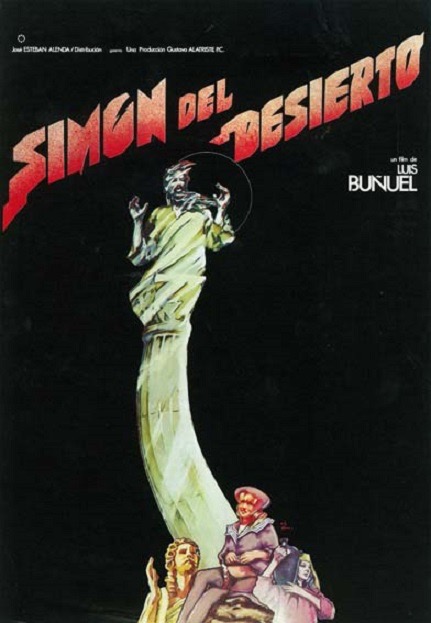
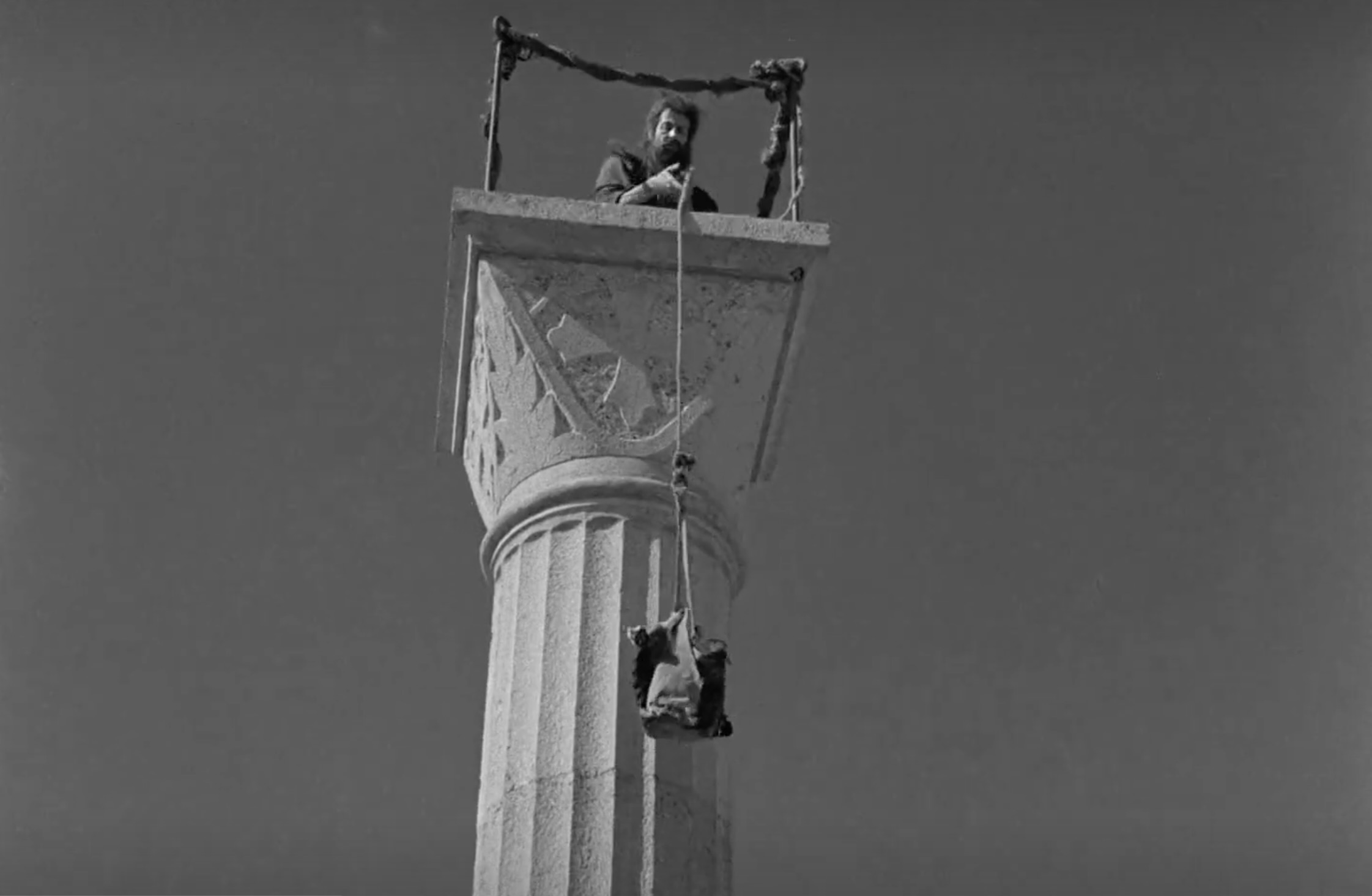
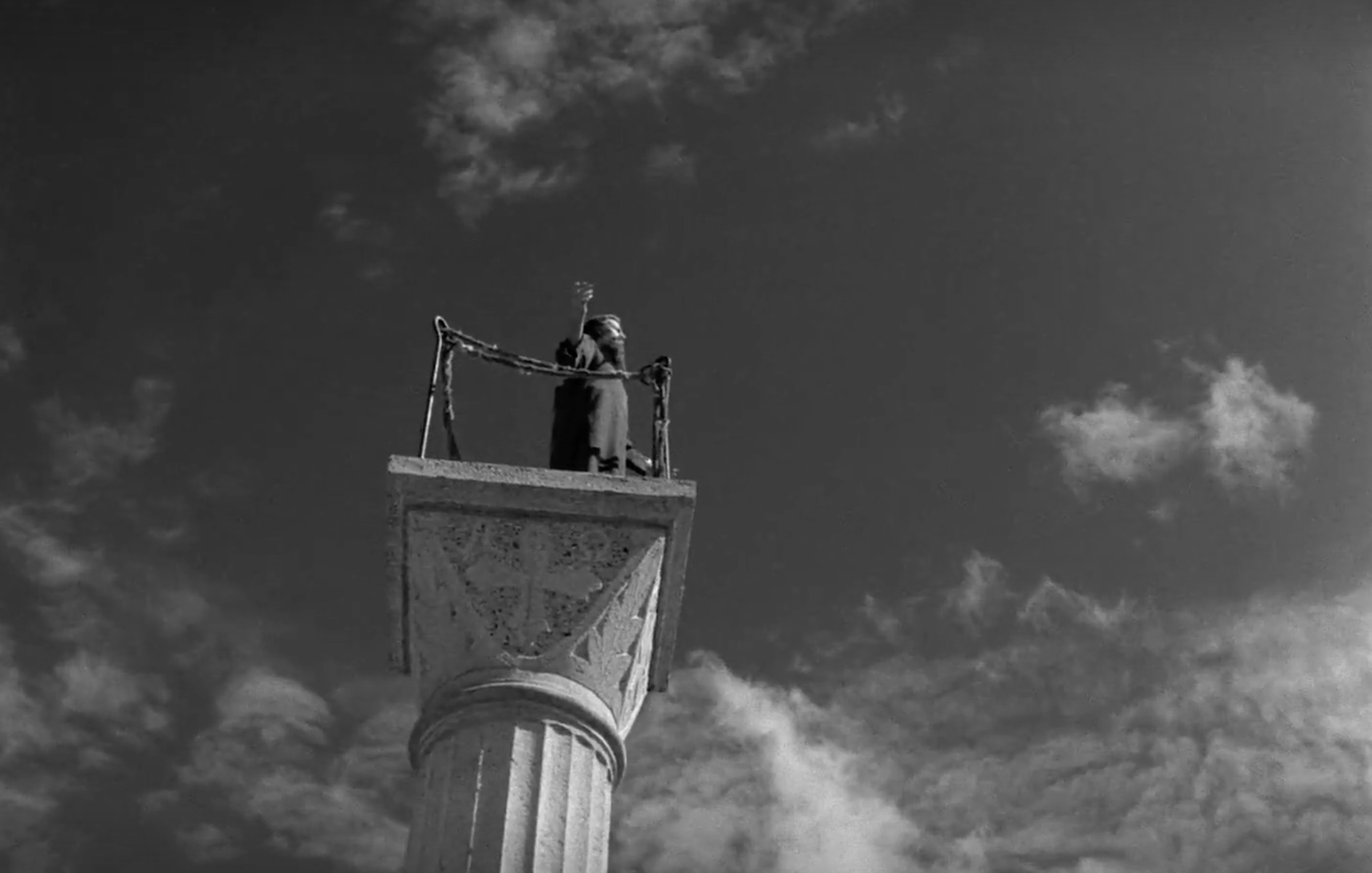
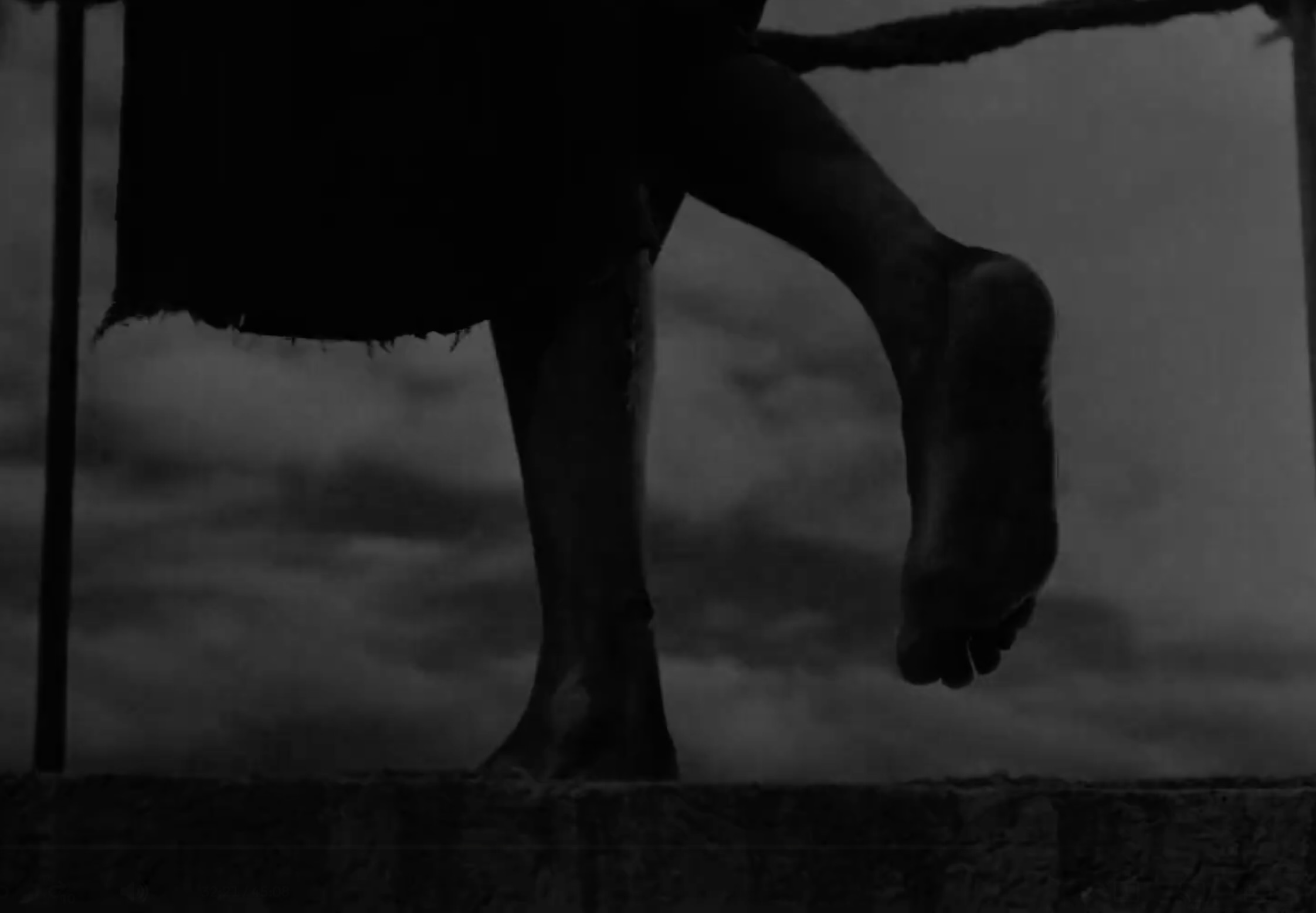
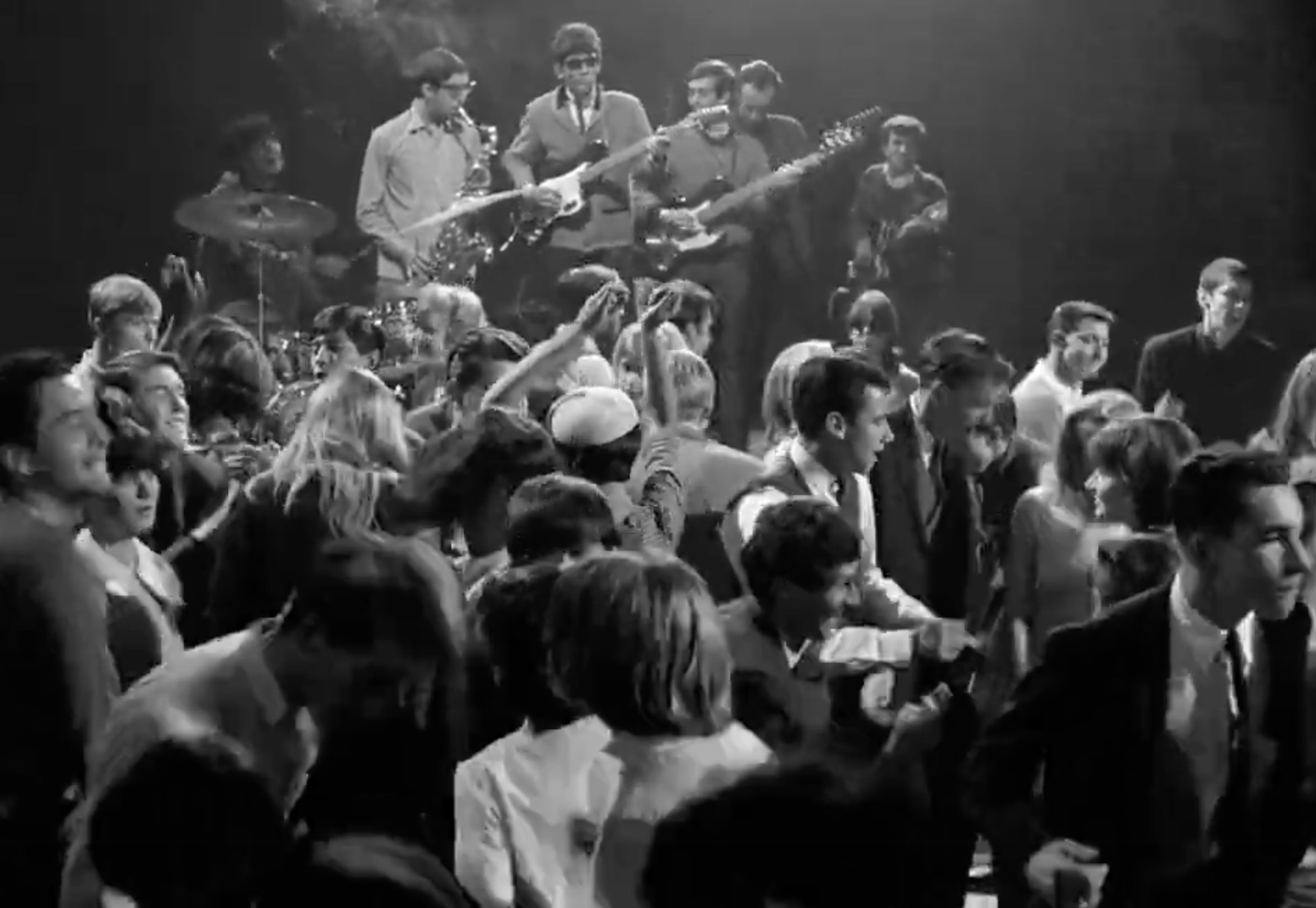
Fictionalized by the ascetic life of Christian saint Simeon Stylite, Simón spends exactly six years, six months, and six days on top of a column to worship God and bless the people who come to him in the middle of a desert in Syria. Deeply respected and loved by his community, Simón is asked to move to a different, higher pillar as a gesture of gratitude, so he can continue modeling and practicing his way of life. Simón’s commitment and modesty are demonstrated in this transition as he politely declines to be with his mother before she passes away to avoid distraction, and he refuses to receive holy orders because of his unworthiness. Throughout the film, however, Simón faces several challenges caused by Satan (and/or possibly God) to force him to give in to worldly pleasures and to stop worshipping God. These trials take place either in the form of a young innocent woman, representing Satan himself, or of the people who have become cursed to question the purity of Simón’s work and morality. Simón succeeds in not surrendering to Satan or falling into sin by appealing to Jesus Christ; though, at night, it is apparent that Simón still struggles in solely relying on Jesus for sustenance. During the last encounter with the woman, who approaches Simón in a coffin, she takes Simón to “el Sabbat,” referring to the inverted Christian ritual, against his will. Then an airplane arrives, and the setting immediately shifts to New York City, inside a club where a band is performing, and people are dancing vigorously. Finally, when Simón says that he is going to leave, Satan says that he cannot and has to stick it out to the end.
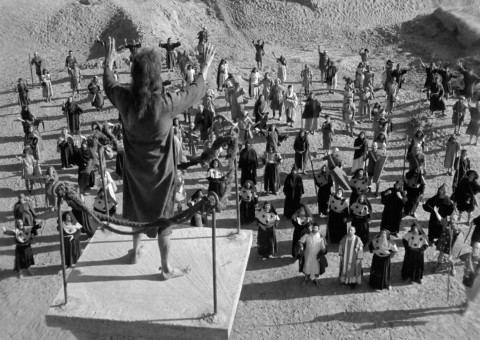
Describes the setting of a scene in a play or a film. It refers to everything placed on the stage or in front of the camera—including people. In other words, mise en scène is a catch-all for everything that contributes to the visual presentation and overall “look” of a production. When translated from French, it means “placing on stage.”
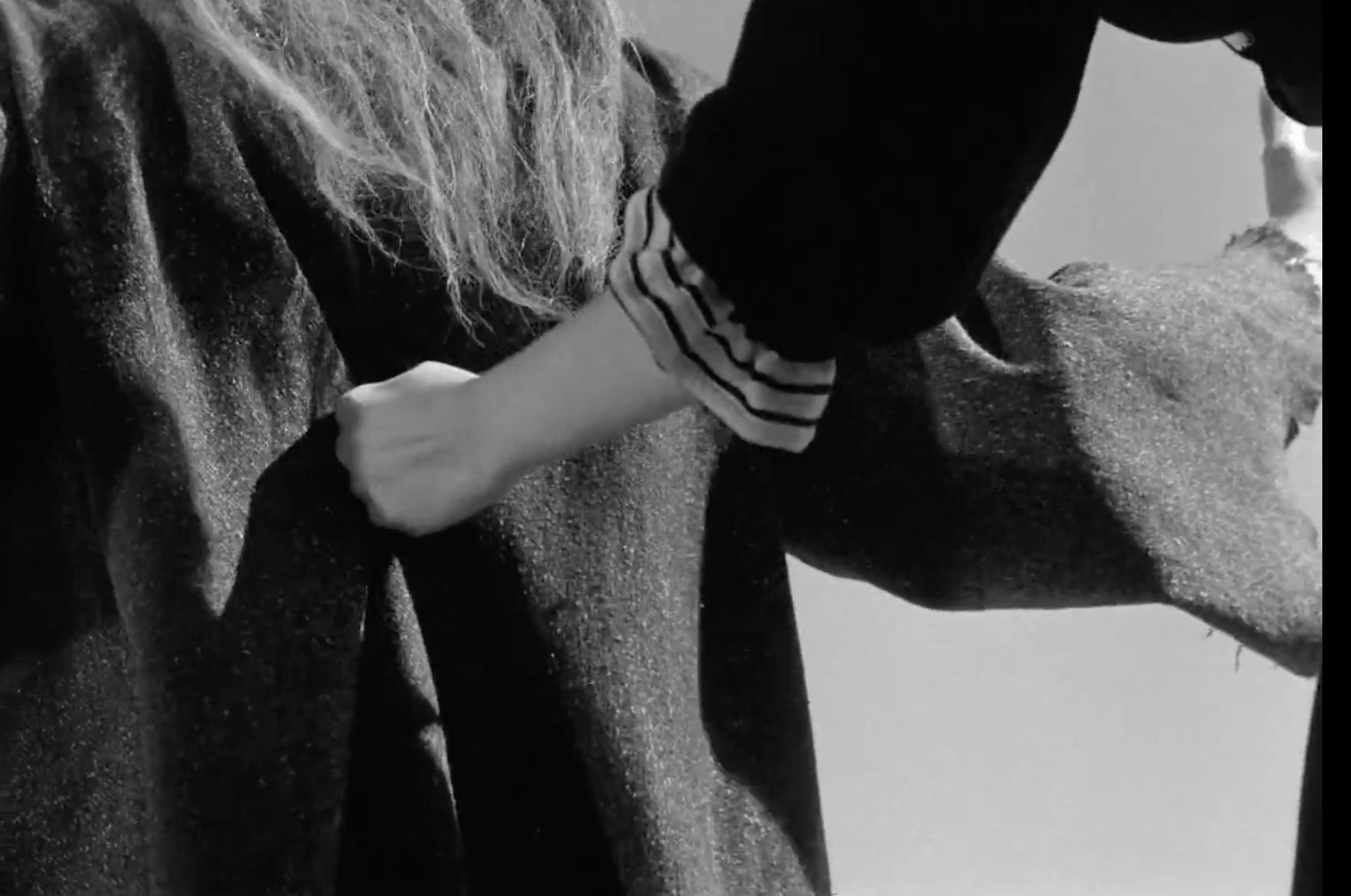
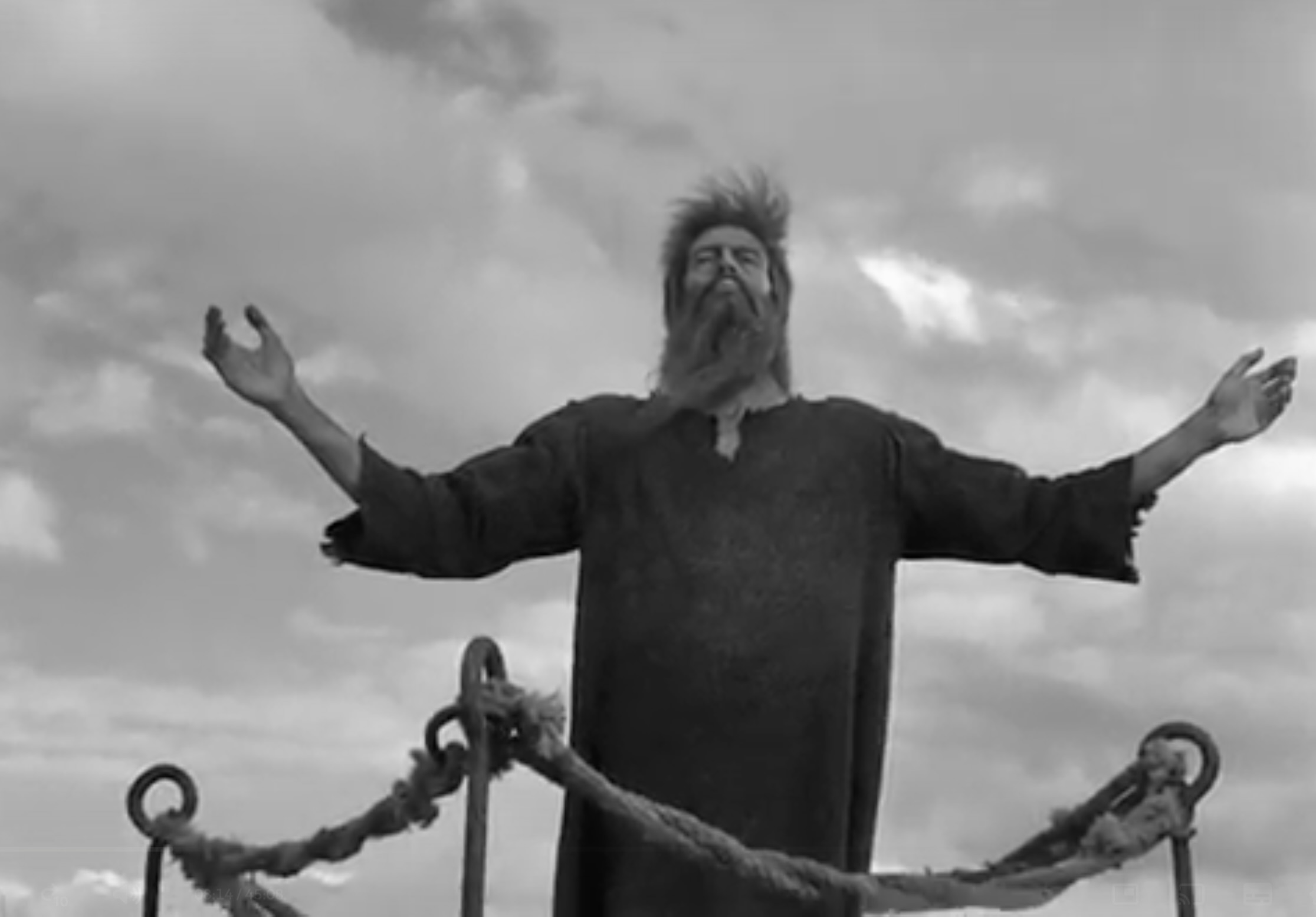
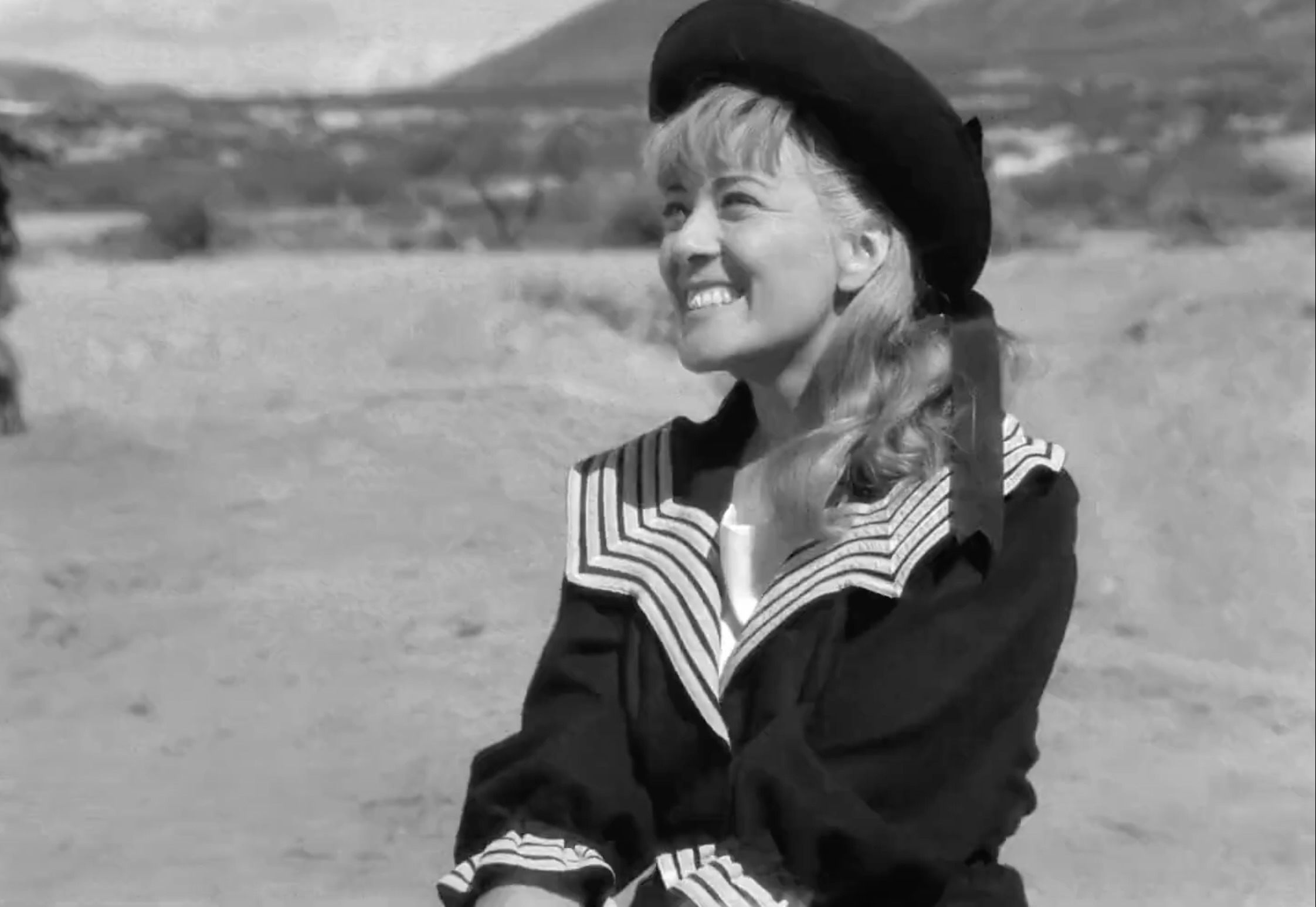
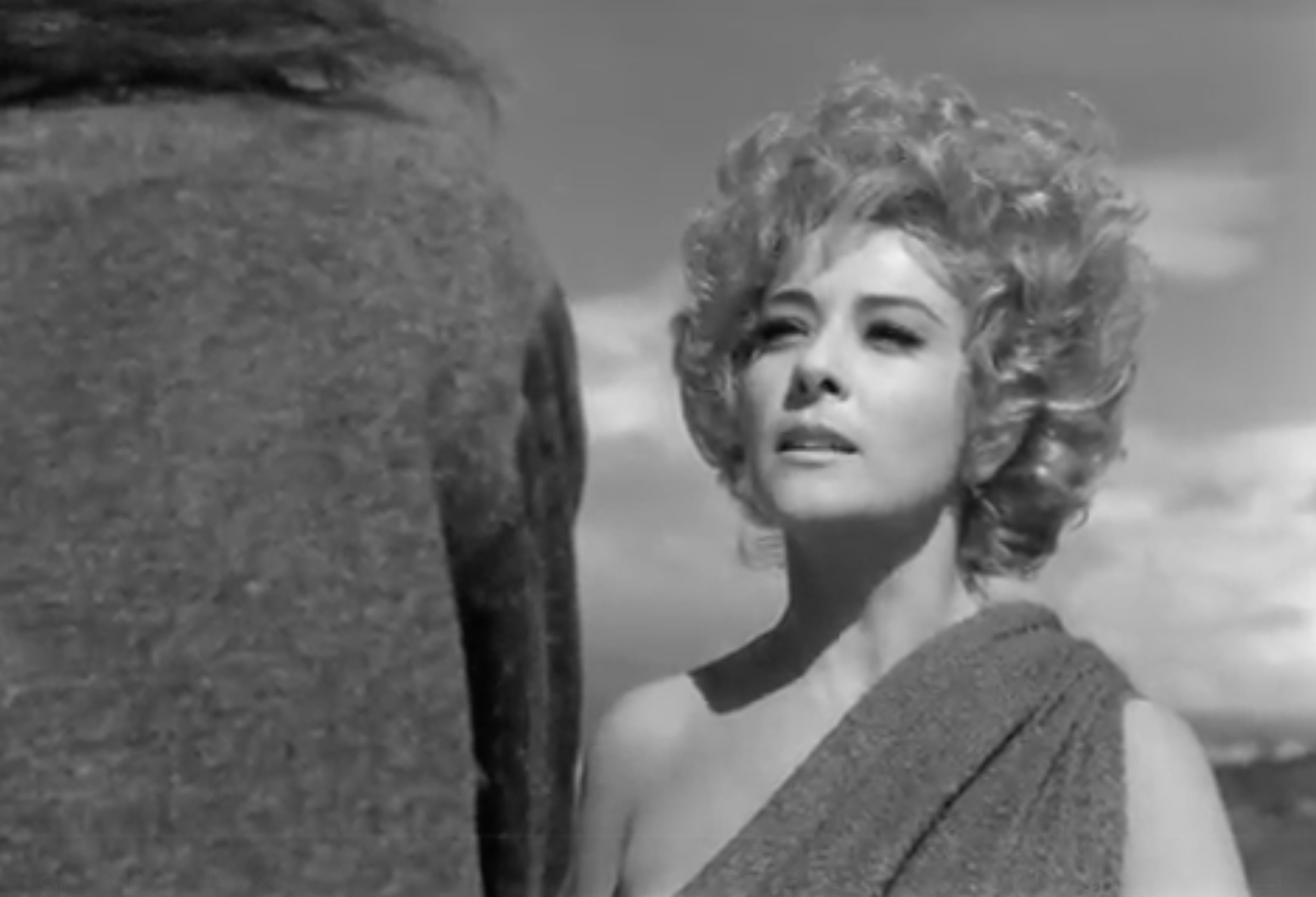
A unique and exceptional case here is Satan/the woman, whose costuming is stylized and central to her deception of Simón. Her first outfit, a modern schoolgirl uniform with a short pleated skirt, garters, and a sailor top, matches her playful, skipping innocence in that scene, confusing and teasing Simón. Her second outfit, a white robe with a curly wig and beard, disguises her as God, lending her false credibility as she tries to convince Simón to abandon the pillar and to indulge in worldly pleasures. Her final outfit, a brown Greek-style robe exposing one breast, marks her last and most aggressive assault on his isolation, using a raw, earthly image of the body to try to break his religious resolve. Each outfit essentially parodies the identity she is performing as an innocent schoolgirl, a divine authority, or generally lewd, always in service of deceiving Simón.
This costuming keeps the spectator in a constant state of tension and uncertainty, since the audience is left guessing both how Simón will respond and what form Satan will take next.
Gender is coded here both through clothing and through the institutional structure of the church itself. Historically, the total absence of women within the church reflects the religious standpoint of the 5th century, when women held no formal role in that space. Beyond that, Buñuel’s choice to code Satan specifically as a woman reinforces a patriarchal religious logic that treats femininity itself as spiritually dangerous, an idea carried through her shifting costumes and their parody of purity, divinity, and temptation all at once.
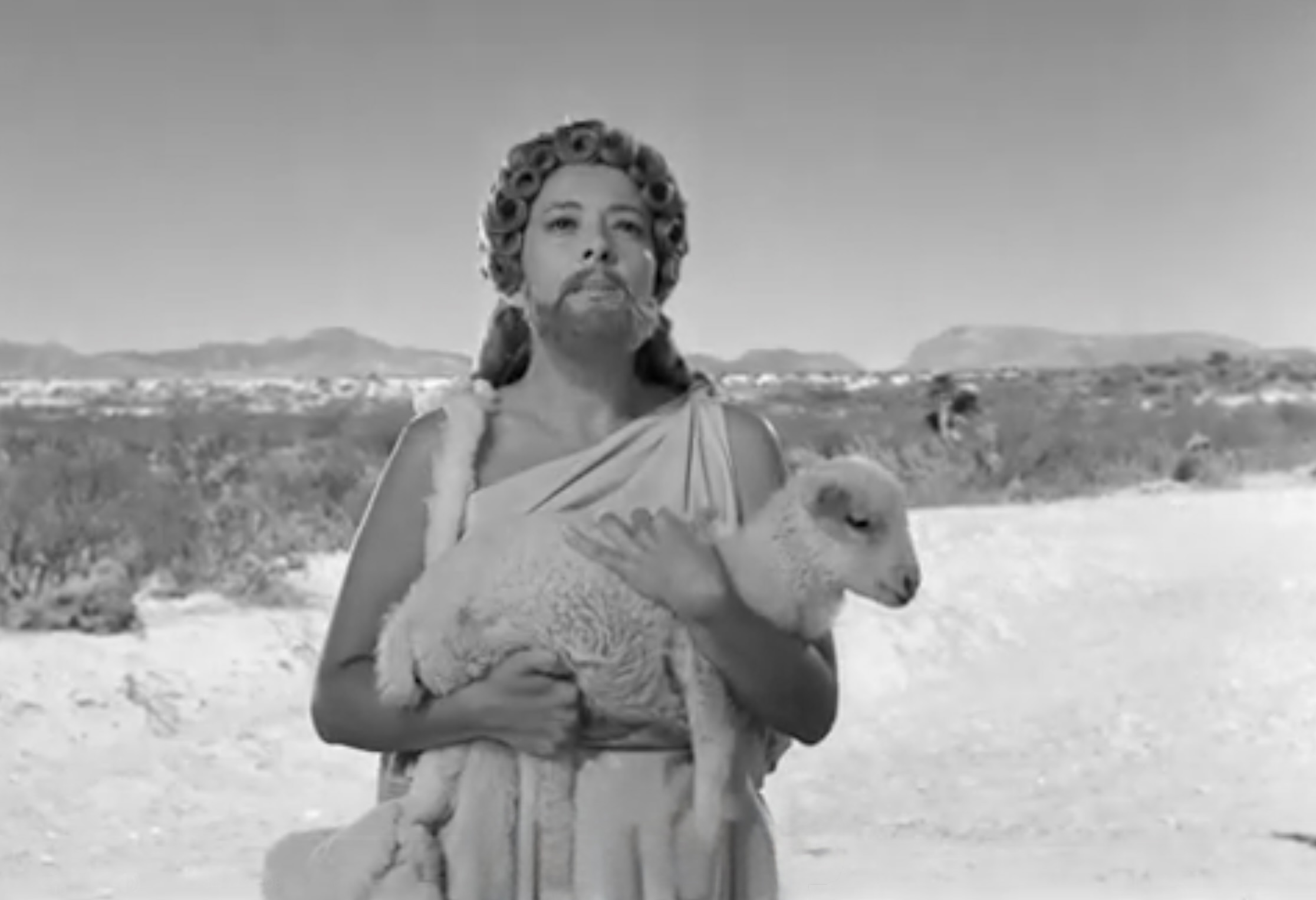
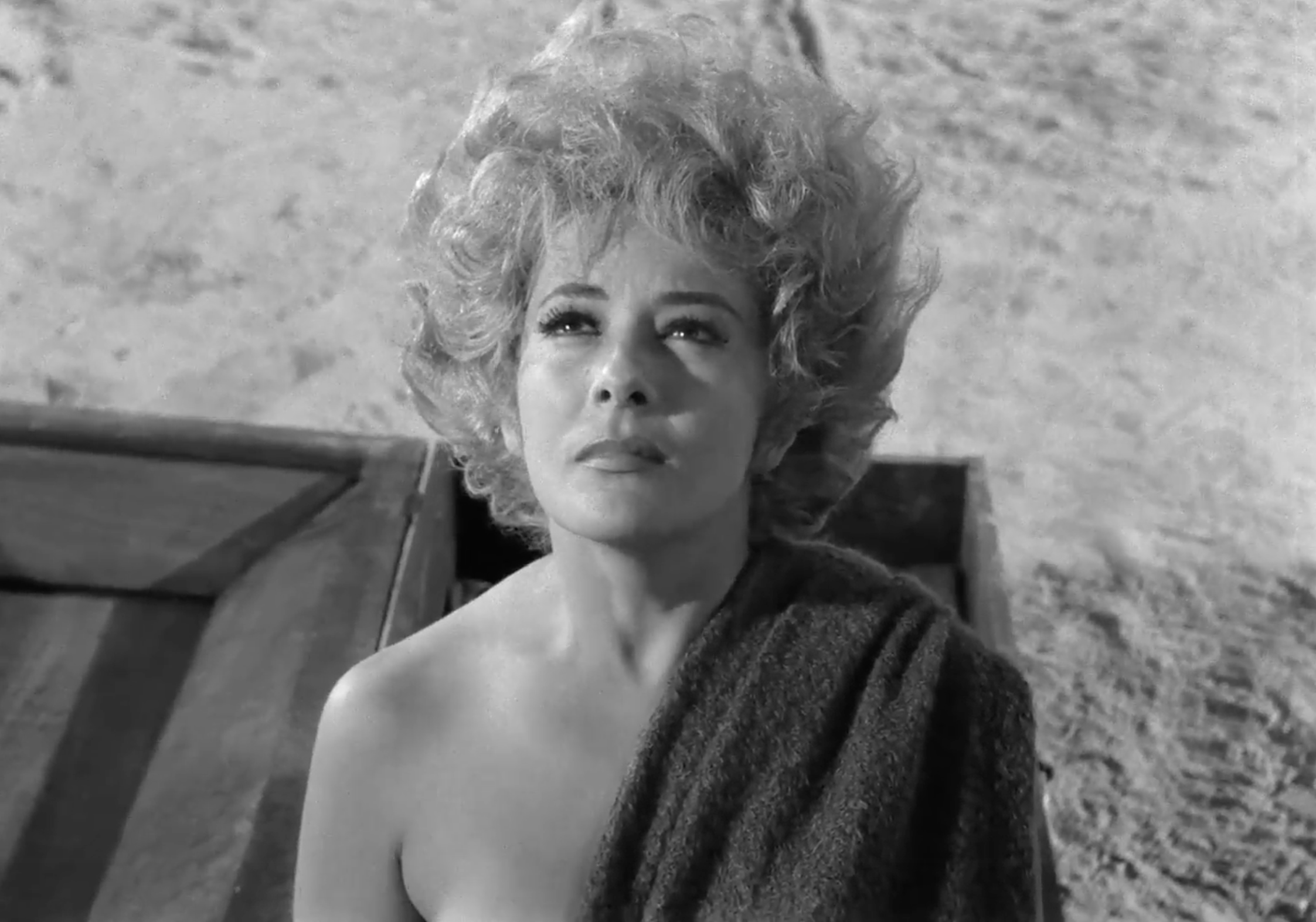
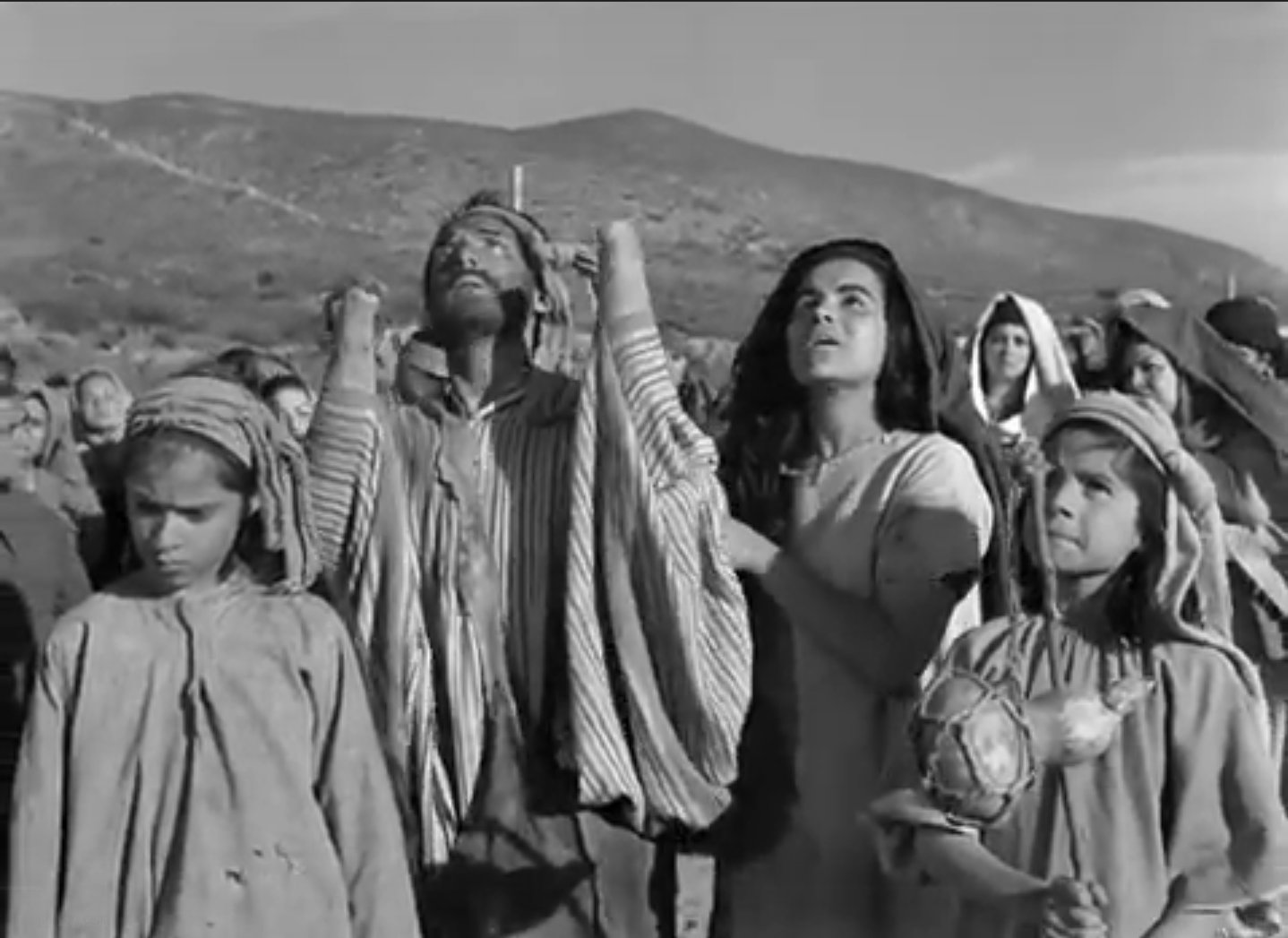
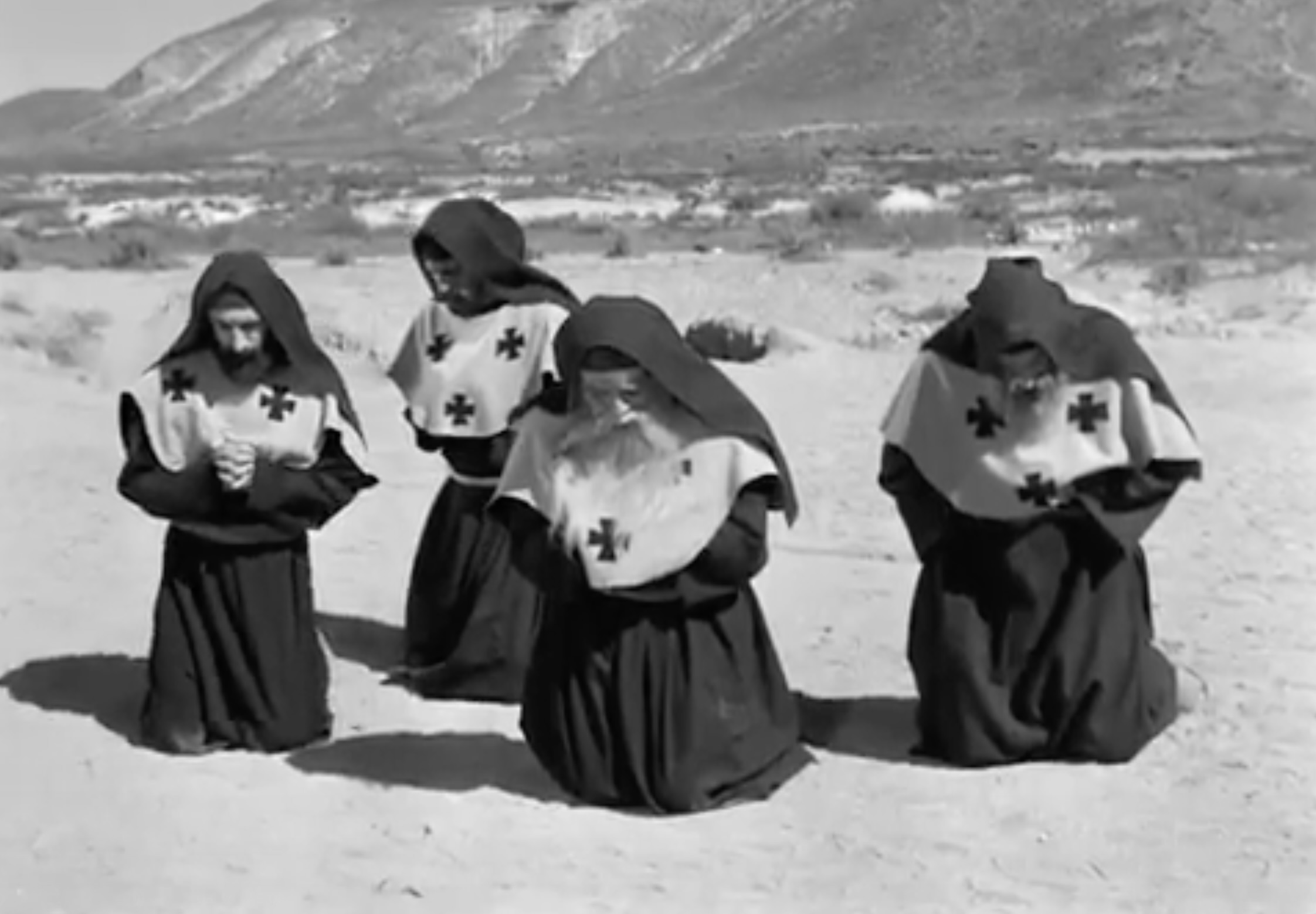
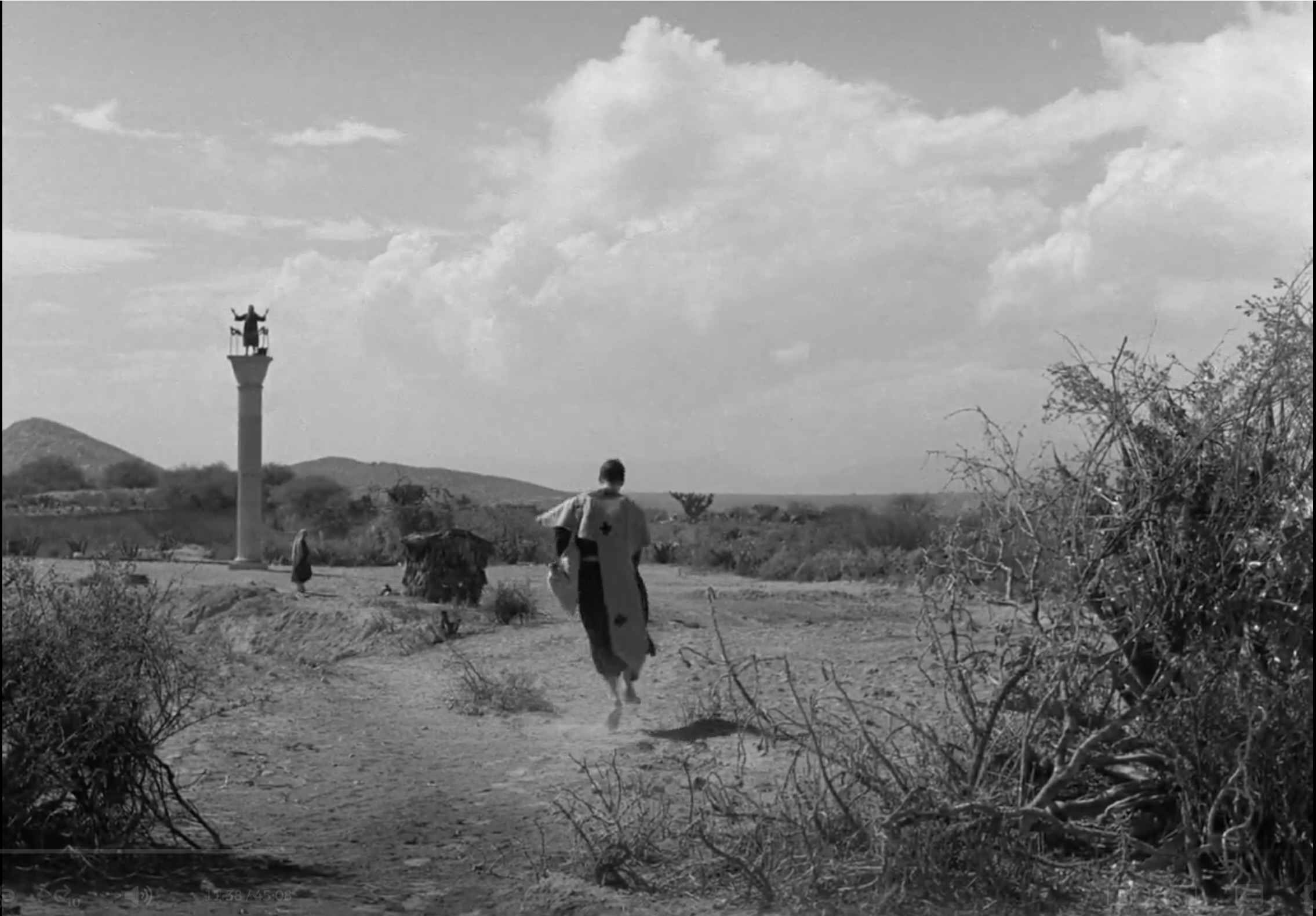
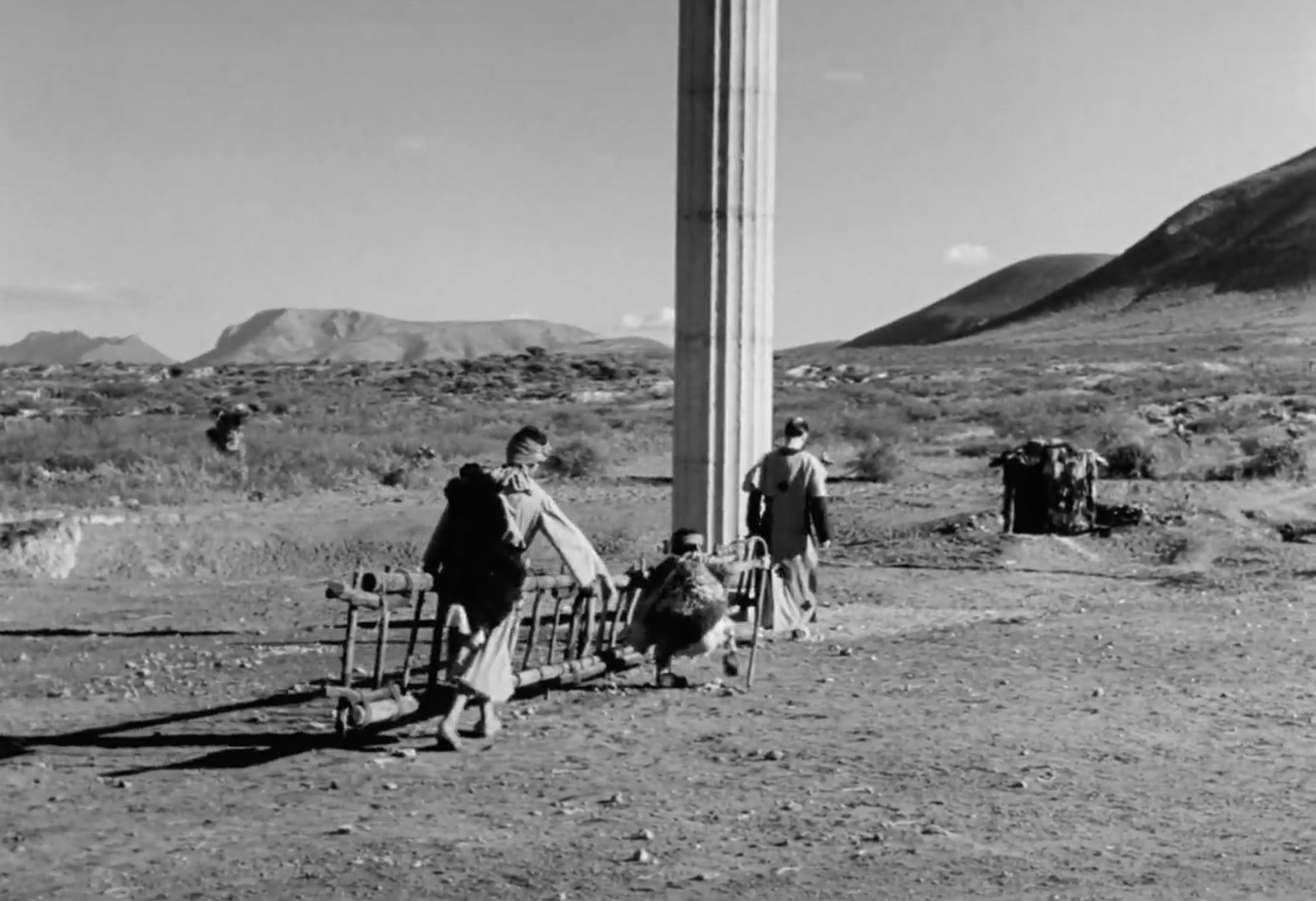
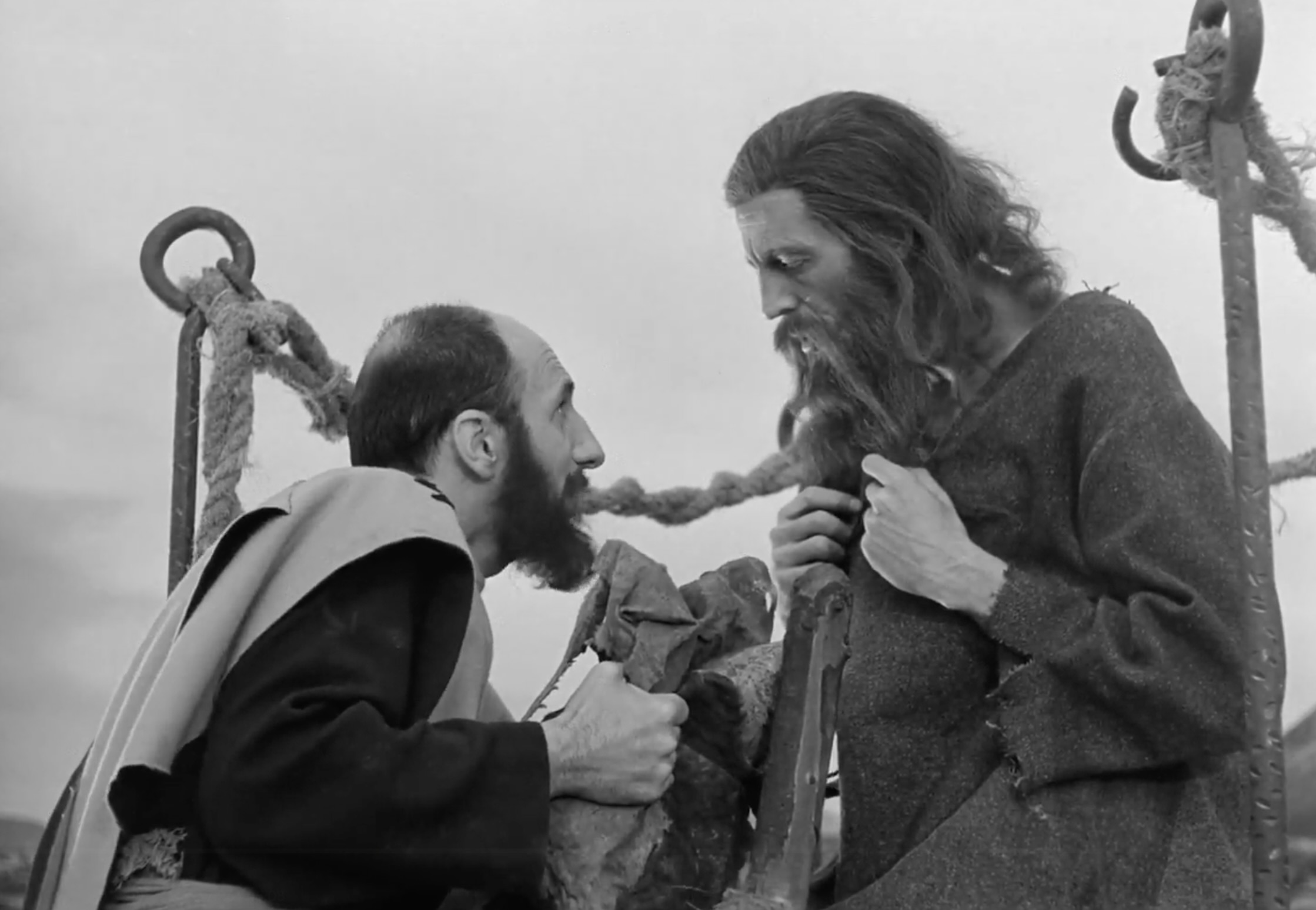
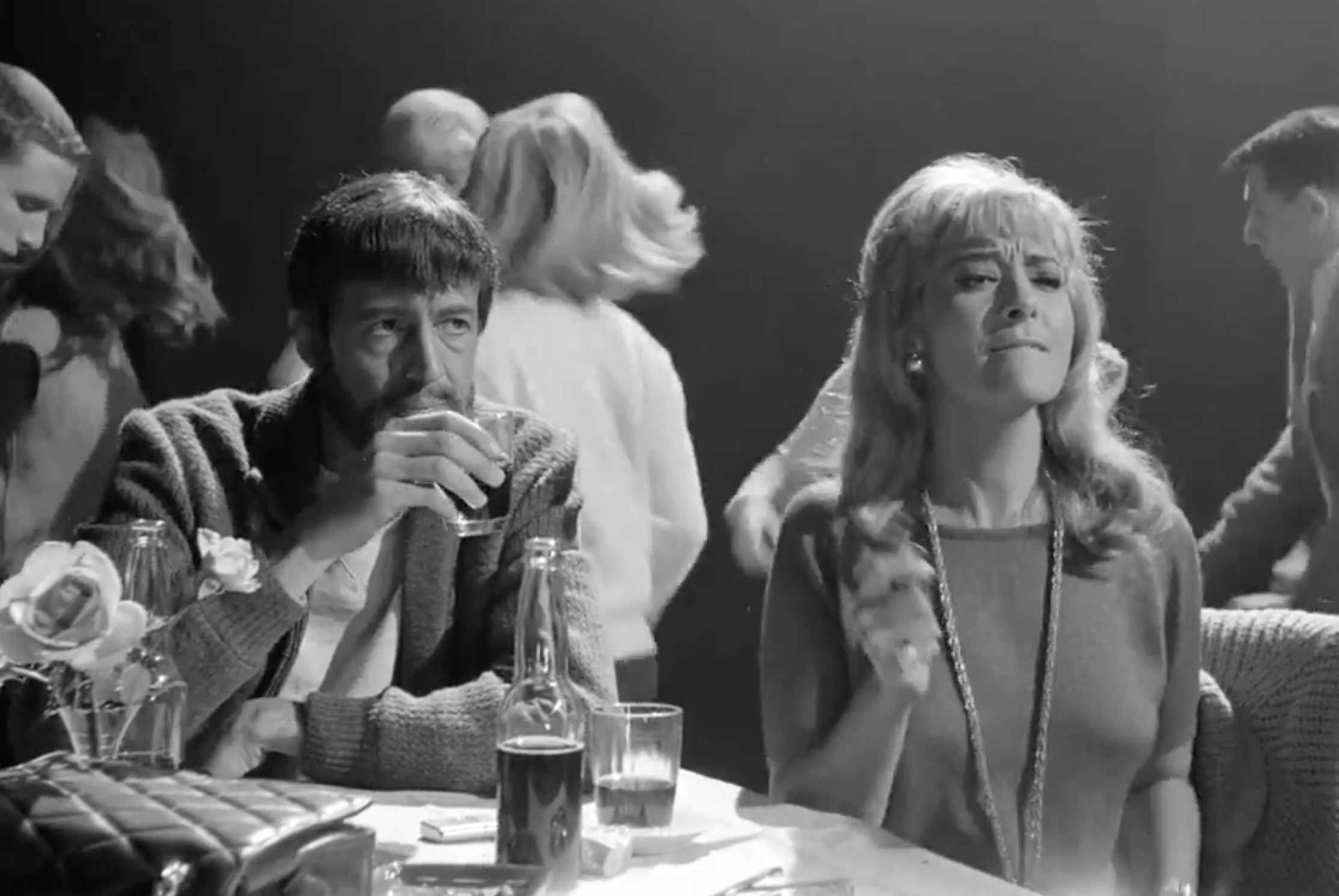
Costumes in the film mix realism and stylization depending on the character and era. For Simón, the villagers/church members, and the Americans in the final scene, costuming leans realistic to ground the historical setting and signal class and role. The makeup that affects hygiene and grooming reinforces this, too: Simón and the villagers both have dirty skin and messy hair, which reflects their way of life and lack of wealth. For Simón specifically, his grimy hair, beard, and skin reflect his commitment to asceticism and his deliberate neglect of physical comfort. Also, when Simón and Satan go to a nightclub in New York, everyone, including them, is dressed in formal wear (e.g., suits, dresses) to signal that they are in the 1960’s. Because of this, the identity of status, wealth, and foreignness flipped significantly, as everyone was wearing the same formal attire due to this composition of style and realism.
A unique and exceptional case here is Satan/the woman, whose costuming is stylized and central to her deception of Simón. Her first outfit, a modern schoolgirl uniform with a short pleated skirt, garters, and a sailor top, matches her playful, skipping innocence in that scene, confusing and teasing Simón. Her second outfit, a white robe with a curly wig and beard, disguises her as God, lending her false credibility as she tries to convince Simón to abandon the pillar and to indulge in worldly pleasures. Her final outfit, a brown Greek-style robe exposing one breast, marks her last and most aggressive assault on his isolation, using a raw, earthly image of the body to try to break his religious resolve. Each outfit essentially parodies the identity she is performing as an innocent schoolgirl, a divine authority, or generally lewd, always in service of deceiving Simón.
This costuming keeps the spectator in a constant state of tension and uncertainty, since the audience is left guessing both how Simón will respond and what form Satan will take next.
Gender is coded here both through clothing and through the institutional structure of the church itself. Historically, the total absence of women within the church reflects the religious standpoint of the 5th century, when women held no formal role in that space. Beyond that, Buñuel’s choice to code Satan specifically as a woman reinforces a patriarchal religious logic that treats femininity itself as spiritually dangerous, an idea carried through her shifting costumes and their parody of purity, divinity, and temptation all at once.
Satan, mostly an attractive woman but also a naked elderly woman or a demon possessing a churchgoer, has the most dynamic choreography. Her gestures start playful and childish, skipping and showing skin from a distance, before she gets close enough to stab Simón in the back. Later she kicks a lamb, breaks into exaggerated crying and stomping, swings a rock at his head, and vows to return. When she does, in a coffin, her movement is slow and sincere, covering herself modestly. Her voice drops from high-pitched and loud to calm and natural, mirroring how her tactics grow less aggressive over time.
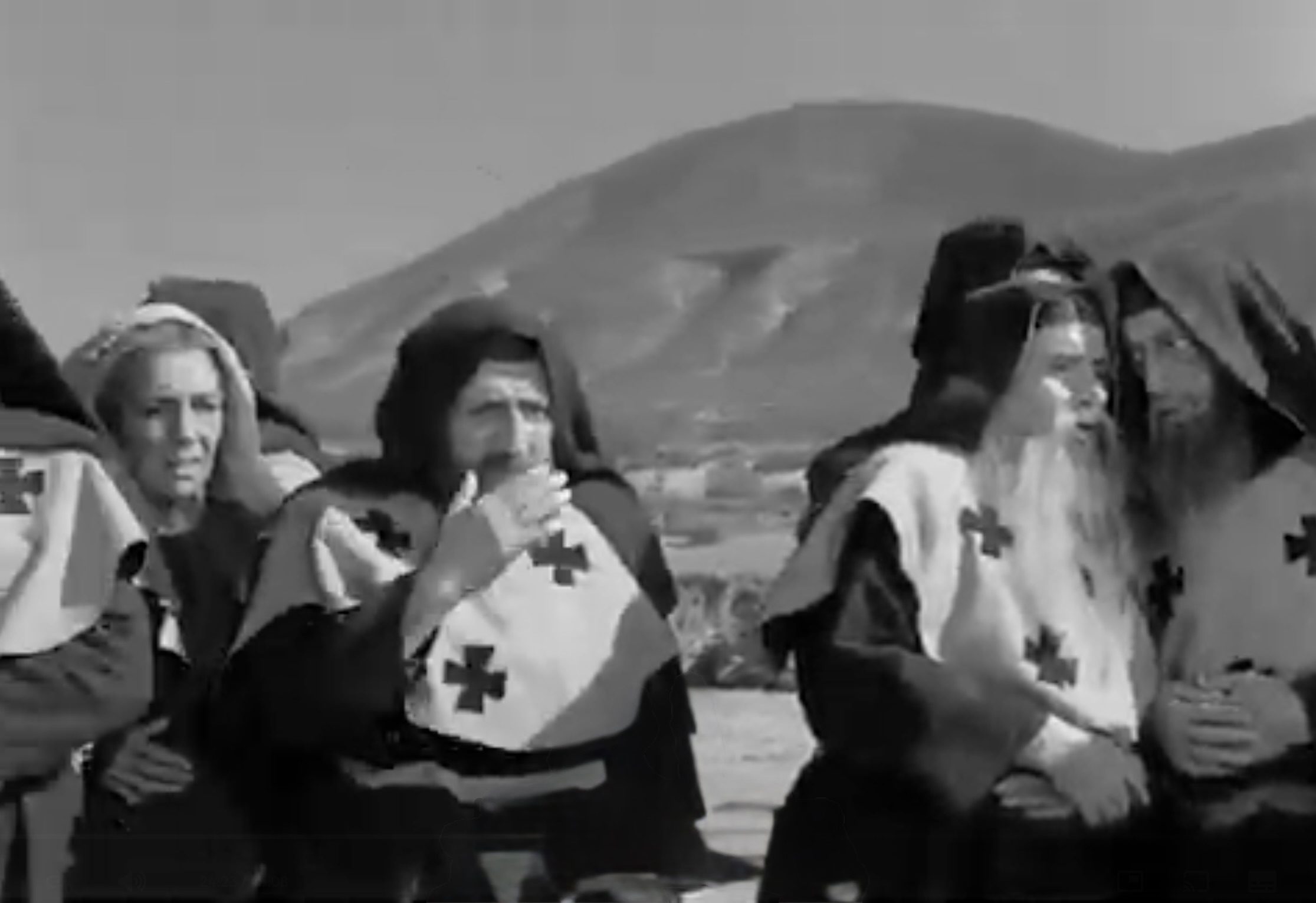
The villagers, mostly bearded men in religious or poor clothing, mirror Simón's prayer gestures but are far less composed, screaming or hiding at disturbing events while he stays still. Their voices stay calm until crisis hits, then turn quickly to anger or desperation.
The Americans in the final scene break from all this, affluent and formally dressed, communicating entirely through the energetic, joyful movement of rock and roll dancing.
Casting mixes trained professionals, Claudio Brook, Silvia Pinal, priests like Luis Aceves Castañeda and Antonio Bravo, with non-actors: local extras, nightclub dancers, and the band Los Sinners playing themselves. The dwarf goatherd, Jesús Fernández, is the exception.
Movement and grouping shape the viewer's response throughout. Satan's shifting tactics build suspense; Simón's strained, repetitive prayer builds sympathy; and the crowds gathered beneath the pillar create curiosity and unease before the historical context is clear.
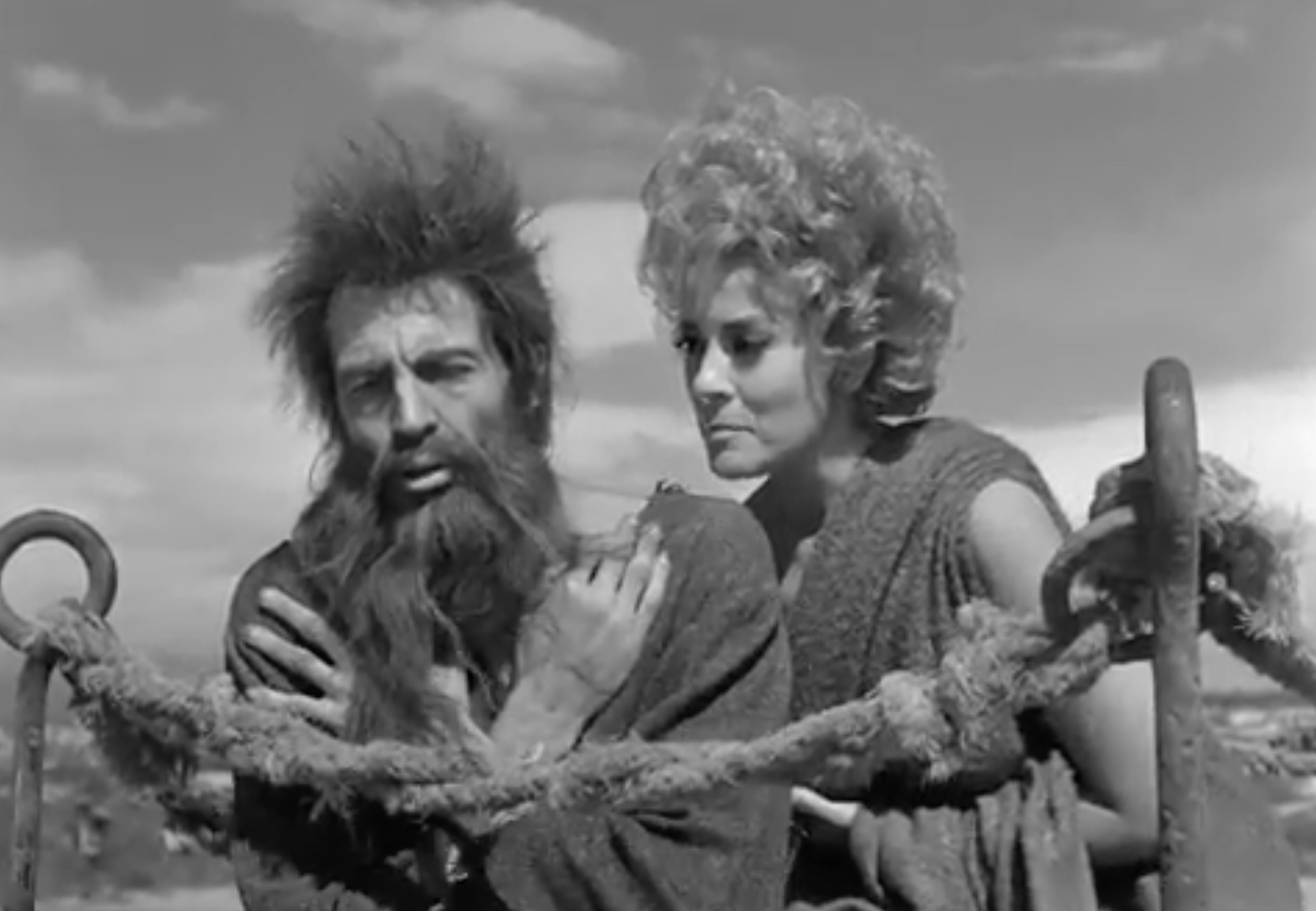
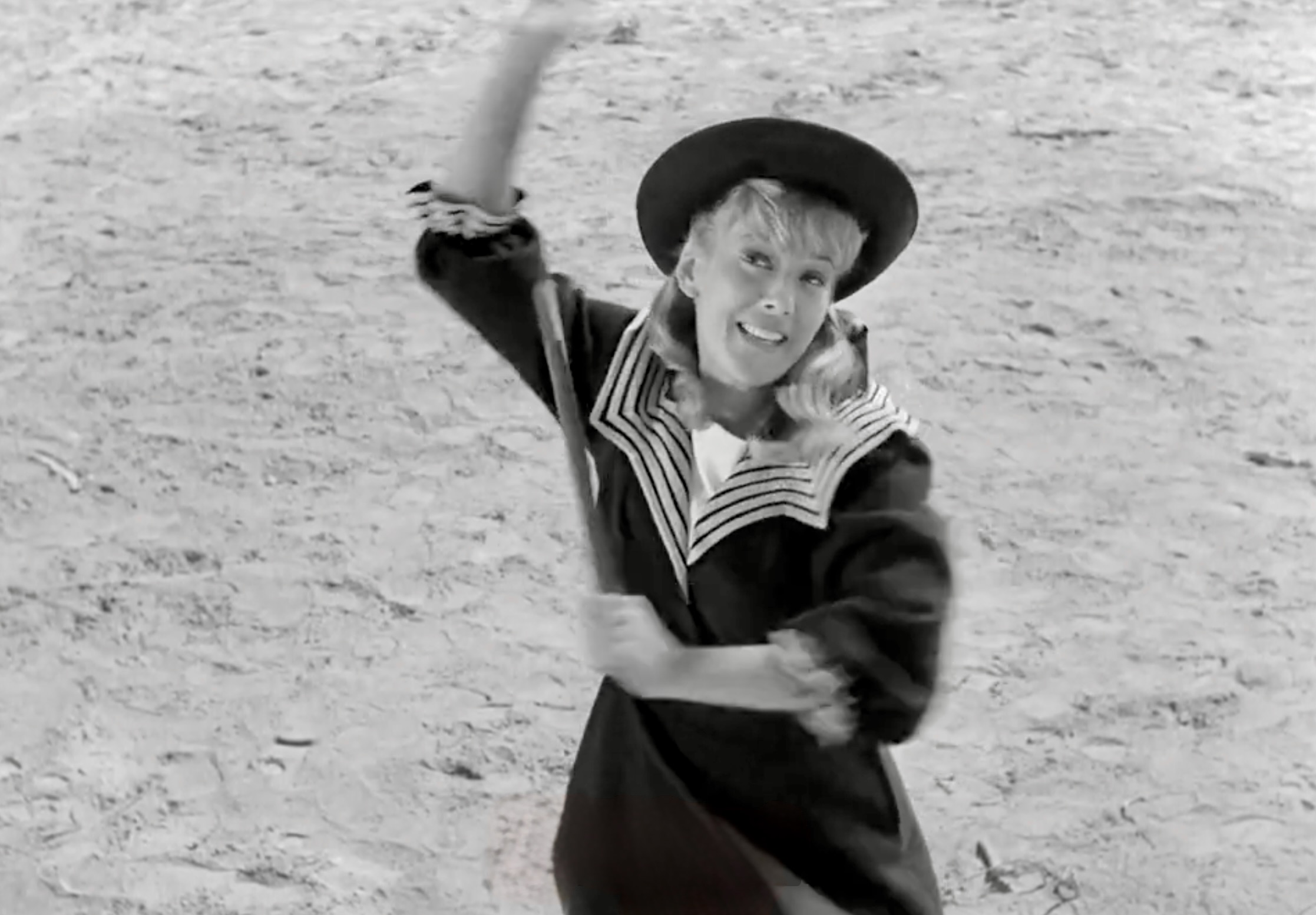
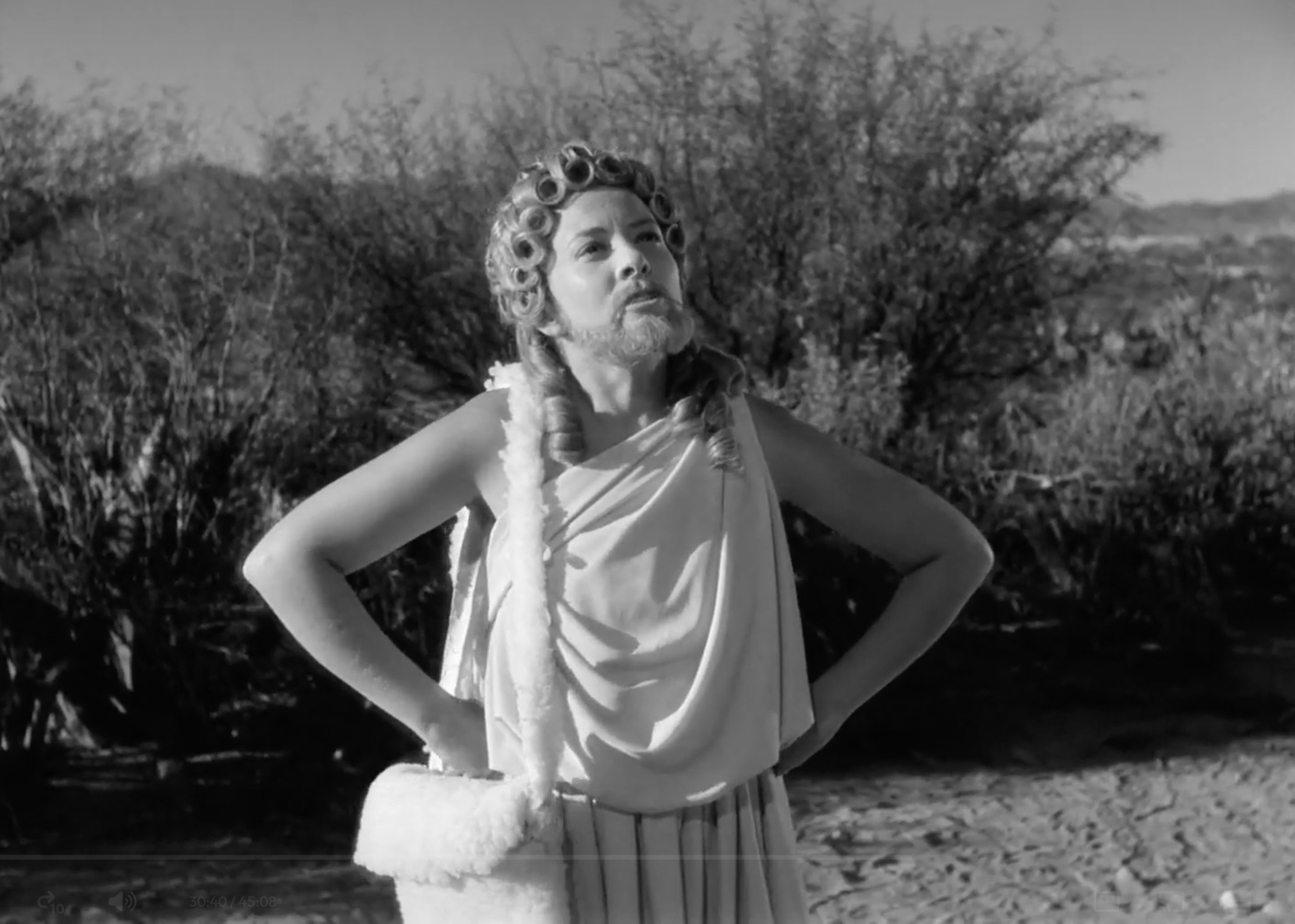
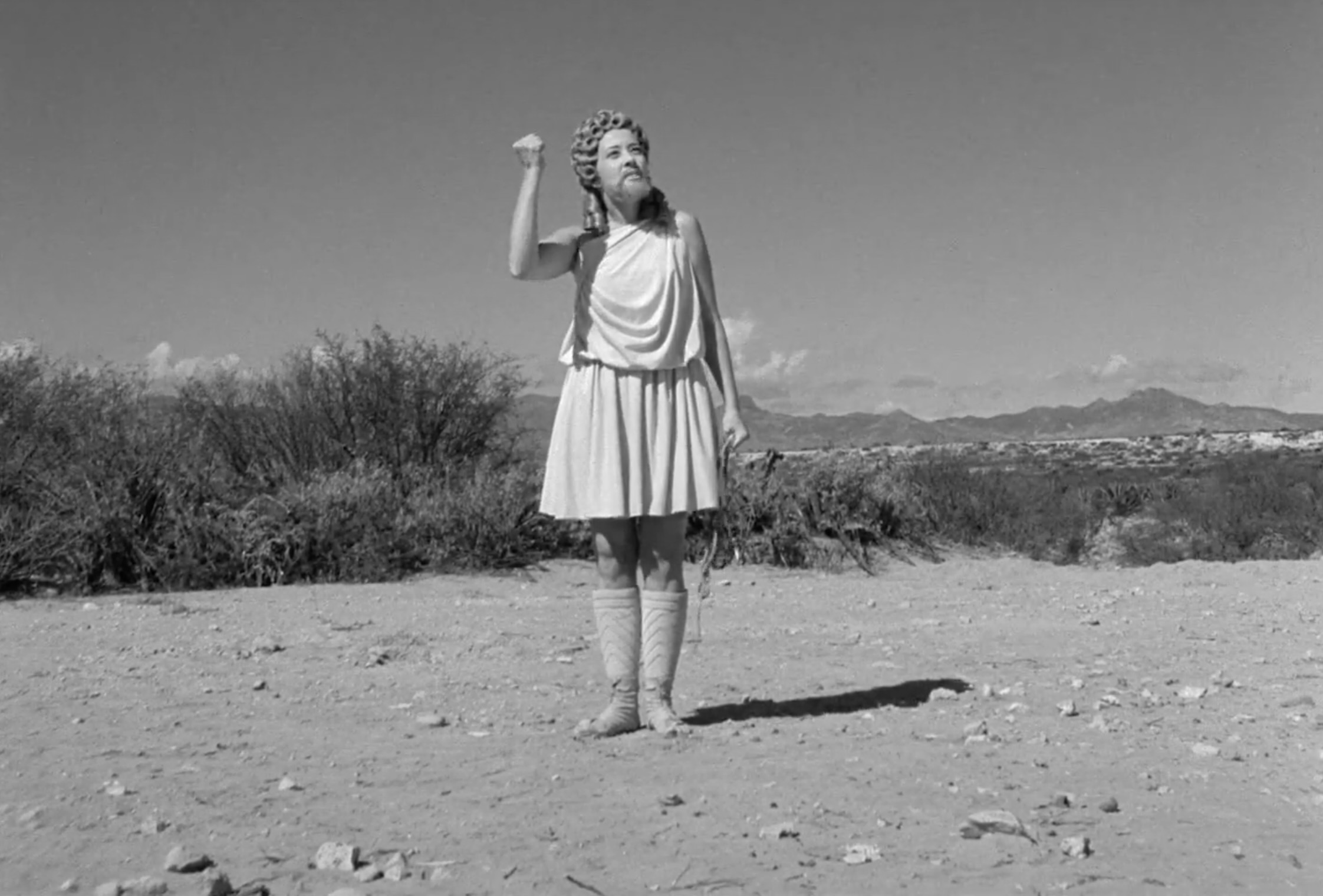
This is the art of photography and visual storytelling in a motion picture or television show. Cinematography comprises all on-screen visual elements, including lighting, framing, composition, camera motion, camera angles, film selection, lens choices, depth of field, zoom, focus, color, exposure, and filtration. Cinematography sets and supports the overall look and mood of a film’s visual narrative. Each visual element that appears on screen, a.k.a. the mise-en-scène of a film, can serve and enhance the story—so it is the cinematographer’s responsibility to ensure that every element is cohesive and support the story. Filmmakers often choose to spend the majority of their budget on high-quality cinematography to guarantee that the film will look incredible on the big screen.
Editing is the process of putting a film together–the selection and arrangement of shots and scenes. Editing can condense space and time, emphasize separate elements and bring them together, and organize material in such a way that patterns of meaning become apparent. In addition, editing can determine how a film is perceived: for instance, quick, rapid cuts can create a feeling of tension, while a long take can create a more dramatic effect. The first photoplays generally had no cutting, owing to the fact that they were single-reel films; once filming began, you could not stop until the film ran out. (https://filmglossary.ccnmtl.columbia.edu/term/editing/)
Sound is an integral part in a film. It refers to everything that the audience hears including sound effects, words and music. Sound is used in films for various purposes, including: providing the information to the viewer about the location of the scene, heightening the mood, telling the audience about the characters and advancing the plot. Every person who watches a film realizes that the choice of voices, soundtrack and music present in a film affect the way that the viewer perceives a particular film. As a result, the sound is an important and integral element of the film, one that determines the way that the viewer experiences and understands a film as a visual experience.
Narrative analysis is an examination of the story elements, including narrative structure, character, and plot. A narrative can be considered to be the chain of events in a cause-effect relationship occurring in time and space. In order to analyze the narrative of a film, we need to first make the distinction between the plot of the film and the story of the film. This is sometimes referred to as the discourse and story of a film. Narrative may also be called the story thought story mainly refers to the events that describe the narrative.
Film genres are various forms or identifiable types, categories, classifications or groups of films. (Genre comes from the French word meaning "kind," "category," or "type"). These provide a convenient way for scriptwriters and film-makers to produce, cast and structure their narratives within a manageable, well-defined framework. Genres also offer the studios an easily 'marketable' product, and give audiences satisfying, expected and predictable choices. Genres refers to recurring, repeating and similar, familiar or instantly-recognizable patterns, styles, themes, syntax, templates, paradigms, motifs, rules or generic conventions.