Roma

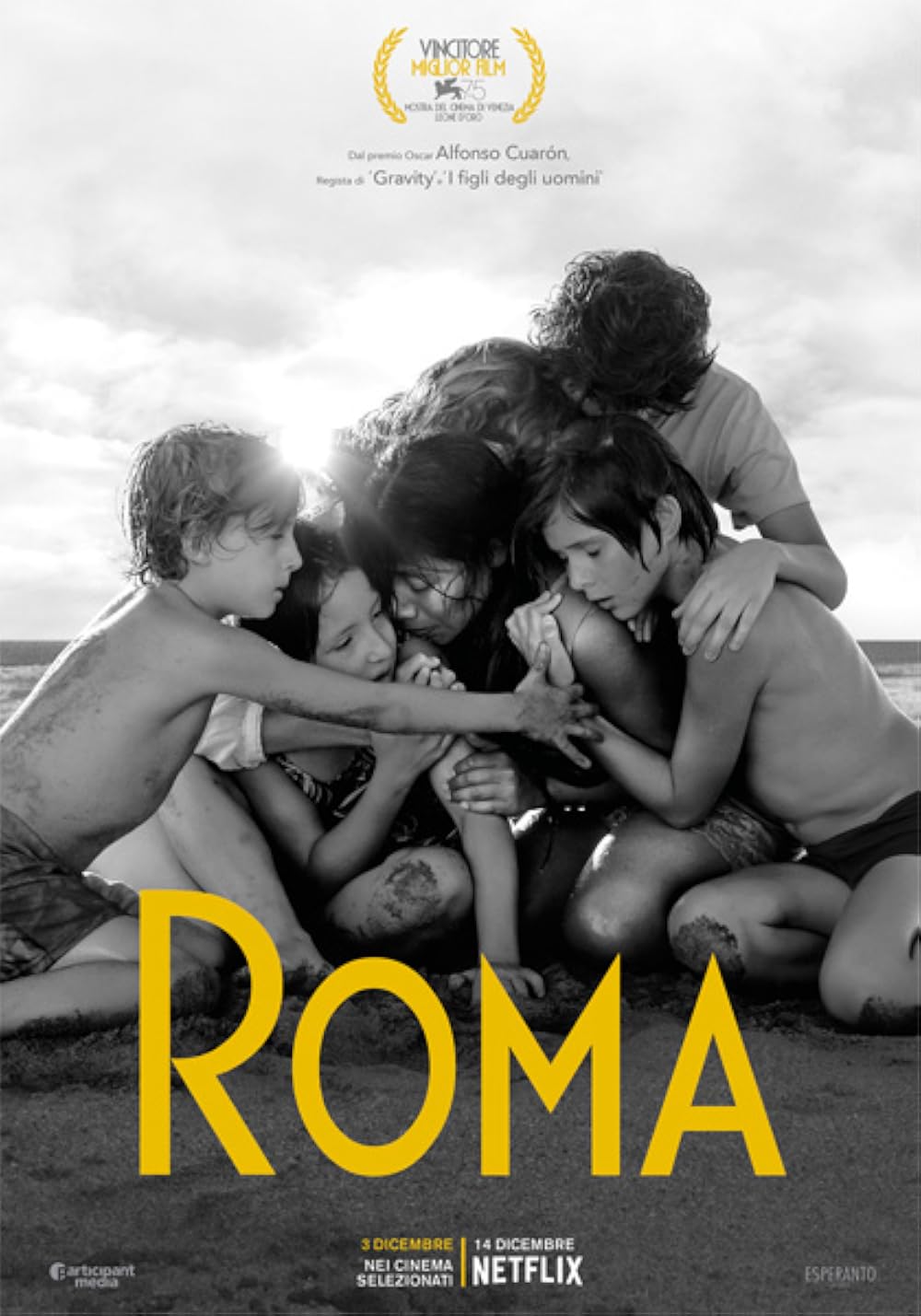
    Movie Poster
    Release year
    2018
    Director
    Alfonso Cuarón Orozco
    Biography of director(s)
    Alfonso Cuarón Orozco was born in Mexico City in 1961. He studied film at UNAM and started his career working in Mexican television and as an assistant director. Later, he directed films such as Y Tu Mamá También, Children of Men, Gravity, and Roma. He is known for using long shots and paying a lot of attention to the space around his characters. His movies often focus on family, memory, and social issues. He has won the Academy Award for Best Director twice, including for Roma, which was also inspired partly by his own childhood in Mexico City.
    Country
    Mexico / United States (co-production)
    Original synopsis of the film

    Roma follows Cleo, a young domestic worker who lives with a middle-class family in Mexico City in the early 1970s. Most of her daily life is spent cleaning the house, taking care of the children, and helping Sofia, the mother of the family. At the same time, the family begins having problems after the father, Antonio, slowly disappears from their lives. Cleo also finds out that she is pregnant after dating Fermin, but he leaves her when he learns about the pregnancy.

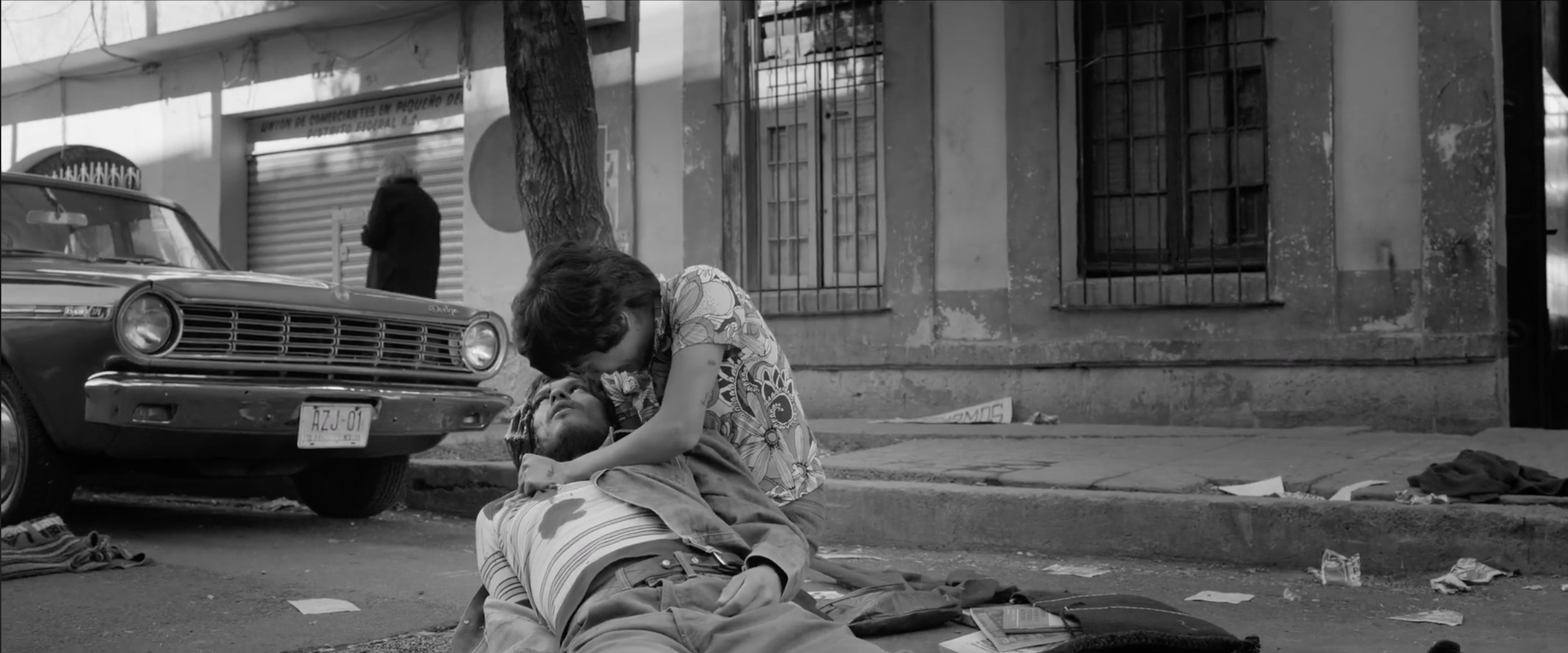
    As Cleo deals with her own problems, political violence is happening around her in Mexico City. During the Corpus Christi massacre, she unexpectedly sees Fermin again, connecting her personal situation to the violence outside the family home. Later, Cleo goes through a serious personal loss. Near the end of the film, she travels with Sofia and the children to the beach. When two children get caught in the ocean, Cleo saves them even though she cannot swim. Afterward, she admits that she did not want her baby to be born. The family comforts her and returns home changed, but Cleo goes back to her everyday routine, showing that life continues after everything that has happened.
    Film Awards
    Academy Awards (Oscars), 2019: won 3 Oscars — Best Director (Alfonso Cuarón), Best Cinematography, and Best Foreign Language Film. It received 10 Oscar nominations overall, including Best Picture and acting nominations for Yalitza Aparicio and Marina de Tavira.
    BAFTA Awards, 2019: won 4 awards — Best Film, Best Director, Best Cinematography, and Best Film Not in the English Language.
    Golden Globe Awards, 2019: won 2 awards — Best Motion Picture – Non-English Language and Best Director. It was also nominated for Best Screenplay.
    Venice International Film Festival, 2018: won the Golden Lion for Best Film, the festival’s top prize.
    Film still
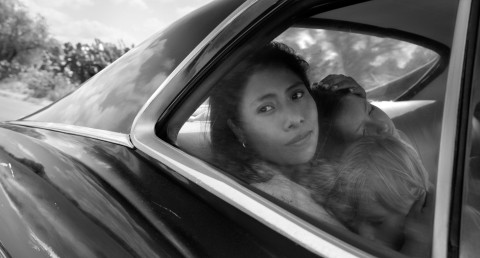
    A black-and-white film still showing a woman seated inside a car with two children resting against her. She looks through the car window while reflections of clouds and the surrounding landscape appear across the glass.
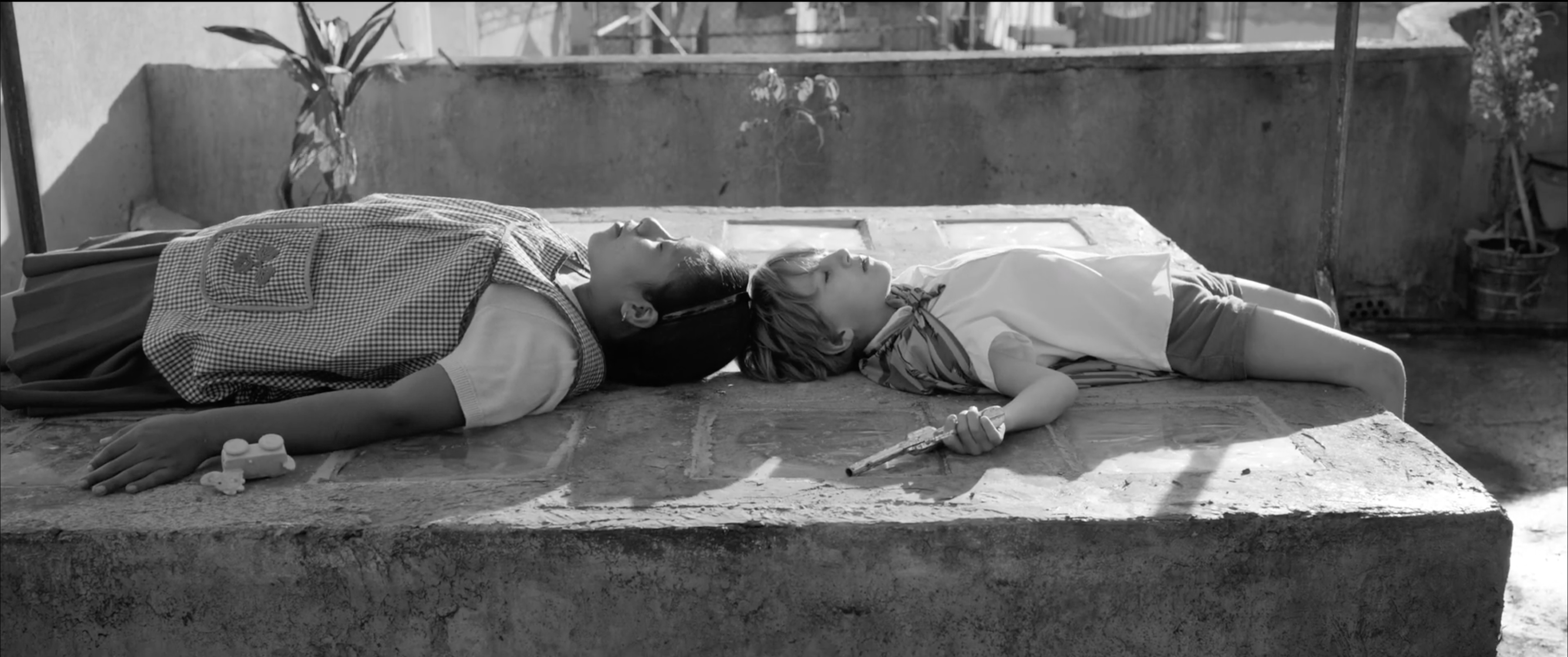
    A black-and-white film still showing a domestic worker washing clothes at a concrete basin on a rooftop in Mexico City. She wears a checkered apron and looks to the side while rooftops and laundry appear in the background.
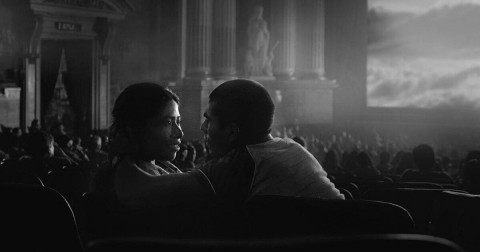
    A black-and-white film still showing a young woman and man sitting beside each other in a movie theater. They turn toward one another while rows of seats and large decorative columns are visible in the background.

    Describes the setting of a scene in a play or a film. It refers to everything placed on the stage or in front of the camera—including people. In other words, mise en scène is a catch-all for everything that contributes to the visual presentation and overall “look” of a production. When translated from French, it means “placing on stage.”
    Setting
    Setting
    Explanation
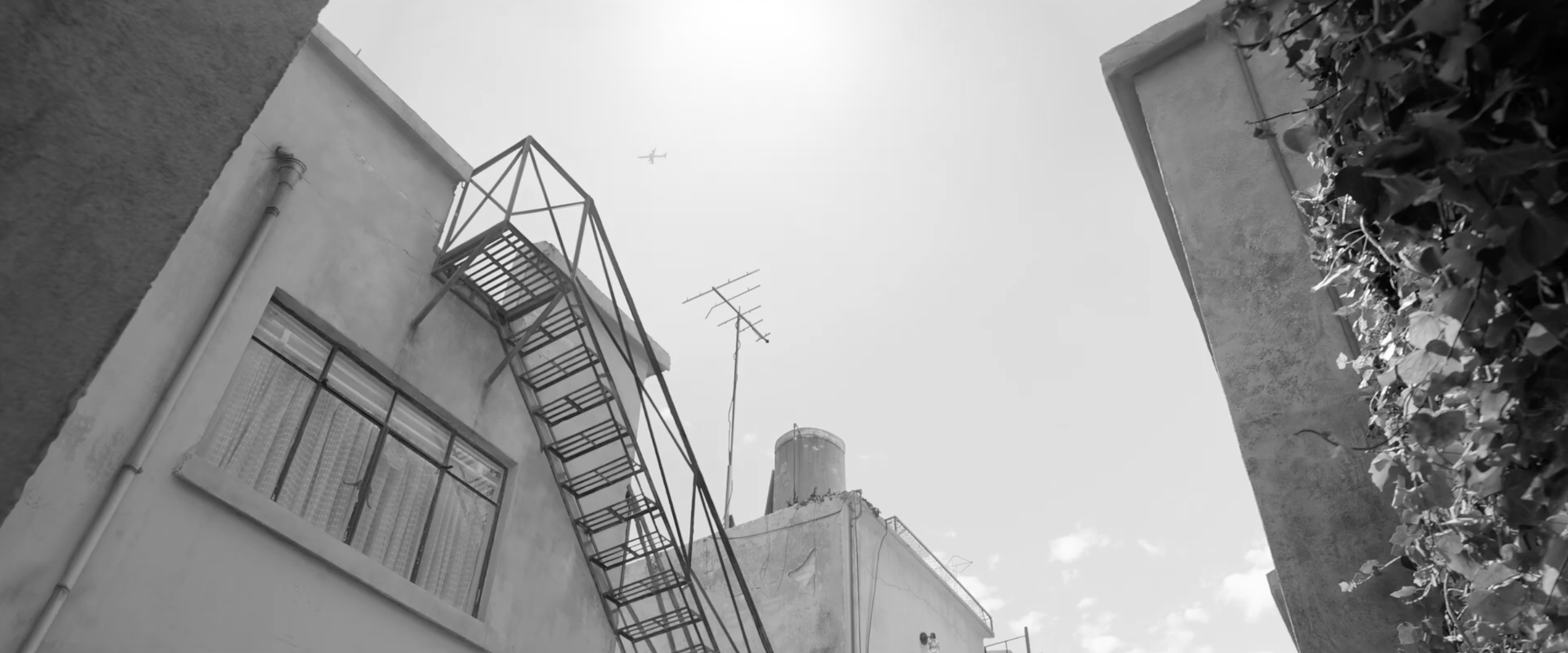
    The movie mostly uses real locations, which makes the story feel more realistic. We see the family house, streets in Mexico City, the hospital, the movie theater, the training field, and the beach. The house is especially important because we keep seeing Cleo move through the courtyard, bedrooms, kitchen, and rooftop while doing her daily work. These places show the difference between Cleo's private life inside the house and the larger world outside. The changing locations also make it clear that her personal problems are happening at the same time as social and political changes in Mexico.
    Timecode
    00:10:41-00:12:40
    Film Still
    Exterior of the family home with rooftop stairs and an airplane overhead
    Film Clip
    Props
    Timecode
    00:13:47-00:15:45
    Prop
    Antonio's Ford Galaxie
    Explanation
    One important prop is Antonio's Ford Galaxie. At the beginning, he very carefully drives the large car into the family's narrow driveway, almost like the car is too big for the space. It makes him seem important and also shows the family's wealth. After he leaves, Sofia becomes the main person driving the car and starts scraping and damaging it. The car becomes more worn down as the family situation gets worse. Later, she replaces it with a smaller car, which can also represent the family adjusting to a new life without Antonio.
    Film Still
    The Ford Galaxie beside Sofia on a Mexico City street
    Film Clip
    Lighting
    Lighting
    Explanation
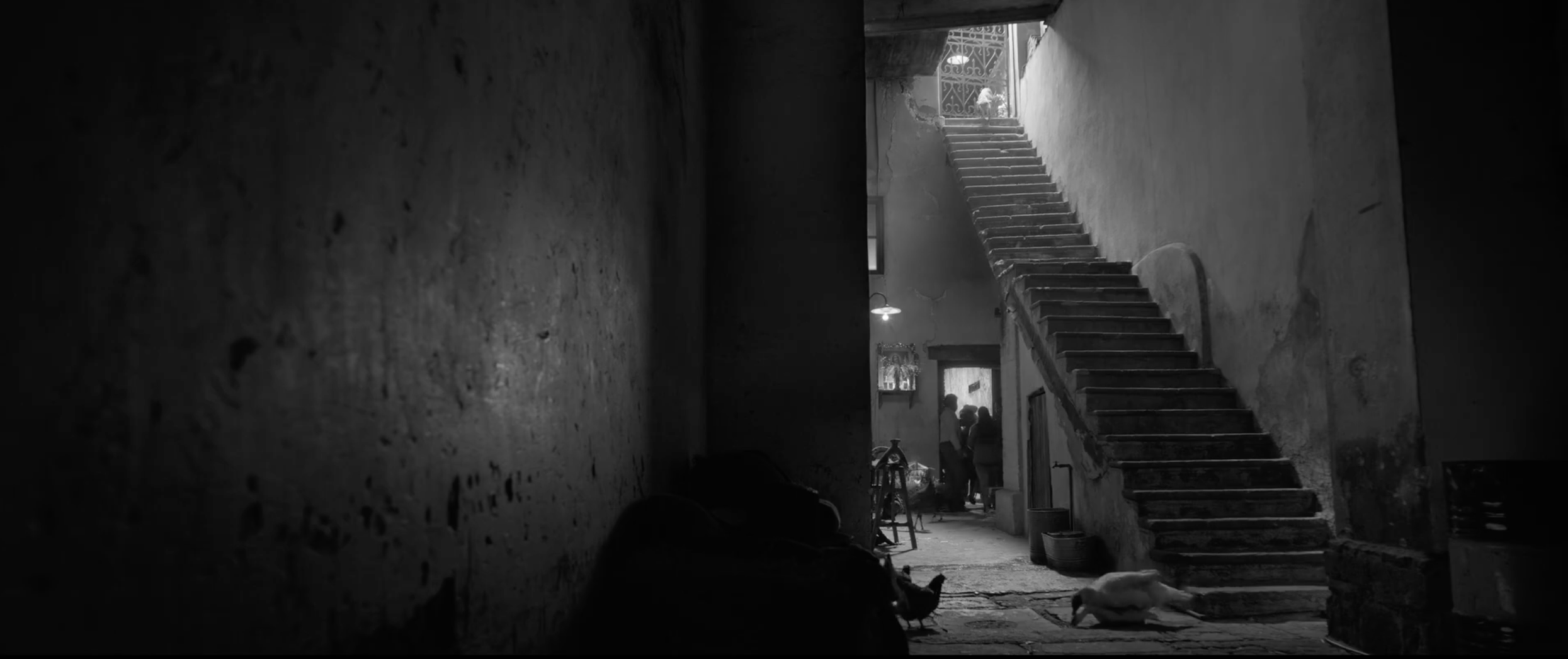
    A lot of the indoor and nighttime scenes use low-key lighting. Some rooms are dark and only have light coming from lamps, windows, or other natural-looking sources. Because the movie is in black and white, the difference between light and shadow is also very noticeable. This gives the house a quieter and more private feeling. It fits many of the emotional scenes because the characters often do not directly say what they are feeling. The outdoor scenes usually feel brighter and more open, which creates a strong contrast with the darker scenes inside the house.
    Timecode
    00:20:39-00:21:23
    Film Still
    Dark interior staircase lit by a small practical lamp
    Film Clip
    Costume
    Costume
    Cleo's work clothes
    Explanation
    Cleo usually wears simple clothes like blouses, skirts, sweaters, and aprons. Her clothes are practical because she is working most of the time, and we see similar outfits repeated throughout the film. The family members usually have more variety in what they wear, especially when they go out or attend social events. This quietly shows the class difference between Cleo and the people she works for. The costumes are not very dramatic, but that makes the difference feel more realistic because it is shown as part of their normal everyday life instead of being directly explained.
    Timecode
    00:09:31-00:10:39
    Film Still
    Cleo wearing her work apron while resting with a child
    Film Clip
    Hair and Makeup
    Example
    Cleo's tied-back hair and natural makeup
    Explanation
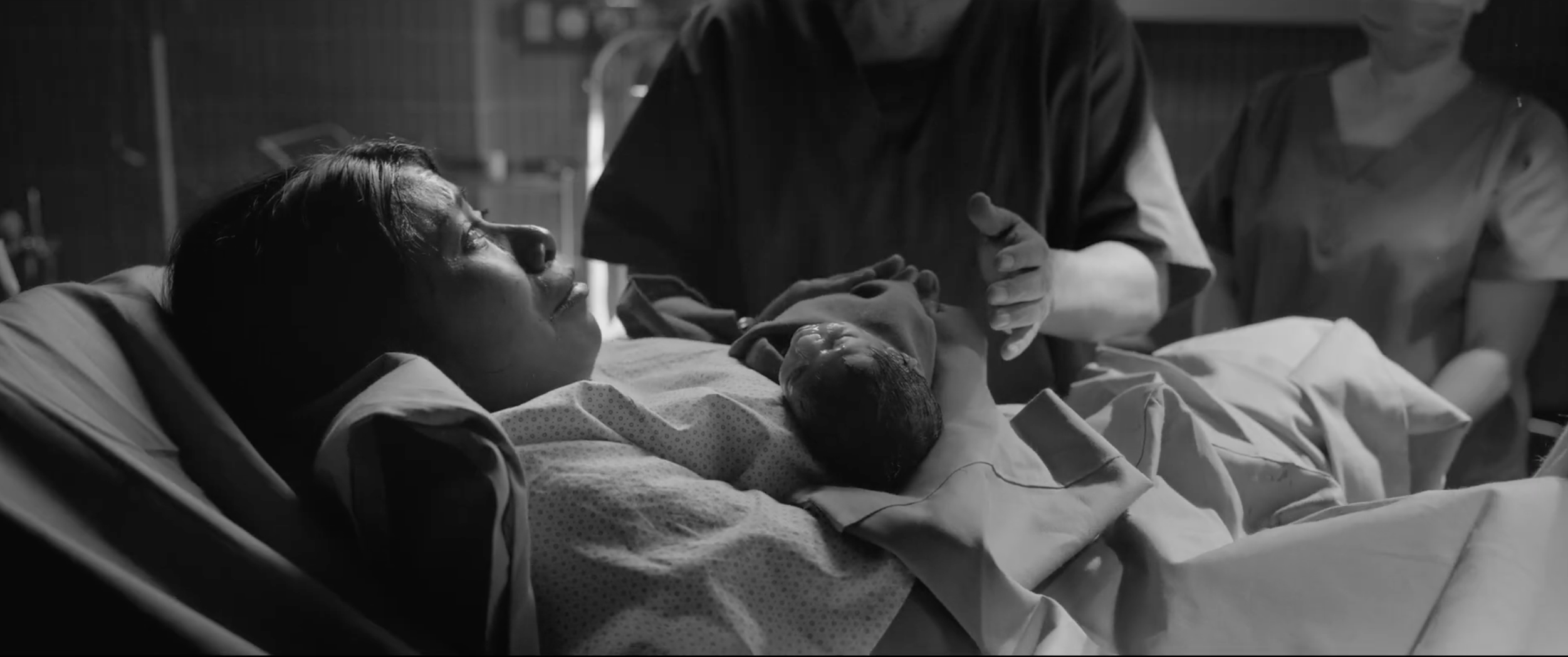
    The hair and makeup in Roma are very natural. Cleo usually has her hair tied back or braided and does not wear noticeable makeup. This fits her character because she is usually busy working and taking care of the children. Her appearance stays simple even when the family goes to different places, which makes her role in the household easy to notice. Sofia also starts to look more tired and less put together as her marriage gets worse. These small changes make the characters feel more like real people instead of actors who have been heavily styled.
    Timecode
    01:26:47-01:27:14
    Film Still
    Cleo with natural makeup and dark hair in the hospital
    Film Clip
    Figure Behavior
    Example
    Cleo's quiet routine and beach rescue
    Explanation
    Cleo is usually very quiet and controlled. She is almost always moving around the house, cleaning, carrying things, waking up the children, or helping someone. Even though she is around the family all the time, she often stays in the background when they are talking, and her body language is usually calm and reserved. This changes during the beach scene. She runs into the ocean to save the children, and afterward the whole family surrounds and hugs her. For one of the first times in the movie, Cleo stops holding everything in and says what she really feels about losing her baby. Her emotions become much more visible than they were earlier in the film.
    Timecode
    02:02:43-02:04:38
    Film Still
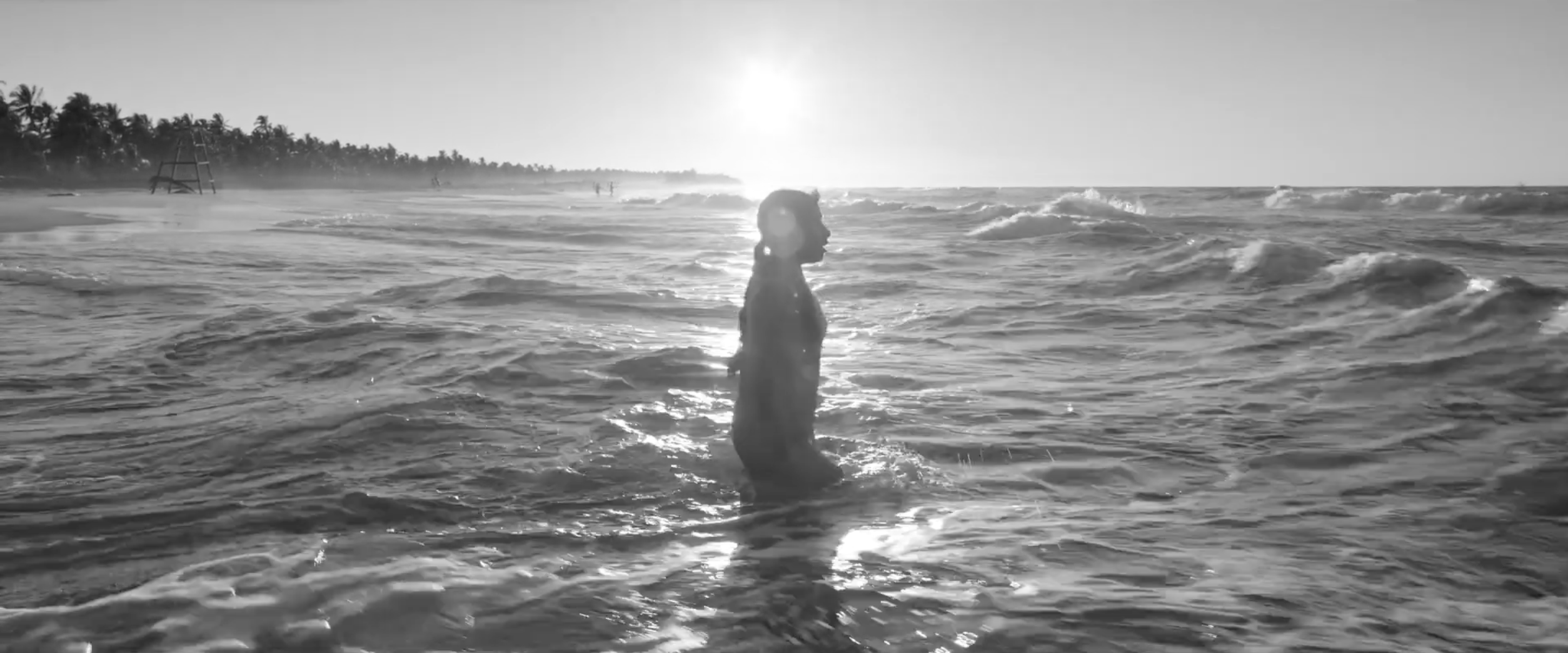
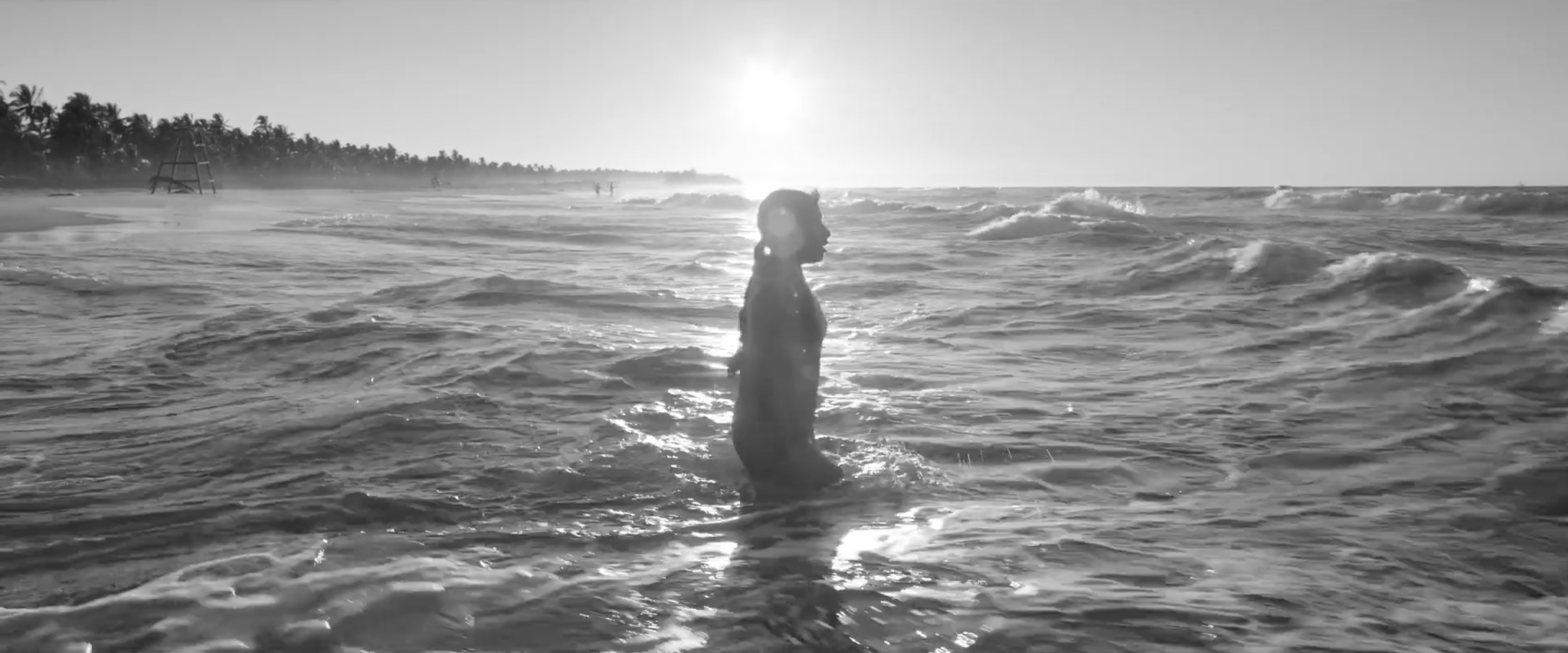
    Cleo standing in the ocean during the beach rescue
    Film Clip
    Representative Clip
    Explanation
    This clip happens right after Cleo saves the children from the ocean. The family gathers around her on the beach and hugs her while the waves continue behind them. The open beach, wet clothes, natural light, and the way everyone stands close together make the scene feel very different from many of the earlier scenes in the house. Cleo then admits that she did not want her baby to be born, and the family keeps holding her instead of pulling away. I chose this scene because it brings together the setting, costume, lighting, and character behavior in one moment. It is also one of the few scenes where Cleo openly shows what she has been feeling for most of the movie.
    Timecode
    02:02:43-02:04:39
    Film Still
    Cleo standing in the ocean during the beach rescue
    Film Clip

    This is the art of photography and visual storytelling in a motion picture or television show. Cinematography comprises all on-screen visual elements, including lighting, framing, composition, camera motion, camera angles, film selection, lens choices, depth of field, zoom, focus, color, exposure, and filtration. Cinematography sets and supports the overall look and mood of a film’s visual narrative. Each visual element that appears on screen, a.k.a. the mise-en-scène of a film, can serve and enhance the story—so it is the cinematographer’s responsibility to ensure that every element is cohesive and support the story. Filmmakers often choose to spend the majority of their budget on high-quality cinematography to guarantee that the film will look incredible on the big screen.

    Point of View
    Quality
    Framing
    Scale
    Movement

    Editing is the process of putting a film together–the selection and arrangement of shots and scenes. Editing can condense space and time, emphasize separate elements and bring them together, and organize material in such a way that patterns of meaning become apparent. In addition, editing can determine how a film is perceived: for instance, quick, rapid cuts can create a feeling of tension, while a long take can create a more dramatic effect. The first photoplays generally had no cutting, owing to the fact that they were single-reel films; once filming began, you could not stop until the film ran out. (https://filmglossary.ccnmtl.columbia.edu/term/editing/)

    Coherence, Continuity, and Rhythym
    Editing Style
    Transitions
    Match
    Expansion and Compression of Time
    Editing General Comments

    Sound is an integral part in a film. It refers to everything that the audience hears including sound effects, words and music. Sound is used in films for various purposes, including: providing the information to the viewer about the location of the scene, heightening the mood, telling the audience about the characters and advancing the plot. Every person who watches a film realizes that the choice of voices, soundtrack and music present in a film affect the way that the viewer perceives a particular film. As a result, the sound is an important and integral element of the film, one that determines the way that the viewer experiences and understands a film as a visual experience.

    Sound Type

    Narrative analysis is an examination of the story elements, including narrative structure, character, and plot. A narrative can be considered to be the chain of events in a cause-effect relationship occurring in time and space. In order to analyze the narrative of a film, we need to first make the distinction between the plot of the film and the story of the film. This is sometimes referred to as the discourse and story of a film. Narrative may also be called the story thought story mainly refers to the events that describe the narrative.

    Plot Comments
    Story Comments
    Narrator Type
    Narrative Structure

    Film genres are various forms or identifiable types, categories, classifications or groups of films. (Genre comes from the French word meaning "kind," "category," or "type"). These provide a convenient way for scriptwriters and film-makers to produce, cast and structure their narratives within a manageable, well-defined framework. Genres also offer the studios an easily 'marketable' product, and give audiences satisfying, expected and predictable choices. Genres refers to recurring, repeating and similar, familiar or instantly-recognizable patterns, styles, themes, syntax, templates, paradigms, motifs, rules or generic conventions.

    Category