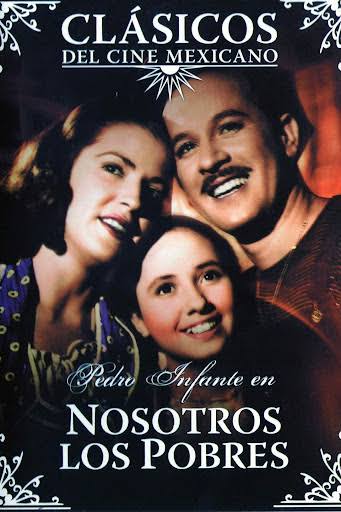
Nosotros los Pobres

    Movie Poster
    Release year
    1948
    Director
    Ismael Rodriguez
    Biography of director(s)
    Ismael Rodríguez was a Mexican film director, producer, and screenwriter who became one of the important filmmakers of the Golden Age of Mexican Cinema. He was born in Mexico City and moved with his family to Los Angeles as a child, where he studied photography and sound. He began directing films in 1942 with ¡Qué lindo es Michoacán! and later founded the production company Películas Rodríguez with his brothers. His films often focused on everyday Mexican people, family, poverty, and working-class life. He directed nearly 100 films throughout his career and received major honors, including an Ariel de Oro for his contributions to Mexican cinema.
    Country
    Mexico
    Original synopsis of the film

    Nosotros los pobres (1948) follows Pepe “El Toro,” a poor carpenter who lives with his daughter Chachita and his mother in a working-class neighborhood in Mexico City. Even though Pepe does not have much money, he works hard to take care of his family and tries to give Chachita a good life. His life becomes much harder when he is wrongly accused of murdering a wealthy woman and is sent to prison. While Pepe is away, his family struggles with poverty, death, and losing their home. Throughout the film, Pepe and the people around him show how important family, friendship, and community are when facing difficult situations. The movie focuses on the struggles of poor and working-class people while also showing their resilience and ability to support each other.
    Film Awards
    N/A
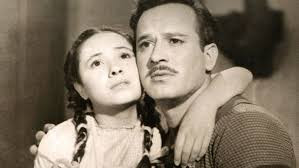
    Film still
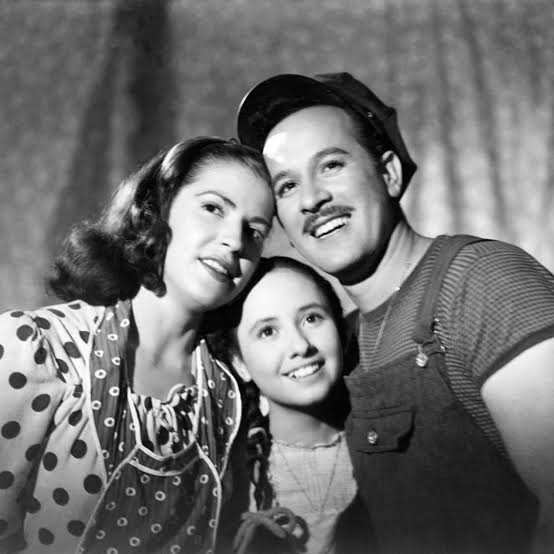
    Chachita and Pepe

    Describes the setting of a scene in a play or a film. It refers to everything placed on the stage or in front of the camera—including people. In other words, mise en scène is a catch-all for everything that contributes to the visual presentation and overall “look” of a production. When translated from French, it means “placing on stage.”
    Setting
    Setting
    Explanation
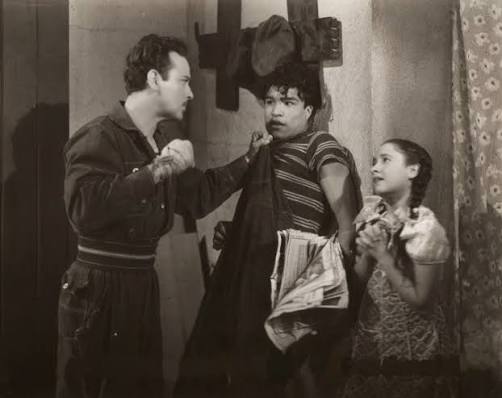
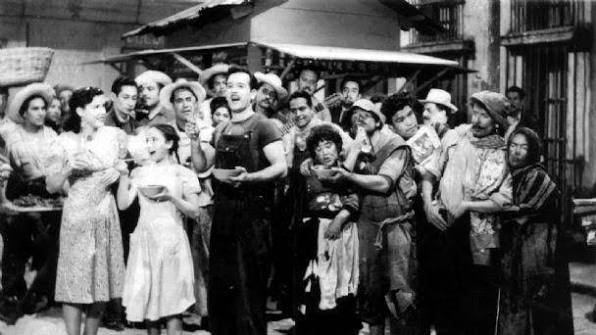
    The setting of Nosotros los pobres is mostly realistic and represents the everyday lives of working-class people in Mexico City. Much of the film takes place in Pepe’s small and crowded home, which makes it clear that his family does not have much money. The home is filled with simple furniture and everyday objects, making the setting feel lived-in rather than glamorous. The carpenter’s workshop is also important because it shows Pepe’s hard work and his role as the provider for his family. Another important part of the setting is the neighborhood, where the close proximity of the homes allows the characters to interact and support each other. Windows and doorways are also used frequently, sometimes showing characters looking into or out of spaces and emphasizing how connected the neighbors are. Overall, the realistic settings help us understand the characters’ economic struggles while also showing the strong sense of community among the people around Pepe.
    Film Still
    Setting
    Props
    Prop
    Money
    Explanation
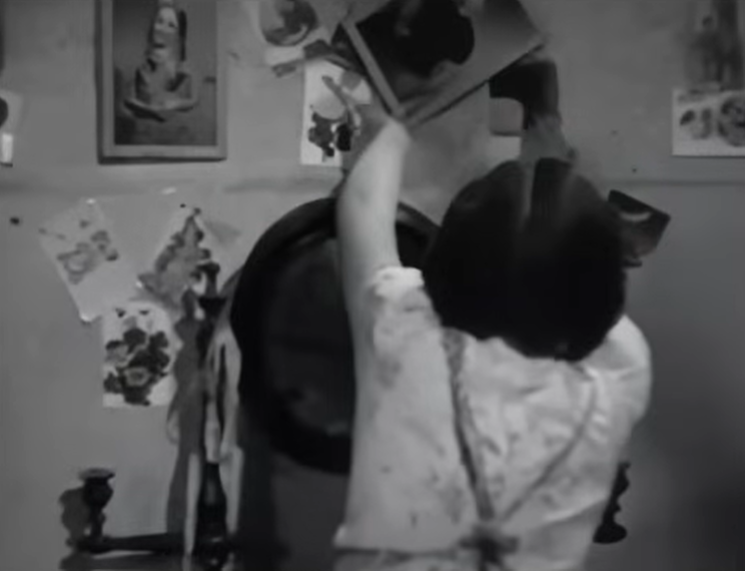
    The money hidden behind the picture frame becomes an important prop when it is stolen. Since the money is so valuable to the family, its theft creates conflict and adds to the characters’ financial struggles. It also shows how vulnerable they are because losing that money has a major effect on their lives and relationships.
    Film Still
    Money hidden
    Lighting
    Lighting
    Explanation
    The lighting in Nosotros los pobres is mostly realistic and uses a combination of natural-looking and studio lighting. Many scenes inside Pepe’s home have softer, darker lighting, which fits the small and modest spaces where the family lives. Some areas are left in shadow, especially during more serious or emotional moments, creating a stronger sense of sadness and struggle. In contrast, outdoor scenes are generally brighter and make the neighborhood feel more open and active. The differences in lighting help create the mood of each scene and make the difficult moments in Pepe’s life feel more emotional.
    Film Still
    Neutral Lighthing
    Costume
    Costume
    Costumes
    Explanation
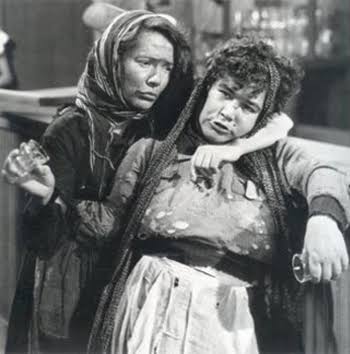
    The costumes in Nosotros los pobres are mostly realistic and reflect the characters’ social and economic status. Pepe and the other working-class characters wear simple, everyday clothing that fits their jobs and lifestyle. In contrast, characters with more money or social authority wear more formal clothing, which helps the audience recognize the differences between social classes. Chachita’s clothing also emphasizes her age and innocence. Her braids, simple dresses, and feminine clothing are gender coded because they reflect how young girls were traditionally expected to look and behave. This makes her appear innocent and vulnerable, which creates more sympathy from the audience. Overall, the costumes help show class differences while also giving the audience a better understanding of each character’s age, gender, and place in society.
    Film Still
    Costumes
    Hair and Makeup
    Example
    Hair and Makeup
    Explanation
    The make-up and hairstyles in Nosotros los pobres are also mostly natural and realistic, which fits the everyday setting of the film. Most characters have simple hairstyles and minimal make-up, making them look like ordinary people rather than highly stylized movie characters. Chachita’s braids especially emphasize her youth and innocence while also reinforcing the traditional feminine appearance of a young girl. The simple hair and make-up help the characters feel more relatable and make the story’s portrayal of working-class life feel more realistic.
    Film Still
    Hair and Makeup
    Figure Behavior
    Example
    Acting & Choreography
    Explanation
    The acting in Nosotros los pobres is very expressive, especially through facial expressions, gestures, and voice. Pepe often appears serious and emotional when he is worried about his family, which makes the audience sympathize with him. Chachita’s expressions and reactions also emphasize her innocence and the difficult situations happening around her. The characters frequently gather together in groups, especially in the neighborhood, which draws attention to the importance of community. During emotional or dramatic scenes, the characters’ movements and expressions help guide the viewer toward the people experiencing the most conflict.
    Representative Clip
    Explanation
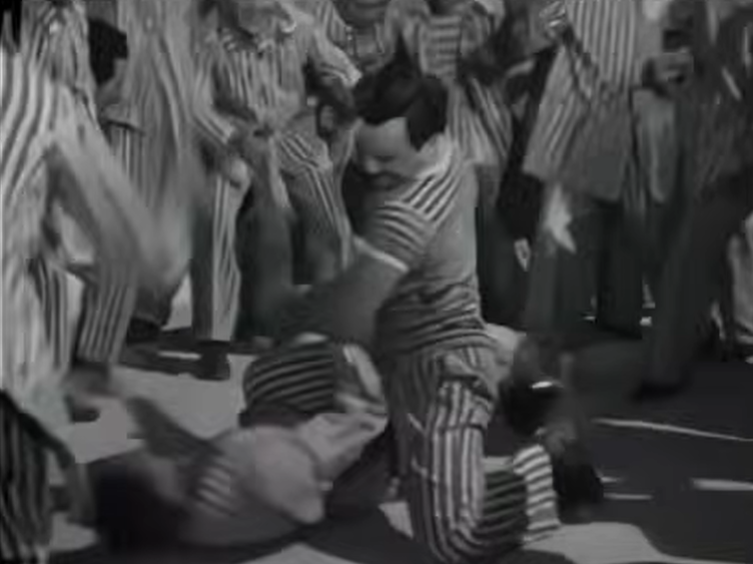
    While Pepe is in jail, he fights with the other prisoner to convince him to admit that he is the real murderer. The scene shows Pepe’s strong sense of loyalty and his willingness to put himself in danger for the people he cares about. It also connects to the film’s larger focus on sacrifice, family, and the difficult situations that working-class characters face.
    Film Still
    Pepe Fighting

    This is the art of photography and visual storytelling in a motion picture or television show. Cinematography comprises all on-screen visual elements, including lighting, framing, composition, camera motion, camera angles, film selection, lens choices, depth of field, zoom, focus, color, exposure, and filtration. Cinematography sets and supports the overall look and mood of a film’s visual narrative. Each visual element that appears on screen, a.k.a. the mise-en-scène of a film, can serve and enhance the story—so it is the cinematographer’s responsibility to ensure that every element is cohesive and support the story. Filmmakers often choose to spend the majority of their budget on high-quality cinematography to guarantee that the film will look incredible on the big screen.

    Point of View
    Quality
    Framing
    Scale
    Movement

    Editing is the process of putting a film together–the selection and arrangement of shots and scenes. Editing can condense space and time, emphasize separate elements and bring them together, and organize material in such a way that patterns of meaning become apparent. In addition, editing can determine how a film is perceived: for instance, quick, rapid cuts can create a feeling of tension, while a long take can create a more dramatic effect. The first photoplays generally had no cutting, owing to the fact that they were single-reel films; once filming began, you could not stop until the film ran out. (https://filmglossary.ccnmtl.columbia.edu/term/editing/)

    Coherence, Continuity, and Rhythym
    Editing Style
    Transitions
    Match
    Expansion and Compression of Time
    Editing General Comments

    Sound is an integral part in a film. It refers to everything that the audience hears including sound effects, words and music. Sound is used in films for various purposes, including: providing the information to the viewer about the location of the scene, heightening the mood, telling the audience about the characters and advancing the plot. Every person who watches a film realizes that the choice of voices, soundtrack and music present in a film affect the way that the viewer perceives a particular film. As a result, the sound is an important and integral element of the film, one that determines the way that the viewer experiences and understands a film as a visual experience.

    Sound Type

    Narrative analysis is an examination of the story elements, including narrative structure, character, and plot. A narrative can be considered to be the chain of events in a cause-effect relationship occurring in time and space. In order to analyze the narrative of a film, we need to first make the distinction between the plot of the film and the story of the film. This is sometimes referred to as the discourse and story of a film. Narrative may also be called the story thought story mainly refers to the events that describe the narrative.

    Plot Comments
    Story Comments
    Narrator Type
    Narrative Structure

    Film genres are various forms or identifiable types, categories, classifications or groups of films. (Genre comes from the French word meaning "kind," "category," or "type"). These provide a convenient way for scriptwriters and film-makers to produce, cast and structure their narratives within a manageable, well-defined framework. Genres also offer the studios an easily 'marketable' product, and give audiences satisfying, expected and predictable choices. Genres refers to recurring, repeating and similar, familiar or instantly-recognizable patterns, styles, themes, syntax, templates, paradigms, motifs, rules or generic conventions.

    Category