
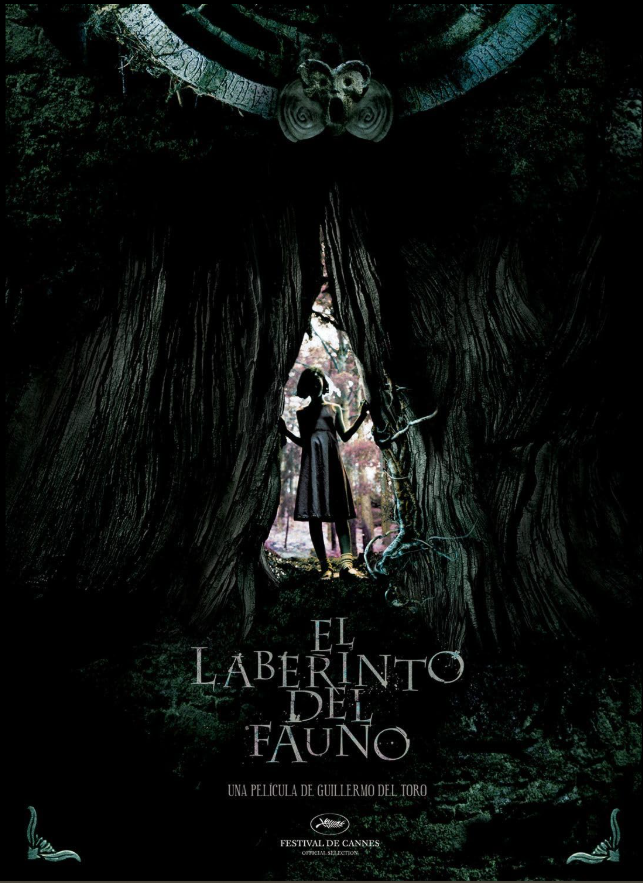
Del Toro's films are well known for their unique blend of horror and whimsy. His work transforms the grotesque into something beautiful. Del Toro is especially strong in visuals, leveraging color to advance his films' storylines and rejecting CGI in an age of modern filmmaking in favor of more creatively challenging techniques in order to bring his creepy worlds and fantastical creatures to life.
El Laberinto del Fauno follows Ofelia, a young girl with a vivid imagination and a love of reading. We meet Ofelia as she moves from the city to the Spanish countryside with her pregnant and ill mother in order to live with her new stepfather, a Captain in Franco's fascist military. In the woods beyond the countryhouse, she encounters an eerie underground world of magic, often referred to as the "Underworld," which serves as a metaphor for childhood imagination. There, she meets a faun who informs her that she used to be the world's long-lost princess. He promises her escape contingent on her successful completion of a set of challenges in order to prove her legitimacy to him.
As Ofelia embarks on the faun's tasks, her home life begins to unravel. During this time, the Captain's self-obsession and disregard for her mother's health or autonomy becomes increasingly obvious. At home, he is controlling in his appearance, in his family's behavior, even in his time. When he leaves in the day, he ruthlessly hunts a group of insurgents living in the woods. In a similar manner to how the insurgents live secretly in the Captain's home, Ofelia takes on a subversive position as well. She soon finds herself in a constant battle to defend her curiosity as her mother tries to push her to conform to the Captain's suffocating expectations. Eventually, her mother's condition begins to deteriorate, and despite the assistance of the faun, she dies after rejecting magical intervention and experiencing a traumatic childbirth.
In light of the collapse of her childhood, Ofelia finds comfort in escaping to the Underworld, underscoring the impact of authoritarian regimes on children. However, despite Ofelia's attempts to escape the nightmare of her life, her mother's condition begins to deteriorate. Regardless of the assistance of the faun, Ofelia's mother dies after rejecting magical intervention and experiencing a traumatic childbirth. At the same time, the Captain uncovers the insurgents in his own home, including Ofelia's only remaining confidant, Mercedes.
In an act of faith in the faun and a simultaneous final attempt to escape the sudden implosion of her reality, Ofelia takes her baby brother to the labyrinth. There, she defies the faun's order to spill her brother's blood. Consequentially, the Captain finds her and kills her. In her death and because of her selflessness, she is accepted back as the princess of the Underworld, ultimately leaving the viewers with the haunting sentiment that authoritarianism offers no real escape for children, who are helpless to its workings. Such children find hope in the only tool a young child is afforded: in their imagination.
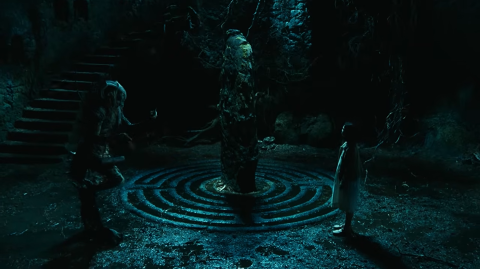
Describes the setting of a scene in a play or a film. It refers to everything placed on the stage or in front of the camera—including people. In other words, mise en scène is a catch-all for everything that contributes to the visual presentation and overall “look” of a production. When translated from French, it means “placing on stage.”
Additionally, Ofelia accessed the Pale Man's dungeon through the walls of the country home. In conjunction with the interpretation of the Pale Man as a symbol for fascism, this detail states clearly that fascism is imbued within the walls of her home. Every evil, every fracture in her childhood that she experiences from this point on can be interpreted as a reminder of the suffering of children under authoritarian regimes. With this in mind, Ofelia isn't only a child subverting a cruel stepfather, she is a child subverting the very forces of fascism with only her imagination.
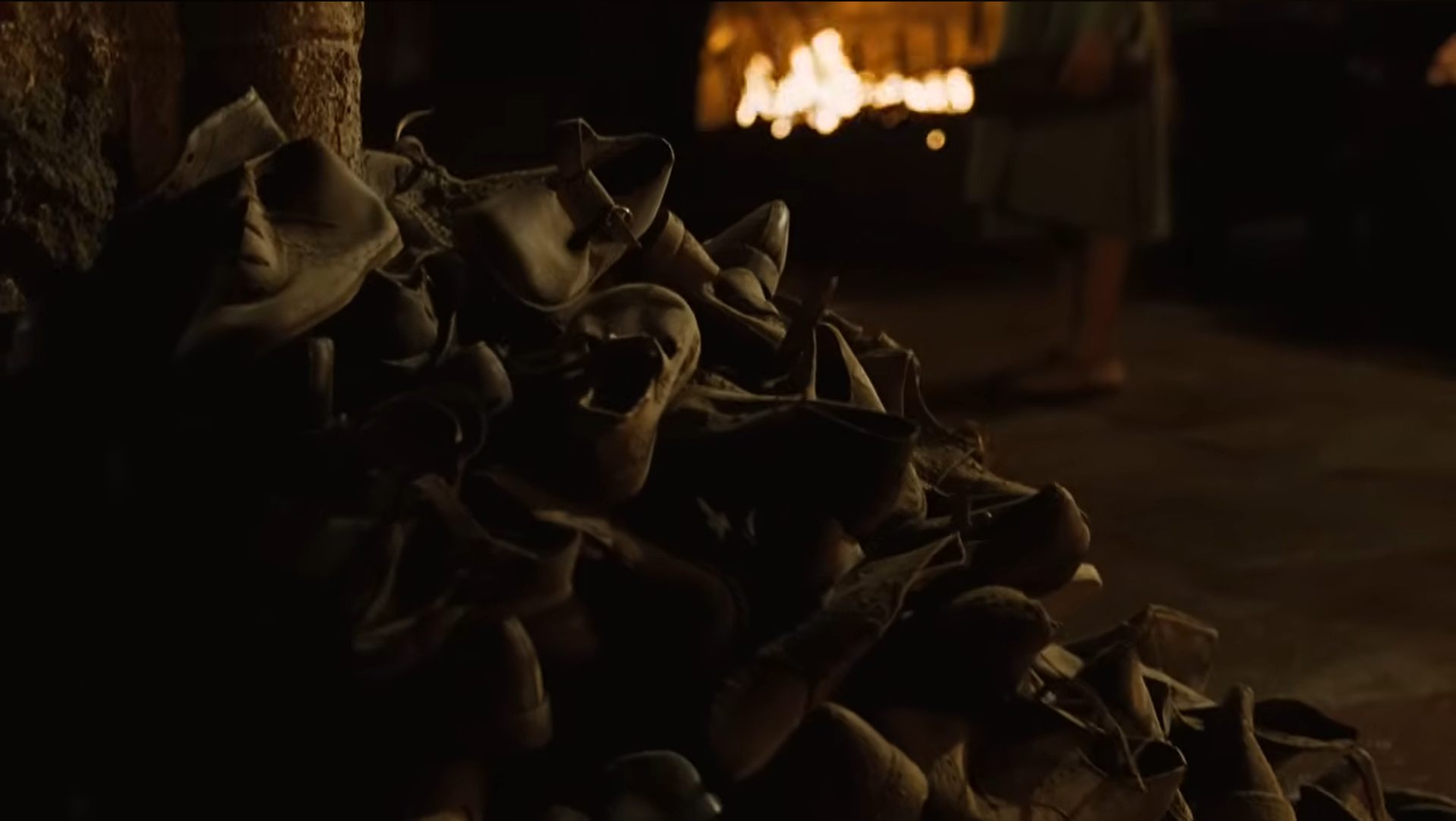
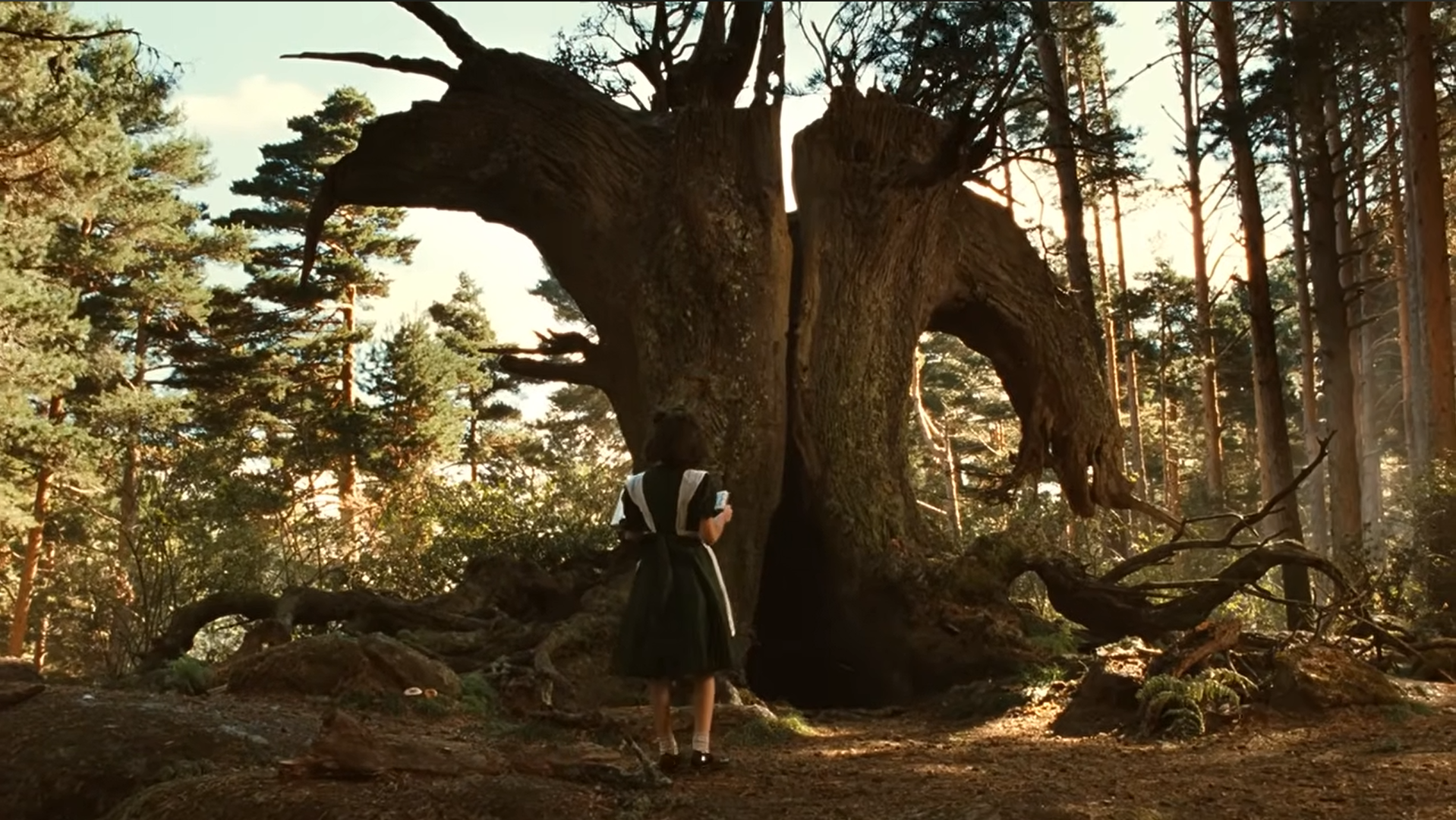
As Ofelia spends more time in the countryside, the colors of the real world begin to adopt those of the underworld. The attached scene is the first still in which this switch is fully captured. As the Captain kills innocent men and waits for his men in the rain, clutching his watch, he is surrounded mostly in the frigid blue of the underworld, hidden in shadow and illuminated only by the moonlight. At the same time, the underworld begins to glow. This transition underscores Ofelia's escape into the underworld, suggesting that, despite its apparent danger, it has become a refuge for her. In using her imagination to find comfort in the grotesque, Ofelia reflects the message that children suffering under authoritarian regimes are desperate for comfort, and are forced to find it in unconventional settings.
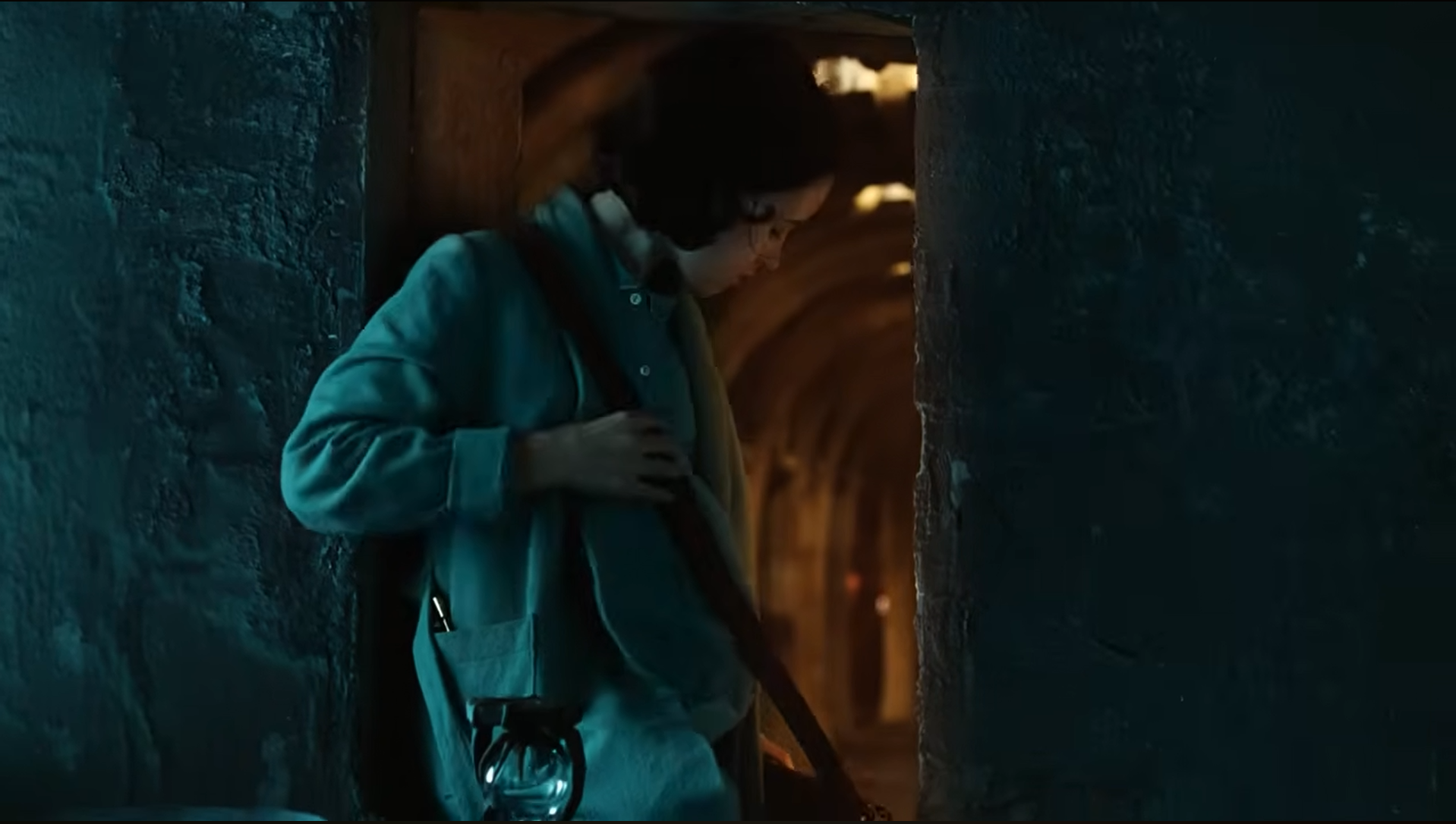
This moment serves to develop the Captain's villainous character and contrast it with the good nature of the women who subvert him. He shows no concern for the passing of his wife, focused solely on what she can provide him, in this case, a son. This scene illuminates the Captain's selfishness and disregard for human life.
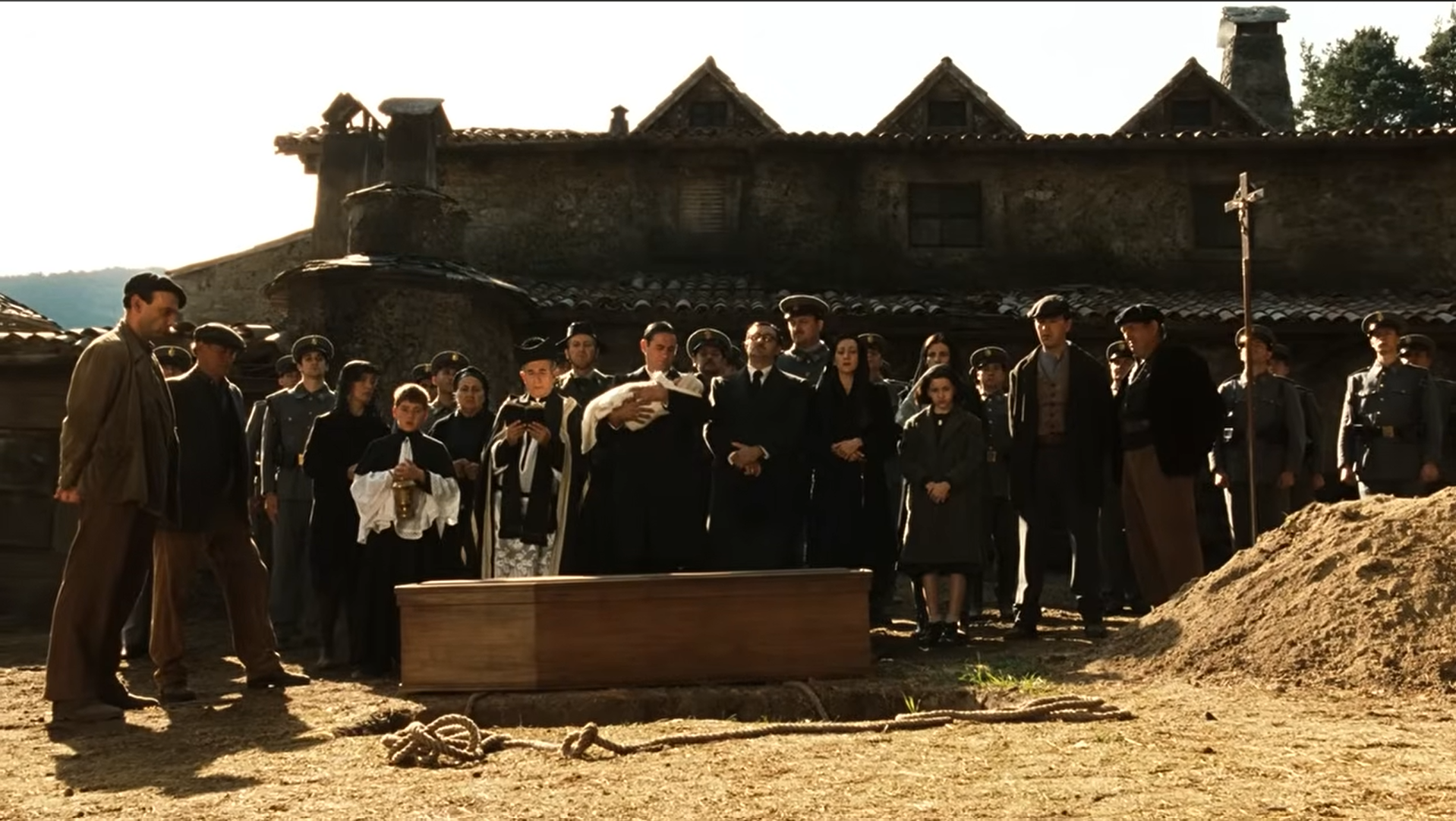
This is the art of photography and visual storytelling in a motion picture or television show. Cinematography comprises all on-screen visual elements, including lighting, framing, composition, camera motion, camera angles, film selection, lens choices, depth of field, zoom, focus, color, exposure, and filtration. Cinematography sets and supports the overall look and mood of a film’s visual narrative. Each visual element that appears on screen, a.k.a. the mise-en-scène of a film, can serve and enhance the story—so it is the cinematographer’s responsibility to ensure that every element is cohesive and support the story. Filmmakers often choose to spend the majority of their budget on high-quality cinematography to guarantee that the film will look incredible on the big screen.
Editing is the process of putting a film together–the selection and arrangement of shots and scenes. Editing can condense space and time, emphasize separate elements and bring them together, and organize material in such a way that patterns of meaning become apparent. In addition, editing can determine how a film is perceived: for instance, quick, rapid cuts can create a feeling of tension, while a long take can create a more dramatic effect. The first photoplays generally had no cutting, owing to the fact that they were single-reel films; once filming began, you could not stop until the film ran out. (https://filmglossary.ccnmtl.columbia.edu/term/editing/)
Sound is an integral part in a film. It refers to everything that the audience hears including sound effects, words and music. Sound is used in films for various purposes, including: providing the information to the viewer about the location of the scene, heightening the mood, telling the audience about the characters and advancing the plot. Every person who watches a film realizes that the choice of voices, soundtrack and music present in a film affect the way that the viewer perceives a particular film. As a result, the sound is an important and integral element of the film, one that determines the way that the viewer experiences and understands a film as a visual experience.
Narrative analysis is an examination of the story elements, including narrative structure, character, and plot. A narrative can be considered to be the chain of events in a cause-effect relationship occurring in time and space. In order to analyze the narrative of a film, we need to first make the distinction between the plot of the film and the story of the film. This is sometimes referred to as the discourse and story of a film. Narrative may also be called the story thought story mainly refers to the events that describe the narrative.
Film genres are various forms or identifiable types, categories, classifications or groups of films. (Genre comes from the French word meaning "kind," "category," or "type"). These provide a convenient way for scriptwriters and film-makers to produce, cast and structure their narratives within a manageable, well-defined framework. Genres also offer the studios an easily 'marketable' product, and give audiences satisfying, expected and predictable choices. Genres refers to recurring, repeating and similar, familiar or instantly-recognizable patterns, styles, themes, syntax, templates, paradigms, motifs, rules or generic conventions.