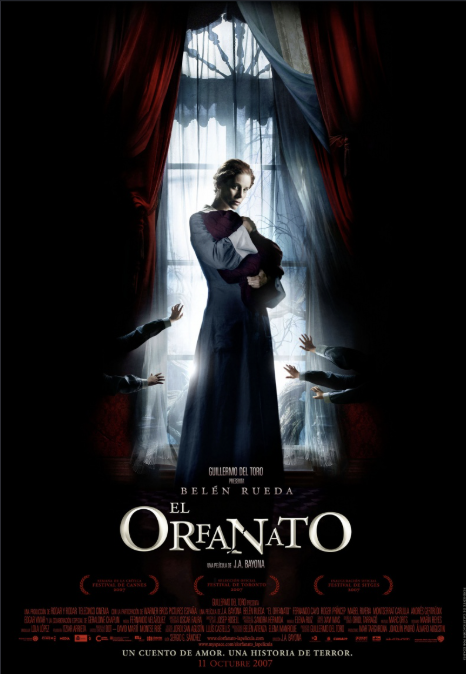
El Orfanato

    Movie Poster
    Release year
    2007
    Director
    J. A. Bayona
    Biography of director(s)
    Juan Antonio Garcia Bayona was born on May 9th in 1975 in Barcelona Spain. He was inspired to be a film director after watching his first movie "Superman." He completed his studies in "Escola Superior de Cinema i Audiovisuals de Catalunya" and when he was 19 years old, he met Guillermo del Toro at festival. His career began after graduating by directing music videos and then 2004 he met with Sergio G. Sanchéz who offered him the script of The Orphanage, which he ended up co-producing it with Guillermo Del Toro. Later on, Bayona was awarded the Goya Award for Best New Director in 2008. In 2010s he began filming "The Impossible" which grossed $8.6 million dollars, breaking the record for the best opening in the history of the Spanish box office.
    Country
    Spain and México
    Original synopsis of the film

    "The Orphanage" is a movie released in 2007, where Laura and her husband Carlos move into Laura's childhood home with their adopted son Simón. Laura has plans for this new home, to make it into the home of disabled children, but after an argument with Simón, he goes missing. 
    Film still
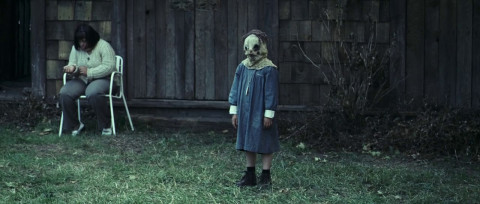
    The Orphanage Film Still

    Describes the setting of a scene in a play or a film. It refers to everything placed on the stage or in front of the camera—including people. In other words, mise en scène is a catch-all for everything that contributes to the visual presentation and overall “look” of a production. When translated from French, it means “placing on stage.”
    Setting
    Setting
    Explanation
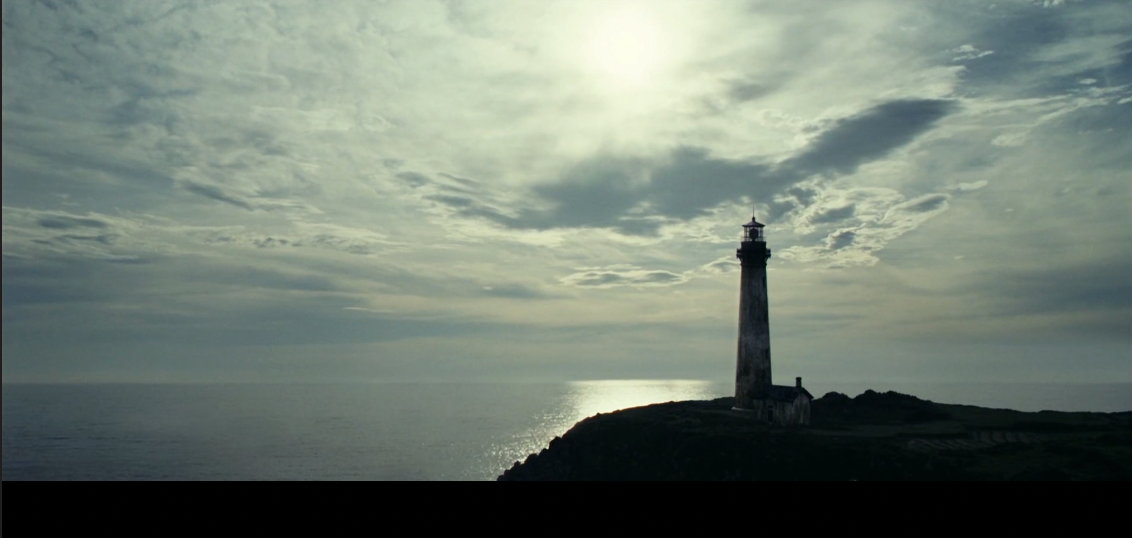
    The movie "El Orfanato" used a combination of both studios and locations. For example, they used the "Palacio de Partarríu" in Llanes, which offered the perfect exterior atmosphere for the movie. They also recorded some scenes in the "Playa de Andrín." I believe that the movie directors decided to use a combination of locations and studios because the palace mentioned is a protected historical building and recording every scene in here could of been risky for the infrastructure. My favorite location in the movie is the beach scenes where the movie director is able to break the idea that scary scenes only happen in dark and scary places. The first scene at the beach shows Laura (the mother) and Simon (the son) walking around, and the son explaining that he made a friend called Tomas, but then a wave erases the kid's footsteps making the scene scary and mysterious. The second scene at the beach is Laura looking for his now missing son. Here, the waves also take an act. In this scene the waves are strong and violent, knowing this Laura blindly decides to go into the waves looking for her son inside a cave. Then, her husband arrives after her to save her from these waves because their son is not in there. Knowing about these two scenes, the location of the beach is a genius idea by the film director. I say this because the beach location becomes a secondary character where hope of finding Laura's son is devoured by the monster of the waves. The duality of the location is interesting, the only beautiful and open space of the movie, and instead of conveying freedom and tranquility, it conveys a profound idea of helplessness. Moreover, the ocean itself erases the child's footsteps, it hides and the entrance to the cave. The water functions as a symbol of "el olvido" where Laura's desperation of finding her son reflects the useless fight against things we can't control just like nature and her son's destiny. My biggest question here was, "Why use such a beautiful place to convey horrific scenes?" I think the answer to this is pure film techniques; breaking with the audience's sense of security and to portray that the movie is not only a scary movie but also a movie about a mother losing a son, where the beautiful beach echoes the beautiful life they could of had together in this new house. The contrast of a scary movie with a beautiful location makes the movie more scary.
    Film Still
    A landscape shot of the beach in "El Orfanato"
    Props
    Lighting
    Costume
    Hair and Makeup
    Figure Behavior
    Representative Clip

    This is the art of photography and visual storytelling in a motion picture or television show. Cinematography comprises all on-screen visual elements, including lighting, framing, composition, camera motion, camera angles, film selection, lens choices, depth of field, zoom, focus, color, exposure, and filtration. Cinematography sets and supports the overall look and mood of a film’s visual narrative. Each visual element that appears on screen, a.k.a. the mise-en-scène of a film, can serve and enhance the story—so it is the cinematographer’s responsibility to ensure that every element is cohesive and support the story. Filmmakers often choose to spend the majority of their budget on high-quality cinematography to guarantee that the film will look incredible on the big screen.

    Point of View
    Quality
    Framing
    Scale
    Movement

    Editing is the process of putting a film together–the selection and arrangement of shots and scenes. Editing can condense space and time, emphasize separate elements and bring them together, and organize material in such a way that patterns of meaning become apparent. In addition, editing can determine how a film is perceived: for instance, quick, rapid cuts can create a feeling of tension, while a long take can create a more dramatic effect. The first photoplays generally had no cutting, owing to the fact that they were single-reel films; once filming began, you could not stop until the film ran out. (https://filmglossary.ccnmtl.columbia.edu/term/editing/)

    Coherence, Continuity, and Rhythym
    Editing Style
    Transitions
    Match
    Expansion and Compression of Time
    Editing General Comments

    Sound is an integral part in a film. It refers to everything that the audience hears including sound effects, words and music. Sound is used in films for various purposes, including: providing the information to the viewer about the location of the scene, heightening the mood, telling the audience about the characters and advancing the plot. Every person who watches a film realizes that the choice of voices, soundtrack and music present in a film affect the way that the viewer perceives a particular film. As a result, the sound is an important and integral element of the film, one that determines the way that the viewer experiences and understands a film as a visual experience.

    Sound Type

    Narrative analysis is an examination of the story elements, including narrative structure, character, and plot. A narrative can be considered to be the chain of events in a cause-effect relationship occurring in time and space. In order to analyze the narrative of a film, we need to first make the distinction between the plot of the film and the story of the film. This is sometimes referred to as the discourse and story of a film. Narrative may also be called the story thought story mainly refers to the events that describe the narrative.

    Plot Comments
    Story Comments
    Narrator Type
    Narrative Structure

    Film genres are various forms or identifiable types, categories, classifications or groups of films. (Genre comes from the French word meaning "kind," "category," or "type"). These provide a convenient way for scriptwriters and film-makers to produce, cast and structure their narratives within a manageable, well-defined framework. Genres also offer the studios an easily 'marketable' product, and give audiences satisfying, expected and predictable choices. Genres refers to recurring, repeating and similar, familiar or instantly-recognizable patterns, styles, themes, syntax, templates, paradigms, motifs, rules or generic conventions.

    Category