Nueve reinas

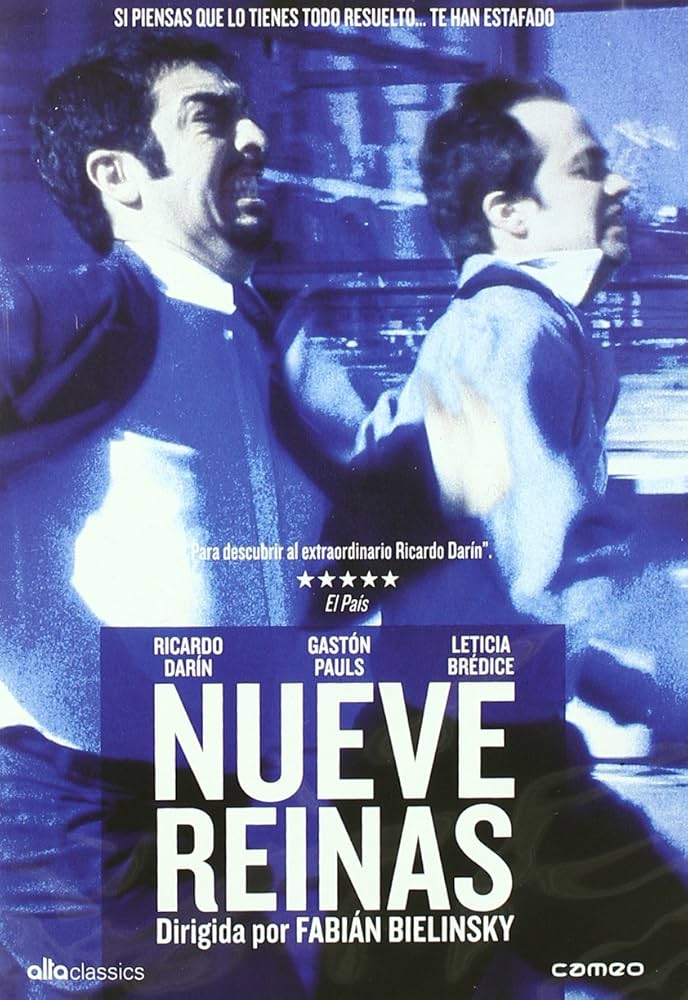
    Movie Poster
    Release year
    2000
    Director
    Fabián Bielinsky
    Biography of director(s)
    Fabián Bielinsky (February 3, 1959 – June 29, 2006) was an Argentine film director. He directed two feature-length films, Nueve reinas (2000) and El aura (2005), and one short film La espera (1983). Both feature films were highly critically acclaimed and successful in Argentina and abroad, with Nueve reinas winning seven Argentinean Film Critics Association awards and El aura winning six Silver Condors from the Argentinean Film Critics Association.
    Original synopsis of the film

    In Buenos Aires, Argentina, a young, inexperienced con artist named Juan is caught trying to swindle a convenience store clerk. Marcos, a more experienced con artist, saves Juan from being turned into the authorities and recruits Juan to be his partner. Juan reluctantly agrees in order to quickly obtain enough money to get his father out of jail, but is soon impressed with Marcos' expert con techniques. Juan and Marcos eventually get involved in a high-stakes con involving the sale of counterfeit stamps for $450,000.  

    Marcos' former partner, Sandler, has expertly forged the stamps known as the "Nine Queens" but has fallen sick and cannot sell them in time to Esteban Vidal Gandalfo, a rich Spanish businessman who will be deported for corruption charges the next morning. Marcos agrees to sell the stamps for Sandler, but only offers Sandler a measly 10% cut of the profits. Sandler is practically forced to agree, and Juan also insists on being a part of the deal for a share of $2,500. 

    Juan and Marcos successfully make a deal with Gandalfo, even though Gandalfo sees through many of Marcos' tactics. Juan skillfully negotiates an unbeatable price for the counterfeit stamps. Before the final sale occurs, two motorcyclists steal the briefcase containing the stamps and eventually dump the stamps in the ocean, ruining the stamps and the deal. Marcos and Juan decide to obtain the real "Nine Queens" from Sandler's sister, Berta, who sells them for $250,000. When the final sale is about to occur, Gandalfo insists on sleeping with Marcos' sister Valeria as part of the deal. Valeria agrees on the condition that Marcos tells his younger brother Federico that he swindled both Valeria and Federico from their father's inheritance. 

    Once Marcos has obtained the check of $450,000 from Valeria, he tries to trick Juan out of the deal but fails. Upon arriving to the bank, Marcos learns that the bank has failed due to fraud. Juan walks away dejectedly but it is revealed that Juan orchestrated the con upon Marcos to swindle him out of $200,000. Juan had actually been collaborating with Valeria, the bank official, Gandalfo, the motorcycle thieves, and Sandler all along. 

    Describes the setting of a scene in a play or a film. It refers to everything placed on the stage or in front of the camera—including people. In other words, mise en scène is a catch-all for everything that contributes to the visual presentation and overall “look” of a production. When translated from French, it means “placing on stage.”
    Setting
    Setting
    Explanation
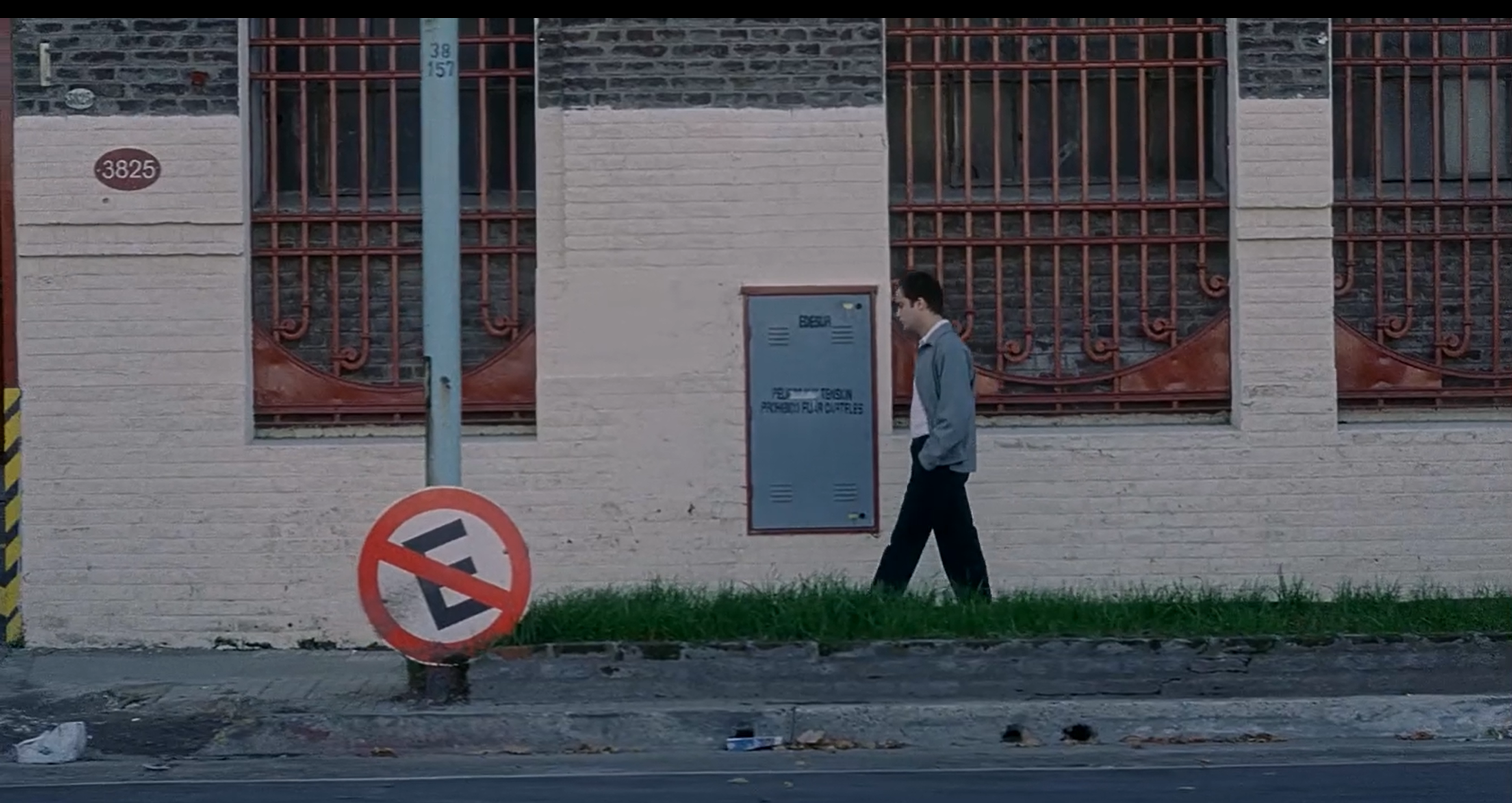
    Regarding how space is used in the film, this still is from the end of the film, when Juan and Marcos find out that the bank has failed and that they lost all their money. This is before it is revealed that Juan actually orchestrated the fake bank failure and conned Marcos of the $200,000. The still here seems to be closed form, as carefully places Juan as a small figure in the center of a bleak, empty, and dilapidated environment. The unkempt street, the half-painted brick wall, the barred windows, and the fallen street sign all point to the degradation of morality. It signifies how Juan’s attempt to make money through illicit means has only backfired with more evil, showing the futility of trying to use immoral means to profit off an immoral world. Juan is represented as a figure who is alone and dejected, forced to exist within the corruption and face the consequences if he becomes corrupt himself.
    Film Still
    Juan walking to a warehouse at the end of the film.
    Props
    Prop
    Toy Car
    Explanation
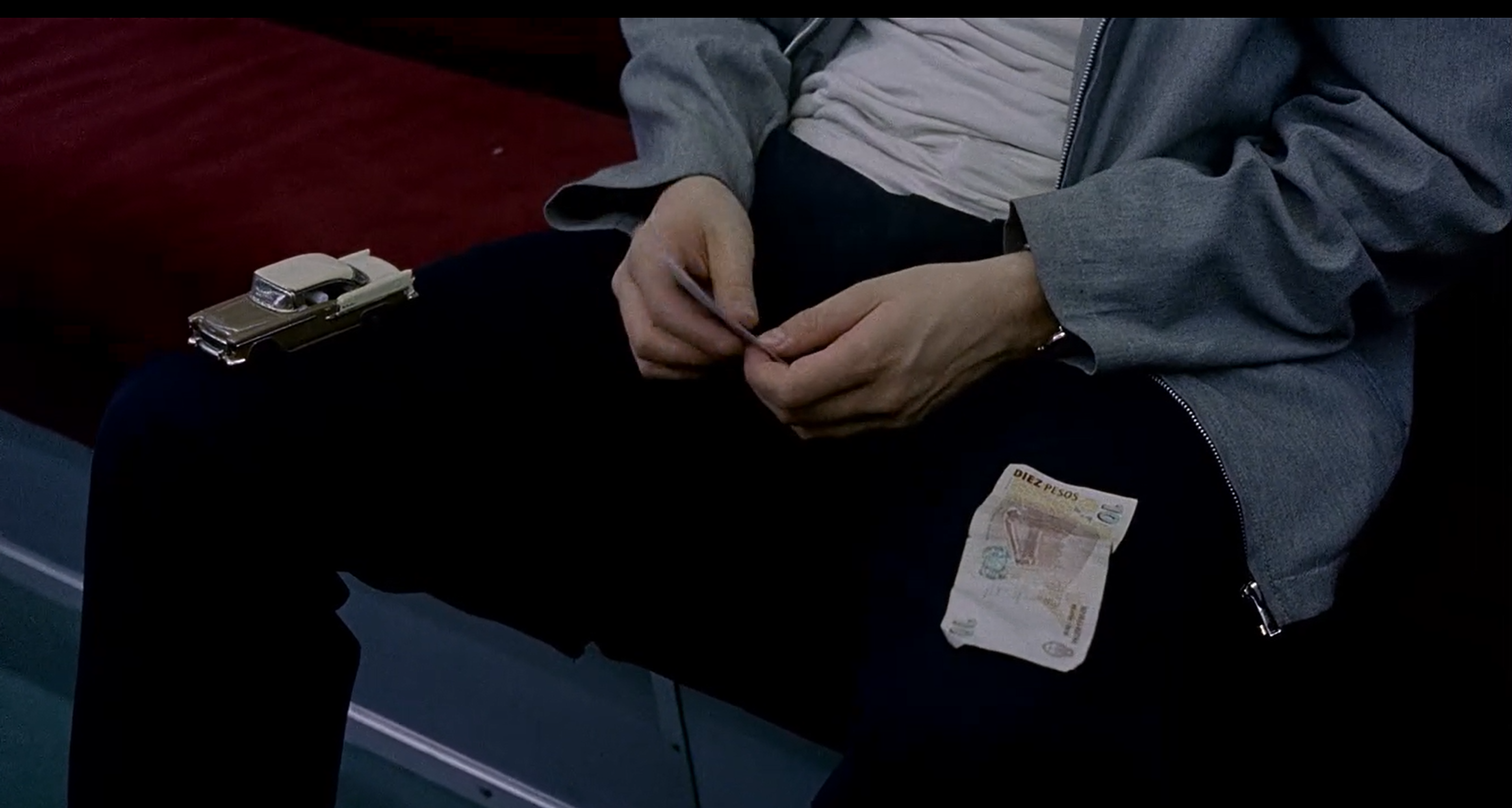
    The prop of the toy car reappears throughout the movie as a symbol of innocence and youth. The car is carried by Juan throughout the movie as it reminds him of his father. Amid the corruption and thievery endemic in everyday life, the car symbolizes the attempt to grasp at the last traces of goodness. The fact that it is a toy car from childhood shows how this pure goodness has been lost to the past of childhood, becoming more and more scarce and unreachable as time passes. Especially poignant is toward the end of the film, where Juan gives a boy a choice between 10 pesos and the toy car that he treasures. It is like a litmus test for society, to determine whether an ordinary individual will choose money over some higher value of sentimentality and happiness. The boy ultimately chooses the money, but Juan decides to give him the car as well. This symbolizes how it is not wrong for an individual to value financial security; we all need to make a living to survive. However, this does not have to be such a rigid binary between money and higher values of what is good. We can make enough money to have what is necessary, and also maintain values that are inherent to human goodness. The onus is upon us to not exert this pressure of a false dichotomy.
    Film Still
    Juan giving the boy on the subway a choice between a toy car and money.
    Lighting
    Lighting
    Explanation
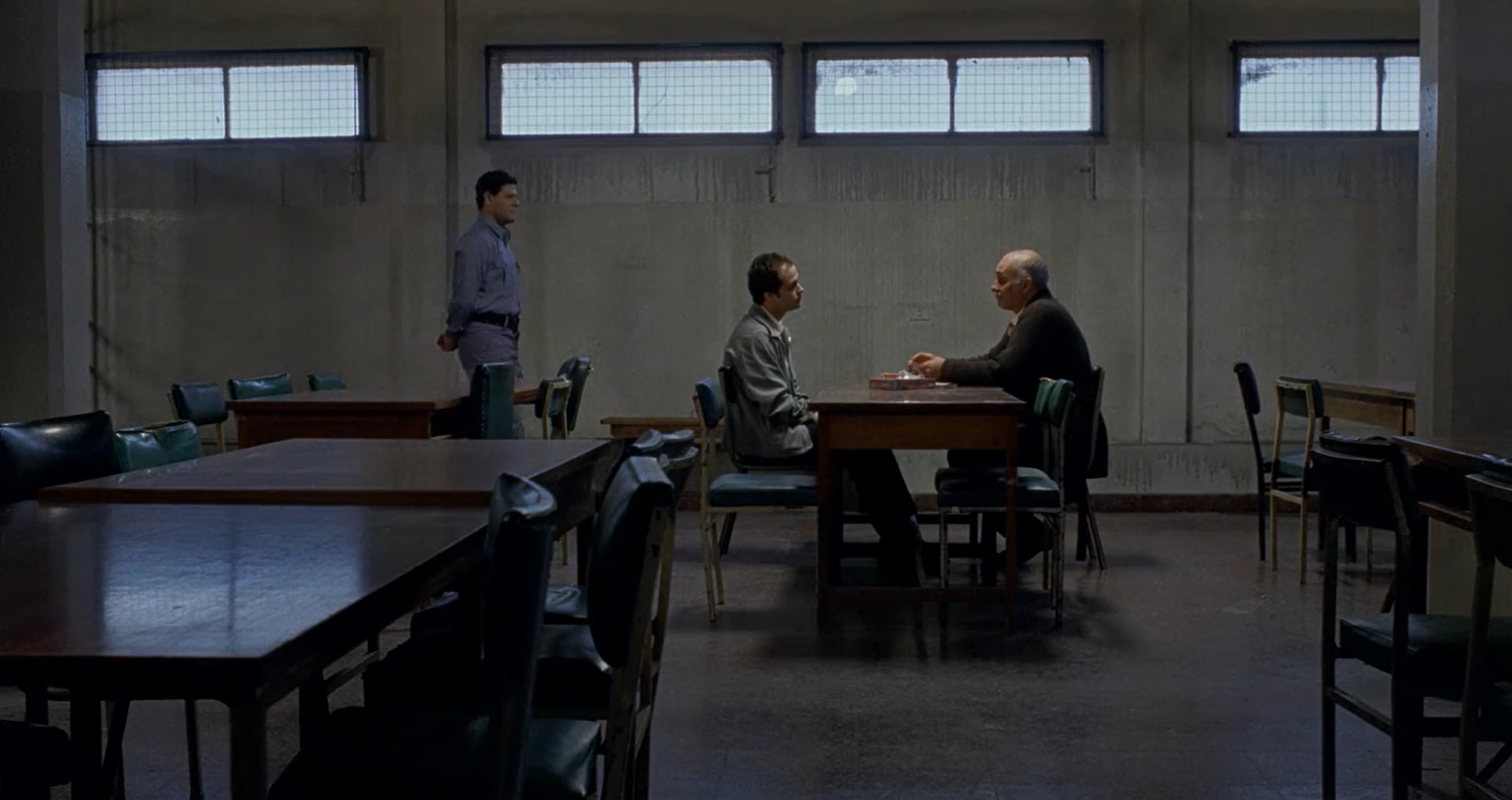
    The majority of the film has a blue-grey undertone, showing the corrupt and bleak nature of the world. This still has more hard lighting, with the light originating directly above Juan and his father. The isolation and emptiness of the room except for Juan and his father signifies the close father-son relationship, and emphasizes how Juan’s father only has Juan for companionship. The lighting underscores how important this relationship is to Juan and his father, as his father worries for Juan’s wellbeing and Juan is desperately trying to come up with enough money to take his father out of jail. The dark lighting also brings out the dusky light from the caged windows, along with a very faint moon, which signifies how restrained and trapped Juan’s father feels in the environment. The windows are also placed high and away from eye-level, making even the simple freedom of seeing the outside world and getting natural sunlight more inaccessible and further obstructed by the wire mesh.
    Film Still
    Juan and his father at the jail.
    Costume
    Hair and Makeup
    Figure Behavior
    Representative Clip

    This is the art of photography and visual storytelling in a motion picture or television show. Cinematography comprises all on-screen visual elements, including lighting, framing, composition, camera motion, camera angles, film selection, lens choices, depth of field, zoom, focus, color, exposure, and filtration. Cinematography sets and supports the overall look and mood of a film’s visual narrative. Each visual element that appears on screen, a.k.a. the mise-en-scène of a film, can serve and enhance the story—so it is the cinematographer’s responsibility to ensure that every element is cohesive and support the story. Filmmakers often choose to spend the majority of their budget on high-quality cinematography to guarantee that the film will look incredible on the big screen.
    Point of View
    Point of View
    Comments
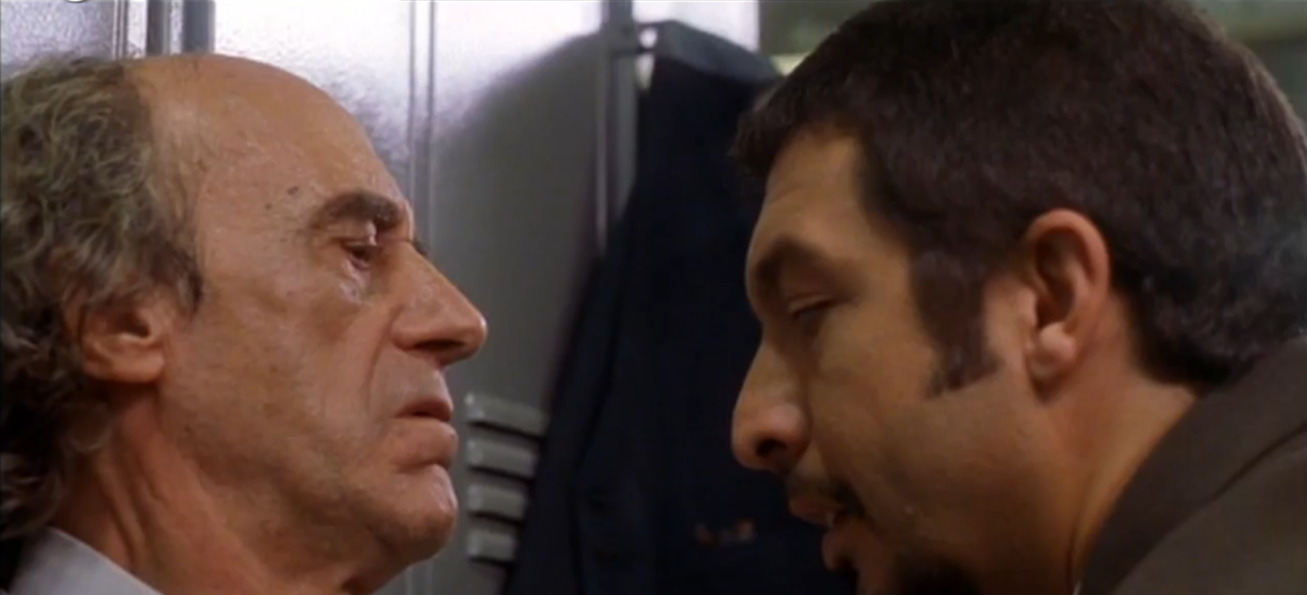
    The majority of the film follows the Indirect Subjective point of view, since the camera does not directly track the point of view of each character but it still incorporates very close shots that allow the audience to feel the emotions of the character. In this scene, Sandler’s state of vulnerability and weakness can be sensed by the extreme close-up, which allows the audience to feel claustrophobic and fearful like Sandler. The zoom of the lens only leaves space to see Sandler and Marcos; their faces completely cover the screen, giving a sense of gravity and importance to this interaction.
    Film Still
    Sandler and Marcos
    Quality
    Quality
    Comments
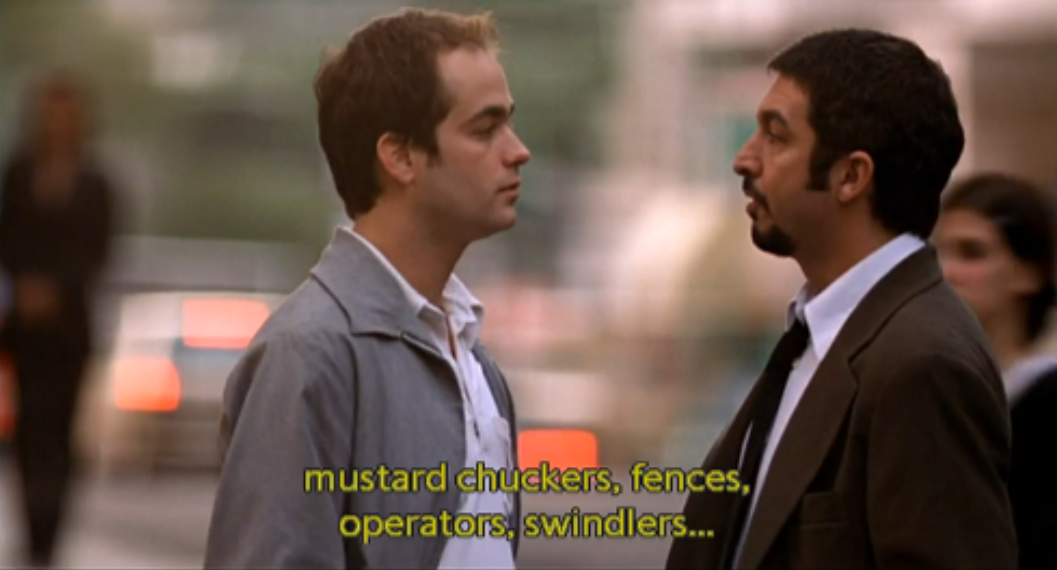
    Shallow focus shots are common throughout the film, but an especially apparent shallow focus shot is during Marcos’ monologue about how he is not a common thief. Marcos and Juan are talking in the middle of the city, but the background is blurred so that the audience can only see the blurry figures of people walking in front of the camera and decipher the environment through the loud noises of traffic and city noise. The shallow focus gives a sense of importance to this interaction, as if it surmounts above all the commotion and noise that surrounds Marcos and Juan. This further demonstrates how Marcos sees himself as above the common crooks, though he himself is a swindler, since is able to predict the actions of the thieves around him as an all-knowing outsider.
    Film Still
    Juan and Marcos
    Framing
    Framing
    Comments
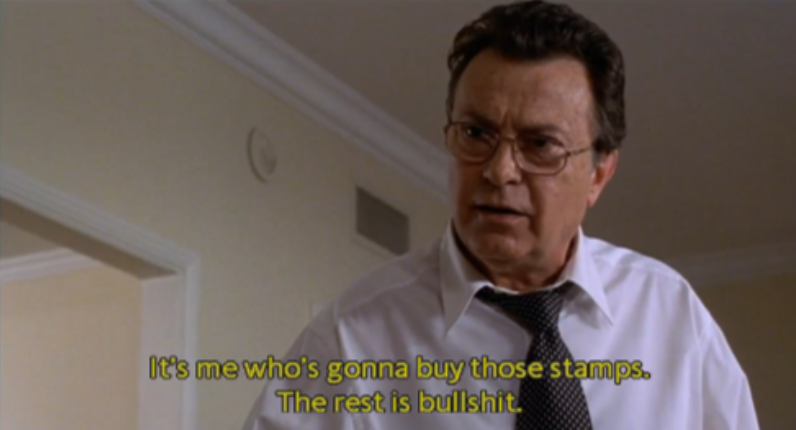
    Low angle shots are primarily used in the scenes with Vidal Gandolfo, a businessman who is being deported due to corruption charges. In the scene where Juan and Marcos are anxiously waiting to see if Gandolfo’s assistant assesses whether the stamps are genuine, the low angle shot functions to create an atmosphere where Gandolfo clearly holds power over Juan and Marcos. The shot gives the impression that if Gandolfo finds out the stamps are fake, he has the ability to ruin the lives of Juan and Marcos. This camera technique allows the audience to feel the gravity of the moment and the power dynamics at play during the transaction.
    Film Still
    Vidal Gandolfo
    Scale
    Comments
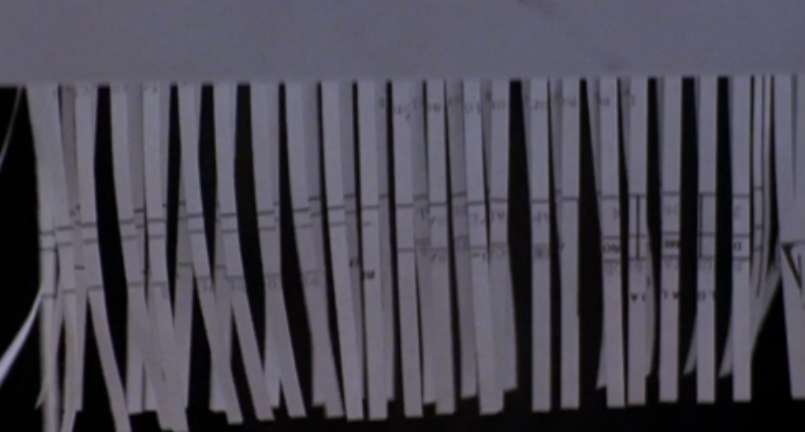
    This is an extreme close-up of the documents that were being shredded by Vidal Gandolfo to hide any evidence that could be used against him in the corruption case. At the same time, Juan and Marcos were waiting to see if Gandolfo would determine that the stamps were genuine. This shot adds to the atmosphere of tension in this scene, as it illustrates the time constraint that Gandolfo is under due to his imminent deportation. It also shows Gandolfo is not a person who follows the law or of good character, which makes him all the more dangerous to Juan and Marcos.
    Film Still
    Shredded Documents
    Movement
    Movement
    Comments
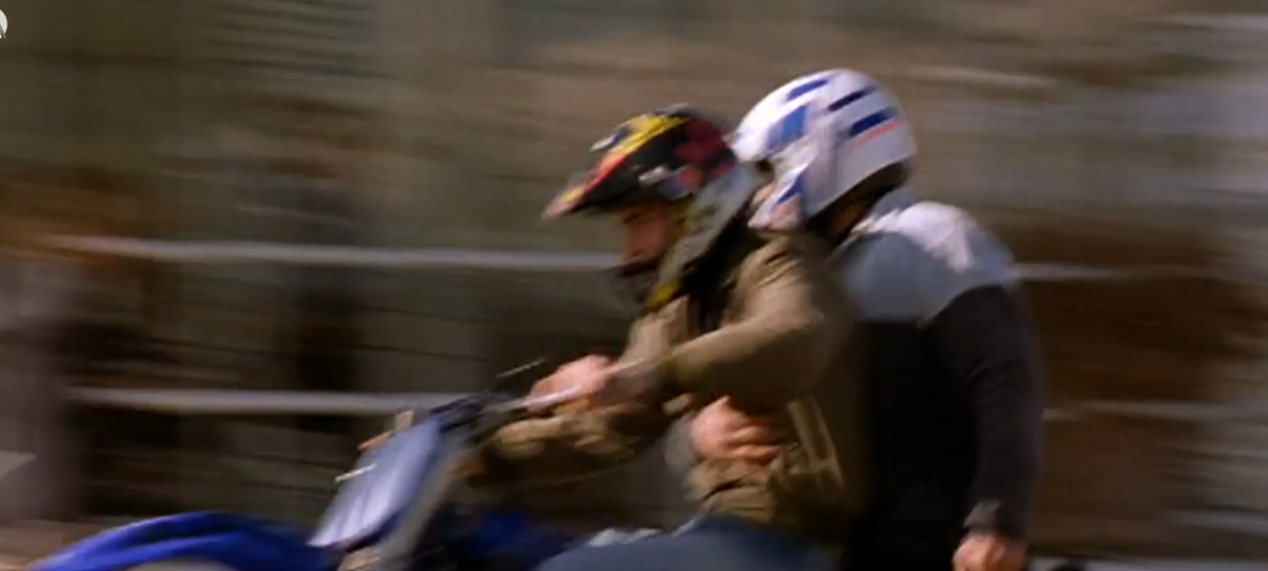
    This is a clear dolly shot since the motorcyclists are being filmed while the motorcycle is in motion. Juan and Marcos are also being filmed while they are running and trying to catch the motorcyclists. This tracking shot connects the characters of Juan and Marcos with the motorcyclists who have just stolen the briefcase with the stamps. The use of the tracking shot as opposed to filming the motorcycle with a stationary camera conveys a better sense of an ongoing, rapid event that the audience is intimately involved in. A wide angle shot of this same scene would require constant cuts to “track” the movement, which would take away from the continuity of the scene and how fast paced it is. The tracking shot of Juan and Marcos chasing after the motorcyclists gives a better sense of how desperate they are to not lose the stamps.
    Film Clip
    Video file

    Editing is the process of putting a film together–the selection and arrangement of shots and scenes. Editing can condense space and time, emphasize separate elements and bring them together, and organize material in such a way that patterns of meaning become apparent. In addition, editing can determine how a film is perceived: for instance, quick, rapid cuts can create a feeling of tension, while a long take can create a more dramatic effect. The first photoplays generally had no cutting, owing to the fact that they were single-reel films; once filming began, you could not stop until the film ran out. (https://filmglossary.ccnmtl.columbia.edu/term/editing/)
    Coherence, Continuity, and Rhythym
    Comments
    The film did a good job with using editing to create differing effects of rhythm, especially the scene where Juan and Marcos are chasing the motorcyclists. The rapid rhythm of the scene is palpable to the audience. The camera also used more panning and tracking shots during moments of tension or slow-paced conversations, while smash cuts and sudden cuts were used during rapid-fire arguments. The tracking shots especially created a good sense of continuity. For coherence, I think the editing could have been better to make it more clear how two scenes are connected. I also thought that the ending was a bit hard to understand because the editing left a lot of unanswered questions. It would be more coherent to have more cuts at the end of the movie, perhaps in the form of a flashback, to make it clear to the audience how Juan actually manufactured the entire operation.
    Film Still
    Motorcyclists
    Editing Style
    Editing Style
    Comments
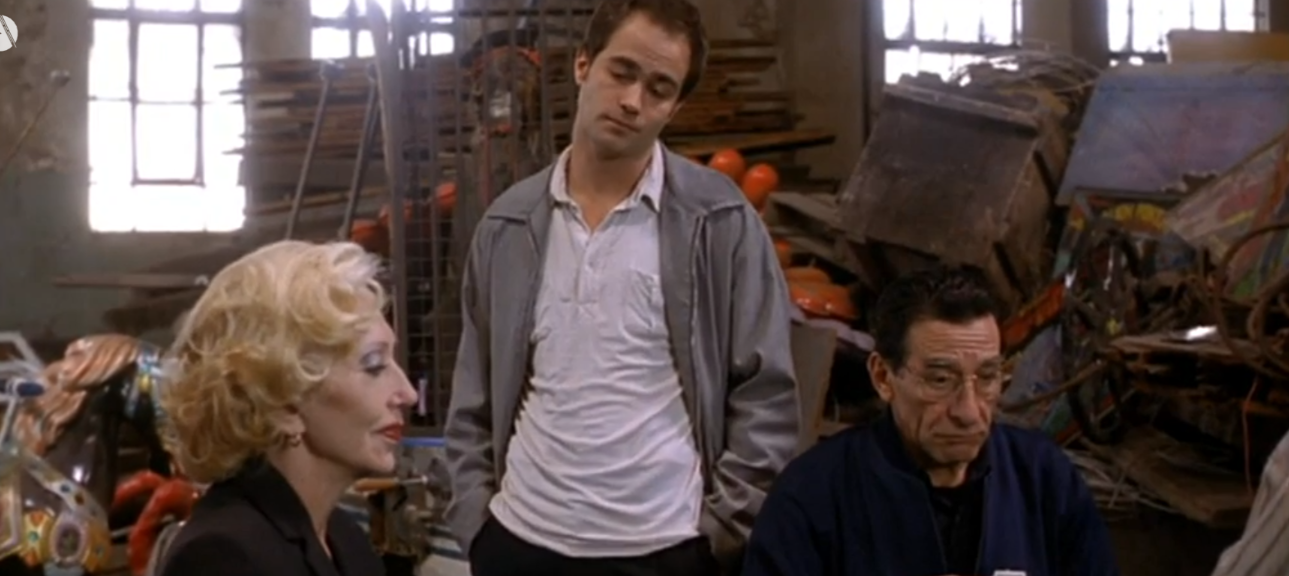
    This is a good example of the continuity style of editing, which is used much more in the film than the montage style. This shot captures the conversation between Juan and Marcos, where Marcos is trying to convince Juan to use all the money he has saved for his father to buy the real stamps and still make a profit. Instead of cutting between Juan and Marcos as they both argue, the camera uses the continuity style throughout the whole conversation. This has the impact of feeling more informal and slow-paced, which adds to the rowdy nature of the argument. This style also enhances the high tensions and seething emotions present during this scene, since it tracks the moment when Marcos and Juan start physically shoving each other. This allows the audience to remain attentive to the rising tension present during the conversation, which ultimately progresses to a physical confrontation.
    Film Clip
    Video file
    Transitions
    Match
    Comments
    This eyeline transition is used to connect the scene where Juan is trying to convince the real owner of the stamps to give the stamps to him and the scene where Juan and Marcos have already obtained the stamps from the owner. This cut represents a jump in time, since Juan likely had to spend a lot of time talking to the woman to gradually persuade her to give the stamps to him. In this cut, we can see that Juan was initially looking at the elderly woman, but then the scene cuts to the stamps on a table, which Juan is looking down upon. This cut feels continuous because we are still following Juan’s gaze. However, most of the movie does not have very well made transitions. The majority of cuts between scenes in this movie did not have an easily discernable relation to each other.
    Timecode
    Film Clip
    Video file
    Expansion and Compression of Time
    Expansion and Compression of Time
    Comments
    This shot is a good example of elliptical editing because it cuts between Juan discussing the price of the stamps with Gandolfo and then jumps to the end of the settlement of the deal. This type of editing has the function of creating a sense of mystery and excitement since the audience does not know what the final price of the stamps will be and whether Gandolfo would agree to the proposed price. Time is compressed with this sudden transition, yet still connected since Juan answers Gandolfo’s question in the next scene.
    Film Clip
    Video file
    Editing General Comments
    Comments
    The editing in this film has been a mix between tracking shots, especially for conversations between characters, as well as eyeline and graphic transitions. Some of the transitions were more well thought out than others, such as using objects to connect between scenes like Marcos’ briefcase that contained the stamps. There are still some transitions that seem to not really connect scenes together to me. Other transitions use a panning technique to slowly connect disparate scenes if an object is not used. I thought that the editing was well done but it had the potential to be more creative at times. I think the ending of the movie had excellent editing, as it slowly tracked different characters to reveal that Juan was behind the entire plot.
    Film Still
    Ending scene of Nueve Reinas

    Sound is an integral part in a film. It refers to everything that the audience hears including sound effects, words and music. Sound is used in films for various purposes, including: providing the information to the viewer about the location of the scene, heightening the mood, telling the audience about the characters and advancing the plot. Every person who watches a film realizes that the choice of voices, soundtrack and music present in a film affect the way that the viewer perceives a particular film. As a result, the sound is an important and integral element of the film, one that determines the way that the viewer experiences and understands a film as a visual experience.

    Sound Type

    Narrative analysis is an examination of the story elements, including narrative structure, character, and plot. A narrative can be considered to be the chain of events in a cause-effect relationship occurring in time and space. In order to analyze the narrative of a film, we need to first make the distinction between the plot of the film and the story of the film. This is sometimes referred to as the discourse and story of a film. Narrative may also be called the story thought story mainly refers to the events that describe the narrative.

    Plot Comments
    Story Comments
    Narrator Type
    Narrative Structure

    Film genres are various forms or identifiable types, categories, classifications or groups of films. (Genre comes from the French word meaning "kind," "category," or "type"). These provide a convenient way for scriptwriters and film-makers to produce, cast and structure their narratives within a manageable, well-defined framework. Genres also offer the studios an easily 'marketable' product, and give audiences satisfying, expected and predictable choices. Genres refers to recurring, repeating and similar, familiar or instantly-recognizable patterns, styles, themes, syntax, templates, paradigms, motifs, rules or generic conventions.

    Category
    Bibliography

    Harley, Kevin. “Fabian Bielinsky.” The Independent, Independent Digital News & Media Ltd, 19 July 2006, www.the-independent.com/news/obituaries/fabian-bielinsky-6094891.html.

    “Obituary: Fabián Bielinsky.” The Guardian, Guardian Media Group, 20 July 2006, www.theguardian.com/news/2006/jul/20/guardianobituaries.argentina.

    Romney, Jonathan. “Nine Queens (15).” The Independent, Independent Digital News & Media Ltd, 13 July 2002, www.the-independent.com/arts-entertainment/films/reviews/nine-queens-15-184585.html.