El Secreto de Sus Ojos (The Secret in Their Eyes)

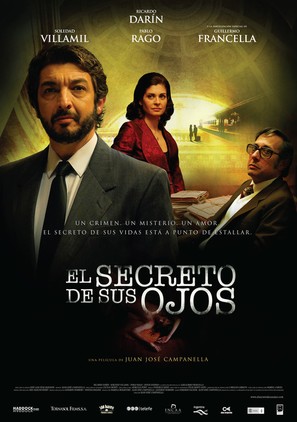
    Movie Poster
    Release year
    2009
    Director
    Juan José Campanella
    Biography of director(s)
    Juan José Campanella is an Argentinian film and television director, as well as a screenwriter and producer. Born in Buenos Aires, Argentina on July 19th 1959, Campanella began his college career by studying engineering for four years before abandoning his studies. His first production was National Priority in 1979. Afterwards, Campanella traveled to the United States where he studied at the New York University Tisch School of the Arts. After his graduation, he produced a few American movies, various episodes for popular television shows such as House and Law & Order, and some additional Spanish films as well. Nonetheless, his most successful film has been The Secret in Their Eyes, for which he won the Academy Award for Best Foreign Language Film in 2010. Currently, Campanella continues to produce movies, with his most recent release being The Weasel’s Tale in 2019.
    Country
    Coproduction between Argentina and Spain. The companies involved with the production were Haddock Films, 100 Bares, and Tornasol Films.
    Original synopsis of the film

    Benjamín Espósito is a judiciary agent in Buenos Aires, Argentina. The film follows Espósito’s life as he investigates the rape and murder of Liliana Colotto de Morales, both in the past and present. As Espósito uncovers clues and experiences revelations regarding the case, the film alternates between the years subsequent to the murder and 25 years afterwards. Upon analysis of some old photographs, the agent discovers a man with a keen interest for Liliana. Along with the help of the department chief Irene Menéndez-Hastings, this discovery leads to a guilty confession by Isidoro Gómez. However, Gómez is freed from conviction thanks to acts of political injustice in the country. Gómez is then never found for 25 years, until Espósito begins to write a novel based on the case and makes the ultimate discovery. Originally lying and claiming that he murdered Gómez, Liliana’s husband, Ricardo, is found to have held Gómez captive for decades in efforts to fulfill Gómez’s life sentence he was never given. After the case has been resolved, Espósito also faces his feelings for Irene and finds her to offer his own confession, one of love.

    The Secret in Their Eyes. Directed by Juan José Campanella, Alta Classics, 16 Apr. 2010.
    Film Awards
    2010 Academy Award for Best International Feature Film
    2010 Goya Award for Best Iberoamerican Film
    2010 Ariel Award for Best Ibero-American Film
    2010 Grande Prêmio do Cinema Brasileiro for Best International Feature Film
    Film still
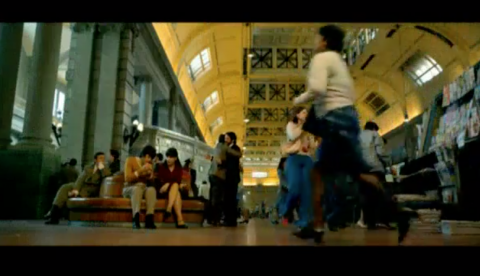
    An image of the two agents embracing before Espósito flees from Buenos Aires as he has experienced attempted murder.

    Describes the setting of a scene in a play or a film. It refers to everything placed on the stage or in front of the camera—including people. In other words, mise en scène is a catch-all for everything that contributes to the visual presentation and overall “look” of a production. When translated from French, it means “placing on stage.”

    Setting
    Setting
    Explanation
    Location: Buenos Aires, Argentina
    Filmed in various locations and neighborhoods around the capital of Argentina, Buenos Aires. Key locations include the Tomás Aldofo Ducó Stadium, Palace of Justice of the Argentine Nation, Retiro Station, and El Secreto bar.
    Timecode
    1:02:09
    Film Still
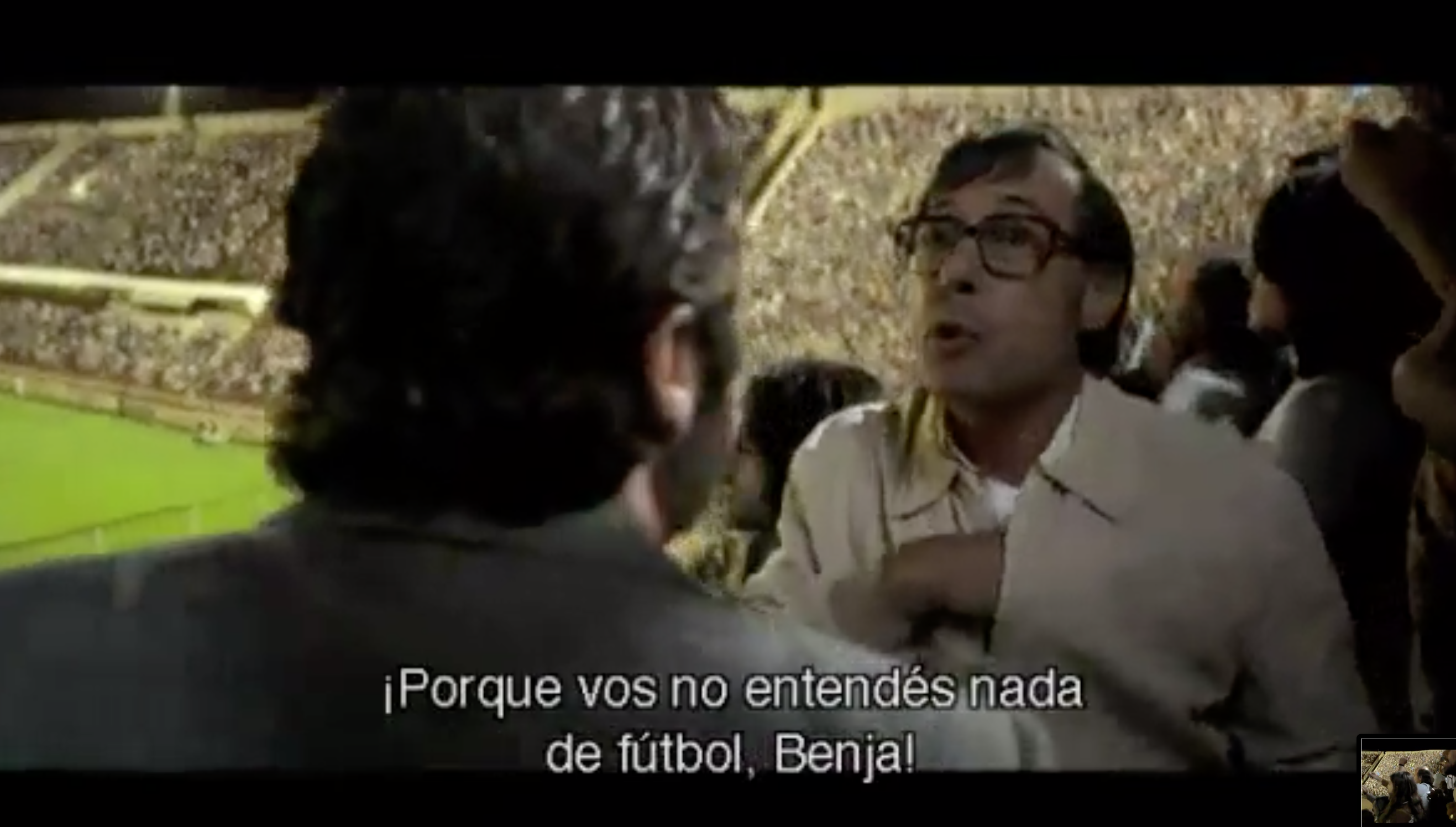
    This shot shows Espósito and Sandoval at Tomás Adolfo Ducó Stadium in Buenos Aires, Argentina.
    Props
    Timecode
    00:27:09
    Prop
    Photograph of Liliana and Isidoro Gómez
    Explanation
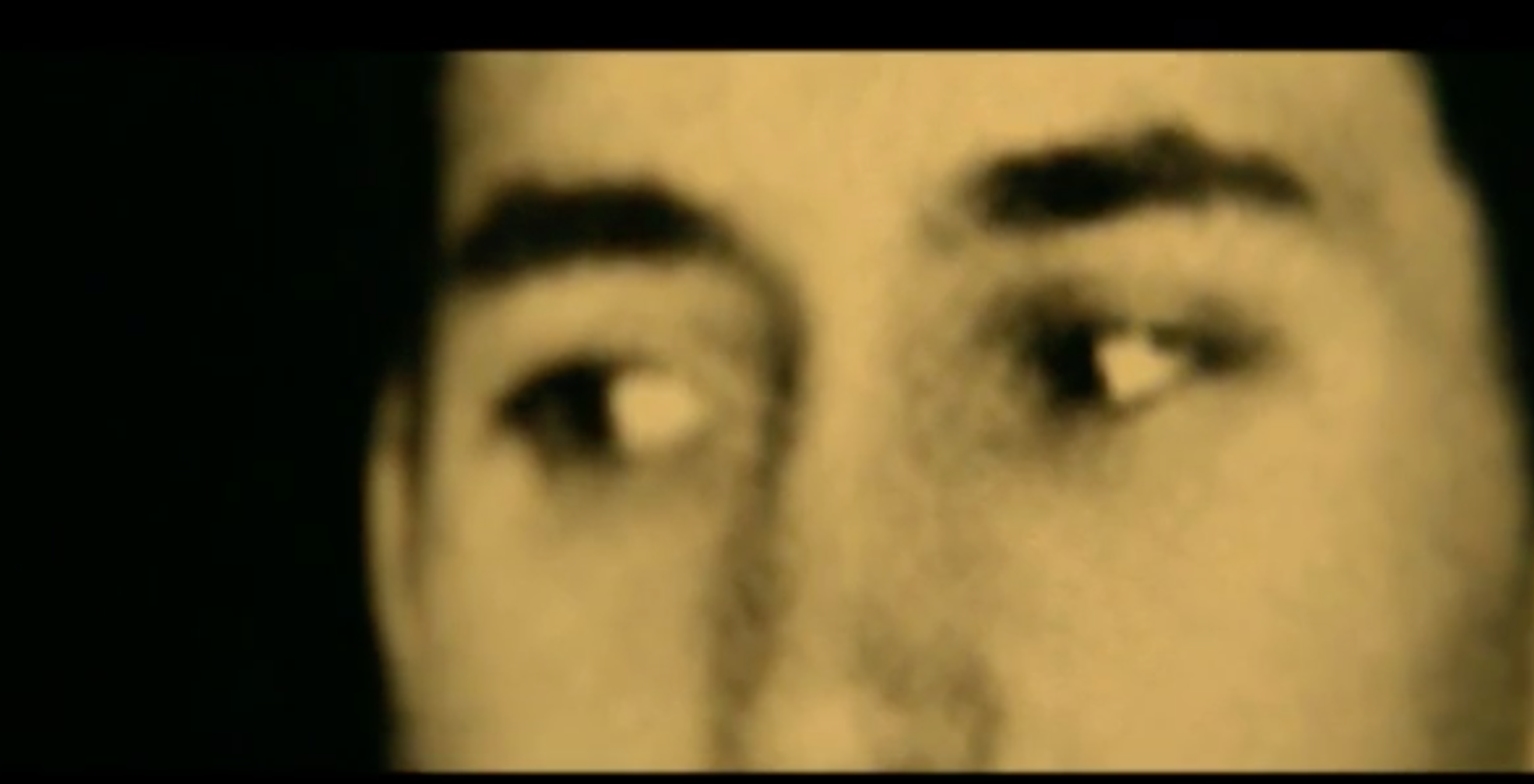
    The photograph of the victim, Liliana, with her friends is the most notable prop in the film. It is this image in which agent Espósito sees Isidoro staring at her longingly and that the camera slowly zooms in on his gaze. It is probable that this instance in the movie renders it its name, The Secret in Their Eyes, which conveys how the gaze reveals the yearning which led Isidoro to commit the crime.
    Film Still
    This shot is a close-up of Isidoro's eyes as he gazes longingly at Lilana from afar.
    Timecode
    01:49:17
    Prop
    Portrait of Espósito
    Explanation
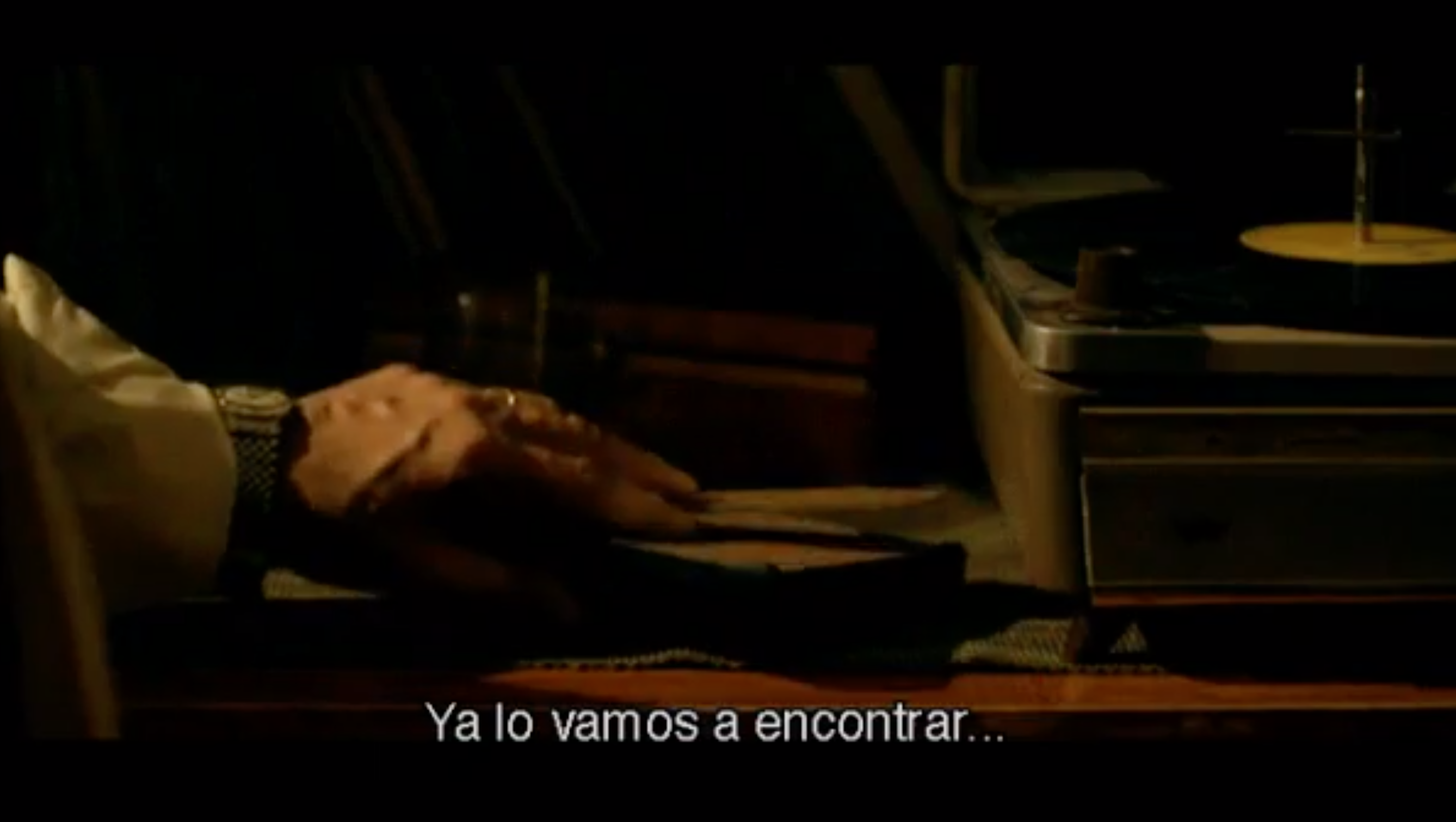
    Other key props in the movie are Isidoro Gómez’s gun which he uses to intimidate the investigators, the portraits that Sandoval turns over to protect Espósito’s life, and the flowers that Espósito finally leaves at Sandoval’s grave.
    Film Still
    In this image, we see Sandoval turning over a portrait of Espósito at his home in order to protect Espósito from the murderers discovering his true identity. It is an act of sacrifice as Sandoval is mistakenly killed afterward.
    Lighting
    Lighting
    Explanation
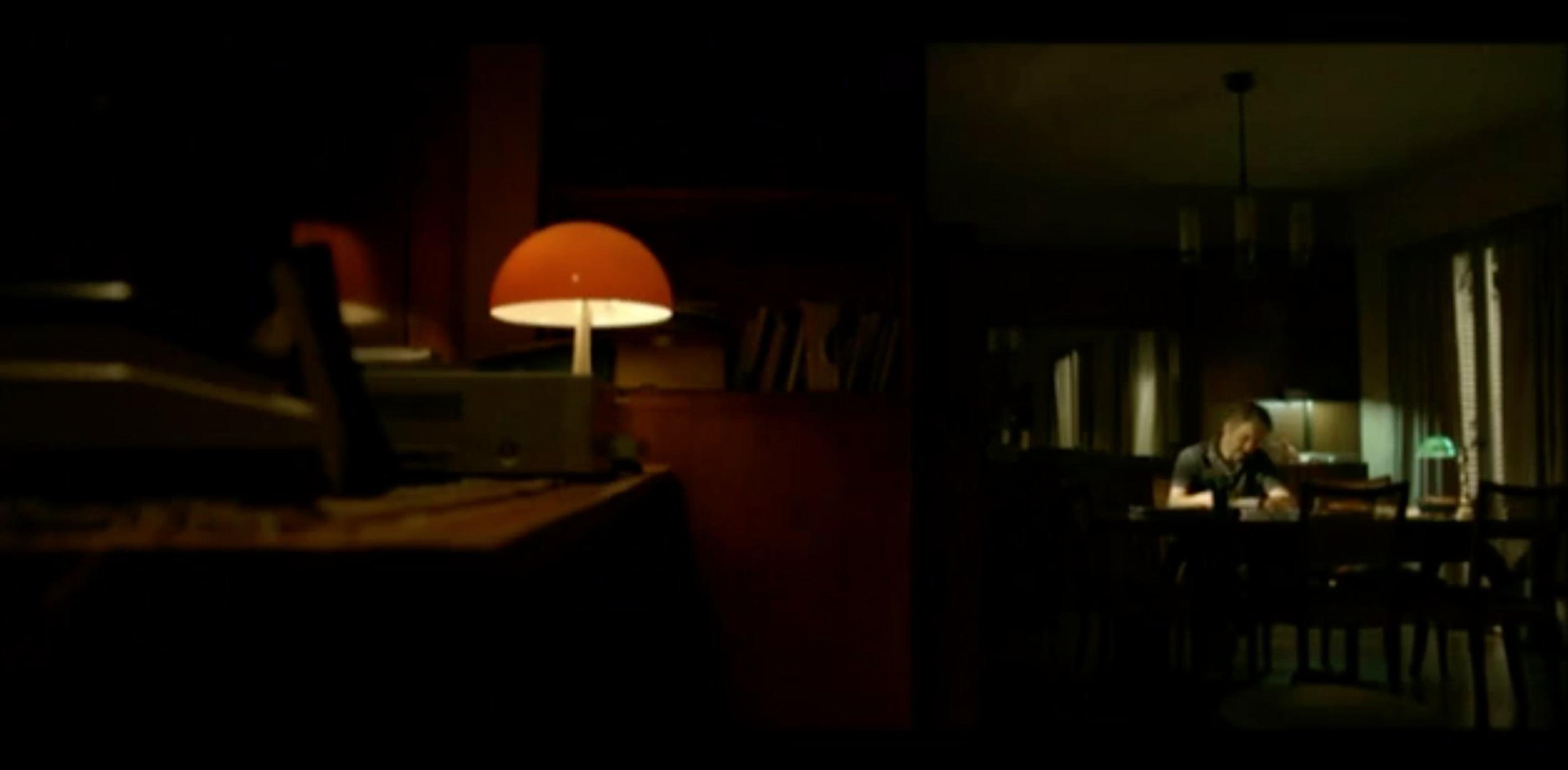
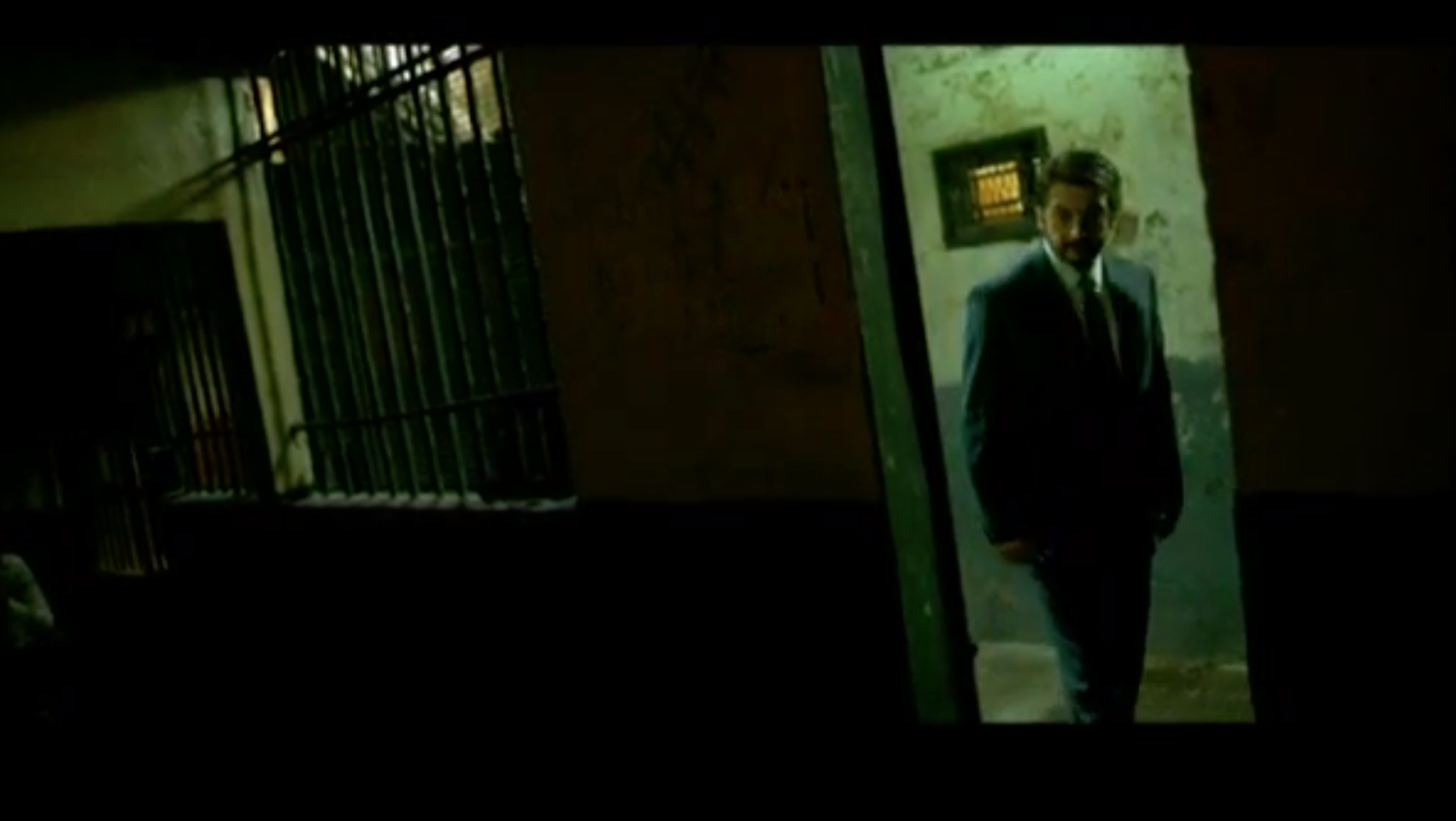
    Throughout the movie, there is frequent use of low key lighting to emphasize the dramatic mood of the story. The contrast and darkness taint the scenes with a somber and intense atmosphere. This is fitting for suspenseful scenes such as the investigator working late and uncovering clues, as well as frightening scenes, such as when Sandoval is shot dead. The lighting is also utilized for ominous warnings and frequently appears before tragic events in the movie.
    Timecode
    00:02:43,00:19:28
    Film Still
    We see Espósito sitting the background of the shot working on his novel deep into the night.
    We see Espósito visiting the dark jail where he discovers the culprits of the murder were actually beaten in order to get fake confessions.
    Costume
    Costume
    Formal business attire, 70s floral prints
    Explanation
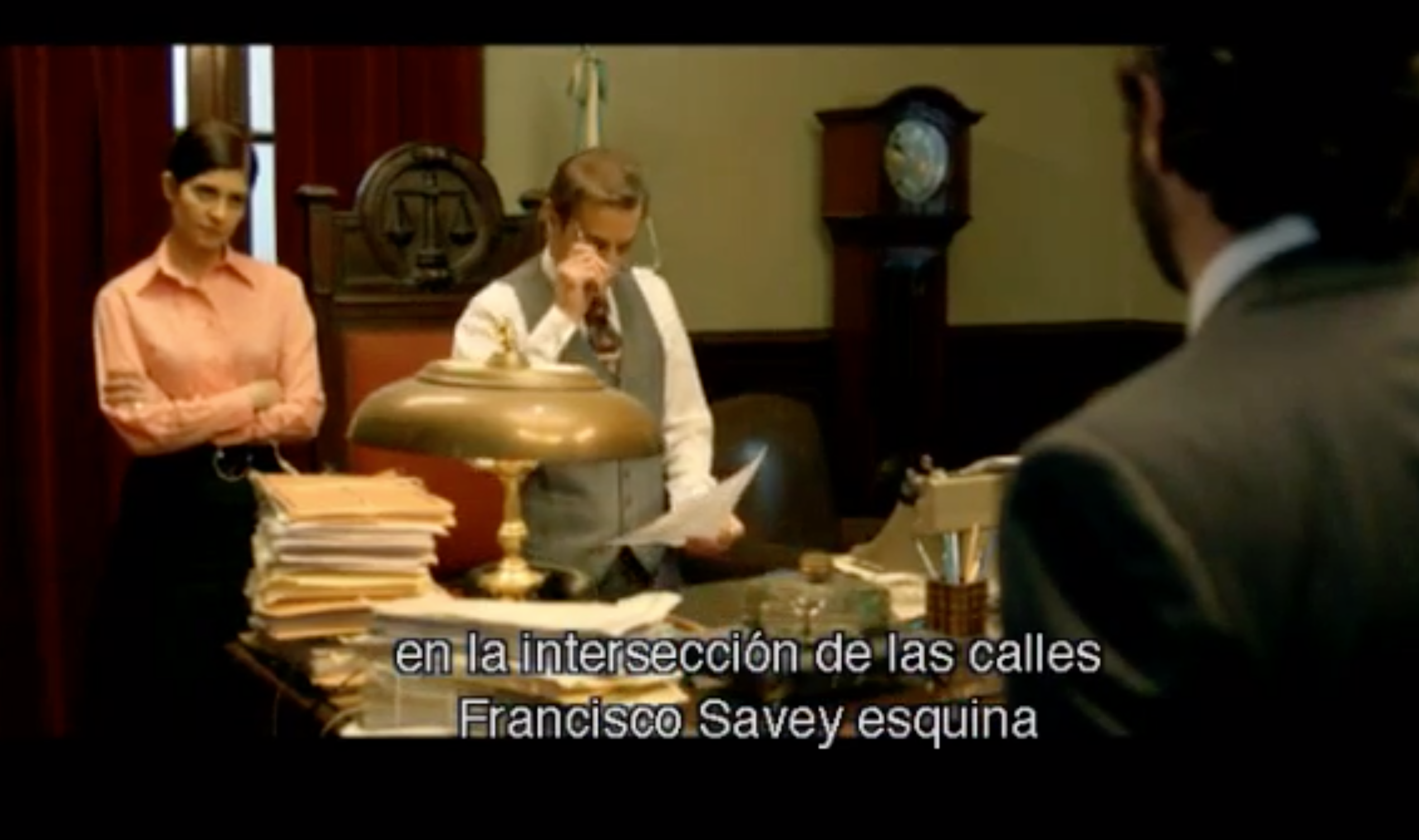
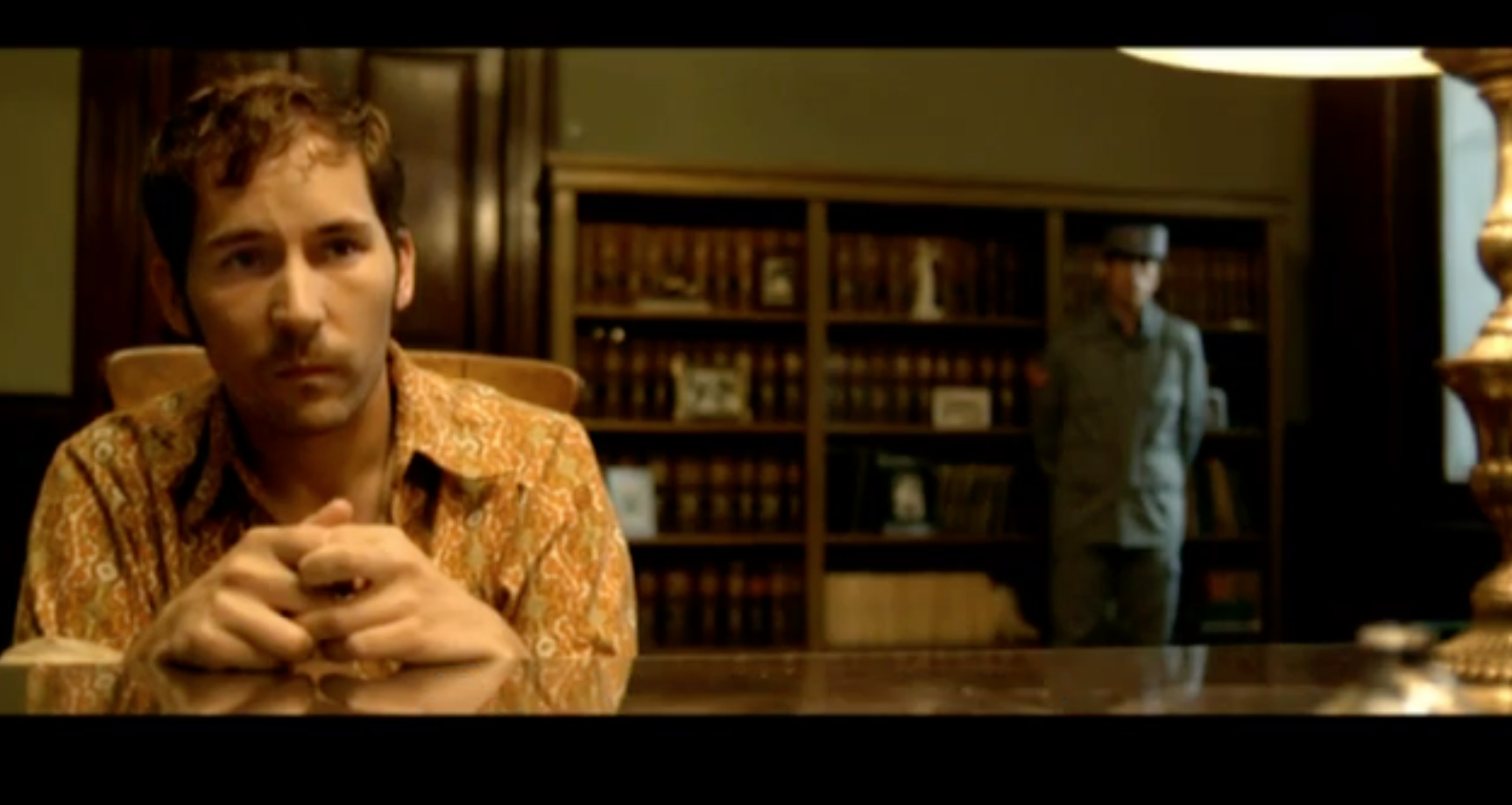
    The judiciary agents and chief wear formal business attire throughout the film. When Isidoro is being interrogated by the agents, he can be seen wearing a flowery orange-yellow shirt, matching a style that was popular in the 70s and dating the scene as taking place in the past.
    Timecode
    00:42:46,01:07:26
    Film Still
    We see the different judiciary agents working in formal business attire.
    We see Isidoro wearing a 70s print orange and yellow floral blouse as he is interogated.
    Hair and Makeup
    Example
    Cues to indicate stress and aging
    Explanation
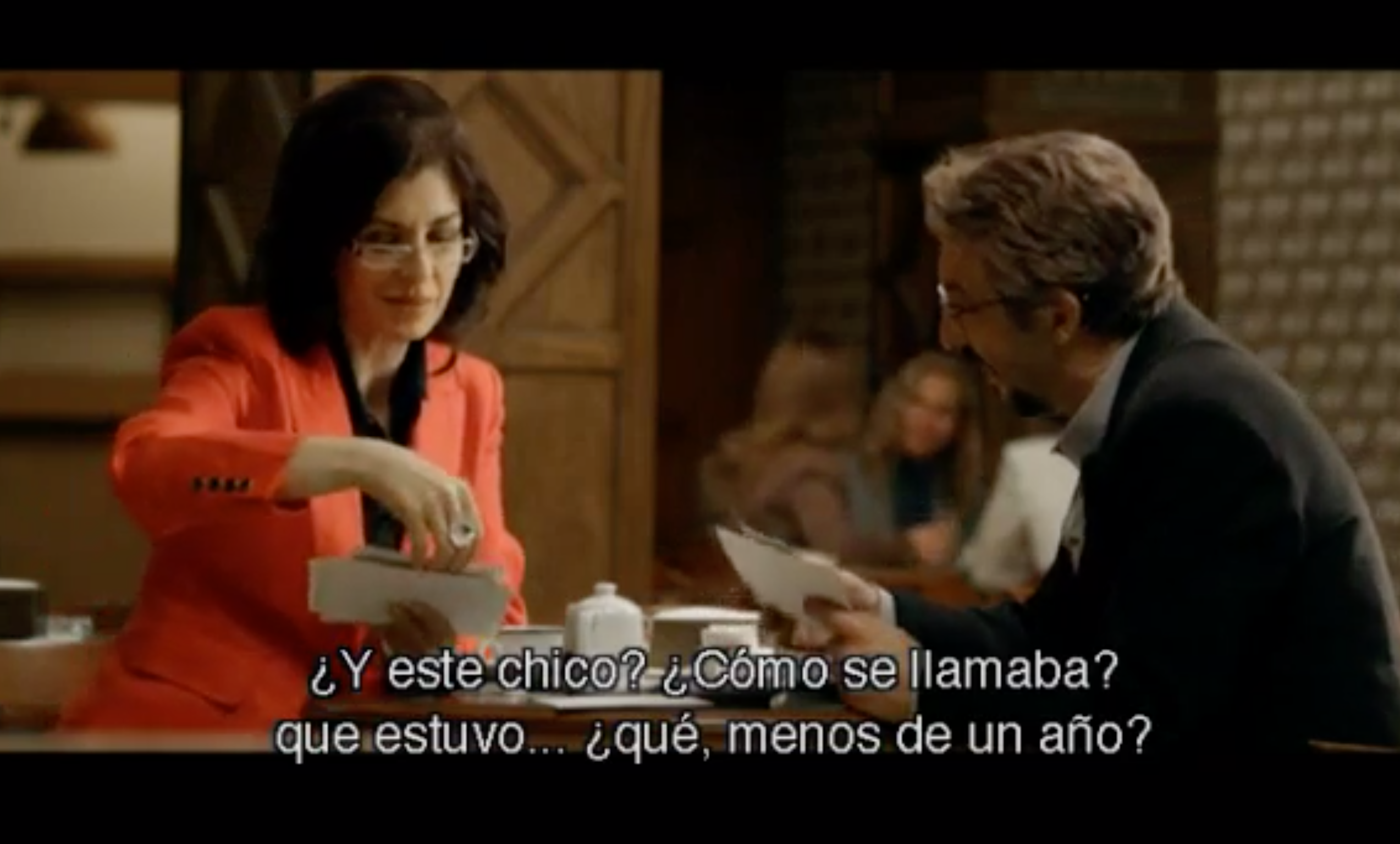
    Both Benjamín Espósito and Irene Menéndez-Hastings are shown to have deep eye bags throughout the film. This is to symbolize the toll and stress their jobs have on their lives, but also the commitment and perseverance they possess, which leads to their overworked condition. Benjamín is distinguished between the past and present by the addition of fine lines to his face and graying hairs, whereas Irene is given wrinkles and glasses.
    Timecode
    01:06:43,00:47:39
    Film Still
    We see the agents' tired expressions and prominent eye bags as they discuss the murder case.
    In present day, we see the main characters meeting over coffee, both using glasses and expressing grey hairs and additional wrinkles.
    Figure Behavior
    Example
    Characters interactions between each other and gazes
    Explanation
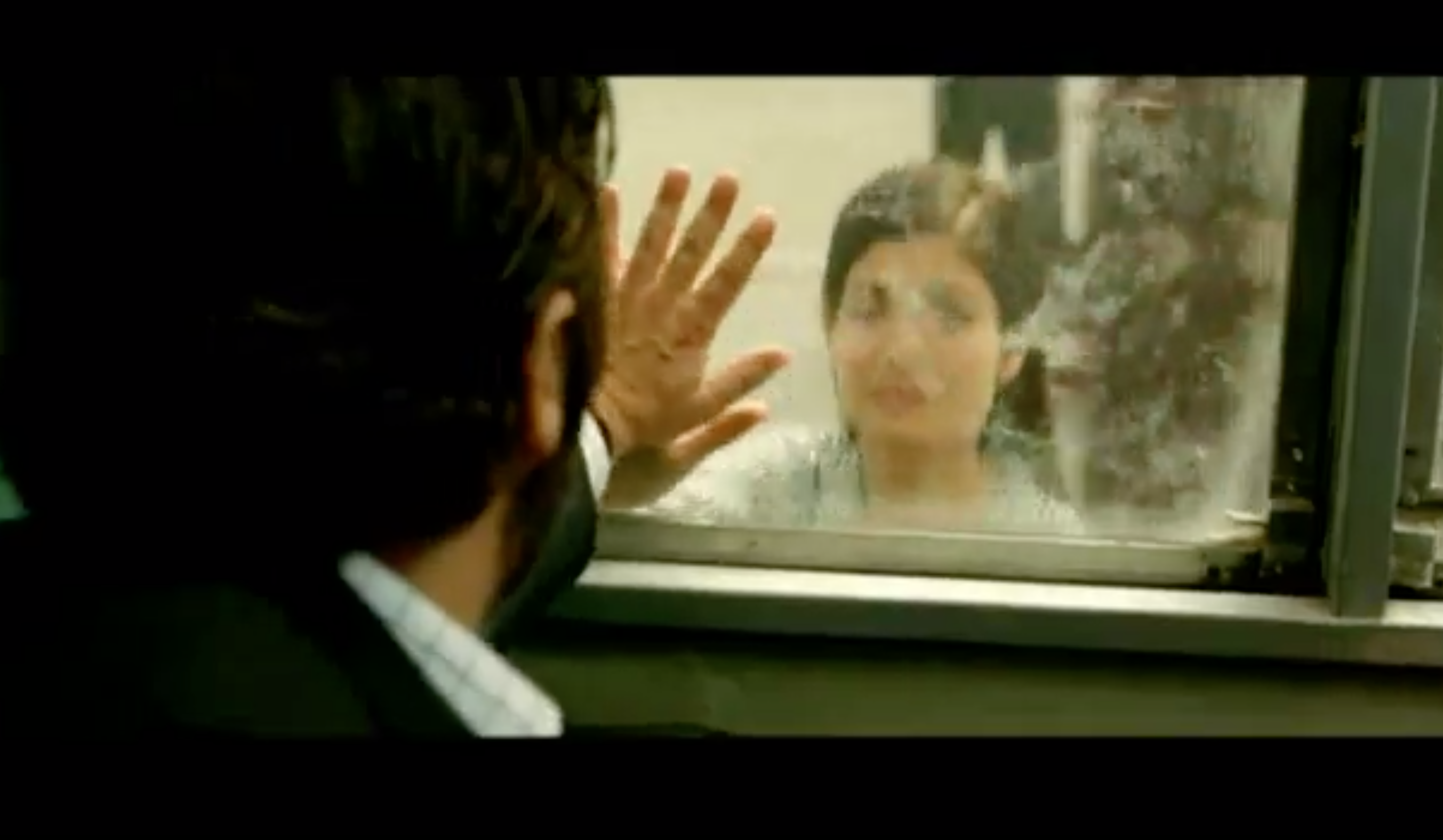
    Espósito is shown to frequently look out into space and ponder over what is happening around him. This demonstrates not only his thoughtful attitude that leads to the discovery of Lilian’s perpetrator, but also his indecisiveness over his personal relationship with Irene. There is also frequent tension between Irene and Espósito as they attempt to conceal their feelings from others and each other. This is demonstrated via proximity with refrain from physical contact (at times), longing glances, and eventually a train chase with yearning hands intercepted by a window.
    Timecode
    01:16:31,01:34:34
    Film Still
    We see the two protagonists embracing in a crowded train station. The camera focus is only on them and the surrounding world blurs.
    We see Espósito and Irene meeting hands on two different sides of the train window.
    Representative Clip
    Explanation
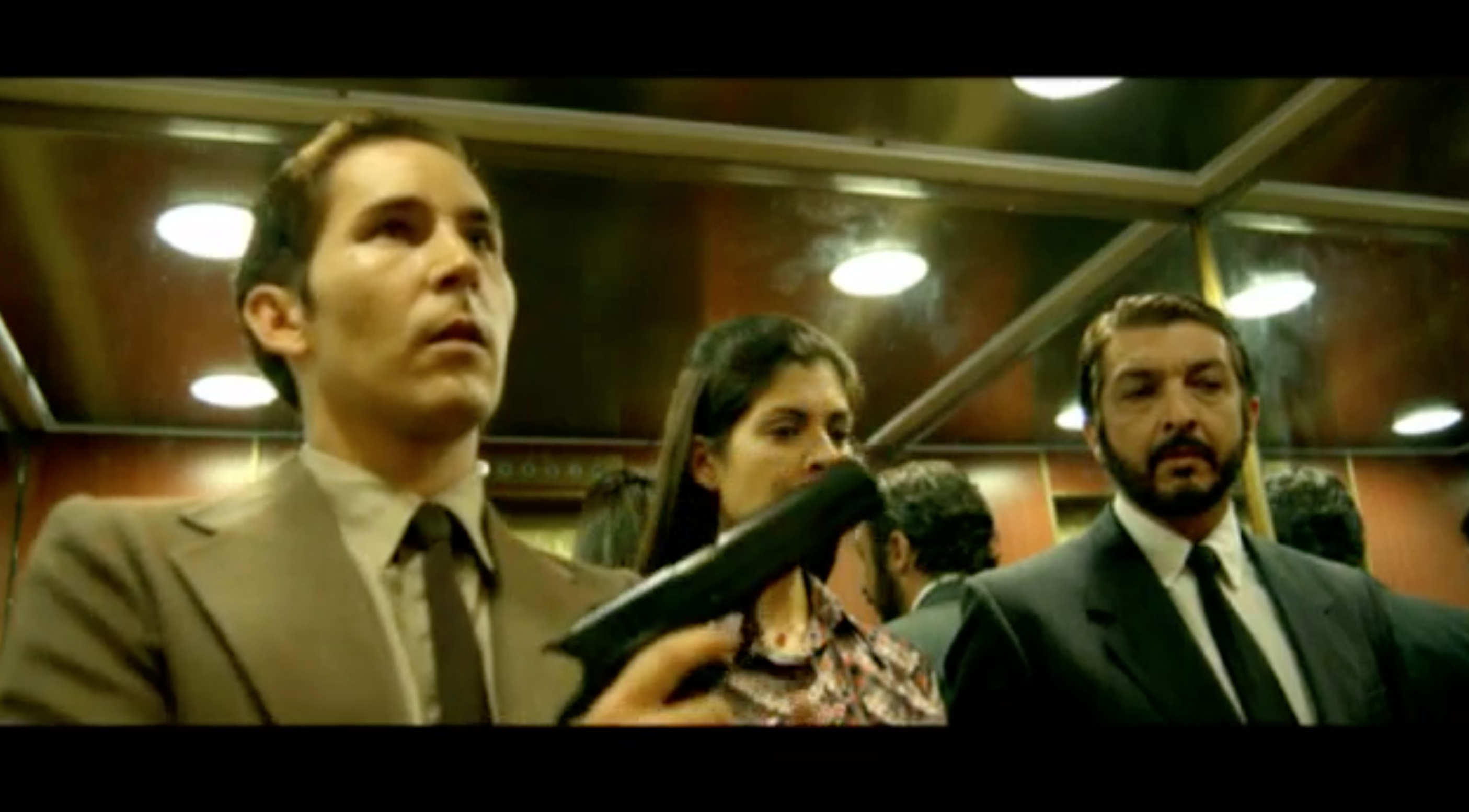
    This scene depicts agents Benjamín Espósito and Irene Menéndez-Hastings as they board an elevator immediately after learning the murderer cannot be convicted thanks to his employment by the Argentinian government as a hitman. Gómez then enters the elevator and adjusts his gun as a demonstration of intimidation for the agents. Once Gómez exits the elevator, we can see him staring at the agents through the mirrored wall in the background as a way of reemphasizing his message.
    Timecode
    01:22:30-01:23:44
    Film Still
    We see Isidoro Goméz showcase his gun in front of the agents while all together in an elevator. There is surprise and uneasiness in Irene's eyes.

    This is the art of photography and visual storytelling in a motion picture or television show. Cinematography comprises all on-screen visual elements, including lighting, framing, composition, camera motion, camera angles, film selection, lens choices, depth of field, zoom, focus, color, exposure, and filtration. Cinematography sets and supports the overall look and mood of a film’s visual narrative. Each visual element that appears on screen, a.k.a. the mise-en-scène of a film, can serve and enhance the story—so it is the cinematographer’s responsibility to ensure that every element is cohesive and support the story. Filmmakers often choose to spend the majority of their budget on high-quality cinematography to guarantee that the film will look incredible on the big screen.
    Point of View
    Comments
    Type of shot: Establishing shot
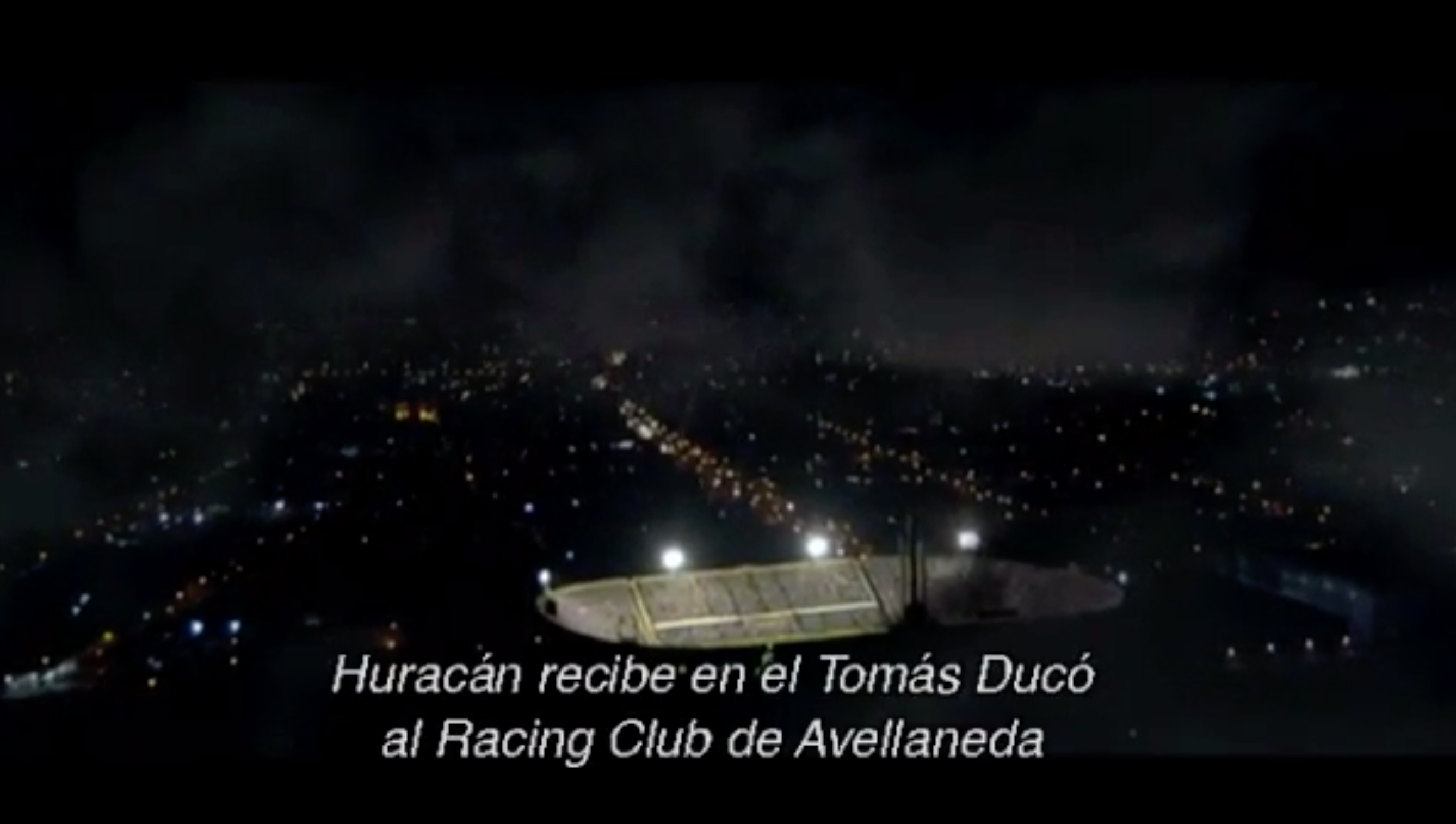
    Establishing shots are used to set up the context for the scene taking place. In this shot in the movie, the audience is greeted by a long take which slowly zooms in from a wide-angle to capture the Tomás Aldofo Ducó Stadium where the soccer game the agents visit takes place. This shot is also tied to the previous scene where Sandoval comments on the passions of Argentinian men. Consequently, this take not only establishes the location for the scene to come, but also welcomes the audience in relating to the same passion. The stadium is shown to be packed and loud, also foreshadowing the trouble the agents face when attempting to identify the murderer amongst the crowd.
    Timecode
    01:00:54
    Film Still
    We see the Tomás Adolfo Ducó Stadium from an aerial view, setting the stage for the scene to come.
    Comments
    Reaction shots are used to demonstrate a character’s reactions to a situation before the audience is able to see it. They are very effective in setting the mood for the scene and foreshadowing any emotions the audience is about to experience. At this point in the movie, Espósito returns to his home to find Sandoval murdered on his bed, causing a shock to his system and provoking him to hide his face in his hands to avoid the horror. Although the audience hasn’t seen anything yet, they are now expecting a gruesome and saddening sight. Seeing a character react to the scene first also helps the viewer understand how the scene is to be interpreted.
    Timecode
    01:31:36
    Film Still
    This close-up shot is of Espósito's face as he sees Sandoval's dead body. He is shocked and immediately hides his face in his hands.
    Quality
    Quality
    Comments
    Lens: Wide-angle
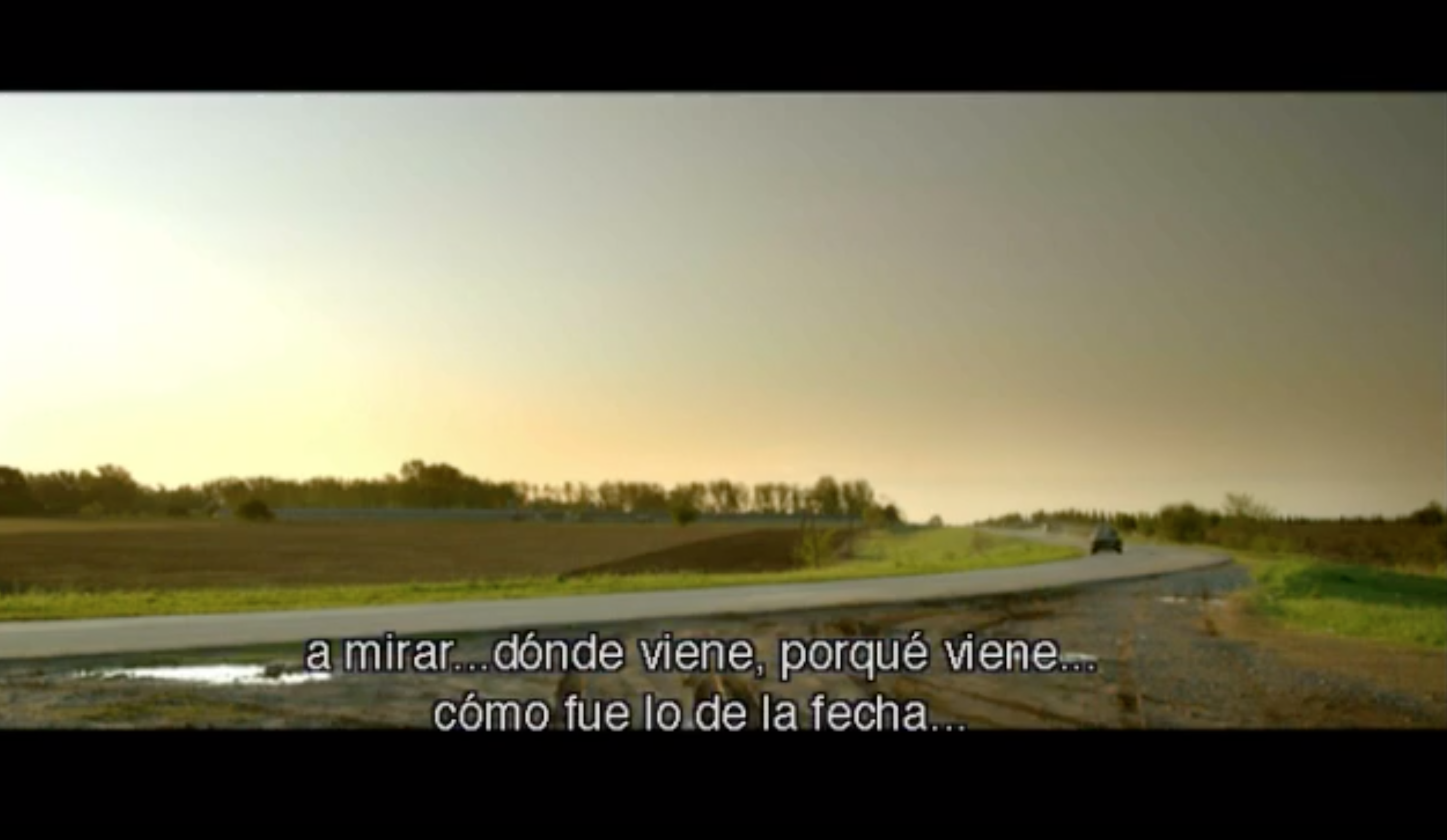
    In this case, the use of wide-angle shot is used to showcase the landscape of the Argentinian countryside. At this point in the story, the investigators have just fled the house of the murderer’s mother after searching for handwritten letters for clues of the culprit’s whereabouts. Her address is never disclosed, but the wide-angle shot of the countryside reveals that they have driven far from their office’s location in the bustling city of Buenos Aires. This is key in highlighting the protocol they’ve broken and the lengths they were willing to go in order to possess this information. By using actual shots of Argentina (rather than shooting in a studio), the story feels realistic and more easily submerges the audience into the plot.
    Timecode
    00:40:43
    Film Still
    We see the agent's car driving over an empty road in rural Argentina.
    Quality
    Comments
    Focus: Soft Focus
    When Benjamín Espósito is recalling the murder of Liliana Colotto for the novel he is writing, the screen depicts a flashback of her final moments with her lover. Liliana is filmed with a soft focus, blurring and brightening the edges of her outline. Not only is this selection done to indicate that the scene is a flashback, but it also highlights her innocence. With the soft gradient and white highlights, Liliana looks angelic, which heightens the audience’s horror as they learn of her murder.
    Timecode
    00:03:02
    Film Still
    We see a flashback of Liliana with blurred edges and a white cast on her body as she eats her final breakfast.
    Comments
    Special Effect: Long-exposure cinematography
    The movie begins with multiple long-exposure shots filmed with a long-duration shutter speed in order to create the effect of bodies blurring on screen. This is used to communicate the passage of time, as one of the protagonists recollects memories of his departure from Buenos Aires. There is also a soft focus of the images on screen, adding to the dream-like state. There is a brief moment where the only characters in focus are the two protagonists parting ways, emphasizing how their attention is only on each other.
    Timecode
    00:01:09-00:02:15
    Film Still
    We see Irene's blurred hand as she reaches for Espósito as his train departs to Jujuy.
    Framing
    Framing
    Comments
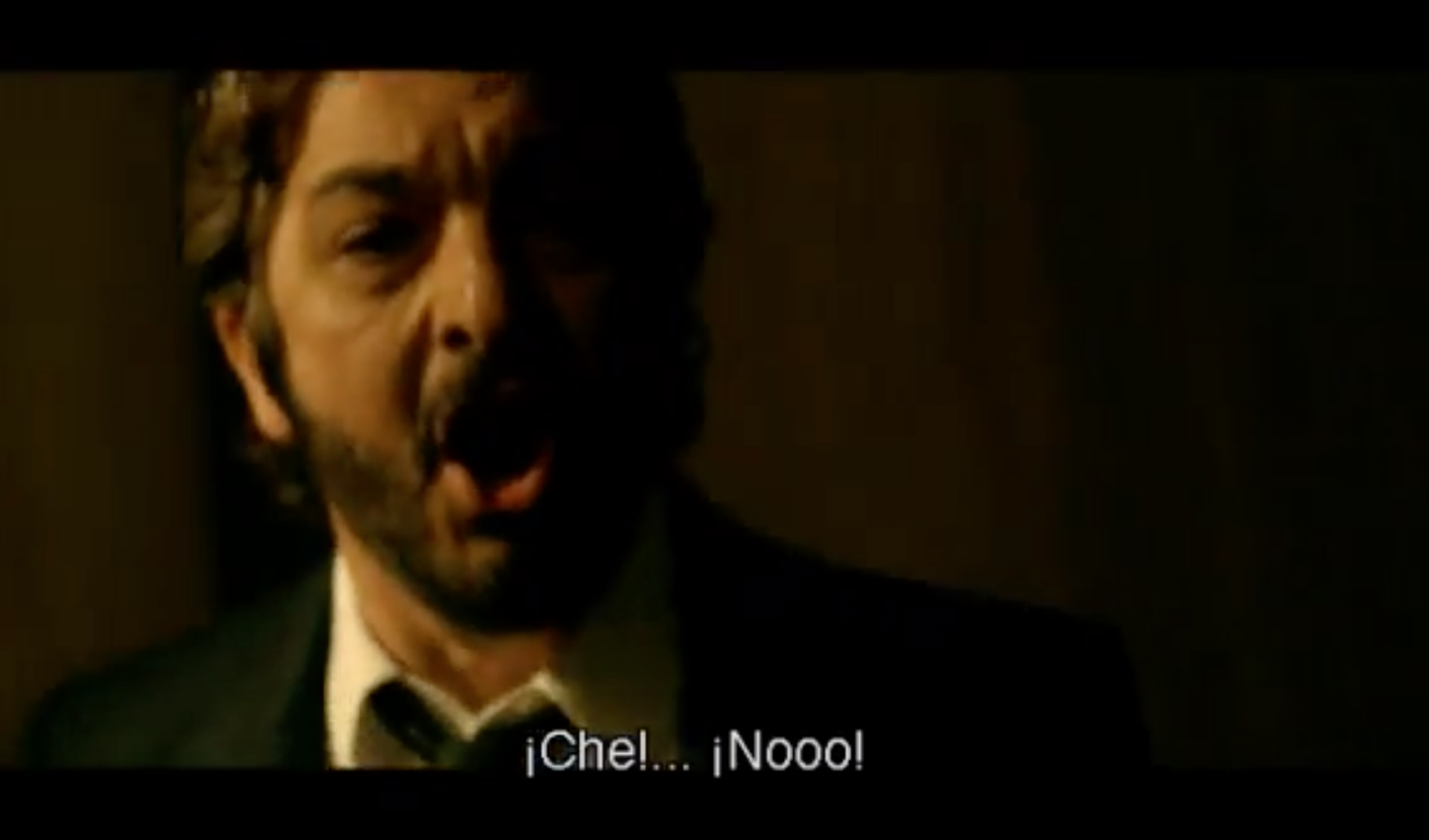
    The low-angle shot is utilized at this point in the film in order to demonstrate where the character’s gaze is falling. It is at this point in the movie where Ricardo Morales learns of his wife’s murder and is in a state of shock and disbelief. By watching the character from this point of view, we can see the emptiness in his gaze as he looks off into “nothing.” We see the character’s expression as he tries to process the traumatic event he is facing. This angle also establishes the stability of the two characters shown, with inspector Espósito watching over Morales in the middle of questioning. Not only is Morales in this vulnerable emotional state, but he is also a suspect in the case and showcased in a debilitated position of power as he is interrogated. The angle conveys that Espósito has the upper hand.
    Timecode
    00:15:25
    Film Still
    We see Ricardo looking off into the camera at as he processes his wife's murder. Behind him, Espósito stands tall as they ask him questions.
    Scale
    Comments
    In this shot, the camera slowly zooms in on a photo until an extreme close-up is reached, focusing on Isidoro Gómez’s eyes. Not only does this emphasize to the viewer that a key discovery has been made by clearly depicting where ​​Espósito’s gaze is lying, but the camera also pauses on the face for a dramatic effect. It can be presumed that the movie’s name is extrapolated from this still, “The Secrete in Their Eyes” meaning the hidden obsession Isidoro has for Liliana is revealed through these photographs. This moment also demonstrates the observation which leads to the breakthrough and resolution of the case. The gaze is creepy and unsettling, which is likely the reason the camera focuses on it for so long, in order to instill these emotions in the audience along with the inspector. The viewer is transported into Espósito’s point of view and feels the same uneasiness.
    Timecode
    00:27:04
    Film Still
    The camera zooms in on Gómez's face in an old photograph as he stares at Liliana, indicating his desire for her.
    Movement
    Movement
    Comments
    This shorter sequence is part of a long take which begins at an aerial shot of the massive soccer stadium and ends with a closely followed tracking shot of the agents chasing the murderer through the crowd. This long take serves as a way of creating a realistic scene as the audience perceives the time pass by along with the characters. Further reinforcing this idea is the tracking shot captured in the clip, where the viewer is propelled into the chase past bystanders. The style of shot not only throws the spectator into the action, but also aids in setting the tone of the scene, by bringing forth the urgency of the pursuit. Via utilization of a handheld camera and the tracking shot, the audience assumes the point of view of another agent chasing along with the protagonists.
    Timecode
    01:03:17-01:04:03
    Film Still
    We see Sandoval's back and the blurry background as he pushes past a crowd of soccer fanatics in hopes of capturing Isidoro.

    Editing is the process of putting a film together–the selection and arrangement of shots and scenes. Editing can condense space and time, emphasize separate elements and bring them together, and organize material in such a way that patterns of meaning become apparent. In addition, editing can determine how a film is perceived: for instance, quick, rapid cuts can create a feeling of tension, while a long take can create a more dramatic effect. The first photoplays generally had no cutting, owing to the fact that they were single-reel films; once filming began, you could not stop until the film ran out. (https://filmglossary.ccnmtl.columbia.edu/term/editing/)

    Coherence, Continuity, and Rhythym
    Comments
    Rhythm and Pace: Flowing, slow-paced shot
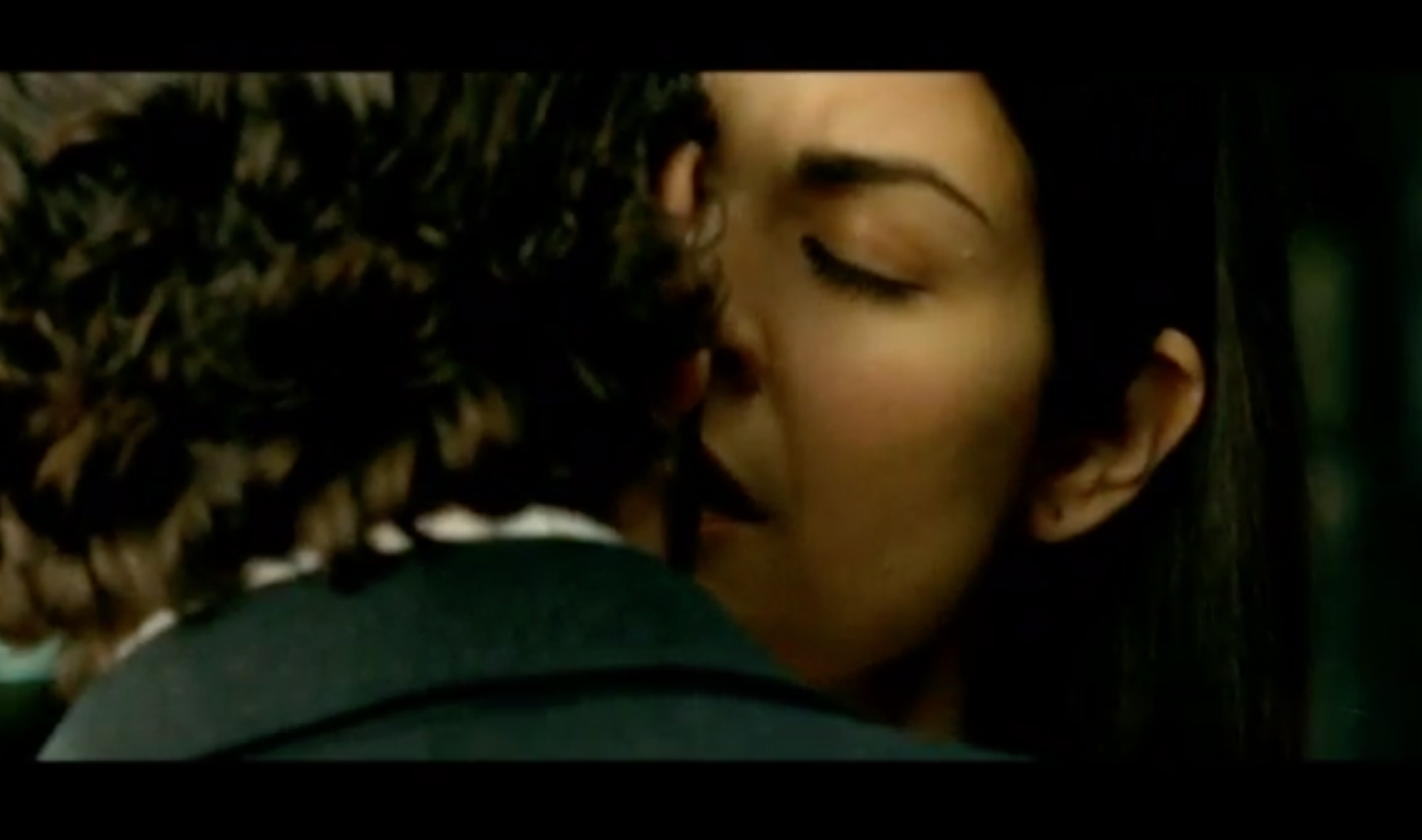
    This scene depicts the final moments between Irene and Espósito before he flees to Jujuy after his attempted murder. The pair had long ignored their romantic affections for each other and face the problem of whether to reconcile everything at once. The take is slow-paced and flows from one camera angle to another in order to cautiously capture the intimacy between both characters. The shots linger on their faces and the protagonists’ lips to highlight the tension between them, but also their unwillingness to give in. By avoiding quick transitions and opting for longer takes, the audience feels present and is consumed by the moment. It is also a slower-paced scene, and there are no conflicting events to interject the characters’ interactions.
    Timecode
    01:32:34-01:33:50
    Film Still
    We see Irene and Espósito slowly withhold from kissing each other in a very intimate close-up shot.
    Editing Style
    Transitions
    Comments
    Purpose of editing: “Invisible” cutting
    This technique is used to create the illusion of continuity and maintain a smooth flow of action from one take to another. During this segment of the movie, Espósito is chatting with Liliana’s husband at the train station, and figures of passersby frequently cross in front of the camera. As a person cuts in front of the camera, the brief period of darkness is used as an opportunity to switch to shot from a different point of view in the scene after the person passes. However, due to the quickness of the moment, the transition is smooth and discrete, creating the illusion that nothing has changed.
    Timecode
    00:52:40-00:52:42
    Film Still
    This still immediately follows the change in shot after a passerby crosses in front of the camera. Liliana's husband is conversing with Espósito at a busy train station.
    Comments
    Transition technique: Instantaneous Change
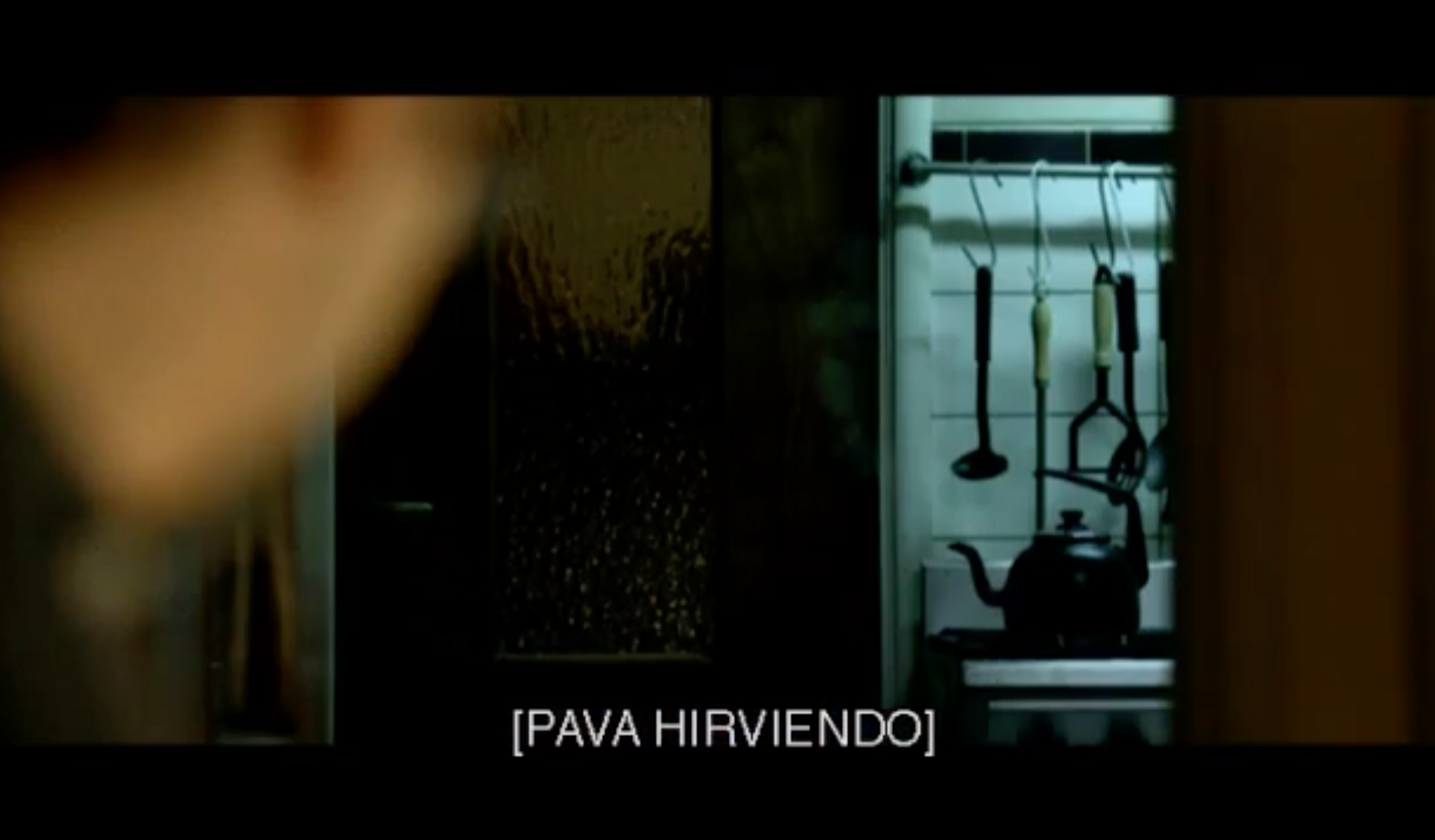
    This clip shows the transition from Ricardo Morales looking off into the distance after hearing of his wife’s murder to a boiling pot of water. The two shots are unified by a sound bridge of the kettle ringing. Not only does this diegetic sound connect the two shots, but it also symbolizes the anger and passionate emotions brewing inside of Morales. This notion is reinforced when, at the end of the film, the audience learns that Morales actually kidnaps and holds the murderer hostage for many years. With this new information, it can be deduced that at this point in time, the water boiling parallels the anger erupting from Morales.
    Timecode
    00:16:27-00:16:35
    Film Still
    We see a teapot in the distance aggressively boiling after Ricardo Morales hears of his wife's murder.
    Expansion and Compression of Time
    Comments
    Duration: Quick cutting
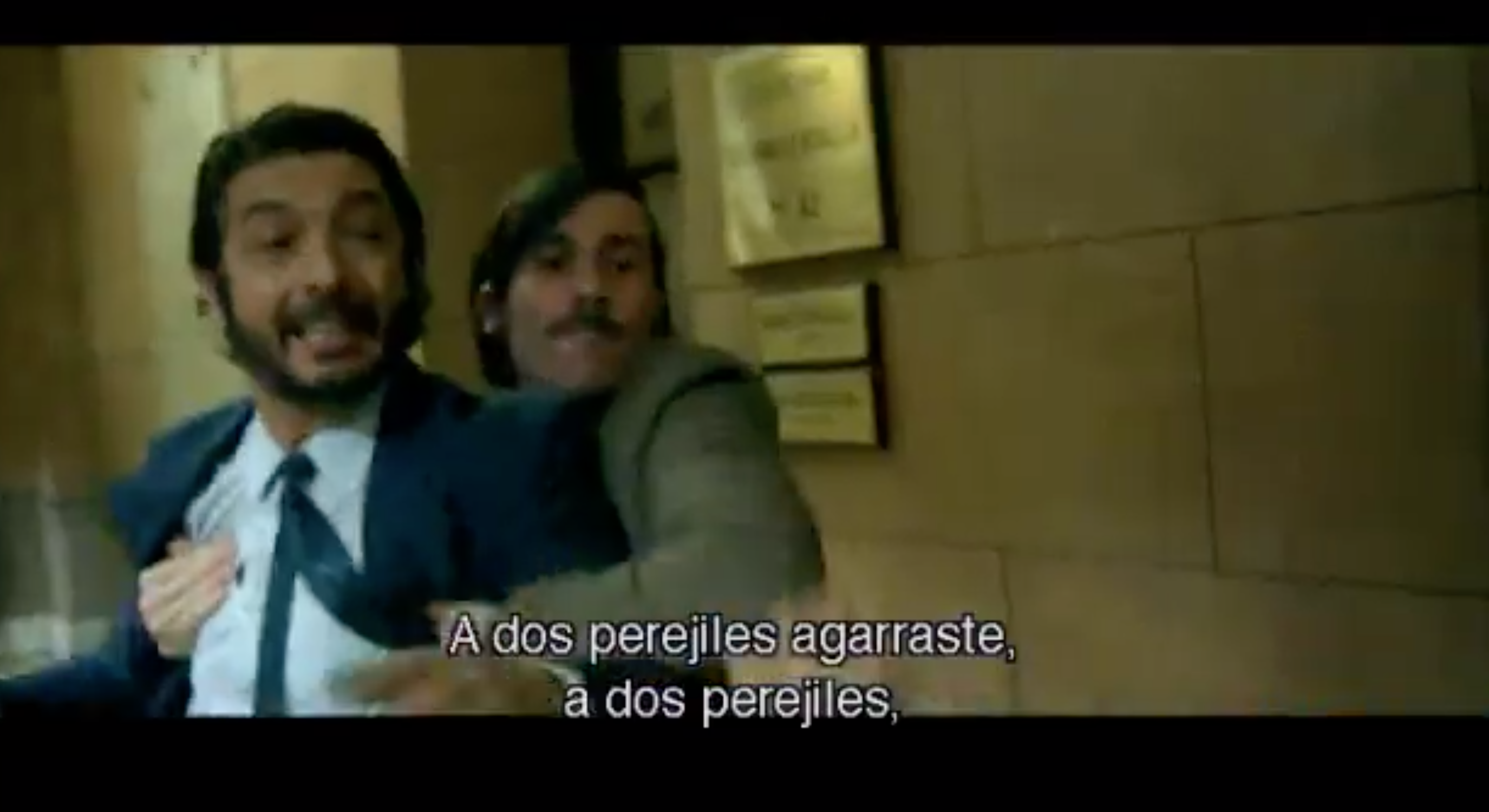
    During this segment of the movie, a transition takes place between inspector Espósito at the local jail and then a shot of him confronting a rival judiciary agent outside their offices. Once Espósito discovers that the men who confessed to the crime were beaten into submission, the camera instantly switches to his attack of the other agent. This is then followed by multiple quick transitions between shots from both sides’ point of view. As the men shout at each other and attempt to throw punches, the handheld camera quickly follows. These fast transitions help communicate the action and immediacy of the situation. This technique not only conveys perspectives in the fight, but also serves to showcase how quickly Espósito came to the realization and took action after seeing the battered men.
    Timecode
    00:20:04-00:20:29
    Film Still
    We see Espósito getting held back by other men as he tries attacking a rival judiciary agent in a quick-moving scene with many transitions.
    Editing General Comments

    Sound is an integral part in a film. It refers to everything that the audience hears including sound effects, words and music. Sound is used in films for various purposes, including: providing the information to the viewer about the location of the scene, heightening the mood, telling the audience about the characters and advancing the plot. Every person who watches a film realizes that the choice of voices, soundtrack and music present in a film affect the way that the viewer perceives a particular film. As a result, the sound is an important and integral element of the film, one that determines the way that the viewer experiences and understands a film as a visual experience.

    Sound Type

    Narrative analysis is an examination of the story elements, including narrative structure, character, and plot. A narrative can be considered to be the chain of events in a cause-effect relationship occurring in time and space. In order to analyze the narrative of a film, we need to first make the distinction between the plot of the film and the story of the film. This is sometimes referred to as the discourse and story of a film. Narrative may also be called the story thought story mainly refers to the events that describe the narrative.

    Plot Comments
    Story Comments
    Narrator Type
    Narrative Structure

    Film genres are various forms or identifiable types, categories, classifications or groups of films. (Genre comes from the French word meaning "kind," "category," or "type"). These provide a convenient way for scriptwriters and film-makers to produce, cast and structure their narratives within a manageable, well-defined framework. Genres also offer the studios an easily 'marketable' product, and give audiences satisfying, expected and predictable choices. Genres refers to recurring, repeating and similar, familiar or instantly-recognizable patterns, styles, themes, syntax, templates, paradigms, motifs, rules or generic conventions.

    Category
    Comments
    Also considered a Thriller/Suspense film and a Drama.

    The Secret in Their Eyes. Directed by Juan José Campanella, Alta Classics, 16 Apr. 2010.