La Gente de la Universal

    Movie Poster
    Release year
    1991
    Director
    Felipe Aljure
    Biography of director(s)
    Felipe Aljure was born in Girardot, Colombia, and studied Art and Technique of Filmmaking in London. He has directed three movies: La Gente de la Universal (1991), El Colombian Dream (2006), and Tres Escapularios (2015). He was also an assistant director of Rodrigo D, No Futuro (1990), shortly before starting on La Gente de la Universal.
    Country
    Colombia
    Original synopsis of the film

    Diogenes, a private investigator and the leader of “La Universal,” is tasked by a crime boss, Gaston, to spy on his mistress and make sure his wife doesn’t find out about the affair until she can get him out of jail. Diogenes works with his nephew Clemente to spy on the mistress, but unbeknownst to him, Clemente continuously bails on his work to have an affair with Diogenes’s wife. After a series of lies and bribery, Gaston’s mistress is revealed to be a famous porn actress who is sleeping with many men - including eventually Diogenes himself. Towards the end of the film, all of the lies unravel. Diogenes finds out his wife has been cheating on him with his nephew, and Gaston’s wife finds out about his own affair with the porn actress. Diogenes tells Gaston that his mistress has been cheating on him with Clemente, his nephew, and as a result, Gaston orders for Clemente to be killed (though the attempted murder is unsuccessful). Gaston also sends someone to kill his mistress, who at the time happens to be sleeping with Diogenes; both Diogenes and the mistress are shot and killed. When Gaston’s wife and grandmother discover what he has done, they abandon him and leave Colombia, leaving him with no money or family outside prison.
     

    Film Awards
    Best Unpublished Screenplay, Havana Film Festival, 1991
    Gold Precolumbian Circle Nominee, Bogota Film Festival, 1994
    Best Original Screenplay, Rhode Island International Film Festival, 1994
    Best Director, Uruguay International Film Festival, 1994
    Film still
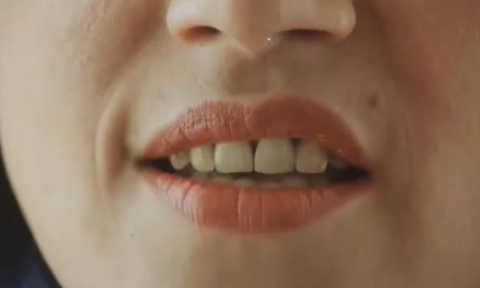
    Close-up of a character's lips

    Describes the setting of a scene in a play or a film. It refers to everything placed on the stage or in front of the camera—including people. In other words, mise en scène is a catch-all for everything that contributes to the visual presentation and overall “look” of a production. When translated from French, it means “placing on stage.”
    Setting
    Setting
    Explanation
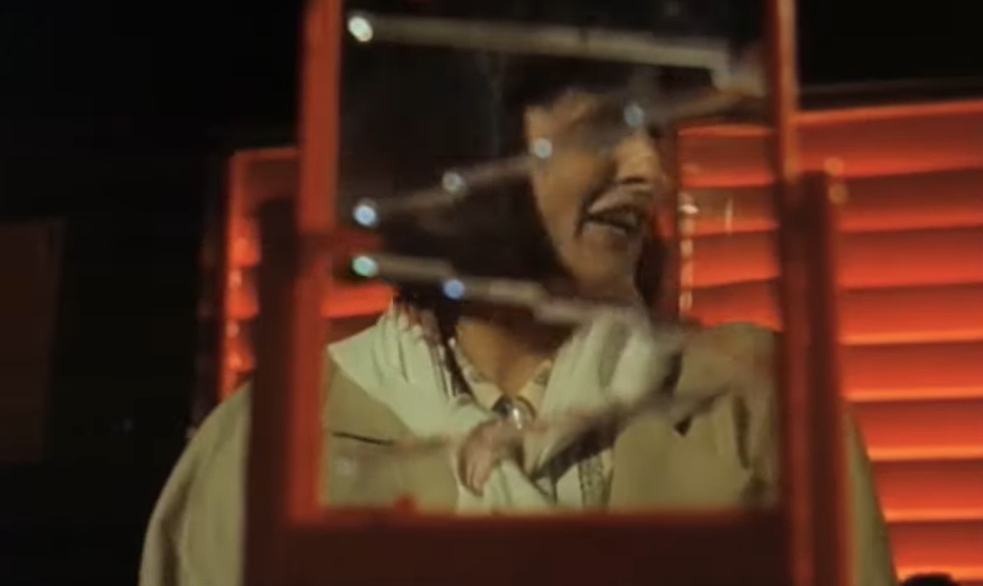
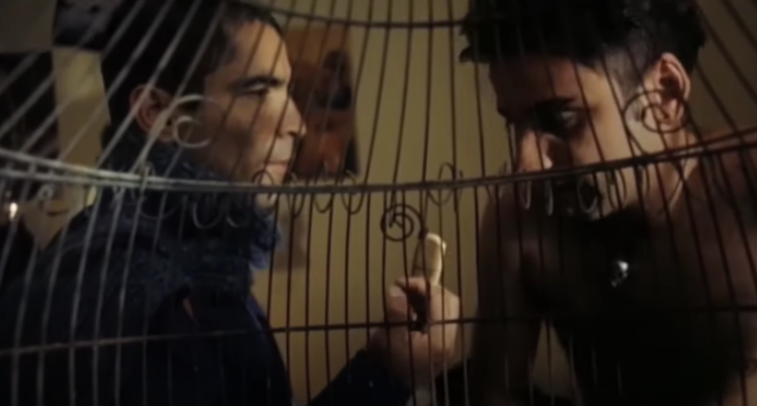
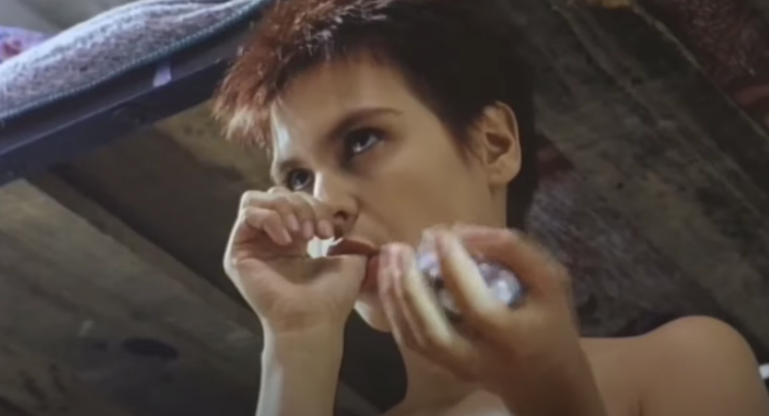
    The film is mostly shot on location in Bogota, Colombia. The setting is depicted in a realistic fashion, emphasizing the brutal and somewhat run-down state of Bogota prior to a series of urban renewals that occurred around the time of the film’s production. It is a contemporary depiction, as the movie takes place in the present day or very recent past. Aljure does not emphasize the exotic aspects of his setting at all, instead focusing on scenes of lower and middle-class urban settings that could perhaps be found in any large, struggling metropolis. The movie’s primary symbol is bars, as throughout the film, there are a number of characters and scenes that are filmed either behind or in front of some sort of cage of bars. For example, there is a scene in Clemente’s house where the entire scene is shot from the perspective of inside a bird cage, and there are also numerous scenes in a literal prison, many of which have cell bars prominently displayed in the forefront of the shot. This might emphasize the sort of cage that all of the characters are trapped in, a cage of lies and deceit that enables and even requires more lies and more deceit to keep up the farce. Additionally, the cages and the prison could represent Bogota itself, as the seemingly normless urban jungle in which the characters live represents a cage that they cannot escape or possibly don’t even want to. Several props used throughout the film also have overtly sexual symbolism, most notably cigarettes as phallic imagery and the actress’s set of metal balls as a metaphor for her playing with Gaston’s manhood.
    Film Still
    Bars of birdcage
    Gaston's metal balls
    Props
    Prop
    Space (there's not another section for it)
    Explanation
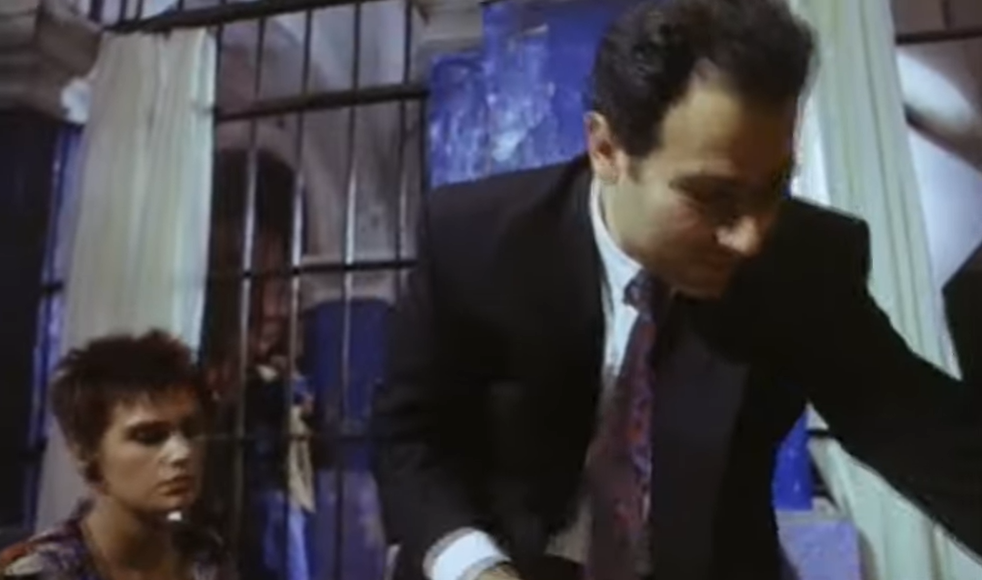
    The space of this movie and the effect that the space has vary from scene to scene and from location to location, but as a general trend, the film’s spaces are cluttered and busy but, at the same time, very deliberate. The film is shot in Colombia, mostly on-site in urban Bogota, and Aljure seems to consciously use his urban locations to create the sense of drama and chaos that is felt in this movie. In particular, the prison location is very chaotic, in terms not only of its spatial elements but also in terms of sound--in contrast to the rest of the movie, which is shot in a way that heavily focuses on the interactions between a small number of people at any given time, the prison scenes feature so much background noise that it is extremely hard to hear what is actually going on in the foreground, and they jump back and forth between speakers and conversations at a rapid, sometimes almost nauseating pace. The movie theater office is also very chaotic and could be viewed as symbolic or foreshadowing of the fatal affair between Diogenes and the actress and, in a broader sense, the overarching sexual tension that pervades the entire movie. In addition to the actress’s pornographic movie being played on a screen that can be easily seen from the office, the red chairs, windowsills, and blinds provide essentially the only color in the entire room, giving the space a very sexual atmosphere. These sets and effects are clearly very intentional, however, as the frame is closed-form throughout the film. Aljure makes use of camera movement seemingly just for the sake of camera movement in pivotal moments, such as in several scenes where two people are talking and the camera circles around them, giving an otherwise stationary setting a vertigo-type effect. This movement serves as a type of wake-up call to the viewer that a key event is happening and works with the characters’ flair for drama in creating the raised level of general tension that pervades the entire movie.
    Film Still
    Red movie theater office
    Chaotic prison setting
    Hair and Makeup
    Figure Behavior
    Example
    Extreme Close-ups and character expressiveness
    Explanation
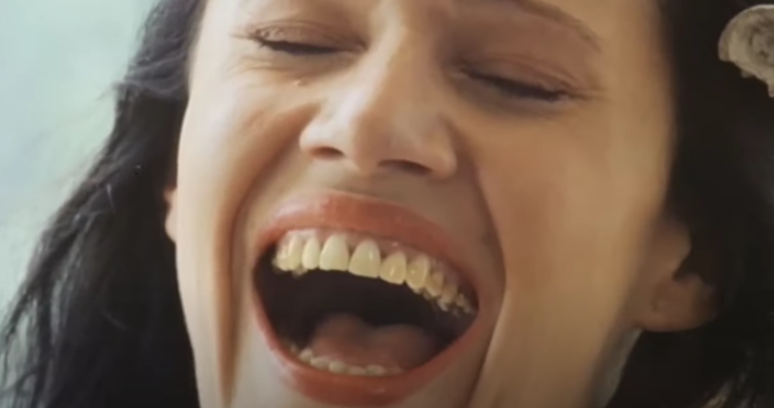
    La Gente de la Universal employs professional actors, most of whom are Colombian but some of whom are foreign. It might not be considered a classic example of the star system, since none of the actors in the film were particularly well-known at the time of the film; however, they are still trained actors who are not just playing fictionalized versions of themselves. Aljure utilizes these actors, particularly through their facial expressions and body language, to convey and enhance the significant levels of drama that are present in the movie. For one, the film makes frequent use of extreme close-up shots of characters’ faces as they are talking. In these shots, the face is perfectly centered and takes up almost the entire frame, with any visible background being completely blurred out at best, and the character looks directly into the camera. In one notable sequence, Aljure takes this zooming in to an extreme level, such that all that is visible in the shot is a character’s lips and the surrounding parts of their face as they’re talking. These shots have the effect of putting the audience in the shoes of the person being talked to and raising the intensity of the conversation, since it is essentially impossible to escape the speaker’s very intense gaze. Additionally, throughout the film, characters are extremely dramatic and expressive in almost every context. People are frequently either maniacally laughing or angrily yelling at each other, and this high level of energy and expression gives the movie an overall atmosphere of craziness, both in terms of the characters themselves and the situations they find themselves in.
    Film Still
    Close-up of hysteric laughter
    Centered, character-driven, closed-form frame
    Example
    Sexually Charged Gaze
    Explanation
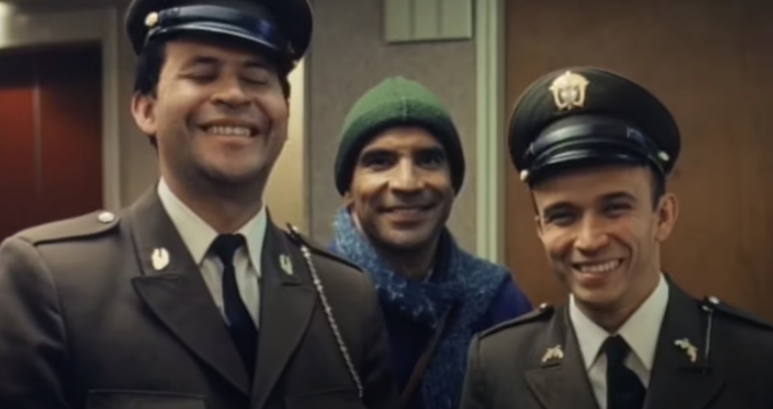
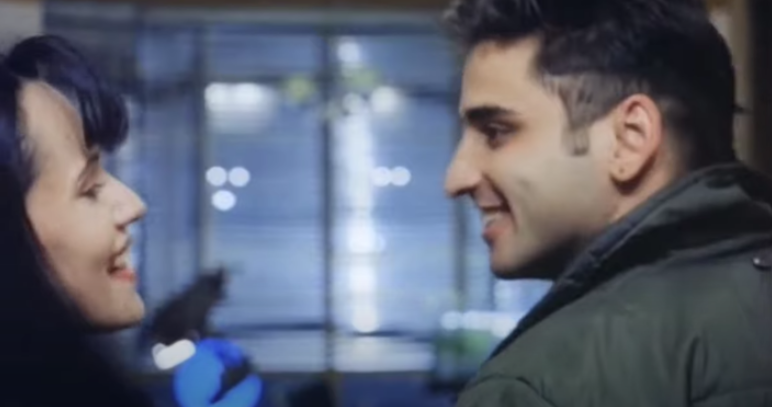
    Finally, the interactions and gazes between characters are relevant primarily in a sexual context. Sexual escapades, more particularly affairs, drive essentially the entire plot of this movie, and the characters’ facial expressions during both literal sex scenes and other scenes that are tangentially related to sex serve to frame how the characters themselves feel about the encounters and how the audience will react to them. For example, when Diogenes and his wife are having sex during the opening scene of the movie, the woman is clearly very unhappy and uncomfortable, which gives the viewer a negative perception of the film’s main character from the very beginning. On the other hand, when she sleeps with Clemente throughout the movie, the expressions from both characters in those scenes are much more passionate and genuine, which frames their relationship in a more positive, sympathetic light for the viewer even though it is an inappropriate relationship and the cause of one of the film’s main conflicts.
    Film Still
    Sexual gaze between Clemente and Diogenes' wife
    Representative Clip

    This is the art of photography and visual storytelling in a motion picture or television show. Cinematography comprises all on-screen visual elements, including lighting, framing, composition, camera motion, camera angles, film selection, lens choices, depth of field, zoom, focus, color, exposure, and filtration. Cinematography sets and supports the overall look and mood of a film’s visual narrative. Each visual element that appears on screen, a.k.a. the mise-en-scène of a film, can serve and enhance the story—so it is the cinematographer’s responsibility to ensure that every element is cohesive and support the story. Filmmakers often choose to spend the majority of their budget on high-quality cinematography to guarantee that the film will look incredible on the big screen.

    Point of View
    Quality
    Framing
    Scale
    Movement

    Editing is the process of putting a film together–the selection and arrangement of shots and scenes. Editing can condense space and time, emphasize separate elements and bring them together, and organize material in such a way that patterns of meaning become apparent. In addition, editing can determine how a film is perceived: for instance, quick, rapid cuts can create a feeling of tension, while a long take can create a more dramatic effect. The first photoplays generally had no cutting, owing to the fact that they were single-reel films; once filming began, you could not stop until the film ran out. (https://filmglossary.ccnmtl.columbia.edu/term/editing/)

    Coherence, Continuity, and Rhythym
    Editing Style
    Transitions
    Match
    Expansion and Compression of Time
    Editing General Comments

    Sound is an integral part in a film. It refers to everything that the audience hears including sound effects, words and music. Sound is used in films for various purposes, including: providing the information to the viewer about the location of the scene, heightening the mood, telling the audience about the characters and advancing the plot. Every person who watches a film realizes that the choice of voices, soundtrack and music present in a film affect the way that the viewer perceives a particular film. As a result, the sound is an important and integral element of the film, one that determines the way that the viewer experiences and understands a film as a visual experience.

    Sound Type

    Narrative analysis is an examination of the story elements, including narrative structure, character, and plot. A narrative can be considered to be the chain of events in a cause-effect relationship occurring in time and space. In order to analyze the narrative of a film, we need to first make the distinction between the plot of the film and the story of the film. This is sometimes referred to as the discourse and story of a film. Narrative may also be called the story thought story mainly refers to the events that describe the narrative.

    Plot Comments
    Story Comments
    Narrator Type
    Narrative Structure

    Film genres are various forms or identifiable types, categories, classifications or groups of films. (Genre comes from the French word meaning "kind," "category," or "type"). These provide a convenient way for scriptwriters and film-makers to produce, cast and structure their narratives within a manageable, well-defined framework. Genres also offer the studios an easily 'marketable' product, and give audiences satisfying, expected and predictable choices. Genres refers to recurring, repeating and similar, familiar or instantly-recognizable patterns, styles, themes, syntax, templates, paradigms, motifs, rules or generic conventions.

    Category