
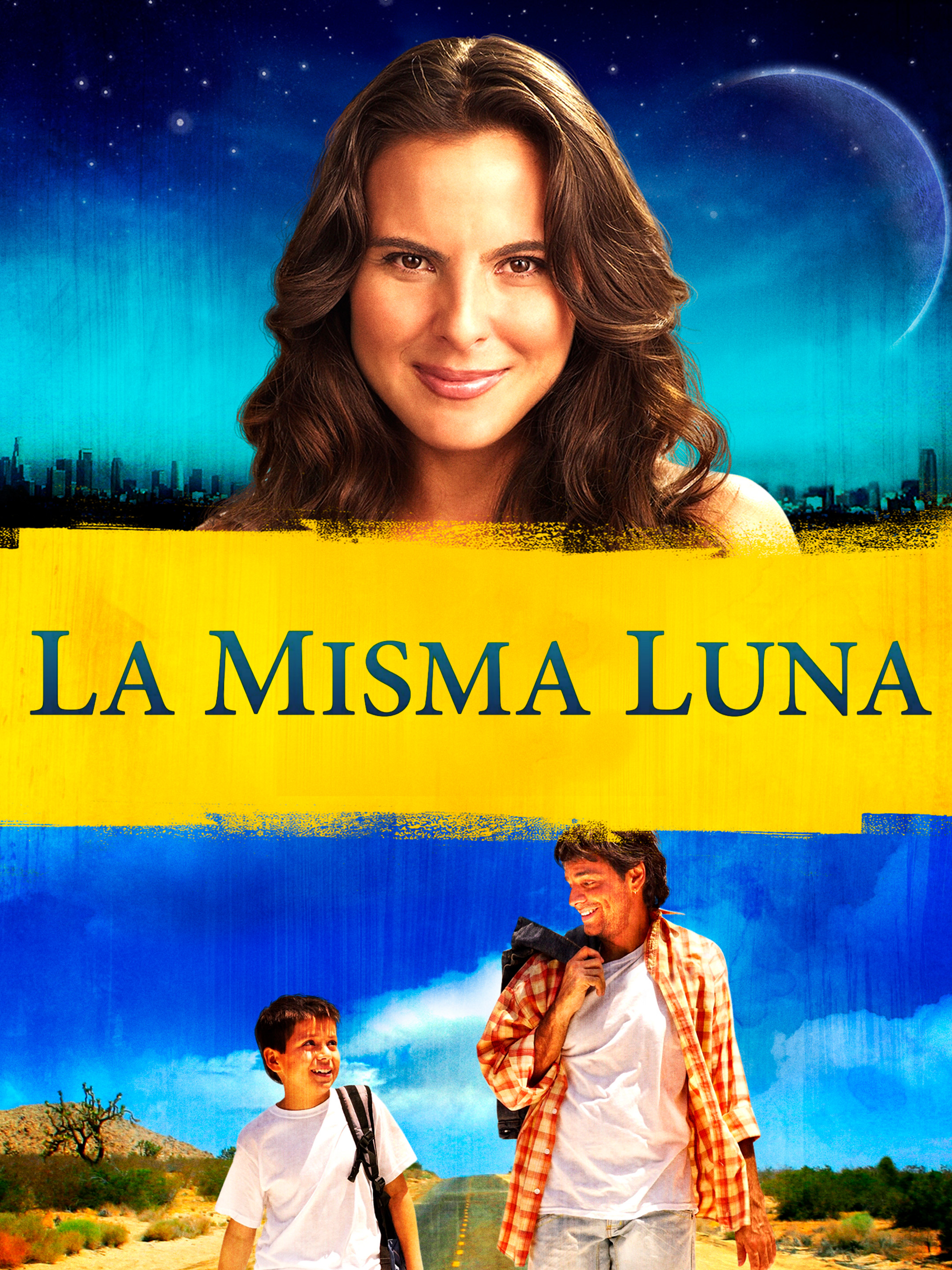
La misma luna (Under the Same Moon, 2007) is a Mexican-American drama about family separation, immigration, and the relationship between a mother and her son.
The film features Carlitos, a nine-year-old boy who lives in Mexico with his grandmother. His mother, Rosario, is undocumented and lives in Los Angeles. She makes a living by cleaning houses to earn money and build a better future for them. Although they are separated by the U.S.–Mexico border, Rosario calls Carlitos every Sunday from the same pay phone, and the two remain extremely close.
After Carlitos's grandmother dies, he decides that he cannot continue living apart from his mother. He crosses the border into the United States and travels toward Los Angeles all on his own. Along the way, he encounters different immigrants and learns firsthand about the dangers and difficulties faced by undocumented people in the U.S. One of the most important people he meets is named Enrique. He is a reluctant migrant worker who eventually becomes a protective, almost father-like figure to Carlitos.
Meanwhile, Rosario is struggling with her own situation. She considers marrying a U.S. citizen to obtain a legal status in the United States, but she is conflicted about what she is willing to do to remain in the country. She also becomes more and more discouraged by being separated from Carlitos and even considers returning to Mexico.
The movie builds around Carlitos trying to find Rosario using the few details he remembers from all their weekly phone calls. Their stories repeatedly come close to intersecting before the film's emotional conclusion.
At its core, La misma luna is less about immigration as an abstract political issue and more about what migration does to families. The major themes include mother-child love, sacrifice, loneliness, belonging, resilience, immigration, economic opportunity, and the idea of “home.” The title captures the idea that Carlitos and Rosario remain connected even when they are physically separated: wherever they are, they can look up and see the same moon.
Describes the setting of a scene in a play or a film. It refers to everything placed on the stage or in front of the camera—including people. In other words, mise en scène is a catch-all for everything that contributes to the visual presentation and overall “look” of a production. When translated from French, it means “placing on stage.”
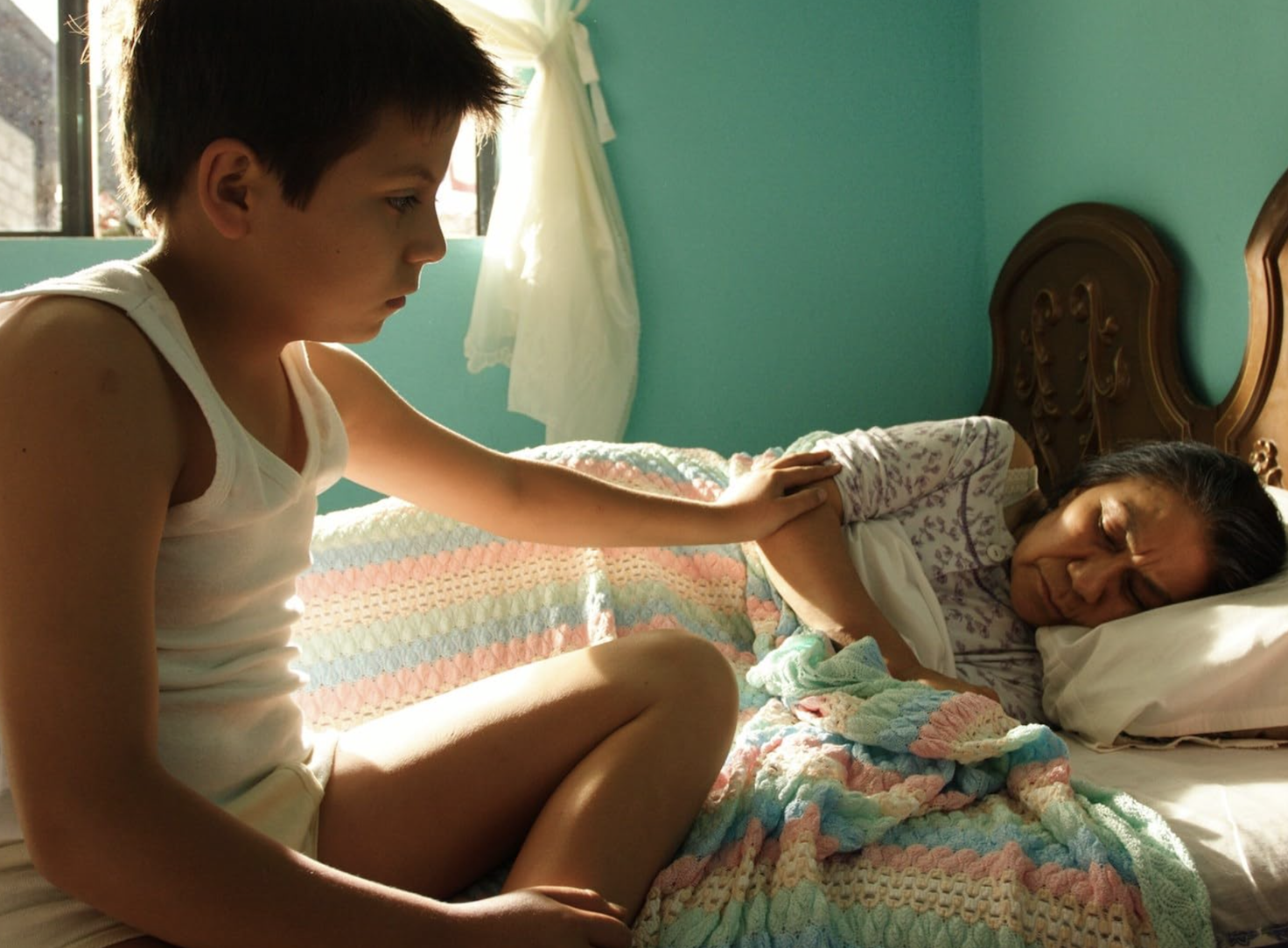
The darkness that surrounds them makes the space feel enclosed and private, while the warmer illumination on their faces creates this sense of intimacy, comfort, and safety. Since their faces are positioned across from each other, the illuminated area creates an illusion of their emotional connection.
The movie is centered around their physical separation, so the lighting helps transform their closeness into the focus of this scene.
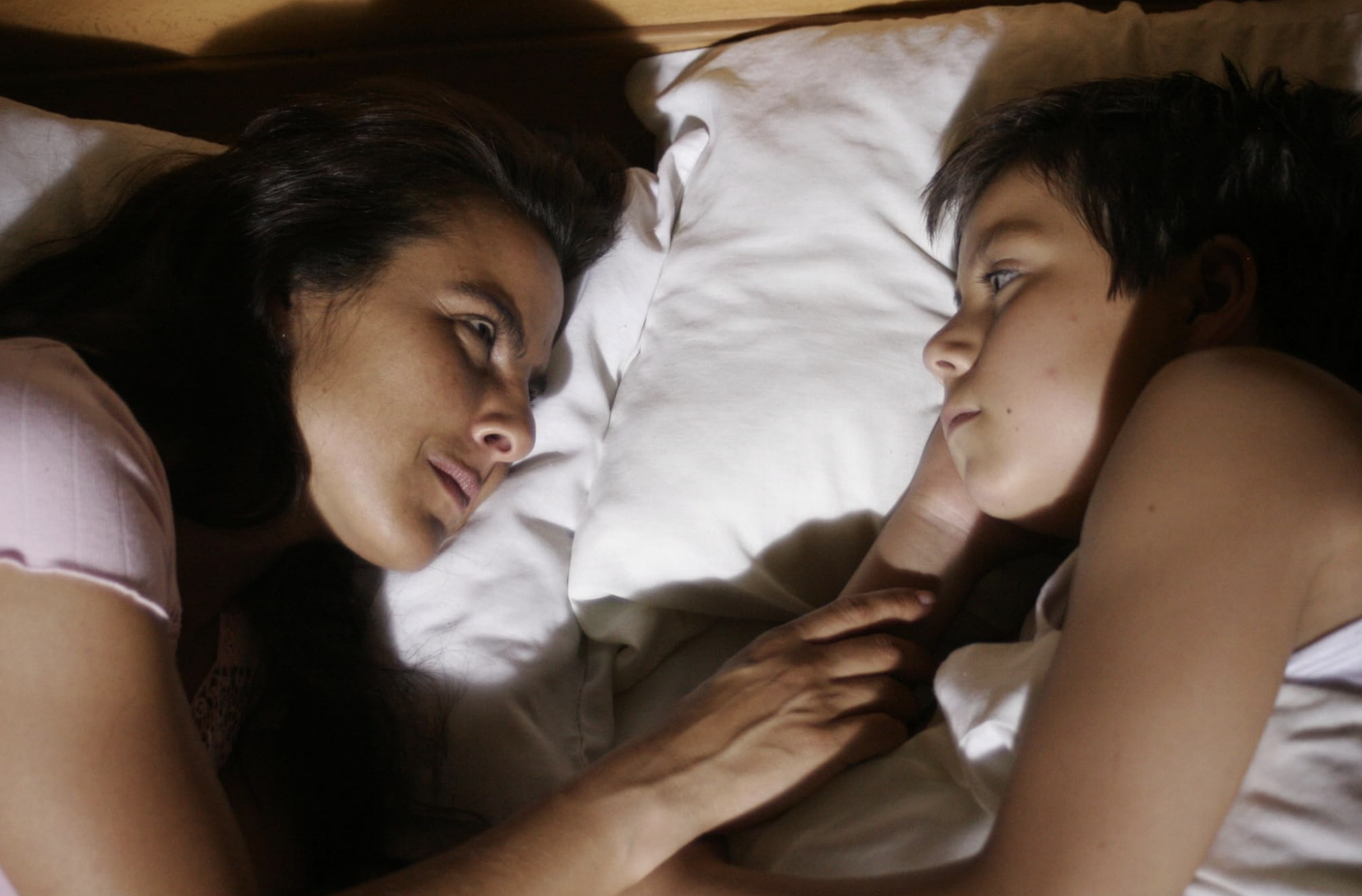
Their body language in this scene also reflects the development of their relationship throughout the film. Enrique did not want to take on he responsibilities of helping Carlitos at first. Over time, he gradually becomes more protective of him as they get closer by traveling together. The decreasing distance between the characters helps communicate the growing emotional connection. Both of their gestures, gaze, and positionings show that Enrique becomes a protective father-like figure to Carlitos.
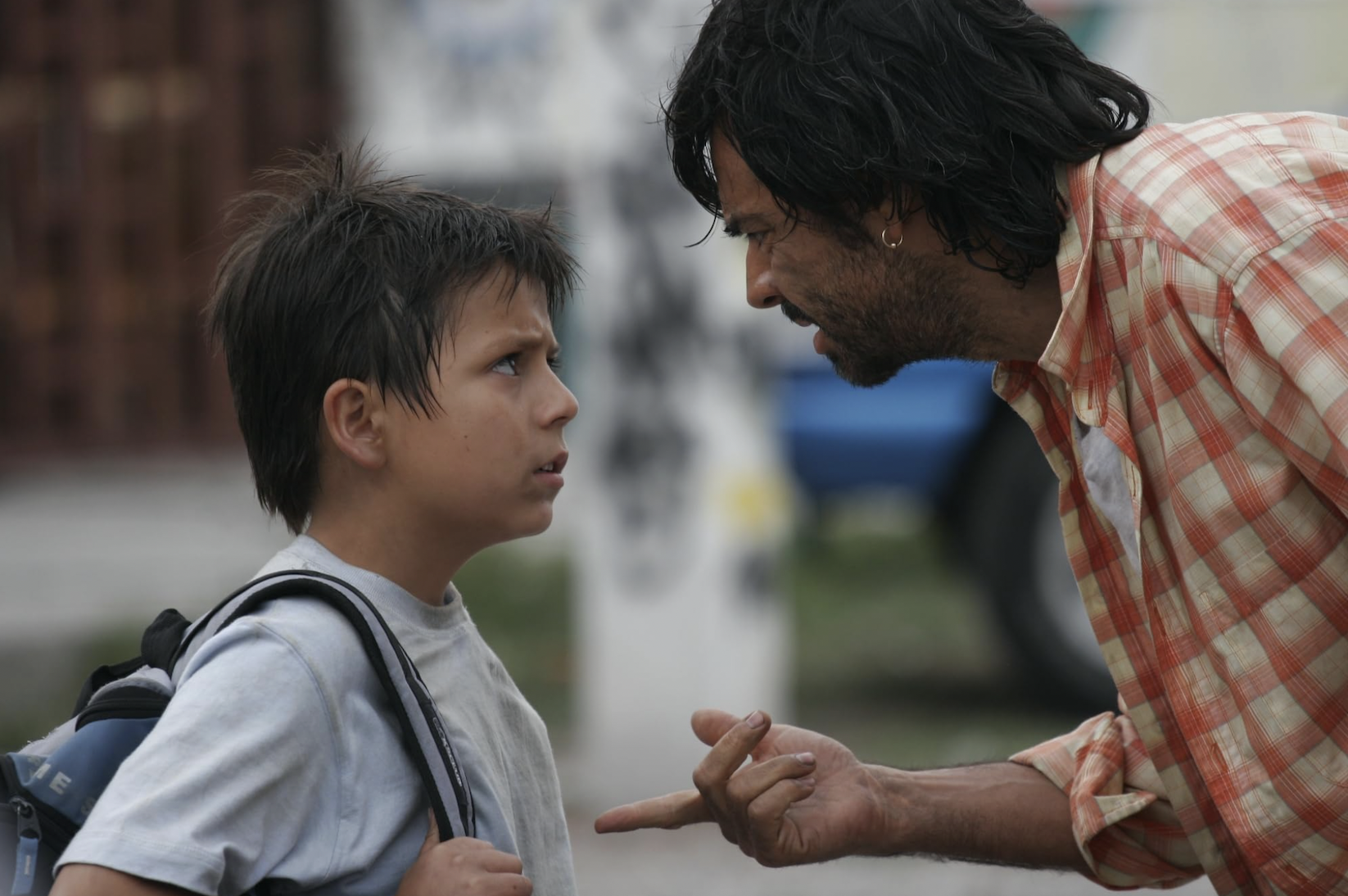
This is the art of photography and visual storytelling in a motion picture or television show. Cinematography comprises all on-screen visual elements, including lighting, framing, composition, camera motion, camera angles, film selection, lens choices, depth of field, zoom, focus, color, exposure, and filtration. Cinematography sets and supports the overall look and mood of a film’s visual narrative. Each visual element that appears on screen, a.k.a. the mise-en-scène of a film, can serve and enhance the story—so it is the cinematographer’s responsibility to ensure that every element is cohesive and support the story. Filmmakers often choose to spend the majority of their budget on high-quality cinematography to guarantee that the film will look incredible on the big screen.
Editing is the process of putting a film together–the selection and arrangement of shots and scenes. Editing can condense space and time, emphasize separate elements and bring them together, and organize material in such a way that patterns of meaning become apparent. In addition, editing can determine how a film is perceived: for instance, quick, rapid cuts can create a feeling of tension, while a long take can create a more dramatic effect. The first photoplays generally had no cutting, owing to the fact that they were single-reel films; once filming began, you could not stop until the film ran out. (https://filmglossary.ccnmtl.columbia.edu/term/editing/)
Sound is an integral part in a film. It refers to everything that the audience hears including sound effects, words and music. Sound is used in films for various purposes, including: providing the information to the viewer about the location of the scene, heightening the mood, telling the audience about the characters and advancing the plot. Every person who watches a film realizes that the choice of voices, soundtrack and music present in a film affect the way that the viewer perceives a particular film. As a result, the sound is an important and integral element of the film, one that determines the way that the viewer experiences and understands a film as a visual experience.
Narrative analysis is an examination of the story elements, including narrative structure, character, and plot. A narrative can be considered to be the chain of events in a cause-effect relationship occurring in time and space. In order to analyze the narrative of a film, we need to first make the distinction between the plot of the film and the story of the film. This is sometimes referred to as the discourse and story of a film. Narrative may also be called the story thought story mainly refers to the events that describe the narrative.
Film genres are various forms or identifiable types, categories, classifications or groups of films. (Genre comes from the French word meaning "kind," "category," or "type"). These provide a convenient way for scriptwriters and film-makers to produce, cast and structure their narratives within a manageable, well-defined framework. Genres also offer the studios an easily 'marketable' product, and give audiences satisfying, expected and predictable choices. Genres refers to recurring, repeating and similar, familiar or instantly-recognizable patterns, styles, themes, syntax, templates, paradigms, motifs, rules or generic conventions.