
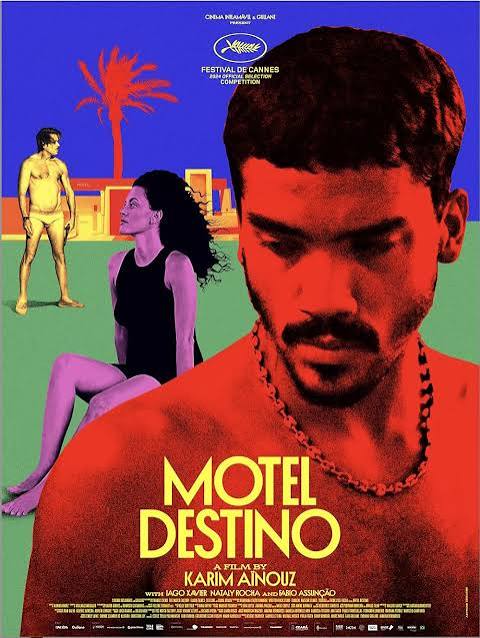
Motel Destino is set in the coastal city of Ceará, Brazil. The movie opens with a beautiful scene of two men laughing and playing on a beach in Brazil. The movie centers on one of the two brothers, Heraldo. Heraldo works for his family member, who runs a criminal organization. She asks Heraldo and his brother to ‘handle’ a businessman who owes her a significant sum, but is constantly flanked by bodyguards. We see that Heraldo is reluctant to go, but ultimately agrees.
That night, Heraldo engages in a heated encounter with a woman at Motel Destino, a sleazy, neon-lit sex hotel. He wakes up in the morning with his wallet and phone missing. He can’t pay for the hotel, so the receptionist, Dayana, asks him to leave his ID at the front desk. When he finally leaves the hotel, late for the job his mother had created for him, he finds that his brother has been murdered by the European businessman’s bodyguards.
He returns home to collect his belongings, where another family member blames Heraldo for his brother’s death, urging him to leave. Heraldo wastes no time mourning, as he must flee. His mother, in conversation with friends or family members, says that she has people looking for Heraldo everywhere.
With nowhere else to go, Heraldo returns to Motel Destino. The receptionist, Dayana, allows Heraldo to stay. Dayana is the wife of Iago, the Motel’s owner. Heraldo offers to work for Motel Destino as an electrician and mechanic, and the couple agrees to take him on as a janitor. As he continues working for the hotel, his desire becomes a central theme of the film. Heraldo and Dayana engage in a heated sexual affair throughout the film, causing tension with Elias, the husband.
Throughout the film, the vibrant atmosphere of Motel Destino mold it into its own character. We hear sounds of visitors having sexual encounters throughout the film, though it is rarely acknowledged. The movie is beautifully filmed as Dayana and Heraldo develop a complex, desire-filled relationship. The movie culminates in a violent encounter, where Elias holds both Dayana and Heraldo at gunpoint. The pair escapes from Elias and runs away. When a police officer asks Heraldo what happened, he responds, “I was born, that's what.” The final scene of the movie alludes to Heraldo working in an ice factory, leaving his lover for a life starkly different from the one at Motel Destino
Describes the setting of a scene in a play or a film. It refers to everything placed on the stage or in front of the camera—including people. In other words, mise en scène is a catch-all for everything that contributes to the visual presentation and overall “look” of a production. When translated from French, it means “placing on stage.”
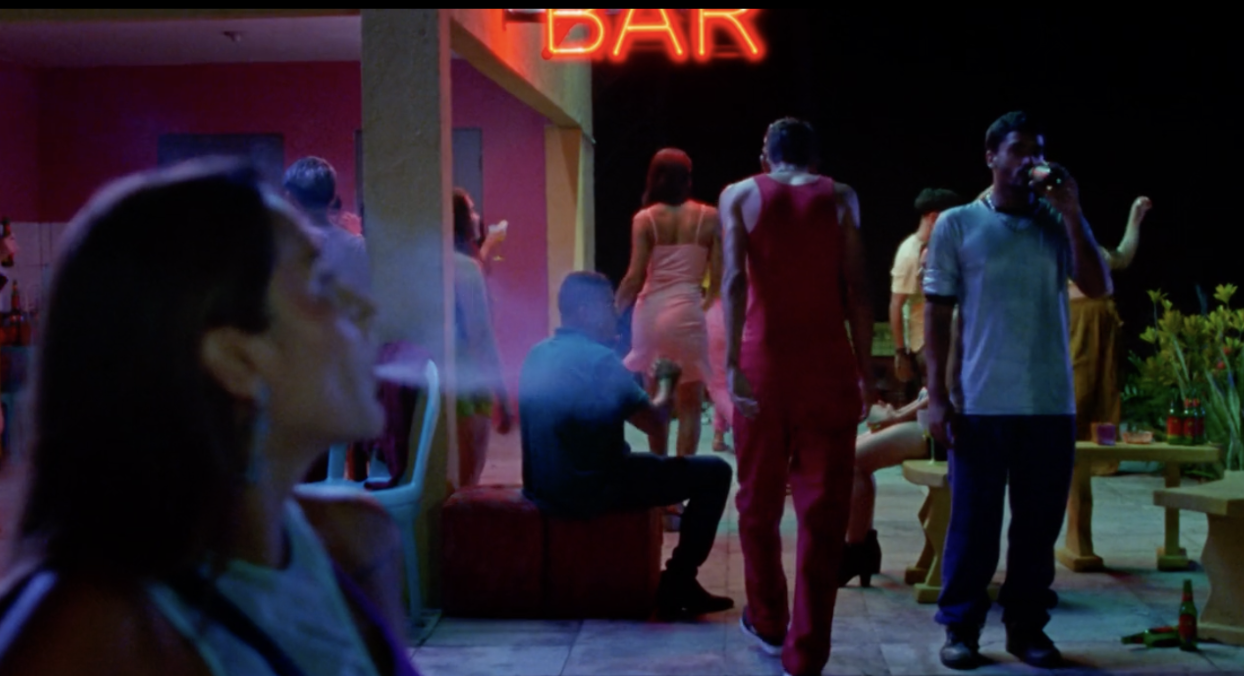
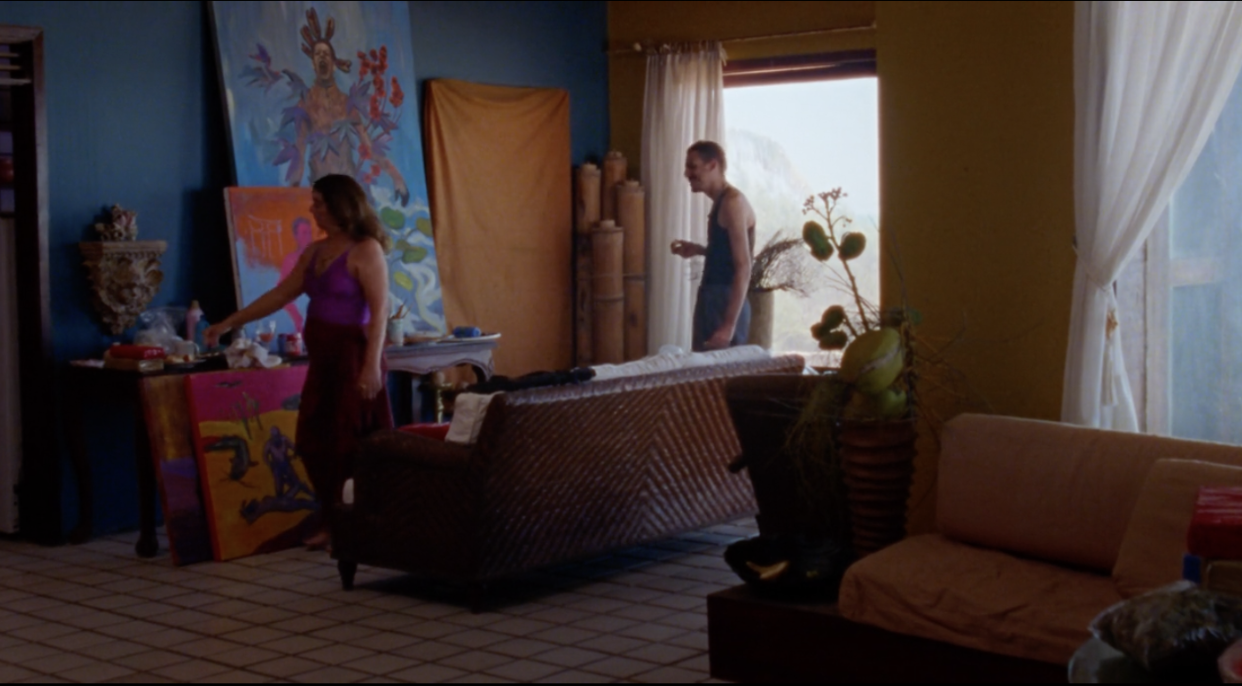
When Heraldo begins speaking with Dayana, we see the stark contrast between the Motel Destino's internal red and the typical vibrancy of the outdoors. Dayana is visible in all 3 primary colors: the blue of her top, the neon yellowish green of her bra, and the pale red of the wall behind her. The reality she brings into the scene doesn’t meet Heraldo, and the red illumination doesn’t escape his side of the wall. From the lighting in this scene, we see that his captor, Dayana, is in a position of power.
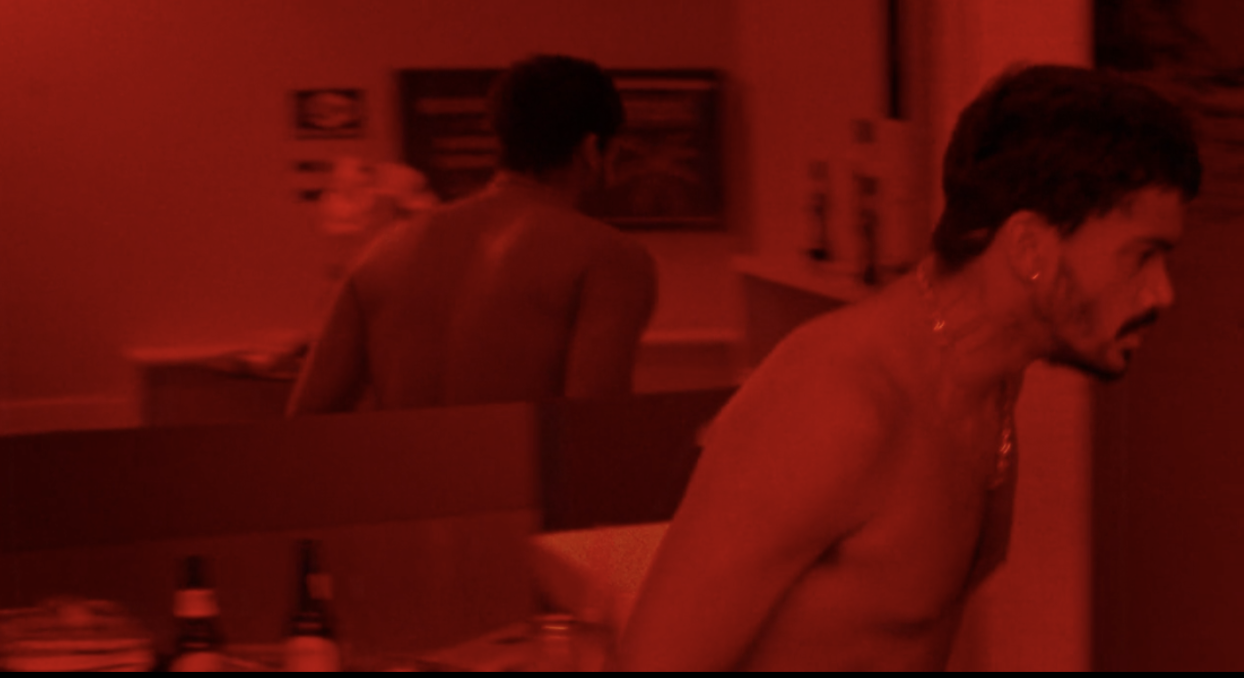

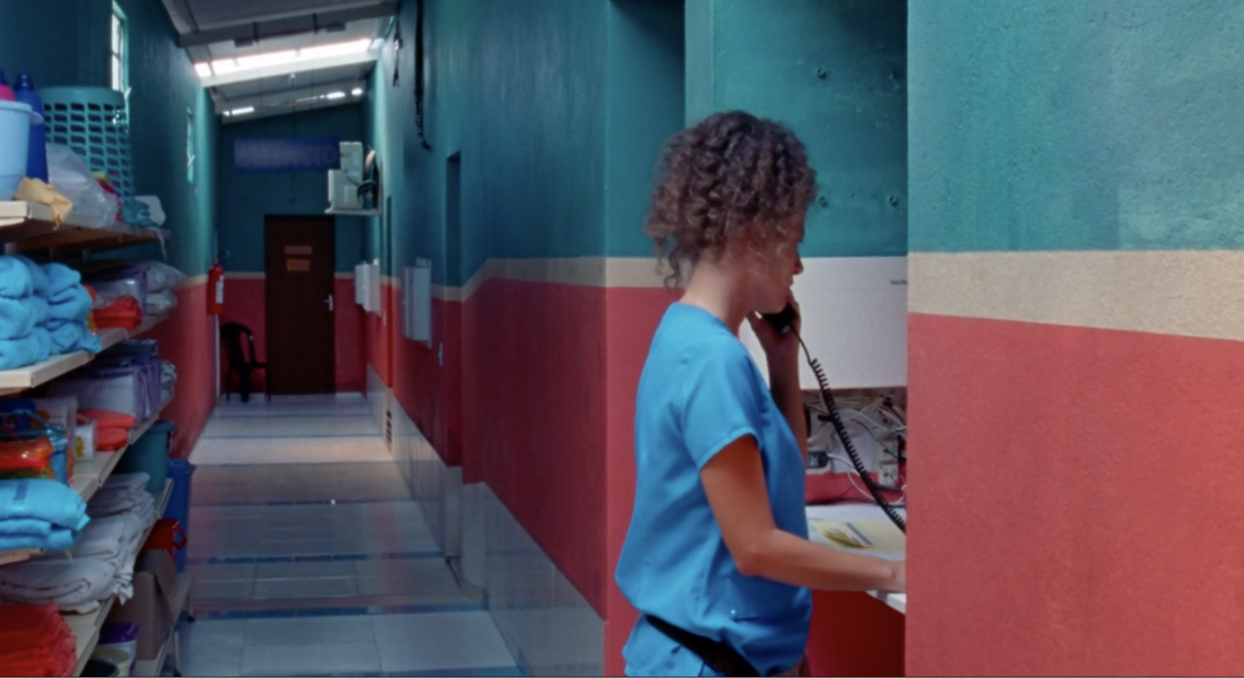
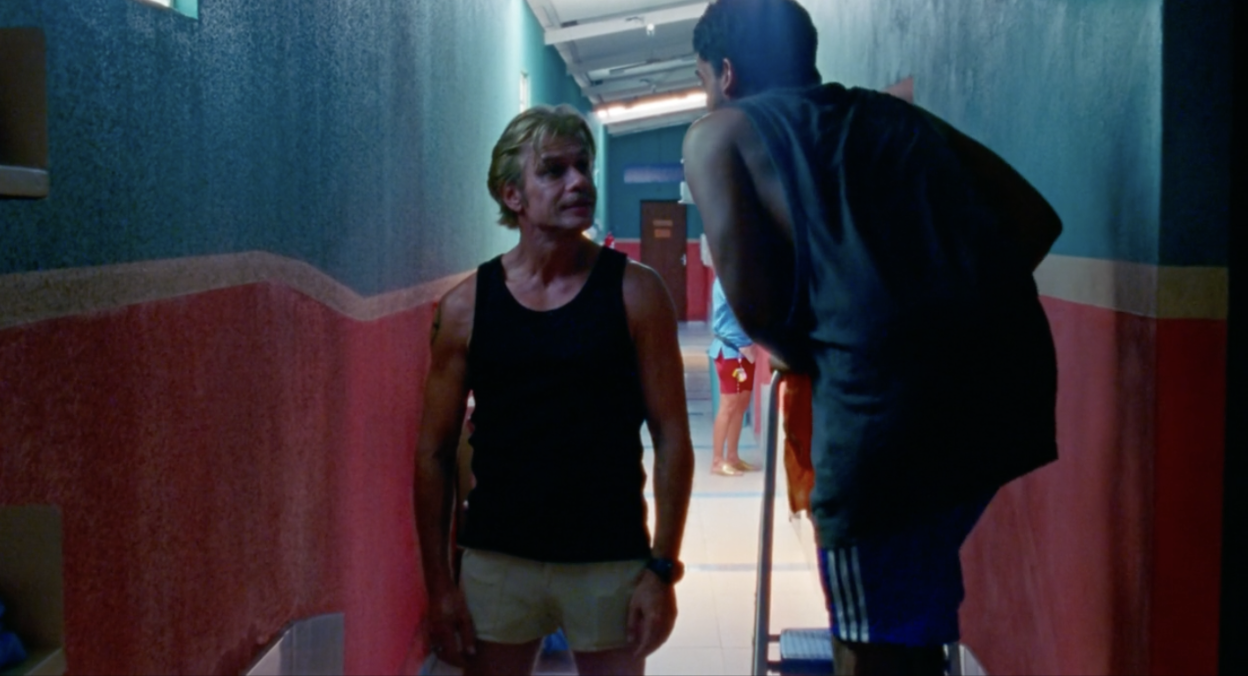
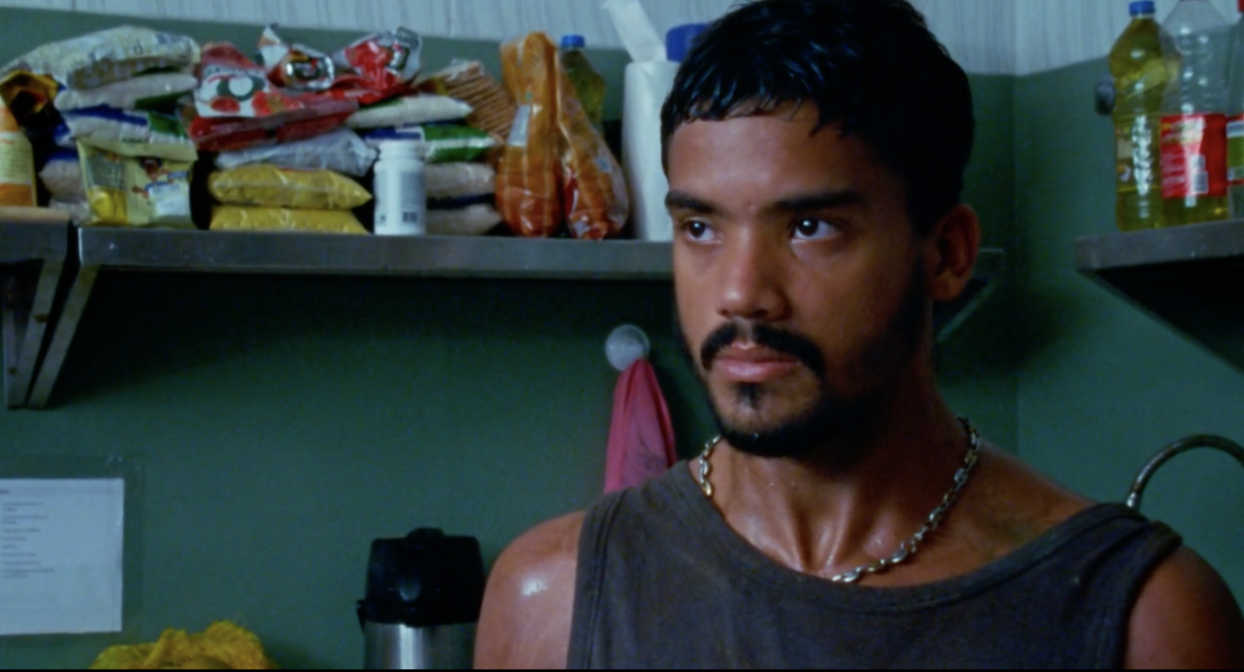
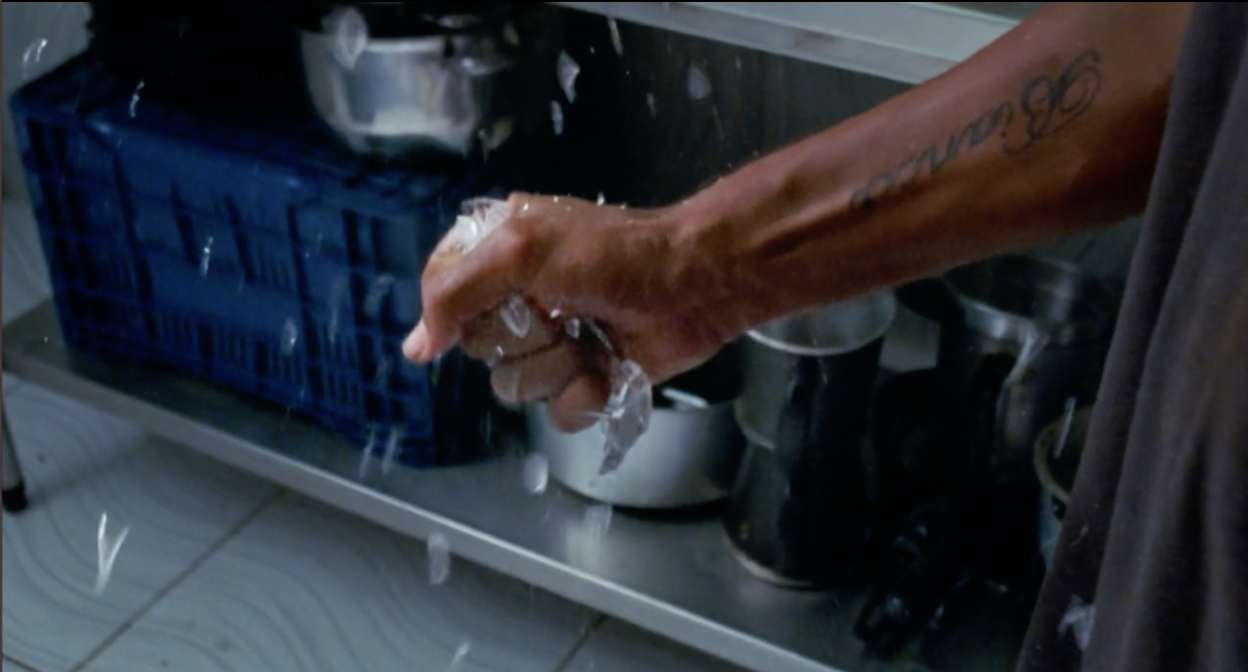
This is the art of photography and visual storytelling in a motion picture or television show. Cinematography comprises all on-screen visual elements, including lighting, framing, composition, camera motion, camera angles, film selection, lens choices, depth of field, zoom, focus, color, exposure, and filtration. Cinematography sets and supports the overall look and mood of a film’s visual narrative. Each visual element that appears on screen, a.k.a. the mise-en-scène of a film, can serve and enhance the story—so it is the cinematographer’s responsibility to ensure that every element is cohesive and support the story. Filmmakers often choose to spend the majority of their budget on high-quality cinematography to guarantee that the film will look incredible on the big screen.
Editing is the process of putting a film together–the selection and arrangement of shots and scenes. Editing can condense space and time, emphasize separate elements and bring them together, and organize material in such a way that patterns of meaning become apparent. In addition, editing can determine how a film is perceived: for instance, quick, rapid cuts can create a feeling of tension, while a long take can create a more dramatic effect. The first photoplays generally had no cutting, owing to the fact that they were single-reel films; once filming began, you could not stop until the film ran out. (https://filmglossary.ccnmtl.columbia.edu/term/editing/)
Sound is an integral part in a film. It refers to everything that the audience hears including sound effects, words and music. Sound is used in films for various purposes, including: providing the information to the viewer about the location of the scene, heightening the mood, telling the audience about the characters and advancing the plot. Every person who watches a film realizes that the choice of voices, soundtrack and music present in a film affect the way that the viewer perceives a particular film. As a result, the sound is an important and integral element of the film, one that determines the way that the viewer experiences and understands a film as a visual experience.
Narrative analysis is an examination of the story elements, including narrative structure, character, and plot. A narrative can be considered to be the chain of events in a cause-effect relationship occurring in time and space. In order to analyze the narrative of a film, we need to first make the distinction between the plot of the film and the story of the film. This is sometimes referred to as the discourse and story of a film. Narrative may also be called the story thought story mainly refers to the events that describe the narrative.
Film genres are various forms or identifiable types, categories, classifications or groups of films. (Genre comes from the French word meaning "kind," "category," or "type"). These provide a convenient way for scriptwriters and film-makers to produce, cast and structure their narratives within a manageable, well-defined framework. Genres also offer the studios an easily 'marketable' product, and give audiences satisfying, expected and predictable choices. Genres refers to recurring, repeating and similar, familiar or instantly-recognizable patterns, styles, themes, syntax, templates, paradigms, motifs, rules or generic conventions.