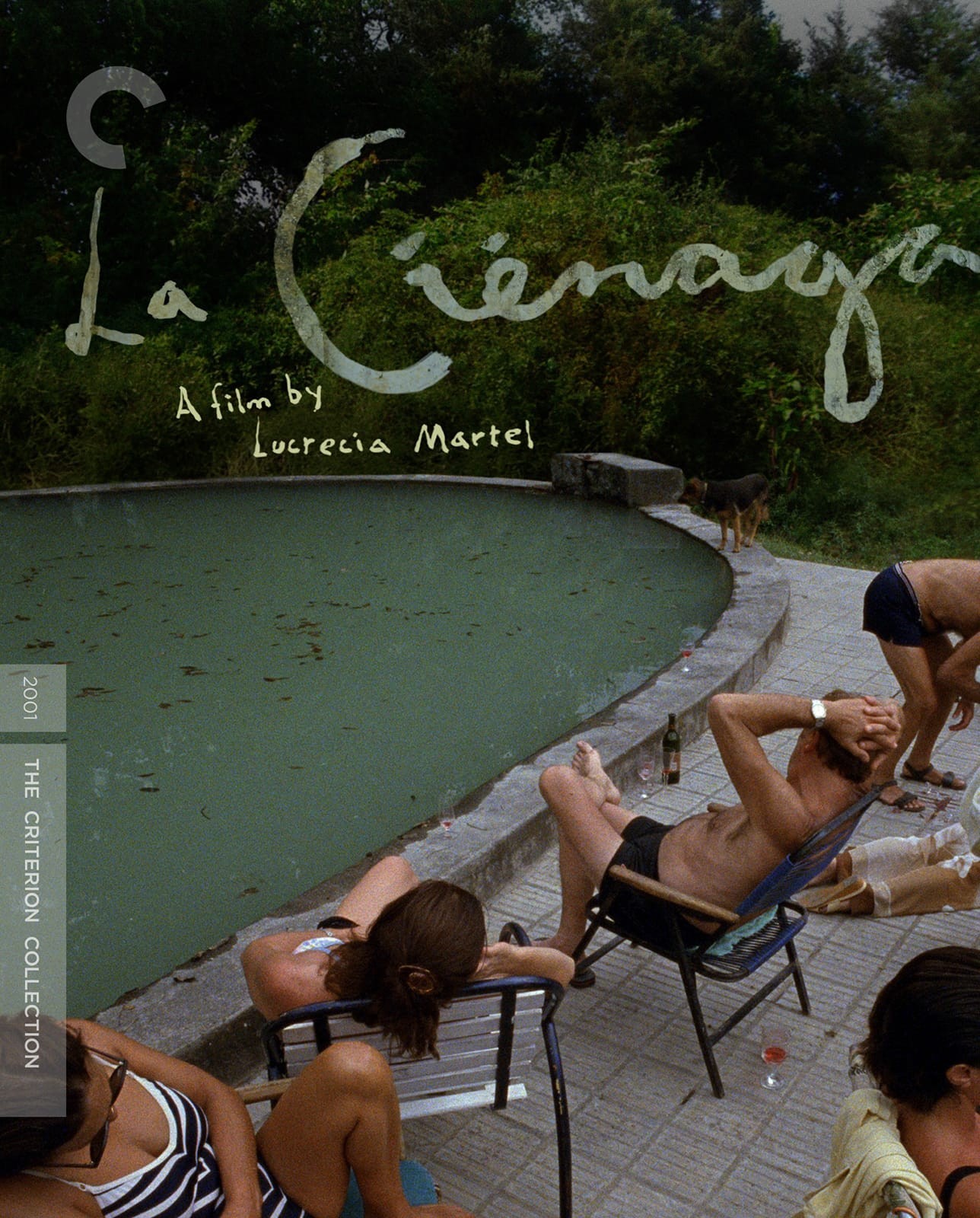
La Ciénaga

    Movie Poster
    Release year
    2001
    Director
    Lucrecia Martel
    Biography of director(s)
    Lucrecia Martel is a film director from North Argentina. In the mid to late 1990s, she worked on short films through which she garnered awards and acclaim in International film festivals. In the 2000s, she produced longer works, including La Ciénaga. Much of her work explores darker themes through her morbid sense of humor.
    Country
    Argentina
    Original synopsis of the film

    This film explores the relationships within a well-to-do family in Argentina through a summer they spend in the countryside. Throughout this film the adults are presented as self-involved, morally bereft, and negligent toward the children.

    In the initial scene, the mother, Mecha, drunkenly falls while holding glasses and ends up with shards in her chest. This does not prompt her to stop drinking. In fact, she continues to drink and waste away in bed throughout the film. While the adult female figures seem lax, they seem to be more present in their children's lives than the adult male figures.

    To get Mecha out of bed, her sister suggests that they go to Bolivia to buy school supplies for their children, claiming that it will be cheaper. She believes that it will be nice to get Mecha out of bed. However, a storm comes preventing this trip.

    The oldest daughter, Momi, is constantly swimming in a dirty pool, which could make her sick. Her closest friend is the maid, Isabel, who Mecha is constantly suspicious of and rude to. In fact, in the beginning of the film, Mecha is considering firing Isable. Isabel eventually leaves to live with her sister, leaving Momi behind.

    The youngest son, Luciano, constantly seems to be in harms way. At the beginning he is washing his bloody leg in the sink. During a hunting trip, he is in the direct line of the guns his older siblings plan on using to kill a deer. Additionally, he complains of being afraid of a giant rat before he goes to bed. Ultimately, he climbs up a ladder unsupervised so he can see over a fence because he is curious about the rat, which happens to the neighbor's dog. He falls to his death with no family members around to be there with him in his final moments. Although his aftermath is not depicted, the family is depicted to be grieving Luciano's death.

    This is not a typical film with a typical plot line, but rather a depiction of a series of events contributing to the continued ruining of an already morally decaying family.

    Film Awards
    Berlin International Film Festival (2001) - Alfred Bauer Prize
    Havana Film Festival (2001) - Best Film (Grand Coral - First Prize) and Best Director
    Toulouse Latin American Film Festival (2001) - Grand Prix and French Critics' Discovery Award
    Uruguayan Film Critics Association (2001) - Best Latin American Film
    Sundance Film Festival (1999) - NHK Award (during development)
    SESC Film Festival, Brazil (2005) - Critics Award for Best Foreign Director

    Describes the setting of a scene in a play or a film. It refers to everything placed on the stage or in front of the camera—including people. In other words, mise en scène is a catch-all for everything that contributes to the visual presentation and overall “look” of a production. When translated from French, it means “placing on stage.”
    Setting
    Setting
    Explanation
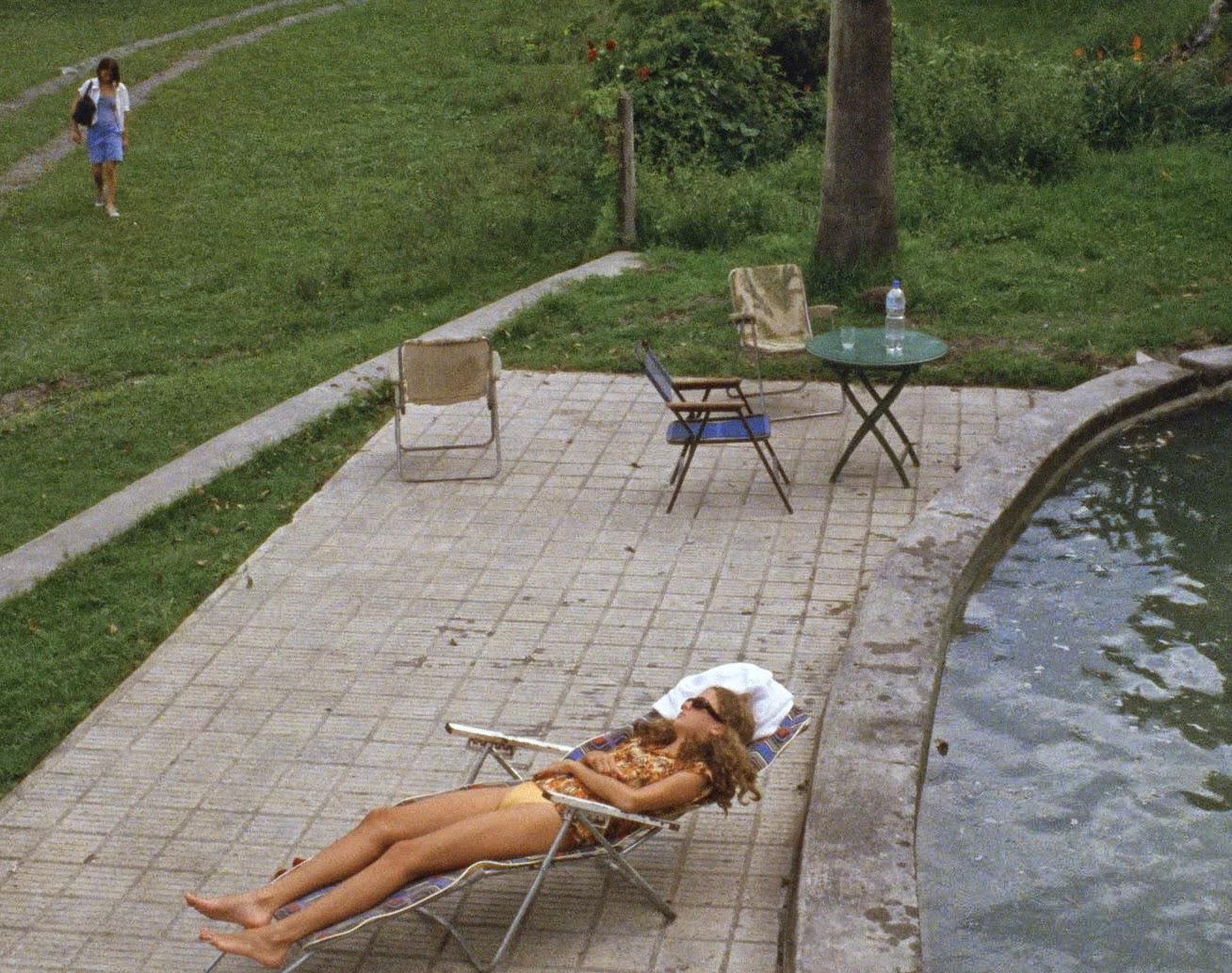
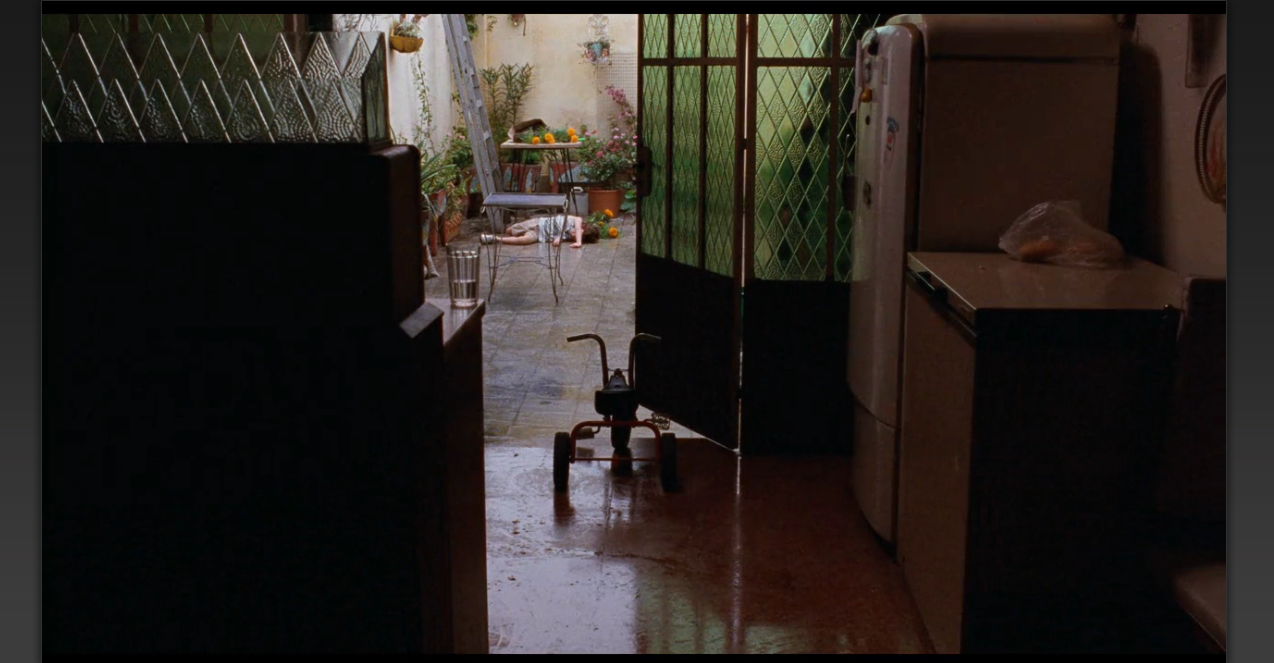
    This film was shot entirely on location, showing the decaying country houses. It was clear from the rustiness of the white metal outdoor chairs that the place had not been refurnished in a long time, reflecting the laziness of the adult family members. The house is not fancy, but rather reflective of furniture that was placed a long time ago. For example, the closet that the maid, Isabel, uses looks vintage and classic. Moreover, the patio has beautiful plants and seems to be the only part of the house that is being updated, as one of the older women in the family is planting new flowers that she has just potted. Ultimately, when Luciano falls off the ladder to his death, he lands in those flowers, which "ruins" the most well-kept part of the family's house. This is reflective of the general hopelessness and the irreversibility of the family's moral decay.
    Film Still
    This is a picture of one of the daughters lounging outside on the rusty white outdoor chair.
    This is a picture of the scene where Luciano dies, falling into the fresh orange flowers.
    Props
    Lighting
    Costume
    Costume
    The two people with the most notable style are Mecha and her daughter Momi, especially due to the stark contrast in the way they dress. While Mecha appears more womanly and sensual, Momi appears to be the young, undone girl that she is.
    Explanation
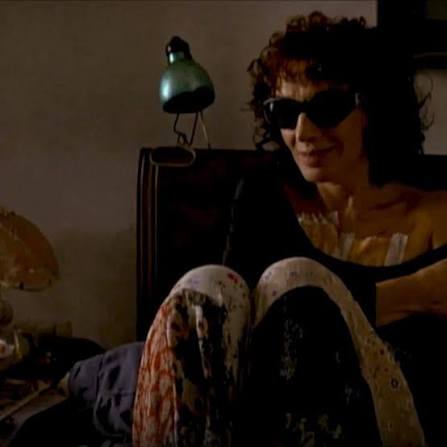
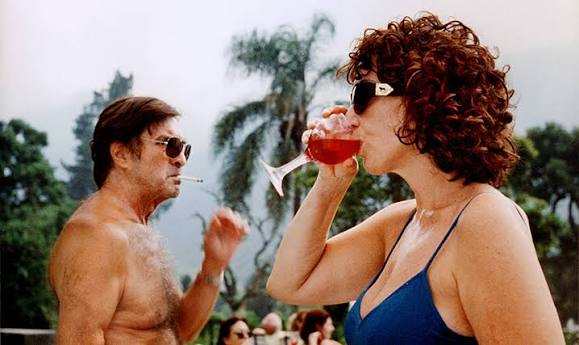
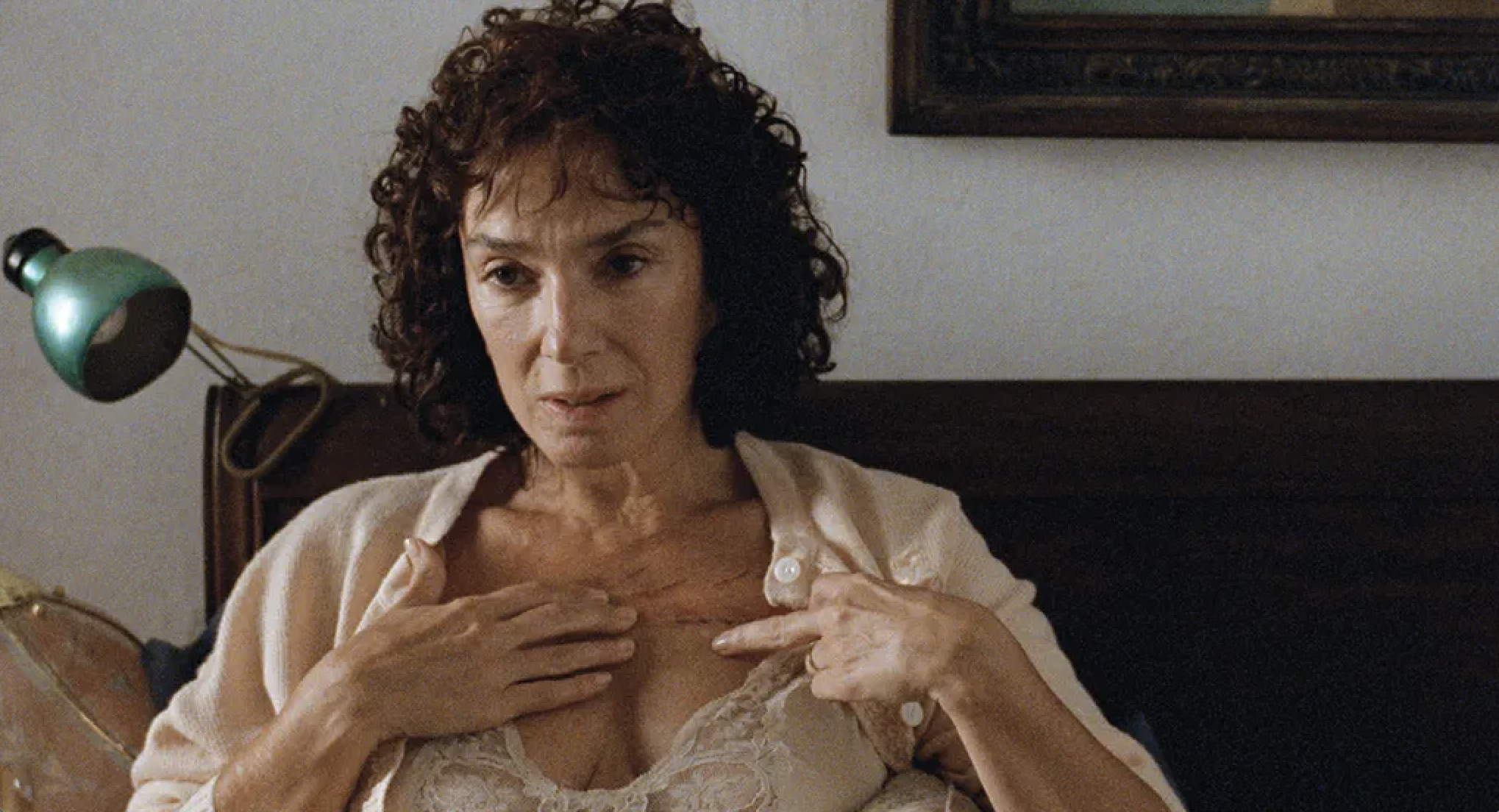
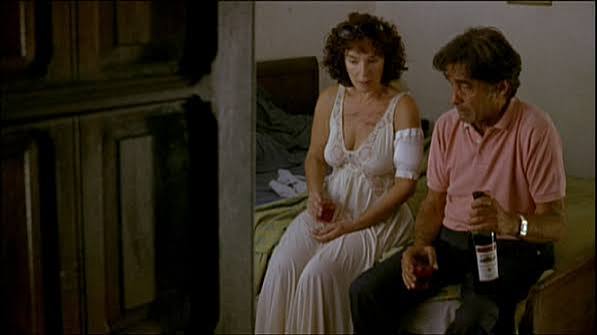
    Mecha, who is rather vain, seems to always be looking chic despite the fact that she is obviously not put together. This is clearly reflected in the way she dresses. Initially, she is wearing a royal blue swimsuit and big black sunglasses. In bed, she is found wearing a long, cream, lacy rayon nightgown that hugs her curves. She often adds a pastel pink cardigan to this look. In one of the scenes, she wears these patterned pants, likely made of silk or rayon, and a loose black pullover sweater, through which the strap of her bra is peaking out. Although her clothes are beautiful, they always seem to prioritize comfort and accommodate her constantly-in-bed lifestyle.

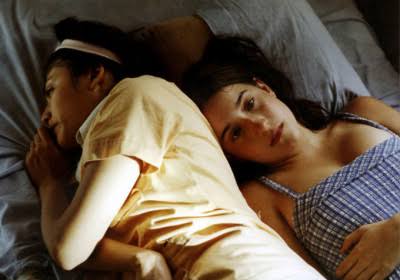
    On the other hand, Momi is anything but chic. Her clothes are often mismatched, or the silhouettes do not accentuate her figure. For example, in one scene, she complains that Isabel picked an outfit for her that does not go together because the top is floral and the bottoms have stripes. However, she wears the outfit anyway. Moreover, when she goes to the store with Isabel, she is wearing this light pink button-down that is oversized and pink straight-leg pants. Because the top is too big for her, the pants appear slimmer, creating an unbalanced look. Momi does not concern herself with her appearance, spending most of the film in her periwinkle and white plaid swimsuit. Momi's style reflects her general carefree nature and her lack of preoccupation with superficiality.
    Timecode
    0:32:50 - 0:34:55
    Film Still
    This is a picture of Mecha in her cream, rayon nightgown
    This is Mecha in bed in her silky patterned pants and her loose black sweater.
    This is Mecha in her navy blue swimsuit and her black sunglasses.
    This is Momi, lying next to Isabel, in her plaid swimsuit
    Film Clip
    Hair and Makeup
    Figure Behavior
    Example
    Mecha's vanity gets in the way of her relationship with her daughter.
    Explanation
    She seems to use her fall in the first scene of the movie as an excuse to remain bedridden. When she is looking at her scars, she claims that they will never go away. As she is getting the scars on her chest powdered, she is thinking about her skin and how it was once perfect. She looks at her daughter, Momi, and begins yelling at her for all of the time she spends in the sun, getting sunburned. This argument ends with her daughter telling her that her Mecha is going to end up never leaving her room, just like her grandmother. Mecha does not like the sound of her reality and throws a newspaper at Momi.
    Timecode
    1:11:23 - 1:12:51
    Film Still
    Mecha is scrutinizing her scars as she sits in bed.
    Film Clip
    Example
    Mecha's behavior reflects her adamant refusal to participate in her life, as her life seems to revolve around the time she spends in her bed.
    Explanation
    She seems resigned to her husband's infidelity and does not display the desire to take care of her children. She spends all day in bed. In fact, during one scene, she yells at someone, refusing to get out of bed. When her children spend time with her, they all circle around her on her bed. Although she spends most of her time scowling, her children seem to be the only people who can make her smile.
    Timecode
    0:38:43 - 0:41:35
    Film Clip
    Example
    Even though Isabel only seems to be caring for and helping the family, Mecha often yells at Isabel
    Explanation
    Mecha seems to have a perpetual scowl. However, for a moment, she seems to regain strength and decides that she will be going to Bolivia. However, when Isabel informs her that she is leaving to live with her sister, she seems to lose her resolve. She gets very angry and screams at Isabel, claiming that Isabel is a good-for-nothing party girl. However, in reality, Isabel was a consistent hard worker, and Mecha feels that the loss of Isabel will further contribute to her already falling-apart family.
    Timecode
    1:28:23 - 1:29:28
    Film Clip
    Representative Clip

    This is the art of photography and visual storytelling in a motion picture or television show. Cinematography comprises all on-screen visual elements, including lighting, framing, composition, camera motion, camera angles, film selection, lens choices, depth of field, zoom, focus, color, exposure, and filtration. Cinematography sets and supports the overall look and mood of a film’s visual narrative. Each visual element that appears on screen, a.k.a. the mise-en-scène of a film, can serve and enhance the story—so it is the cinematographer’s responsibility to ensure that every element is cohesive and support the story. Filmmakers often choose to spend the majority of their budget on high-quality cinematography to guarantee that the film will look incredible on the big screen.

    Point of View
    Comments
    Throughout this scene, the camera remains sharply focused. It is initially level with Luciano and sits right behind him. We see him eye the ladder and the wall and move his head from side to side in contemplation. The camera maintains this position as he goes under the table, partially hidden by the potted plants that sit atop it. We see Luciano emerge as he begins to climb the ladder on the side of the house. Then the camera shifts and zooms to find the boy’s head and torso as he reaches the very top of the ladder. It remains close to the top of the ladder when Luciano reaches the top and stumbles. We see him attempt to find his footing again. However, we never see him regain hold of the ladder. The camera stays in its position, showing us the empty, unperturbed top of the ladder. The camera cuts to an empty part of the house before we see an extreme long shot of the room with the open door to the garden. The camera remains in this position for several seconds. Through this open door, we see Luciano lying dead, peacefully on the floor. The camera reflects a passive, yet observant perspective on Luciano’s death as it does not depict the horror of the death so much as it shows us the events leading up to the death and fact that there is no parental presence. This lack of emphasis on Luciano’s death reflects the lax nature of the adults in this film who are not there to supervise Luciano or take care of him in his final moments. There is no drama to this death scene to reflect the nonchalant approach to parenting the adults have in this film.

    Timecode
    1:33:07 -1:34:11
    Film Clip
    Quality
    Quality
    Film Clip
    Framing
    Framing
    Comments
    This is a clip of a shot/countershot, taken at a low angle. Initially, we look up at the heads of the parents. They are holding their drinks to their chests and smoking. They are wearing sunglasses and looking down at their drinks, as if their eyes cannot handle the sunlight. Then, the camera cuts to a depiction of a green mountain. Next, the camera is zoomed in on the torsos of the hunting dogs as they run through the lush, tall greenery that covers their legs. Initially, the camera briefly tracks the first dog that runs through the greenery, while maintaining its position as the other dogs run through, and eventually as the boys arrive. We do not see their bodies, just the middle part of their legs between their thighs and their calves. Then the camera is placed at the level of the calves of the boys and tilted upwards, moving with them as they run. It is as if we are standing under these boys as they run through the jungle, their backs hunched over, as they avoid hitting their heads on tree branches above. A branch hits the camera as it stops moving. Eventually, we see one of the boys from far enough away to notice that he is holding a rifle. Then, we see him disappear behind a slight slope and mass of green trees. In this quick scene, it feels as if the boys and the dogs are one, running wildly through the overgrown jungle. The juxtaposition between the activities of the parents and the children underscores the separation between the lives of the adults and the children, alluding to the lack of parental supervision these children have in their lives.
    Timecode
    0:02:52 -0:03:27
    Film Clip
    Scale
    Movement
    Movement
    Comments
    The sharply focused camera is zoomed in on the empty drinkware with droplets of liquor coating the sides and pooling at the bottom, as well as a bottle of liquor. Then, we see Mecha’s shaky hand pour (and spill) some alcohol into two of the glasses. As she puts down the bottle of liquor, the table shakes. She adds ice and picks up a cup. Maintaining the zoom and focus, the camera attempts to closely follow her shaky hand, staying level with it, as Mecha lifts a glass up and swirls it around with the ice clinking inside it. There are times when the hand partially leaves the view of the camera due to the volatile nature of its movements. In this scene, it is clear that it is light outside, so it is occurring during the day. From this brief scene, it is obvious that Mecha is inebriated, and—based on the second droplet-coated glass she fills—it is highly likely that she is not the only one. This sets the tone for the rest of the production, in which we soon find that all the adults are drunk; we eventually realize that the adults are lackadaisical, solely their own pleasure, and negligent toward their children
    Timecode
    0:01:01 -0:01:16
    Film Clip

    Editing is the process of putting a film together–the selection and arrangement of shots and scenes. Editing can condense space and time, emphasize separate elements and bring them together, and organize material in such a way that patterns of meaning become apparent. In addition, editing can determine how a film is perceived: for instance, quick, rapid cuts can create a feeling of tension, while a long take can create a more dramatic effect. The first photoplays generally had no cutting, owing to the fact that they were single-reel films; once filming began, you could not stop until the film ran out. (https://filmglossary.ccnmtl.columbia.edu/term/editing/)

    Coherence, Continuity, and Rhythym
    Editing Style
    Transitions
    Match
    Expansion and Compression of Time
    Editing General Comments

    Sound is an integral part in a film. It refers to everything that the audience hears including sound effects, words and music. Sound is used in films for various purposes, including: providing the information to the viewer about the location of the scene, heightening the mood, telling the audience about the characters and advancing the plot. Every person who watches a film realizes that the choice of voices, soundtrack and music present in a film affect the way that the viewer perceives a particular film. As a result, the sound is an important and integral element of the film, one that determines the way that the viewer experiences and understands a film as a visual experience.

    Sound Type

    Narrative analysis is an examination of the story elements, including narrative structure, character, and plot. A narrative can be considered to be the chain of events in a cause-effect relationship occurring in time and space. In order to analyze the narrative of a film, we need to first make the distinction between the plot of the film and the story of the film. This is sometimes referred to as the discourse and story of a film. Narrative may also be called the story thought story mainly refers to the events that describe the narrative.

    Plot Comments
    Story Comments
    Narrator Type
    Narrative Structure

    Film genres are various forms or identifiable types, categories, classifications or groups of films. (Genre comes from the French word meaning "kind," "category," or "type"). These provide a convenient way for scriptwriters and film-makers to produce, cast and structure their narratives within a manageable, well-defined framework. Genres also offer the studios an easily 'marketable' product, and give audiences satisfying, expected and predictable choices. Genres refers to recurring, repeating and similar, familiar or instantly-recognizable patterns, styles, themes, syntax, templates, paradigms, motifs, rules or generic conventions.

    Category
    Bibliography

    https://youtu.be/spXKUSu5Kg4?si=lEUKJP58fYwdXC9S

    Martel, Lucrecia, director. La Ciénaga. Cuatro Cabezas, 4k Films, Wanda Visión, 2001.