Heli

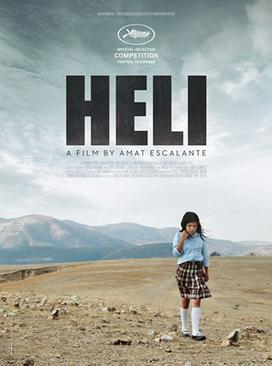
    Movie Poster
    Release year
    2013
    Director
    Amat Escalante
    Biography of director(s)
    Amat Escalante is a Spanish-Mexican film director, producer, and screenwriter. He was born in Barcelona, Spain but grew up in Guanajuato, Mexico and moved to Spain at age 22 to study film at the Center of Cinematographic Studies. In 2002, Escalante released his debut short film, Amarrados, which he directed and wrote himself.

    Since then, he has directed, produced, and written other films like Sangre (2005), Heli (2013), and The Untamed (2023). He has also worked on the American TV series Narcos: Mexico (2020). He has won several awards for his work, including the Best Director prize at the 2013 Cannes Film Festival and the Silver Lion for Best Director at the 2016 Venice Film Festival.
    Country
    Mexico
    Original synopsis of the film

    The film follows a factory worker in rural Guanajuato, Heli, who lives with his wife (Sabrina), sister (Estela), his baby, and father. 12-year-old Estela then falls in love with 17-year-old Beto, who is a military recruit. As part of Beto’s military duties, he works during a military operation to burn and destroy several tons of marijuana and cocaine. After this, Beto gets a hold of some packages containing cocaine. He meets up with Estela on the roof of her house and tells her about the packages and says that people are going to buy them tomorrow and he needs a place to hide them for the night, which he does in their water tank. As they are talking, Heli comes up, and Beto jumps off, and Heli scolds Estela for meeting up with someone.

    After hiding the packages in the water tank, the water goes out as Sabrina is taking a shower and Heli goes to fix it. He sees the packages and takes them to dump them out in a pond. The next day, their house gets stormed by people wearing police uniforms who were looking for the packages. They come in with their guns drawn, and they shoot and kill Heli’s father. After being unable to find the packages, they destroy parts of their house and kidnap Heli and his sister, all the people who were home that day. They, along with their father’s dead body, are put in the back of a truck, where Beto was already there, already injured. During the ride, the policemen dump his father’s body along the side of the road.

    They arrive at a house where they leave Beto and Heli and continue driving off with Estela. At the house, there is a group of people, both adults and younger teenagers, who start to beat and torture the two with Beto going first. They tie him up, hang him by his hands, and begin to flog his back. They then strip him down to light his genitals on fire. They then tie up and hang Heli and only flog him. They then drive to a bridge where Beto is hung wearing nothing but his underwear and his pants down to his ankles, and Heli is left on the bridge. He is badly injured but still alive. 

    Heli then walks to a police station to try and find his father’s dead body and find his sister. As Heli is not fully transparent with the police so that they don’t think of his family as criminals, they are of very little help to them. After experiencing everything, Heli becomes very erratic and violent, to the point he even loses his job. 

    Eventually, Estela returns home. Heli and Sabrina try to comfort her, but she is unable to speak as well as pregnant. Then, Estela draws a map of where she was raped, and Heli goes there and kills the man living there. The movie ends with Heli returning back home and having sex with Sabrina while Estela lies with their child on the couch.
    Film Awards
    Cannes Film Festival (2013): Amat Escalante won Best Director
    Munich International Film Festival (2013): Won Award for Best International Film
    Lima Film Festival (2013): Won Best Film
    Havana International Film Festival (2013): Won Best Film
    Montreal Festival of New Cinema (2013): Won Best Film
    Film still
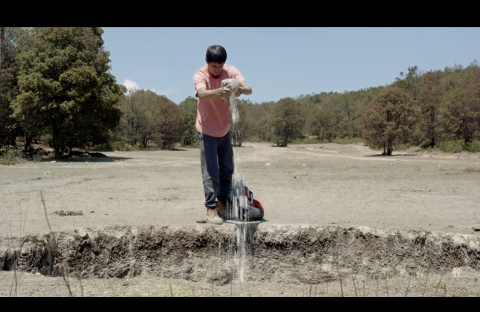
    Heli throwing out the cocaine that Beto left in his water tank

    Describes the setting of a scene in a play or a film. It refers to everything placed on the stage or in front of the camera—including people. In other words, mise en scène is a catch-all for everything that contributes to the visual presentation and overall “look” of a production. When translated from French, it means “placing on stage.”
    Setting
    Setting
    Explanation
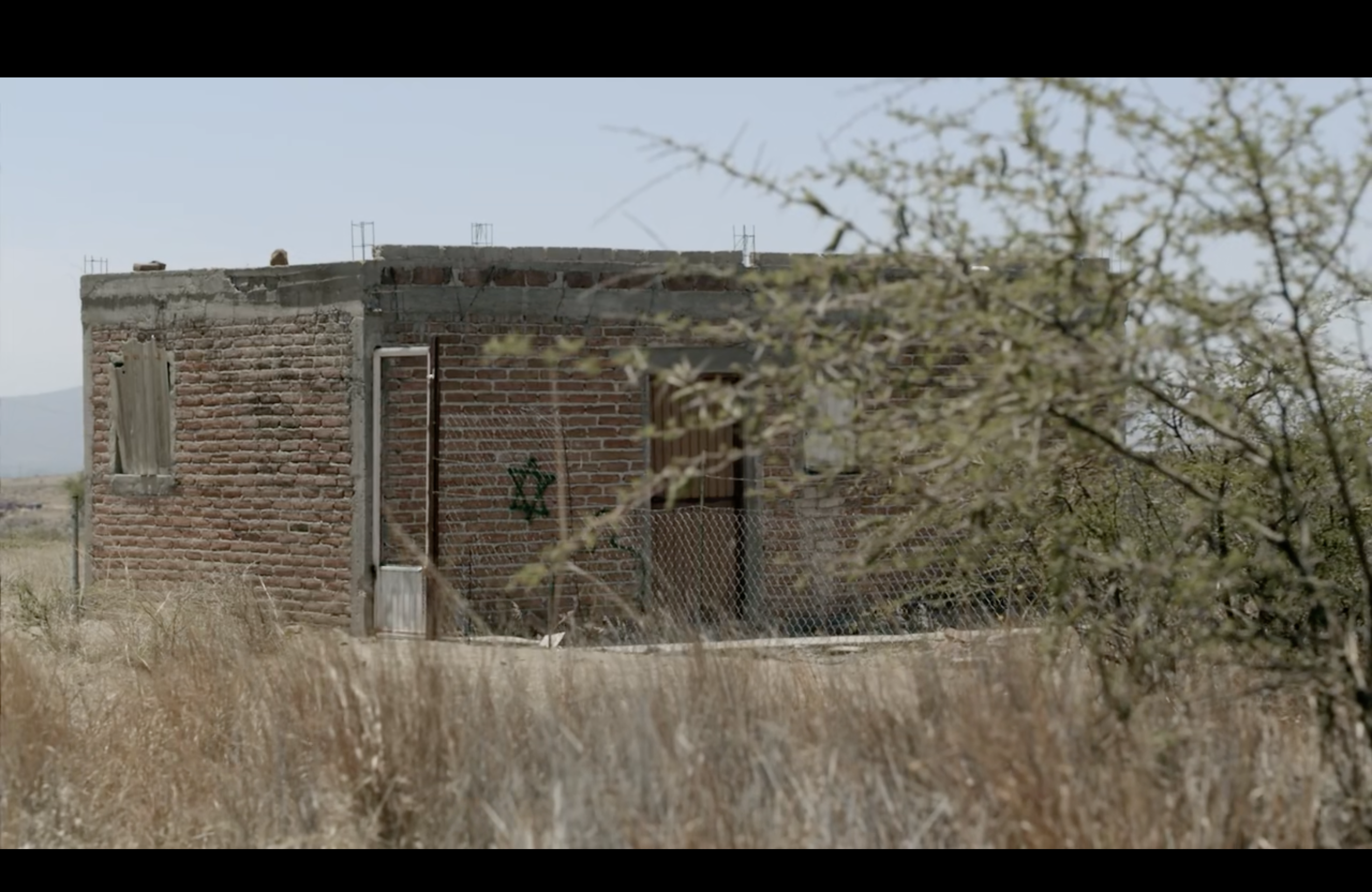
    Heli was primarily filmed at on-site locations. The movie was filmed where the actual story takes place, in villages around the state of Guanajuato. There are several scenes where it is a wide shot of the scenery where we can see vast fields and mountains. This can be seen in the scene where Heli goes to kill Estela’s rapist. In this particular shot, we see a singular worn-down brick structure, and behind it is nothing but empty fields and mountains. Additionally, we see a graffitied Star of David on the wall. This serves as a visual marker: the ironic use of a religious symbol in a lawless area, specifically on the building where a horrible crime took place. Although the religious symbolism is there, it serves as a godless environment.
    Film Still
    The building where Estela was raped and where Heli's map lead him to
    Props
    Prop
    The dog, Cookie
    Explanation
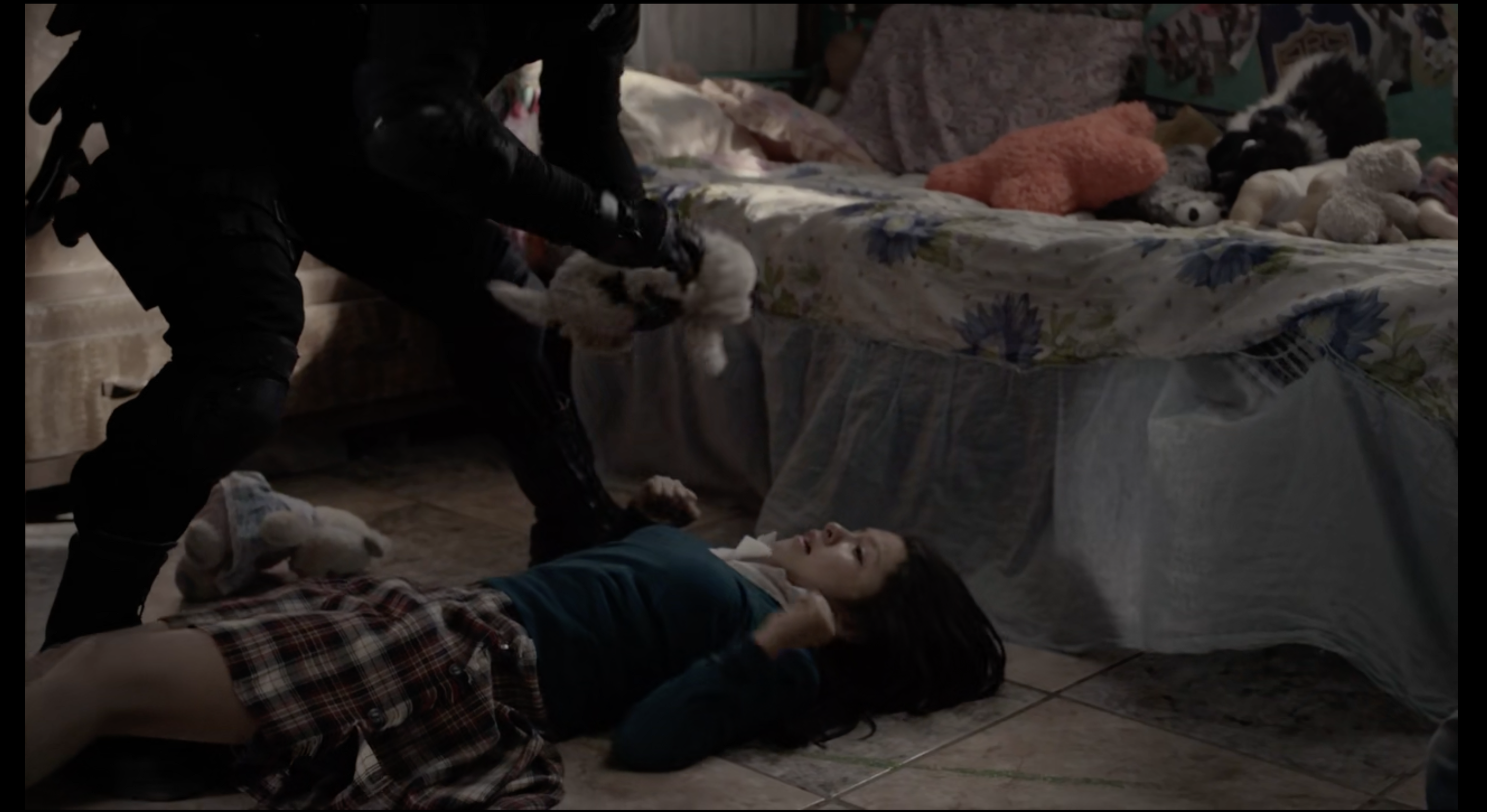
    One prop used to highlight the severity of the crime and length that the people went to be able to get these packages and hurt the family was Estela’s dog, Cookie, which she only had for a short amount of time. Near the beginning of the movie, Estela finds a small white dog and brings him home and names him Cookie. Once the people posing as police enter their house, Estela hides under her bed holding her dog. A soldier grabs her from under, snatches the dog out of her hands, and snaps its neck. This prop was used to highlight the lack of empathy that these people have as well as to have the audience develop an emotional attachment to the dog, just for it to be swiftly killed.
    Film Still
    Cookie getting his neck snapped.
    Lighting
    Explanation
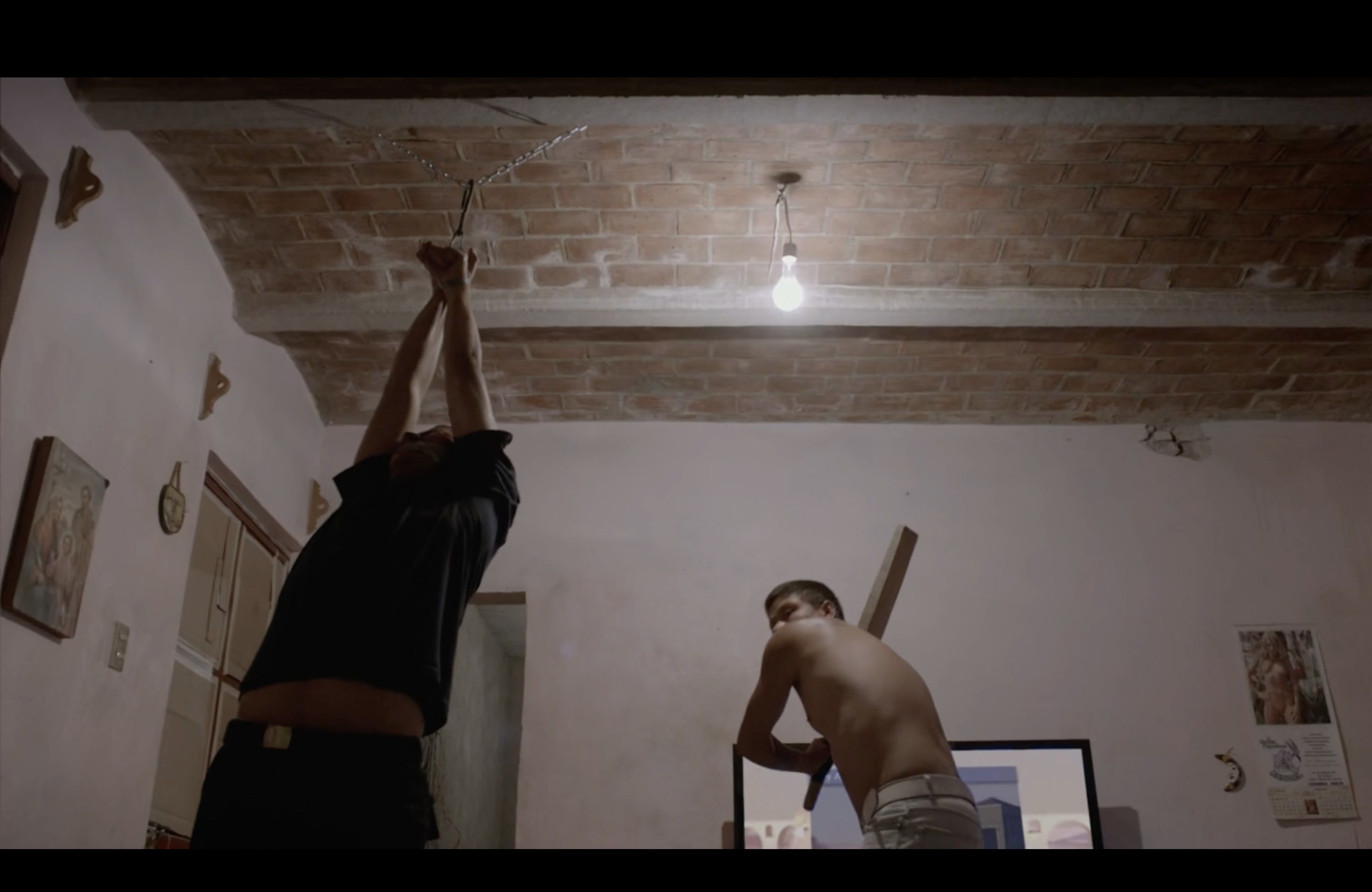
    In the scene where Beto is being flogged, we can see how lighting is used for dramatic effect. In this still, we see only a single lightbulb from the ceiling. The light is directly above the flogger. The usage of a toplight and him being lit up while Beto is dark and only a silhouette additionally highlights who is in power during this specific instance. Additionally, the minimal lighting in the house also showcases the economic and social statuses of the people who live there. The lack of lighting and aesthetics with the lighting shows that they are in a rural village and of a lower socioeconomic status than someone who would be living in the city.
    Film Still
    Beto being flogged.
    Costume
    Costume
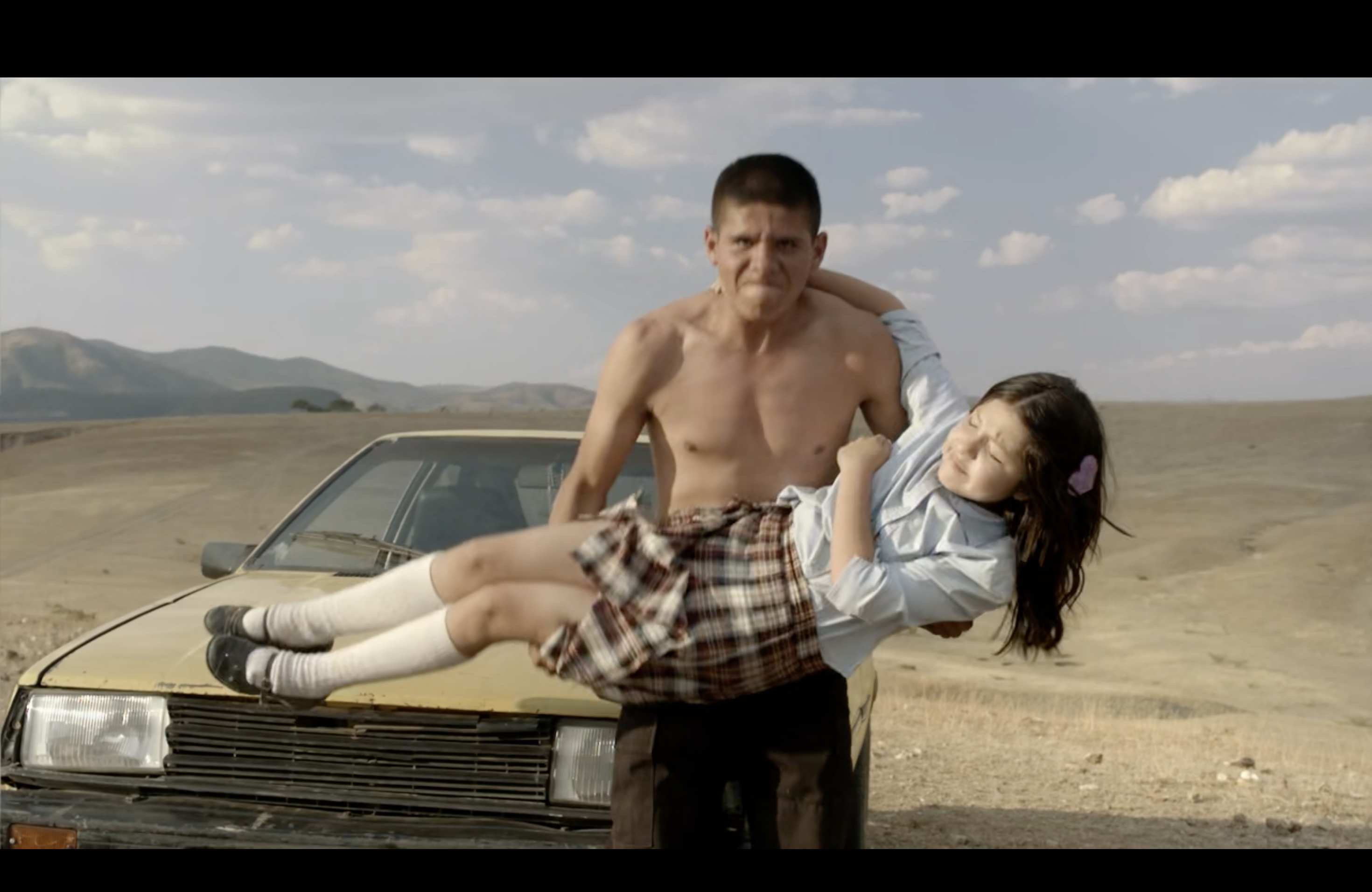
    Estela's school uniform and Beto's shirtlessness
    Explanation
    In order to highlight the age gap between Beto and Estela, there are very specific costume choices made. One of them was when Beto and Estela were hanging out talking about Beto’s training. Beto wants to show Estela what they do over there, so he does bicep curls using her as a weight. In this still, Estela is dressed up as a little girl. She is wearing her school uniform of a shirt and white knee-high socks. She also has a heart-shaped barrette in her hair, making her look like her true age of 12 years old. Beto, on the other hand, is shirtless and in brown cargo pants. Earlier in the scene, he is wearing a button-up shirt as well. This outfit choice and him taking off the shirt remind the viewer of his age and make him look older, especially compared to Estela, who is dressed up as a little girl.
    Film Still
    Beto doing bicep curls with Estela
    Hair and Makeup
    Example
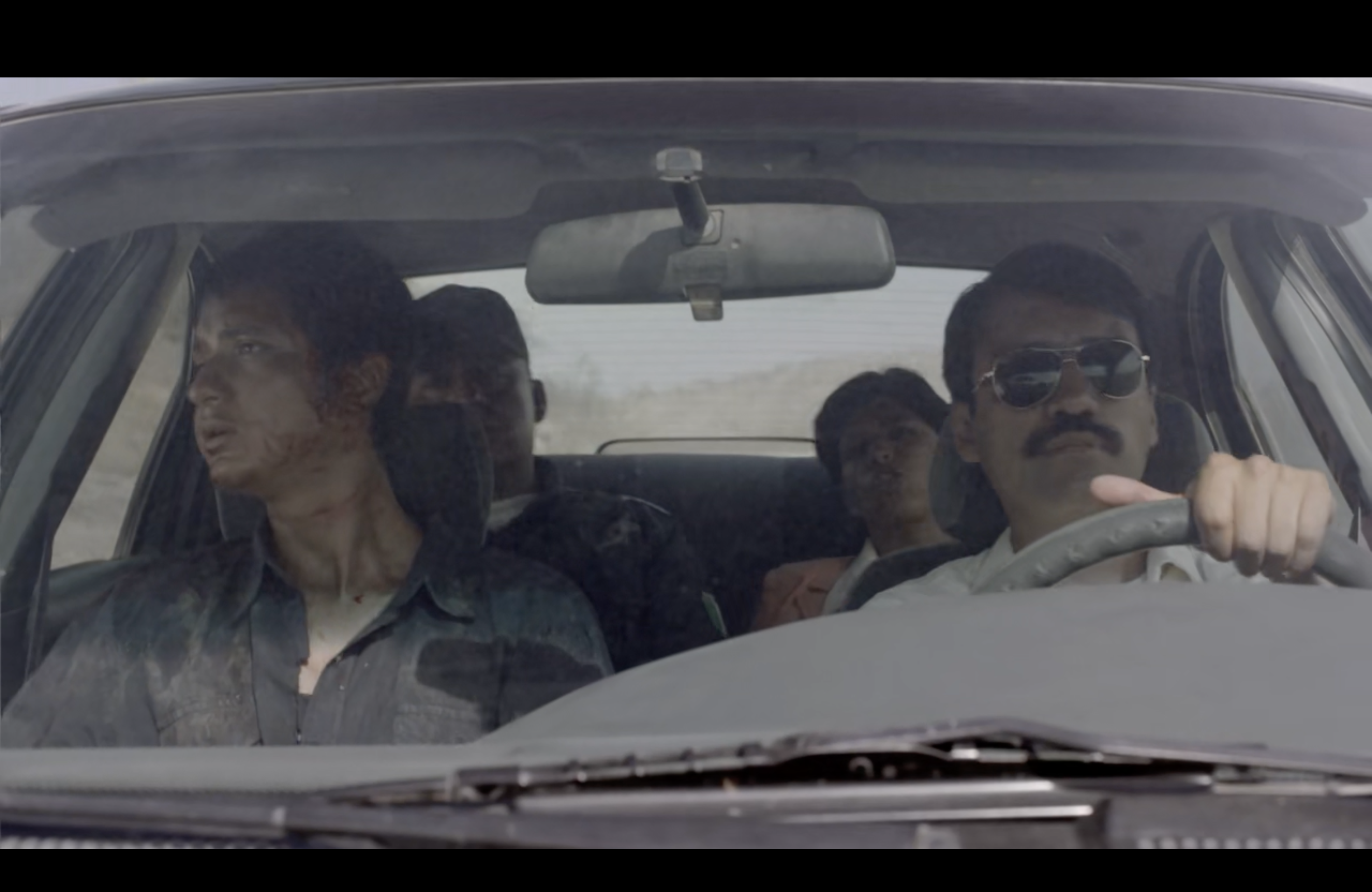
    Heli in the car with the invesigators
    Explanation
    After Heli initially goes to the police station, they go out and try to find his dad’s body, which was abandoned during the kidnapping. The three investigators are all wearing business clothing, while Heli is in the passenger seat badly beaten, bleeding, and wearing scuffed-up clothes. The differences in their appearance highlight Heli’s vulnerability in this situation, being scared and powerless. It also highlights the power dynamic between the two classes. The investigators being in clean, professional clothes makes them appear more than Heli in his dirty clothes. This distinction is especially important as Heli was taken advantage of by the female investigator later in the film.
    Film Still
    Heli in the car with the investigators
    Figure Behavior
    Example
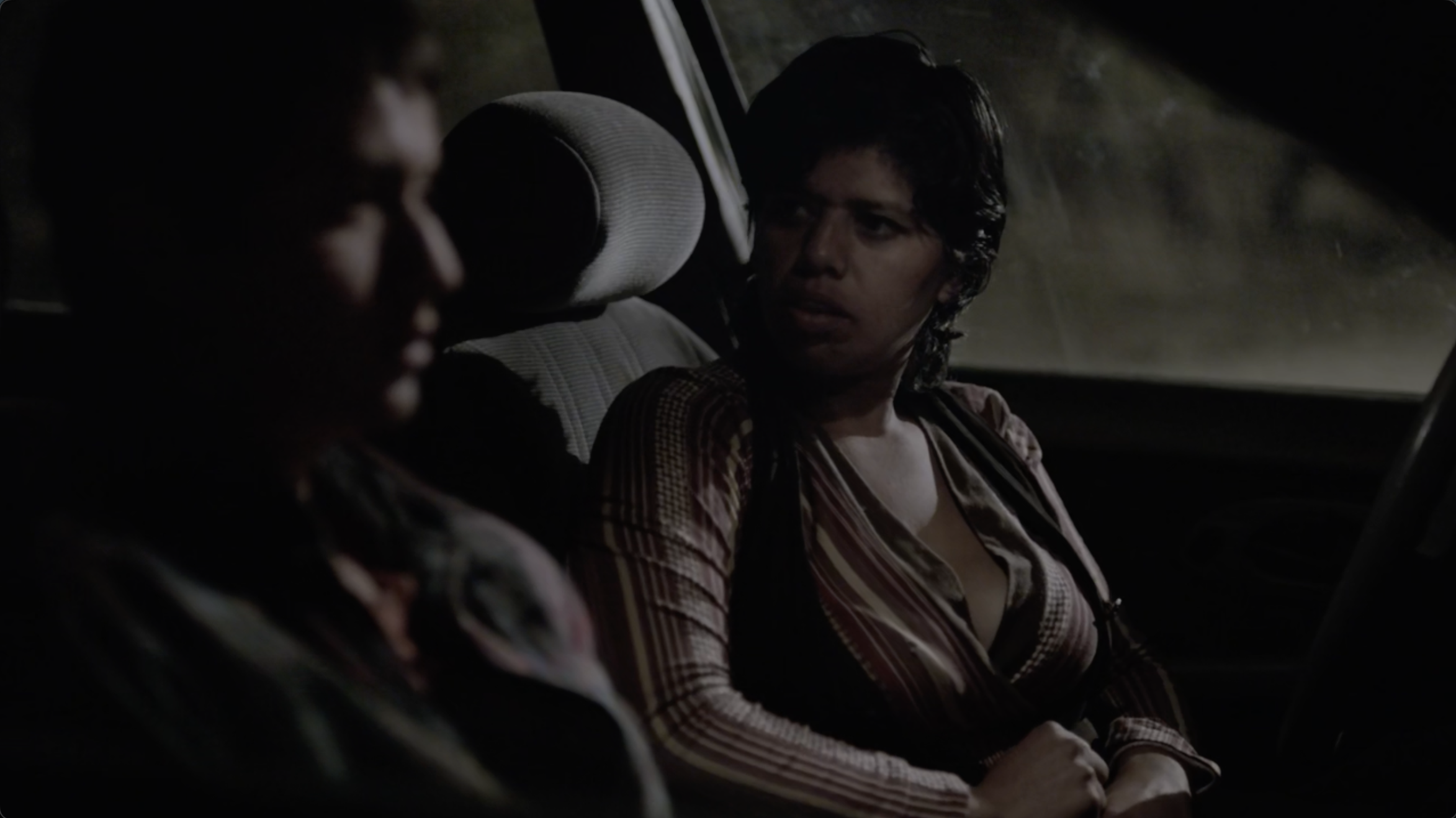
    Heli and the Investigator
    Explanation
    Once Heli decides to tell the investigator the full story, the female investigator starts to make sexual advances on Heli. At first, Heli reciprocates but then later stops and leaves the car. Throughout the interaction, Heli looks tired and emotionless. This highlights his lack of power with the situation regarding his sister being missing. The investigator making these advances also shows corruption with the state, as she was there for professional reasons, and she starts undressing as she’s telling him that his sister’s case is basically closed. In Heli’s reciprocations with her, he has a lack of passion and very awkward motions, emphasizing even more how broken he is.
    Film Still
    Heli and the female investigator in her car
    Representative Clip
    Explanation
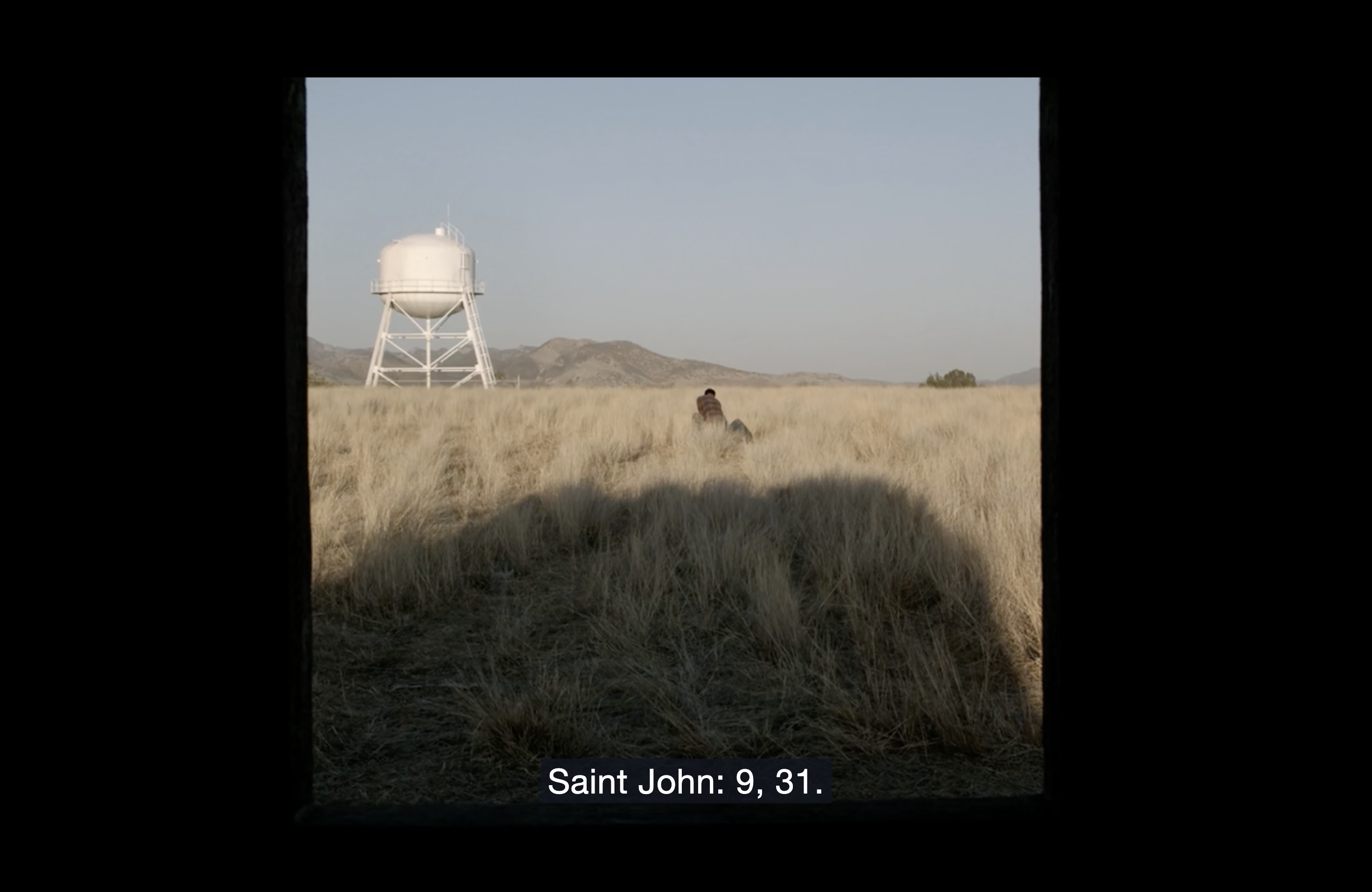
    In the second to last scene of the movie, Heli follows a map to the location where Estela was raped. The building is a run-down brick building with the Star of David graffited on the front. Heli breaks down the door, and the rapist jumps out the window, and Heli follows. The two are now on the field outside, and Heli begins to beat and stangle the man to death. The camera follows the two jumping out the window, and the picture is now in a square ratio, rather than a rectangle. While Heli is killing the man, a Christian radio show is playing in the background, in which it is telling listeners to open their Bible to John 9:31. The verse John 9:31 basically says that God does not listen to sinners, but God listens to those who worship God and do his will. This Bible verse playing signifies that as Heli and his whole town live in sin, God has turned his back on them, and they live in a godless and lawless land. Additionally, this verse draws attention to how he was forced into this life of sin. Since Beto was the main reason that he and his sister were kidnapped, he never had a choice to stay clear of this life. Even when Heli tried to seek justice the legal way, he was prayed upon by the female investigator, and the police ultimately did nothing. This led to him seeking justice in the form of murder. Ultimately, this scene and the accompanying audio and Bible verse highlight the main tragedies of Heli throughout the movie, as he has had no other choices throughout his life, which has led him down a path of sin, away from his normal life of grace before the cartel forces raided his house.
    Timecode
    1:35:32 - 1:37:50
    Film Still
    Heli killing Estela's rapist as John 9:31 is talked about in the background

    This is the art of photography and visual storytelling in a motion picture or television show. Cinematography comprises all on-screen visual elements, including lighting, framing, composition, camera motion, camera angles, film selection, lens choices, depth of field, zoom, focus, color, exposure, and filtration. Cinematography sets and supports the overall look and mood of a film’s visual narrative. Each visual element that appears on screen, a.k.a. the mise-en-scène of a film, can serve and enhance the story—so it is the cinematographer’s responsibility to ensure that every element is cohesive and support the story. Filmmakers often choose to spend the majority of their budget on high-quality cinematography to guarantee that the film will look incredible on the big screen.

    Point of View
    Quality
    Framing
    Scale
    Movement

    Editing is the process of putting a film together–the selection and arrangement of shots and scenes. Editing can condense space and time, emphasize separate elements and bring them together, and organize material in such a way that patterns of meaning become apparent. In addition, editing can determine how a film is perceived: for instance, quick, rapid cuts can create a feeling of tension, while a long take can create a more dramatic effect. The first photoplays generally had no cutting, owing to the fact that they were single-reel films; once filming began, you could not stop until the film ran out. (https://filmglossary.ccnmtl.columbia.edu/term/editing/)

    Coherence, Continuity, and Rhythym
    Editing Style
    Transitions
    Match
    Expansion and Compression of Time
    Editing General Comments

    Sound is an integral part in a film. It refers to everything that the audience hears including sound effects, words and music. Sound is used in films for various purposes, including: providing the information to the viewer about the location of the scene, heightening the mood, telling the audience about the characters and advancing the plot. Every person who watches a film realizes that the choice of voices, soundtrack and music present in a film affect the way that the viewer perceives a particular film. As a result, the sound is an important and integral element of the film, one that determines the way that the viewer experiences and understands a film as a visual experience.

    Sound Type

    Narrative analysis is an examination of the story elements, including narrative structure, character, and plot. A narrative can be considered to be the chain of events in a cause-effect relationship occurring in time and space. In order to analyze the narrative of a film, we need to first make the distinction between the plot of the film and the story of the film. This is sometimes referred to as the discourse and story of a film. Narrative may also be called the story thought story mainly refers to the events that describe the narrative.

    Plot Comments
    Story Comments
    Narrator Type
    Narrative Structure

    Film genres are various forms or identifiable types, categories, classifications or groups of films. (Genre comes from the French word meaning "kind," "category," or "type"). These provide a convenient way for scriptwriters and film-makers to produce, cast and structure their narratives within a manageable, well-defined framework. Genres also offer the studios an easily 'marketable' product, and give audiences satisfying, expected and predictable choices. Genres refers to recurring, repeating and similar, familiar or instantly-recognizable patterns, styles, themes, syntax, templates, paradigms, motifs, rules or generic conventions.

    Category