Roma

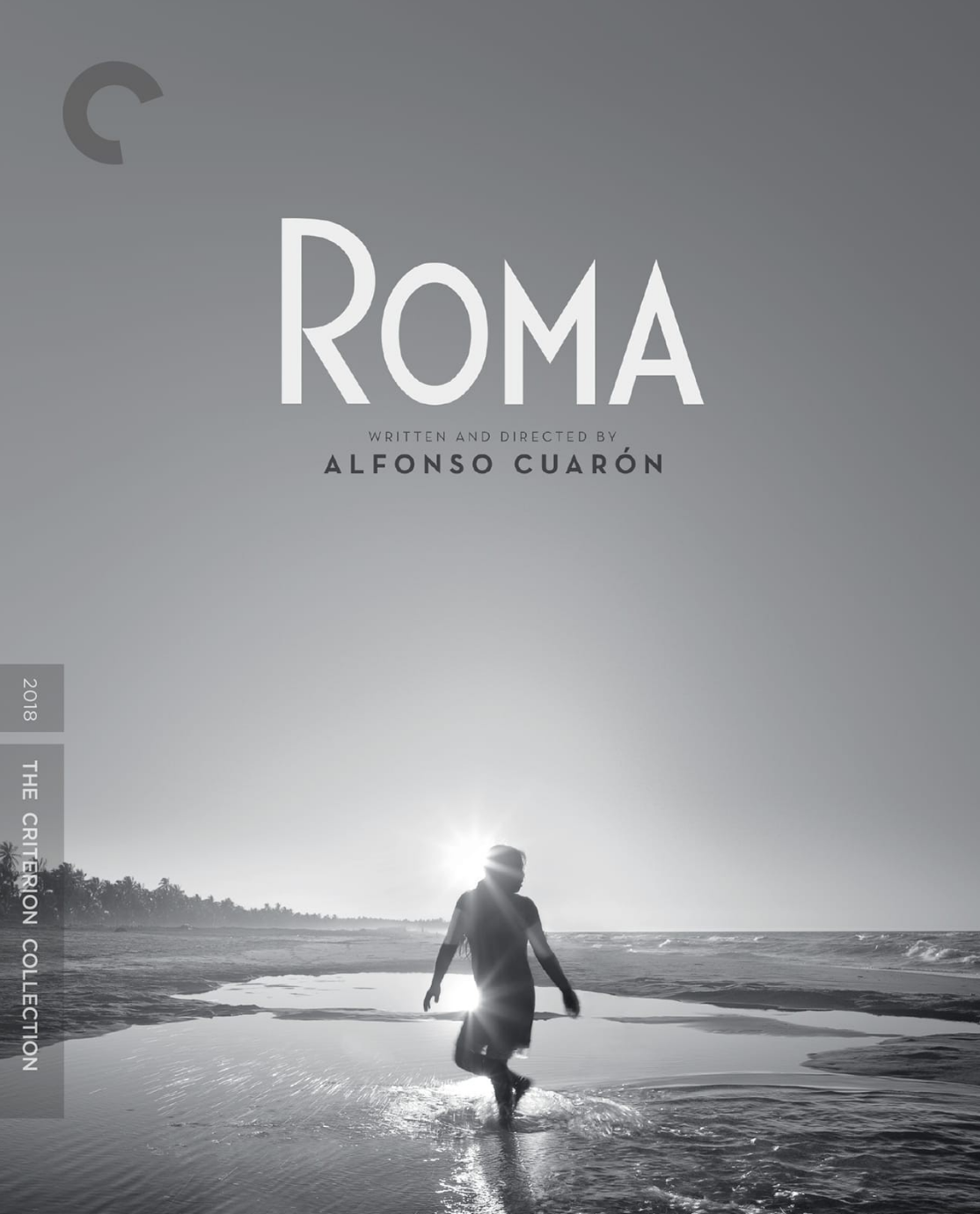
    Movie Poster
    Release year
    2018
    Director
    Alfonso Cuarón Orozco
    Biography of director(s)
    Alfonso Cuarón Orozco is a Mexican filmmaker who started out as a philosophy student at the National Autonomous University of Mexico. He also studied filmmaking in el Centro Universitario de Estudios Cinematográficos, where he made his debut film Vengeance is Mine at 22. This spark would lead him to win many Golden Globe and Academy Awards.
    Country
    Mexico
    Original synopsis of the film

    Roma follows the life of a middle-class family and their Mixtec housekeeper, Cleo, living in Mexico City. While the film tackles many themes and conflicts within the lives of Cleo and the family, such as divorce, political violence, or the concept of motherhood, the film ultimately focuses on the bonds Cleo has with the family.
    Film Awards
    Best Picture - Golden Ariel Award (2019)
    Best Film - BAFTA Film Award (2019)
    Best Foreign Language Film - Academy Award (2019)
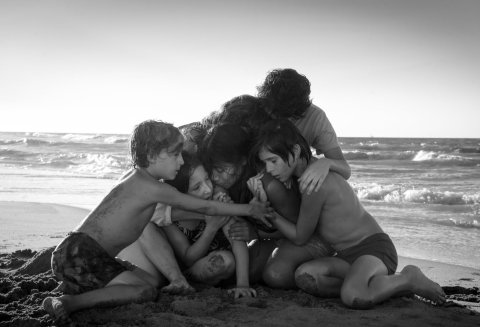
    Film still
    A black and white picture of a family hugging their housekeeper on the beach.

    Describes the setting of a scene in a play or a film. It refers to everything placed on the stage or in front of the camera—including people. In other words, mise en scène is a catch-all for everything that contributes to the visual presentation and overall “look” of a production. When translated from French, it means “placing on stage.”
    Setting
    Setting
    Explanation
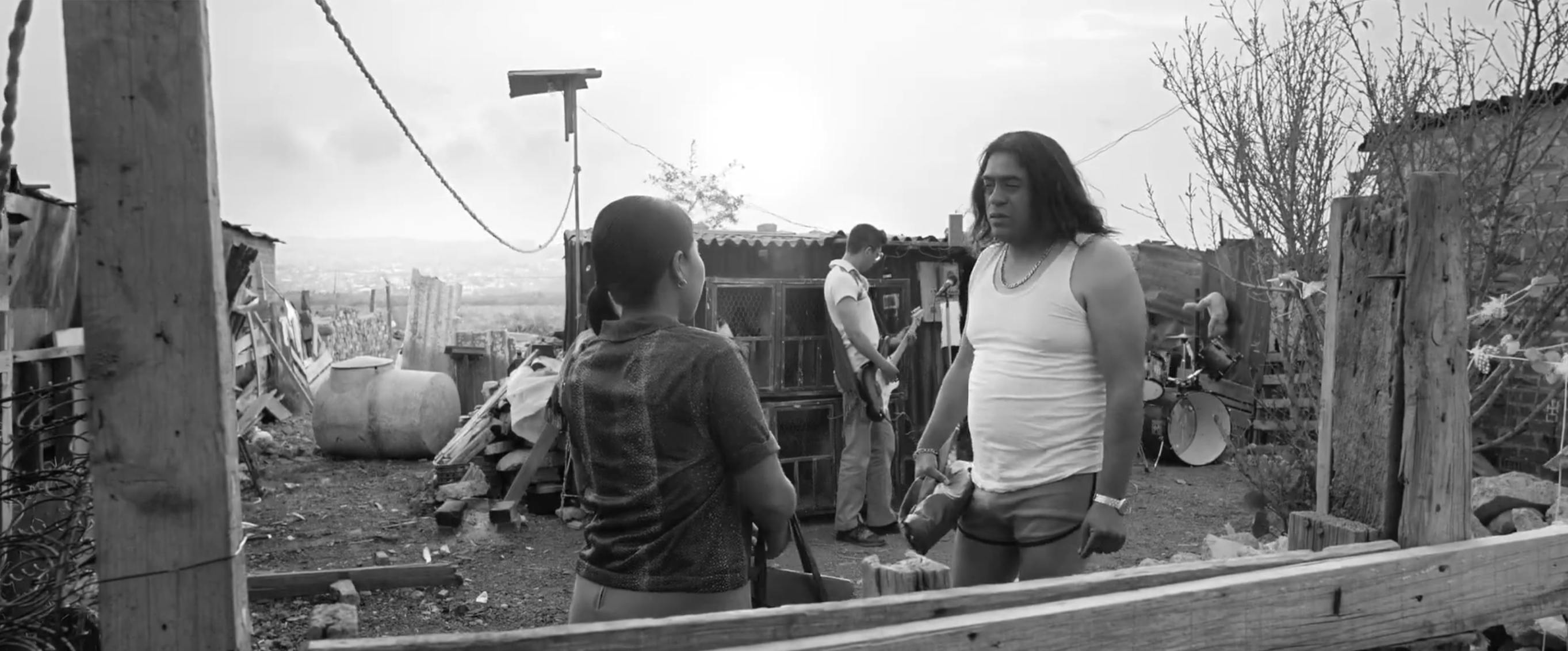
    The film covers a variety of realistic settings located in Mexico during the 1970’s. All of which were meticulously constructed by the director (Alfonso Cuarón Orozco) or brought by his actual child home during his youth in Mexico City. The locations present in the film range from historical movie theaters to huge forests, all of which are captured with wide shots as we follow Cleo’s day by day life. Cuaron’s choices with direction lead the viewer to feel as grounded in reality as Cleo. Despite the emphasis placed on capturing the life of Cleo during this time period, there is just as much emphasis on the symbolic association objects in the film have on the stories narrative.
    Film Still
    Cleo in a realistic looking junkyard.
    Props
    Prop
    The Family car
    Explanation
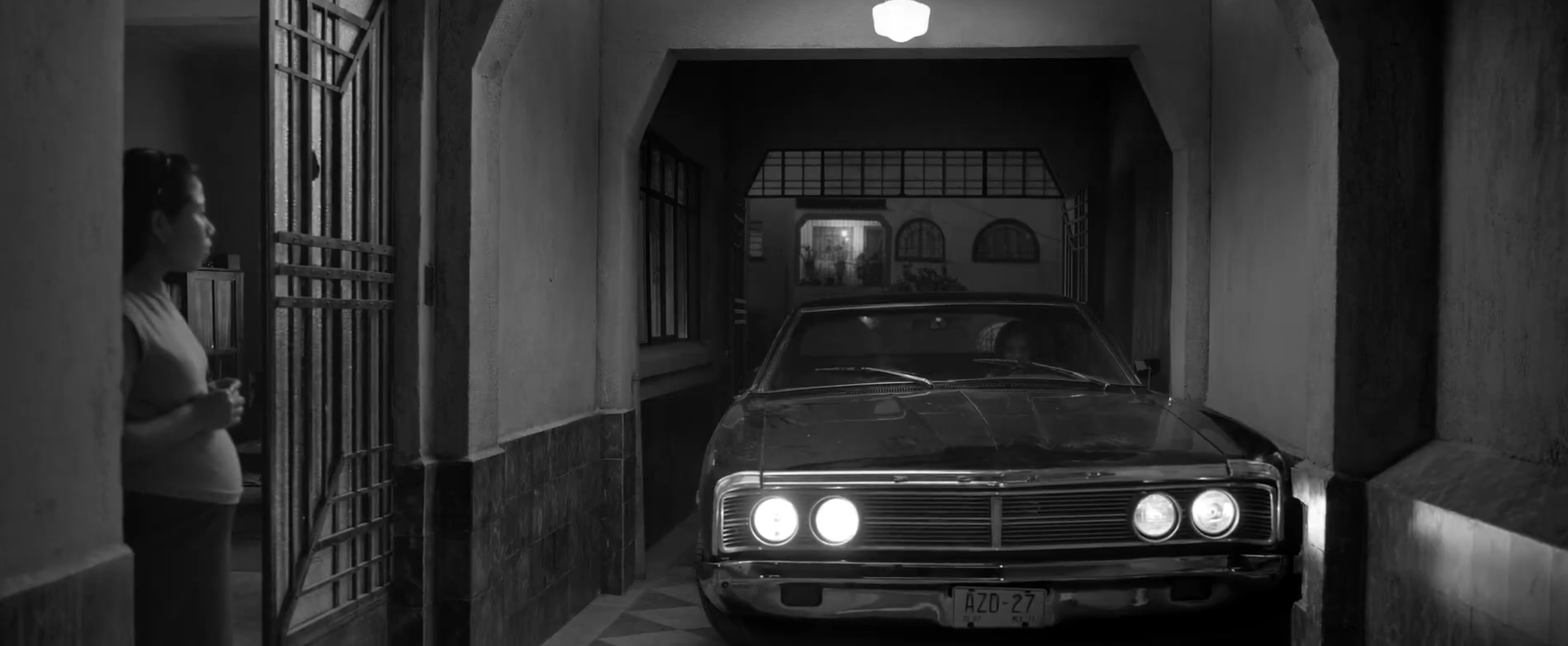
    A driving form of symbolism that is present throughout the film is the father’s car. The film starts out by establishing Cleo and Fermin (the Housekeeper and her boyfriend) along with Sofía and Antonio (the Mother and Father of the four children Cleo housekeeps for). The more it seems the two relationships grow distant, the more the car continues to wear out. Pivotal moments of the film, such as Cleo being abandoned by Fermín when revealing that she’s pregnant with his child or Sofía coming to terms with her Husband’s adultery, result in a trip that leads the two women to go out, which results in many sequences where Sofía damages the car in frustration. Cuarón makes this deliberate choice to represent the cost of absence and male ego. Absence that leaves these women to face the tense situations that the men chose to irresponsibly avoid.
    Film Still
    The family car being parked as Cleo watches.
    Lighting
    Lighting
    Explanation
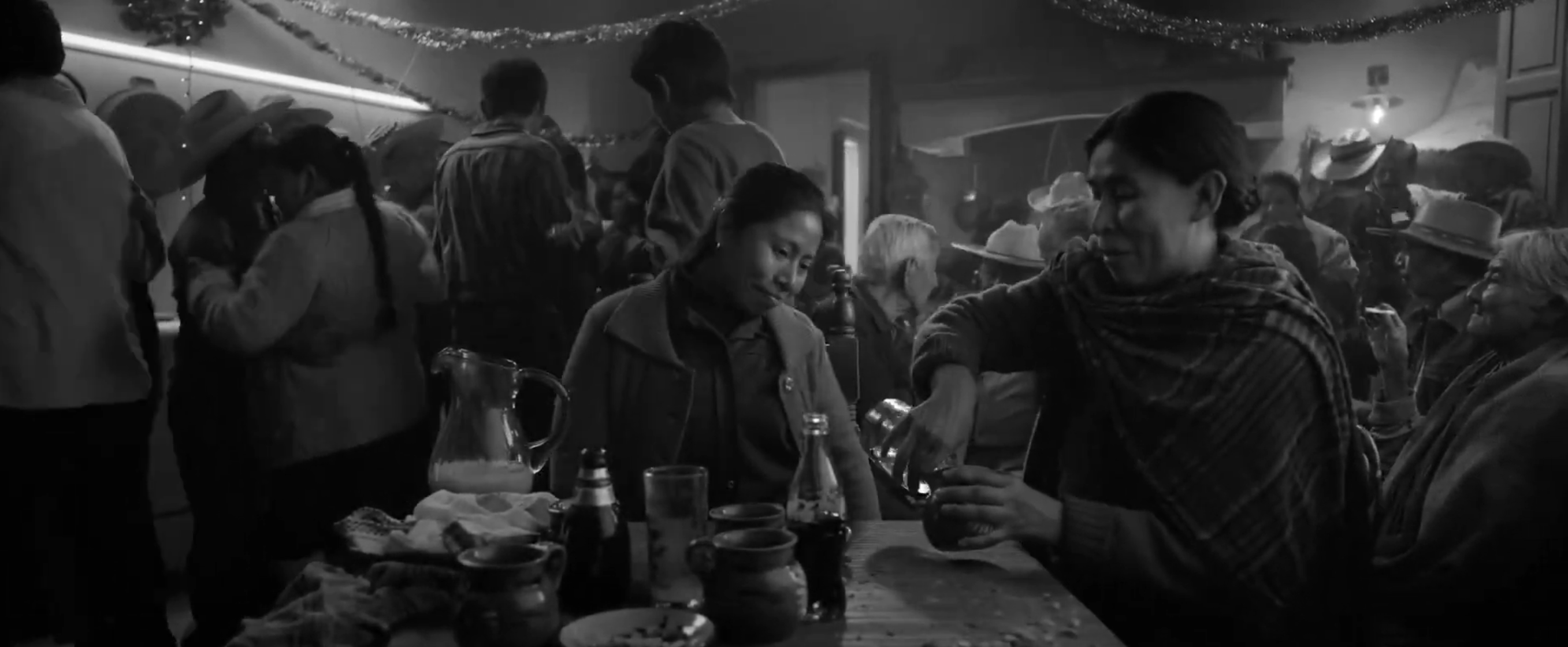
    The choice to have the film completely in black and white creates a tone that is distinct from other depictions of the 1970s in film. As I stated before, Cuarón puts great emphasis on the set design, and that is amplified by the removal of color as it pushes the audience to focus on form. With most films, there is a push to make the main character as visually noticeable as possible, whether it be through lighting rigs, frequent close-ups, different clothes, etc. However, Cleo lacks all of these. She’s often captured through natural light sources, and wears clothes similar to those around her. These elements mimic Cleo’s feelings of being lost while she navigates her role as the servant and mother figure of the family. Something I will discuss more of in the “Figure Behavior” section.
    Film Still
    Cleo in a packed environment wearing dark clothing.
    Costume
    Hair and Makeup
    Figure Behavior
    Example
    Cleo's physical distance from the rest of the family.
    Explanation
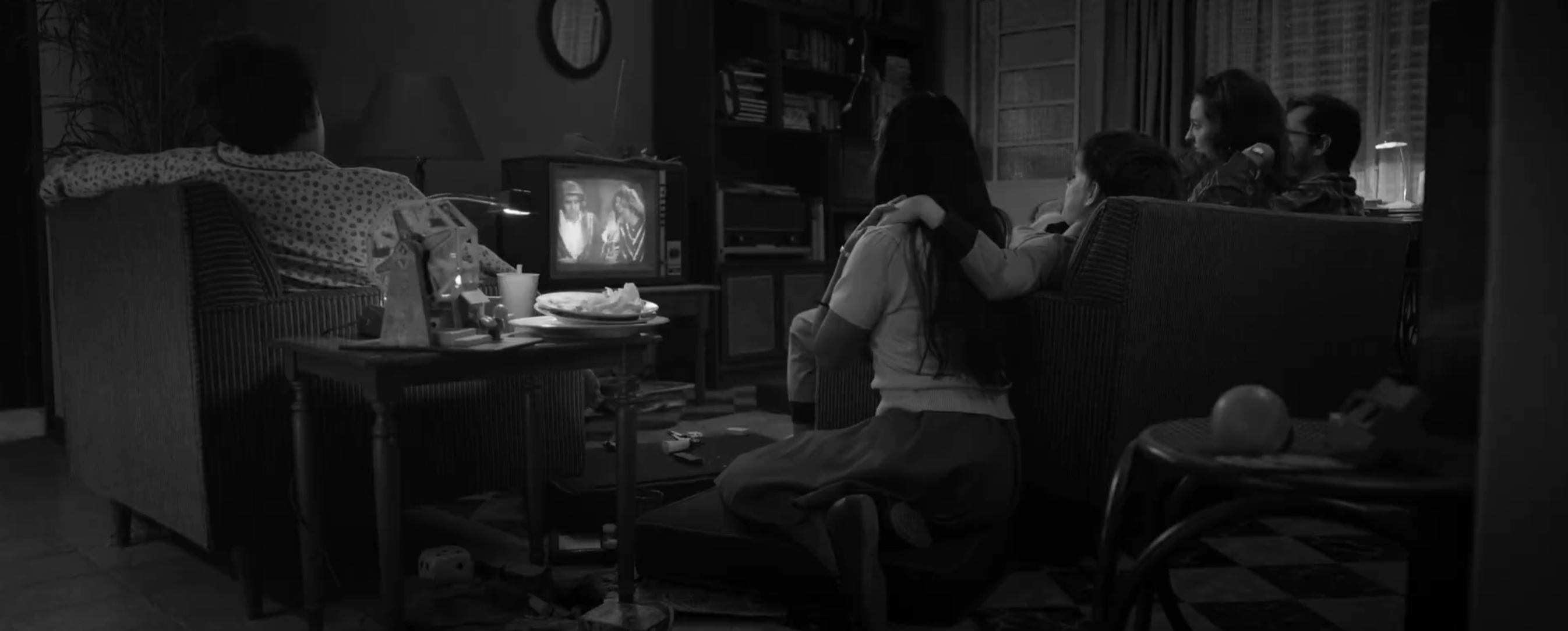
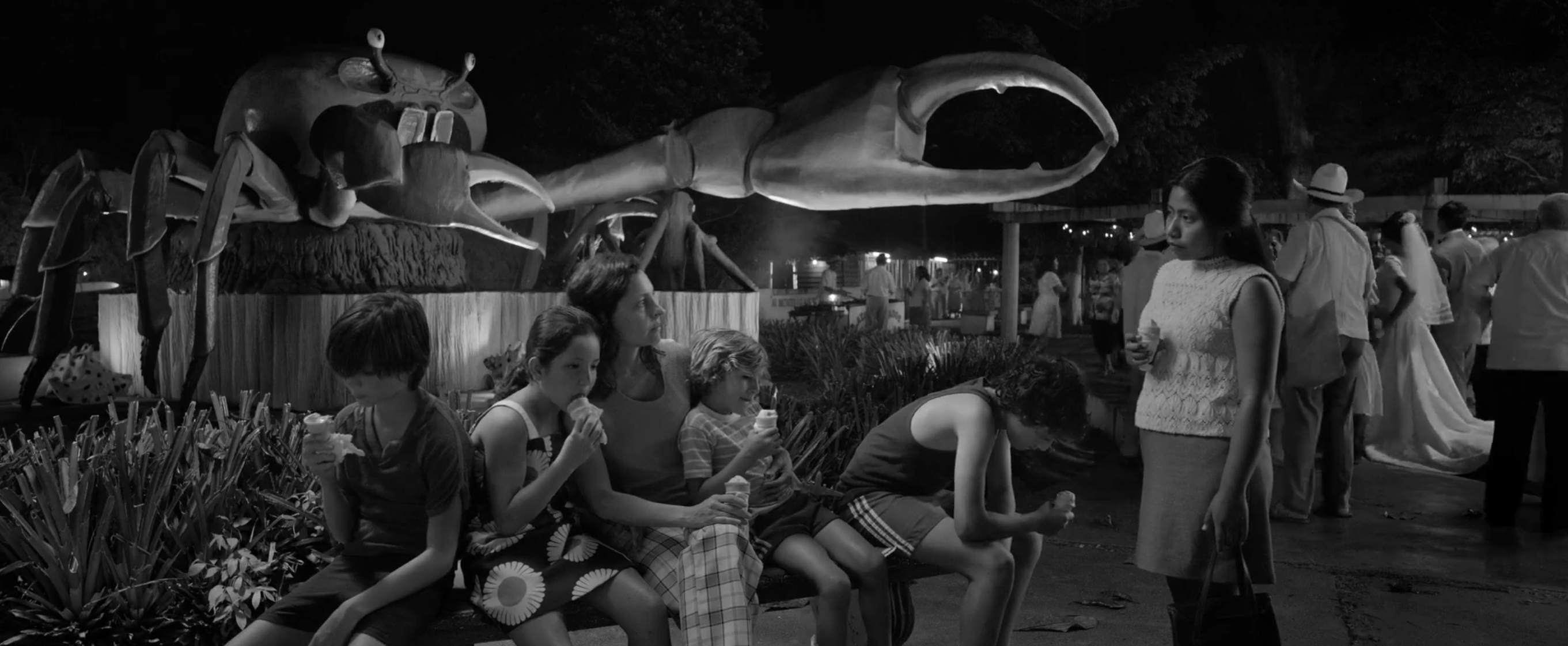
    When thinking of acting, one would first think of analyzing the emotional performances of each actor. What caught my attention just as much, however, is the blocking decisions for Cleo in relation to the rest of the family. The stills I’ve chosen for this are particularly striking to me because it’s visually clear that Cleo is not treated as family in all regards despite her overwhelming time with them. She may be given hugs or be offered rides to the hospital, but her lower status in the family is constantly apparent when she is the last to be offered a seat. Even as a single pregnant woman.
    Film Still
    Cleo sitting on the floor as she and the family watch TV.
    The family and Cleo eating ice cream. Cleo is the only one standing while pregnant.
    Representative Clip

    This is the art of photography and visual storytelling in a motion picture or television show. Cinematography comprises all on-screen visual elements, including lighting, framing, composition, camera motion, camera angles, film selection, lens choices, depth of field, zoom, focus, color, exposure, and filtration. Cinematography sets and supports the overall look and mood of a film’s visual narrative. Each visual element that appears on screen, a.k.a. the mise-en-scène of a film, can serve and enhance the story—so it is the cinematographer’s responsibility to ensure that every element is cohesive and support the story. Filmmakers often choose to spend the majority of their budget on high-quality cinematography to guarantee that the film will look incredible on the big screen.

    Point of View
    Quality
    Framing
    Scale
    Movement

    Editing is the process of putting a film together–the selection and arrangement of shots and scenes. Editing can condense space and time, emphasize separate elements and bring them together, and organize material in such a way that patterns of meaning become apparent. In addition, editing can determine how a film is perceived: for instance, quick, rapid cuts can create a feeling of tension, while a long take can create a more dramatic effect. The first photoplays generally had no cutting, owing to the fact that they were single-reel films; once filming began, you could not stop until the film ran out. (https://filmglossary.ccnmtl.columbia.edu/term/editing/)
    Coherence, Continuity, and Rhythym
    Editing Style
    Editing Style
    Comments
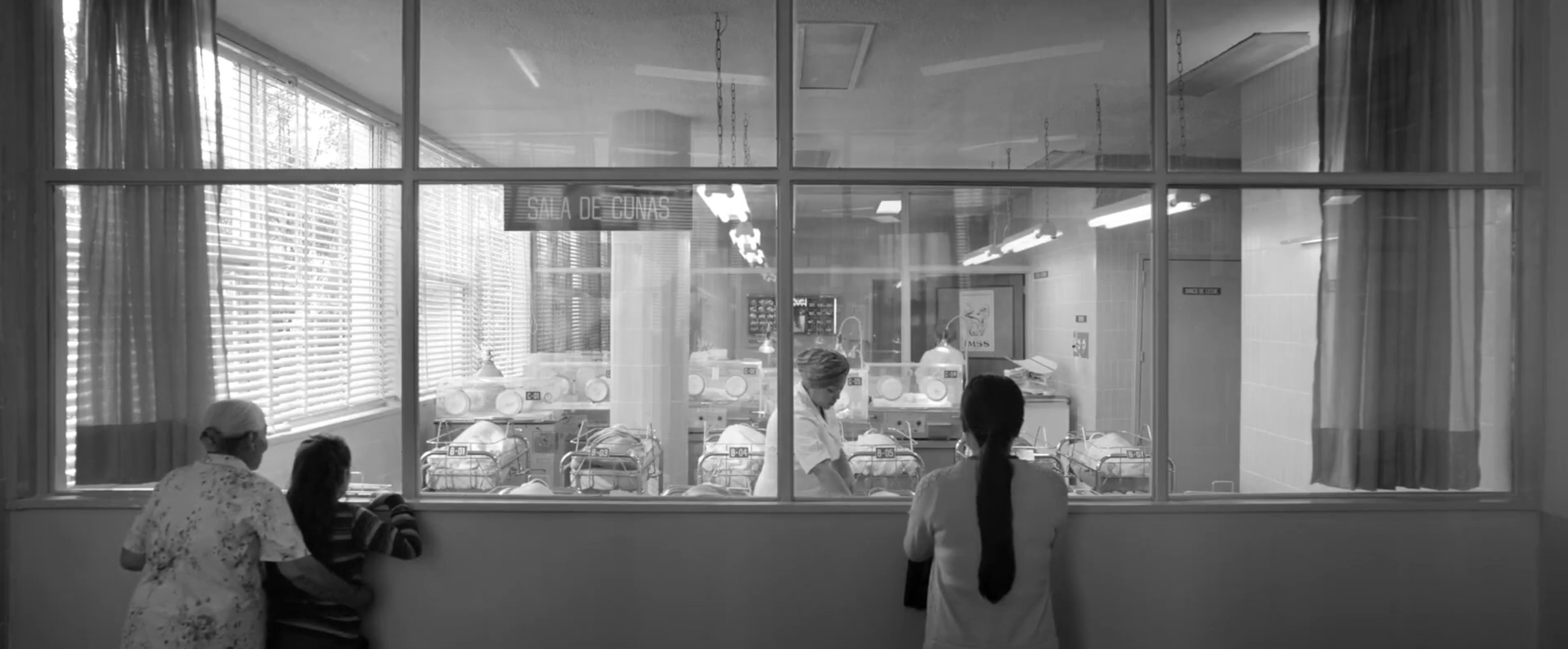
    This film has a great number of wide shots and long takes which give the viewer the impression of living in Cleo’s reality. It’s typical for a film to push for a variety of short takes and frequent cuts to keep the viewer engaged, but Cuarón has chosen to use his level of meticulous realism and grounding to do the entertainment instead. Whether it’s the bustling traffic of Mexico City or the quiet nights with Cleo as she wraps up her day, we feel attached to her.
    Film Still
    A wide shot of Cleo as she looks at a nursery. She is completely off center in the shot to the point where only her torso is captured.
    Transitions
    Match
    Expansion and Compression of Time
    Editing General Comments

    Sound is an integral part in a film. It refers to everything that the audience hears including sound effects, words and music. Sound is used in films for various purposes, including: providing the information to the viewer about the location of the scene, heightening the mood, telling the audience about the characters and advancing the plot. Every person who watches a film realizes that the choice of voices, soundtrack and music present in a film affect the way that the viewer perceives a particular film. As a result, the sound is an important and integral element of the film, one that determines the way that the viewer experiences and understands a film as a visual experience.

    Sound Type

    Narrative analysis is an examination of the story elements, including narrative structure, character, and plot. A narrative can be considered to be the chain of events in a cause-effect relationship occurring in time and space. In order to analyze the narrative of a film, we need to first make the distinction between the plot of the film and the story of the film. This is sometimes referred to as the discourse and story of a film. Narrative may also be called the story thought story mainly refers to the events that describe the narrative.

    Plot Comments
    Story Comments
    Narrator Type
    Narrative Structure

    Film genres are various forms or identifiable types, categories, classifications or groups of films. (Genre comes from the French word meaning "kind," "category," or "type"). These provide a convenient way for scriptwriters and film-makers to produce, cast and structure their narratives within a manageable, well-defined framework. Genres also offer the studios an easily 'marketable' product, and give audiences satisfying, expected and predictable choices. Genres refers to recurring, repeating and similar, familiar or instantly-recognizable patterns, styles, themes, syntax, templates, paradigms, motifs, rules or generic conventions.

    Category