
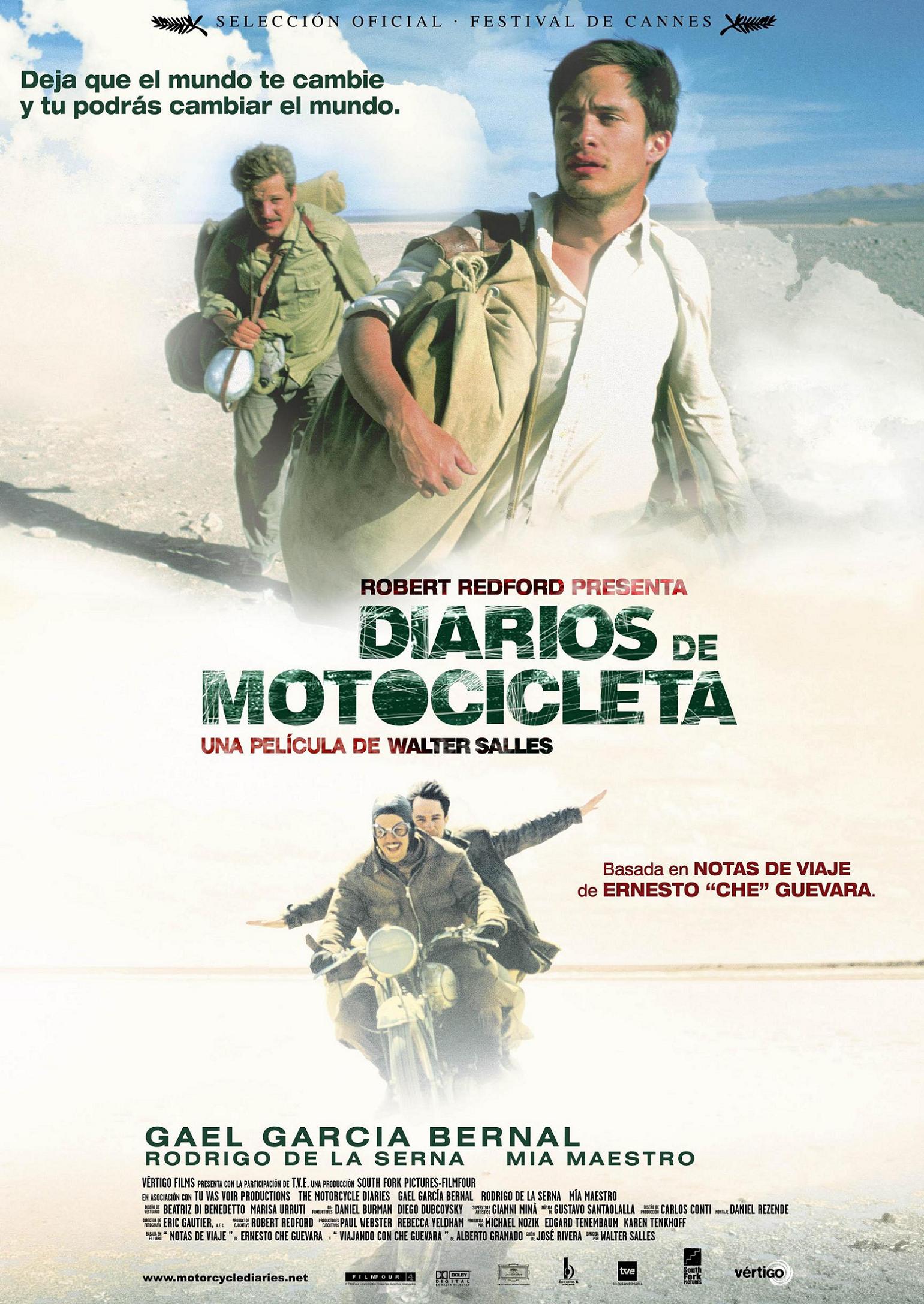
In January 1952, Ernesto Guevara, a twenty-three-year-old medical student one semester short of his degree, and his friend Alberto Granado, a twenty-nine-year-old biochemist, leave Buenos Aires on a battered 1939 Norton 500 motorcycle they call La Poderosa. Their plan is to cross South America and reach Venezuela in time for Alberto's thirtieth birthday. The first leg takes them to Miramar, where Ernesto visits his upper-class girlfriend Chichina, who gives him fifteen dollars and asks him to buy her a swimsuit in the United States.
The motorcycle breaks down repeatedly through Patagonia and Chile and is finally abandoned in Los Ángeles. Now on foot and hitchhiking, the two rely on charm and improvised deceptions to eat and sleep. Along the way Ernesto receives a letter from Chichina ending the relationship. In the Atacama Desert they meet a Communist couple, forced from their land and searching for work, and travel with them to the Chuquicamata copper mine, where Ernesto is angered by the treatment of the labourers. Crossing into Peru, they walk through the Andes, visit Cuzco and Machu Picchu, and meet indigenous farmers and displaced families.
In Lima they stay with Dr. Hugo Pesce, a leprosy specialist, who sends them to the San Pablo leper colony on the Amazon. There Ernesto refuses the gloves the nuns require and touches the patients directly, and on his birthday he swims across the river at night to spend it with them. The colony's staff and patients build the two a raft, and they float downriver to Leticia. In Caracas the friends separate: Alberto stays to work at a hospital, Ernesto flies home.
Describes the setting of a scene in a play or a film. It refers to everything placed on the stage or in front of the camera—including people. In other words, mise en scène is a catch-all for everything that contributes to the visual presentation and overall “look” of a production. When translated from French, it means “placing on stage.”
The setting is not exotic in that it takes place entirely on the South American Continent, yet there is a constant sense of discovery as the protagonists travel through impressive landscapes, geographical features, cities, and historical landmarks; often with wide establishing shots and text describing the locations, marking their importance.
The road, the motorcycle, and the letters home are the recurring props, and the whole film is structured around thresholds — borders, rivers, mountain passes — that mark stages in Ernesto's political formation.
The strongest instance of setting doing symbolic work is the leper colony.The colony is laid out so that the patients live on one bank of the Amazon and the doctors and nuns on the other with a boat ferries staff across in daylight. The river functions as the symbolic line between the healthy and the sick, and by extension the class division seen throughout the film. On the night of his twenty-fourth birthday, celebrated on the staff side, Ernesto walks out of the party and swims across to the patients, breaking that barrier, morally and physically.
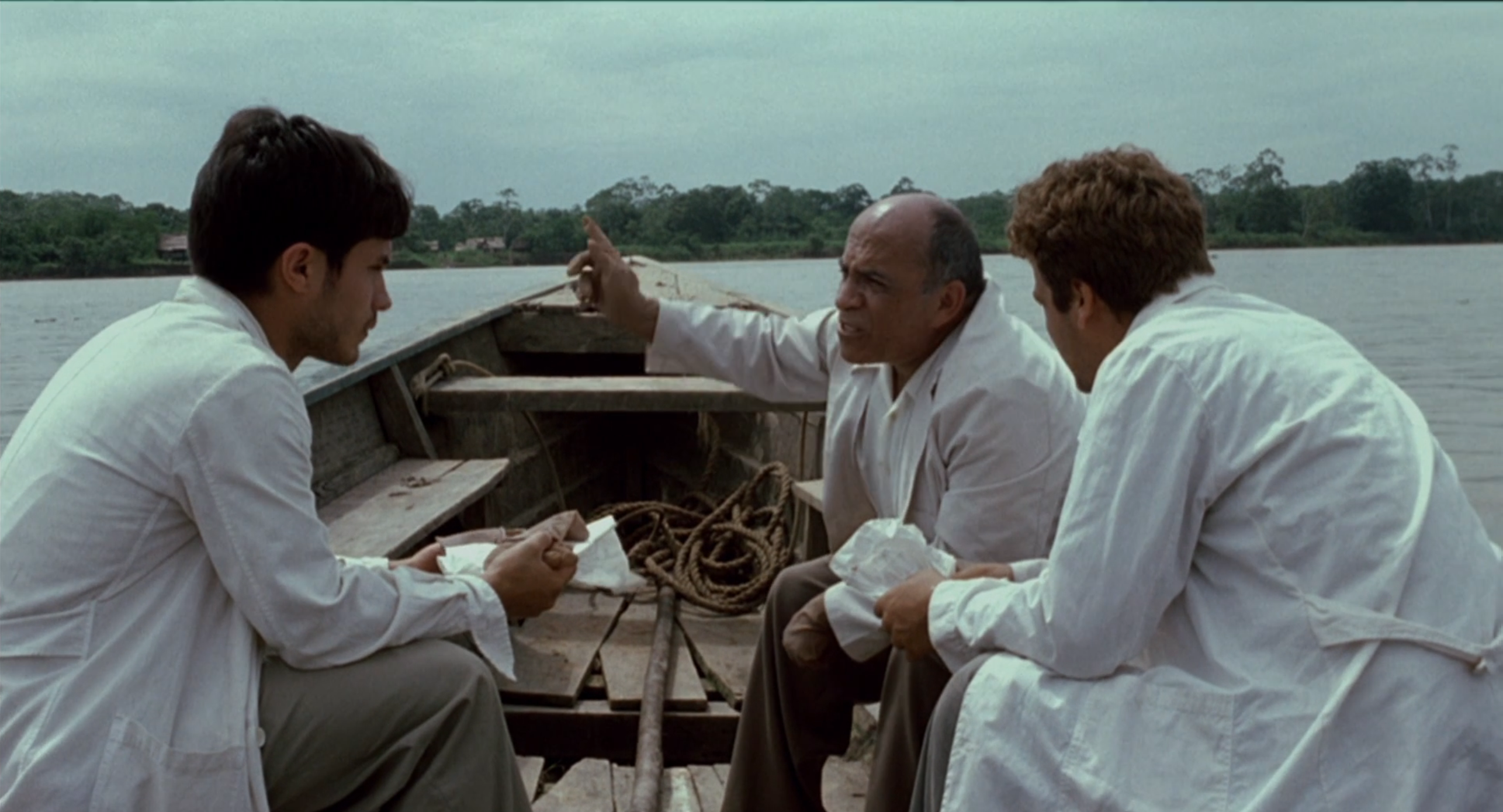
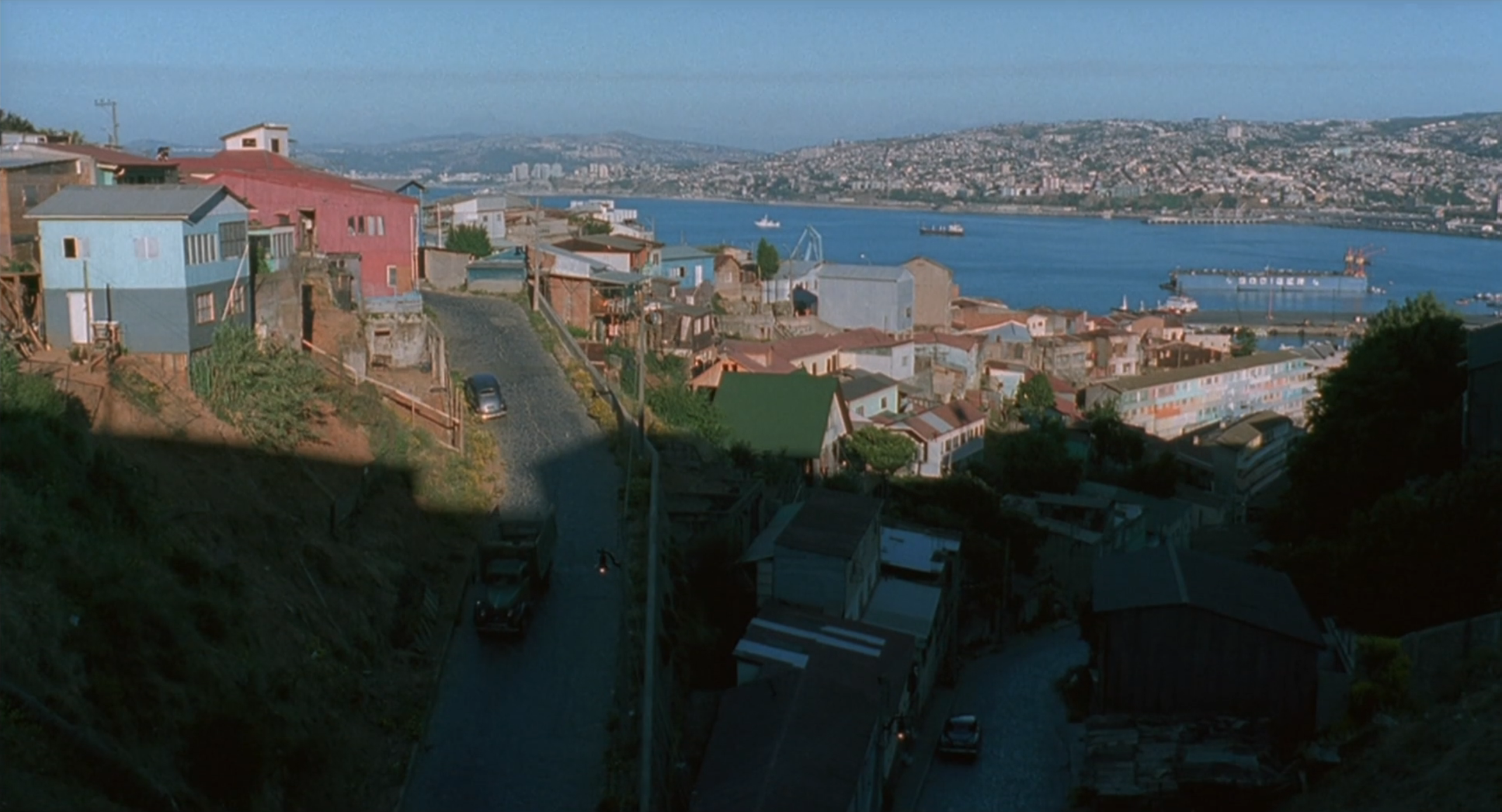
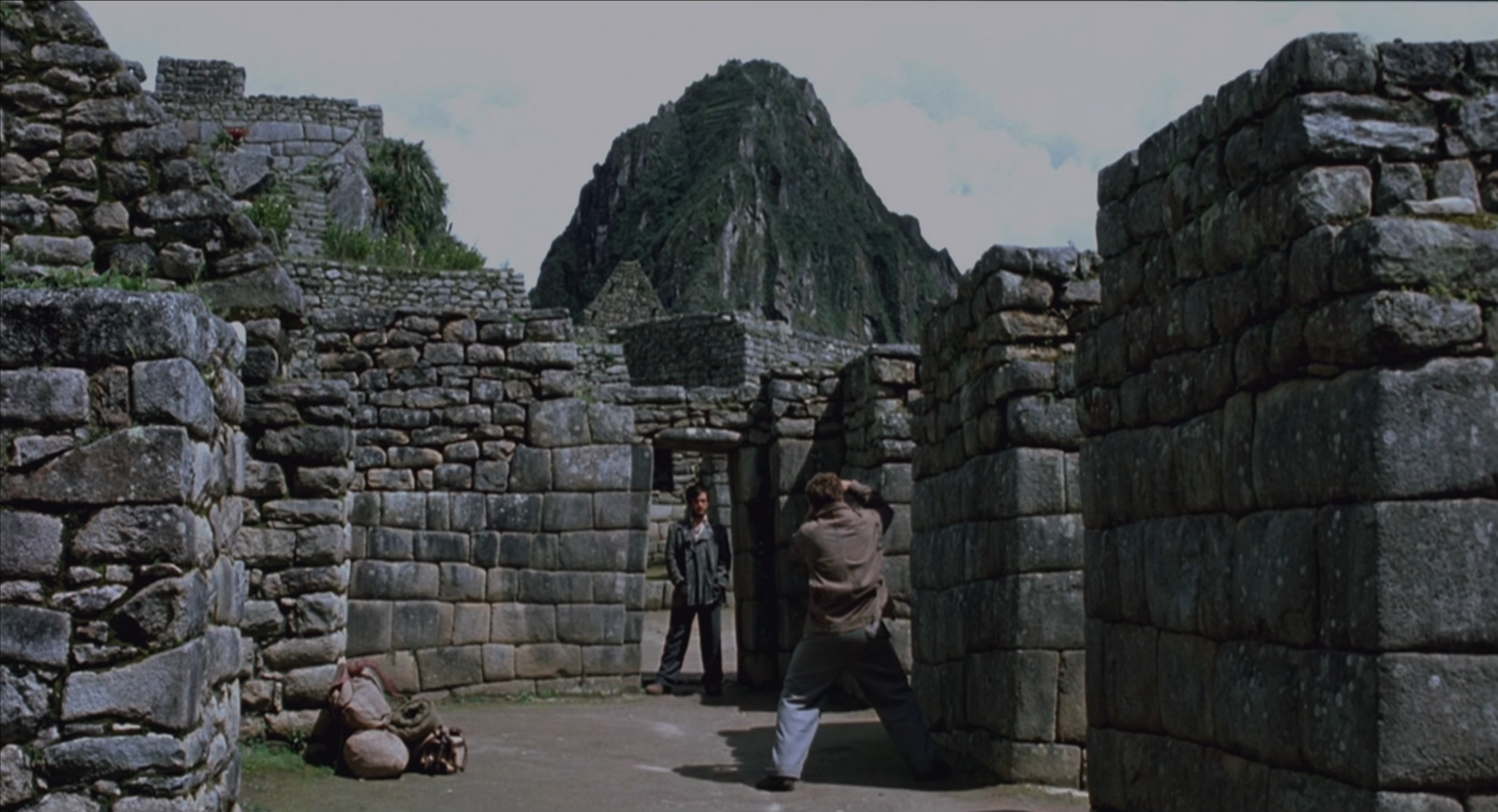
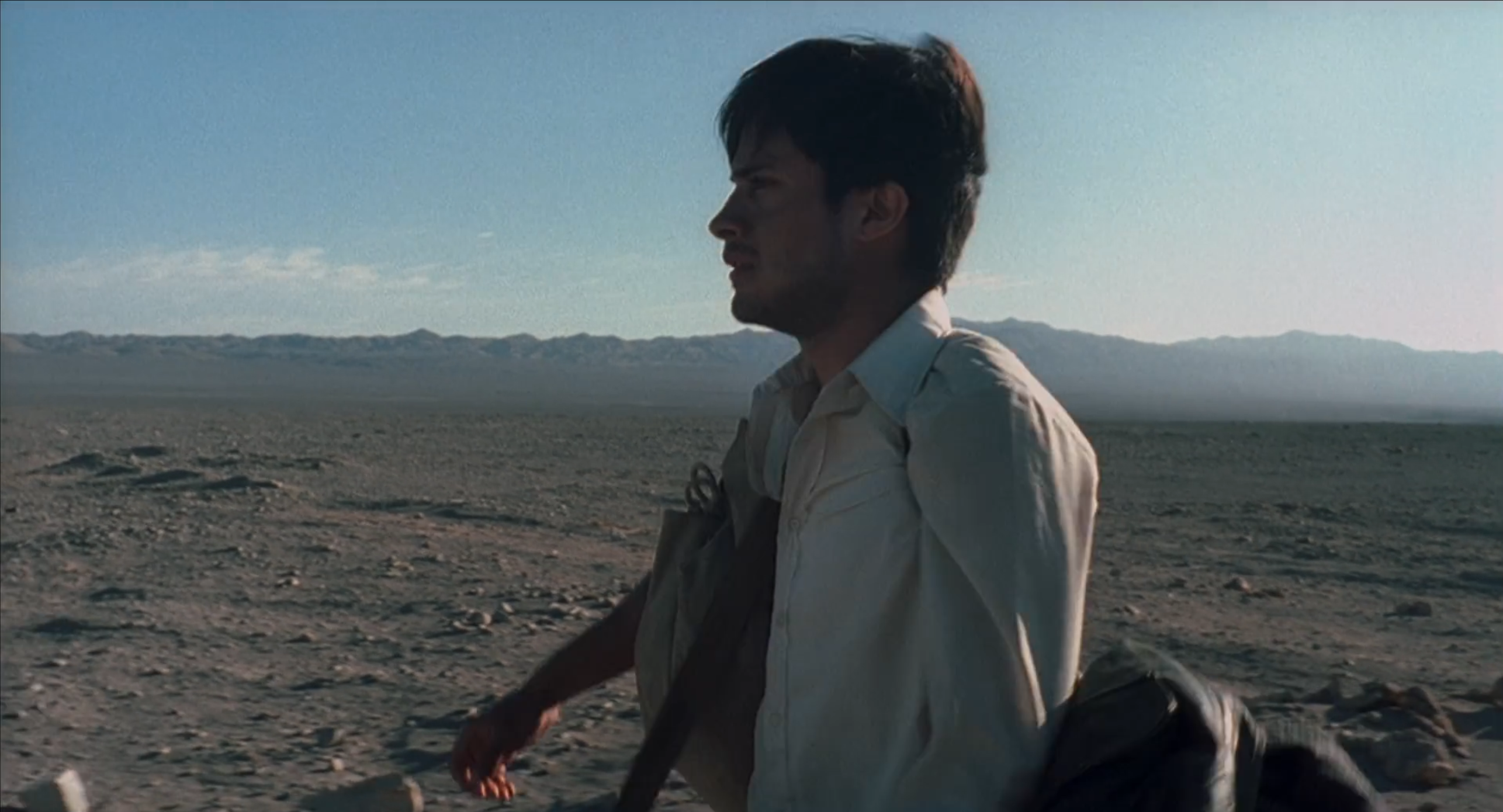
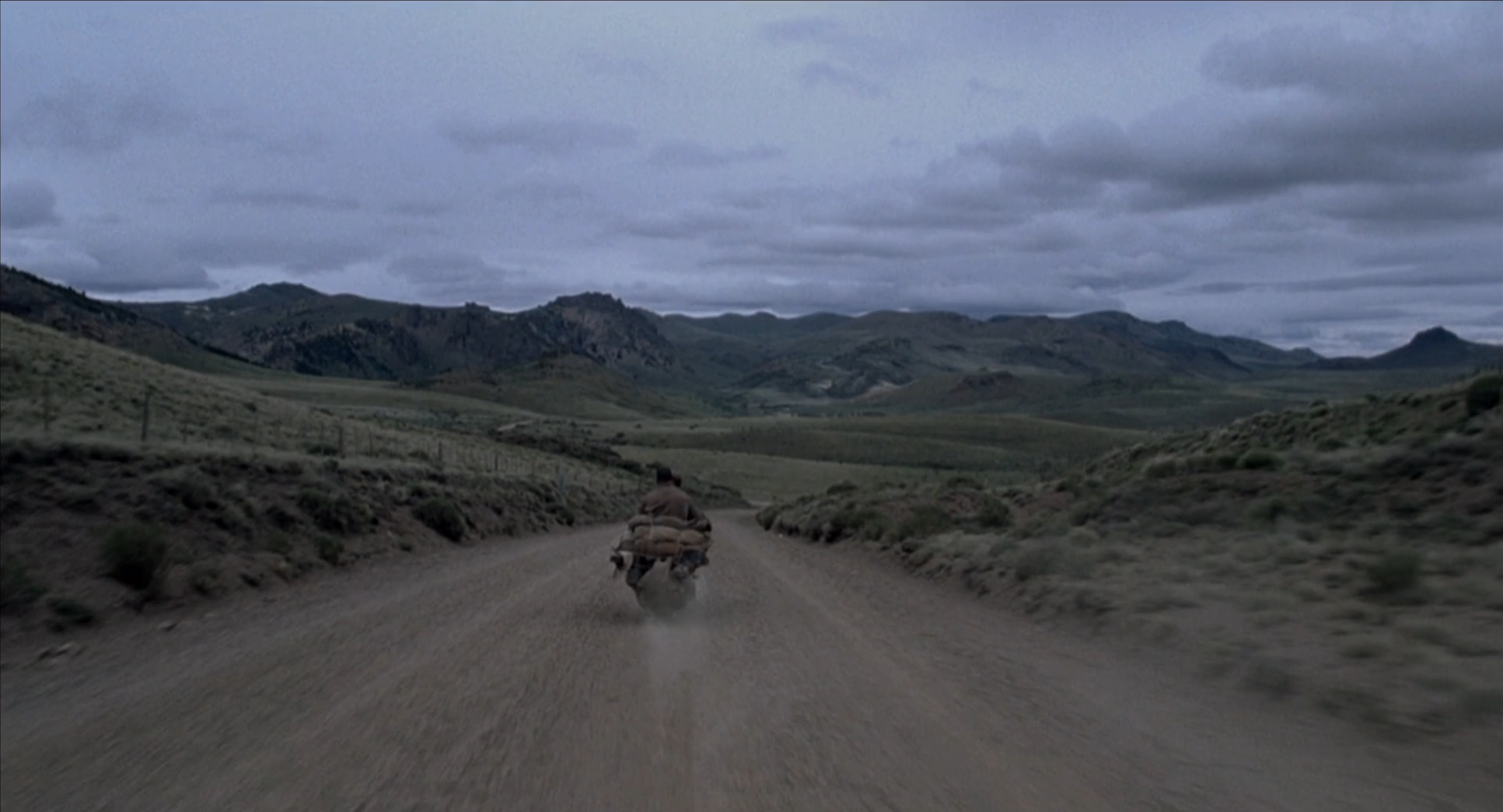
Within the attempt at realism, there is some use of lighting expressively. The Argentine opening is soft and warm: interiors in Buenos Aires and Miramar are lit through windows and lamps, frontal and even, the light of comfort and class. As the journey moves into Patagonia and Chile the light hardens — direct sun, hard-edged shadows, overexposed skies — and the two men are increasingly shot backlit or in silhouette against landscape, tiny figures against horizons. In the Andes and the Amazon, the film turns to low light: firelight, dusk, night interiors where a single lantern picks out one face and leaves the rest in darkness.
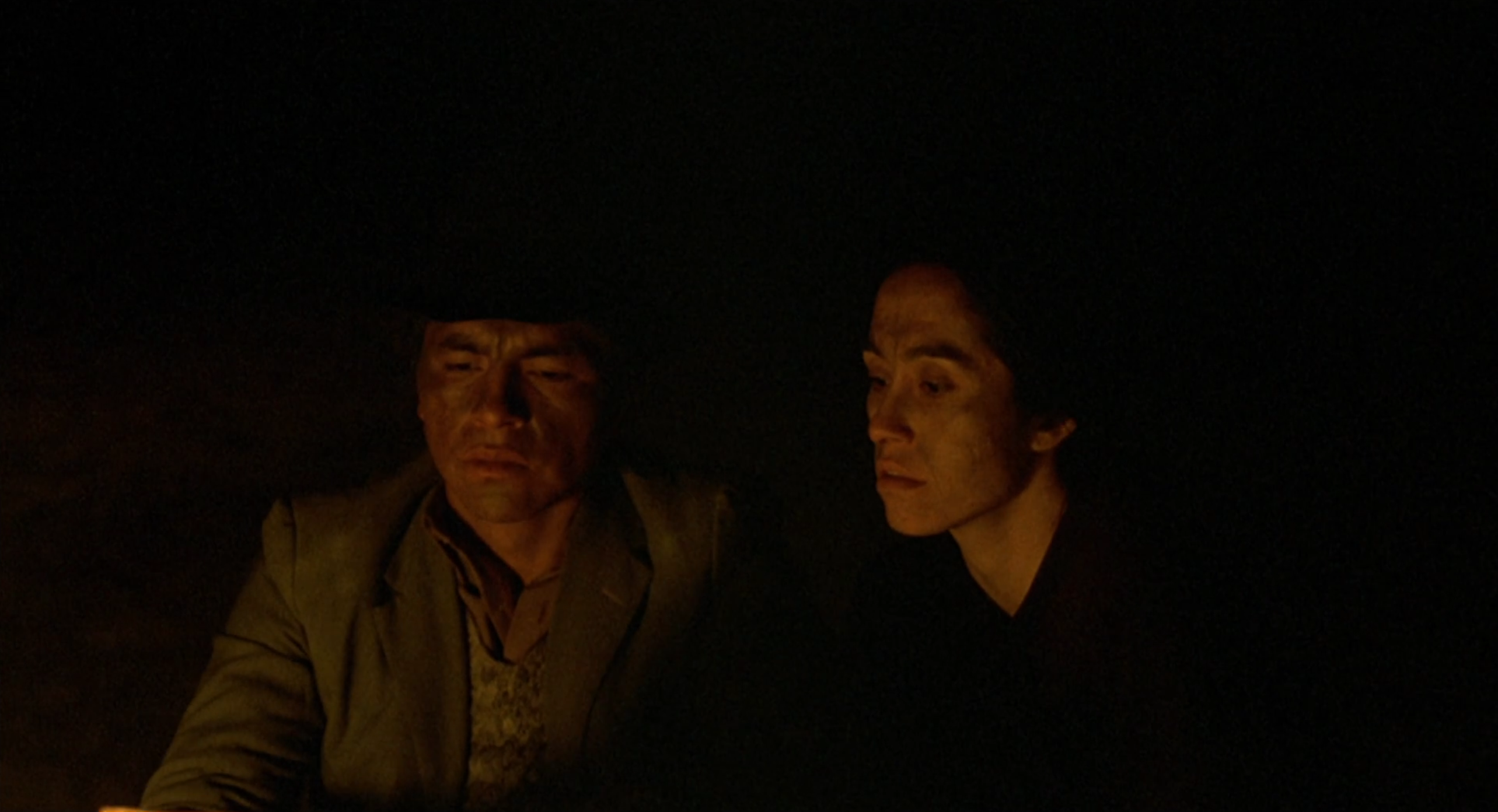
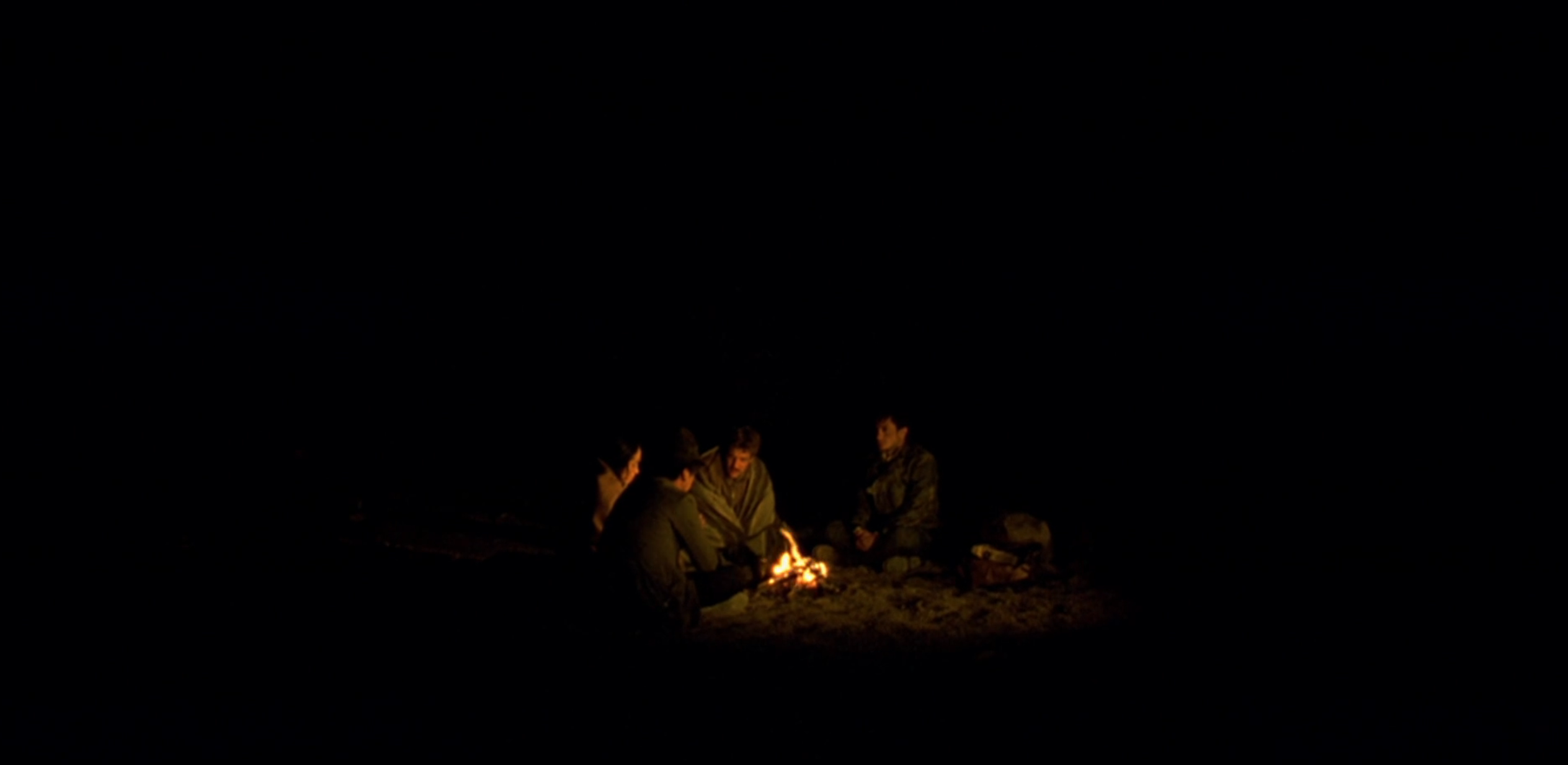
The clearest single lighting choice is the night scene in the Atacama Desert where Ernesto and Alberto share a fire with the Communist couple who have been driven off their land and are heading to the Chuquicamata mine for work. The only source is the fire itself, under-lighting the characters. The scene cuts, at dawn, to the mine: hard, flat, overhead sunlight, no shadows, and the couple being separated from the other laborers by a foreman on a truck. The contrast between the two lighting regims illustrates how people are visible in the dark, but invisible in the daylight of the economy.
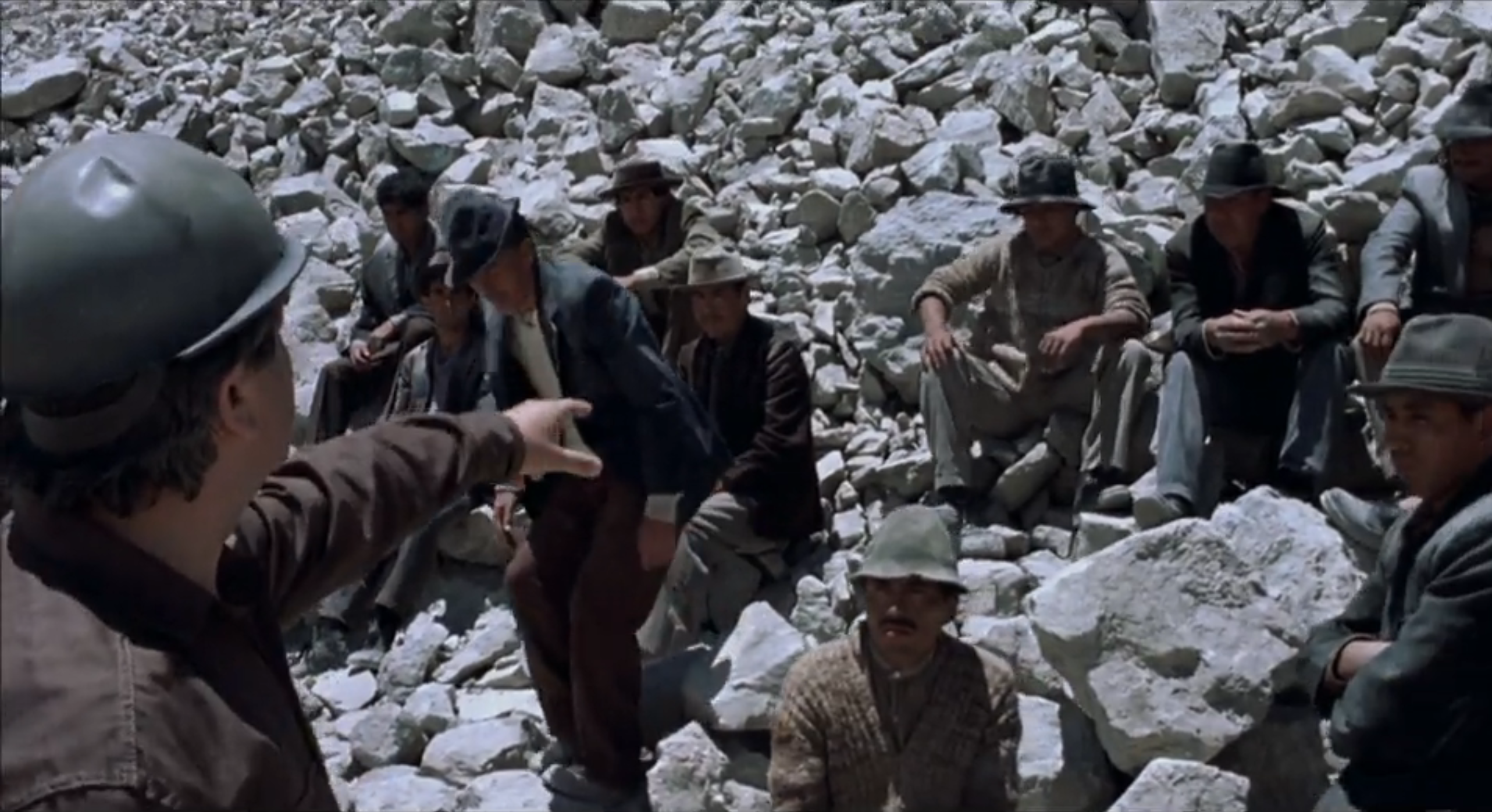
Ernesto is played through stillness. He speaks fairly little and moves less than Alberto. Many of his gestures are refusals, like not lying to the mechanic's wife, and choosing not to wear gloves. His asthma attacks are the only times his body loses composure, meant to show an involuntary loss of control. Alberto on the other hand is much the opposite. He uses broad gestures, talks constantly, and pursues women in the dance-hall.
The film also uses gaze symbolically. Ernesto is the looker: the camera repeatedly gives us his face watching, then what he sees. The film is giving the audience Latin America through his eyes, so that his political education becomes ours. We do not see the mine, the colony, or the Andean farmers directly, but as things Ernesto is learning to look at. Alberto, by contrast, is rarely the point-of-view character. He is usually in the frame, being watched, and by the end of the journey he is watching Ernesto.
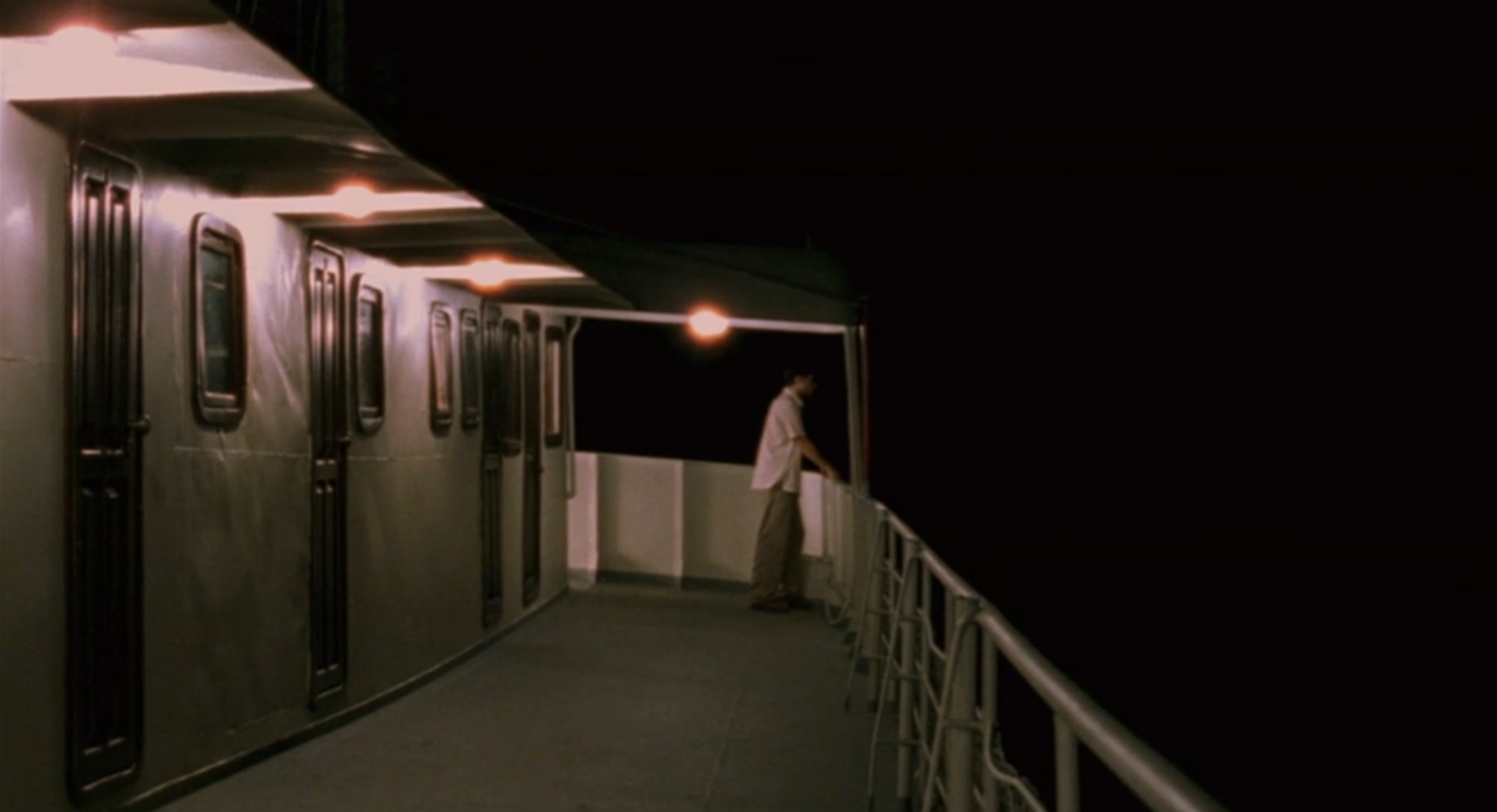
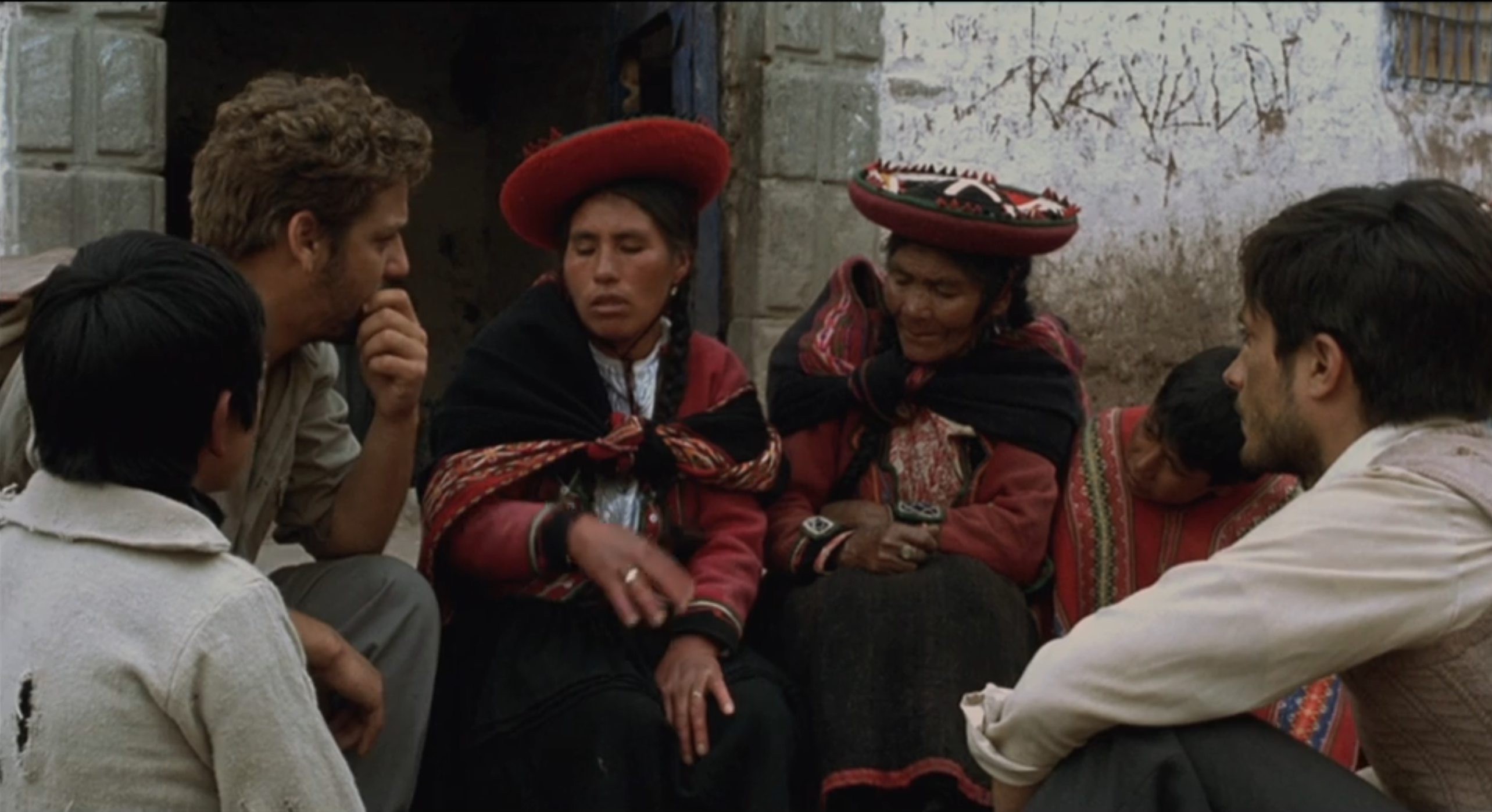
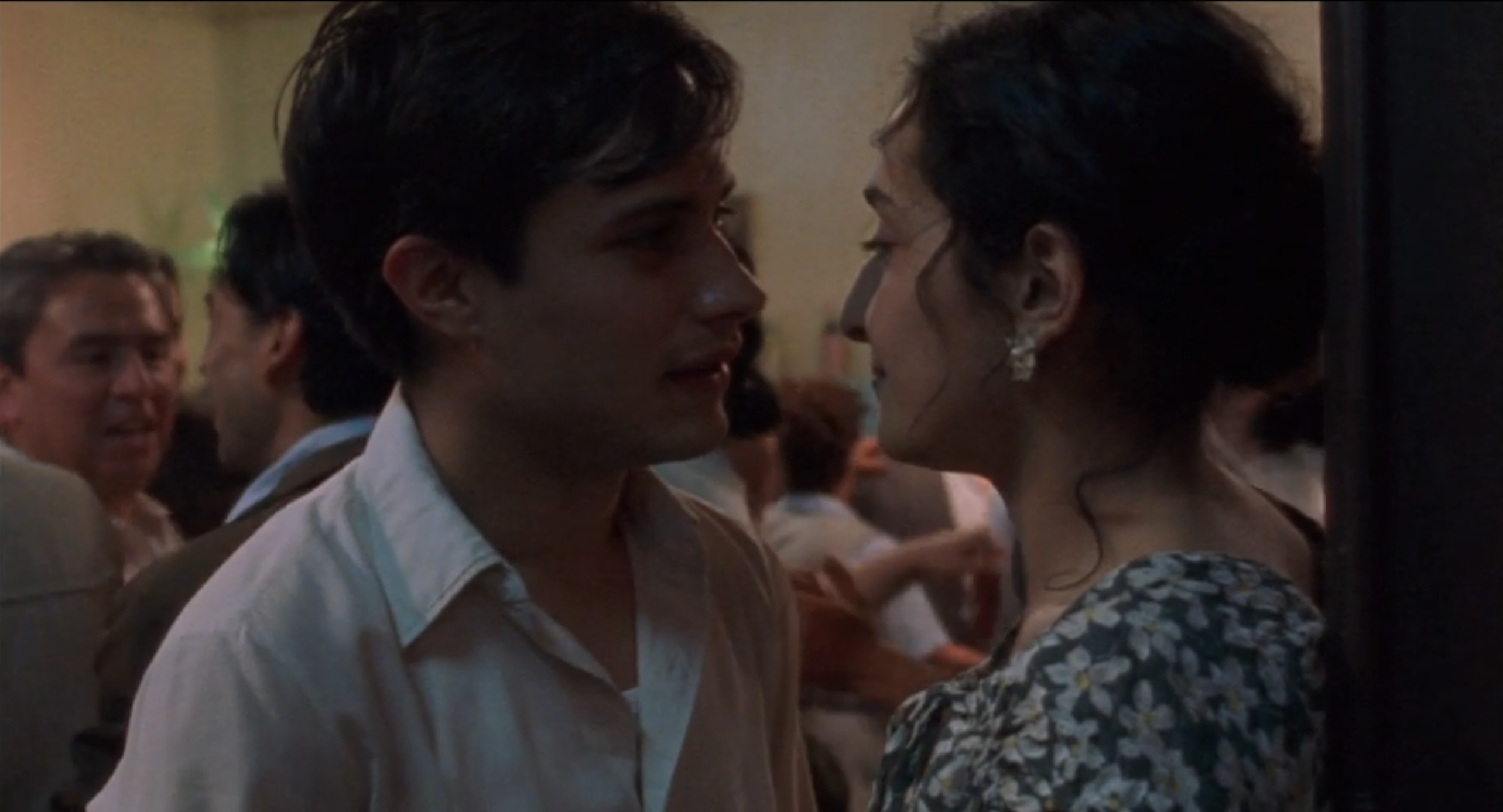
This is the art of photography and visual storytelling in a motion picture or television show. Cinematography comprises all on-screen visual elements, including lighting, framing, composition, camera motion, camera angles, film selection, lens choices, depth of field, zoom, focus, color, exposure, and filtration. Cinematography sets and supports the overall look and mood of a film’s visual narrative. Each visual element that appears on screen, a.k.a. the mise-en-scène of a film, can serve and enhance the story—so it is the cinematographer’s responsibility to ensure that every element is cohesive and support the story. Filmmakers often choose to spend the majority of their budget on high-quality cinematography to guarantee that the film will look incredible on the big screen.
Editing is the process of putting a film together–the selection and arrangement of shots and scenes. Editing can condense space and time, emphasize separate elements and bring them together, and organize material in such a way that patterns of meaning become apparent. In addition, editing can determine how a film is perceived: for instance, quick, rapid cuts can create a feeling of tension, while a long take can create a more dramatic effect. The first photoplays generally had no cutting, owing to the fact that they were single-reel films; once filming began, you could not stop until the film ran out. (https://filmglossary.ccnmtl.columbia.edu/term/editing/)
Sound is an integral part in a film. It refers to everything that the audience hears including sound effects, words and music. Sound is used in films for various purposes, including: providing the information to the viewer about the location of the scene, heightening the mood, telling the audience about the characters and advancing the plot. Every person who watches a film realizes that the choice of voices, soundtrack and music present in a film affect the way that the viewer perceives a particular film. As a result, the sound is an important and integral element of the film, one that determines the way that the viewer experiences and understands a film as a visual experience.
Narrative analysis is an examination of the story elements, including narrative structure, character, and plot. A narrative can be considered to be the chain of events in a cause-effect relationship occurring in time and space. In order to analyze the narrative of a film, we need to first make the distinction between the plot of the film and the story of the film. This is sometimes referred to as the discourse and story of a film. Narrative may also be called the story thought story mainly refers to the events that describe the narrative.
Film genres are various forms or identifiable types, categories, classifications or groups of films. (Genre comes from the French word meaning "kind," "category," or "type"). These provide a convenient way for scriptwriters and film-makers to produce, cast and structure their narratives within a manageable, well-defined framework. Genres also offer the studios an easily 'marketable' product, and give audiences satisfying, expected and predictable choices. Genres refers to recurring, repeating and similar, familiar or instantly-recognizable patterns, styles, themes, syntax, templates, paradigms, motifs, rules or generic conventions.