
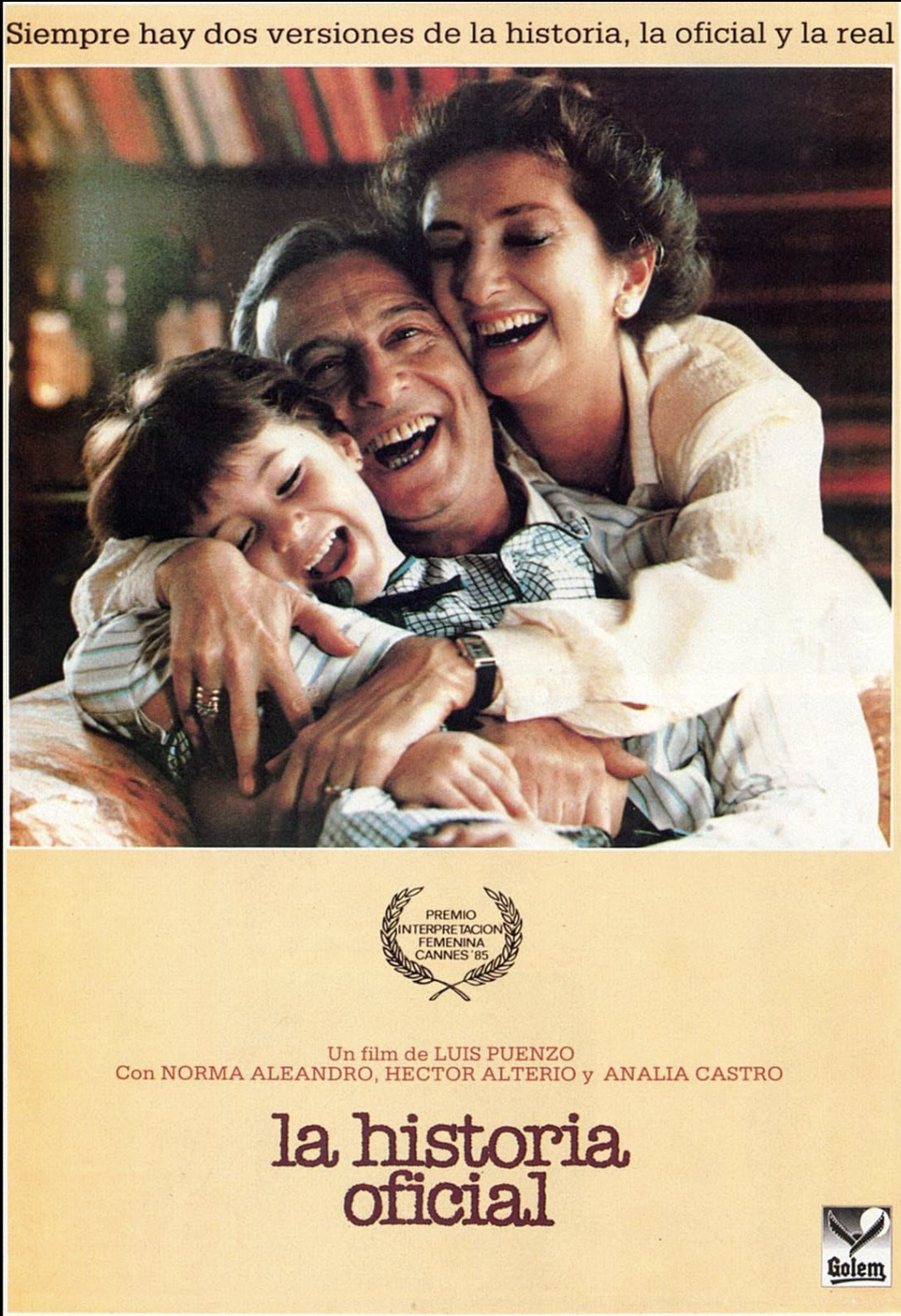
La Historia Oficial follows Alicia, a high school history professor living comfortably in Buenos Aires, Argentina, during the early 1980s with her businessman husband, Roberto, and adoptive daughter, Gaby. It isn't until her long-term friend shares the atrocities she lived through and witnessed newborns of detainees being stolen under the military regime that Alicia begins to question Gaby's birth. Her search for the truth is further motivated by her protesting students and the protests of Las Abuelas de Plaza de Mayo in Buenos Aires. As she continues investigating, she uncovers gaps in birth records and meets a grandmother who is looking for a granddaughter who matches Gaby's description. Alicia's discovery of Sara, Gaby's grandmother, leads to a violent confrontation with Roberto, revealing his participation in the regime's corruption and confirming the truth. Alicia, ultimately, decides to leave the life she once knew because she refuses to ignore the regime's crimes.
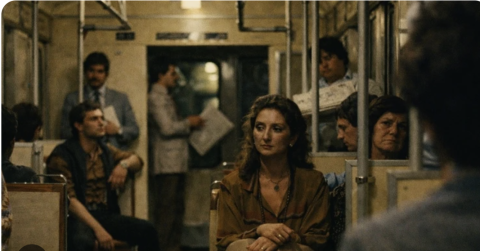
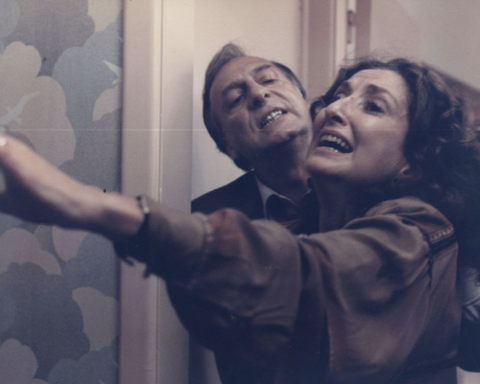
Describes the setting of a scene in a play or a film. It refers to everything placed on the stage or in front of the camera—including people. In other words, mise en scène is a catch-all for everything that contributes to the visual presentation and overall “look” of a production. When translated from French, it means “placing on stage.”
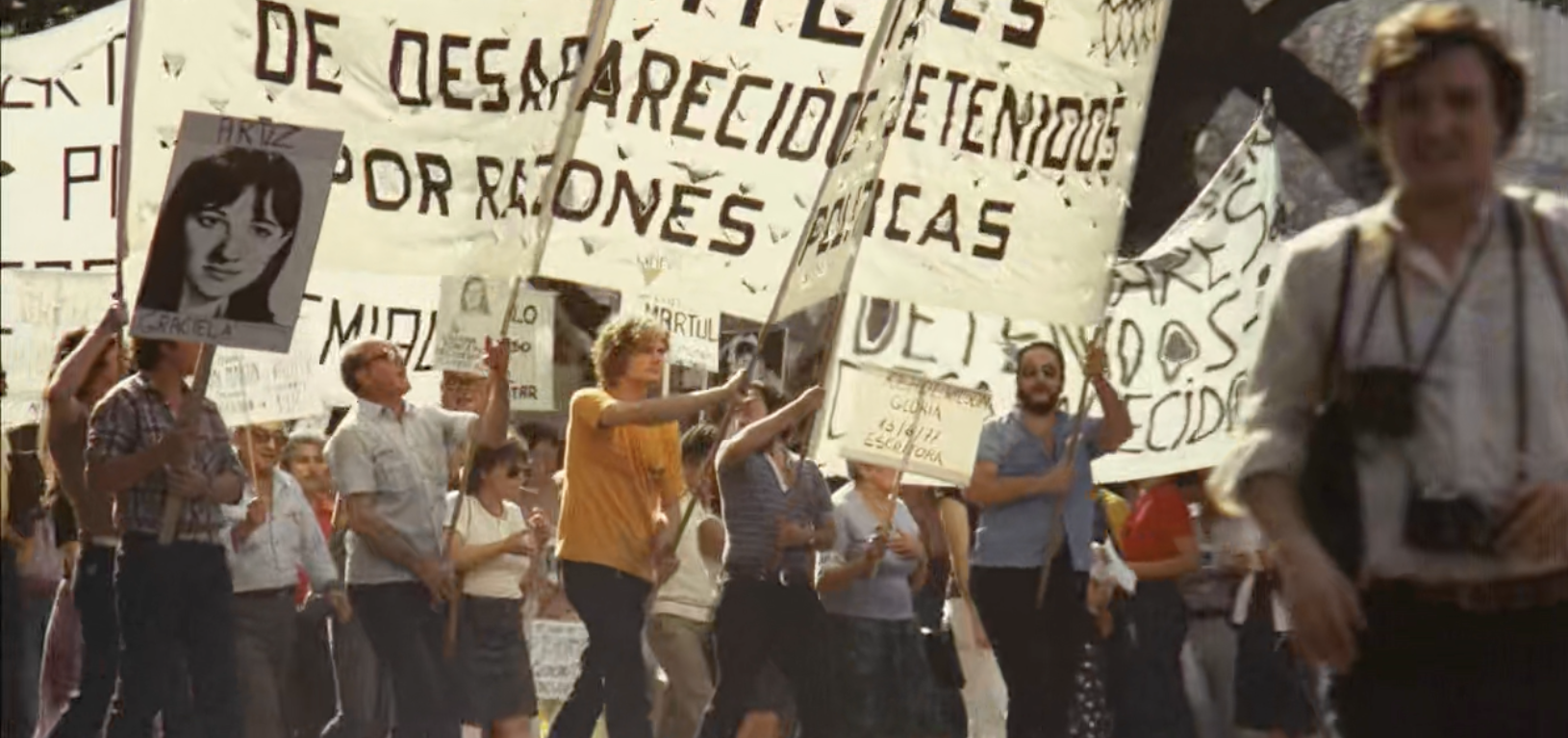
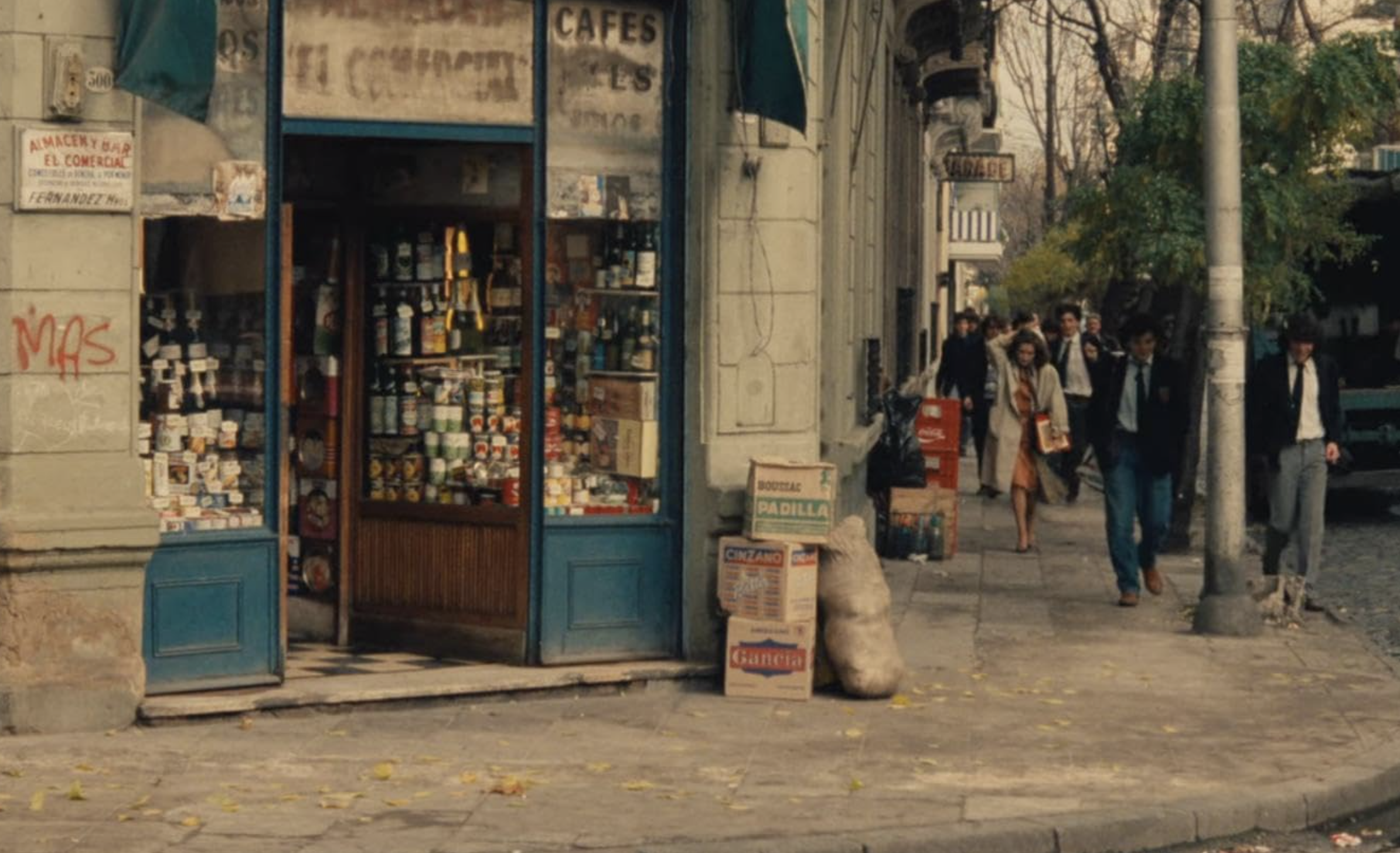
For instance, the scenes of marches and protests by Las Abuelas de la Plaza Mayo in the streets of the city were filmed in real time. Alicia and Roberto’s workplaces were also real buildings in Argentina: one was a high school, and the other was a skyscraper known as the Prourban Tower. Luis Puenzo also used his house to film the domestic scenes, which gave a true insight into la vida cotidiana of wealthy and upper-class Argentinian families during the regime. Using real spaces made the setting a realistic portrait of the era's moral unrest, fear, and uncertainty.
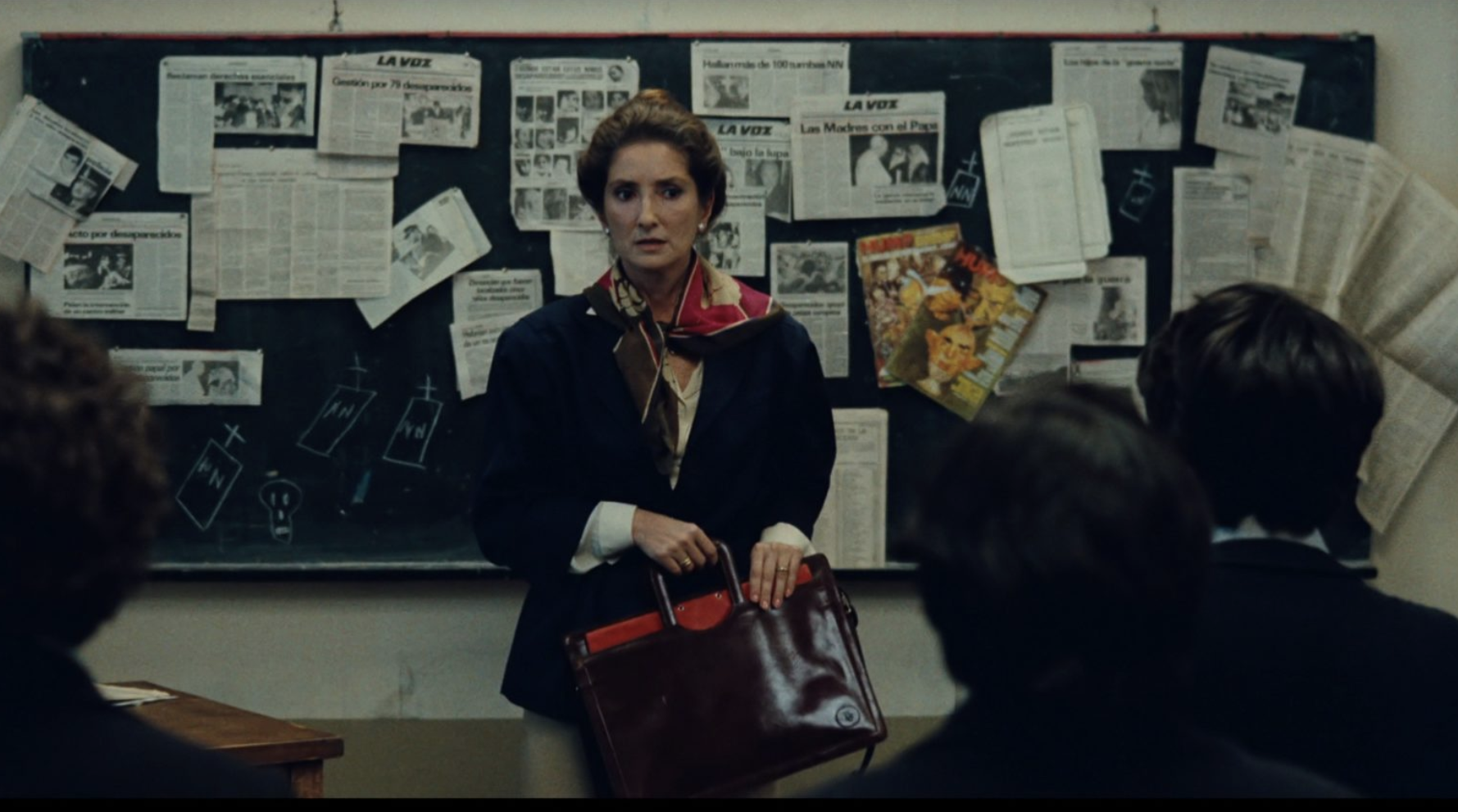
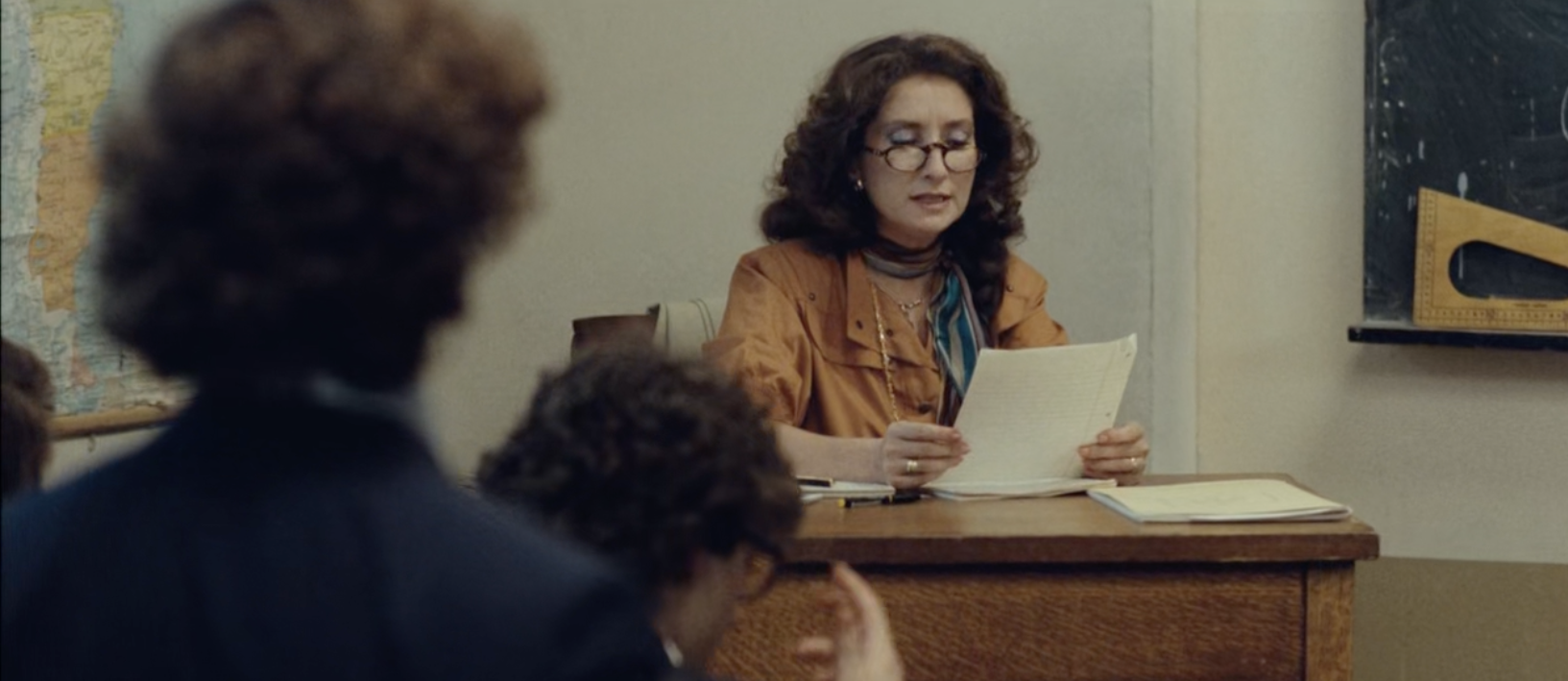
One of the main props is historical textbooks, essays, and newspapers. At the beginning of the movie, Alicia is a professor who teaches strictly from a history book and does not question what it says, making her rigid and practical. Marco Costa, one of her students, is the first to challenge her domestic life and her view of the government. His essays and the newspapers he tapes on her blackboard become a recurrent prop representing Alicia’s process of accepting an uncomfortable truth. As the movie progresses, her desk is shown less filled with historical textbooks and more open to Costa's essays, newspapers, and her personal journal with the information she has about Gaby.
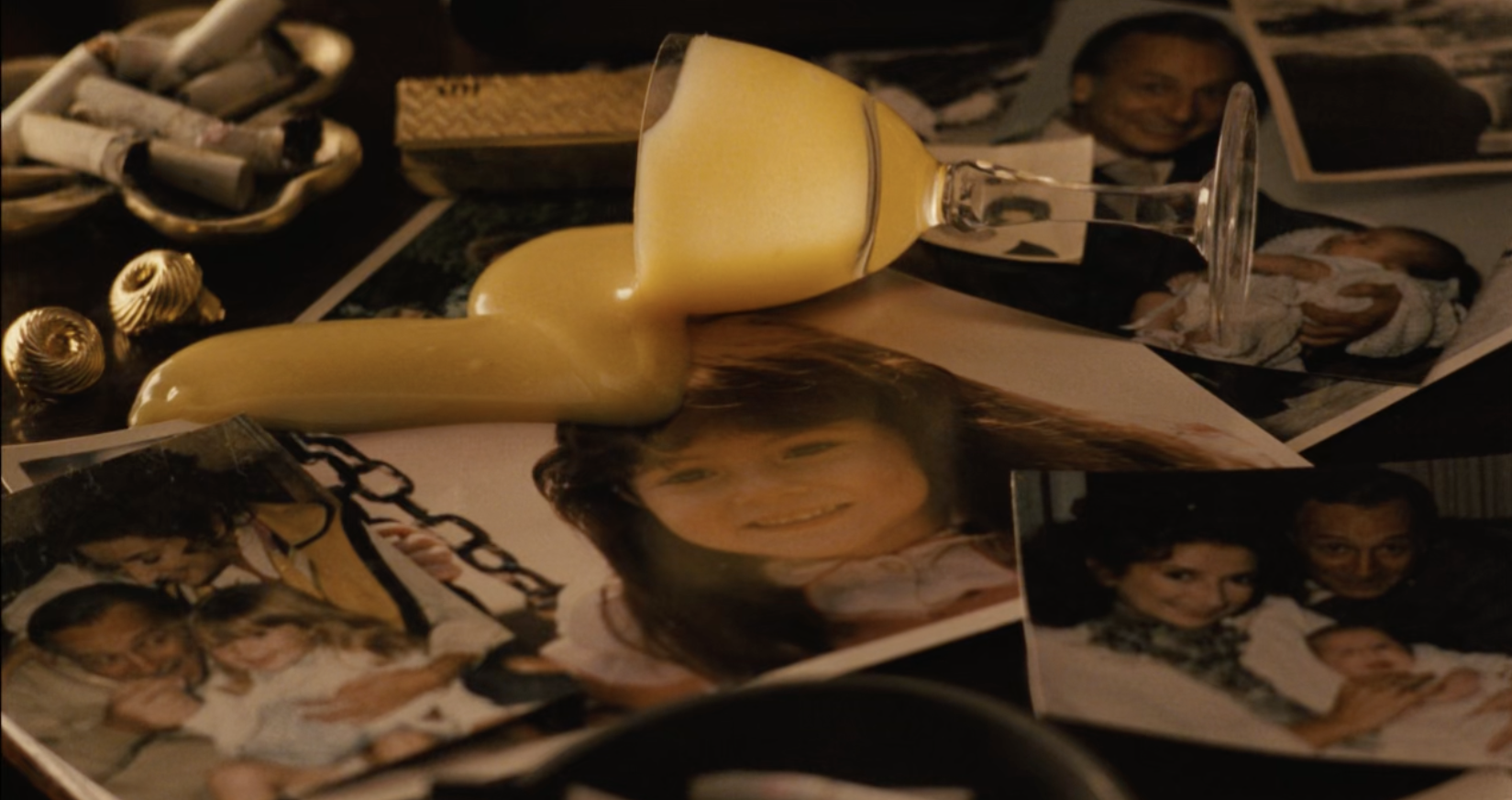
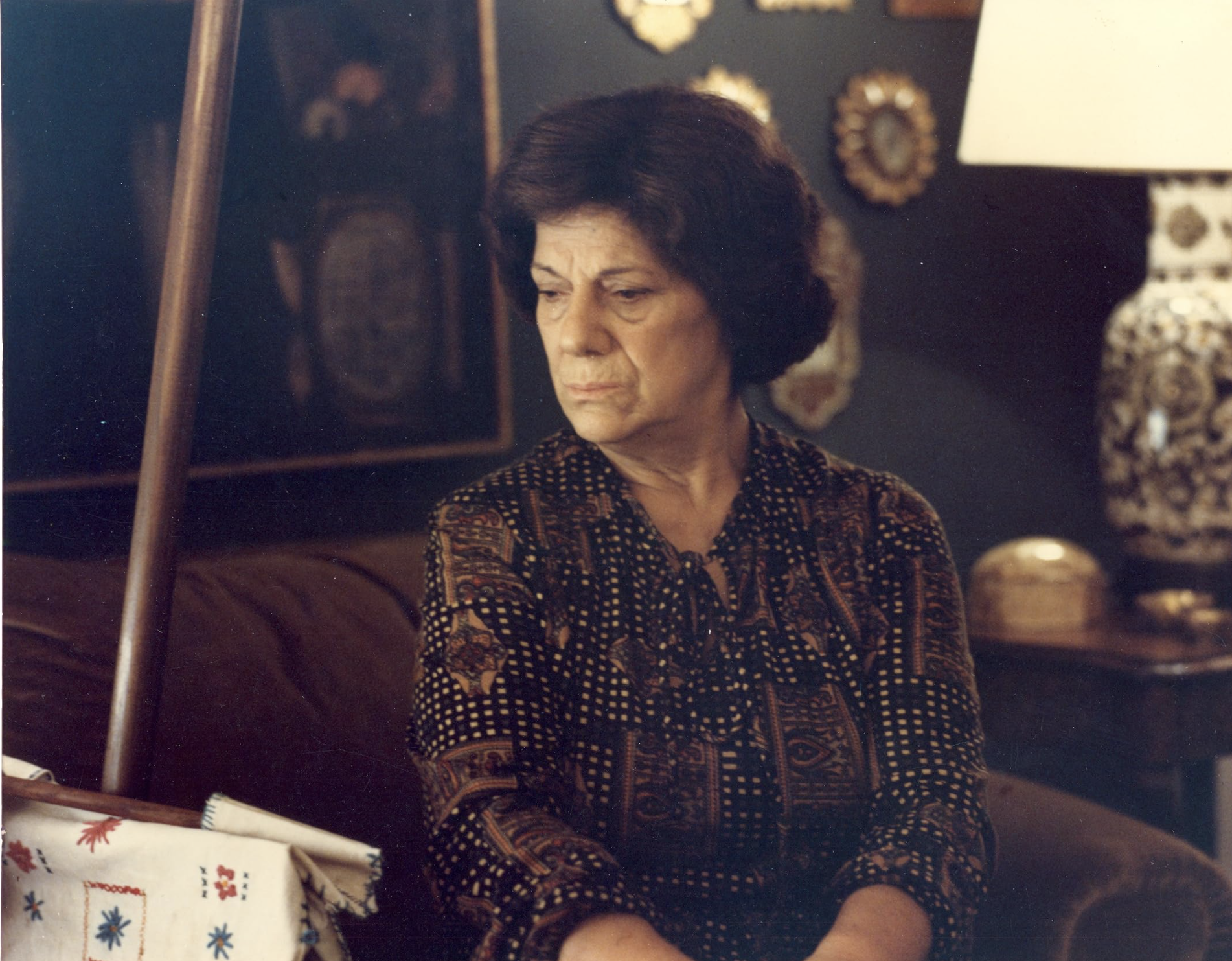
Another prominent prop in the film is the family pictures with Gaby and the lack of newborn pictures of her, which serve as a reminder of the gap between the reality of where she comes from and the story Alicia chose to believe to protect her peace of mind. As she uncovers the truth, these pictures powerfully represent the stripped identity, rights, and lives of Los Desaparecidos.
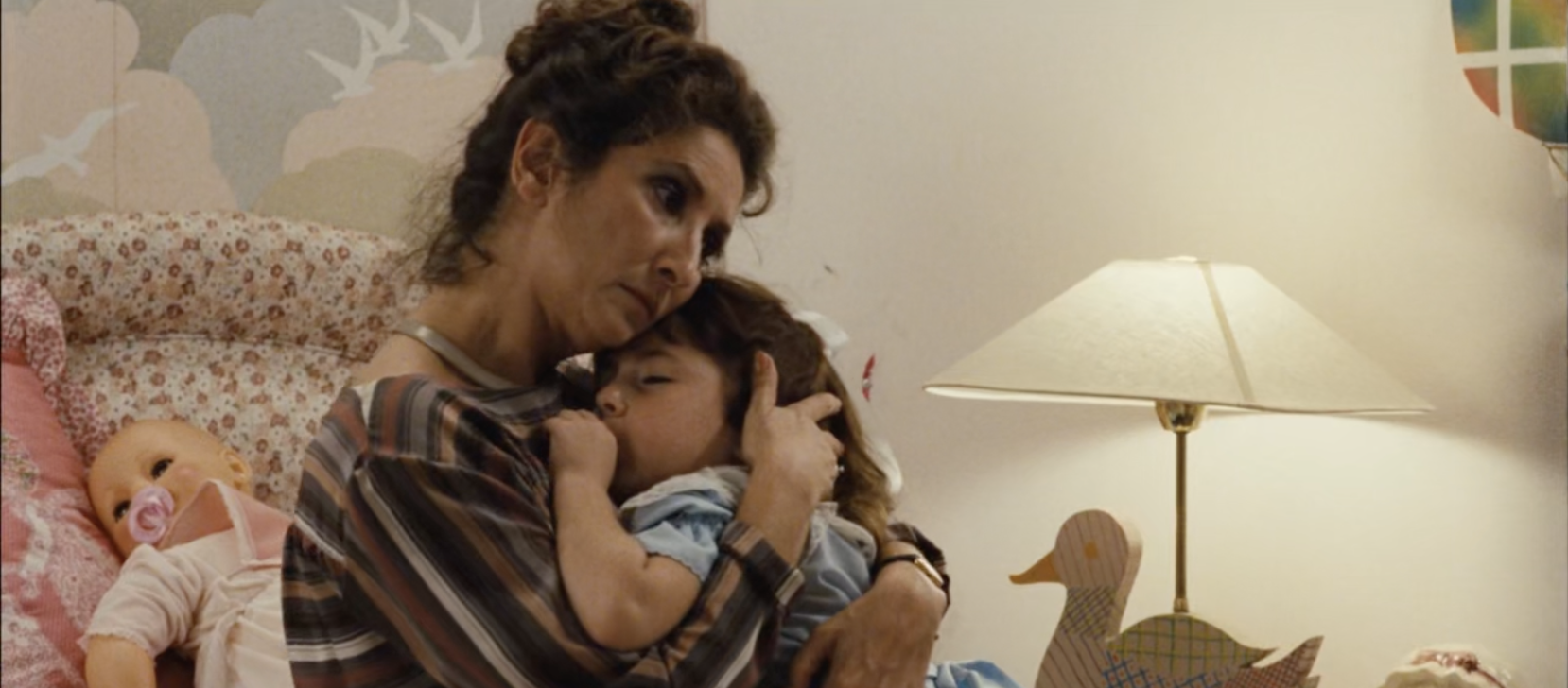
The large baby doll Roberto gave Gaby is also a significant prop that reappears when Gaby is alone in her room and on her birthday. Although the gift is apparently thoughtful, the size of the doll symbolizes the upper classes who were compliant with the dictatorship and how they used their wealth to protect themselves from the harsh atrocities of the regime and the fact that their children were stolen. In this case, material objects helped alleviate their conscience, as they believed they were “providing” for the children they had stolen.
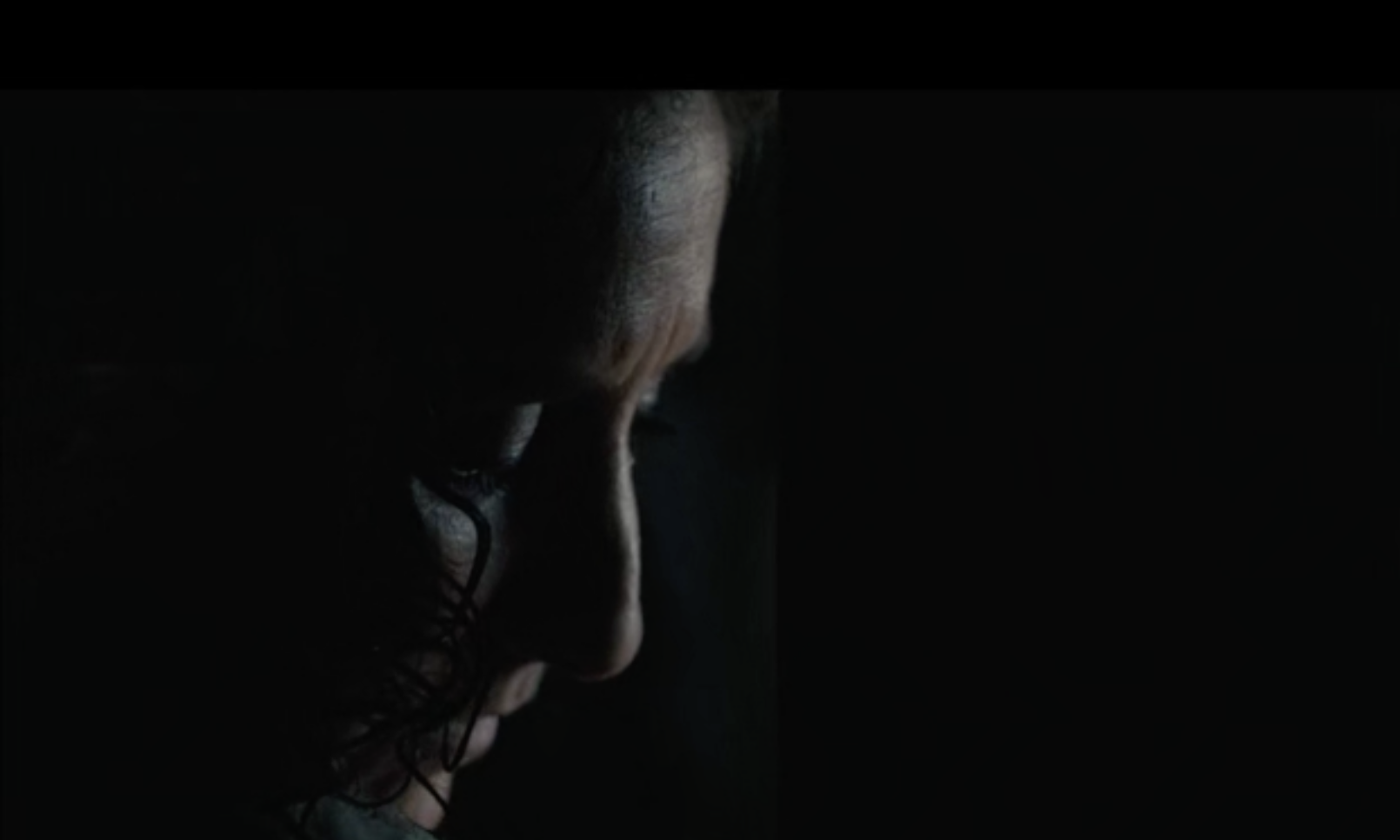
The church scenes also shift to even darker lighting, evoking a sense of unsafety, hypocrisy, and institutional compliance. At the end of the film, a striking contrast emerges between the dark background and the light on Alicia’s face as she chooses to walk out the door. The lack of shadows and the high-contrast lighting communicate the moment when the facade crumbles, and all that is left for each character is to accept reality. The light illuminating Alicia as she leaves the house also represents her choice to not comply with the Argentinian regime and to accept the lack of “an official story.”
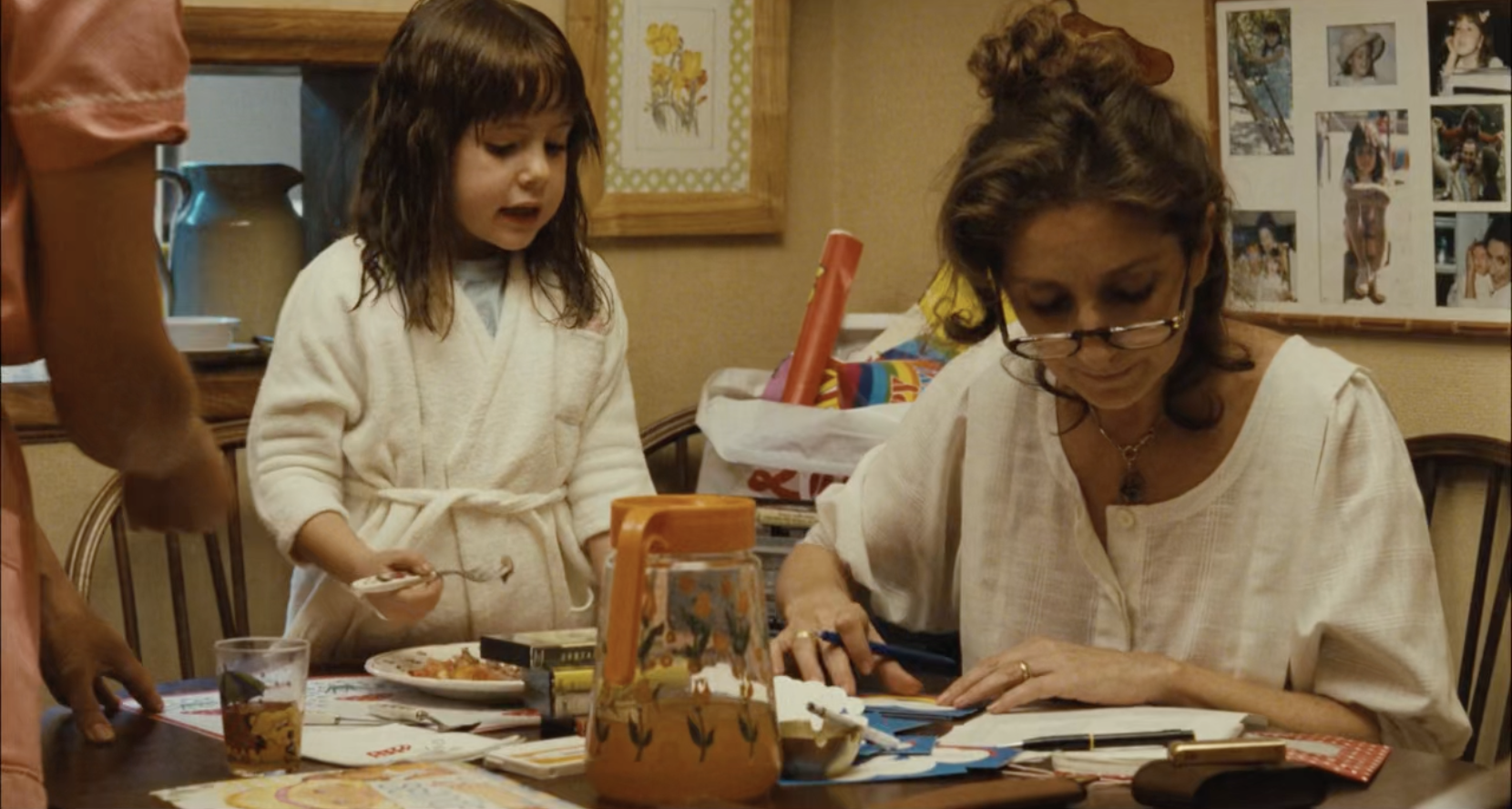
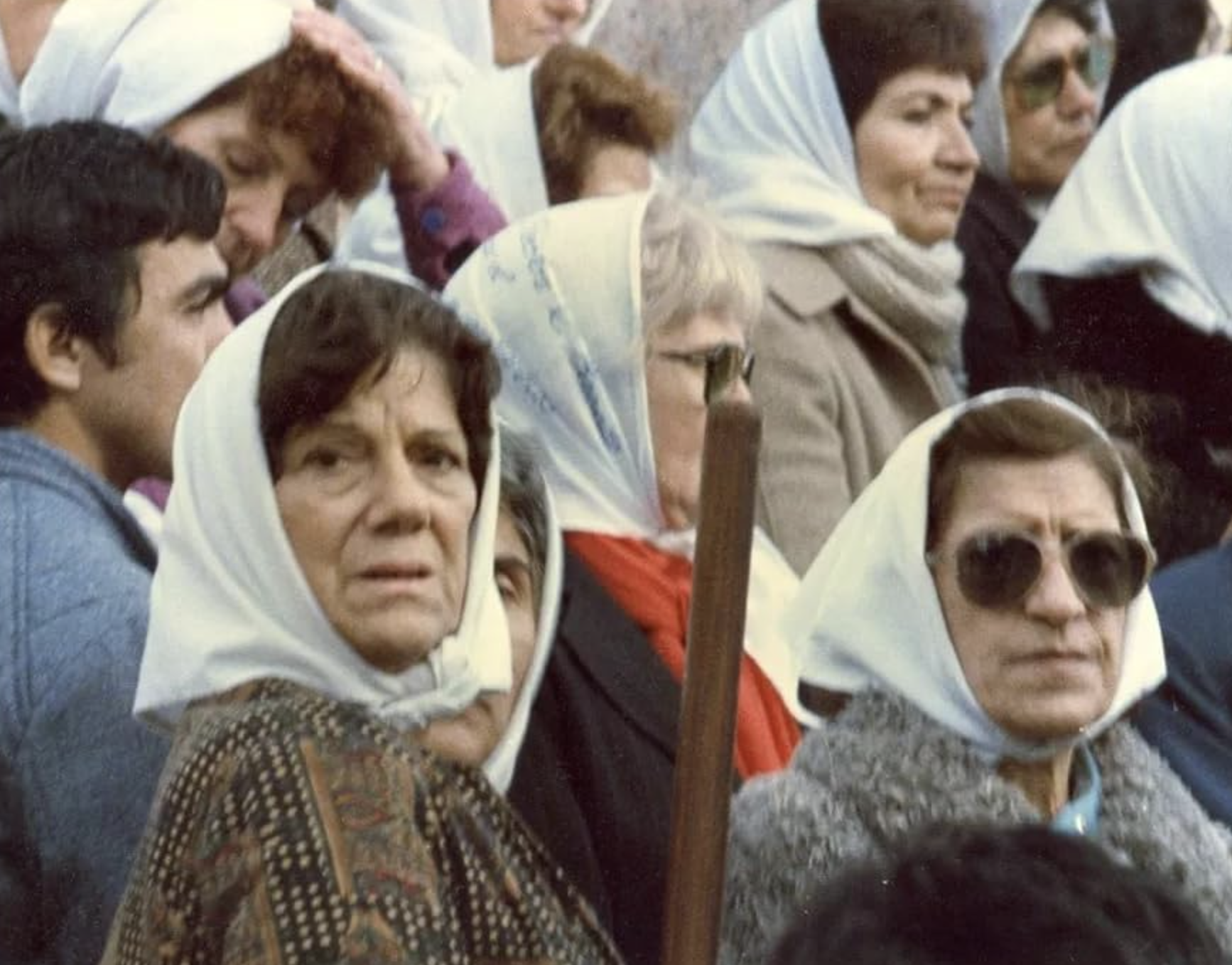
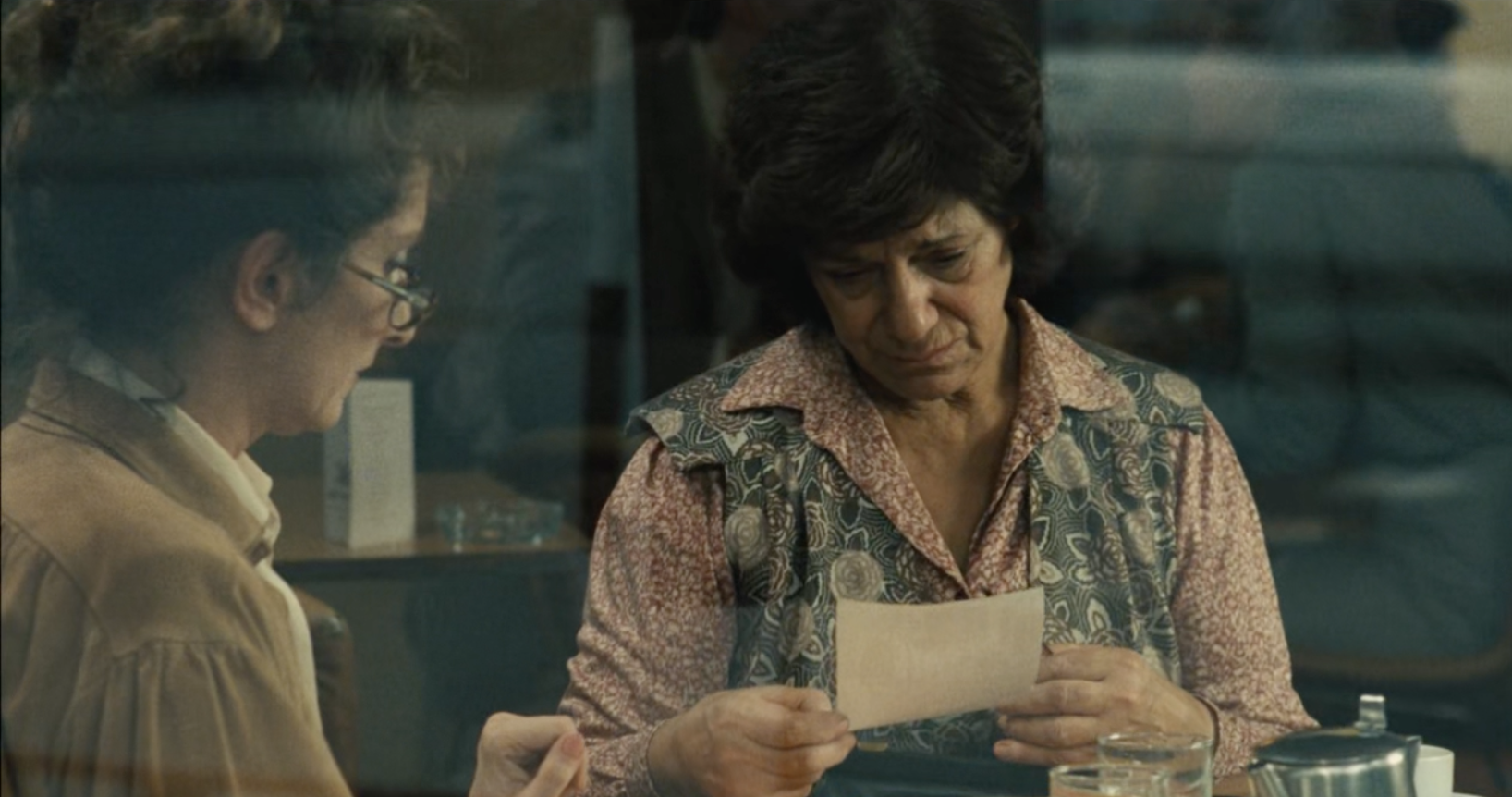
As Alicia begins to discover the truth, she begins to wear looser blouses and freeing clothing, representing her decision to break from the wealth and economic comfort that was originally blinding her to reality. Throughout the film, the upper-class attire is contrasted with the simple, ordinary dresses of Las Abuelas de Plaza de Mayo and the lower-class clothing of those protesting in the streets, showing real-world images of the regime.
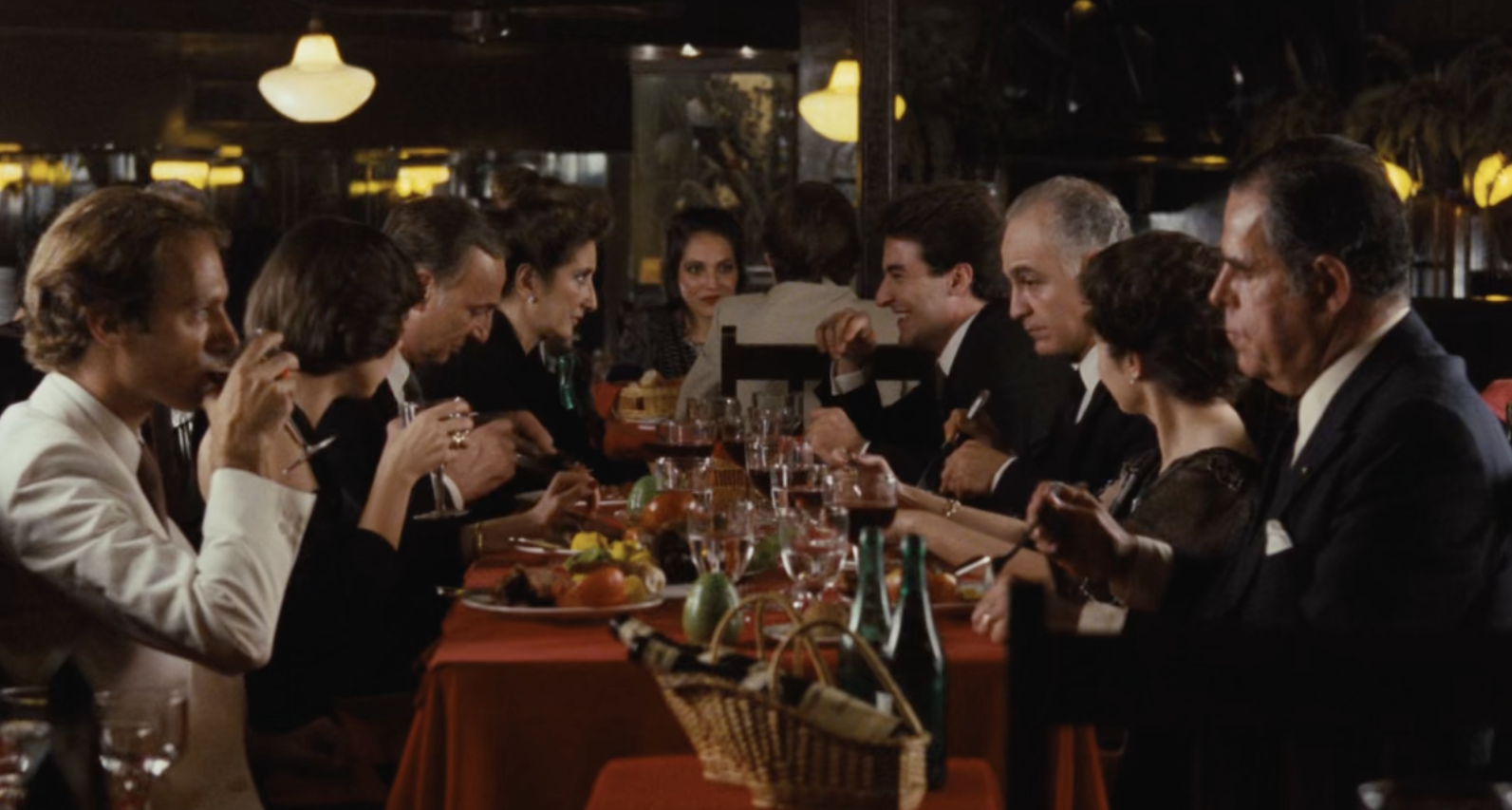
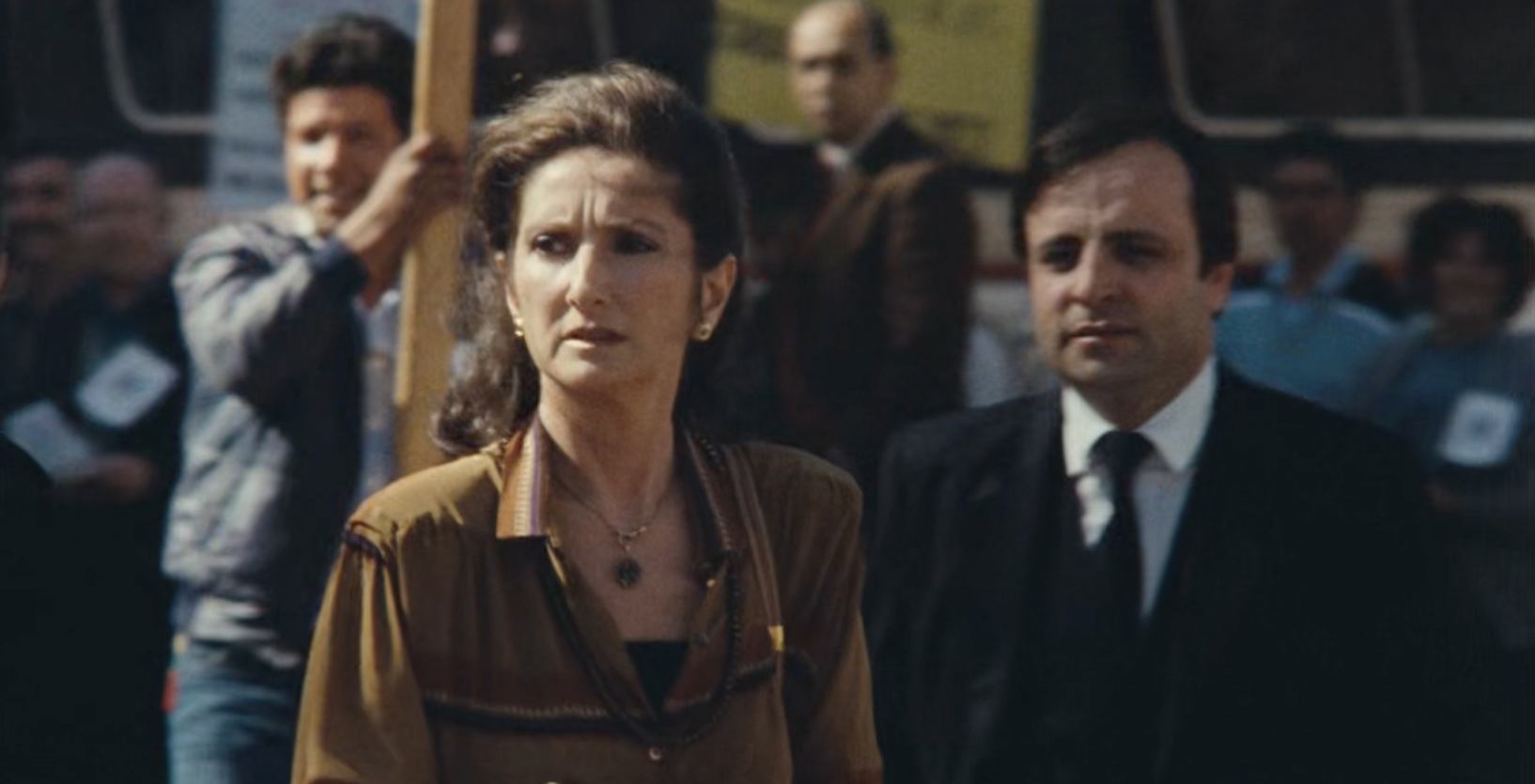
Gender roles also come through what Alicia initially wears; her elegant clothing matches her husband's to show her submission to him, while upholding the ideals of the proper bourgeois wife. While Roberto wears heavy, rigid suits to show his wealth and power, Alicia wears formal, feminine suits to match and comply with him, further reinforcing an image in which she maintains the home and doesn't question his decisions. As she begins to investigate Gaby’s past, she begins to strip away from the ideal and wears looser, maternal clothing as a form of resistance to the patriarchy, lack of truth, and the regime.
Alicia’s change in clothing also represents her understanding of Gaby’s biological grandmother and her willingness to also help her find answers. Most importantly, the white handkerchiefs, or pañuelos, used by Las Abuelas de Plaza de Mayo represent their unity, resistance, motherhood, and collective grief. They became a powerful costume choice that shows how many families were affected by the regime's cruelty and how many families were still determined to fight for justice and find their children.
This is the art of photography and visual storytelling in a motion picture or television show. Cinematography comprises all on-screen visual elements, including lighting, framing, composition, camera motion, camera angles, film selection, lens choices, depth of field, zoom, focus, color, exposure, and filtration. Cinematography sets and supports the overall look and mood of a film’s visual narrative. Each visual element that appears on screen, a.k.a. the mise-en-scène of a film, can serve and enhance the story—so it is the cinematographer’s responsibility to ensure that every element is cohesive and support the story. Filmmakers often choose to spend the majority of their budget on high-quality cinematography to guarantee that the film will look incredible on the big screen.
Editing is the process of putting a film together–the selection and arrangement of shots and scenes. Editing can condense space and time, emphasize separate elements and bring them together, and organize material in such a way that patterns of meaning become apparent. In addition, editing can determine how a film is perceived: for instance, quick, rapid cuts can create a feeling of tension, while a long take can create a more dramatic effect. The first photoplays generally had no cutting, owing to the fact that they were single-reel films; once filming began, you could not stop until the film ran out. (https://filmglossary.ccnmtl.columbia.edu/term/editing/)
Sound is an integral part in a film. It refers to everything that the audience hears including sound effects, words and music. Sound is used in films for various purposes, including: providing the information to the viewer about the location of the scene, heightening the mood, telling the audience about the characters and advancing the plot. Every person who watches a film realizes that the choice of voices, soundtrack and music present in a film affect the way that the viewer perceives a particular film. As a result, the sound is an important and integral element of the film, one that determines the way that the viewer experiences and understands a film as a visual experience.
Narrative analysis is an examination of the story elements, including narrative structure, character, and plot. A narrative can be considered to be the chain of events in a cause-effect relationship occurring in time and space. In order to analyze the narrative of a film, we need to first make the distinction between the plot of the film and the story of the film. This is sometimes referred to as the discourse and story of a film. Narrative may also be called the story thought story mainly refers to the events that describe the narrative.
Film genres are various forms or identifiable types, categories, classifications or groups of films. (Genre comes from the French word meaning "kind," "category," or "type"). These provide a convenient way for scriptwriters and film-makers to produce, cast and structure their narratives within a manageable, well-defined framework. Genres also offer the studios an easily 'marketable' product, and give audiences satisfying, expected and predictable choices. Genres refers to recurring, repeating and similar, familiar or instantly-recognizable patterns, styles, themes, syntax, templates, paradigms, motifs, rules or generic conventions.