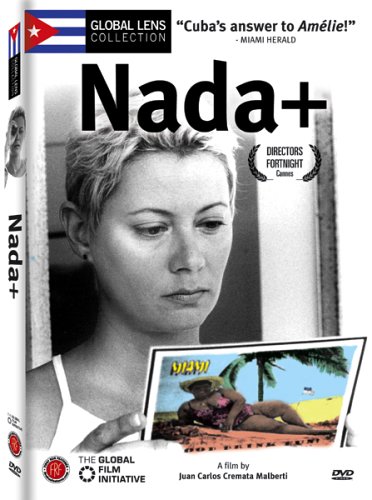
Nada +

    Movie Poster
    Release year
    2003
    Director
    Juan Carlos Cremata Malberti
    Biography of director(s)
    Juan Carlos Cremata Malberti (b. 1961) is a Cuban theater and film director. In 1990, he graduated from the International Film School of San Antonio de los Baños. In 1996, Cremata Alberti received a Guggenheim Fellowship and resided in NYC for over a year. He has directed several movies, short films, and documentaries, and is most well known for directing Viva Cuba, which won the Best Children’s Film Award at the Cannes International Film Festival in 2005.
    Country
    The film was primarily produced by the Instituto Cubano de Arte e Industria Cinematográficos (ICAIC) in Cuba. However, it is also a coproduction with participation from D.M.V.B films (France), P.H.F films (Spain), INTRAMOVIES (Italy), and CANAL + (Spain).
    Original synopsis of the film

    Carla Perez works a 9-5 job as a postal clerk in Havana, Cuba. She lives alone in her apartment and is apathetic about her daily life. Her parents moved to Miami when she was young, but they recently applied to get her a visa to come to the United States. In the meanwhile, Carla begins to steal letters from her post office branch, vicariously living through the lives of others by rewriting these letters with greater emotion and care to send to the receiving party. After a change in management, Cunda Cervera takes over as the administrator of the post office and begins to crack down on its dysfunctional status. Carla continues to steal and rewrite letters but is eventually caught by the courier César. Although César initially admonishes Carla, he decides not to expose her secret and the pair develops a closer relationship. Carla’s rewritten letters spark a significant amount of joy among their recipients, and her relationship with César blossoms. However, after she discovers that her visa was approved, she attempts to burn all the evidence away and destroy the identity that she crafted. A chase scene ensues, and with the help of César, Carla is able to avoid detection from Cervera. Although she is initially set on leaving, she receives a letter from César, and ultimately decides to stay in Cuba and continue her job at the post office and her relationship with César.

    Film Awards
    Grand Jury Prize in the Miami Film Festival (2003)
    Audience Award in Lleida Latin-American Film Festival (2003)

    Describes the setting of a scene in a play or a film. It refers to everything placed on the stage or in front of the camera—including people. In other words, mise en scène is a catch-all for everything that contributes to the visual presentation and overall “look” of a production. When translated from French, it means “placing on stage.”
    Setting
    Setting
    Explanation
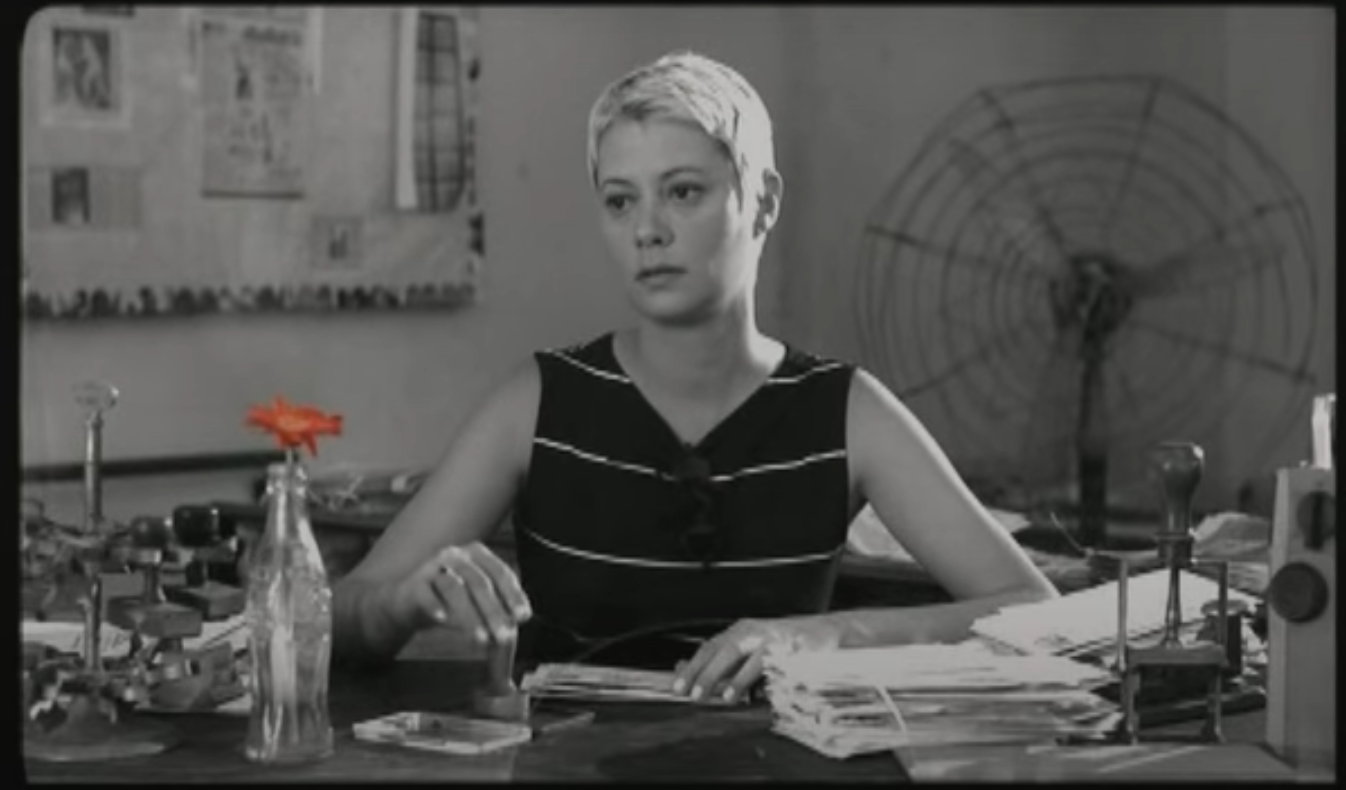
    The film is primarily shot on location in Havana, Cuba. The setting is depicted in a realistic manner, but it does utilize animation throughout the scenes in order to emphasize the mindset of the characters. For instance, some of the scenes that Carla shares with César depict a fluttering animation butterfly on the screen which highlights her joyful mood during these moments. The film takes place in a contemporary setting, and this decision is used to parody the bureaucracy and limitations within the current Cuban government. Much of the film transpires within the post office and her room inside an apartment building. Interestingly, her desk space is highlighted in both her apartment and her workspace. Although her post office desk is dull and usually organized, a colored flower appears and reappears throughout the movie, with each color foreshadowing a different scene. For example, after a red flower appears on her desk, Carla’s boss Cervera begins to take greater notice about Carla’s behavior and even starts to spy on her.
    Film Still
    Black and white photo of Carla sitting in her post office desk with a red flower in a vase.
    Props
    Timecode
    00:39:53-00:40:10
    Prop
    Postcards
    Explanation
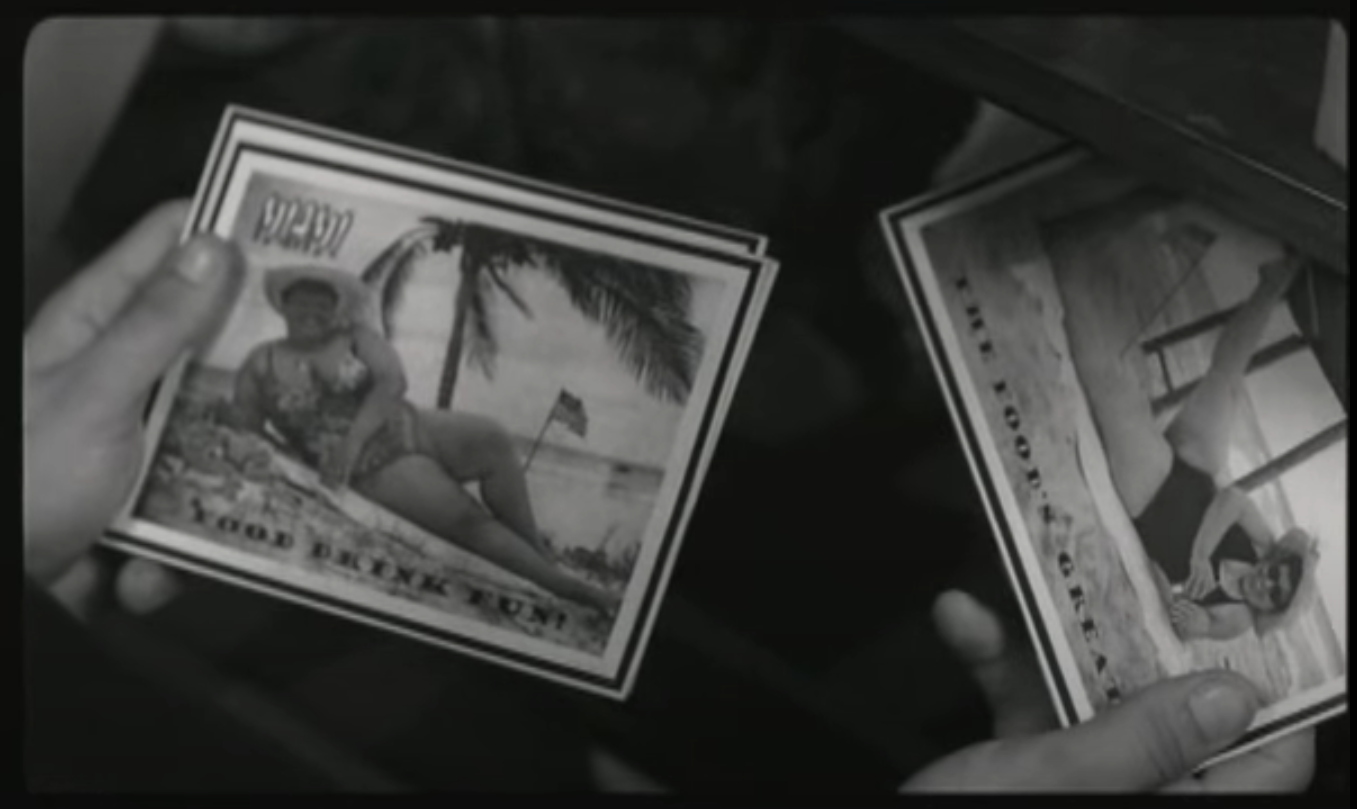
    The only exotic visual in the film appears in the postcards that Carla receives from her mother. These postcards are plastered with photos of her mom enjoying her time at the beach, juxtaposing how simple and carefree her life is in comparison to Carla’s. They also highlight Carla's primary communication with her parents during the film, and therefore represent her only conception (albeit idealized) of what a different life in Miami can entail.
    Film Still
    The postcards that Carla received from her mother
    Film Clip
    Lighting
    Lighting
    Explanation
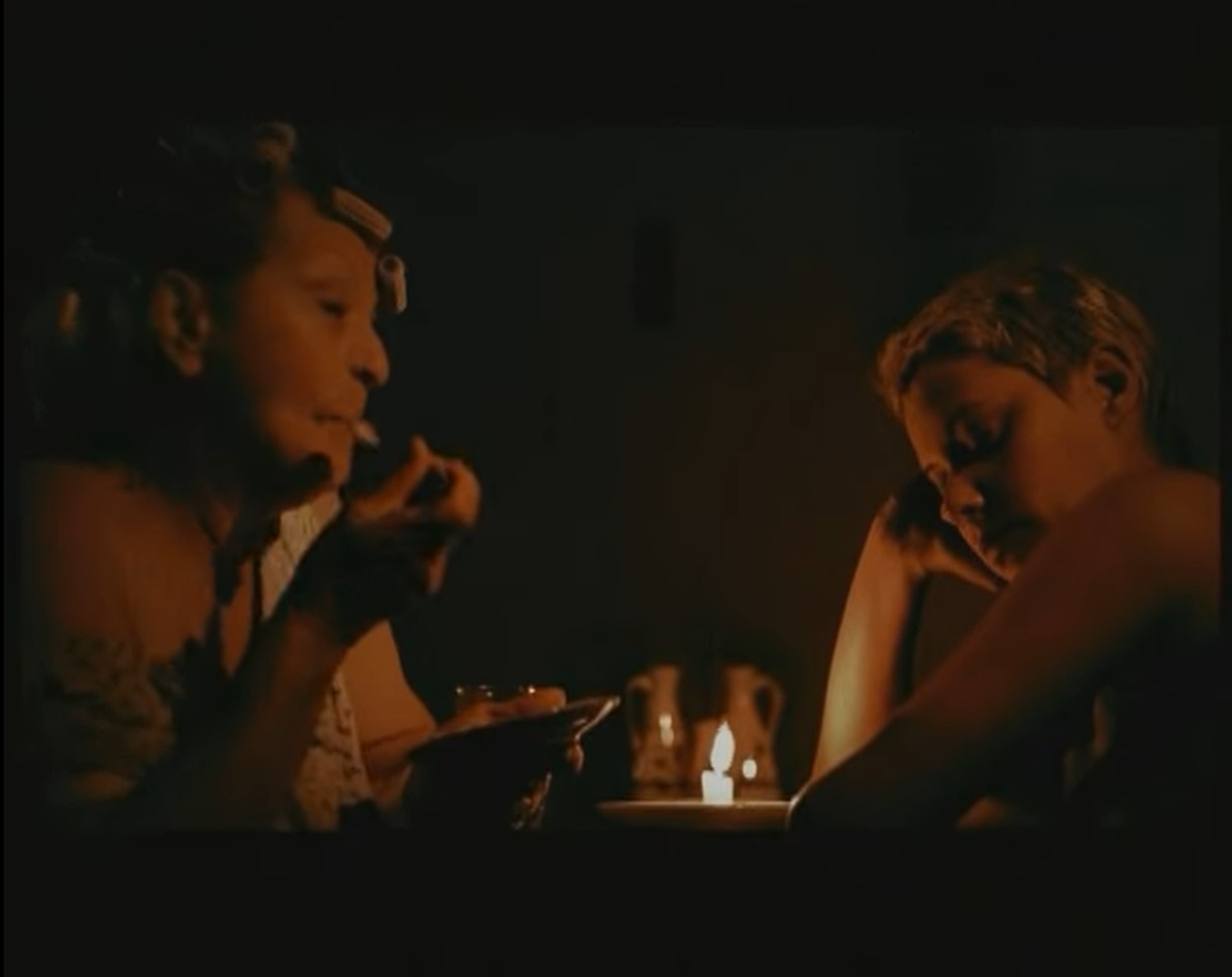
    Cremata Malberti often utilized indoor lighting to represent how trapped the characters were in their everyday situations. For example, after César discovers Carla’s true nature, she has a tiresome conversation with her neighbor in the candlelight because the lights were shut down. As the fire continued to flicker and deplete, Carla became more and more tired, eventually falling asleep while her neighbor continued to babble. This scene demonstrated how defeated her character was, and the low key lighting accentuated how hopeless she felt.
    Film Still
    Carla and her neighbor conversing in the dark by candlelight. Carla is asleep while her neighbor is talking.
    Explanation
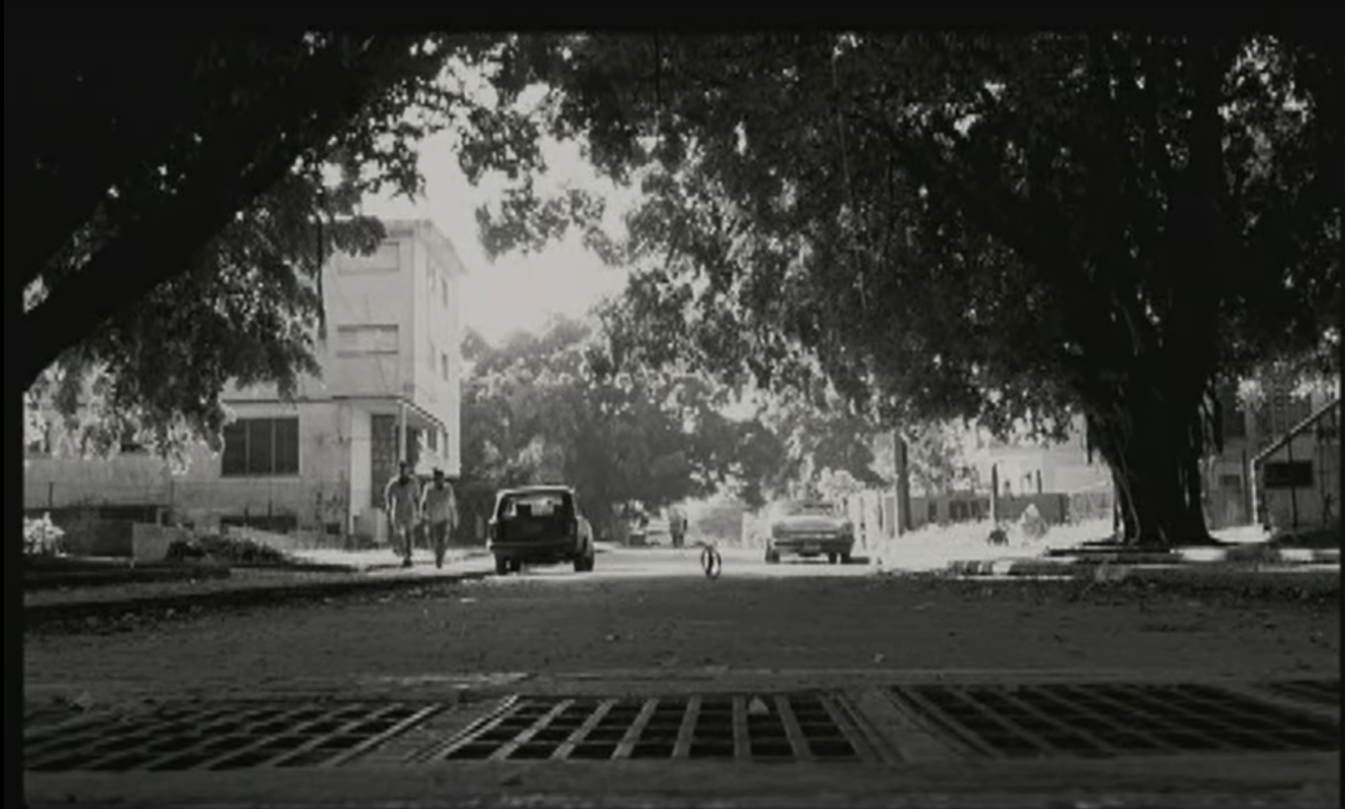
    On the other hand, Cremata Malberti used outdoor natural lighting to represent the characters as spontaneous, free, and in control of their lives. For example, lighting was used to point out the dichotomy between protagonist and antagonist during the chase scene in the end. After Cervera’s car crashes with the truck, she throws her wheel towards the escaping César down the outdoor street. However, the wheel never makes it past the shadows into the light, indicating that César successfully fled with the box of letters.
    Film Still
    Black and white photo of the end of the car chase. César is biking away in the light while the tire remains stuck in the shadows.
    Costume
    Hair and Makeup
    Figure Behavior
    Example
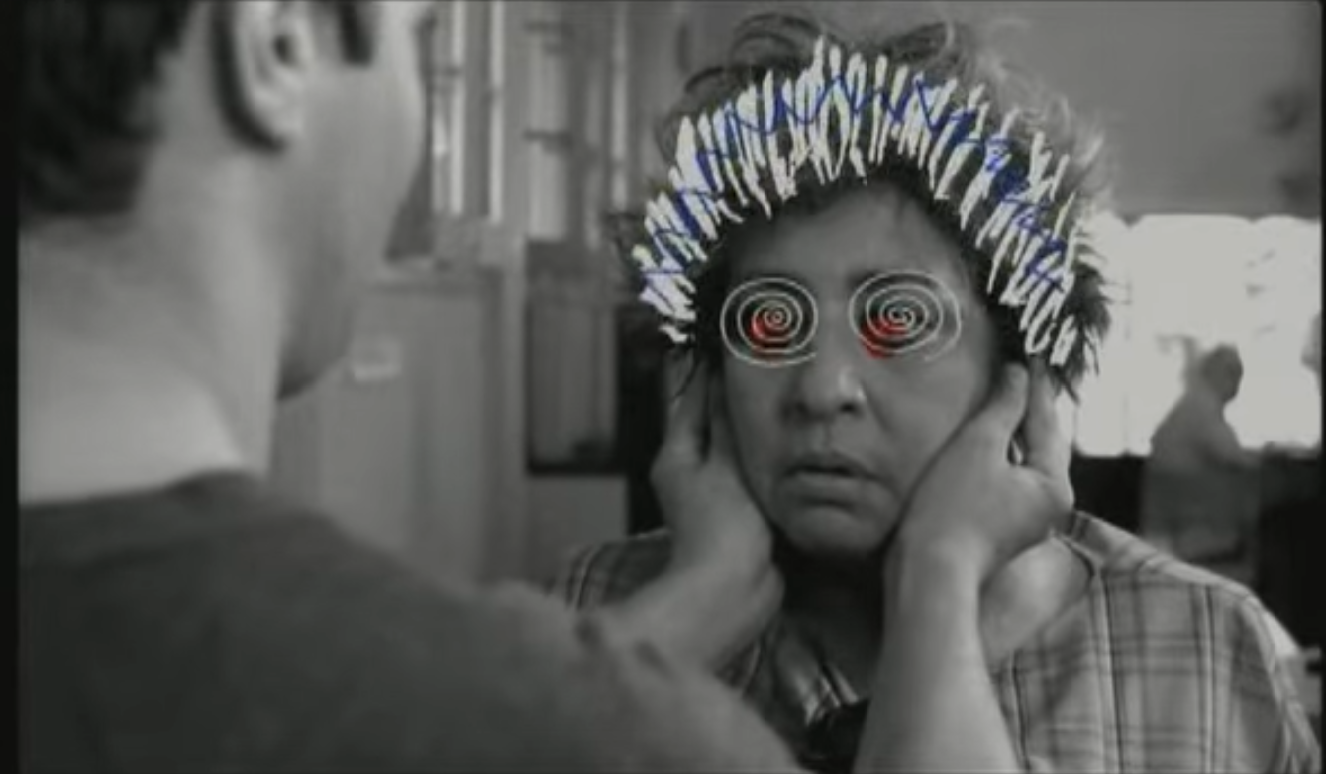
    César incorrectly assumes that Cervera wanted to listen to his rock music, and so he puts his headphones into her ears. Her reaction is animated both figuratively and literally, and we can see scribble marks on her hair and spirals in her eyes.
    Explanation
    Despite serving as the antagonist, Cunda Cervera still performs within the context of comedy in the film. Her serious and official demeanor is often juxtaposed by her over-the-top, loud, and eccentric behavior, and Cervera seems to overreact to almost any display of disobedience. This reaction lightens the seriousness of Cervera's accusations, and lets us still laugh during the film.
    Film Still
    Funny animated face of Cunda Cervera after listening to César's rock music
    Representative Clip

    This is the art of photography and visual storytelling in a motion picture or television show. Cinematography comprises all on-screen visual elements, including lighting, framing, composition, camera motion, camera angles, film selection, lens choices, depth of field, zoom, focus, color, exposure, and filtration. Cinematography sets and supports the overall look and mood of a film’s visual narrative. Each visual element that appears on screen, a.k.a. the mise-en-scène of a film, can serve and enhance the story—so it is the cinematographer’s responsibility to ensure that every element is cohesive and support the story. Filmmakers often choose to spend the majority of their budget on high-quality cinematography to guarantee that the film will look incredible on the big screen.
    Point of View
    Comments
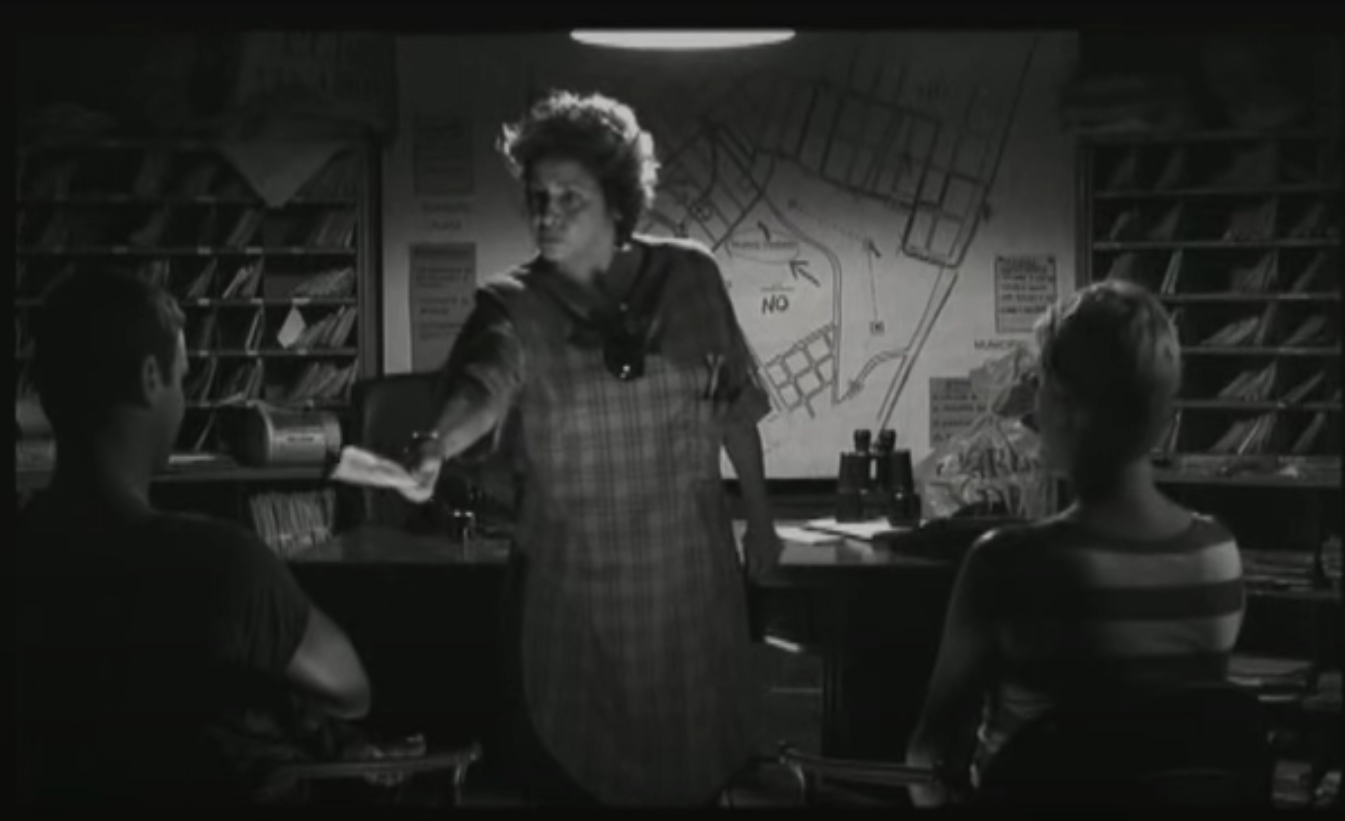
    Although much of the film is ostensibly shot with an objective point of view, we see several moments in which the camera cuts, slows down, or speeds up a sequence within the film. As a result, this suggests that the camera is more subject to the director's interpretation of the events, and this decision enhances the mise-en-scene of the film. In this specific timeframe, we see Carla in slow-motion destroying her shelves full of letters after she discovered that her visa was approved. The use of slow-motion ironically characterizes that Carla has lost control of her life as her life begins to move too quickly for her.
    Timecode
    01:09:39-01:10:14
    Film Clip
    Quality
    Quality
    Comments
    With regards to the contrast, Cremata Malberti typically uses hard lighting to create more shadows and contrast across character faces to focus our attention on the lighter parts of the scene. For instance, some objects are depicted completely black or completely white which forces the viewer to ignore that constant pattern for something more interesting. On the other hand, there are instances where hard lighting is also used to dramatize the scene as well. For example, during Cervera’s investigation of César and Carla’s behavior, her face is filled with hard light to intensify the seriousness of this moment. However, the revelation that thousands of letters were written for Professor Calzado immediately lightens the scene, and signals that the stressful moment has passed.
    Timecode
    00:51:56-00:53:45
    Film Still
    Cervera investigating César and Carla in almost total darkness
    Film Clip
    Quality
    Comments
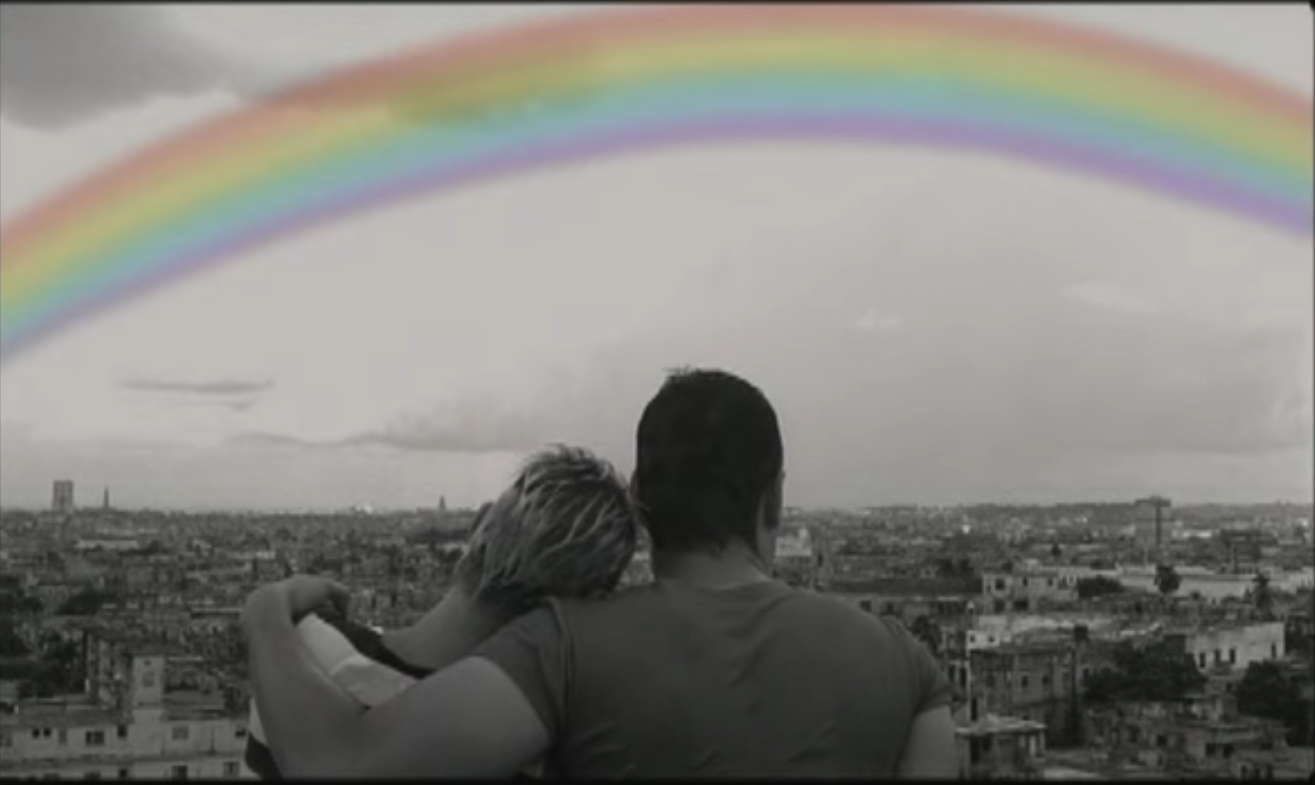
    This contemporary film is shot primarily in black-and-white, but certain objects and faces are presented with flashes of color during certain scenes. With regards to color, it is often used to express specific feelings of the character and to direct our attention onto the overall mood of the film. For example, we see a colorful rainbow appear at the beginning of César and Carla's relationship, indicating that love is in the air. Immediately following, a fluttering yellow butterfly accompanies the romantic scenes between César and Carla, and this bright butterfly flourishes in contrast to the black-and-white background. In fact, it even appears in scenes in which other Cuban residents also become joyous and happy. Thus, the director deliberately utilized color to indicate sharper attention towards his motivations for the film and the emotions of the characters within the film.
    Timecode
    01:04:47-01:05:41
    Film Still
    Black and white shot of César embracing Carla as they gaze at a colorful rainbow
    Film Clip
    Framing
    Framing
    Comments
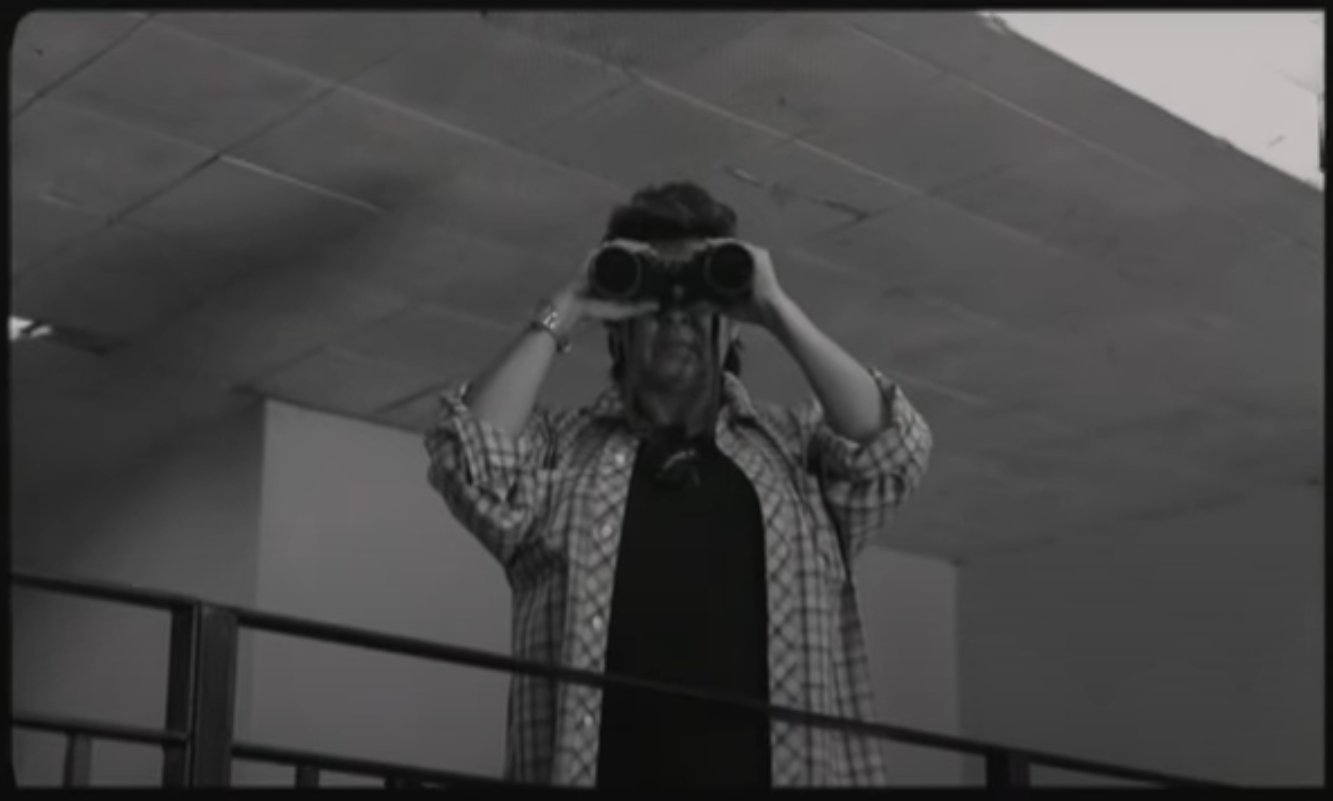
    In this example of a low angle, we see Carla’s perspective of Cervera as she stands atop the balcony of the post office using binoculars to spy on Carla. This low angle creates an inherent power dynamic between the two characters. Cervera is the new postmaster of the post office, and so she holds authority over Carla due to her position. This angle serves to amplify her power because she is literally not on the same plane as Carla, and as a result Carla must resort to unconventional tricks to subvert Cervera’s authority and continue to steal letters from the post office.
    Film Still
    Cervera wearing binoculars on top of a balcony
    Scale
    Comments
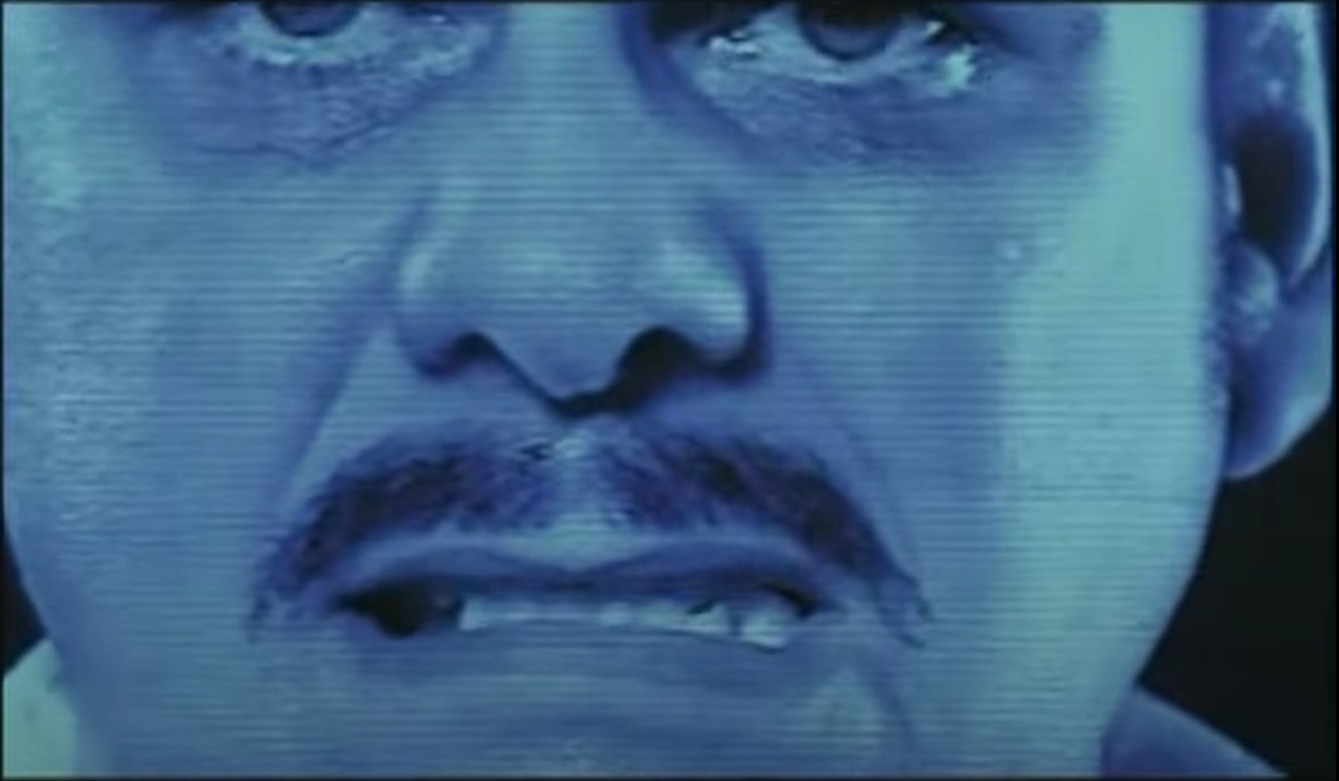
    In this extreme close-up, we see Professor Calzado crying as he reads the fan letter that Carla wrote to him. The letter caused such strong emotions in Professor Calzado that he almost hung himself on live TV, an action that he had tried to dissuade at the beginning of the film. The extreme closeup directly communicates the intense feelings that Professor Calzado has, and this scale clearly displays the emotional impact of Carla’s letters.
    Film Still
    Extreme closeup of Professor Calzado as he cries reading the letter on screen.
    Comments
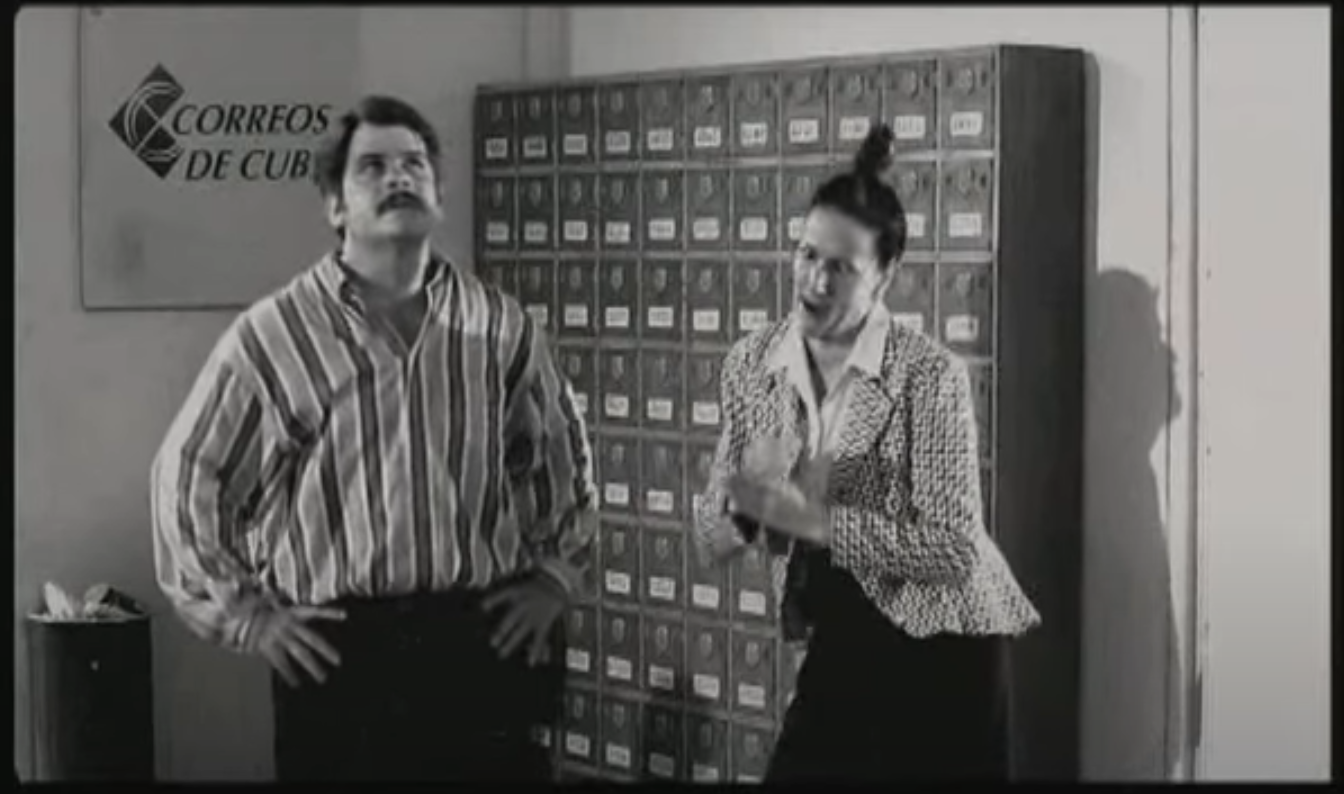
    In this medium long shot, we see Professor Calzado arguing with Concha. This shot is also known as an American shot because we see 3/4 of the characters in the frame, a feature commonly present in many American westerns. This shot is significant because it emphasizes the dialogue between the two characters, and more comically, their actions. Professor Calzado is upset and fuming because he has not received any letters yet, and makes very wild body motions. On the other end, Concha is explaining that it might be because he is not that popular, and her facial expressions are overexaggerated to highlight her incompetency in the bureaucracy. It is therefore interesting that in a scene comically criticizing the post office bureaucracy and politics, the director chose an American shot to depict this argument.
    Timecode
    00:13:28-00:14:00
    Film Still
    Concha and Professor Calzado arguing in the post office
    Film Clip
    Scale
    Comments
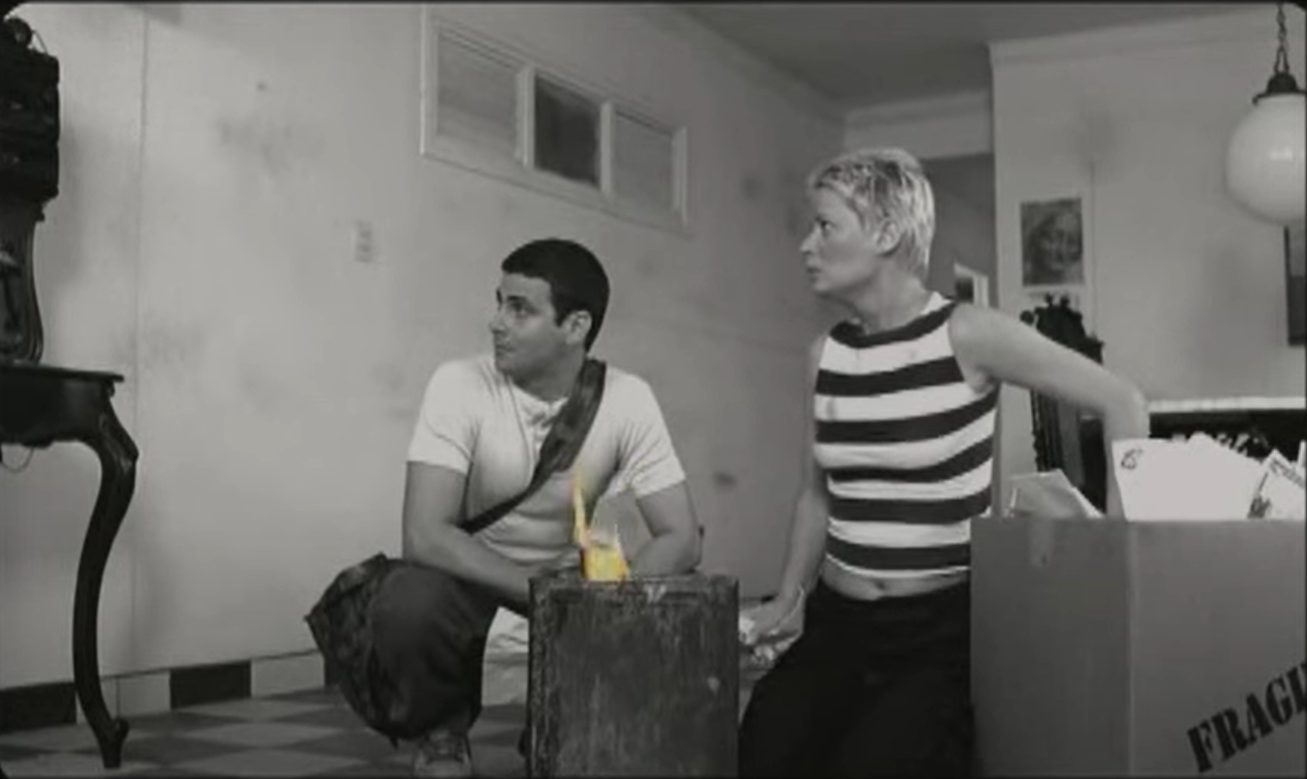
    In this long shot, Carla is attempting to get rid of all the evidence of letters in her room. The long shot emphasizes the chaos within the scene, and allows us to see Carla's reactions to several different facets of her life crashing down. In the scene, César is questioning her decision, her boss Cervera is banging on her door, and her telephone is incessantly ringing. This long shot encapsulates a lot of rising tension in the film, and in this specific film still we see Carla unsure about what to do next.
    Film Still
    César and Carla in her apartment trying to burn the letters.
    Movement
    Comments
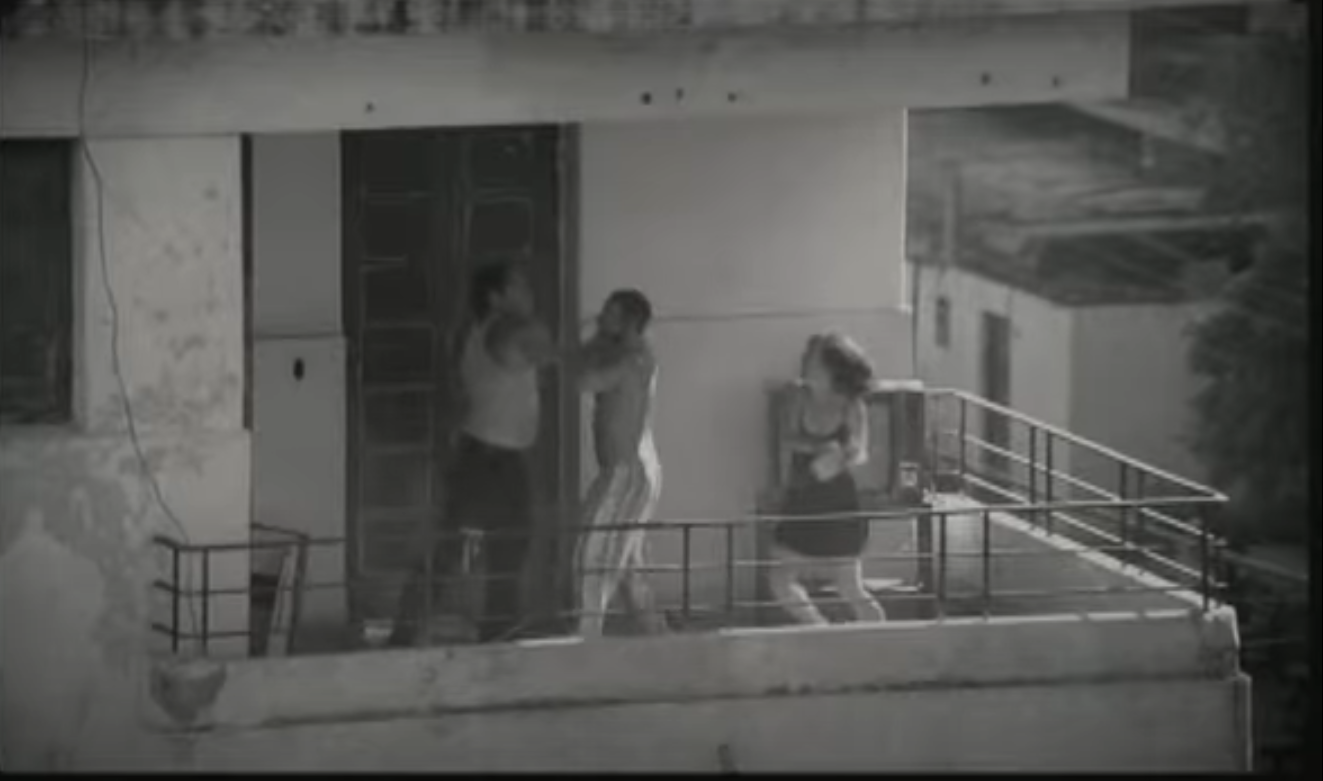
    The camera comically follows the repercussions of one of Carla's rewritten letters. Carla narrates the desire to commit infidelity as the camera follows a woman cheating on her significant other to make love with a neighbor. However, the woman is caught, and the former lover attempts to strangle the neighbor and perhaps even the woman. The handheld camera represent Carla's perspective as she spies on the events that transpire in the neighboring building. Although the sequence of events is quite hilarious, the scene more importantly underscores Carla's obsession with her letter writing because she stalked the recipients who received her letter.
    Timecode
    00:22:49-00:24:35
    Film Still
    A man strangles the cheating partner of his girlfriend. The girlfriend tries to attack the man with an iron.
    Film Clip
    Movement
    Comments
    This tracking shot follows Carla as she enters the post office after Cervera takes over as postmaster. Interestingly, this exact tracking shot was repeated earlier in the film before Cervera's takeover. This repetition highlights the differences that Cervera introduces to the post office, including more rules and regulations dictating one's behavior around the post office. This shot is particularly most useful for this purpose because it depicts Carla's behavior as static indicating that she will still continue to steal letters while other characters are criticized for breaking the new guidelines.
    Timecode
    00:30:13-00:30:41
    Film Still
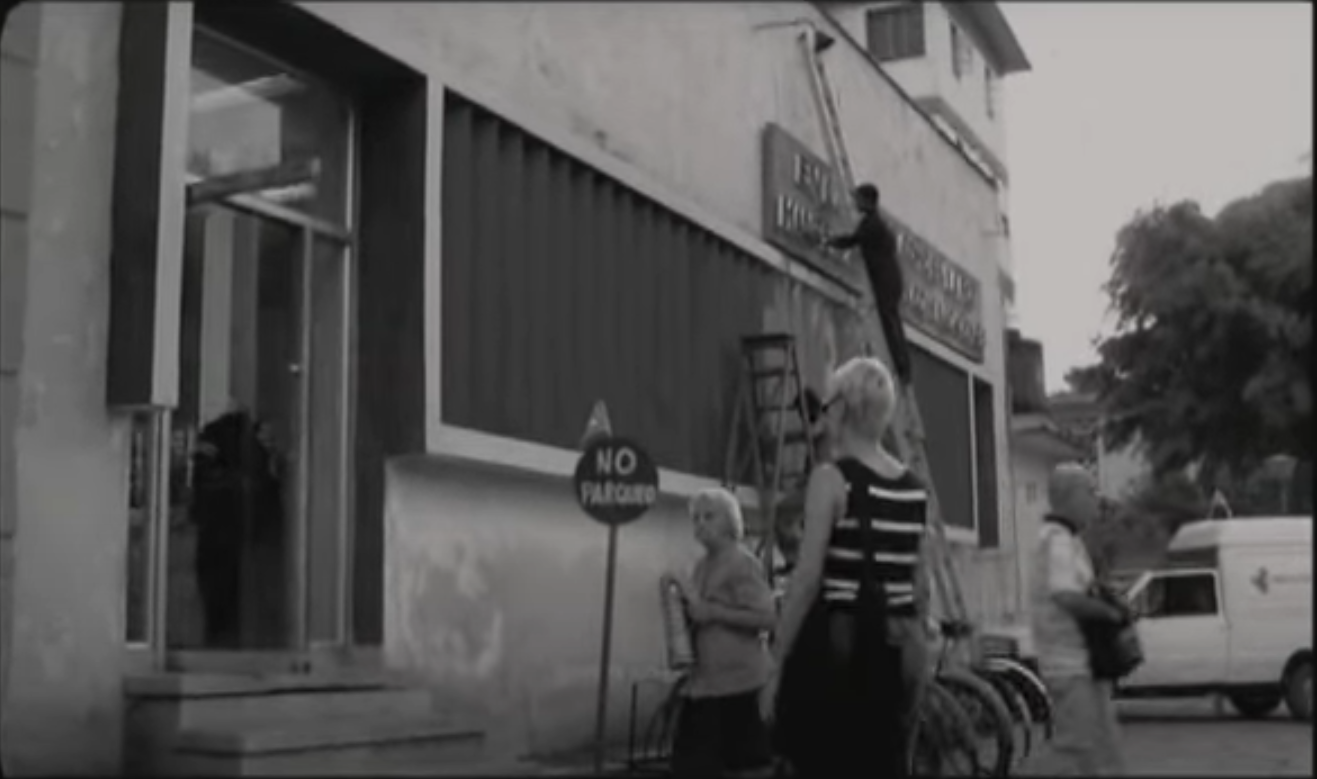
    Carla walking to the post office
    Film Clip

    Editing is the process of putting a film together–the selection and arrangement of shots and scenes. Editing can condense space and time, emphasize separate elements and bring them together, and organize material in such a way that patterns of meaning become apparent. In addition, editing can determine how a film is perceived: for instance, quick, rapid cuts can create a feeling of tension, while a long take can create a more dramatic effect. The first photoplays generally had no cutting, owing to the fact that they were single-reel films; once filming began, you could not stop until the film ran out. (https://filmglossary.ccnmtl.columbia.edu/term/editing/)
    Coherence, Continuity, and Rhythym
    Comments
    The film occurs in a linear order and primarily focuses on Carla's development. One of the primary modes that the film uses to transition between different shots were fade to black sequences. This created a jerky and disjointed set of sequences, but one that also coincided with Carla's life in Cuba as well. These transitions were often accompanied with large sound booms as well, which forced viewers to also notice the multitude of jump cuts as well. These transitions ultimately served to continue the direction of the film, but in some cases further increased the tension of Carla's eventual decision of staying within Cuba or leaving to Miami.
    Timecode
    00:10:53-00:11:03
    Film Clip
    Editing Style
    Editing Style
    Comments
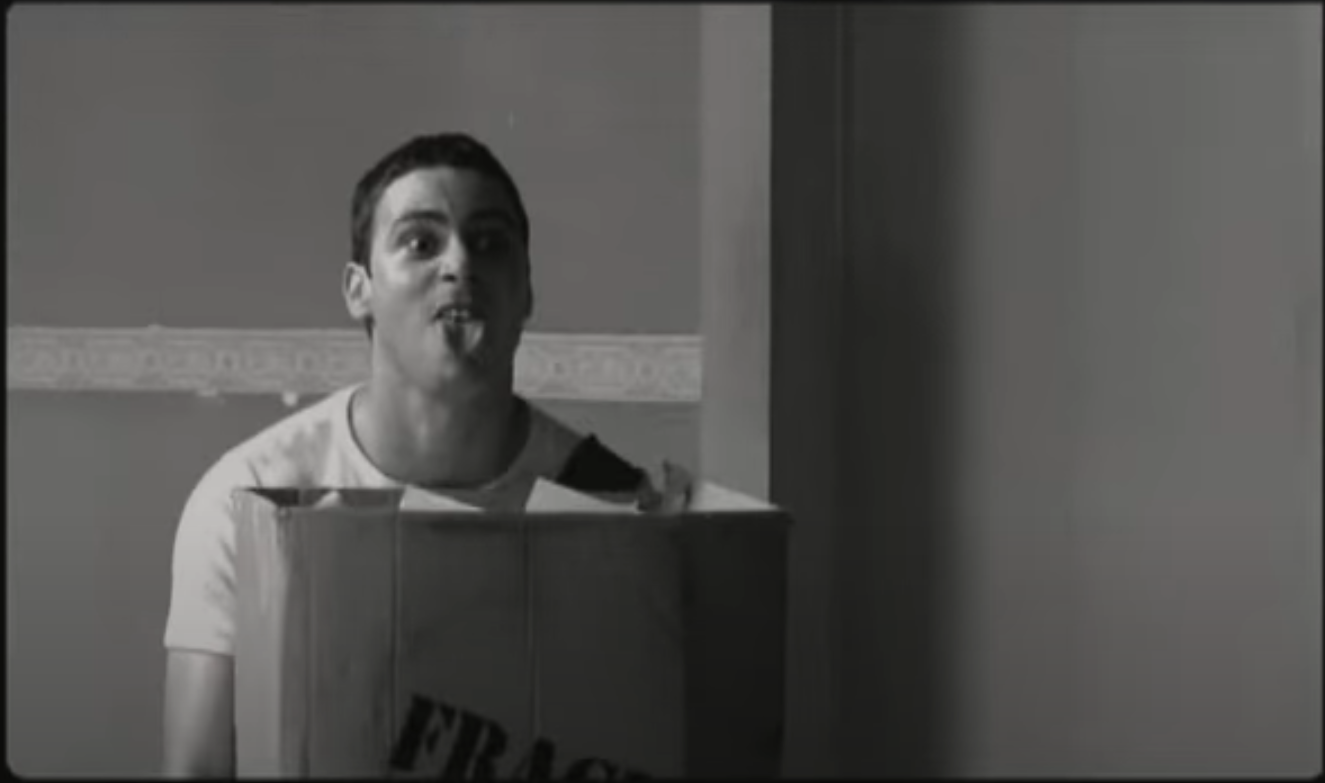
    In this sequence, a chase scene ensues, and with the help of César, Carla is able to avoid detection from Cervera. The chase scene resembles chases similar to those in Scooby Doo, and at the end of the chase scene in the apartment, Concha hits her head on the wall after she failed to catch César. The scene comically featured animated spinning stars over her head after the collision, which parodied this character for mindlessly following bureaucratic authority. Importantly, the continuity editing utilizes many stops, cuts, and transitions to favor the action in the sequence.
    Timecode
    01:17:13-01:17:38
    Film Still
    César sticks his tongue out to mock Concha.
    Film Clip
    Transitions
    Match
    Comments
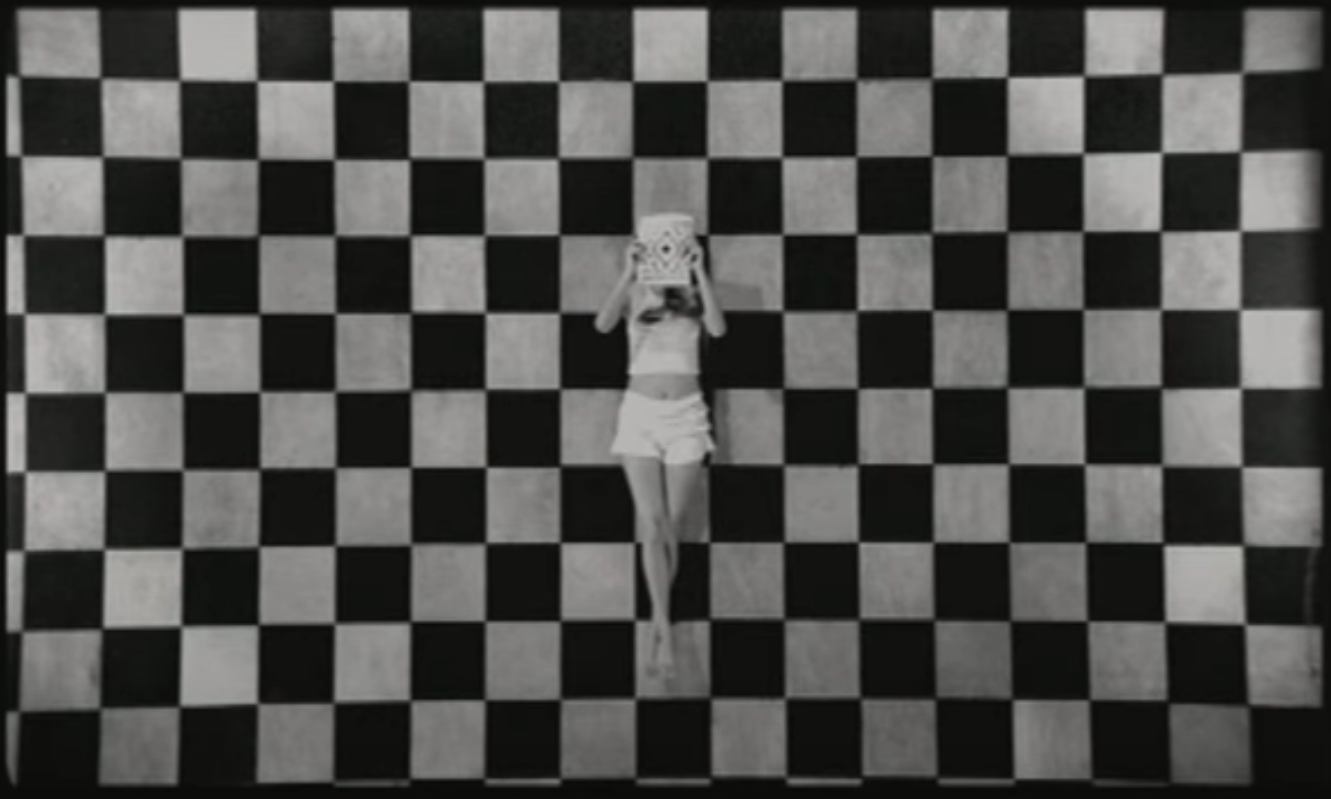
    In the introduction to the film, Carla holds a magazine to her face as she rotates on the checkered floor like the hands of a clock ticking away. This scene illustrates Carla’s life up to that moment – wasting away as she works in the post office. The design of Carla at the beginning spinning around like a clock over a checkered floor board is carefully composed and painterly, but each cut demonstrates an emptiness behind her character.
    Timecode
    00:00:47-00:01:06
    Film Still
    Carla lying flat on a checkered board floor while holding a magazine over her face
    Film Clip
    Match
    Match
    Comments
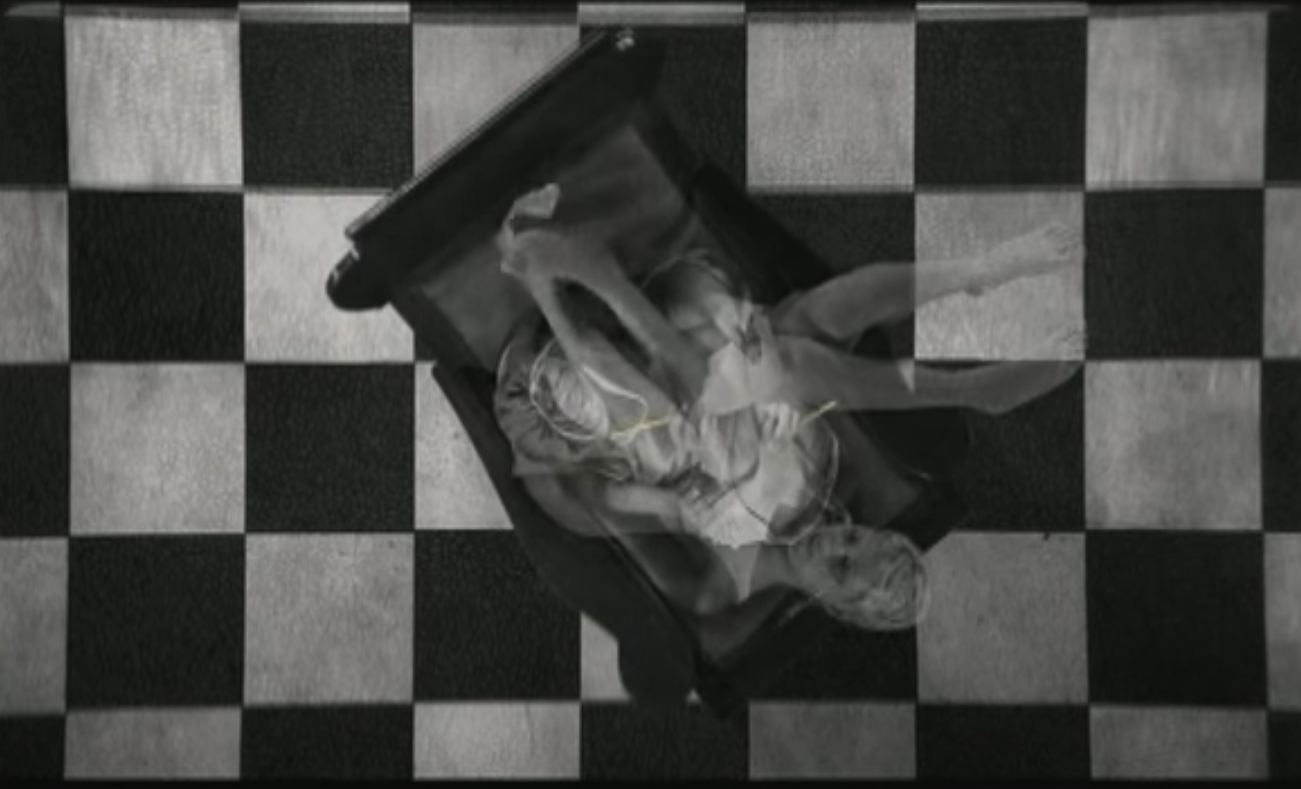
    In each match cut, Carla superimposes upon her previous position on the chair as she writes a letter. These cuts reveal Carla becoming more and more comfortable as she rewrites the letter, and it functions to highlight how this activity is a relaxing and enjoyable passion for Carla. Furthermore, by keeping the superimpositions rather than creating jump cuts from position to the next, the director creates greater fluidity as he paces the film.
    Timecode
    00:10:05-00:10:29
    Film Still
    Carla superimposed upon herself during a transition as she writes a letter on a sofa
    Film Clip
    Expansion and Compression of Time
    Expansion and Compression of Time
    Comments
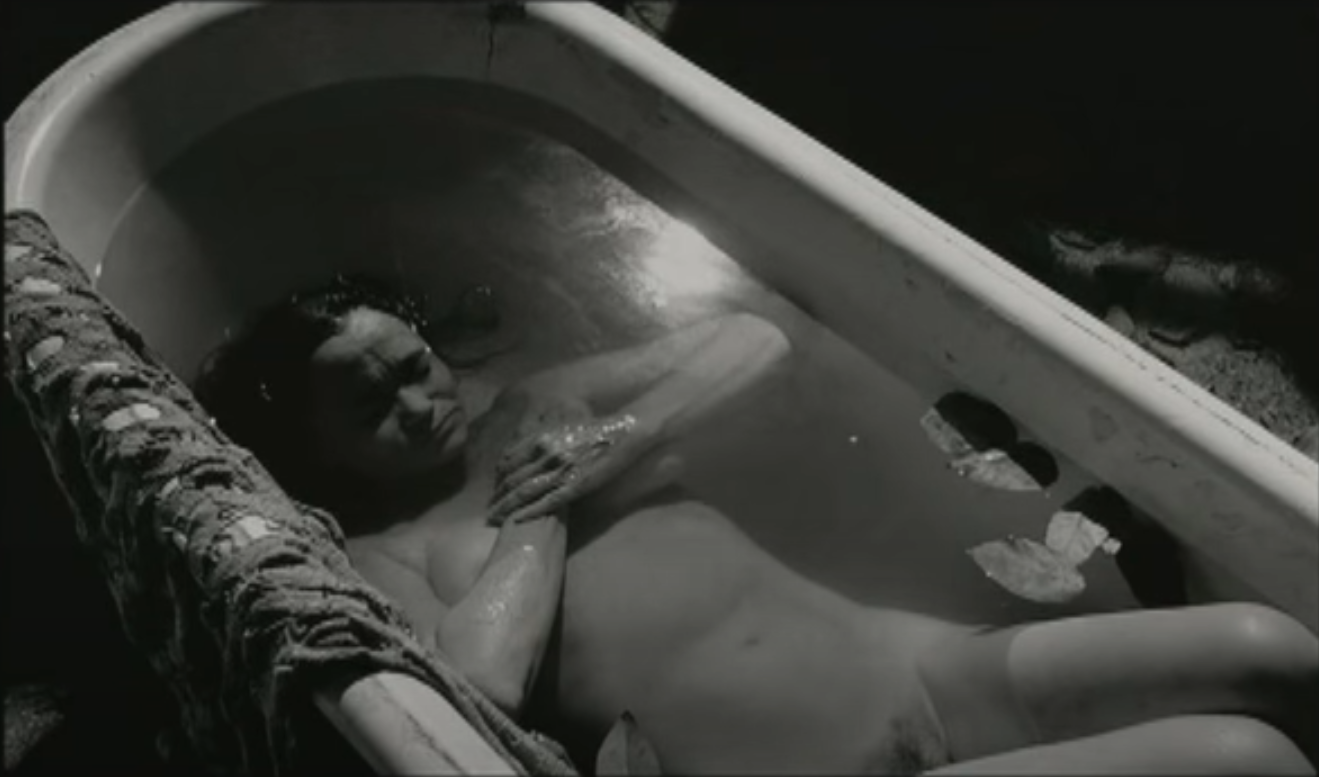
    In one long take, we see Carla narrate a letter to a dying woman urging her to live. Similarly to the old absent father, we witness the dying woman's slow walk to the letter, her expression as she reads the letter, and her immediate reaction following. The sequence culminates with the woman choosing to breathe instead of drowning herself in her bathtub, illustrating the care that Carla took with her letter. The sequence is just over 5 minutes long, and it is a powerful statement of choosing to live despite feeling that nothing matters anymore. The lack of cuts during this shot in a film with several cuts and transition underscores the theme of the film that life holds meaning - the opposite of nothing matters.
    Timecode
    00:57:00-01:02:23
    Film Still
    Woman intentionally drowning in her bathtub
    Film Clip
    Expansion and Compression of Time
    Comments
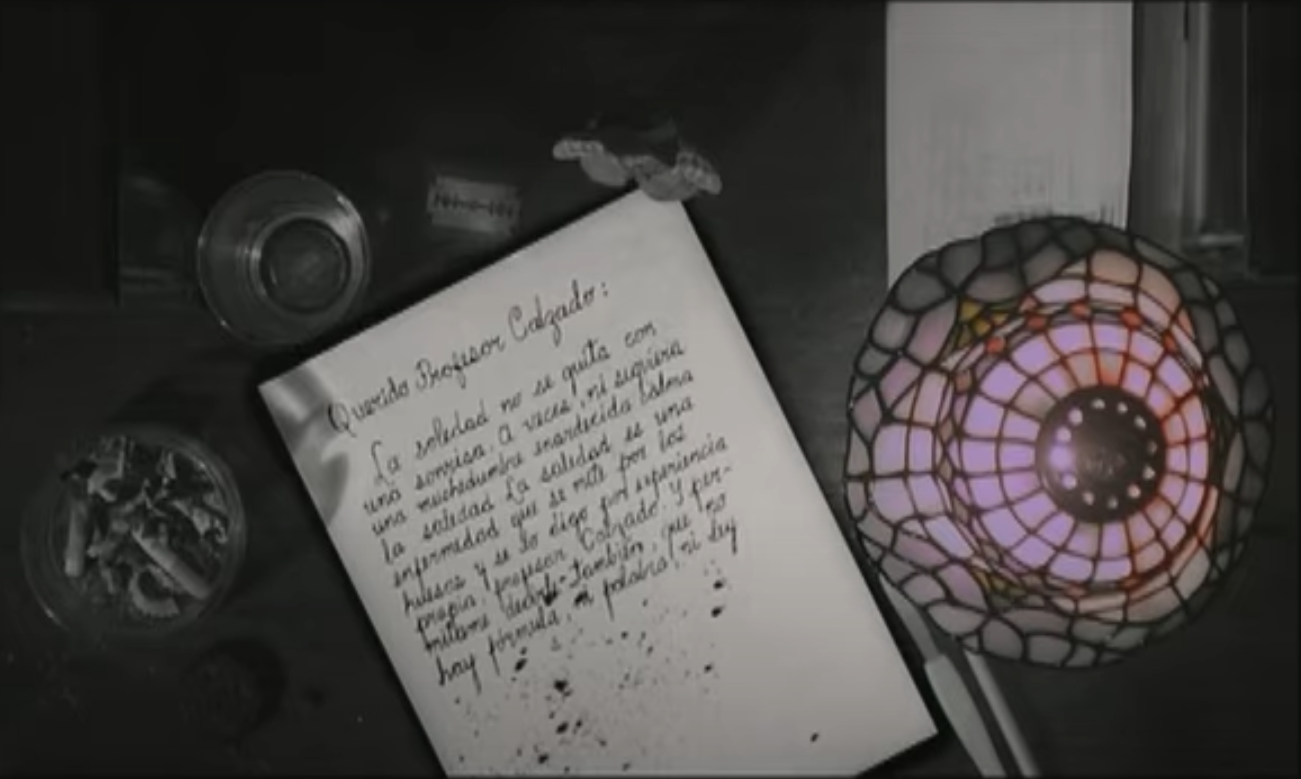
    In this sequence, Carla writes a letter to Professor Calzado. The writing sequence is sped up by various cuts. However, this editing also reveals Carla's actions as she writes which introduces the viewer into how Carla mentally prepares herself for each letter. Interestingly, cigarettes, alcohol, and chocolate appear to come in and out of each cut, illustrating that Carla treats this activity as a relaxation tool rather than as part of her job. This cutting technique thus speeds up the letter to only display the interesting parts, but also takes time to reveal Carla's habits and behavior in the process.
    Timecode
    00:15:45-00:17:00
    Film Still
    Desk with Carla's letter, cigarettes, alcohol, chocolate, and a lamp
    Film Clip
    Editing General Comments

    Sound is an integral part in a film. It refers to everything that the audience hears including sound effects, words and music. Sound is used in films for various purposes, including: providing the information to the viewer about the location of the scene, heightening the mood, telling the audience about the characters and advancing the plot. Every person who watches a film realizes that the choice of voices, soundtrack and music present in a film affect the way that the viewer perceives a particular film. As a result, the sound is an important and integral element of the film, one that determines the way that the viewer experiences and understands a film as a visual experience.
    Sound Type
    Sound Type
    Comments
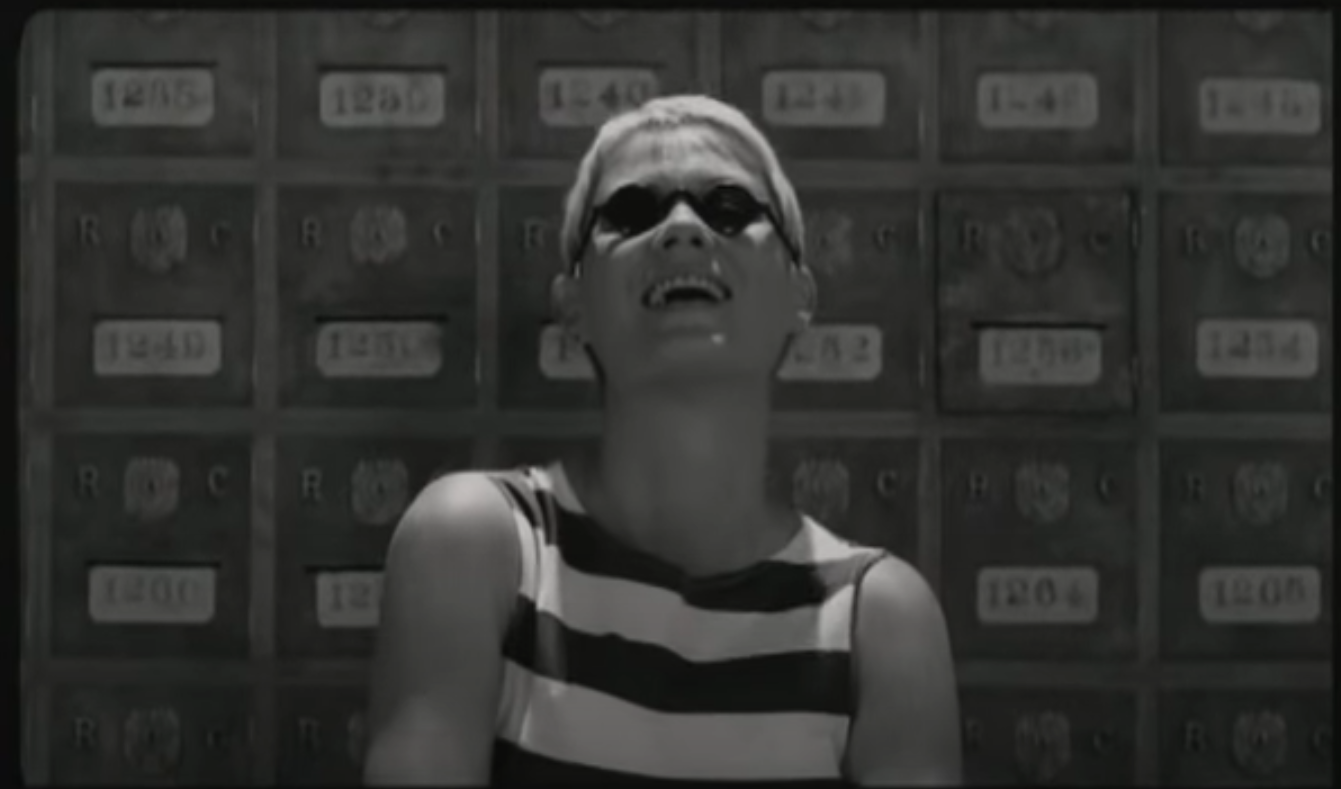
    Throughout the film, there are various instances of classical orchestra and popular Spanish music during many of the montage scenes. The director further uses music originating outside of Cuba as well, demonstrating the transnational appeal of this film. Usually, these sounds are often accompanied by heavy bass, loud trumpets, and sharp percussion instruments to raise tension and build energy within the scene. In this particular scene, we see Carla in her prime, stealing and rewriting many letters without getting caught. The music in the background is “Caballo Negro” by Cuban musician Pérez Prado. This music falls under the Cuban dance music genre of Mambo, and the accompanying dance scene by Carla highlights her joyful mood in this moment of the film.
    Timecode
    00:20:51-00:22:42
    Film Still
    Carla laughing and wearing sunglasses in the mailroom
    Film Clip
    Sound Type
    Comments
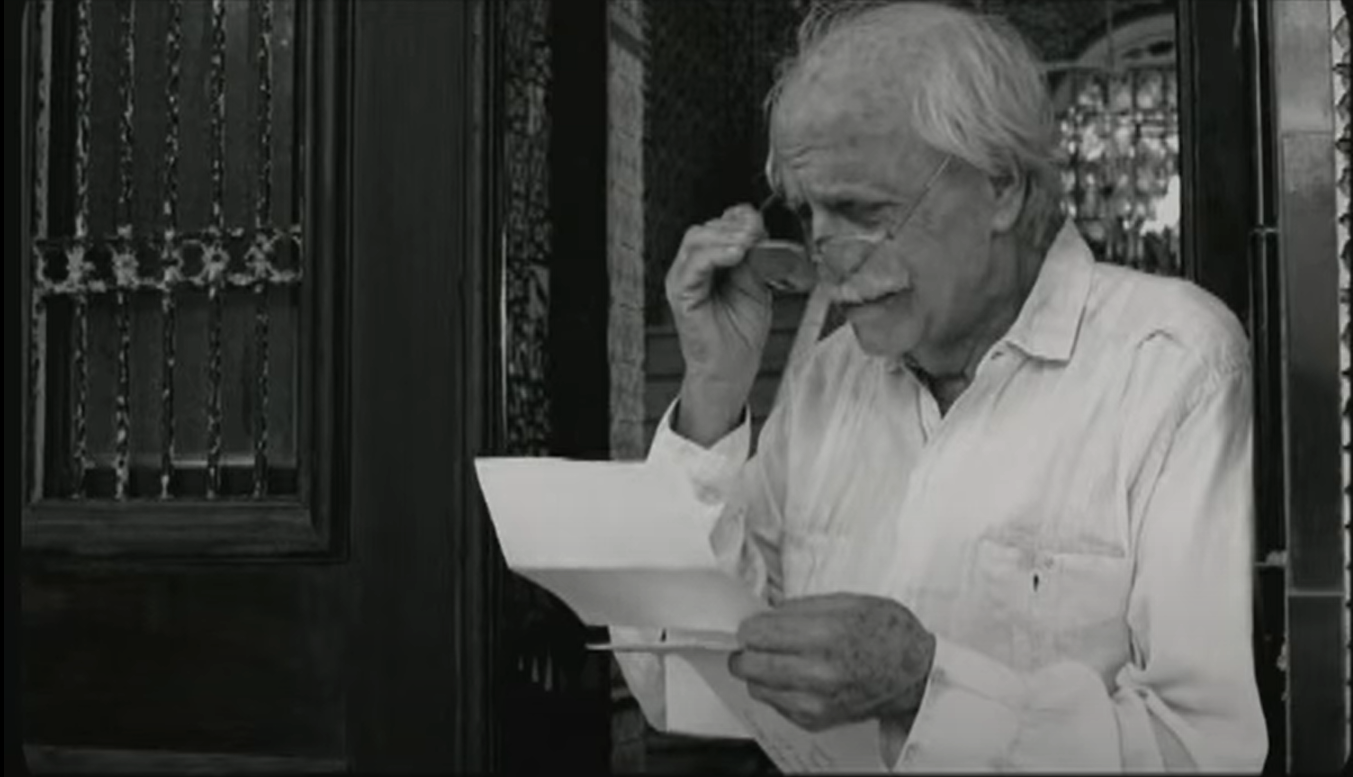
    The film centers on Carla’s letter writing, and various sequences center on the recipients who receive these letters. In these shots, we see their actions prior to receiving the letter, their expressions as they open the letter, and their follow-up reactions after reading the letters. Interestingly, these sequences are narrated by Carla, who reads the letter that she rewrote with various pauses and intonations to dramatize the effect of the letter. In this scene, we see an old man receiving a letter from his daughter who he hasn’t spoken to in quite some time. Carla emphasizes several sentiments of love, nostalgia, and pain that the daughter feels for her missing father, and we see the emotional impact of this letter when the father takes time to pause and reflect by the ocean. Therefore, the non-diegetic sound functions to explain the shift in perspective that the camera focuses on and strengthens the viewer’s understanding of how powerful Carla’s writing is.
    Timecode
    00:34:43-00:37:30
    Film Still
    Father reading and crying at the rewritten letter of his daughter
    Film Clip

    Narrative analysis is an examination of the story elements, including narrative structure, character, and plot. A narrative can be considered to be the chain of events in a cause-effect relationship occurring in time and space. In order to analyze the narrative of a film, we need to first make the distinction between the plot of the film and the story of the film. This is sometimes referred to as the discourse and story of a film. Narrative may also be called the story thought story mainly refers to the events that describe the narrative.
    Plot Comments
    Comments
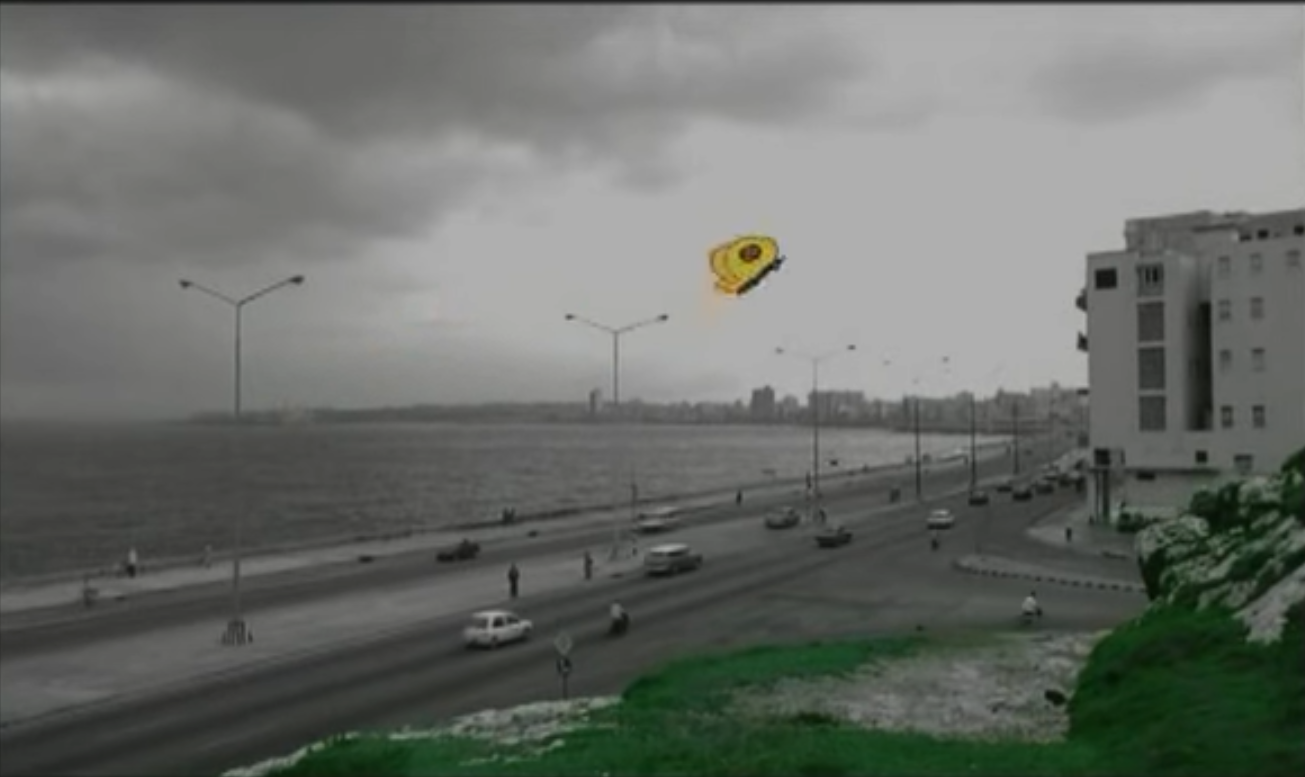
    The film is titled Nada+, and one of the lines that is repeated within the post office is "No somos nada." Interestingly, the film opens up with the philosophy of Carla, who cannot seem to find meaning in her life and watches the psychologist Professor Calzado on TV to find some semblance of happiness. Her mother informs her that she signed Carla up for a visa, and so Carla is eventually awaiting news to see if she will be accepted or not. As the film progresses however, Carla finds passion in rewriting letters and bringing hope to Cubans despite the bureaucratic post office that tries to limit her creativity. Carla eventually finds love in César, and in the end she decides to stay in Cuba and improve it from the inside rather than flee and find a new empty life in the United States. The film, although critical of the bureaucratic nature of Cuba, is ultimately about finding meaning in one's life. The final shot hints that although the grass maybe greener on the other side, the grass is still pretty green on the Cuban side as well. In contrast to the repeated statement of "no somos nada," Cremata Malberti argues that Cubans are something through Nada+.
    Film Still
    Final scene overlooking the Cuban beach with the yellow butterfly and the green grass
    Story Comments
    Narrator Type
    Narrator Type
    Comments
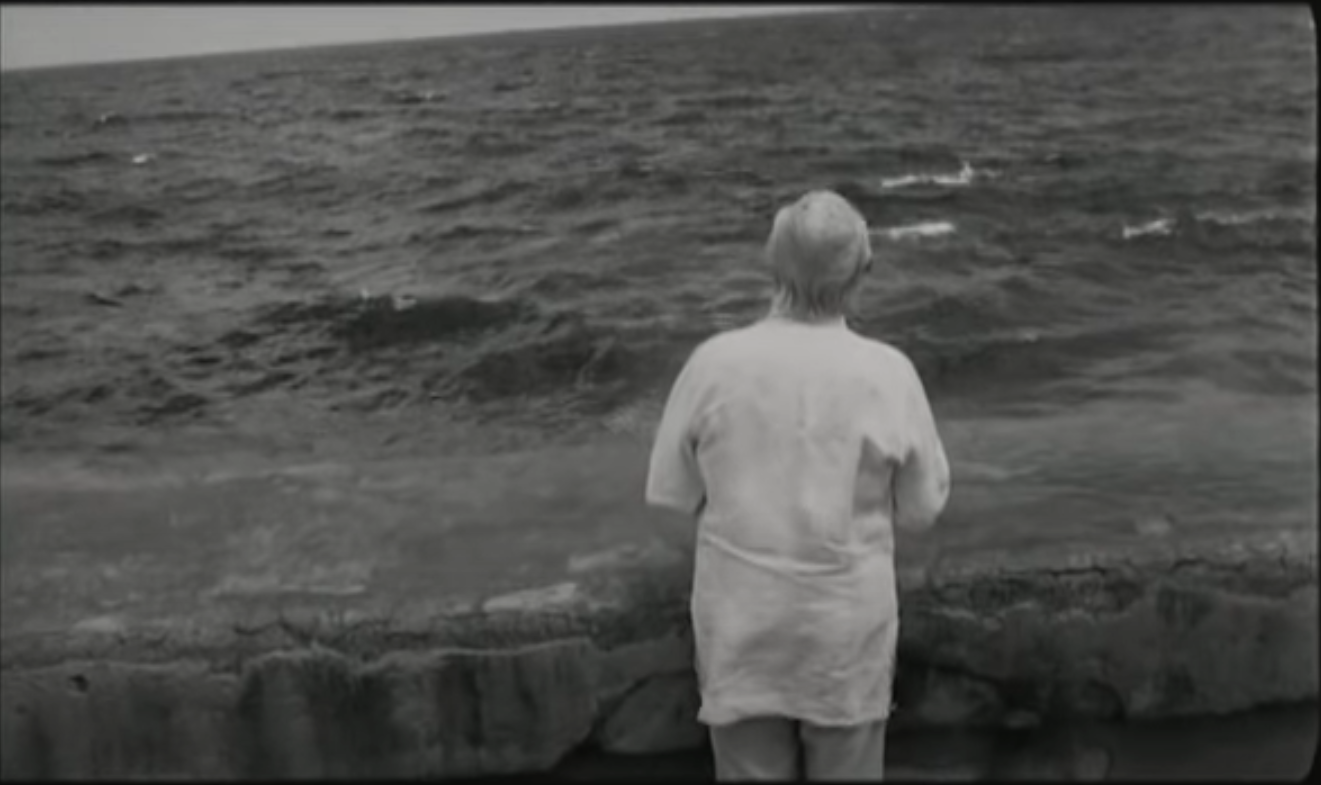
    The film is almost primarily shot in the third person perspective. The director chooses the positioning and focus of the camera to influence our perspective of the scene. In some instances though, Carla narrates the letter that she rewrote in the stories of the recipients. However, this further illustrates that the narration is in the third perspective, because Carla is unable to directly see who she sends the letters to.
    Timecode
    00:36:10-00:37:22
    Film Still
    Old man stares at the ocean
    Film Clip
    Narrative Structure
    Narrative Structure
    Comments
    The film is primarily shot in a chronological order, with a few transitions to the side stories of the recipients who receive Carla's letter.

    Film genres are various forms or identifiable types, categories, classifications or groups of films. (Genre comes from the French word meaning "kind," "category," or "type"). These provide a convenient way for scriptwriters and film-makers to produce, cast and structure their narratives within a manageable, well-defined framework. Genres also offer the studios an easily 'marketable' product, and give audiences satisfying, expected and predictable choices. Genres refers to recurring, repeating and similar, familiar or instantly-recognizable patterns, styles, themes, syntax, templates, paradigms, motifs, rules or generic conventions.

    Category
    Category
    Comments
    Nada+. Directed by Juan Carlos Cremata Malberti, L.C.J Editions and Productions, Instituto Cubano de Arte e Industria Cinematográficos, D.M.V.B films, P.H.F films, IntraMovies, Marvel Movies, PHS Films and Canal+ España, 2001.