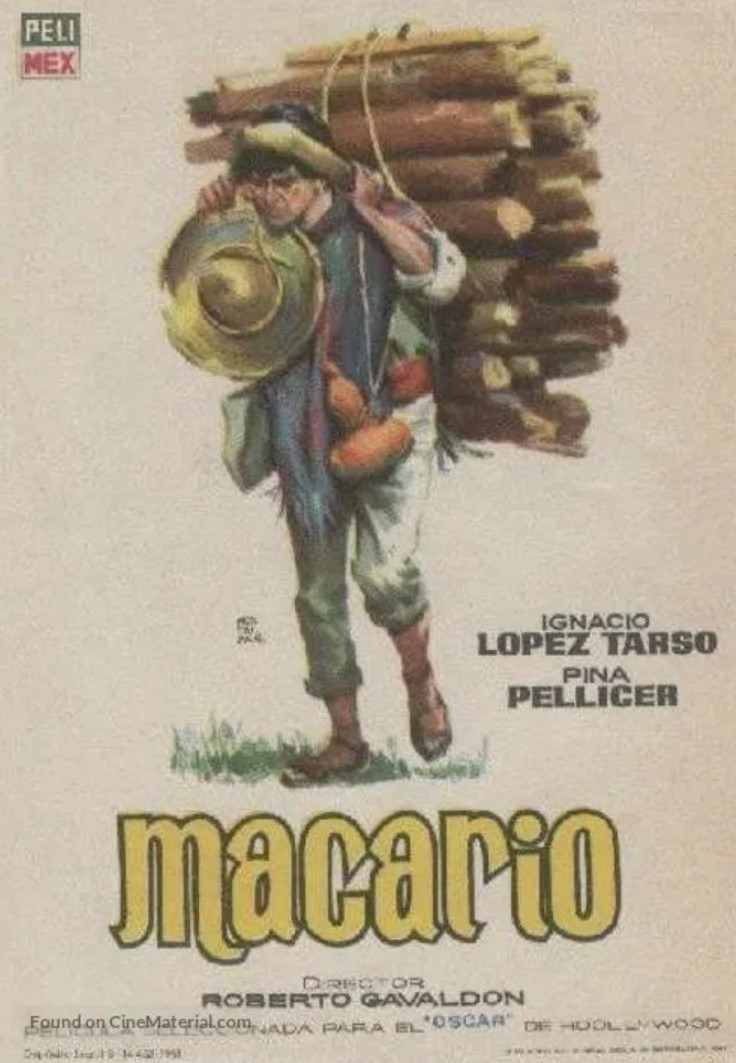
Macario

    Movie Poster
    Release year
    1960
    Director
    Roberto Gavaldón
    Biography of director(s)
    Born in Chihuahua, Mexico, in June 1909, Gavaldón was a film director during the Mexican golden age of cinema. He was known for movies of the melodrama genre and is seen as one of the most influential directors of Mexican cinema. He had some fame internationally too: his film ‘Macario’ was nominated for an Academy Award and he even directed a couple of small films in Hollywood. He passed away in 1986.
    Country
    Mexico
    Original synopsis of the film

    Macario is a poor indigenous man who together with his wife, struggles to feed their many children even after giving them their portions of food. One day, Macario grows tired of never having a full meal for himself his entire life and vows to never eat again if he must share again. Worried, his wife steals and kills a bird to feed Macario, who she tells must run into the woods before the children know. There, he meets God and Devil, whom he refuses to share his food with, but when a hungry Death asks him, he gives in. As a gift, Death gives him magic water that will allow him to save anyone who is about to die, with conditions. Sometime later after he grows rich and famous, the Inquisition abducts him for witchcraft. When the only way to not get burned is to save an aristocrat’s dying son, he finds out Death has already decided to take the boy’s life. Unable to do anything, Macario runs away into the woods. It is then shown that Macario’s wife comes looking for him and finds him dead where he originally met Death and shared his food

    Describes the setting of a scene in a play or a film. It refers to everything placed on the stage or in front of the camera—including people. In other words, mise en scène is a catch-all for everything that contributes to the visual presentation and overall “look” of a production. When translated from French, it means “placing on stage.”

    Setting
    Setting
    Explanation
    The film was produced in various locations including: las Lagunas de Zempoala, Morales, the city of Puebla y Taxco, Guerrero, and the famous Cacahuamilpa Caves. Two of the most prominent settings of the story were the village/town and the woods surrounding it. In particular, these two settings juxtaposed the main conflict of the movie: man vs nature. When Macario is still refusing to eat until he dies, he goes out into the woods where not only does he meet the God and the Devil (good vs evil), but also the primordial and amoral presence of death. After being gifted magic water for his good deed, Macario begins to be seen in the woods less and less, symbolizing his perceived assimilation into “society” and the illusion he is above eventual ruthlessness of nature itself (in this case, death). By the end of the film, after he is stripped of his wealth and prestige by the church, it is obvious he is no longer in control (or rather, has never been in control) of his own life. This is especially evident in the twist ending of the film, where it is revealed, he never did return from the woods all that time ago. When he met death the first time, it would also be his last. To believe you have any say in who gets to live or who dies, is purely imagination. And it turned out the film’s plot was probably in Macario’s mind.
    Timecode
    00:24:28-00:27:10
    Film Clip
    Props
    Timecode
    Water jug and via
    Prop
    Water jug and vials
    Explanation
    The most important prop of the movie is the water given by Death to Macario. It becomes a tool which shows how Macario has power, and how later in the film, he becomes helpless yet again when the Inquisition breaks most of his remaining vials of water.
    Film Clip
    Lighting
    Lighting
    Explanation
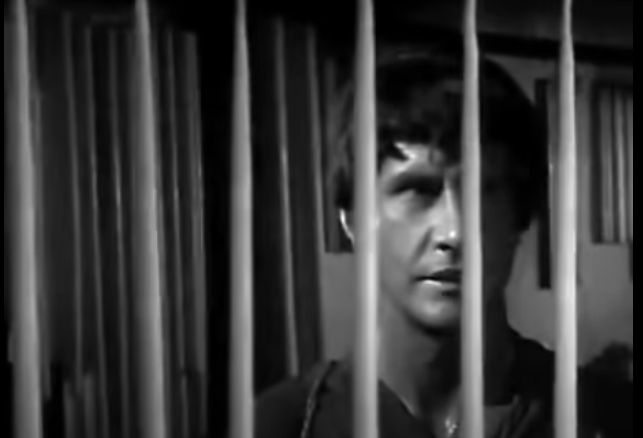
    The use of low-key lighting is used to emphasize the theme of death and Día de Los Muertos. This lighting style is particularly evident whenever Macario goes into a dying person’s room alone because the natural darkness from being indoors implies that death is creeping closer.
    Timecode
    00:54:07-00:55:25
    Film Clip
    Costume
    Costume
    Macario's first look: poncho and trousers
    Explanation
    The costumes in ‘Macario’ change as the plot progresses. When we first meet Macario, he is dressed modestly, with a simple combination of trousers and a traditional poncho.
    Timecode
    00:10:09-00:10:20
    Film Clip
    Costume
    Macario's 'elite' clothing
    Explanation
    As he grows in popularity, his costumes reflect his ascent in society. In fact, we might even compare these later outfits with that of the Devil, seen earlier in the film, whose silver spurs and gold buttons Macario previously insisted he had no need for.
    Timecode
    01:02:30-01:03:45
    Film Clip
    Costume
    Torn clothing
    Explanation
    In the scene where Macario flees the Viceroy’s house and into the forest, heading towards the cave of Death, his expensive clothes are covered in dirt and there is a tear in his left shoulder area of his shirt - a visual symbol of how his fame and good fortune is being stripped away from him.
    Timecode
    01:21:50-01:23:00
    Film Clip
    Hair and Makeup
    Example
    Death's makeup
    Explanation
    The character of Death is seen with contouring that accentuates his hollow cheeks and eyes. By darkening these areas, the makeup artist is playing on connotations of sickness, as well as making the actor appear more skeletal, which is fitting for his role. The rest of the cast do not appear to have on much more than some natural makeup necessary to not look ‘washed out’ on camera, however we should consider that due to the film being in black and white, it may at times be more difficult to notice the subtleties of light-colored eyeshadow, blush, and lipstick.
    Timecode
    01:19:15_01:21:25
    Film Clip
    Example
    Hair of the villagers vs hair of the wealthy
    Explanation
    The hairstyles seen throughout the film seem to indicate the standing in society that character has. Except for Macario’s wife, the poorer women and girls wear their hair in one or two braids. On the other hand, those who are seen as being higher up in society - for example, the Viceroy’s wife, and Don Ramiro - wear their hair in more intricate buns if they are women, or tied back in a low ponytail, sometimes with a ribbon, if they are men.
    Timecode
    00:50:45-00:51:45
    Film Clip
    Figure Behavior
    Example
    Macario's changing body language
    Explanation
    For the most part, Macario tends to assume a submissive position when we analyze his body language. From the first time we see him doubled over by the weight of the logs, and then throughout the period of the film before he gains recognition for his healing gifts, we see him with rounded shoulders and a low gaze, such as when he eats or when he talks to people outside of his family. He tends to hold his hat in front of him with both hands, almost like a shield between him and others. Similar to the costumes, as the plot progresses, Macario’s body language does too, although this time it is not reflective of his character arc in regards to his standing in society, but rather to his internal development of confidence and self-worth. Whilst he still exhibits gentle mannerisms, he no longer is submissive, even when being interrogated by the Inquisition. Nevertheless, he reverts to some of his old body language, as well as becoming more frantic, as his fortune unravels.
    Timecode
    01:05:10-01:06.33
    Film Clip
    Example
    Death's closed off behaviour
    Explanation
    The character of death, except for the first time and the last time we see him, is completely silent. He communicates solely through nods or shaking of the head, and almost always has his arms crossed across his chest, in the position we imagine dead bodies to be in in a coffin. These examples of figure behaviour communicate to the viewer that he is a mystery and does not exist on an equal plane to humans. His silence and body language separates him from the rest, making him less of an accessible figure, and adds to the fear of the unknown surrounding his person.
    Timecode
    01:10:35-01:12:00
    Film Clip
    Example
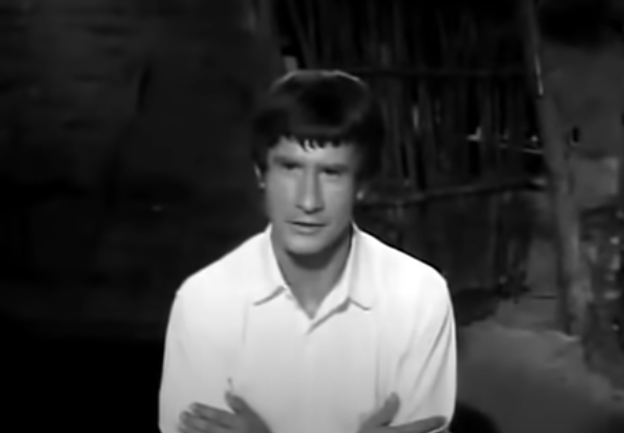
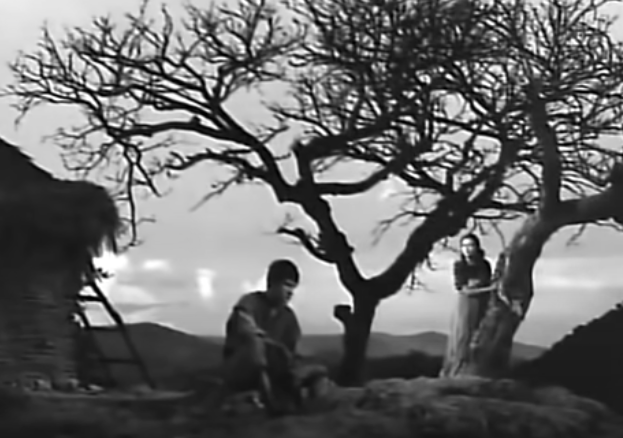
    Macario is approached by his wife whilst he sits forlornly outside his house.
    Explanation
    In this scene, Macario is approached by his wife whilst he sits forlornly outside his house. She asks him whether he is going to eat, warning him that if he doesn’t come soon their children will eat all his share. He reveals to her that he is sick of being hungry all the time, and that he will not eat again until he can have a whole turkey just for himself. He tells her to give their children his share, because he ‘will never eat again’.

    It is shot outside, on location and in natural lighting, which is representative of the rest of the movie. Macario's clothing is very modest, and his behaviour is dejected, which is in keeping with how he is when we are introduced to him, although there is some determination in his voice, which hints to later in the film when he exhibits more confident character behaviour.
    Timecode
    00:17:15-00:19:15
    Film Clip
    Representative Clip

    This is the art of photography and visual storytelling in a motion picture or television show. Cinematography comprises all on-screen visual elements, including lighting, framing, composition, camera motion, camera angles, film selection, lens choices, depth of field, zoom, focus, color, exposure, and filtration. Cinematography sets and supports the overall look and mood of a film’s visual narrative. Each visual element that appears on screen, a.k.a. the mise-en-scène of a film, can serve and enhance the story—so it is the cinematographer’s responsibility to ensure that every element is cohesive and support the story. Filmmakers often choose to spend the majority of their budget on high-quality cinematography to guarantee that the film will look incredible on the big screen.
    Point of View
    Point of View
    Comments
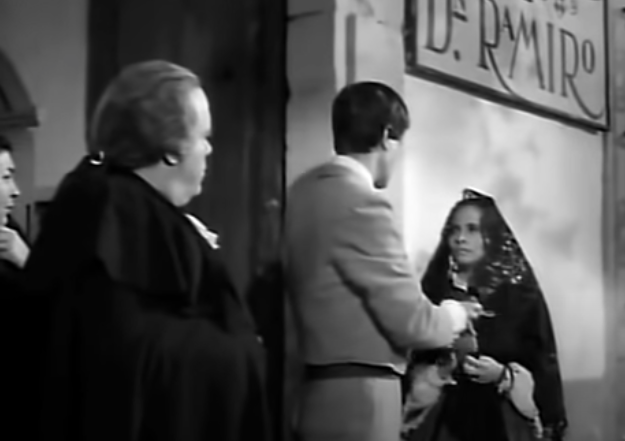
    The camera acts as an omniscient point of view. Whilst most of the action does follow Macario, there are also moments where we see events that take place without him — such as the scenes where his wife visits Don Ramiro’s house to drop off clothing. Even though we can sympathize with the protagonist, it feels as if we are supposed to be judging the film objectively, rather than through Macario’s, or anyone else’s, eyes. The lack of camera movement and the usage of long shots helps add this sense of the viewer being separated from the action.
    Timecode
    00:11:00-00:13:00
    Film Still
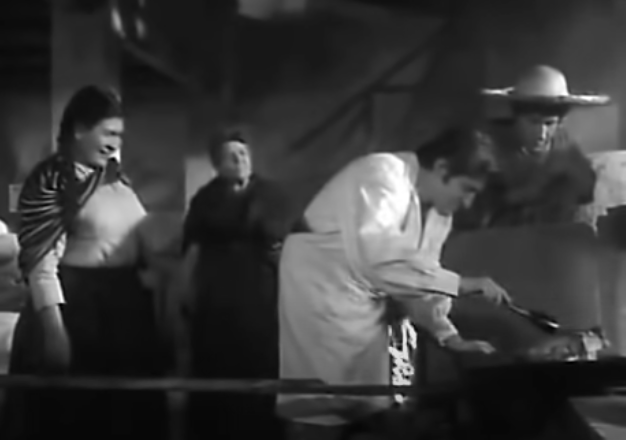
    Macario and others watch as the butcher places on of the large turkeys in the oven.
    Quality
    Quality
    Comments
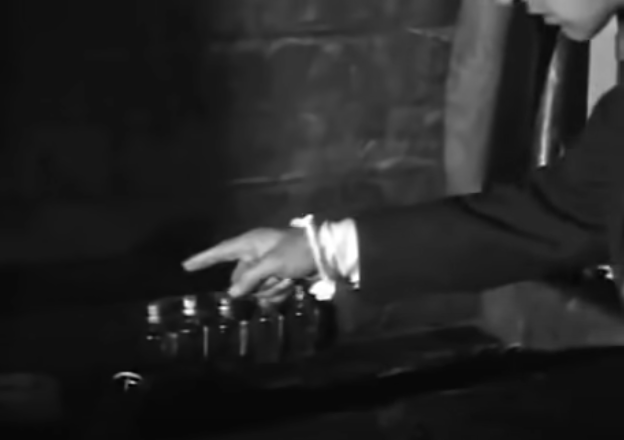
    Macario’ is an old film from 1960, and so it is in black and white and the resolution is quite poor. Nevertheless, the contrast and exposure levels are mostly balanced, with the exception of some indoor scenes, which are a little underexposed and do not have as much contrast as the rest of the movie. Clothing and prop choices were generally important throughout the film to help avoid the feeling of too much darkness on screen; Macario’s white shirt often ‘popped’ in indoor scenes.
    Timecode
    01:01:55-01:01:30
    Film Still
    Macario counts how many vials he has left. His white shirt is seen poking out from under his dark jacket.
    Quality
    Comments
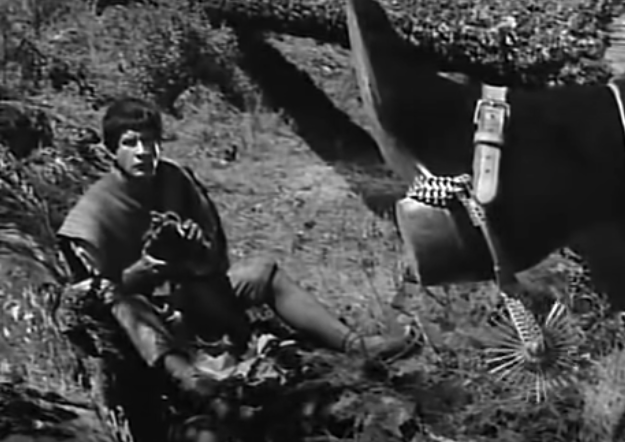
    Furthermore, there is the usage of deep focus. A notable instance of this is the scene with the devil, where his boots are in the foreground, in focus, and Macario is in the background, also in focus.
    Timecode
    00:25:27-00:25:34
    Film Still
    In the foreground, one of the boots that the Devil wears, in the background Macario looks up at him. Both are in focus.
    Framing
    Framing
    Comments
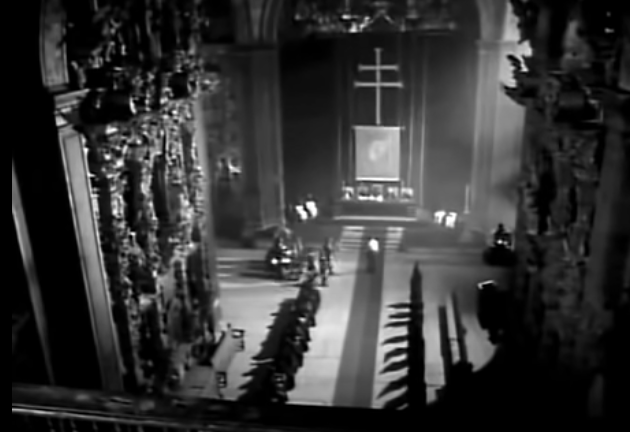
    For the most part, ‘Macario’ is filmed at a level angle. However, there are scenes in which low and high angles are brought in, which create drama and indicate power dynamics. In opening shots of both the scene at the butchers, and the inquisition scene, Macario is filmed from above, indicating that he is entering into, or is currently in, a situation where he is powerless. Conversely, there are multiple instances of the characters of the Devil, God, and Death, where they are shot from below, highlighting the sense that they are powerful beings. The aspect ratio is square.
    Timecode
    01:06:30-01:06:45
    Film Still
    A extreme long shot taken from a high angle where we see the church, with Macario standing in front of the judges.
    Scale
    Scale
    Comments
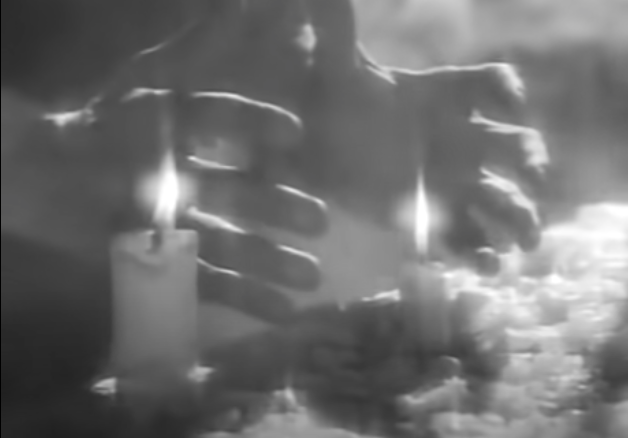
    This movie consists of a variety of shots, but the one that is used most effectively is the close-up. It is used to show the character's faces more clearly during emotionally tense moments, such as in the final sequence with the Viceroy’s son and the subsequent meeting with the 3 figures from the beginning. Additionally, it guides the viewer’s attention to non human objects that are key to the narrative — notably, the first turkey that prompts Macario to make his plot inducing decision to stop eating, and the candle that represents the Viceroy’s son’s life coming to an end.
    Timecode
    01:24:50
    Film Still
    Death's hand are cupped around a diminishing candle.
    Movement
    Movement
    Comments
    Interestingly, there is actually very little camera movement throughout the movie, which, as stated previously, adds to the effect of the viewer being an outsider to the story. Nevertheless, there are a few moments in which tilt and pan are used for dramatic effect. When we are first introduced to the character of Death, we start with a knee level shot, then tilt upwards to reveal his face. This creates suspense, and adds to the mystery surrounding Death’s persona. Then, in the sequence where Macario flees through the woods, meeting the Devil, God, and Death once again, the camera pans to follow his movements through the forest. (01:21:46 - 01:23:04)
    Timecode
    00:30:30-00:30:37
    Film Still
    Death approaches Macario, but we only see his knees before the camera tilts upwards.

    Editing is the process of putting a film together–the selection and arrangement of shots and scenes. Editing can condense space and time, emphasize separate elements and bring them together, and organize material in such a way that patterns of meaning become apparent. In addition, editing can determine how a film is perceived: for instance, quick, rapid cuts can create a feeling of tension, while a long take can create a more dramatic effect. The first photoplays generally had no cutting, owing to the fact that they were single-reel films; once filming began, you could not stop until the film ran out. (https://filmglossary.ccnmtl.columbia.edu/term/editing/)
    Coherence, Continuity, and Rhythym
    Comments
    The majority of the film is straightforward, simple yet effective storytelling. All of the events seem to make logical sense one after the other and there is no sign of uncertainty from editing that creates mystery within the film. Within the film’s world, all the events seem to make sense. The only time the editing diverges from this is the film’s ending where instead of continuing the authorities’ search for Macario, a flashback occurs where his wife and others are searching for Macario.This becomes the only break from the logical flow of events that have occurred in the film as the audience finds out Macario died when he went into the forest a long time ago.
    Editing Style
    Editing Style
    Comments
    There is only one montage moment in the middle of the film. This is shortly after he cures his third patient from dying (his second wealthy patient) and his healing business takes off. During this montage, we see Macario heal babies, have patients from presumably many towns come in, not need the gift of a turkey, and even refunding a poor woman her money after she gave it to him.
    Timecode
    00:54:00-00:56:22
    Film Still
    Don Ramiro watches as Macario hands the poor customer her money back.
    Editing Style
    Comments
    The majority of the film’s style is that of continuity editing. Most of the story happens event after event without many moments in between except for the one montage in the middle of the film.
    Comments
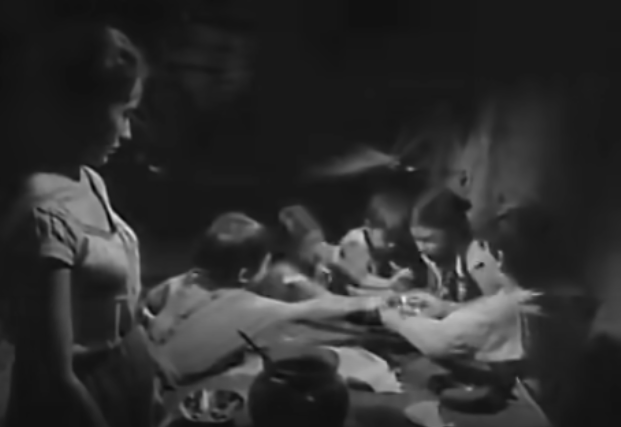
    In this example of fade out, Macario is seen leaving his food at the dinner table because all his children are constantly asking for more food. He seems to not be getting any peace while eating and that he will eventually have to give up the little food he has. This causes him to leave without eating the dinner table and the audience watches as the children put their hands all across the table to get as much food as possible. Then the screen fades to black. This specific use of the fade-out produces a grim and eerie mood and foreshadows the problems with hunger and death that Macario will face simply because that is what his life is like.
    Timecode
    00:05:50-00:06:08
    Film Still
    Macario's children fight over food whilst their Mother looks down at them. The screen is growing dark.
    Comments
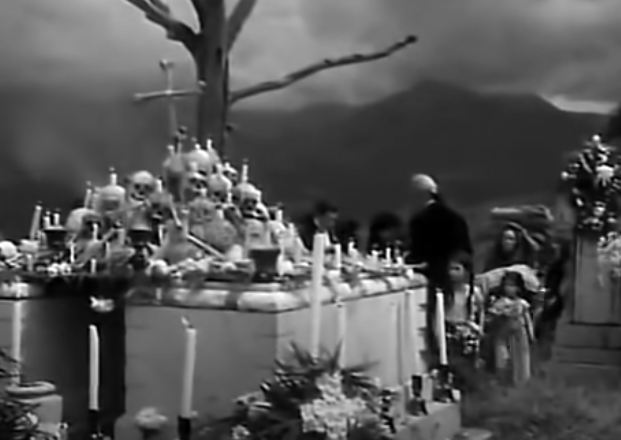
    In this example of the fade-in transition that follows the previous fade-out transition, the camera begins at a Dia de los Muertos grave scene. The camera pans downwards as if to mimic when people let down a corpse into a grave. More symbolically, it is shown that it is the children leading the way to the grave, suggesting that it is Macario’s children that will inevitably lead him to his own death by inadvertently taking away all his food and causing him to die from hunger. This all however is only foreshadowing as a new audience who hasn’t scene this film before would have no idea what is yet to come.
    Timecode
    00:06:08-00:06:18
    Film Still
    Macario and his family approach a grave decorated for Día De Los Muertos
    Comments
    While other transitions between scenes are also used, the dissolve transition seems to be the most used in this film. It has a mysterious effect and it also helps invoke the passage of time. Both the mystery and time aspect of this cut fits well with the theme of death in the film as there is always the mystery of when a person’s time to die will happen.

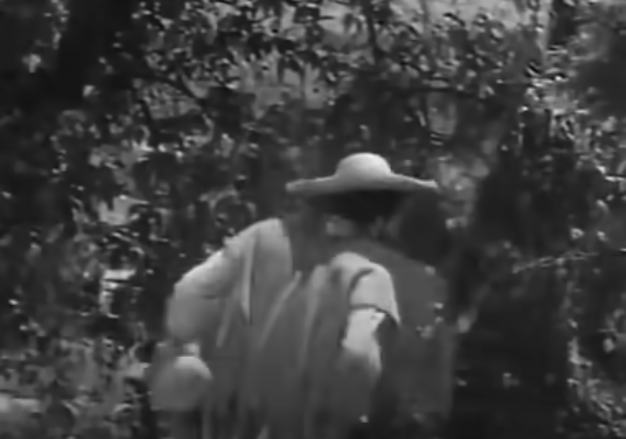
    In this example of the dissolve transition, Macario is just finished hiding his precious and powerful magic water as it cuts to a very strange scene: Macario is wearing a very clean white shirt! This is unusual because he is a peasant and can barely afford to eat. This dissolve transition is drawing a sense of mystery because now the audience is unsure what has just happened. Was there a time lapse that occurred? Soon enough, it is revealed that his whole family has now gotten enough money to not only dress nice, but to no longer have to fight over extra helpings of food, with the assumption that Macario has somehow used his magic water to get wealthy.
    Timecode
    00:49:50-00:49:58
    Film Still
    The image dissolves as Macario runs away into the forest.
    Macario sits at the dinner table wearing a clean, white shirt.
    Comments
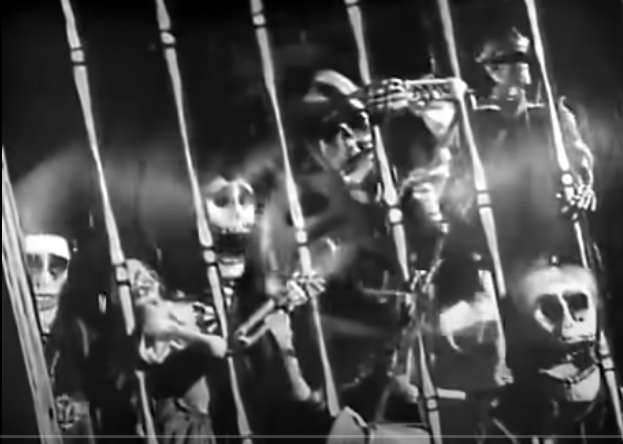
    In this example of superimposition, Macario is shown to be having a nightmare. While a shot of him sleeping is shown, a shot of skeleton puppets dancing (that he is controlling) is superimposed on that. It reveals his desire to want to control death. The horrifying part of this dream to him is that when the skeletons begin to eat all the food (which would leave him completely hungry and foodless), he is unable to stop them. He is powerless even though he thought he had control.
    Timecode
    00:14:15-00:16:33
    Film Still
    Macario's sleeping face is in the background, with images of dancing skeletons superimposed on top.
    Transitions
    Match
    Match
    Comments
    In this example of an eyeline match, Macario is talking to a man about death and Dia de los Muertos. The eyeline match shows Macario watching the spinning candles in between him and the man he is speaking to, almost as if he is a child being distracted. Even though it only happens for a few seconds, this is subtle characterization that helps us understand who Macario is. He may be a man but he is still a person who is just curious about the things that happen around him that he hasn’t been used to. This is especially shown as the man he is talking to explains to him the importance of Dia de los Muertos.
    Timecode
    00:08:30-00:08:38
    Film Still
    Macario behind a spinning wheel of long candles.
    Expansion and Compression of Time
    Editing General Comments

    Sound is an integral part in a film. It refers to everything that the audience hears including sound effects, words and music. Sound is used in films for various purposes, including: providing the information to the viewer about the location of the scene, heightening the mood, telling the audience about the characters and advancing the plot. Every person who watches a film realizes that the choice of voices, soundtrack and music present in a film affect the way that the viewer perceives a particular film. As a result, the sound is an important and integral element of the film, one that determines the way that the viewer experiences and understands a film as a visual experience.

    Sound Type
    Sound Type
    Comments
    Halfway through the movie, there is a song which plays over a montage which is used in place of a traditional narration in order to explain the events that passed as Macario rose in fame. It starts as non diegetic, but in the final sequence it transitions to being diegetic, as we see a small band gathered outside Don Ramiro’s house. Although, it must be said that it is unclear as to whether this band is actually playing the song, as we only see them from the back and they appear to go unnoticed by Macario, the doctor, Dom Ramiro, and the customer, who are all in front of them. Thus, the transition to diegetic sound is inferred but not confirmed. Apart from that song, all other music comes in the form of the musical score, which runs almost continuously throughout the movie.
    Timecode
    00:53:07-00:56:25

    Narrative analysis is an examination of the story elements, including narrative structure, character, and plot. A narrative can be considered to be the chain of events in a cause-effect relationship occurring in time and space. In order to analyze the narrative of a film, we need to first make the distinction between the plot of the film and the story of the film. This is sometimes referred to as the discourse and story of a film. Narrative may also be called the story thought story mainly refers to the events that describe the narrative.
    Plot Comments
    Comments
    The plot of the story deals heavily with both the mortality and morality of man. When Macario refuses both the Devil and God a piece of his food, he states that they are either trying to trick him or that they have no real need for a piece of his food since they are not really hungry like he is. He is so driven by hunger that he does not fear good or evil to dictate what he does as a human. However he only offers Death a piece of his chicken because he realises that each of their conditions - hunger and death - are not their fault, but merely a result of life existing. Since he can relate to this, he offers Death his much prized food. What proceeds to happen, after Death gives him magic water as a prize, is that Macario truly believes he has earned enough power to tell Death what it can do (or who’s life he can take). Yet even though he has used the magic water to help himself escape poverty, it is also shown in the film that he still helps those without a lot of money to give him, showing that he is still not a man consumed by greed. However, when he needed this power the most to save his own life (by first saving a wealthy and powerful couple’s dying son), it fails him. Death simply refuses to leave the boy’s bed and he realizes that he is still a man, despite the wealth and the status he was able to acquire as a result of the water. As a consequence because he cannot tell Death to spare the boy’s life, his own life is in danger as the authorities chase after him when he escapes. Unfortunately it seems he was never able to persuade Death to help him at all. At the end of the film, it was revealed that Macario never returned from the woods that day he supposedly met the Devil, God, and Death. He died where he had met Death, and that was their last meeting. Everything else that happened in the movie was an illusion. Thus, it is an illusion that a person can escape man when it is their time to go, regardless of their morality.
    Story Comments
    Comments
    The story follows the peasant man Macario who struggles to continually provide food for his children and his wife, but eventually decides to stop eating until he can have a meal all to himself. After his wife steals and kills a bird from him, Macario runs into the woods and proceeds to refuse the Devil and God a share but finally lets Death have a piece. Macario gains magic water that allows him to save any person close to death, with the condition that Death does not show up next to their bed. After some time making a business using the water, Macario is eventually tried as a witch. Eventually, Macario is able to escape certain death at the hands of the church but while he is running away with people chasing him, a flashback reveals his wife finds his dead body where he had originally met Death.
    Narrator Type
    Narrator Type
    Comments
    Throughout the film, there is no active narrator telling the story. Instead, the camera passively tells the story through its lens, its position, its attention or lack thereof to certain objects, and other elements of editing.
    Timecode
    00:17:28-00:17:55
    Film Still
    Macario sits outside, looking dejected. His wife looks over him from a nearby tree.
    Narrative Structure
    Narrative Structure
    Comments
    Most of the story is told in chronological order. Everything, except for the twist ending, happens from when Macario is shown returning home to his wife and kids to when he is running away from the authorities.
    Narrative Structure
    Comments
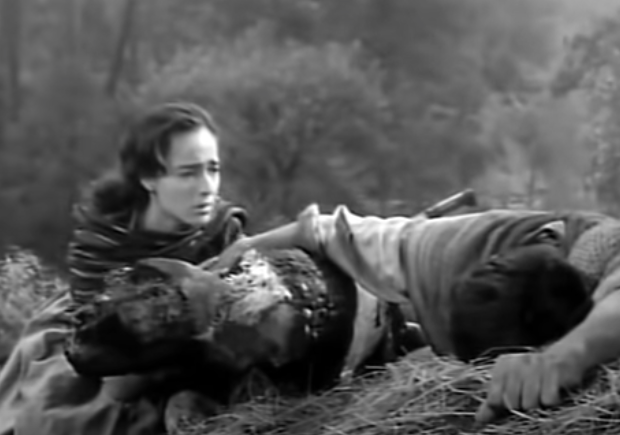
    The one flashback that happens in the story is at the end of the film and it is a twist ending. It is revealed that most of the story’s events never happened, because Macario died at the spot where he met Death and shared his food with him.
    Timecode
    01:27:50-01:27:58
    Film Still
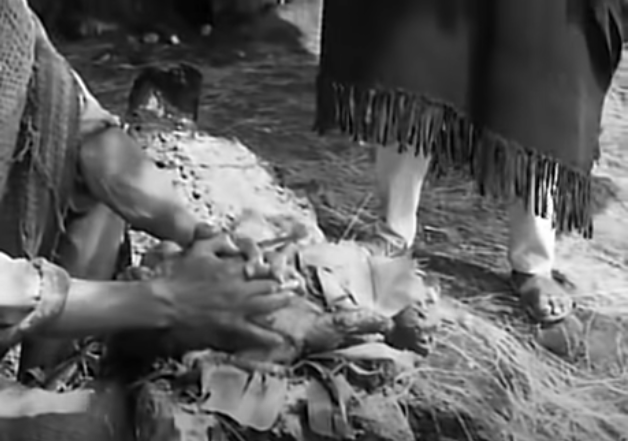
    Macario's wife finds his dead body. He is slumped over a tree stub with his turkey.

    Film genres are various forms or identifiable types, categories, classifications or groups of films. (Genre comes from the French word meaning "kind," "category," or "type"). These provide a convenient way for scriptwriters and film-makers to produce, cast and structure their narratives within a manageable, well-defined framework. Genres also offer the studios an easily 'marketable' product, and give audiences satisfying, expected and predictable choices. Genres refers to recurring, repeating and similar, familiar or instantly-recognizable patterns, styles, themes, syntax, templates, paradigms, motifs, rules or generic conventions.

    Category
    Comments
    Supernatural drama with elements of surrealism.