
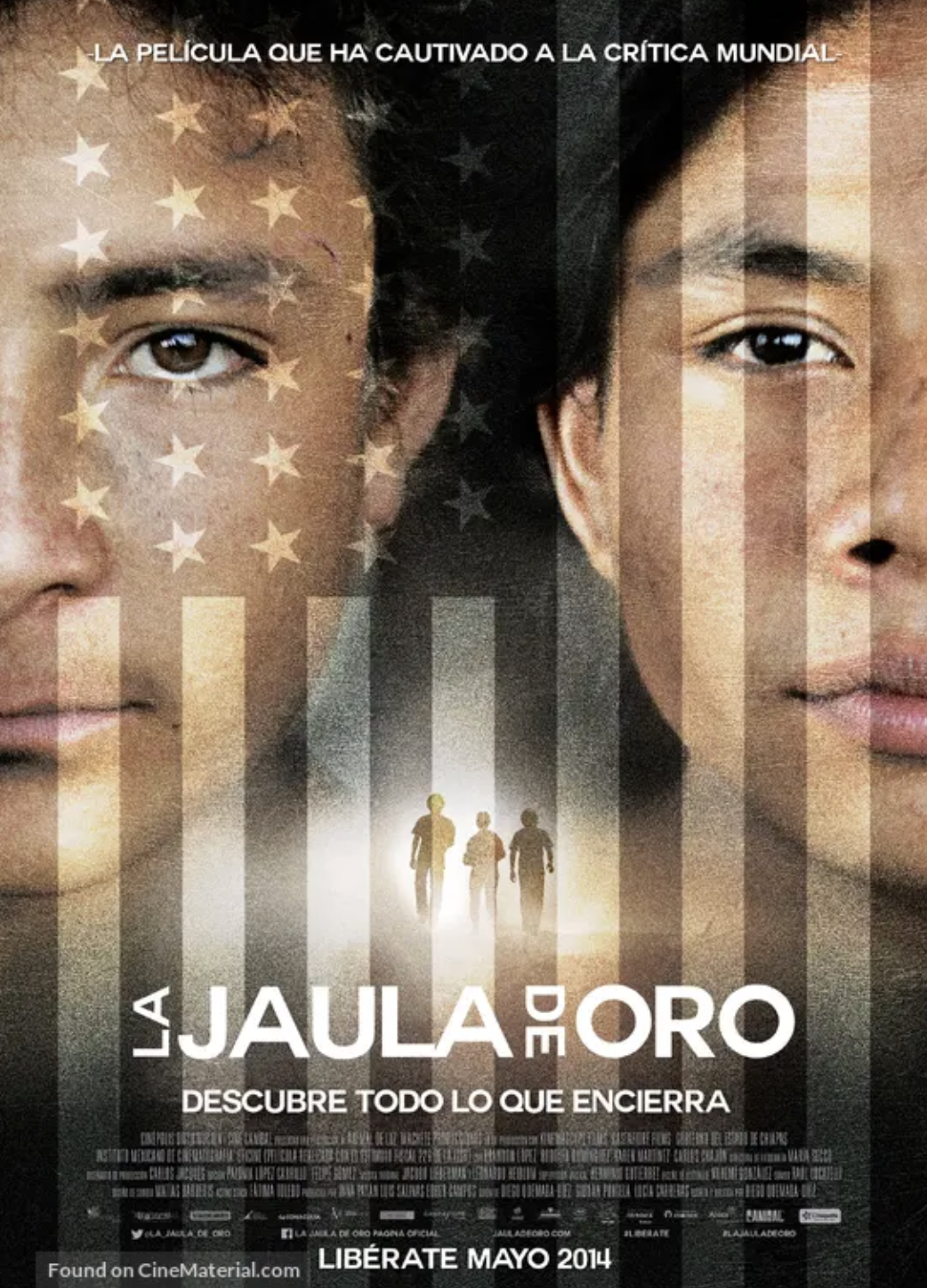
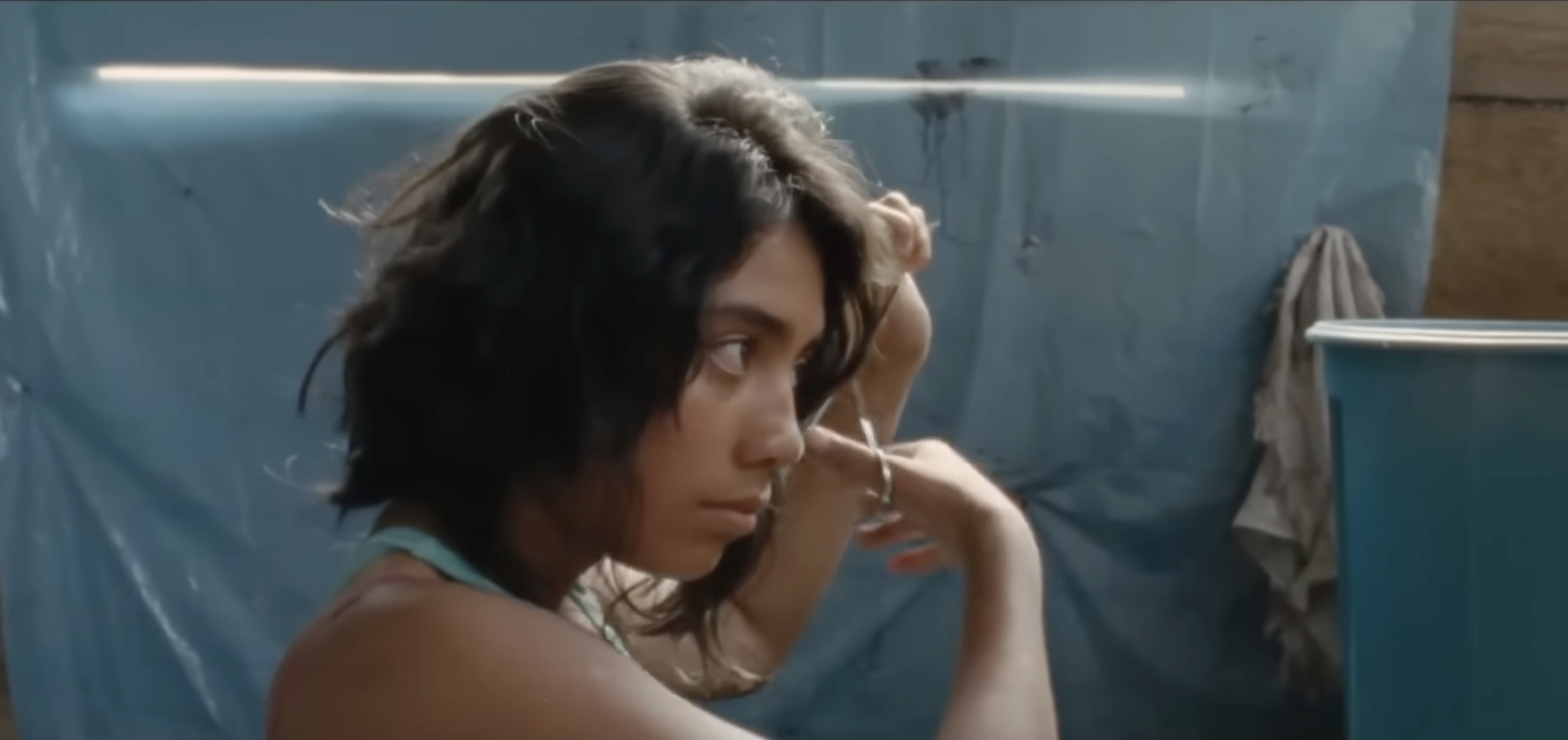
In a poor neighborhood of Guatemala City, three teenagers, Juan, Sara, and Samuel, prepare to leave for the United States. Sara cuts her hair and disguises herself as a boy so she can travel more safely. After crossing into Mexico they meet Chauk, an indigenous Tzotzil boy from Chiapas who speaks almost no Spanish. Sara welcomes him, but Juan treats him with hostility from the start.
The journey quickly turns dangerous. Mexican police rob the group and send them back to Guatemala, and Samuel decides to stay home. Juan, Sara, and Chauk try again, this time riding on the roofs of freight trains through southern Mexico. When armed men stop the train, they discover Sara is a girl and take her, and Juan is unable to stop them. Juan and Chauk continue north together, and their rivalry slowly turns into a friendship built more on gestures than words, since the two can barely speak to each other.
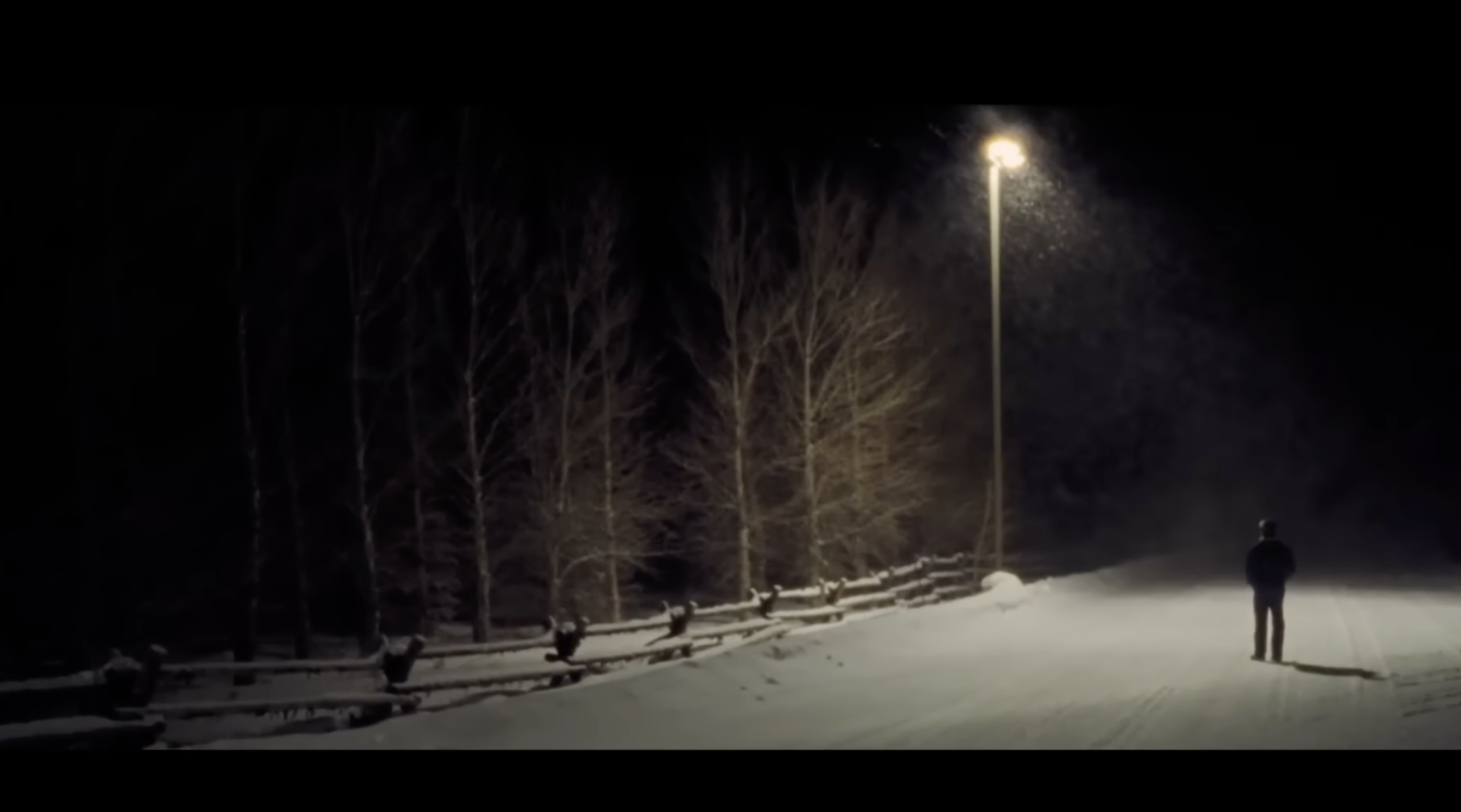
At the border the two boys cross the desert on foot, and Chauk is shot and killed by an unseen gunman. Juan makes it to the United States alone and ends up working in a meatpacking plant. In the final scene he stands on a snowy road at night and watches the snow fall, something Chauk had always wanted to see.
The film is structured as a road movie, and as it goes on the characters lose almost everything they started with, including their money, their friends, and eventually their identity. The title, which translates to "the golden cage," suggests that the promised land is really just another form of confinement. Juan survives, but the life he arrives at is cold and repetitive, and everyone who made the journey meaningful is gone.
Describes the setting of a scene in a play or a film. It refers to everything placed on the stage or in front of the camera—including people. In other words, mise en scène is a catch-all for everything that contributes to the visual presentation and overall “look” of a production. When translated from French, it means “placing on stage.”
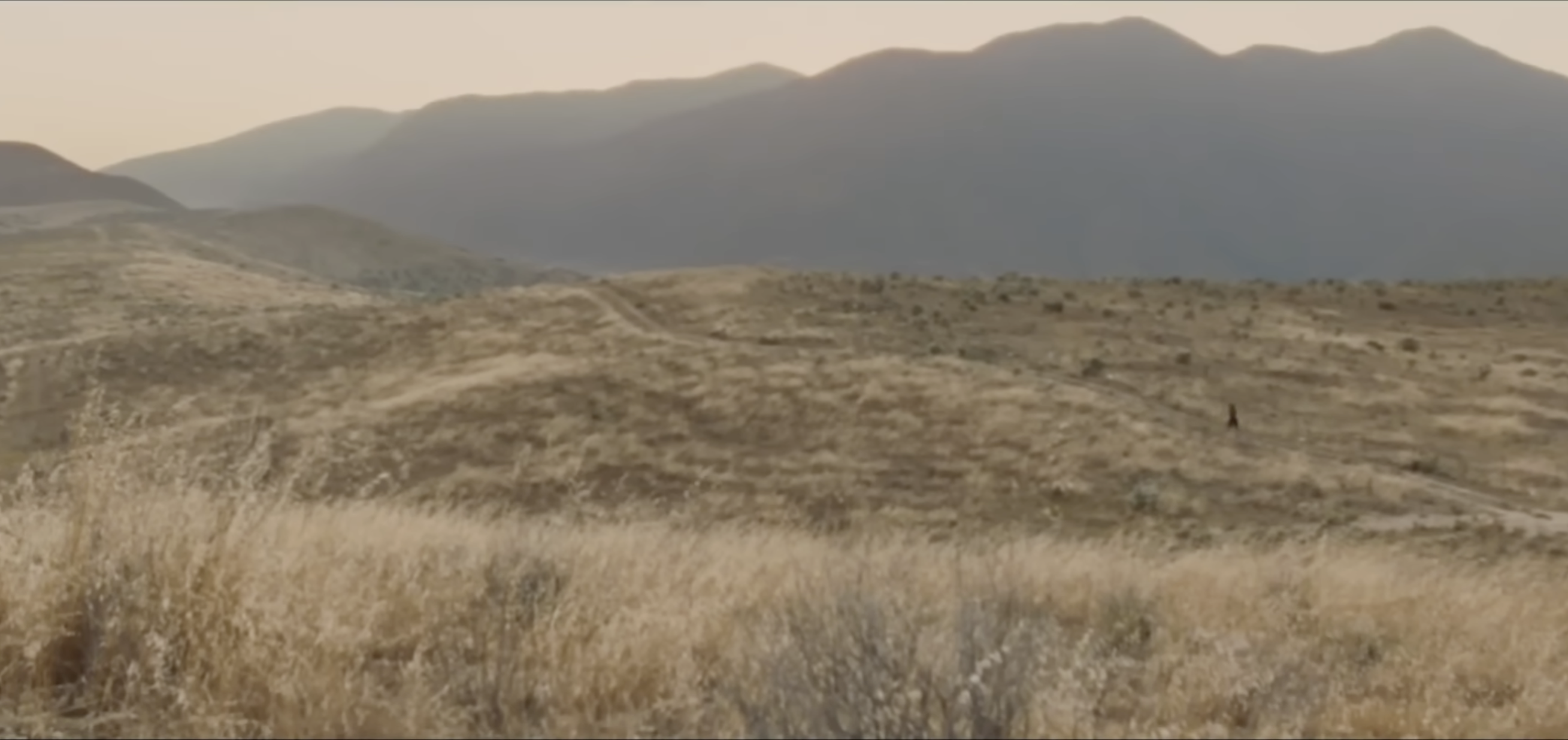
In this still, the landscape takes up almost the entire frame, with dry grass in the foreground and a hazy mountain range in the back. The only person in the shot is a tiny figure on the right side that is barely visible. The setting acts less like a backdrop and more like an obstacle, and its size makes the migrants look small and exposed, showing how much distance and danger still stand between them and the border.
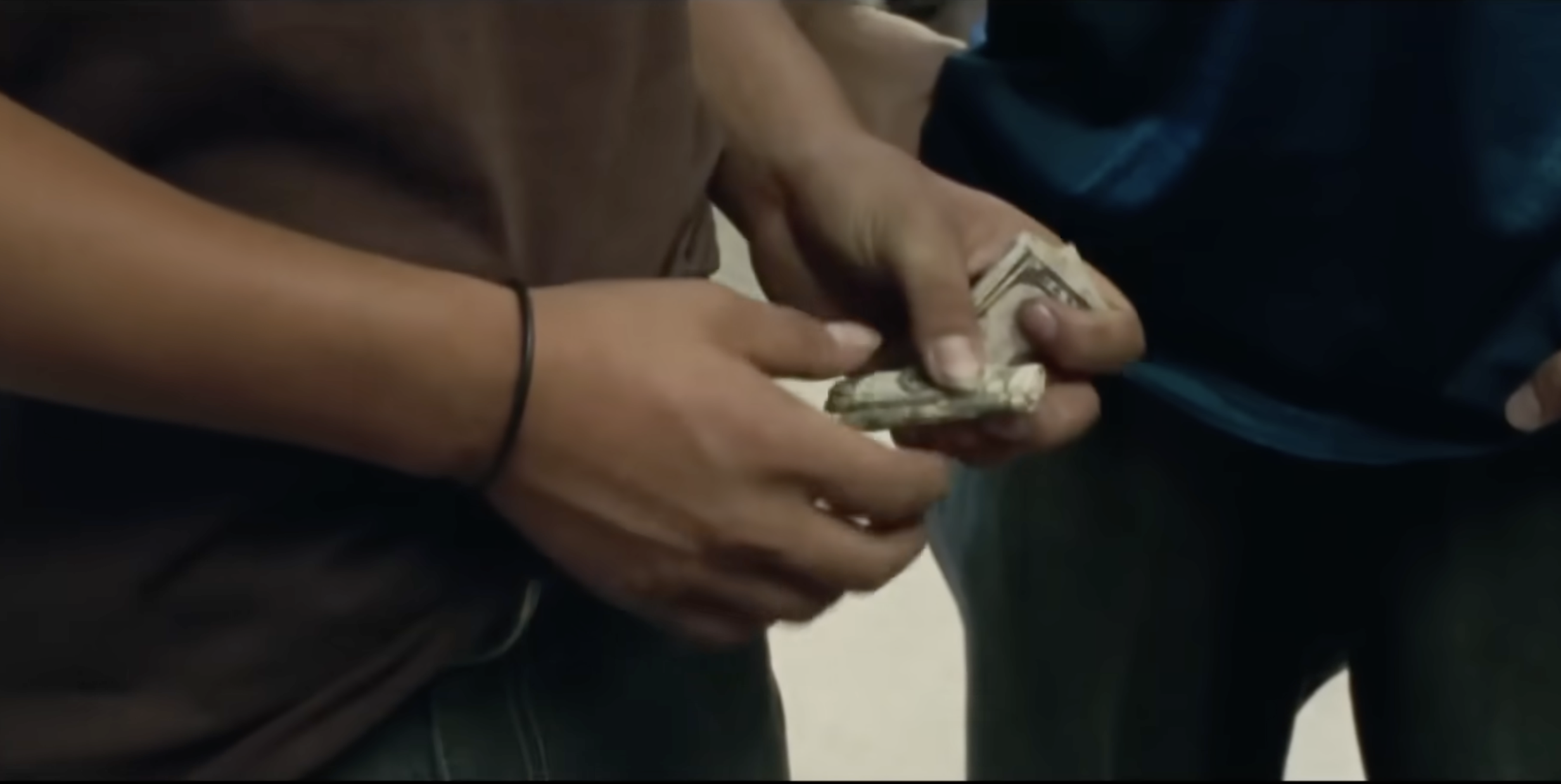
The fact that the bills are dollars is significant. Even before Juan reaches the United States, the currency of his destination is already controlling his journey. The money he saved to start a new life ends up going to the people holding him captive, which shows that on the migrant route money is both a lifeline and what makes migrants targets. Every time it gets taken, Juan loses a little more of his ability to survive and a little more control over his own journey.
Low key (Still 1): In the final scene Juan stands alone on a snowy road at night, and a single streetlamp is the only source of light. The lamp lights up the falling snow and part of the road, while everything around it is almost completely dark. Juan is small, on the far right edge of the frame, with his back to the camera. The snow Chauk always wanted to see has finally arrived, but Juan experiences it alone, and the contrast between the light and the darkness makes the moment feel more lonely than hopeful.
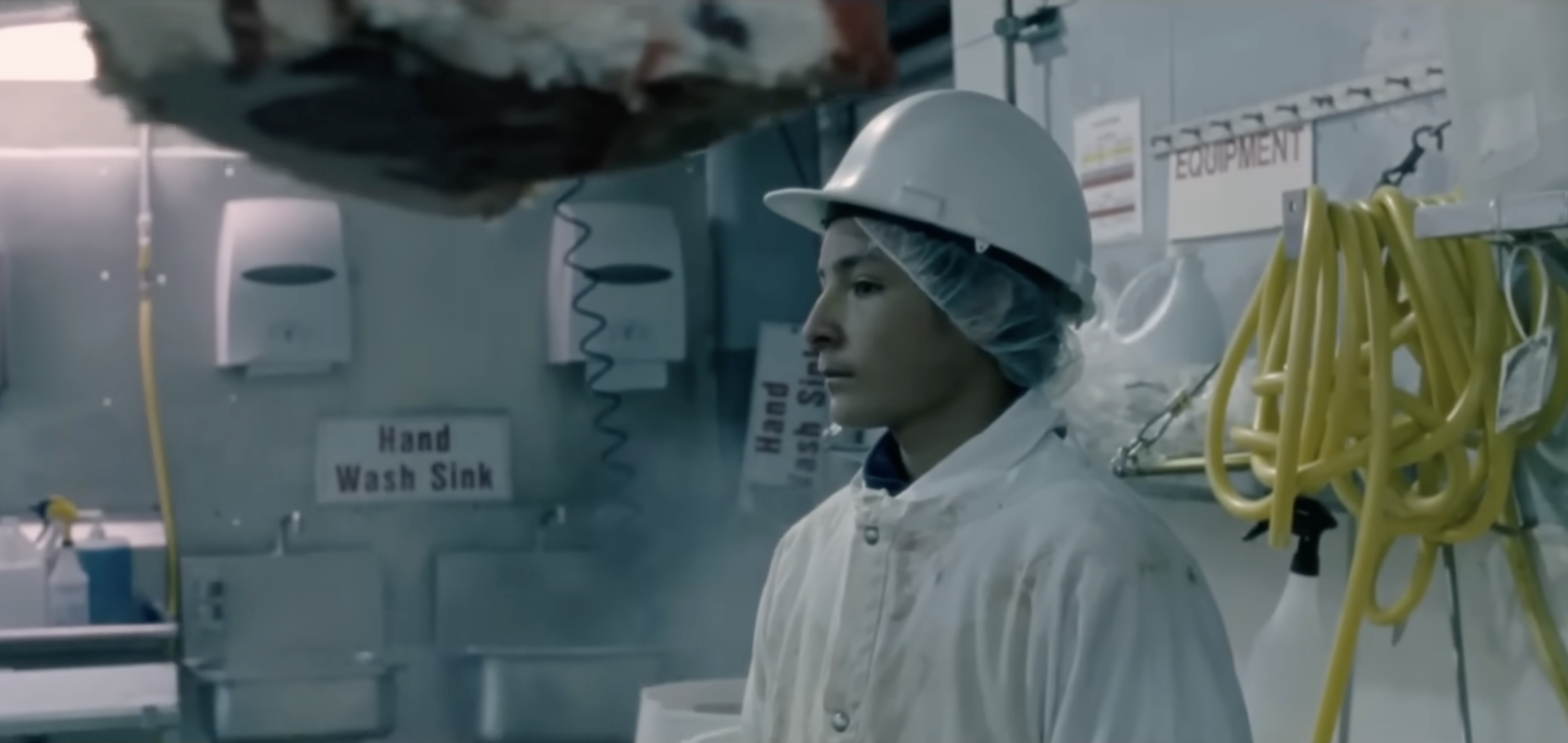
This still shows how Juan's costume changes once he reaches the United States. He wears a white coat, a hairnet, and a white hard hat, the standard uniform of a meatpacking plant. The uniform erases everything that made him stand out on the journey, and he now looks the same as every other worker. The clean white clothing is also a sharp contrast to the dusty clothes he wore on the road.
This is where the title of the film really comes through. Juan has made it to the "golden" destination, but the uniform puts him in a different kind of cage, a cold and repetitive job surrounded by steel walls and hanging carcasses. His blank expression suggests that surviving the journey did not give him the life he had imagined.
Cutting her hair is the first step in disguising herself as a boy. It shows that the migrant route is so dangerous for a girl that she has to give up part of her identity before the journey even starts, and that her appearance could decide whether or not she stays safe.
The makeup throughout the film is just as realistic. The actors wear little to no makeup, and dirt, sweat, and sunburn build up on their faces as the journey goes on. This is very different from Golden Age melodramas like María Candelaria, where makeup was used to create an idealized "Indian" face on a white star, Dolores del Río. In La jaula de oro, Chauk is played by Rodolfo Domínguez, an actual Tzotzil teenager from Chiapas, with no makeup used to racialize him.
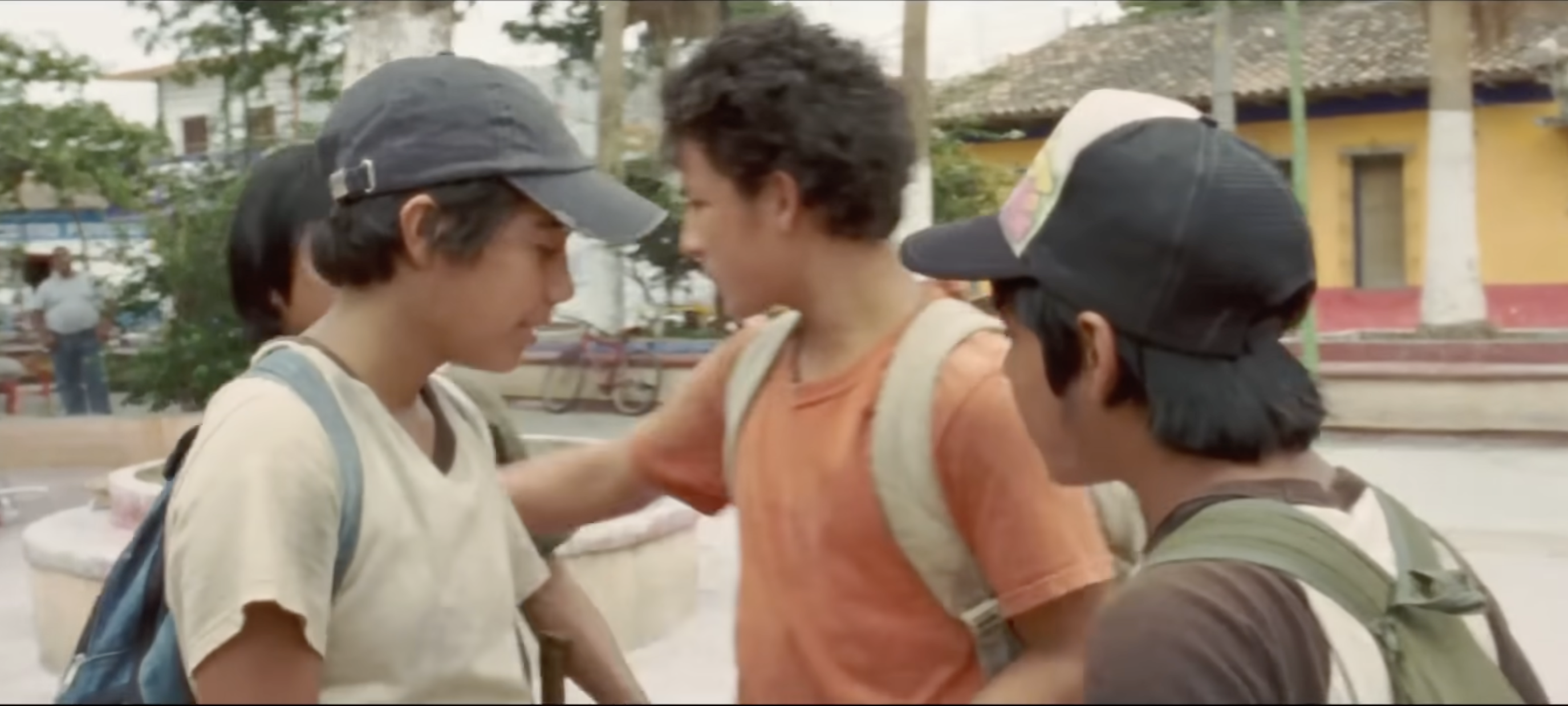
In this still, Juan, in the orange shirt, pushes Chauk while the group stands in a town plaza. He reaches past another boy with his arm out to get to Chauk, who is partly hidden in the background without a hat, while the others watch instead of stepping in. Chauk being half hidden in the frame matches his place in the group as the newest member and an outsider, since he is indigenous and barely speaks Spanish, and Juan makes it clear from the start that he doesn't want him there. Without any dialogue, the way their bodies are placed shows the group's hierarchy, with Juan acting as the leader and Chauk being pushed to the edge.
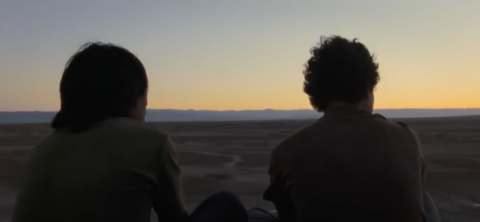
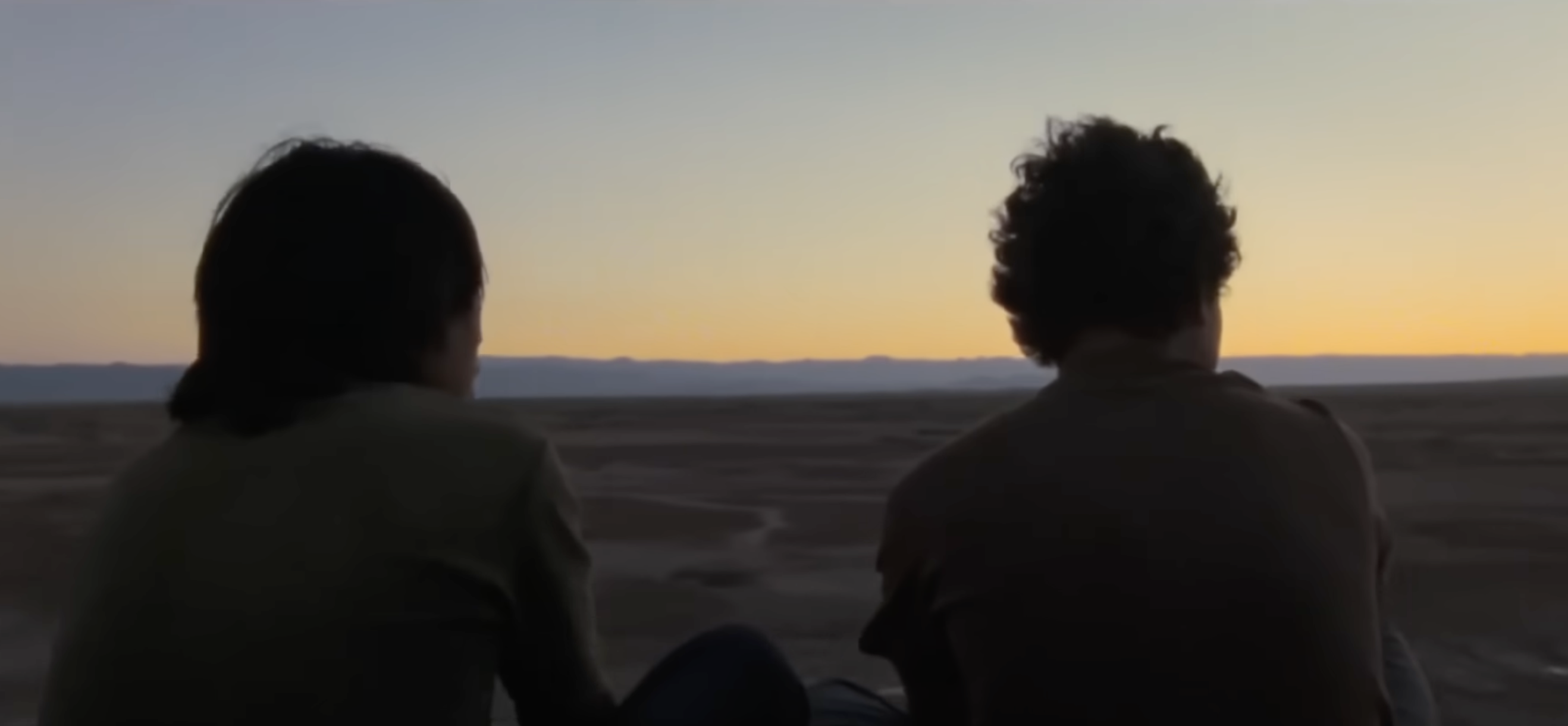
This moment sets up how Juan and Chauk's relationship changes over the course of the film. Because they can barely talk to each other, their relationship is shown almost entirely through body language, and Juan's early aggression slowly turns into a friendship built on gestures instead of words. Compared to the sunset still, where Juan and Chauk sit side by side as equals looking at the same horizon, it is clear how far Juan has come by the end of the journey.
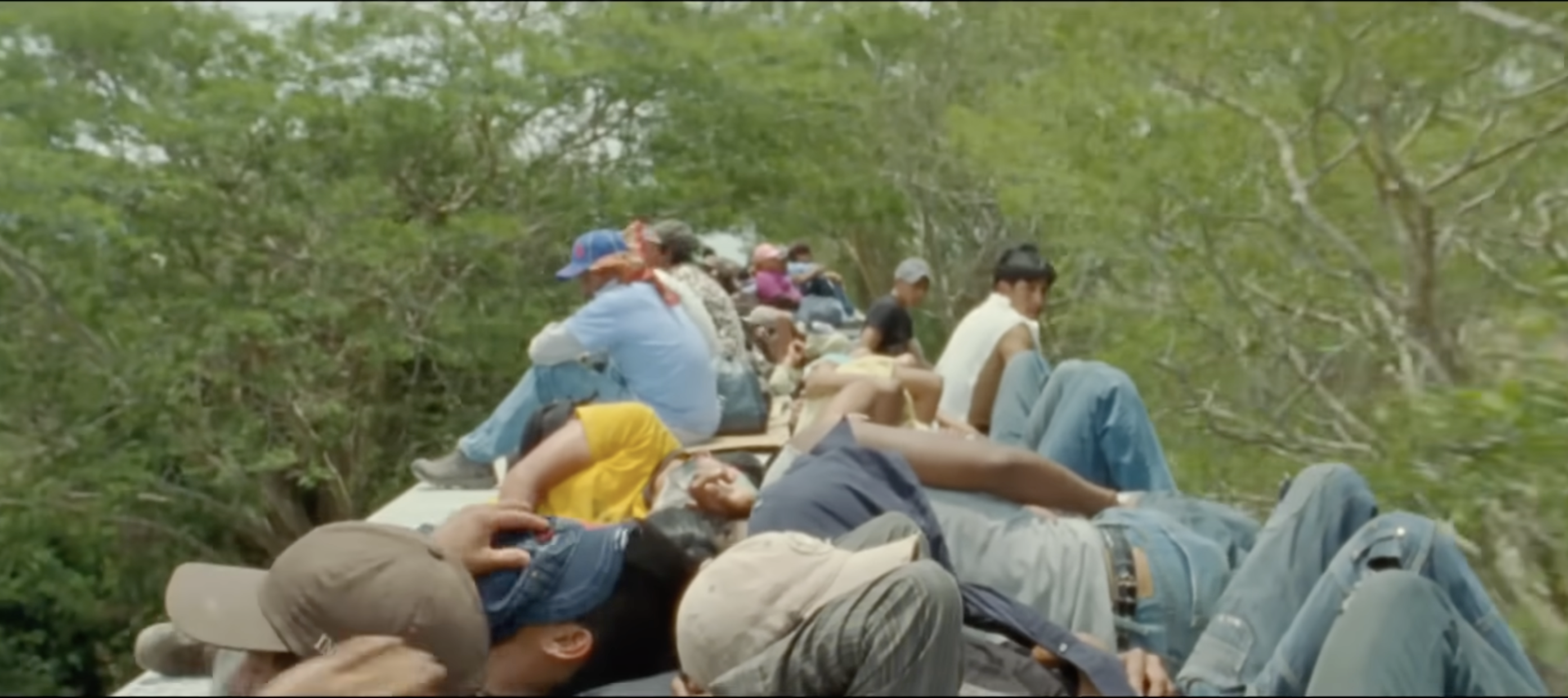
The clip captures the film's mise-en-scène as a whole. The setting is a real train on a real route, the lighting is soft natural daylight, and the costumes are ordinary worn clothes and caps with no visible makeup. The non-professional actors behave naturally, and the crowd makes it hard to tell the main characters apart from everyone else. The train is where the migrants have their rare moments of freedom and connection, but the rusted metal, the height, and the speed are constant reminders of how dangerous the journey is.
This is the art of photography and visual storytelling in a motion picture or television show. Cinematography comprises all on-screen visual elements, including lighting, framing, composition, camera motion, camera angles, film selection, lens choices, depth of field, zoom, focus, color, exposure, and filtration. Cinematography sets and supports the overall look and mood of a film’s visual narrative. Each visual element that appears on screen, a.k.a. the mise-en-scène of a film, can serve and enhance the story—so it is the cinematographer’s responsibility to ensure that every element is cohesive and support the story. Filmmakers often choose to spend the majority of their budget on high-quality cinematography to guarantee that the film will look incredible on the big screen.
Editing is the process of putting a film together–the selection and arrangement of shots and scenes. Editing can condense space and time, emphasize separate elements and bring them together, and organize material in such a way that patterns of meaning become apparent. In addition, editing can determine how a film is perceived: for instance, quick, rapid cuts can create a feeling of tension, while a long take can create a more dramatic effect. The first photoplays generally had no cutting, owing to the fact that they were single-reel films; once filming began, you could not stop until the film ran out. (https://filmglossary.ccnmtl.columbia.edu/term/editing/)
Sound is an integral part in a film. It refers to everything that the audience hears including sound effects, words and music. Sound is used in films for various purposes, including: providing the information to the viewer about the location of the scene, heightening the mood, telling the audience about the characters and advancing the plot. Every person who watches a film realizes that the choice of voices, soundtrack and music present in a film affect the way that the viewer perceives a particular film. As a result, the sound is an important and integral element of the film, one that determines the way that the viewer experiences and understands a film as a visual experience.
Narrative analysis is an examination of the story elements, including narrative structure, character, and plot. A narrative can be considered to be the chain of events in a cause-effect relationship occurring in time and space. In order to analyze the narrative of a film, we need to first make the distinction between the plot of the film and the story of the film. This is sometimes referred to as the discourse and story of a film. Narrative may also be called the story thought story mainly refers to the events that describe the narrative.
Film genres are various forms or identifiable types, categories, classifications or groups of films. (Genre comes from the French word meaning "kind," "category," or "type"). These provide a convenient way for scriptwriters and film-makers to produce, cast and structure their narratives within a manageable, well-defined framework. Genres also offer the studios an easily 'marketable' product, and give audiences satisfying, expected and predictable choices. Genres refers to recurring, repeating and similar, familiar or instantly-recognizable patterns, styles, themes, syntax, templates, paradigms, motifs, rules or generic conventions.