La Hora de los Hornos

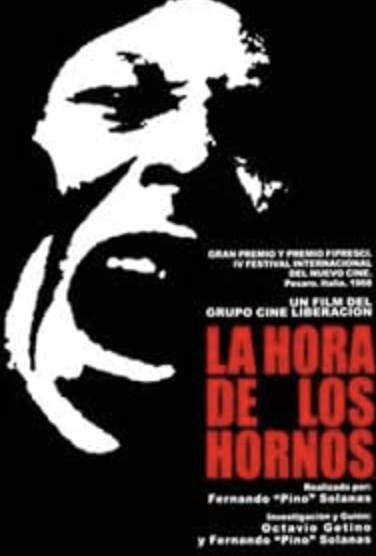
    Movie Poster
    Release year
    1968
    Director
    Fernando Solanas, Octavio Getino
    Biography of director(s)
    La Hora de los Hornos was directed by Fernando Solanas (1936–2020) and Octavio Getino (1935–2012), both being Argentine filmmakers, political theorists, and founders of the militant film collective "Grupo Cine Liberación." In 1969, the two argued that film must reject both commercial Hollywood (First Cinema) and European "art-house" cinema (Second Cinema) to act as a direct weapon for anti-colonial liberation and working-class political awakening. The two co-authored the foundational essay "Towards a Third Cinema," which captures their opinions in full.
    Country
    Argentina
    Original synopsis of the film

    La hora de los Hornos is an essay film. Divided into distinct chapters, each section analyzes systemic violence, neocolonialism, and class struggle in Argentina and Latin America. The film combines raw observational documentary footage, commercial clips, text title cards, and archival imagery to expose how foreign economic exploitation and domestic oligarchic power alienated the Argentine working class in the 20th century. The film functions, rather than offering passive entertainment, as an aggressive political tool designed to incite viewer reflection and revolutionary action.

    Describes the setting of a scene in a play or a film. It refers to everything placed on the stage or in front of the camera—including people. In other words, mise en scène is a catch-all for everything that contributes to the visual presentation and overall “look” of a production. When translated from French, it means “placing on stage.”
    Setting
    Setting
    Explanation
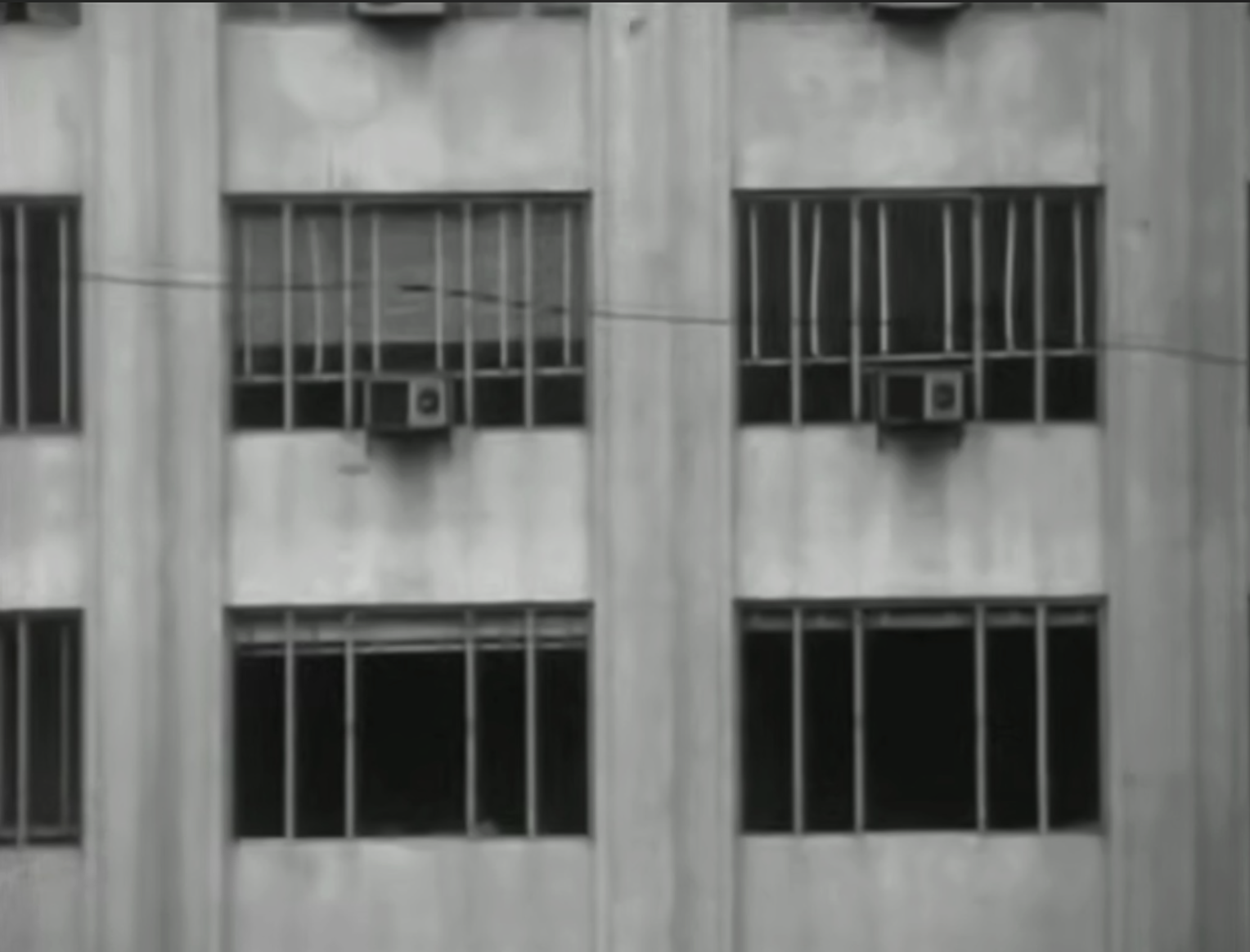
    The setting is an authentic, on-location urban environment. Instead of showing grand historical monuments, the film chooses a cold, unpolished concrete facade to reflect 20th-century urban modernization. The impersonal, industrial look of the building serves as a visual critique of modern city life, representing an oppressive, dehumanizing environment created for the working and middle classes under neocolonial development.
    Film Still
    Shot on location in Buenos Aires, the camera captures the concrete exterior of a modern apartment building, defined by repeating rectangular window frames, AC units, and bare walls.
    Props
    Explanation
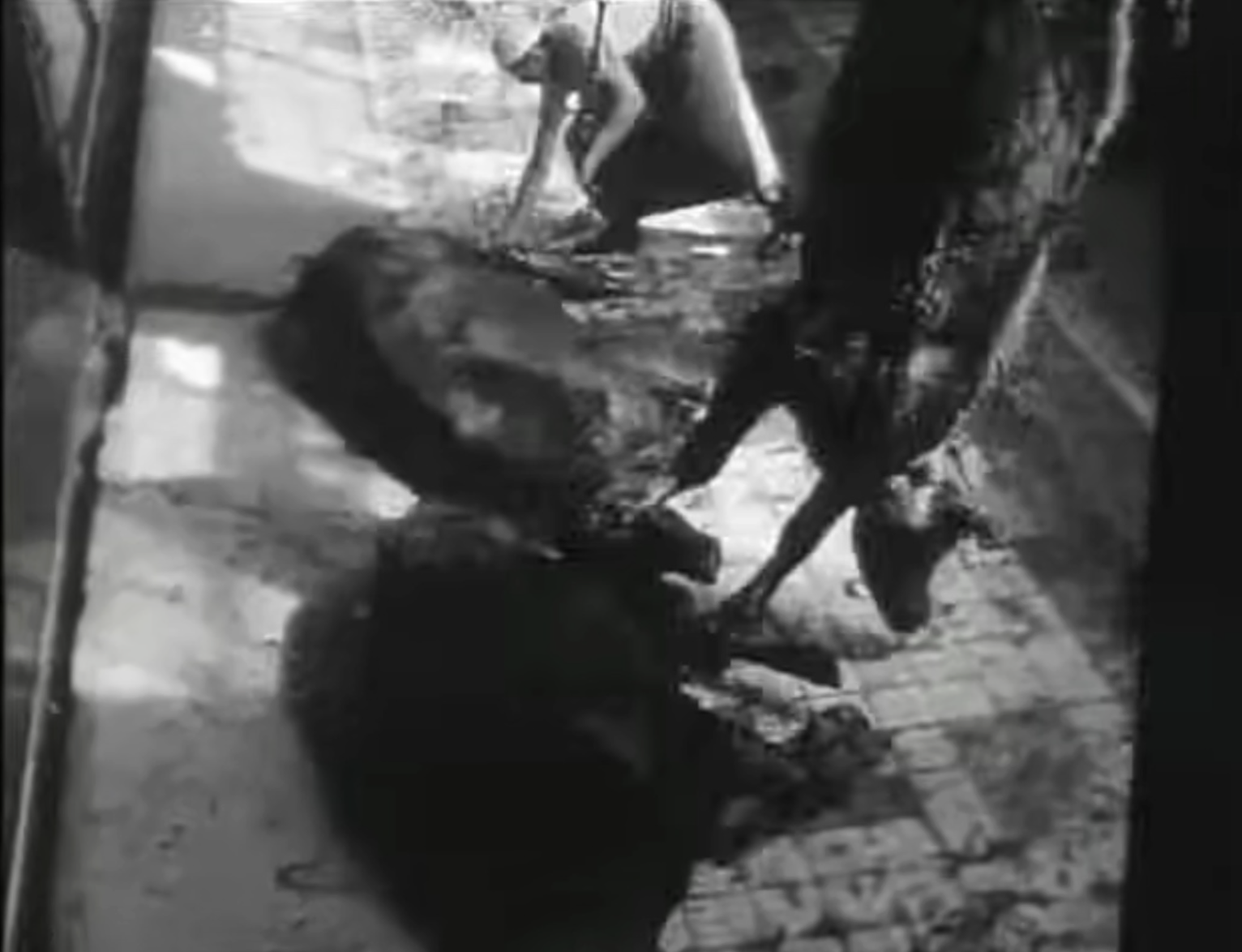
    Shot on location in an industrial slaughterhouse, the scene carries raw, unvarnished documentary realism. However, the abattoir functions primarily as a symbolic setting for Argentina's economic dependency. The cattle carcasses serve as symbolic props representing the nation's primary agricultural export being processed for foreign profit, while the bloody, mechanical environment mirrors the systemic, physical violence inflicted daily upon the working class.
    Film Still
    On a blood-spattered tiled floor, an industrial worker stoops over a slaughtered cattle carcass as it is dragged and processed near heavy metal hooks and drainage channels.
    Lighting
    Lighting
    Explanation
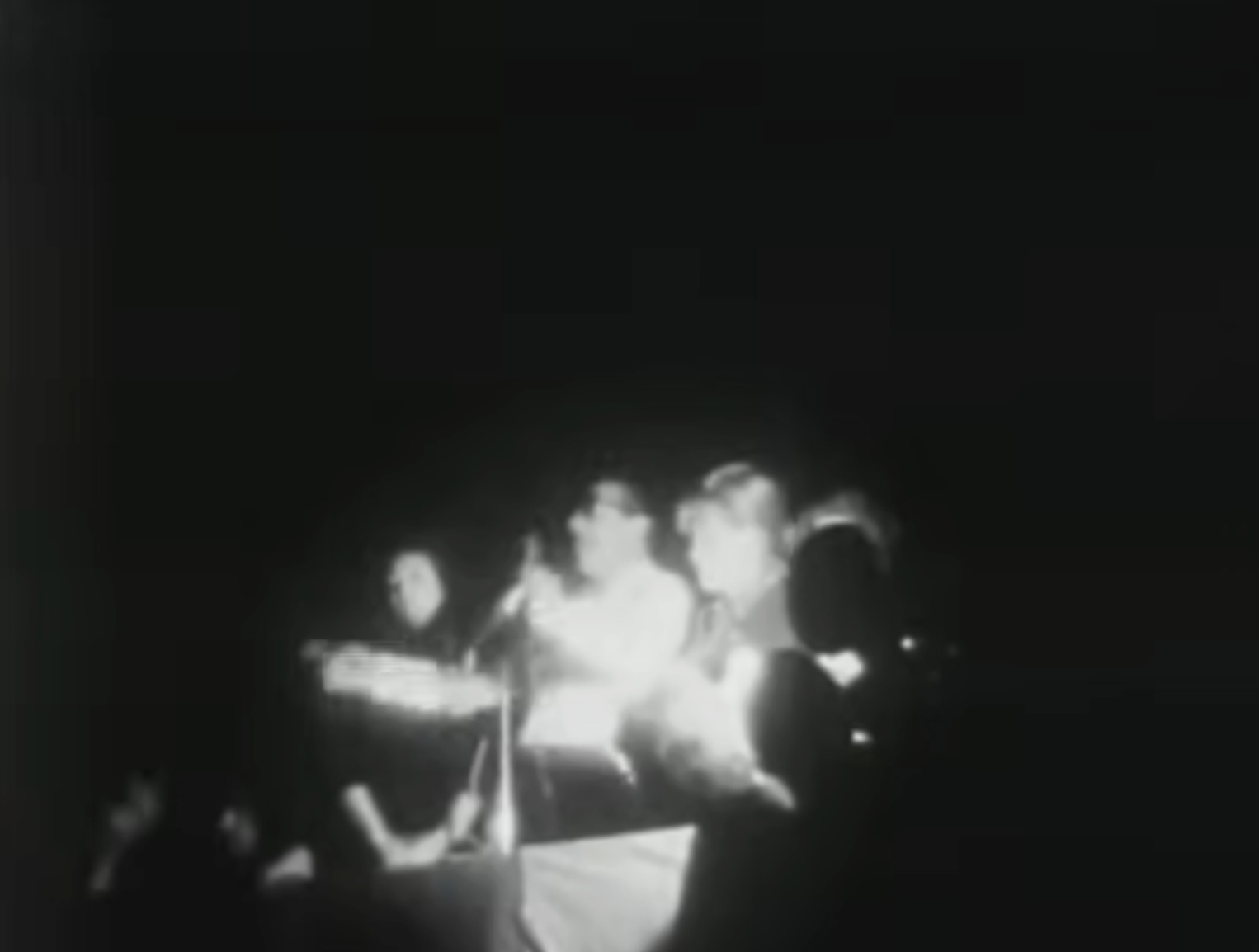
    The scene utilizes non-naturalistic, high-contrast chiaroscuro studio lighting. By stripping away all ambient environmental light and surrounding details, the harsh key lighting isolates the figures against a dark void. The extreme contrast between blown-out highlights and deep shadow creates an atmosphere of urgency, turning the act of public speech into a stark, confrontational ideological statement that demands the viewer's direct focus.
    Film Still
    A direct frontal key light harshly illuminates speakers at a microphone, plunging the surrounding stage and background into an absolute black void.
    Costume
    Explanation
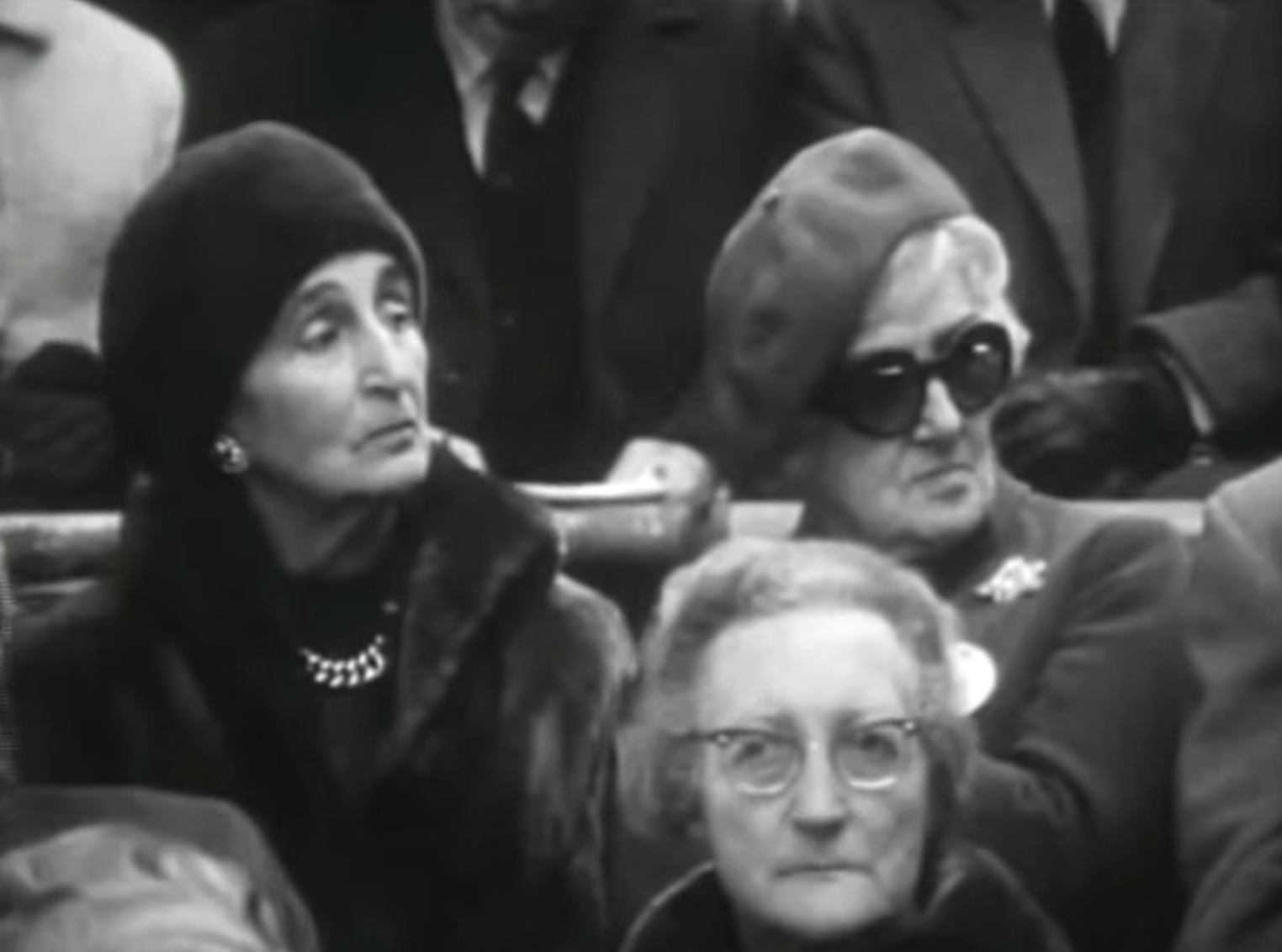
    Costume and accessories are used to signify socio-economic status, wealth, and ideological detachment. The coats, pearl jewelry, and tailored headwear visually code these women as members of Argentina's ruling agrarian oligarchy. The dark sunglasses conceal their eyes, creating an impassive barrier that visualizes their cold, privileged detachment from the economic exploitation and labor that sustain their opulent lifestyle.
    Film Still
    Wealthy upper-class women sit in spectatorship wearing thick coats, jewelry, formal berets, and oversized dark designer sunglasses.
    Hair and Makeup
    Figure Behavior
    Explanation
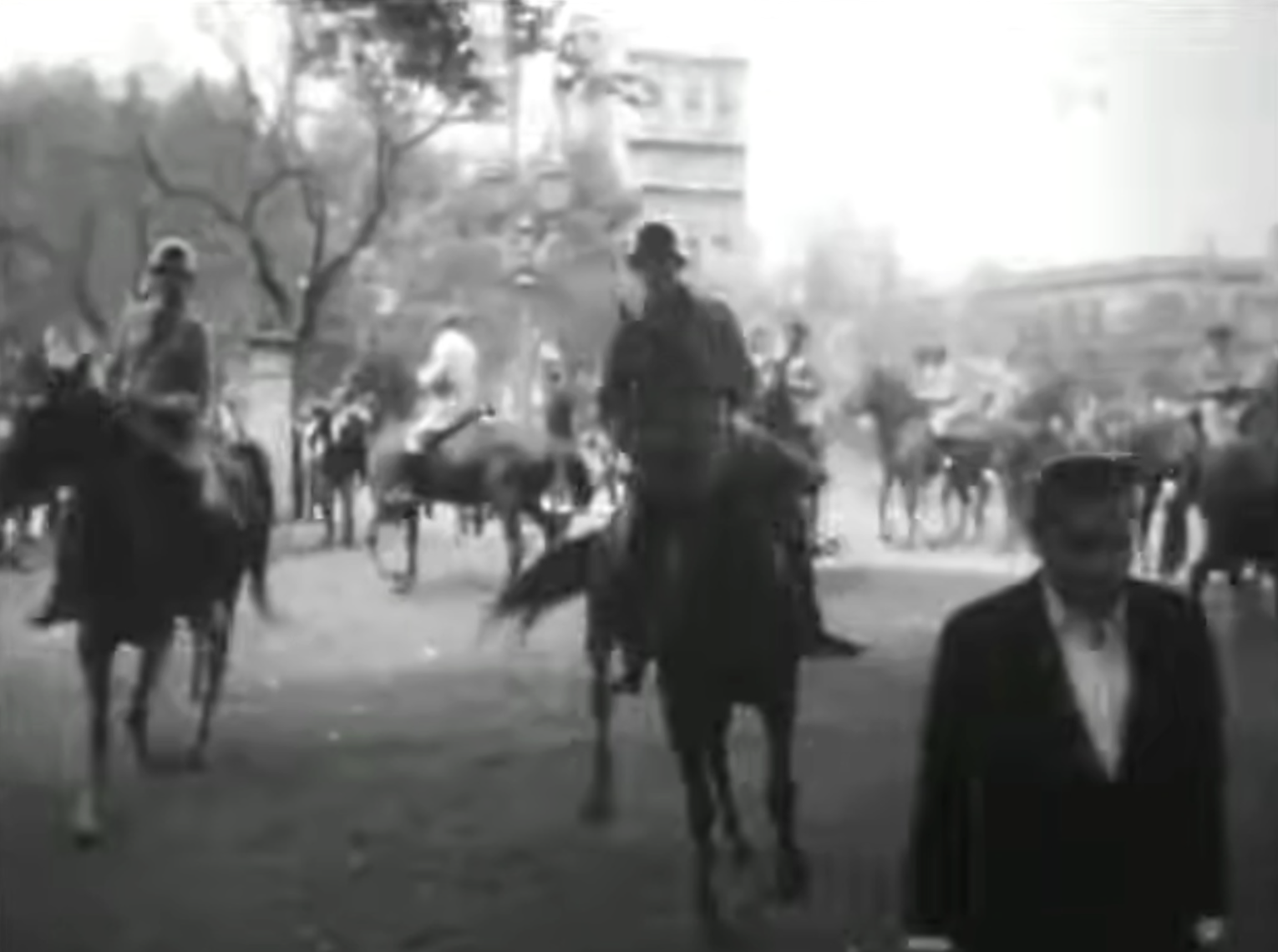
    The spatial blocking and physical positioning of the mounted officers emphasize institutional authority and intimidation. The physical height and mobility granted by the horses allow the police to dominate the public street, establishing physical control over civilian space. The juxtaposition between the imposing, armed officers and solitary pedestrian figure highlights the omnipresence of state surveillance and military power in public life.
    Film Still
    Mounted riot police on horseback command the middle ground in a scattered yet imposing patrol pattern, while a civilian in a suit walks through the foreground.
    Representative Clip

    This is the art of photography and visual storytelling in a motion picture or television show. Cinematography comprises all on-screen visual elements, including lighting, framing, composition, camera motion, camera angles, film selection, lens choices, depth of field, zoom, focus, color, exposure, and filtration. Cinematography sets and supports the overall look and mood of a film’s visual narrative. Each visual element that appears on screen, a.k.a. the mise-en-scène of a film, can serve and enhance the story—so it is the cinematographer’s responsibility to ensure that every element is cohesive and support the story. Filmmakers often choose to spend the majority of their budget on high-quality cinematography to guarantee that the film will look incredible on the big screen.

    Point of View
    Quality
    Framing
    Scale
    Movement

    Editing is the process of putting a film together–the selection and arrangement of shots and scenes. Editing can condense space and time, emphasize separate elements and bring them together, and organize material in such a way that patterns of meaning become apparent. In addition, editing can determine how a film is perceived: for instance, quick, rapid cuts can create a feeling of tension, while a long take can create a more dramatic effect. The first photoplays generally had no cutting, owing to the fact that they were single-reel films; once filming began, you could not stop until the film ran out. (https://filmglossary.ccnmtl.columbia.edu/term/editing/)

    Coherence, Continuity, and Rhythym
    Editing Style
    Transitions
    Match
    Expansion and Compression of Time
    Editing General Comments

    Sound is an integral part in a film. It refers to everything that the audience hears including sound effects, words and music. Sound is used in films for various purposes, including: providing the information to the viewer about the location of the scene, heightening the mood, telling the audience about the characters and advancing the plot. Every person who watches a film realizes that the choice of voices, soundtrack and music present in a film affect the way that the viewer perceives a particular film. As a result, the sound is an important and integral element of the film, one that determines the way that the viewer experiences and understands a film as a visual experience.

    Sound Type

    Narrative analysis is an examination of the story elements, including narrative structure, character, and plot. A narrative can be considered to be the chain of events in a cause-effect relationship occurring in time and space. In order to analyze the narrative of a film, we need to first make the distinction between the plot of the film and the story of the film. This is sometimes referred to as the discourse and story of a film. Narrative may also be called the story thought story mainly refers to the events that describe the narrative.

    Plot Comments
    Story Comments
    Narrator Type
    Narrative Structure

    Film genres are various forms or identifiable types, categories, classifications or groups of films. (Genre comes from the French word meaning "kind," "category," or "type"). These provide a convenient way for scriptwriters and film-makers to produce, cast and structure their narratives within a manageable, well-defined framework. Genres also offer the studios an easily 'marketable' product, and give audiences satisfying, expected and predictable choices. Genres refers to recurring, repeating and similar, familiar or instantly-recognizable patterns, styles, themes, syntax, templates, paradigms, motifs, rules or generic conventions.

    Category