La Estrategia del Caracol

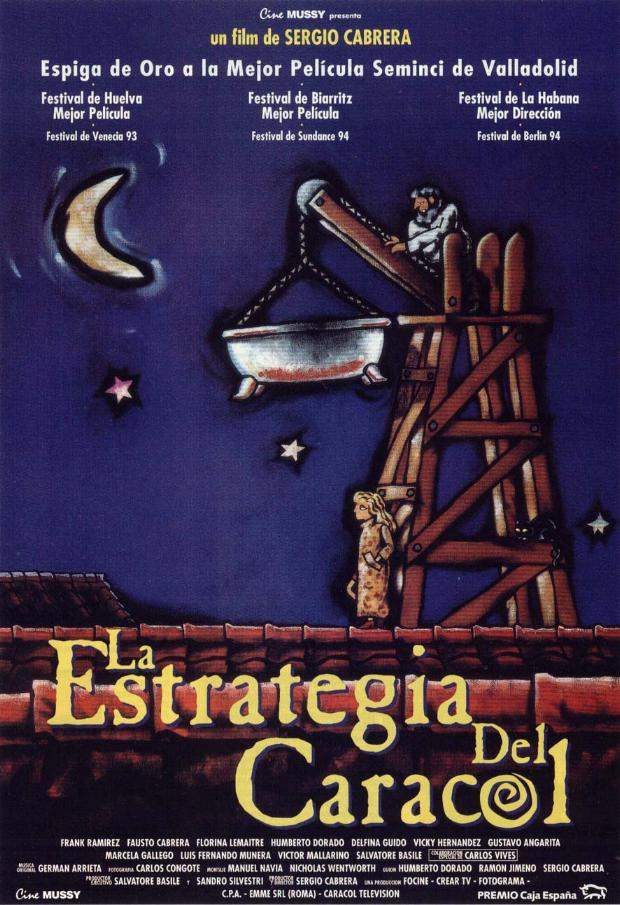
    Movie Poster
    Release year
    1993
    Director
    Sergio Cabrera
    Biography of director(s)
    Son of exiled Spanish actor Fausto Cabrera, Sergio Cabrera was born in Medellin, Colombia in 1950. In Colombia, Sergio lived for 10 years before moving to China with his family, returning a few years later in 1967 to fight with the Ejercito Popular de Liberacion (EPL). After spending 4 years with the EPL, Sergio studied filmmaking at the London Polytechnic School and began working as a writer/director. Over the course of his career, Sergio directed 6 feature length films and dozens of shorts for which he has won 15 'Simon Bolivar' prizes.
    Country
    Colombia
    Original synopsis of the film

    The film opens in Bogotá Colombia with a news reporter interviewing a talkative and charismatic homeless man. The events of the film are told through this interview as the man launches into a spectacular story about the community of squatters that he lived with and their miraculous method of preserving their home.

    The man begins by describing the abandoned 'Casa Uribe' where he and dozens of squatters have been living for years. The Casa Uribe is owned by the rich and cruel Dr. Holguin who, through the use of corrupt lawyers and henchmen, suddenly attempts to evict the residents. One of the squatters, a failed lawyer who goes by 'Perro Romero', fights to gain time with legal tricks so the inhabitants of the house can formulate a plan to save their home.

    Jacinto, another squatter in the Casa Uribe, comes up with a strategy to move the entire house (walls, furniture, appliances, etc) piece by piece using a clever pulley system derived from his experience as a backstage set rigger at the local theater. With just enough time from Perro Romero's legal trickery, the entire Casa Uribe bands together to move their home to the outskirts of town where they can rebuild their life in peace.
     

    Film Awards
    Berlin International Film Festival
    Film still
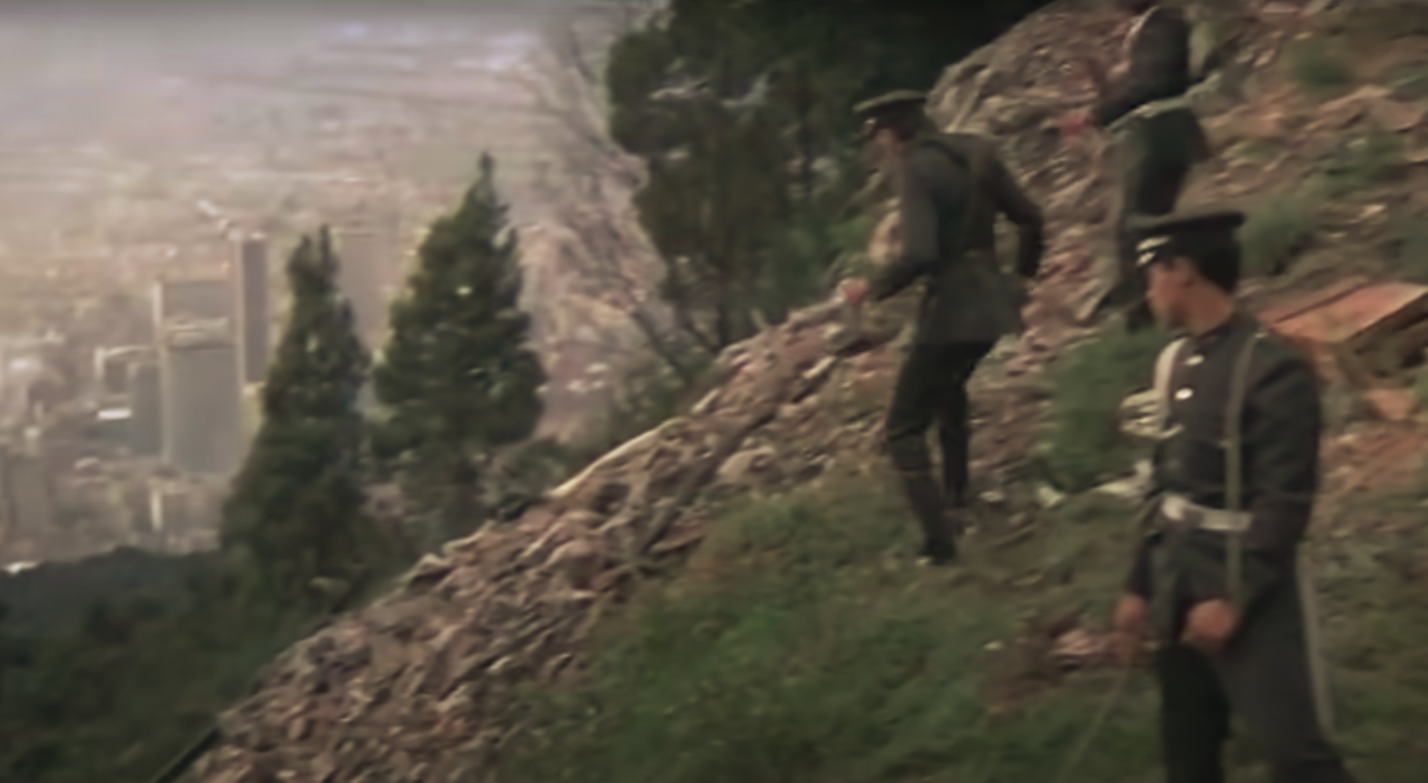
    Dozens of inhabitants gather atop a hill overlooking Bogotá while proudly displaying the stolen pieces of the house in addition to the Colombian flag.
    The inhabitants pray together in front of the camera after discovering a miracle hidden in the walls of the Casa Uribe. In the background some skeptics chat amongst themselves.

    Describes the setting of a scene in a play or a film. It refers to everything placed on the stage or in front of the camera—including people. In other words, mise en scène is a catch-all for everything that contributes to the visual presentation and overall “look” of a production. When translated from French, it means “placing on stage.”
    Setting
    Setting
    Explanation
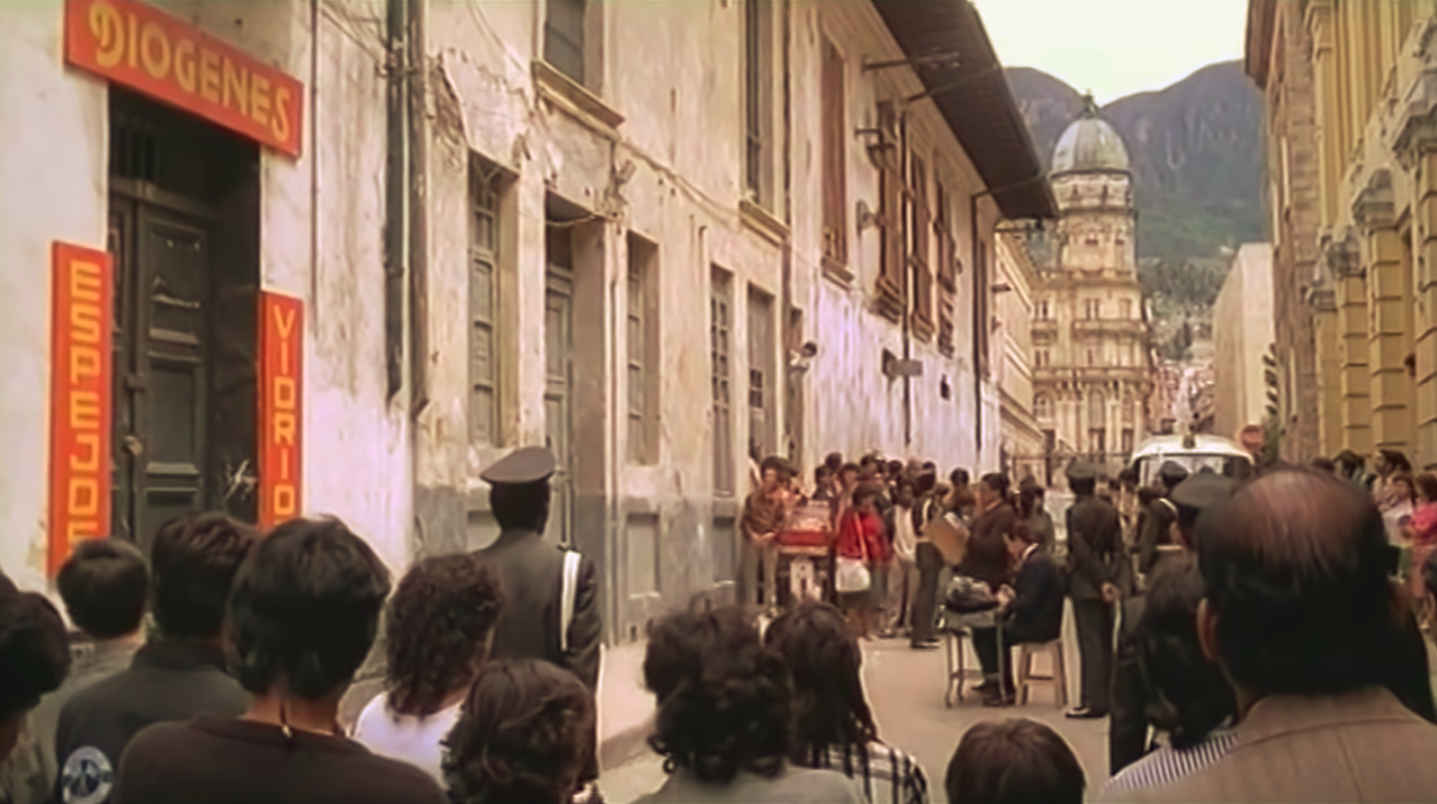
    Filmed on location in Bogotá Colombia, the movie utilizes realistic urban scenery from Bogotá's downtown slums in addition to rural panoramic shots from the country's eastern hills. Additionally, interior sets were used for the important scenes within the Casa Uribe and the contrasting house of Dr. Holguín.
    Timecode
    6:04
    Film Still
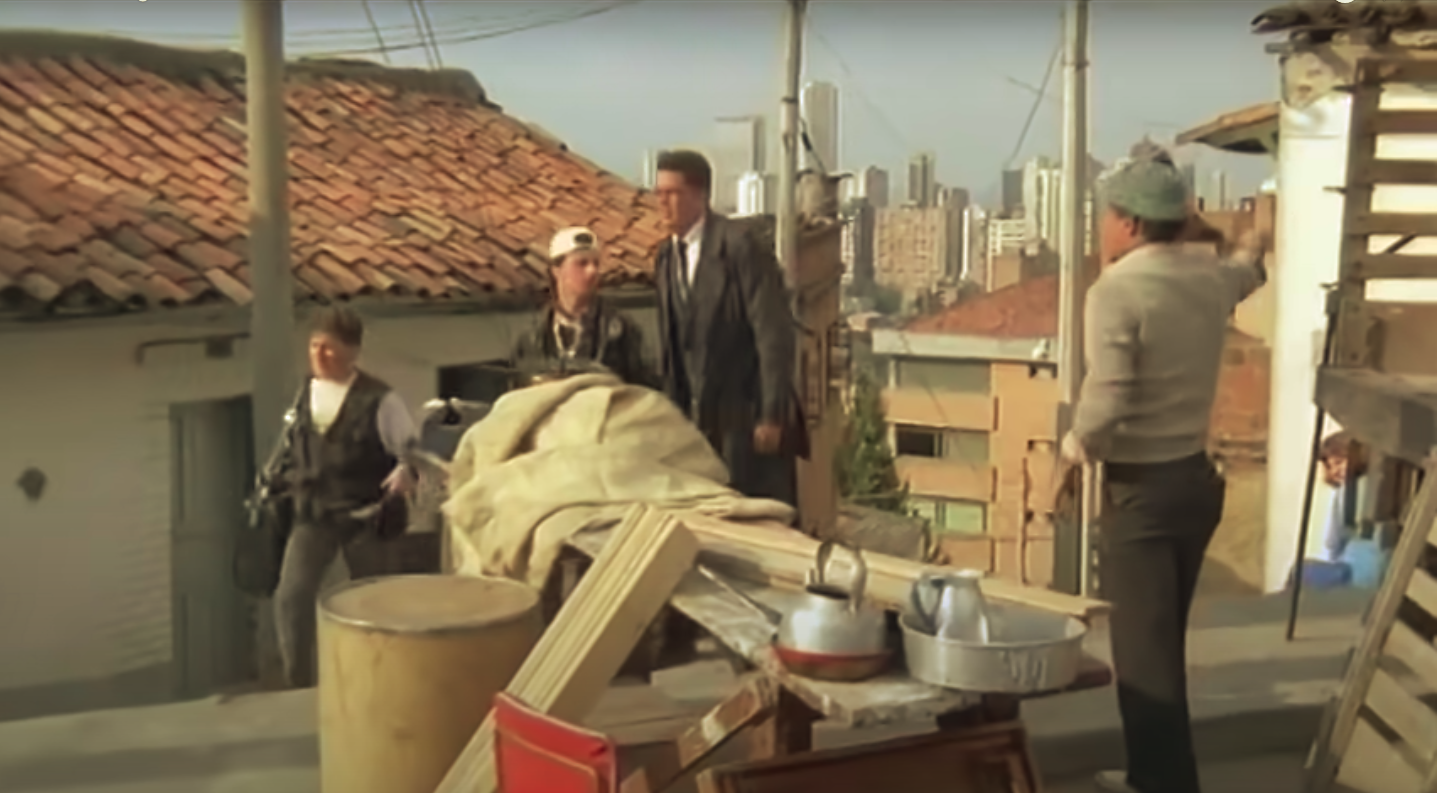
    Citizens gather around the pajarero in downtown Bogotá as eviction proceedings occur.
    Props
    Timecode
    35:14
    Prop
    The wall of Virgin Mary
    Explanation
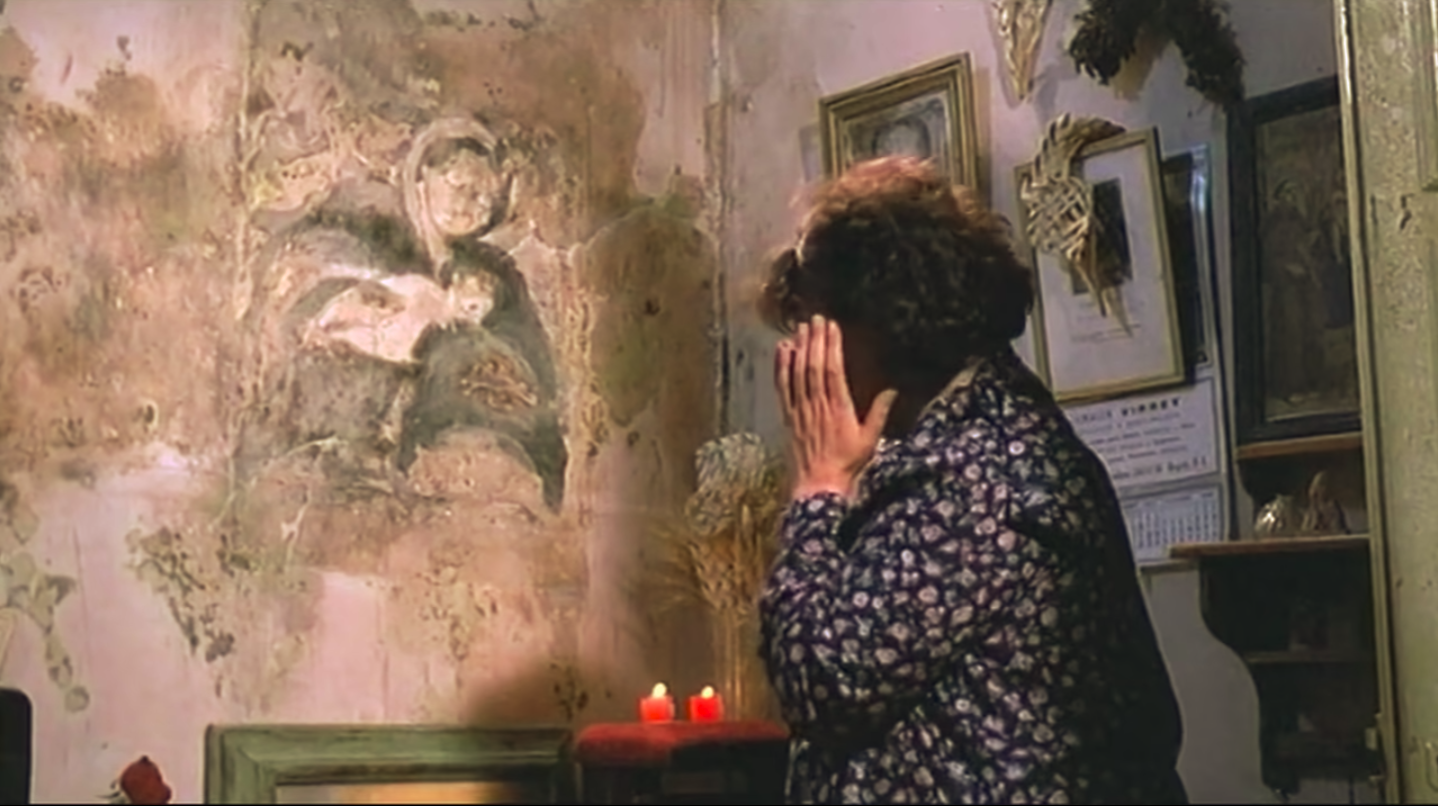
    A key prop which is utilized repeatedly throughout the film is a section of wall featuring stains in the shape of the Virgin Mary. The wall is used frequently as a religious symbol highlighting the bonding power of religion while also subtly critiquing the sometimes absurd overemphasis of Catholicism within Colombia.
    Film Still
    A woman prays before the miraculous stain of Virgin Mary.
    Timecode
    18:43
    Prop
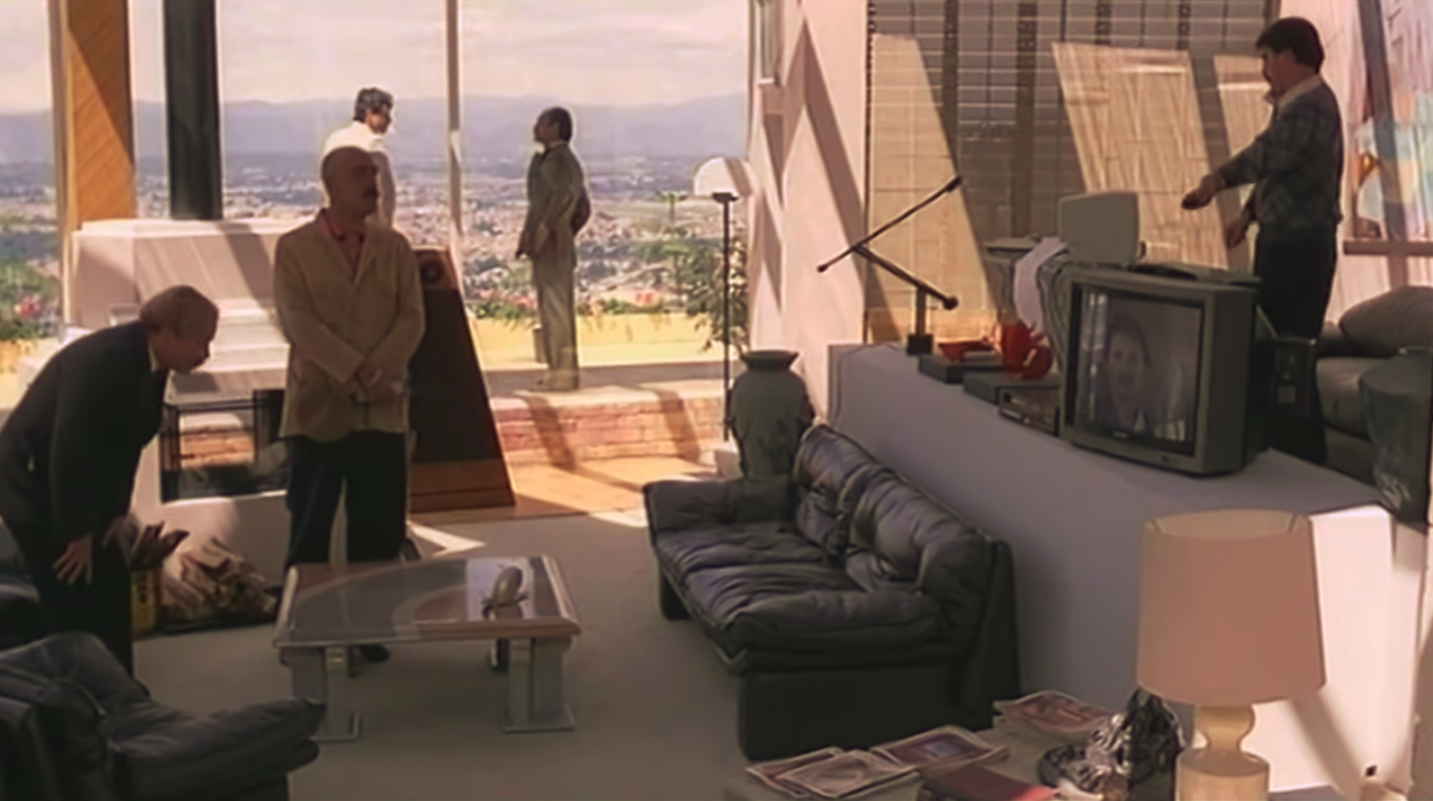
    Television
    Explanation
    Throughout the film, Dr. Holguín utilizes televisions with prerecorded messages to communicate, even while in the room with those trying to speak with him. This prop effectively emphasizes the massive wealth disparity between Dr. Holguín and the squatters in the Casa Uribe while also demonstrating the gross arrogance of Dr. Holguíns character.
    Film Still
    Dr. Holguín uses a remote to play a television message for his henchmen instead of talking to them directly.
    Lighting
    Lighting
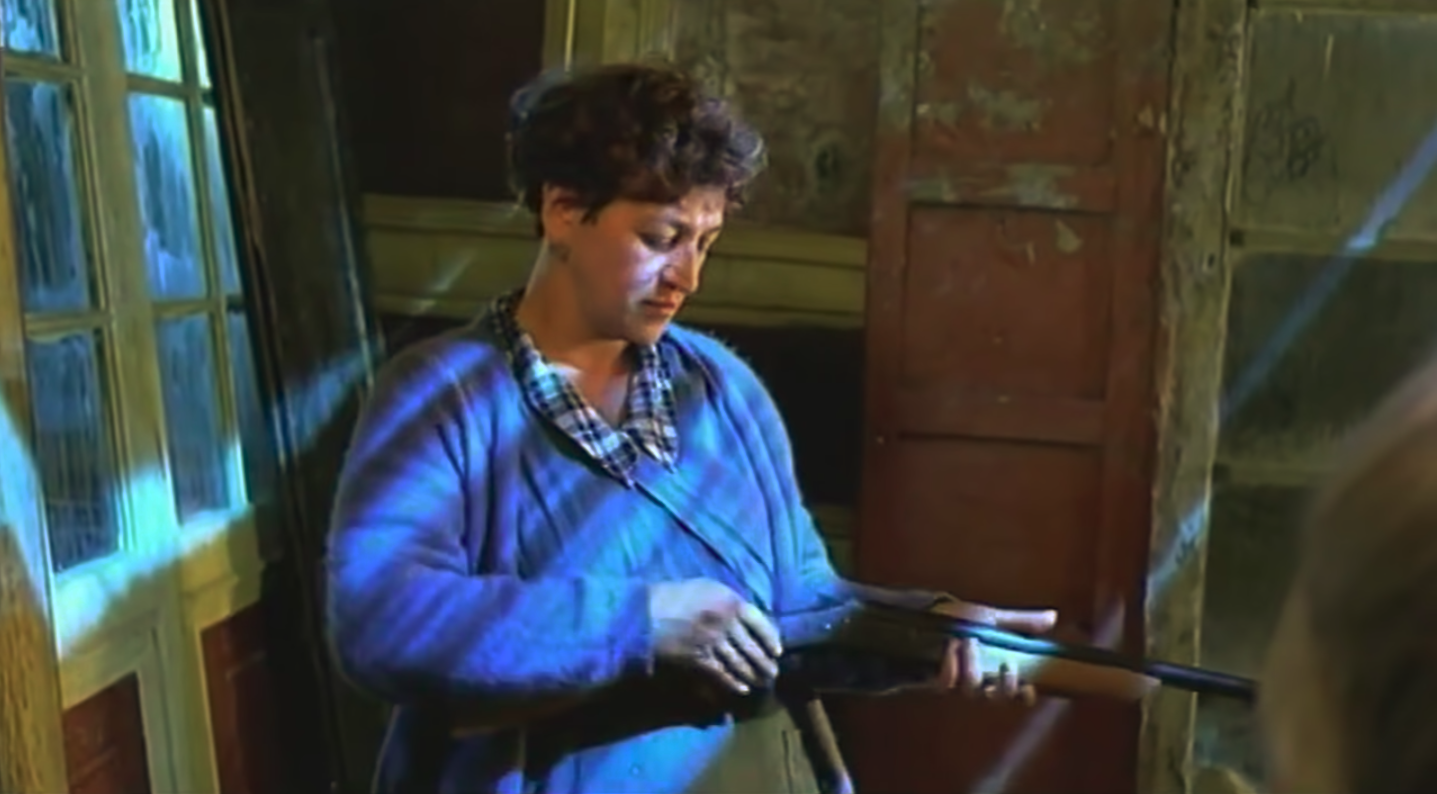
    Explanation
    A large portion of the film occurs at night as the sneaky nature of the squatter's plan forces them to work after sunset. These scenes are frequently shot with little lighting aside from an immensely powerful blue light from above which gives a moonlit quality to the shots. Additionally, these powerful beams of moonlight are often targeted on specific characters or props (the wall of Virgin Mary is frequently illuminated) to highlight their specific importance within the scene.
    Timecode
    1:26:57
    Film Still
    A woman holds a gun as blue moonlight blankets her from the windows above.
    Costume
    Costume
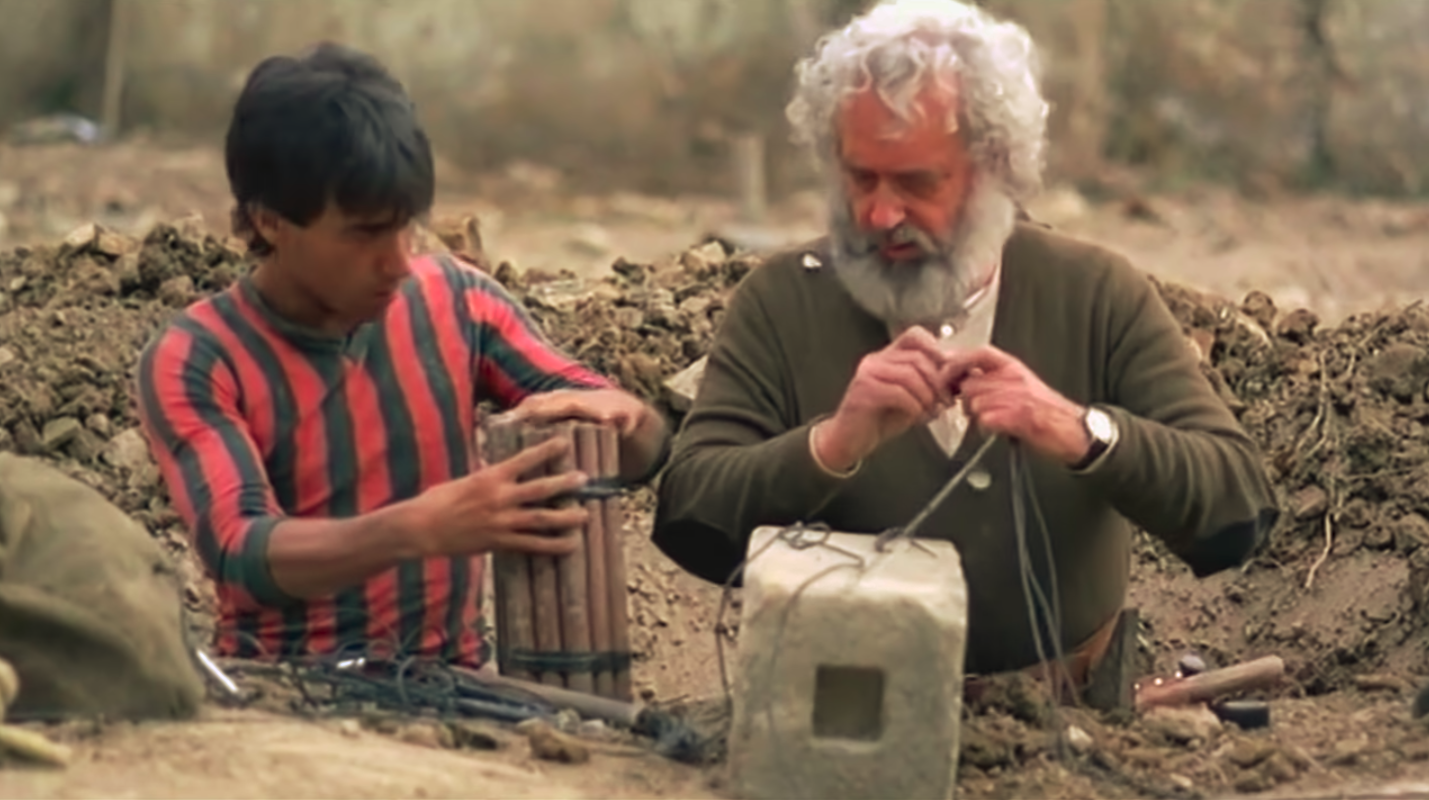
    Jacinto's Sweater
    Explanation
    Jacinto wears the same sweater throughout the duration of the film in which multiple holes can be found. This sweater is used to emphasize the poverty that envelops the Casa Uribe and to further show the massive class separation from Dr. Holguín, who is dressed in a non-repeating wardrobe of blazers and track suits.
    Timecode
    1:36:45
    Film Still
    Jacinto helps prepare charges of dynamite with visible holes in his clothing.
    Hair and Makeup
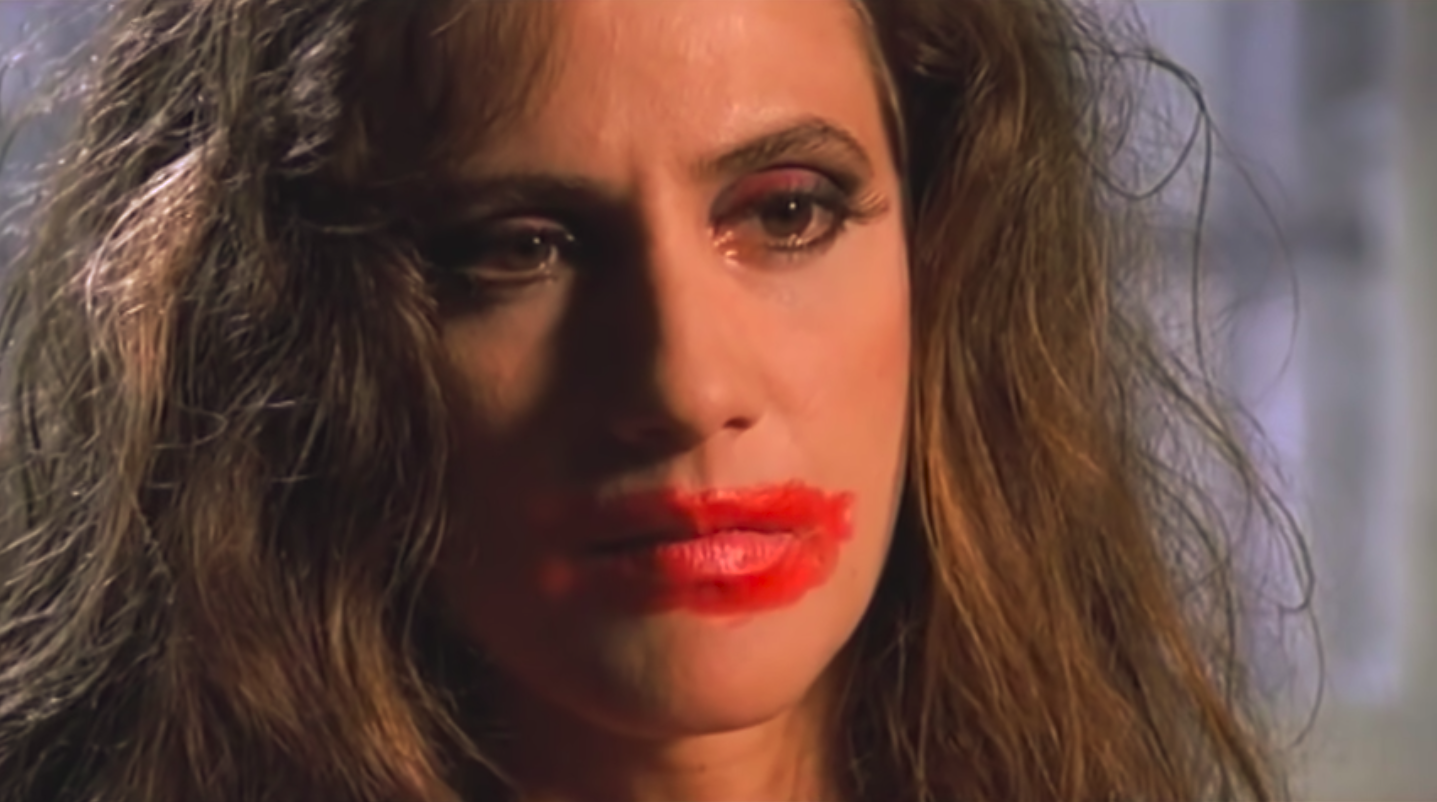
    Example
    Excessive hair/makeup to highlight internal conflict
    Explanation
    One of the most intentional uses of hair/makeup comes with one of the squatters in the Casa Uribe: Gabriel/Gabriela. Gabriel/Gabriela is a transvestite prostitute who faces immense internal conflict over their identity and perceived sins (especially in the ultra-catholic environment). Hair and makeup is used not only to mark their transformation from Gabriel to Gabriela but also excessively to further emphasize this internal struggle.
    Film Still
    Gabriela can be seen with bright red lipstick covering her lips and cheeks in addition to heavy mascara/eyeshadow and her wig.
    Figure Behavior
    Example
    Microcosmic Behavior of the Squatters
    Explanation
    The cast of squatters within the Casa Uribe is huge with each individual having one or two core traits which define their every moment on screen. While this may seem one dimensional, the huge amount of characters constantly present in each scene prevents this and instead the squatters begin to form a microcosm of Colombia itself. Each squatter performs their role in the plan and shows the immense importance of community belonging for Colombia. Additionally, the powerful villains are equally straightforward and contribute to the microcosm by representing the extensive corruption in the Colombian state and the importance of resisting against this corrupt power.
    Timecode
    1:25:37
    Film Still
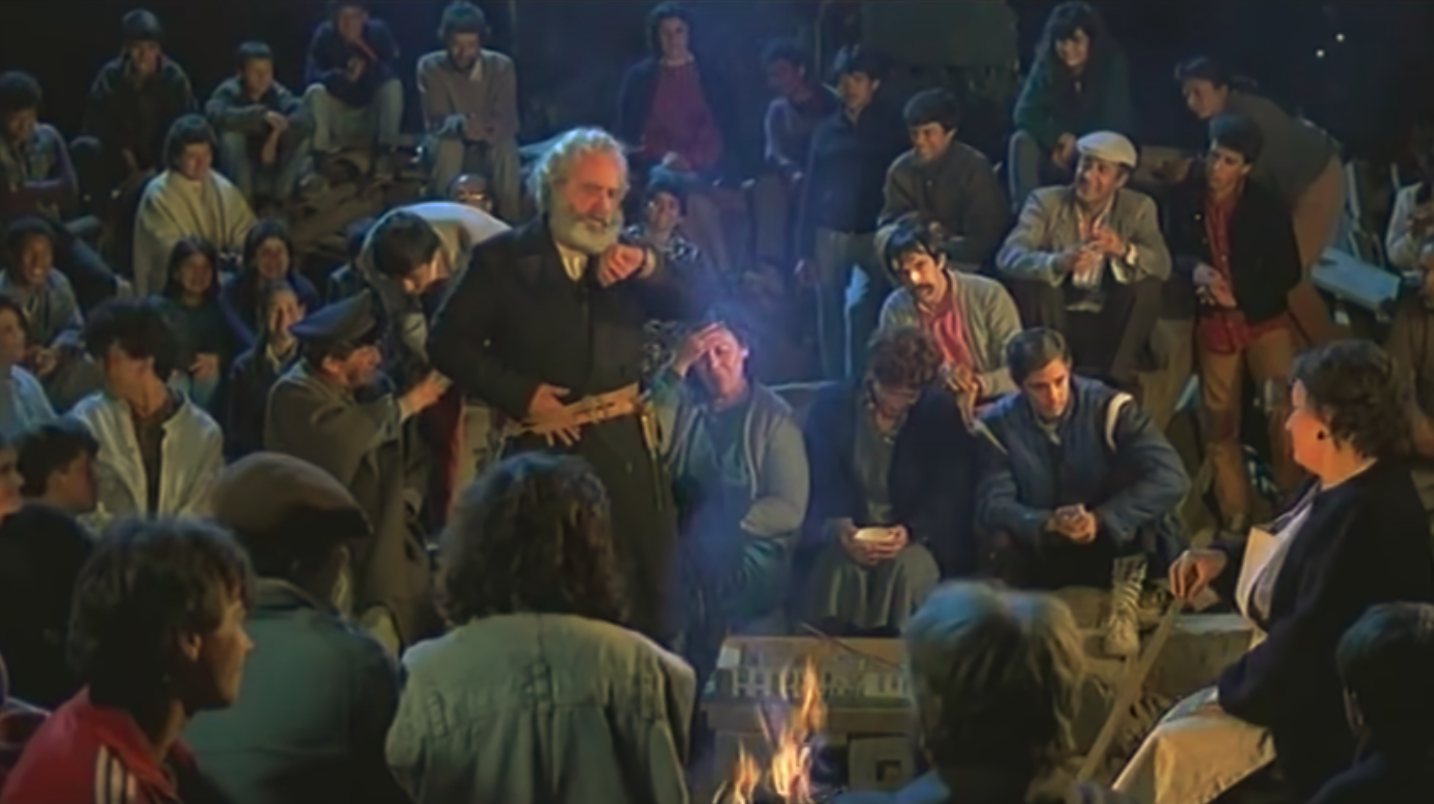
    The squatters of the Casa Uribe can be seen gathered around a fire at night.
    Representative Clip

    This is the art of photography and visual storytelling in a motion picture or television show. Cinematography comprises all on-screen visual elements, including lighting, framing, composition, camera motion, camera angles, film selection, lens choices, depth of field, zoom, focus, color, exposure, and filtration. Cinematography sets and supports the overall look and mood of a film’s visual narrative. Each visual element that appears on screen, a.k.a. the mise-en-scène of a film, can serve and enhance the story—so it is the cinematographer’s responsibility to ensure that every element is cohesive and support the story. Filmmakers often choose to spend the majority of their budget on high-quality cinematography to guarantee that the film will look incredible on the big screen.
    Point of View
    Point of View
    Comments
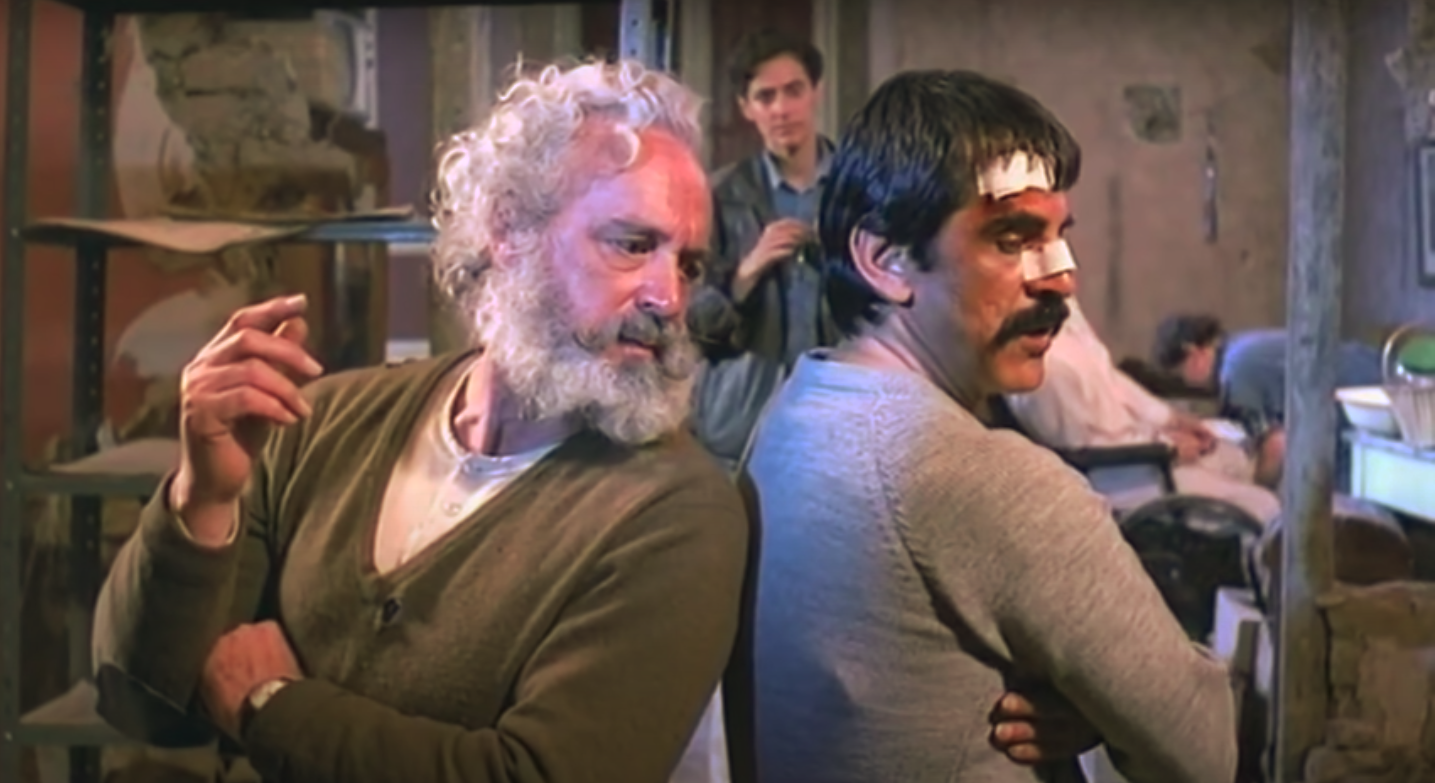
    The film utilizes an indirect subjective perspective which brings the viewer close to the action without exclusively following a single character. Nearly every shot is physically close to the action and places the viewer at the heart of the scene to evoke a feeling of intimate attachment to the tenants of Casa Uribe.
    Timecode
    1:11:12
    Film Still
    A typical mid range shot shows Perro Romero and Jacinto back to back.
    Quality
    Quality
    Comments
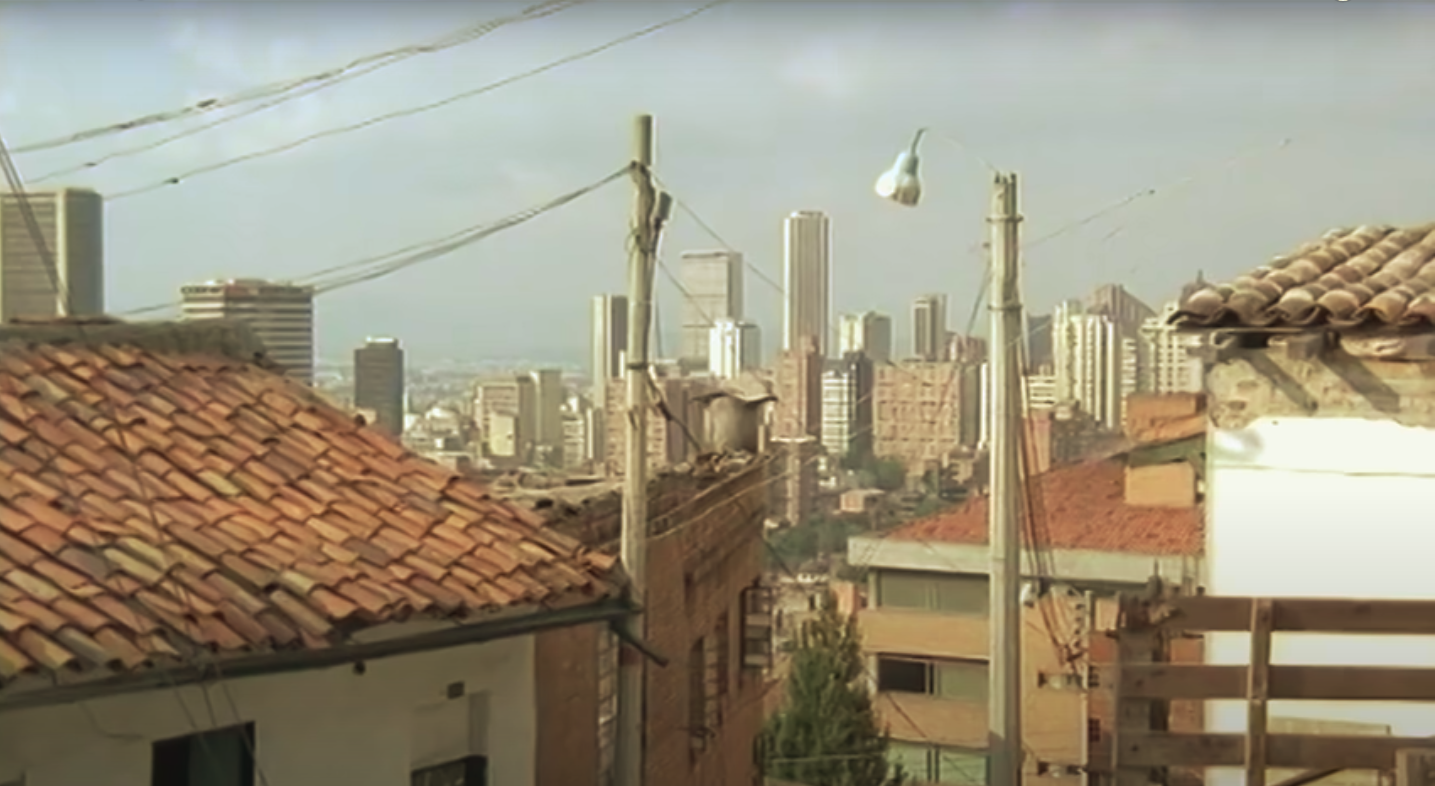
    Cabrera varies the depth of field between shots to effectively guide the viewers attention through the often crowded scenes. The film is also filled with scenes beginning in long environmental shots which simultaneously change the depth of field and pan to characters nearby. This trick nicely contextualizes the scene before smoothly drawing the viewer into the action.
    Timecode
    3:09
    Film Still
    A long distance shot of downtown Bogotá
    A medium distance shot of characters against the long distance background.
    Framing
    Framing
    Comments
    The film is full of level angle shots designed to fully immerse the viewer into the scene. By maintaining the camera at eye level and using medium range shots, Cabrera allows the viewer to put themselves in the shoes of the movie's characters. The level shots also drive the personal conflict of the movie by focusing attention on the facial reactions of the actors, amplifying their painful failures and joyful successes.
    Timecode
    16:12
    Film Still
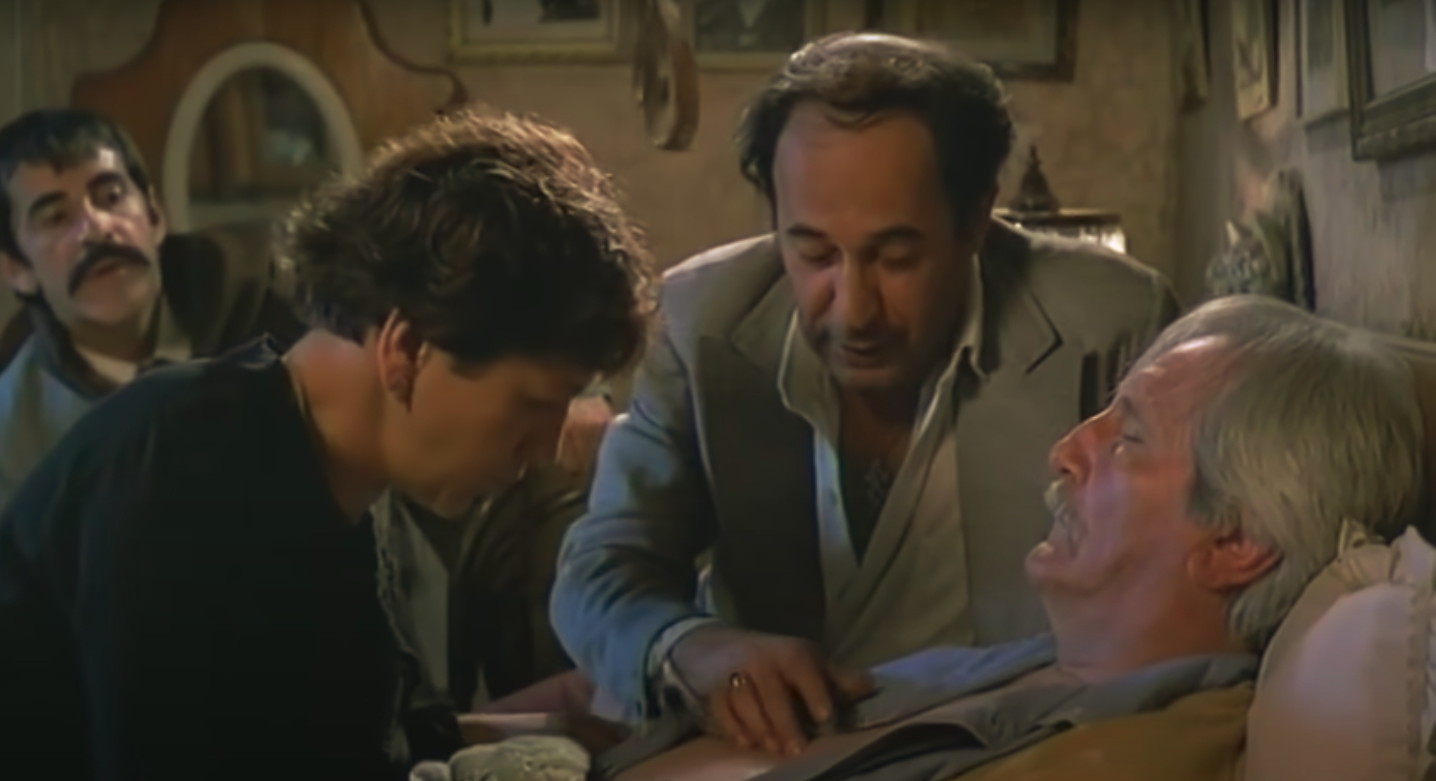
    A level shot of residents gathered around a dying friend at the Casa Uribe.
    Scale
    Scale
    Comments
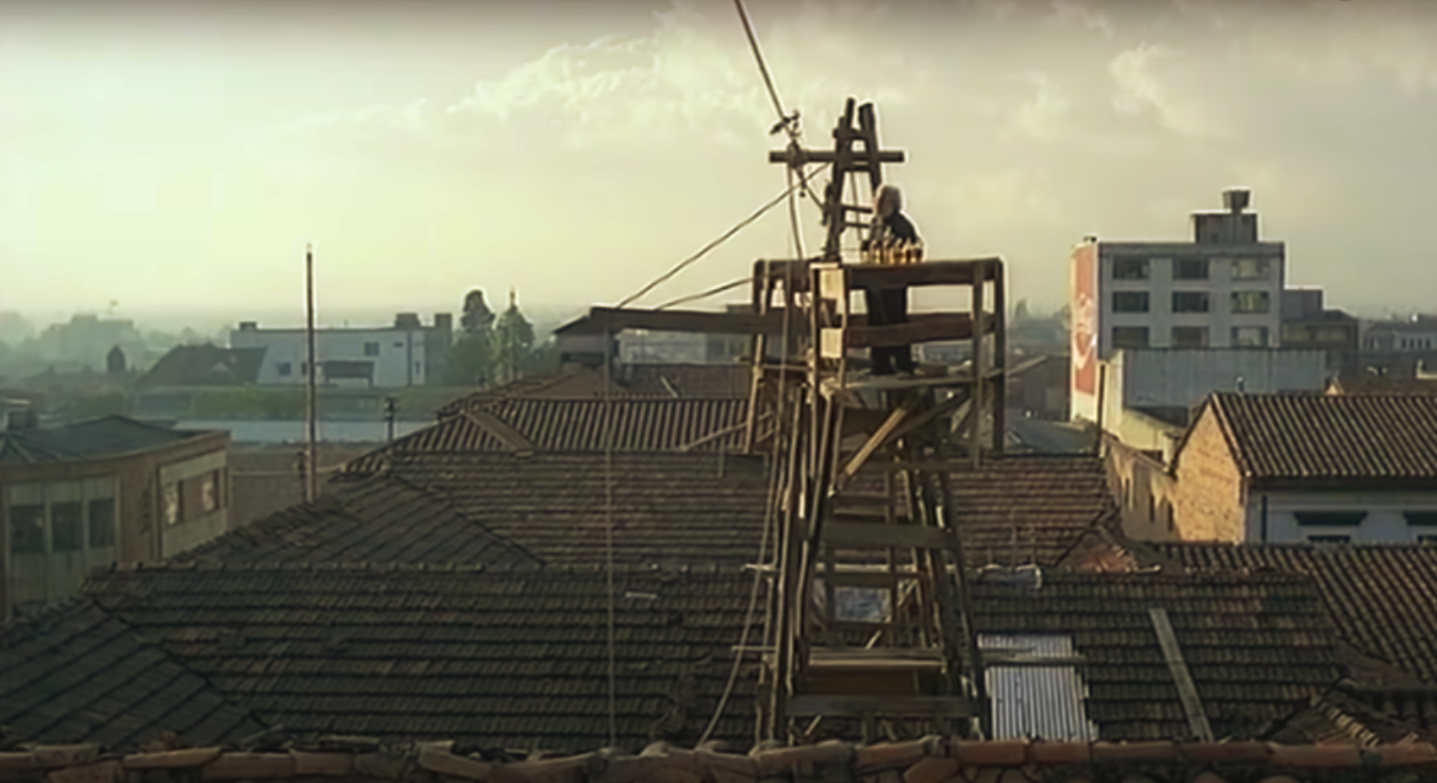
    Long shots are used throughout the film to display the surrounding environment of each scene. This adds a sense of scale in the film and also emphasizes the seemingly hopeless nature of the protagonists struggle against oppression.
    Timecode
    55:48
    Film Still
    A long shot showing the pulley system against the background of Bogotá
    Movement
    Movement
    Comments
    While the majority of the scenes in the film feature steady fixed-camera shots, camera movement is still used throughout the movie. Most often, panning shots are used to follow active scenes or shift the focus within a location.
    Timecode
    1:07:05
    Film Still
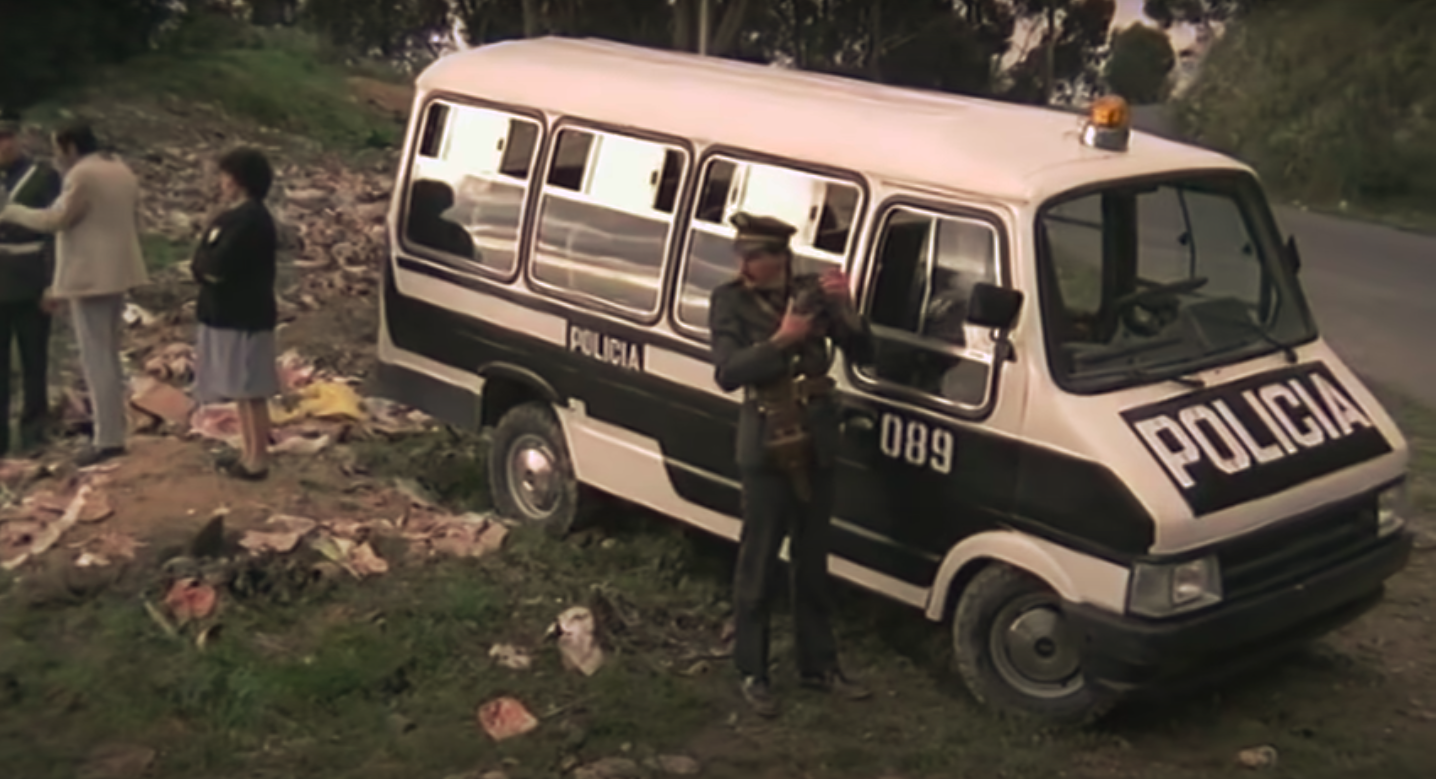
    A police officer is seen running from an ambulance (before pan)
    A police officer is seen running from an ambulance (during pan)

    Editing is the process of putting a film together–the selection and arrangement of shots and scenes. Editing can condense space and time, emphasize separate elements and bring them together, and organize material in such a way that patterns of meaning become apparent. In addition, editing can determine how a film is perceived: for instance, quick, rapid cuts can create a feeling of tension, while a long take can create a more dramatic effect. The first photoplays generally had no cutting, owing to the fact that they were single-reel films; once filming began, you could not stop until the film ran out. (https://filmglossary.ccnmtl.columbia.edu/term/editing/)
    Coherence, Continuity, and Rhythym
    Comments
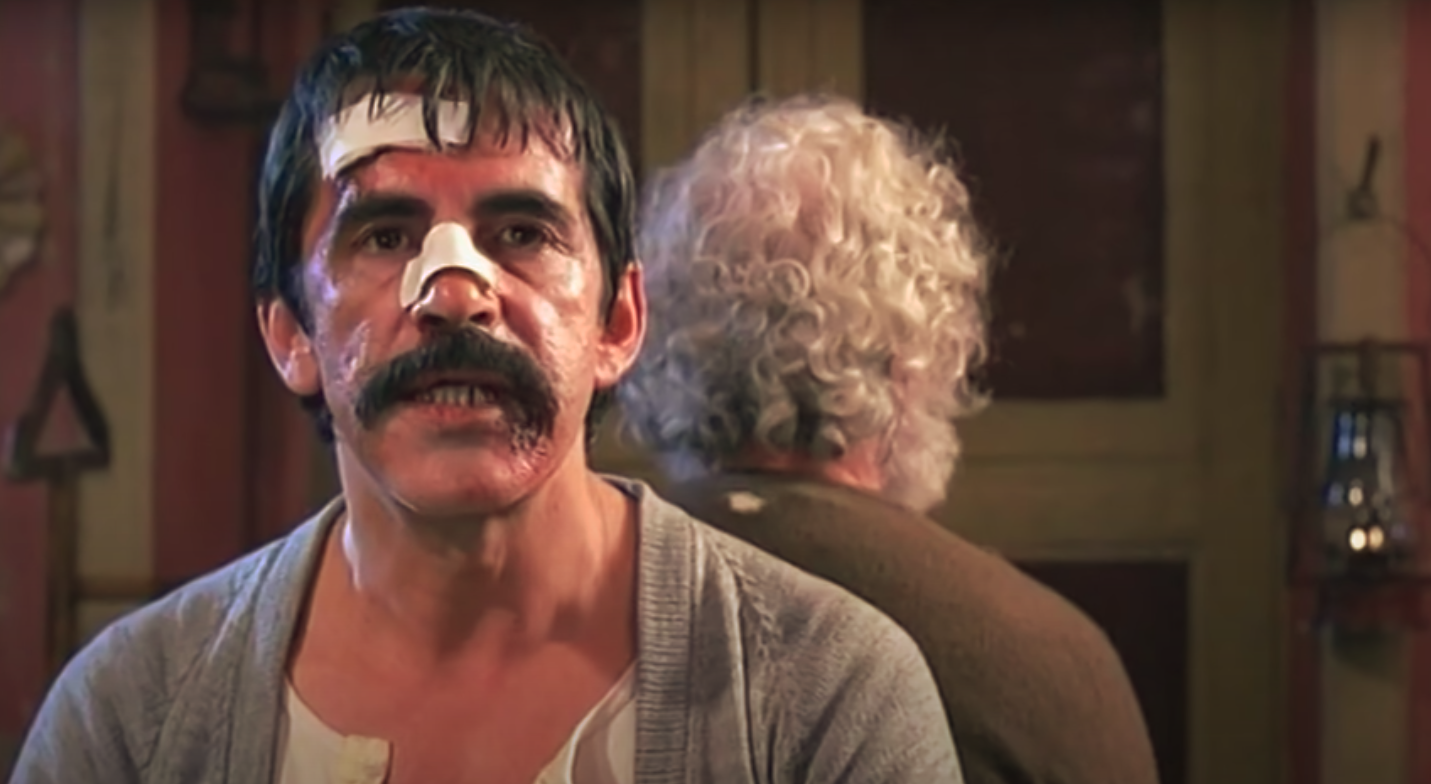
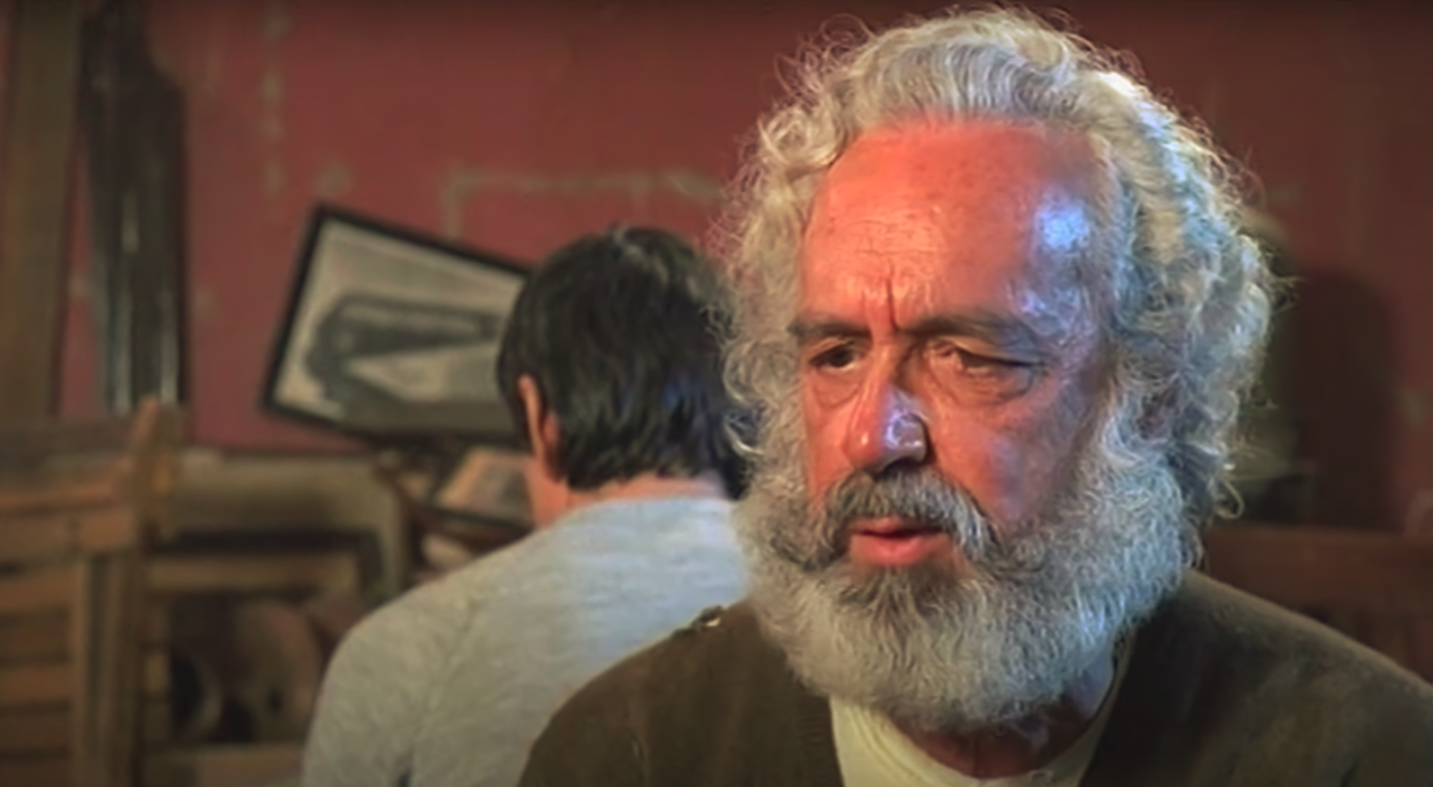
    The film is carefully edited to flow seamlessly. Conforming to many traditional Hollywood practices, cuts are rarely noticeable and a sense of continuity is maintained throughout the movie. The linear storytelling combined with the lack of parallel editing ensures that the viewer is pleasantly locked in the rhythm of the film for its duration.
    Timecode
    1:10:07
    Film Still
    Close shot of Perro Romero from the front as he speaks with Jacinto.
    Close reverse shot of Jacinto from the front as he speaks with Perro Romero.
    Editing Style
    Editing Style
    Comments
    The editing style is largely continuous with brief montage sequences to display the passage of time. This provides a simple straightforward feel to the movie which allows the viewer to focus on the nuances of the plot and story more than the film itself. The editing style is clearly designed to be immersive and its success is marked by how little the editing is noticed by the viewer.
    Timecode
    50:40
    Film Still
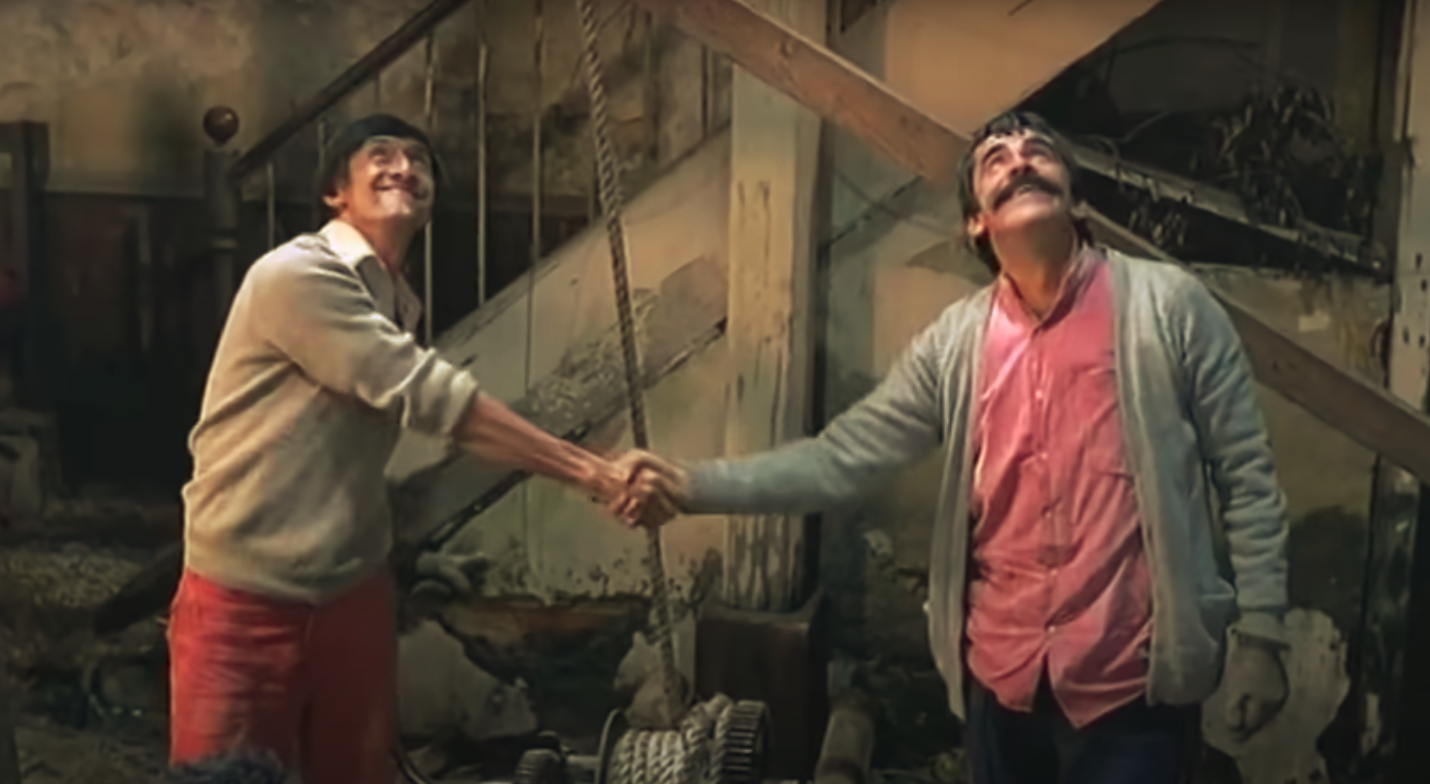
    Tenants of the Casa Uribe shake hands as they watch the pully system work.
    Transitions
    Match
    Comments
    Eyeline match transitions are frequently used throughout the film to help cuts pass unnoticed. By first showing a character clearly looking toward something offscreen and then cutting to a new perspective, the viewer immediately comprehends the new subject is what was just being viewed. This allows the cut to feel logical and perfectly continuous.
    Timecode
    51:25
    Film Still
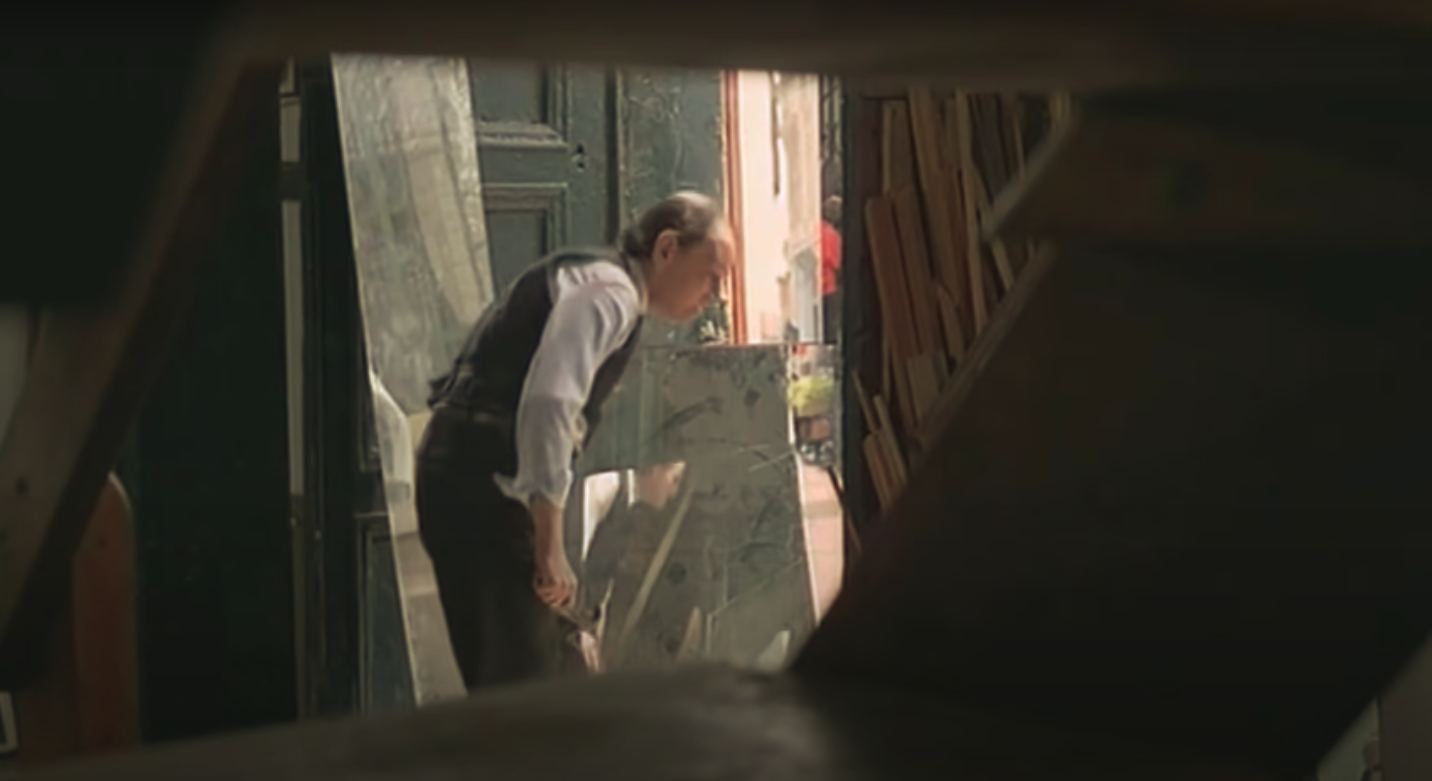
    Jacinto is seen examining something through a crack in the door.
    A man is filmed through a small crack and presumed to be watched by Jacinto.
    Match
    Expansion and Compression of Time
    Editing General Comments

    Sound is an integral part in a film. It refers to everything that the audience hears including sound effects, words and music. Sound is used in films for various purposes, including: providing the information to the viewer about the location of the scene, heightening the mood, telling the audience about the characters and advancing the plot. Every person who watches a film realizes that the choice of voices, soundtrack and music present in a film affect the way that the viewer perceives a particular film. As a result, the sound is an important and integral element of the film, one that determines the way that the viewer experiences and understands a film as a visual experience.

    Sound Type

    Narrative analysis is an examination of the story elements, including narrative structure, character, and plot. A narrative can be considered to be the chain of events in a cause-effect relationship occurring in time and space. In order to analyze the narrative of a film, we need to first make the distinction between the plot of the film and the story of the film. This is sometimes referred to as the discourse and story of a film. Narrative may also be called the story thought story mainly refers to the events that describe the narrative.

    Plot Comments
    Story Comments
    Narrator Type
    Narrative Structure

    Film genres are various forms or identifiable types, categories, classifications or groups of films. (Genre comes from the French word meaning "kind," "category," or "type"). These provide a convenient way for scriptwriters and film-makers to produce, cast and structure their narratives within a manageable, well-defined framework. Genres also offer the studios an easily 'marketable' product, and give audiences satisfying, expected and predictable choices. Genres refers to recurring, repeating and similar, familiar or instantly-recognizable patterns, styles, themes, syntax, templates, paradigms, motifs, rules or generic conventions.

    Category