
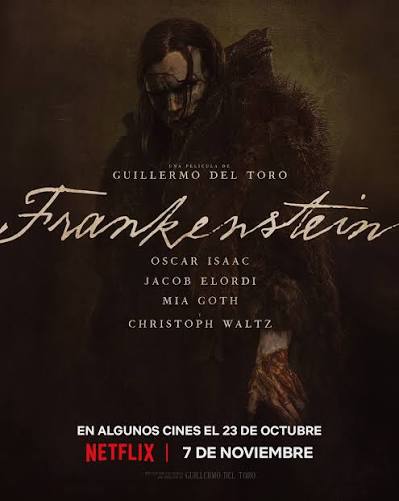
Throughout his work, del Toro has developed a recognizable visual style in which monsters do not necessarily represent evil. His creatures are often outsiders capable of deeply human emotions, while ordinary human beings can become the most violent figures in his stories. Del Toro won the Academy Awards for Best Director and Best Picture for The Shape of Water and later won Best Animated Feature for Guillermo del Toro’s Pinocchio.
Guillermo del Toro reinterprets Mary Shelley’s European story through his Mexican and Catholic perspective. Rather than relocating the story to Latin America, this influence emerges through the film’s treatment of family, creation, resurrection, suffering, compassion, and forgiveness.
Victor Frankenstein, a brilliant but arrogant scientist, becomes obsessed with overcoming the boundary between life and death. Influenced by his experiences with death and his difficult relationship with his father, Victor constructs a new human body and successfully brings it to life. However, instead of taking responsibility for his creation, he rejects it.
The Creature enters the world with enormous physical strength but little understanding of human behavior. Through experiences of kindness, cruelty, and rejection, he develops language, self-awareness, and human emotion while realizing that others continue to see him as unnatural. His conflict with Victor gradually becomes more than a struggle between scientist and monster, developing into a broken relationship between father and son.
The film ultimately complicates the question of who is truly monstrous. While Victor can create life but struggles to care for it, the Creature develops compassion, anger, and eventually forgiveness. Their relationship forces both creator and creation to confront the consequences of Victor’s actions and the bond neither can completely escape.
Describes the setting of a scene in a play or a film. It refers to everything placed on the stage or in front of the camera—including people. In other words, mise en scène is a catch-all for everything that contributes to the visual presentation and overall “look” of a production. When translated from French, it means “placing on stage.”
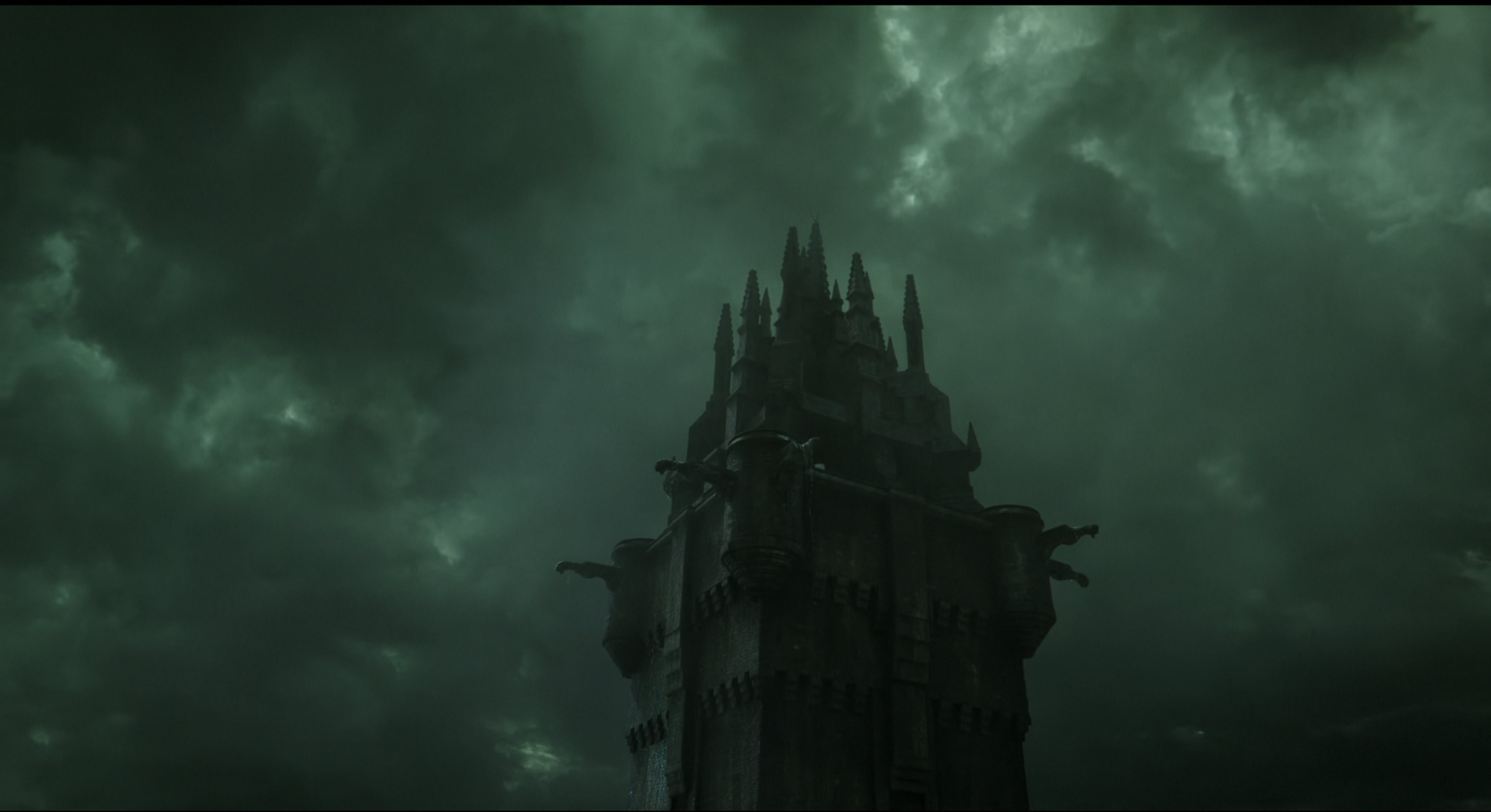
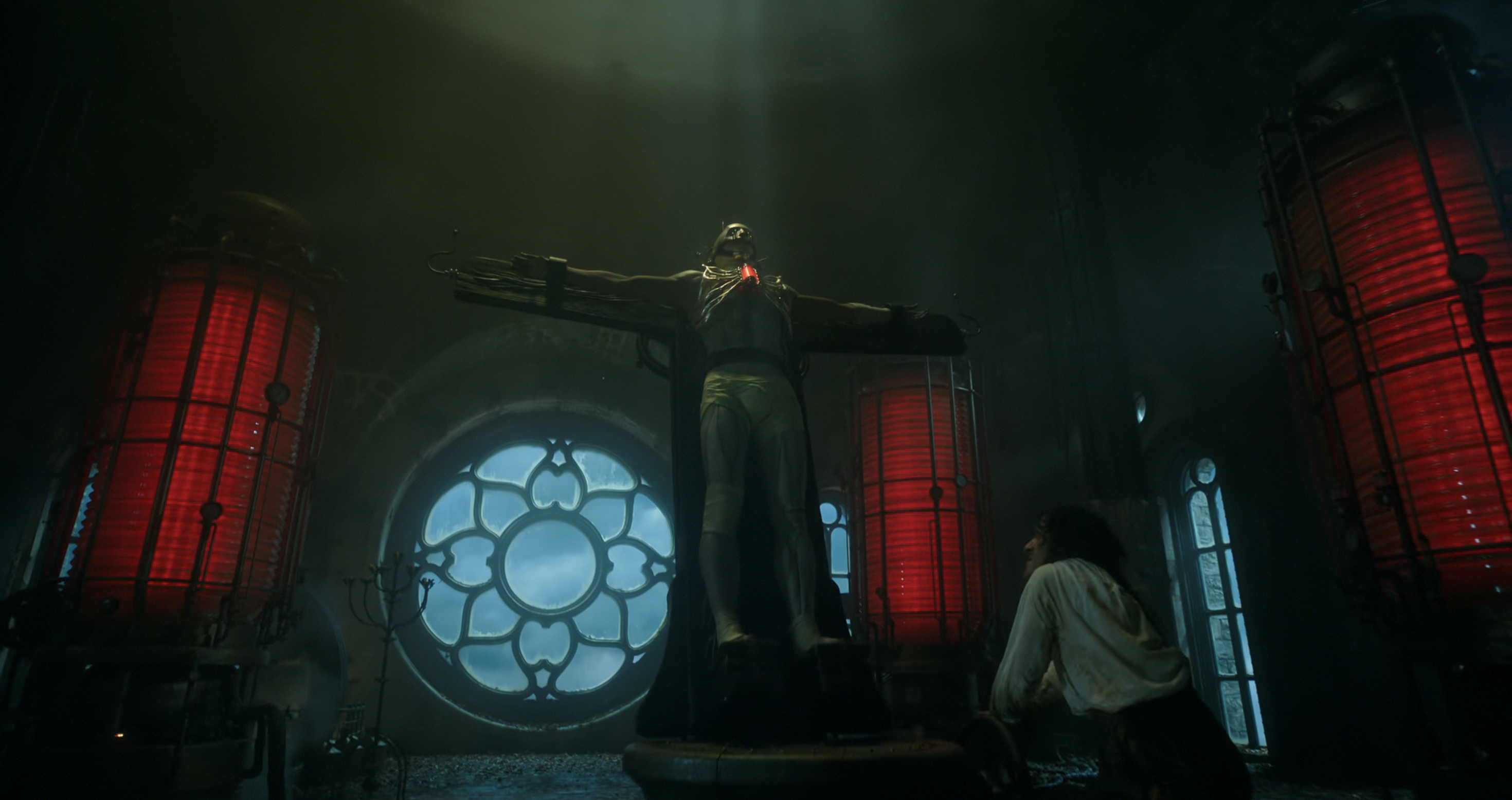
The laboratory also functions as the opposite of a normal place of worship. Instead of being filled with light, paintings, and religious relics, it is dark and filled with machinery, metal, and Gothic stone. However, it maintains the scale and architecture of a cathedral. Rather than entering this space to worship God, Victor has created a place where he can attempt to take the position of God as a creator. The setting therefore reflects Victor’s greatest ambition. He does not simply want to understand life and death. He wants to control them.
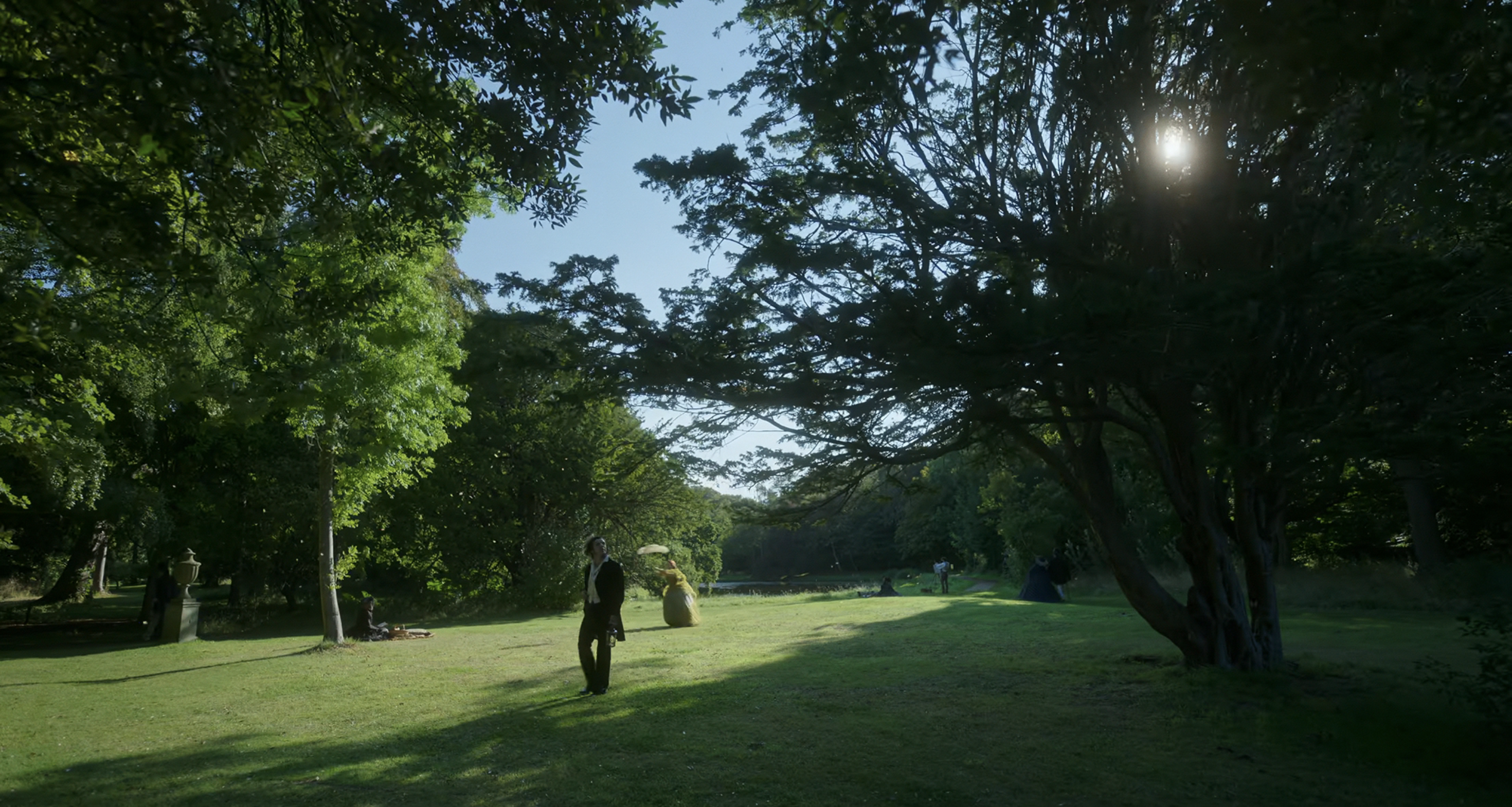
The environment surrounding Victor’s home creates a strong contrast with the laboratory where he conducts his experiments. Outside, the estate is surrounded by open fields, enormous trees, natural sunlight, and bright green vegetation. The characters occupy only a small part of the frame, allowing nature to dominate the image and making the space feel peaceful and full of life. The laboratory reverses almost every part of this setting. It is enclosed, dark, artificial, and dominated by stone, metal, and machinery rather than sunlight and nature. This contrast is especially important because Victor already lives surrounded by natural life and beauty, yet he isolates himself in a dark laboratory because he is not satisfied with simply experiencing life. He wants to understand, recreate, and ultimately control it. The beauty outside the laboratory therefore makes Victor’s obsession even more ironic. He separates himself from a world already full of life in order to construct an artificial space where he can attempt to create life himself.
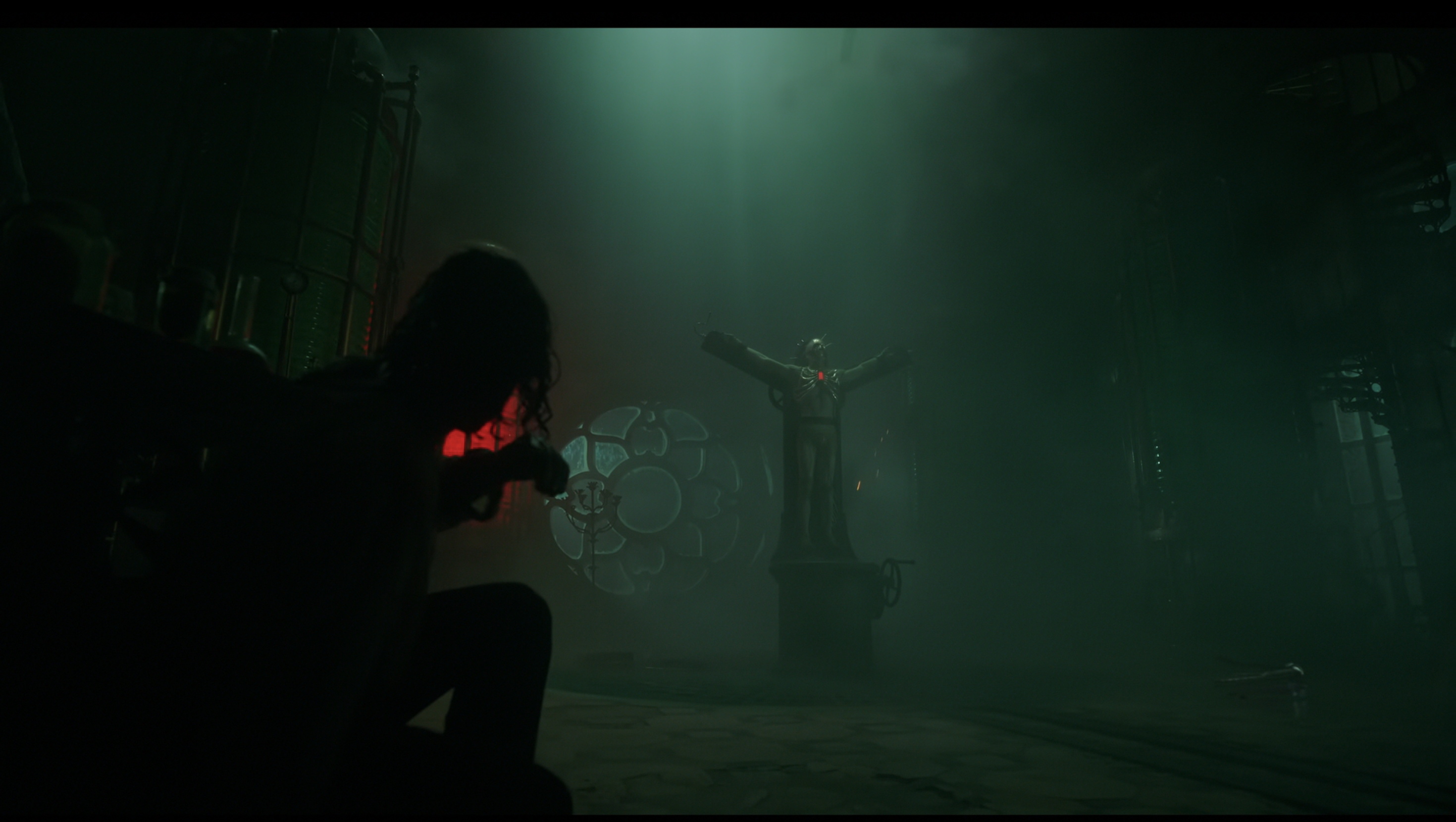
However, the two events move in opposite directions. Christ is placed on the cross and dies, while the Creature is placed on the cross so Victor can bring dead flesh back to life. Victor is essentially attempting to recreate resurrection through science rather than divine power. His position beneath the cross strengthens this comparison. He kneels below the Creature almost like someone before a religious figure, but he is waiting for a miracle that he believes he has created himself. The cross therefore represents more than Christianity. Victor takes a sacred image of death and resurrection and transforms it into his own scientific experiment. He is no longer satisfied with understanding God’s creation. He wants to prove that he can become a creator himself.
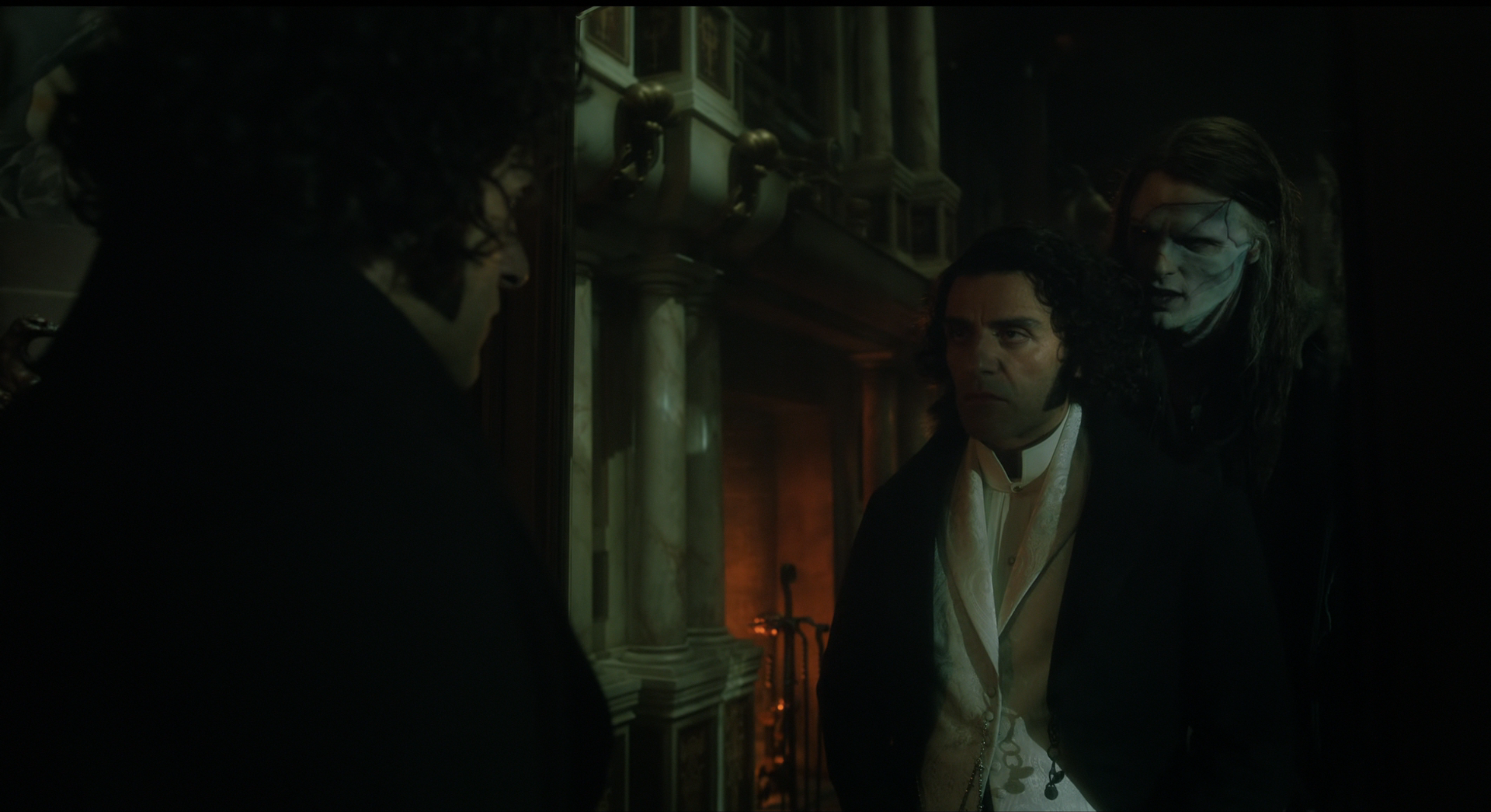
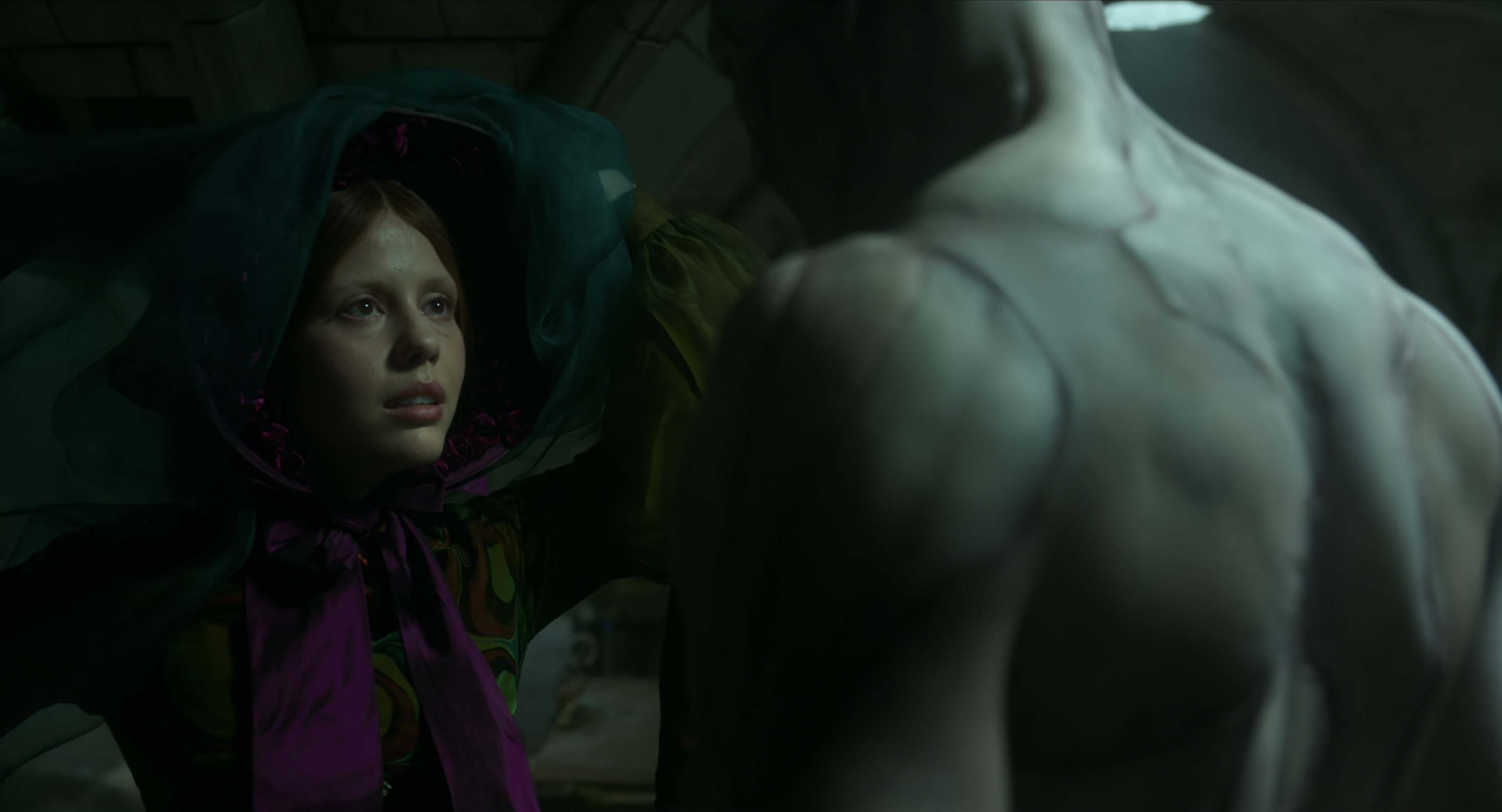
Her appearance can also be interpreted as recalling traditional images of the Virgin Mary, particularly the Virgin of Guadalupe because of the colorful fabric surrounding her head and body. This interpretation corresponds with Elizabeth’s behavior toward the Creature. While Victor treats him as a failed experiment, Elizabeth approaches him without fear and recognizes his suffering. She gives him the care and affection that Victor has refused to provide. Her costume therefore reinforces her almost maternal role toward the Creature. The religious imagery connects Elizabeth with compassion and care, making her a direct contrast to Victor and showing the different ways they respond to the same supposedly monstrous being.
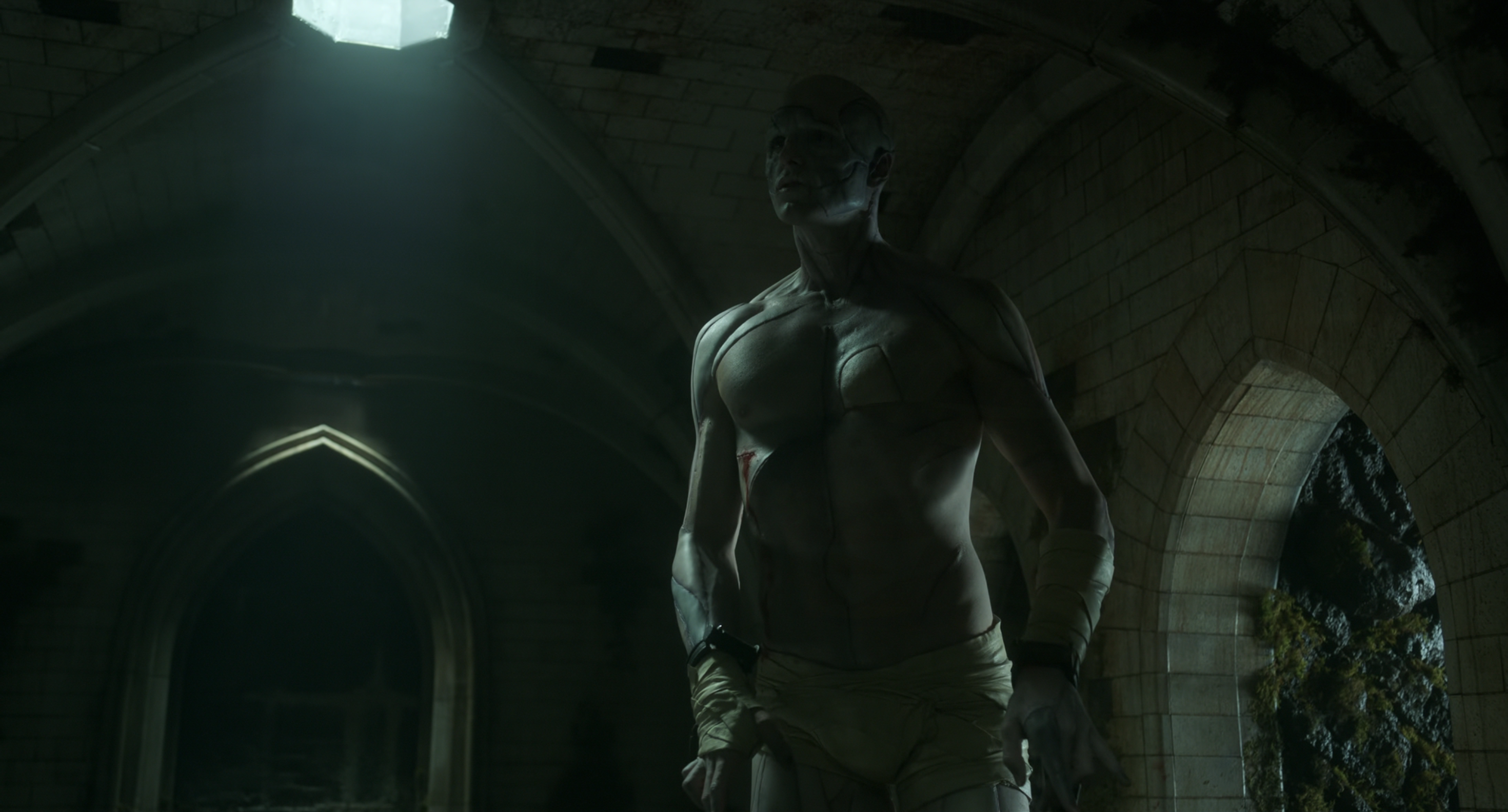
This connects directly to del Toro’s Catholic interpretation of Frankenstein. The Creature is dead flesh that has been resurrected, while his scars and wounds remain visible afterward. This can recall Catholic images of the resurrected Christ, whose wounds remain evidence of his suffering. More importantly, the Creature’s wounds do not simply demonstrate his own violence. They also reveal the violence committed against him. His scars initially make him appear monstrous, but gradually become evidence of his suffering. His makeup therefore makes us question whether monstrosity comes from a person’s appearance or from the way they treat others.
Victor previously controlled, restrained, rejected, and hurt the Creature. Now Victor is helpless and dying while the Creature finally possesses physical power over his creator. Instead of using that power to continue their cycle of violence, however, he chooses to remain by Victor’s side. Their physical contact transforms their relationship from creator and experiment into what it has really become, a relationship between father and son. The Creature no longer appears as a monster pursuing Victor, but as a son beside his dying father. His decision to forgive does not erase Victor’s actions. Instead, it demonstrates that he will not allow Victor’s violence to determine who he becomes. Victor succeeded in creating a human body, but the Creature ultimately demonstrates his humanity through his capacity to forgive.
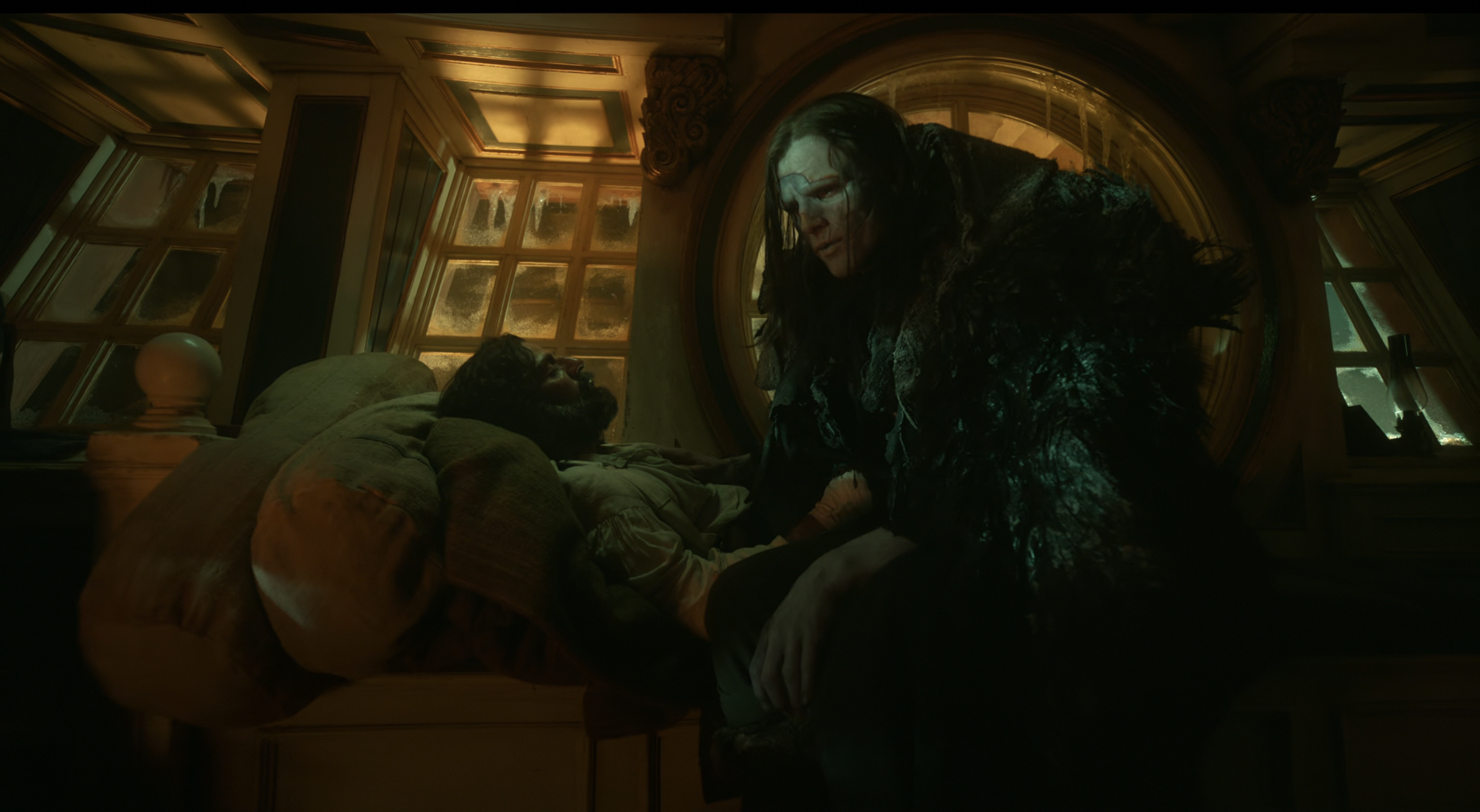
This is the art of photography and visual storytelling in a motion picture or television show. Cinematography comprises all on-screen visual elements, including lighting, framing, composition, camera motion, camera angles, film selection, lens choices, depth of field, zoom, focus, color, exposure, and filtration. Cinematography sets and supports the overall look and mood of a film’s visual narrative. Each visual element that appears on screen, a.k.a. the mise-en-scène of a film, can serve and enhance the story—so it is the cinematographer’s responsibility to ensure that every element is cohesive and support the story. Filmmakers often choose to spend the majority of their budget on high-quality cinematography to guarantee that the film will look incredible on the big screen.
Editing is the process of putting a film together–the selection and arrangement of shots and scenes. Editing can condense space and time, emphasize separate elements and bring them together, and organize material in such a way that patterns of meaning become apparent. In addition, editing can determine how a film is perceived: for instance, quick, rapid cuts can create a feeling of tension, while a long take can create a more dramatic effect. The first photoplays generally had no cutting, owing to the fact that they were single-reel films; once filming began, you could not stop until the film ran out. (https://filmglossary.ccnmtl.columbia.edu/term/editing/)
Sound is an integral part in a film. It refers to everything that the audience hears including sound effects, words and music. Sound is used in films for various purposes, including: providing the information to the viewer about the location of the scene, heightening the mood, telling the audience about the characters and advancing the plot. Every person who watches a film realizes that the choice of voices, soundtrack and music present in a film affect the way that the viewer perceives a particular film. As a result, the sound is an important and integral element of the film, one that determines the way that the viewer experiences and understands a film as a visual experience.
Narrative analysis is an examination of the story elements, including narrative structure, character, and plot. A narrative can be considered to be the chain of events in a cause-effect relationship occurring in time and space. In order to analyze the narrative of a film, we need to first make the distinction between the plot of the film and the story of the film. This is sometimes referred to as the discourse and story of a film. Narrative may also be called the story thought story mainly refers to the events that describe the narrative.
Film genres are various forms or identifiable types, categories, classifications or groups of films. (Genre comes from the French word meaning "kind," "category," or "type"). These provide a convenient way for scriptwriters and film-makers to produce, cast and structure their narratives within a manageable, well-defined framework. Genres also offer the studios an easily 'marketable' product, and give audiences satisfying, expected and predictable choices. Genres refers to recurring, repeating and similar, familiar or instantly-recognizable patterns, styles, themes, syntax, templates, paradigms, motifs, rules or generic conventions.