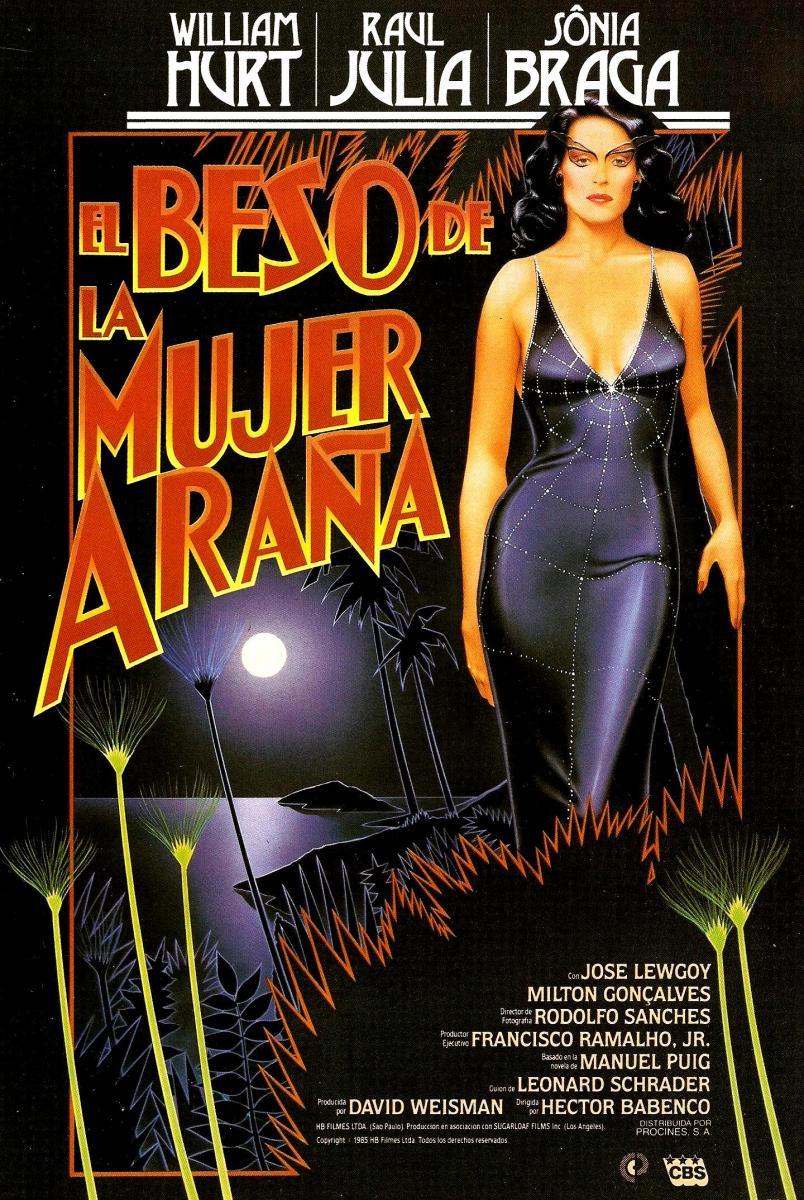
El beso de la mujer araña

    Movie Poster
    Release year
    1985
    Director
    Héctor Babenco
    Biography of director(s)
    Born in Argentina in 1946 to Jewish immigrant parents, Babenco settled in Brazil during the late 1960s, where he built his filmmaking career. He gained international acclaim for his gritty, empathetic depictions of marginalized individuals operating within oppressive social and political systems, notably directing Pixote (1980) and Ironweed (1987). His adaptation of Kiss of the Spider Woman earned him an Academy Award nomination for Best Director. He continued directing acclaimed cinema in South America until his death in 2016.
    Country
    Brazil / United States (Coproduction)
    Original synopsis of the film

    In a stark Latin American prison during a repressive military regime, two radically different men are forced to share a small, claustrophobic cell: Luis Molina, an overtly romantic gay man convicted of "corrupting a minor," and Valentin Arregui, a devout Marxist political prisoner tortured for his revolutionary activism. To escape the brutal physical and psychological realities of their confinement, Molina recounts elaborate, idealized plots of old movies—particularly a romanticized Nazi propaganda film—starring a glamorous actress named Leni Lamaison, who Molina wishes to be like.

    Initially, Valentin dismisses Molina's cinematic escapism as trivial and counter-revolutionary, while Molina struggles with Valentin's rigid hostility and uncompromising political fervor. However, as Molina painstakingly cares for Valentin following violent interrogation sessions, their mutual suspicion gives way to emotional intimacy, mutual dignity, and affection. Unbeknownst to Valentin, prison authorities have arranged a deal with Molina: report on Valentin's urban guerrilla network in exchange for early parole. Caught between his duty to the authorities and his evolving love for his cellmate, Molina undergoes a profound transformation, ultimately making a dangerous political sacrifice that forever links his fate to Valentin's revolutionary cause.

    Describes the setting of a scene in a play or a film. It refers to everything placed on the stage or in front of the camera—including people. In other words, mise en scène is a catch-all for everything that contributes to the visual presentation and overall “look” of a production. When translated from French, it means “placing on stage.”
    Setting
    Setting
    Explanation
    Although interior cell structures were constructed sets, key portions of the film were filmed on location in real urban spaces and harsh penitentiary environments in Brazil. Utilizing location shooting grounds the film’s central narrative in an inescapable, tangible tactile reality. The oppressive concrete walls, rusted iron bars, and peeling paint reflect the lived brutality of South American authoritarian regimes, creating a stark, unglamorous contrast to the hyper-stylized, escapist fantasy worlds Molina projects through his film monologues.
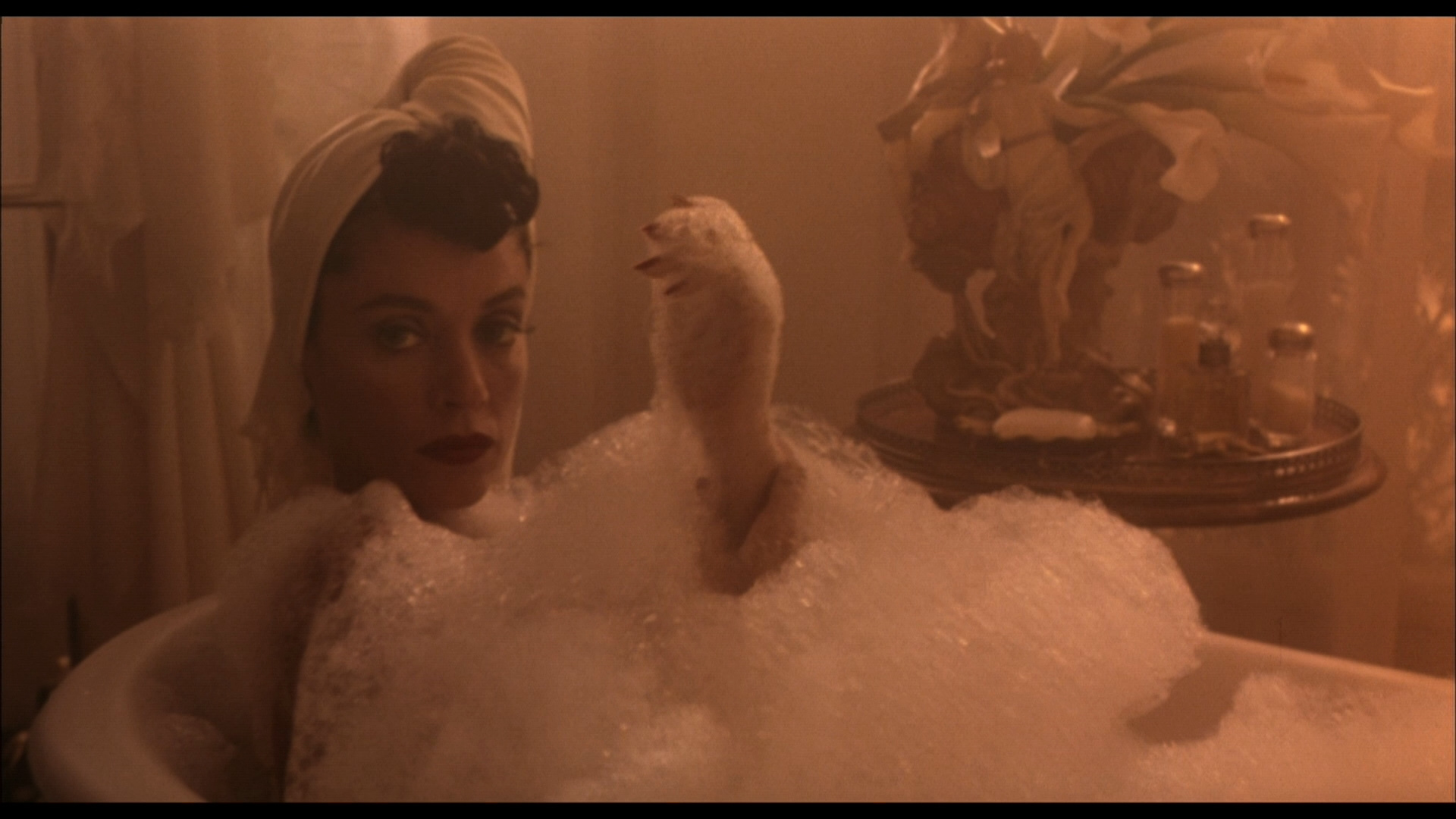
    Film Still
    One of the glamorous Hollywood movie scenes Molina recounts.
    Props
    Prop
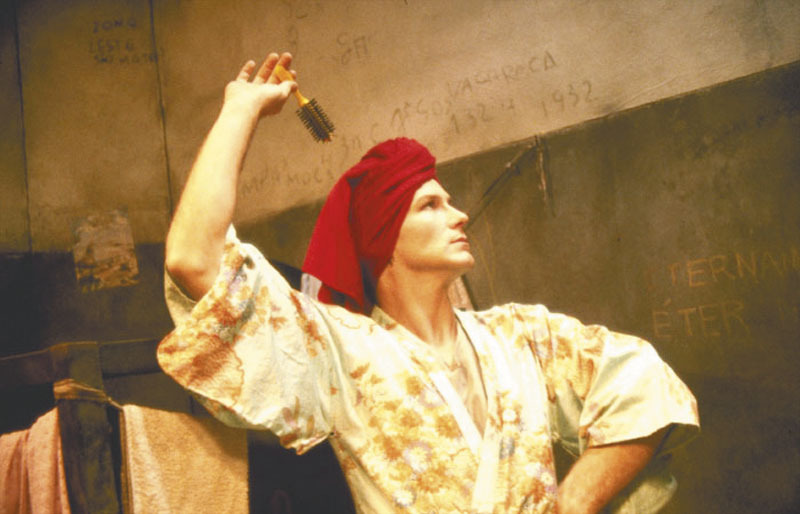
    Molina's Robe
    Explanation
    Molina wraps himself in soft fabrics, using these personal items to soften the harsh physical environment and project his feminine identity within a deeply masculine, hostile institution.
    Film Still
    Molina's colorful robe, expressing his feminity.
    Lighting
    Lighting
    Explanation
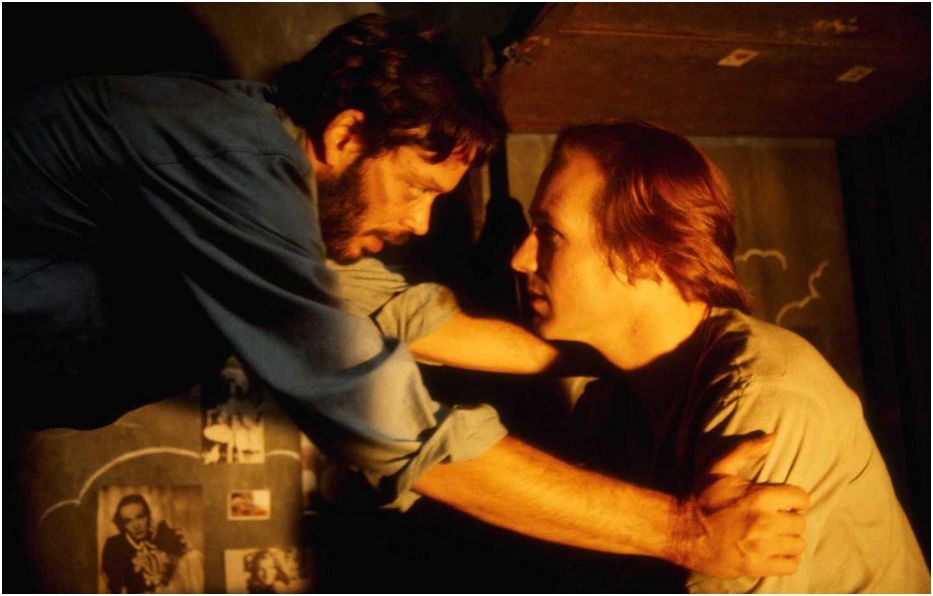
    The film uses low-key lighting featuring high contrast, deep shadows, and strong directional single-source light (such as a single bare cell bulb or sunlight filtering through high iron bars). This expressionistic use of dark tones emphasizes the claustrophobia of imprisonment, accentuates the emotional isolation of the prisoners, and mirrors the moral ambiguity and secrecy underlying the plot's espionage subtext. In particular, very warm lighting is used for close up scenes of Molina and Valentin, emphasizing the growing affection and trust between the two.
    Film Still
    Warm lighting reflects the growing closeness between the inmates.
    Costume
    Costume
    Contrast between Molina & Valentin
    Explanation
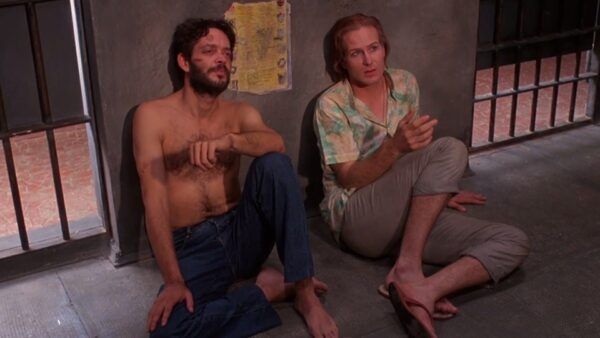
    Molina wears soft, colorful robes and improvised headwraps inside the cell, expressing his fluid gender performance and rejection of prison regimentation. Valentin wears utilitarian, dirt-streaked prison garments that emphasize his stoicism, physical degradation, and identity as a political prisoner stripped of personal freedoms.
    Film Still
    Contrast between inmates reflect their different positions and identities.
    Hair and Makeup
    Example
    Valentin's Rough Condition
    Explanation
    Valentin’s bruised, bloodied face, unkempt beard, and sweat-drenched hair reflect the physical toll of state-sponsored torture. His condition also reflects the ongoing conflict in his mind, as he's troubled by the thoughts of punishment, his love Martha who he left behind, the rebellion, and his growing affection towards Molina which directly counters his masculinity.
    Figure Behavior
    Example
    Body Language
    Explanation
    Molina moves with expressive, soft, and theatrical gestures, embodying the melodramatic heroines of the films he narrates. Valentin initially exhibits rigid, tense, and defensive body language, maintaining physical distance before gradually softening into gentle, vulnerable physical contact as trust develops between the cellmates.
    Representative Clip
    Explanation
    Molina tends to a bedridden, poisoned Valentin under a dim, single hanging light bulb in their cell. While washing Valentin's brow, Molina softly narrates the story of the Spider Woman in a cinematic voiceover, demonstrating how low-key lighting, intimate figure behavior, and minimalist set detail come together to bridge reality and fantasy.
    Timecode
    48:30-51:00
    Film Clip

    This is the art of photography and visual storytelling in a motion picture or television show. Cinematography comprises all on-screen visual elements, including lighting, framing, composition, camera motion, camera angles, film selection, lens choices, depth of field, zoom, focus, color, exposure, and filtration. Cinematography sets and supports the overall look and mood of a film’s visual narrative. Each visual element that appears on screen, a.k.a. the mise-en-scène of a film, can serve and enhance the story—so it is the cinematographer’s responsibility to ensure that every element is cohesive and support the story. Filmmakers often choose to spend the majority of their budget on high-quality cinematography to guarantee that the film will look incredible on the big screen.

    Point of View
    Point of View
    Comments
    Throughout the film, the camera often adopts a subjective perspective, where the audience is able to see and experience the totality of the emotions that Valentin is experiencing. In this still, Valentin is falling from a building, and the subjective point of view allows the viewer to see his intense fear in this moment. Understanding Valentin’s mental state is significant to the films plot twist, helping to explain the use of a subjective point of view.
    Film Still
    Valentin’s fall
    Quality
    Quality
    Comments
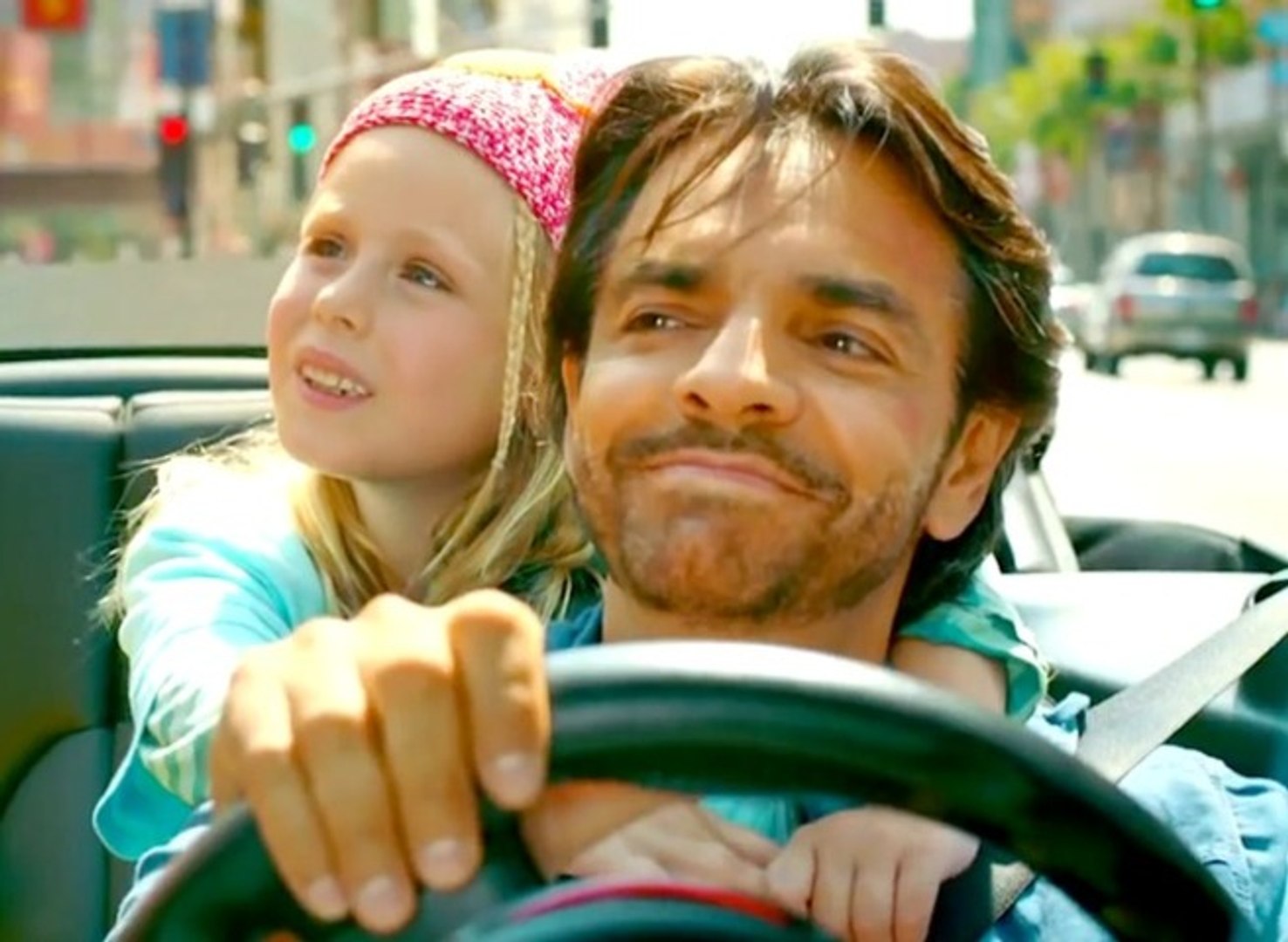
    The films often uses shots with high exposure to illicit a dream-like mood in the viewer as well as nostalgic undertones. The still depicts Maggie hugging Valentin in the car, and the shot quality adds to the fairy-tale, dream-like aspect of this scene. By doing so, it adds to the idea that Valentin has provided Maggie with dream life. The nostalgic undertones from the lighting can also be seen as a way to show the viewer that this situation is impermanent, foreshadowing Maggie’s ultimate passing in the film.
    Film Still
    Car ride
    Framing
    Framing
    Comments
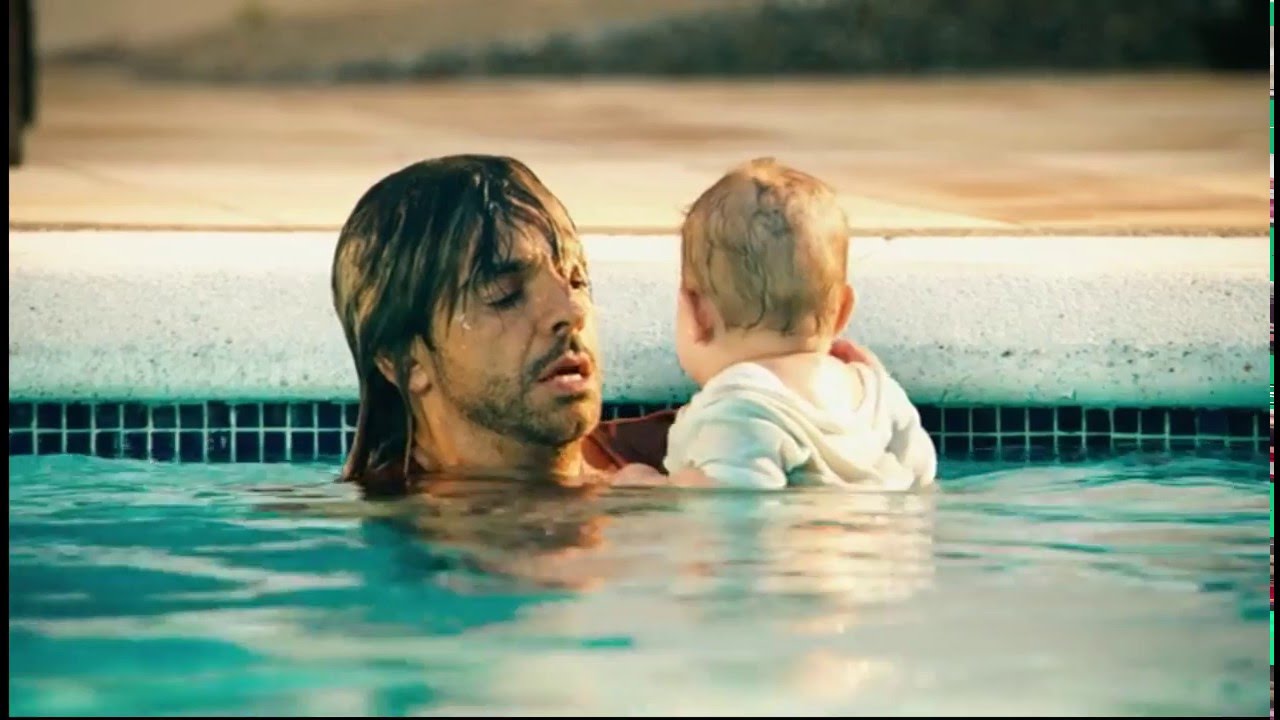
    In the film, intimate shots at a level angle are often used as the standard during a scene of connection because they allow the viewer to see the character’s facial expressions as well as feel more connected and equal to the characters in the scene. In this still, Valentin saves Maggie, who falls into a pool, and it is the first time that he truly begins to feel a connection to his daughter. As a viewer, this connection can easily be felt due to the level angle shot, which allows for full immersion into the scene and a better understanding of Valentin’s facial expressions and thoughts.
    Film Still
    Saved from a swim
    Scale
    Comments
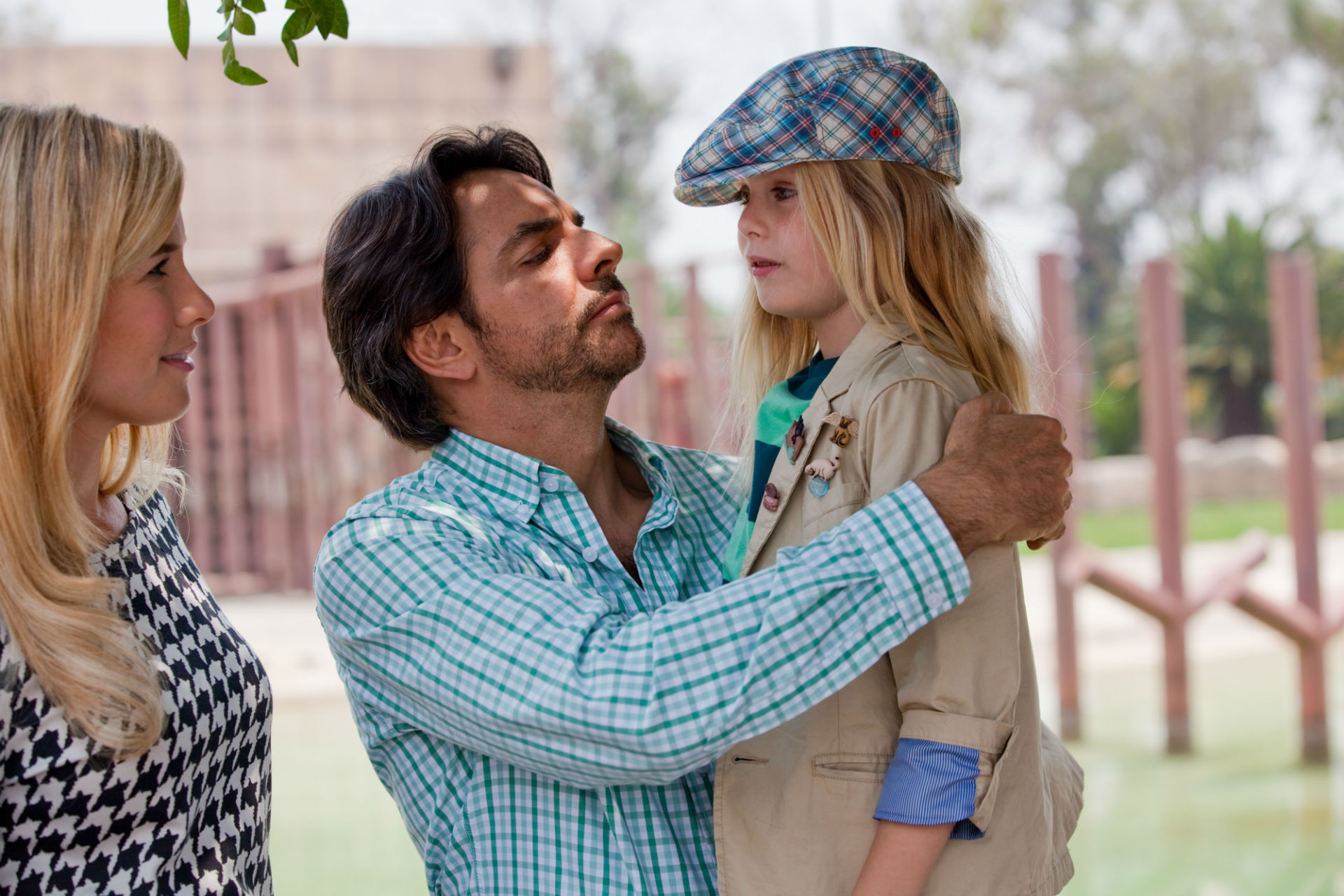
    The film also often uses medium close up shots for dialogue so that the viewer is able to see the character’s physical environment and surrounds while still being able to see the characters’ facial expressions. In this scene, the medium close up allows the viewer not only to see Maggie and Valentin, but also Maggie’s mother. This adds a new dynamic to the film, where Maggie no longer gazes at only Valentin but has another important figure in her life who she looks to for support. Valentin’s intense gaze at Maggie while she looks to another signifies a new dynamic that is created in the film associated with parental responsibility and role-model changes. These paradigms are enhanced with the medium close-up shot that gives the viewer a full picture of the scene’s dynamic.
    Film Still
    Parent presence
    Movement
    Movement
    Comments
    The film frequently uses tracking shots, especially cuts to tracking shots, to switch from a character’s internal emotions to their exterior environments. This still takes place after Valentin is unaware of what to do or where to go upon receiving Maggie. He finds a truck driver willing to drive him, and the shot of the three of them in the car shifts to a tracking shot. This moving shot not only shows that Maggie and Valentin are about to undergo a journey but also immerses the viewer in the reality of loss and confusion that Valentin is experiencing.
    Film Still
    Confused car ride

    Editing is the process of putting a film together–the selection and arrangement of shots and scenes. Editing can condense space and time, emphasize separate elements and bring them together, and organize material in such a way that patterns of meaning become apparent. In addition, editing can determine how a film is perceived: for instance, quick, rapid cuts can create a feeling of tension, while a long take can create a more dramatic effect. The first photoplays generally had no cutting, owing to the fact that they were single-reel films; once filming began, you could not stop until the film ran out. (https://filmglossary.ccnmtl.columbia.edu/term/editing/)
    Coherence, Continuity, and Rhythym
    Comments
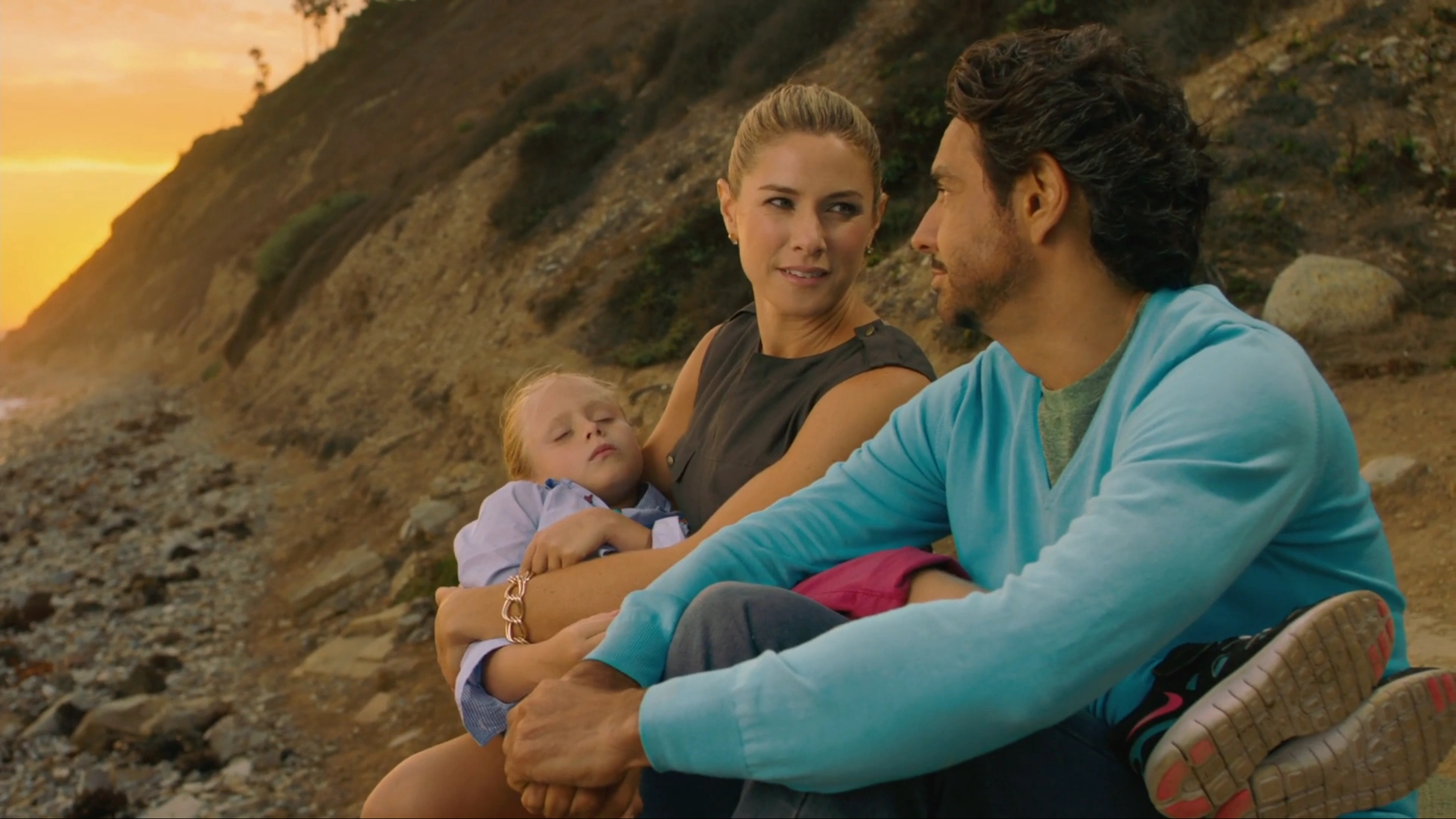
    Rhythm and Pace: In the third act, the film editing begins to switch to a more flowing pace with a slower rhythm. This helps set the tone for the act’s more emotional scenes, especially those in the sunset. This still is taken a bit before Maggie’s passing and the slower rhythm and pace serve to set a more quiet, sad tone for what is about to occur in the film. It also foreshadows Maggie’s passing, which also occurs at the beach when the sun is setting. It is clear to the viewer that there is a shift in rhythm, and just as the film seems to slow down Valentin’s emotions seem to speed up, providing a contrast that makes Valentin’s state more evident.
    Film Still
    Sunset image
    Editing Style
    Transitions
    Match
    Comments
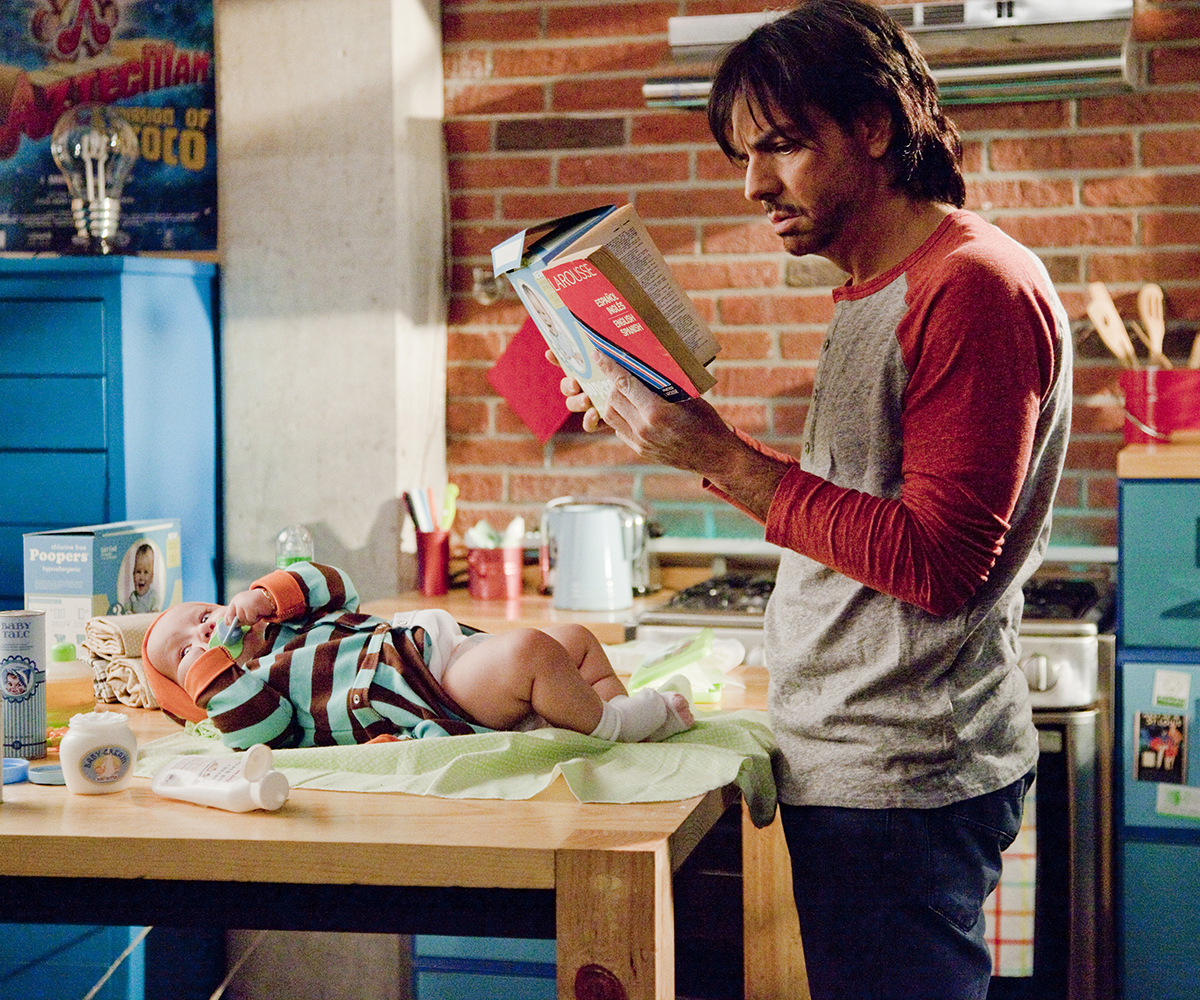
    The film utilizes a graphic match with the children’s manual in the still to compare Valentin’s difficulties with learning how to parent with successful individuals who utilize books for leisure. This emphasizes Valentin’s struggles and helps to highlight his later parenting successes. The film also uses graphic match to connect Maggie’s mind and creativity with the real world.
    Film Still
    Valentin reads a parenting manual
    Match
    Expansion and Compression of Time
    Editing General Comments
    Comments
    Purpose of editing: At the beginning if the film, there is a thematic montage that has rapid cross-cuts and many different scenes of Valentin living in chaos. This shows the viewer his old play-boy lifestyle and also shows his chaotic nature that makes parenting even more challenging. This still depict Valentin hold Maggie after she is dropped off at Valentin’s home by her mother. Cross cuts are similarly used to show Valentin’s struggle with deciding what to do with Maggie and figuring out how to proper take care of a baby.
    Film Still
    Valentin holds his child with confusion

    Sound is an integral part in a film. It refers to everything that the audience hears including sound effects, words and music. Sound is used in films for various purposes, including: providing the information to the viewer about the location of the scene, heightening the mood, telling the audience about the characters and advancing the plot. Every person who watches a film realizes that the choice of voices, soundtrack and music present in a film affect the way that the viewer perceives a particular film. As a result, the sound is an important and integral element of the film, one that determines the way that the viewer experiences and understands a film as a visual experience.

    Sound Type

    Narrative analysis is an examination of the story elements, including narrative structure, character, and plot. A narrative can be considered to be the chain of events in a cause-effect relationship occurring in time and space. In order to analyze the narrative of a film, we need to first make the distinction between the plot of the film and the story of the film. This is sometimes referred to as the discourse and story of a film. Narrative may also be called the story thought story mainly refers to the events that describe the narrative.

    Plot Comments
    Story Comments
    Narrator Type
    Narrative Structure

    Film genres are various forms or identifiable types, categories, classifications or groups of films. (Genre comes from the French word meaning "kind," "category," or "type"). These provide a convenient way for scriptwriters and film-makers to produce, cast and structure their narratives within a manageable, well-defined framework. Genres also offer the studios an easily 'marketable' product, and give audiences satisfying, expected and predictable choices. Genres refers to recurring, repeating and similar, familiar or instantly-recognizable patterns, styles, themes, syntax, templates, paradigms, motifs, rules or generic conventions.

    Category