
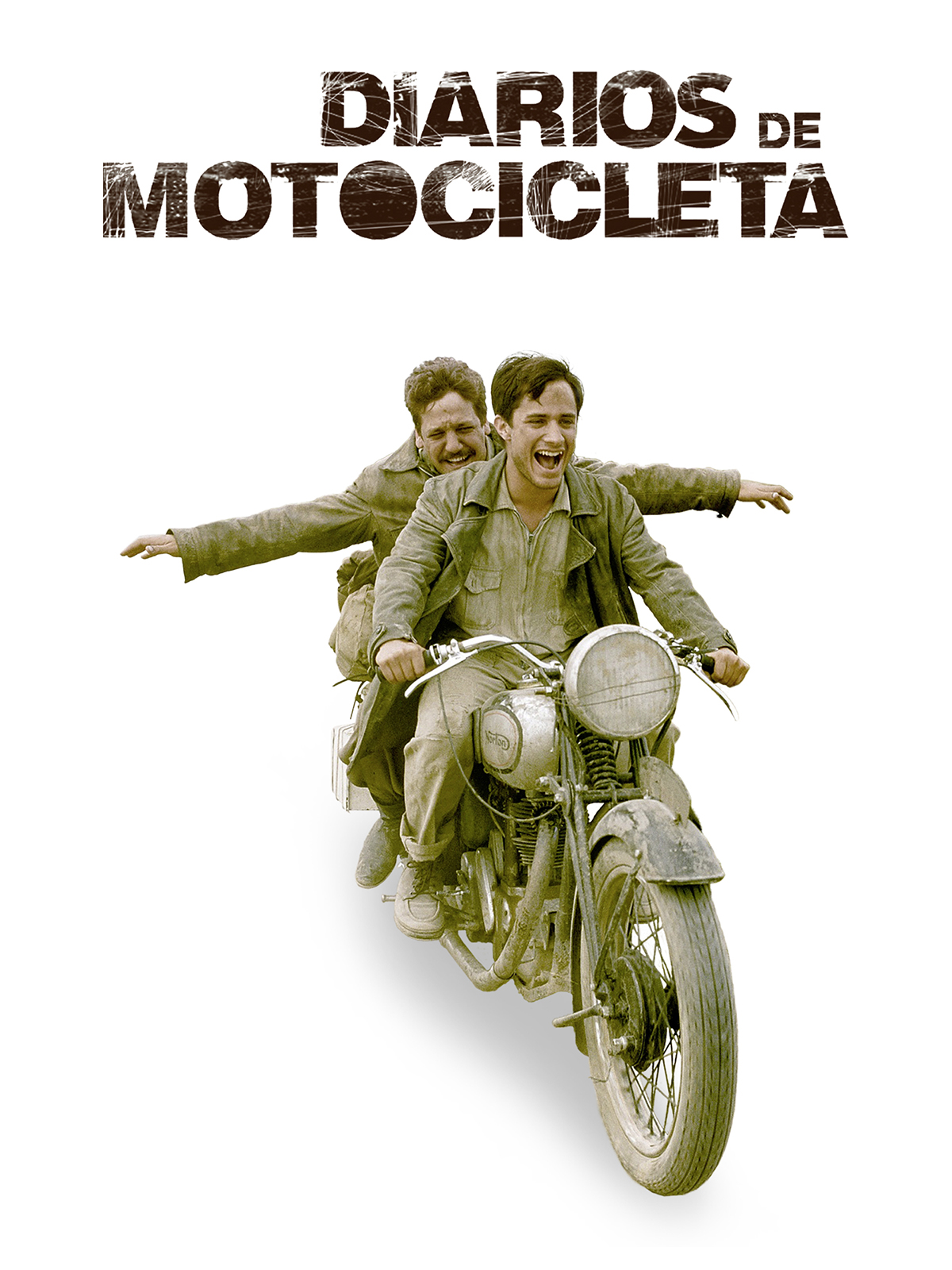
A semester before finishing his medical degree, Ernesto Guevara and his friend Alberto Granado, a biochemist, decide to leave Buenos Aires to travel across South America on Granada’s old and beaten-up motorcycle: La poderosa. The plan is to travel up through as much as Latin America as they can before Granado’s 30th birthday in April.
They start in January on a route through Patagonia, Chile, across the Andes, along the coast of Chile, through the Atacama, to Machu Picchu, and into the Peruvian Amazon to eventually reach the Guajira Peninsula in Venezuela. However, when La poderosa breaks down early on their journey, the two move at a much slower pace than intended. Stopping at a large Swiss estate in Argentina after the breakdown, the two end up way behind schedule. As they continue on their journey, they encounter more and more desperate and persecuted people of indigenous descent searching for work in the desolate deserts and suffering harsh treatment in the wilderness. In Chile, the two encounter a poor couple searching for work because of their exile due to their communist beliefs. Ernesto becomes increasingly frustrated and angry with the economic disparity among South Americans, particularly of the indigenous populations throughout the continent.
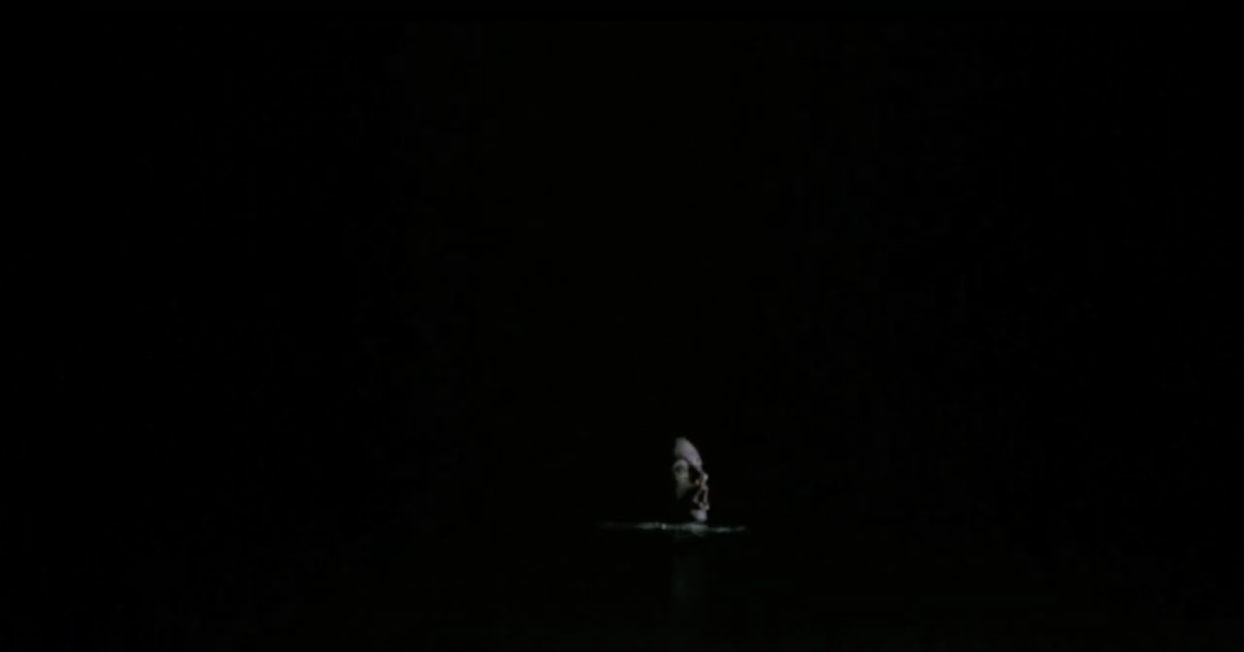
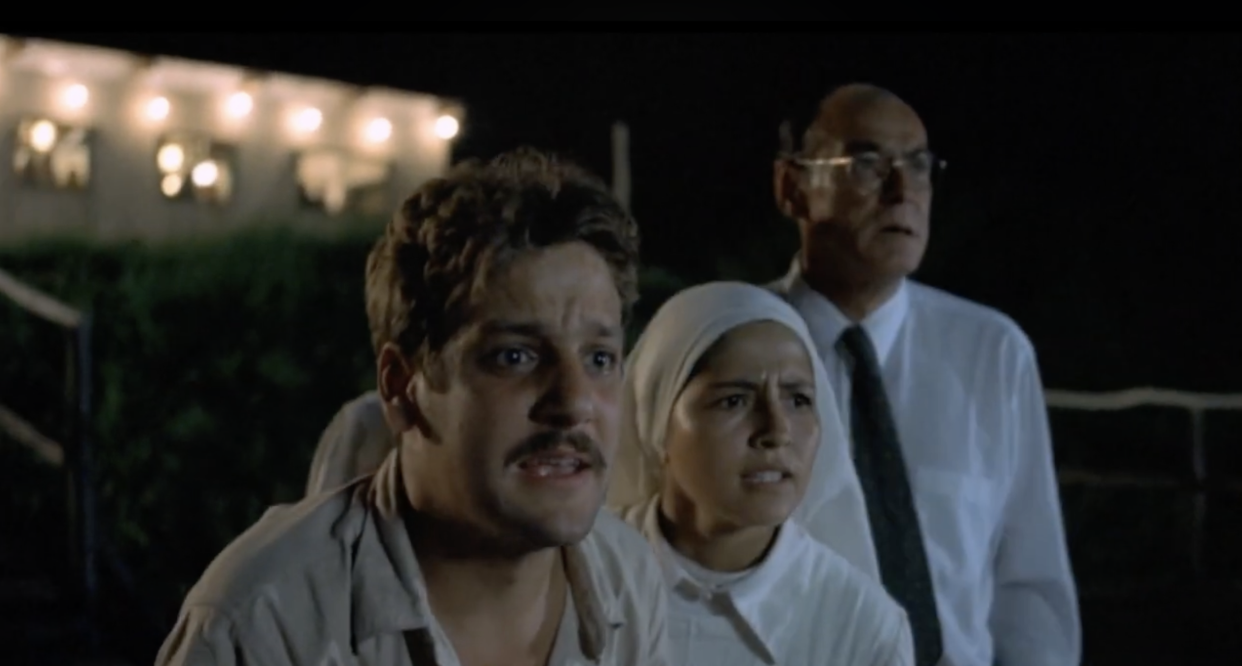
In Peru, the duo volunteer to work at a leper colony in the Amazon where Guevara becomes especially passionate about the inequality he observes, forming close relationships with several lepers that must live on the other side of the river from the volunteers. His experiences at the leper colony push him to his final anti-colonization and egalitarian framework, making a passionate speech and swimming across to the lepers at the end of the film. This solidifies his character as a future Marxist revolutionary, laying the foundation for the rest of his life after the end of the film.
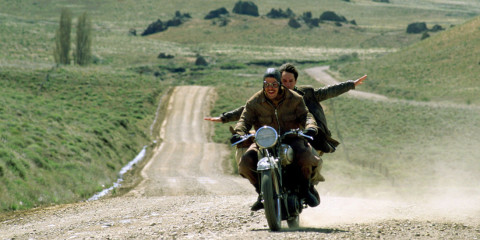
Describes the setting of a scene in a play or a film. It refers to everything placed on the stage or in front of the camera—including people. In other words, mise en scène is a catch-all for everything that contributes to the visual presentation and overall “look” of a production. When translated from French, it means “placing on stage.”
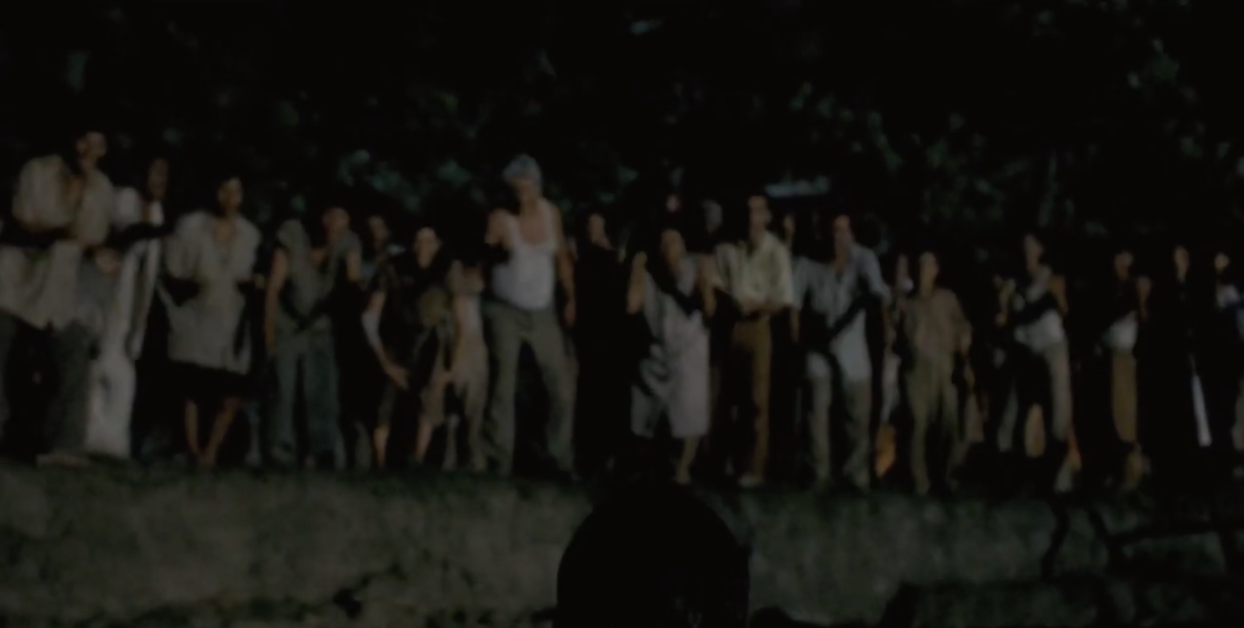
Space: In the climactic scene of the film, Ernesto swims across the river from the volunteer camp to the leper colony. In its key moment, he arrives at the other side to be greeted by the entirety of the leper population whom he has served for weeks. This important shot perfectly summarizes the major themes of the film through its use of space. The frame is very full, but it is not cluttered or random. We see the silhouette of the back of Guevara’s head in the foreground in little detail with the mass of excited people waiting for him in the background. We are in Guevara’s perspective here, and the frame is a very closed form, taking on the shape of a painting – it is very intentional. This single shot serves as a summary of Guevara’s observations through the film: a separated and downtrodden population of the Mestizo people, united in their persecution. The use of space in this shot is a visual representation of the pan-Latin American unity that Guevara has become so enamored with. In that sense, united as one body, the lepers that he has been with for much of this film are eagerly awaiting him in the same way that the people of Latin America will one day be united under his own idealized outlook on Mestizo society.
This is the art of photography and visual storytelling in a motion picture or television show. Cinematography comprises all on-screen visual elements, including lighting, framing, composition, camera motion, camera angles, film selection, lens choices, depth of field, zoom, focus, color, exposure, and filtration. Cinematography sets and supports the overall look and mood of a film’s visual narrative. Each visual element that appears on screen, a.k.a. the mise-en-scène of a film, can serve and enhance the story—so it is the cinematographer’s responsibility to ensure that every element is cohesive and support the story. Filmmakers often choose to spend the majority of their budget on high-quality cinematography to guarantee that the film will look incredible on the big screen.
Editing is the process of putting a film together–the selection and arrangement of shots and scenes. Editing can condense space and time, emphasize separate elements and bring them together, and organize material in such a way that patterns of meaning become apparent. In addition, editing can determine how a film is perceived: for instance, quick, rapid cuts can create a feeling of tension, while a long take can create a more dramatic effect. The first photoplays generally had no cutting, owing to the fact that they were single-reel films; once filming began, you could not stop until the film ran out. (https://filmglossary.ccnmtl.columbia.edu/term/editing/)
Sound is an integral part in a film. It refers to everything that the audience hears including sound effects, words and music. Sound is used in films for various purposes, including: providing the information to the viewer about the location of the scene, heightening the mood, telling the audience about the characters and advancing the plot. Every person who watches a film realizes that the choice of voices, soundtrack and music present in a film affect the way that the viewer perceives a particular film. As a result, the sound is an important and integral element of the film, one that determines the way that the viewer experiences and understands a film as a visual experience.
Narrative analysis is an examination of the story elements, including narrative structure, character, and plot. A narrative can be considered to be the chain of events in a cause-effect relationship occurring in time and space. In order to analyze the narrative of a film, we need to first make the distinction between the plot of the film and the story of the film. This is sometimes referred to as the discourse and story of a film. Narrative may also be called the story thought story mainly refers to the events that describe the narrative.
Film genres are various forms or identifiable types, categories, classifications or groups of films. (Genre comes from the French word meaning "kind," "category," or "type"). These provide a convenient way for scriptwriters and film-makers to produce, cast and structure their narratives within a manageable, well-defined framework. Genres also offer the studios an easily 'marketable' product, and give audiences satisfying, expected and predictable choices. Genres refers to recurring, repeating and similar, familiar or instantly-recognizable patterns, styles, themes, syntax, templates, paradigms, motifs, rules or generic conventions.