
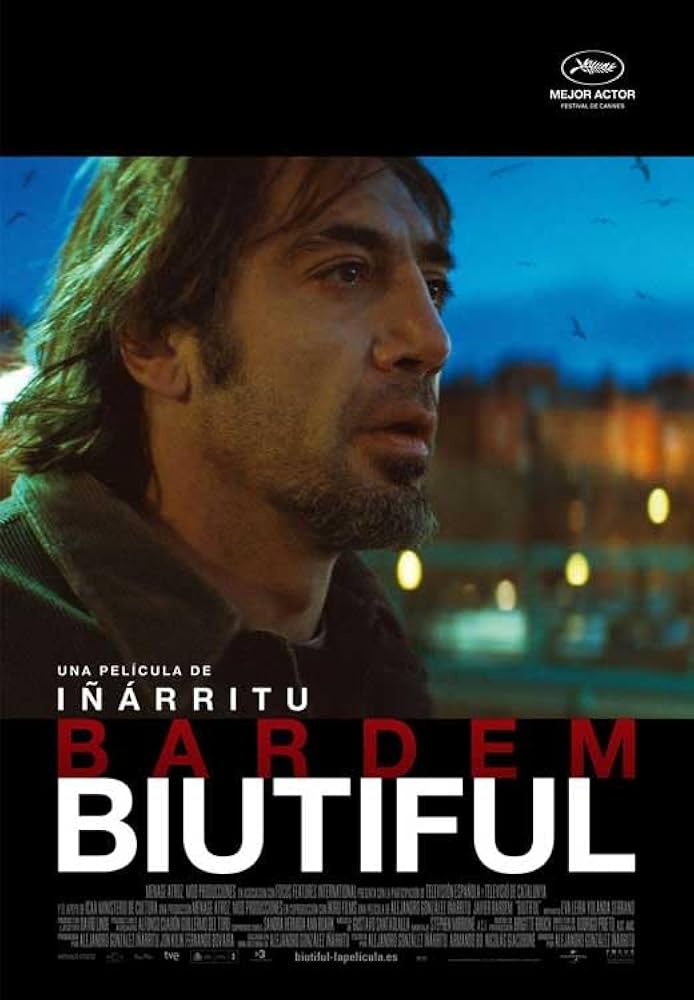
Biutiful follows Uxbal, a man deeply entrenched in the crime scene in Barcelona. Lacking a formal education, he has become the point man for multiple illegal activities, including coordinating drug rings and supplying sweatshops. He uses these activities as a means of providing for his two young children who he has taken full custody of from his abusive, bipolar wife. In addition, Uxbal has a unique power to communicate with and see the spirits of the dead, and often uses this gift to bring peace to grieving families and as a form of work. Early in the film, Uxbal discovers that he has late-stage cancer and approximately 4 months to live. This triggers a series of events in which Uxbal attempts to tie up loose ends in his life and secure his children’s future. This includes a brief reunion with his wife, improving conditions in his sweatshop, and selling the land of his father’s grave. Each of these events ends in tragedy, leaving Uxbal in a constant state of disrepair, terrified to leave the world without his children taken care of. His fears eventually become a reality. Though he tries to conceal his illness from his children, his daughter becomes aware of his impending death, and Uxbal passes away in bed with her. The movie ends with a scene that mirrors the movie’s opening, where Uxbal reunites with his dead father and comes to terms with this passing.
Describes the setting of a scene in a play or a film. It refers to everything placed on the stage or in front of the camera—including people. In other words, mise en scène is a catch-all for everything that contributes to the visual presentation and overall “look” of a production. When translated from French, it means “placing on stage.”
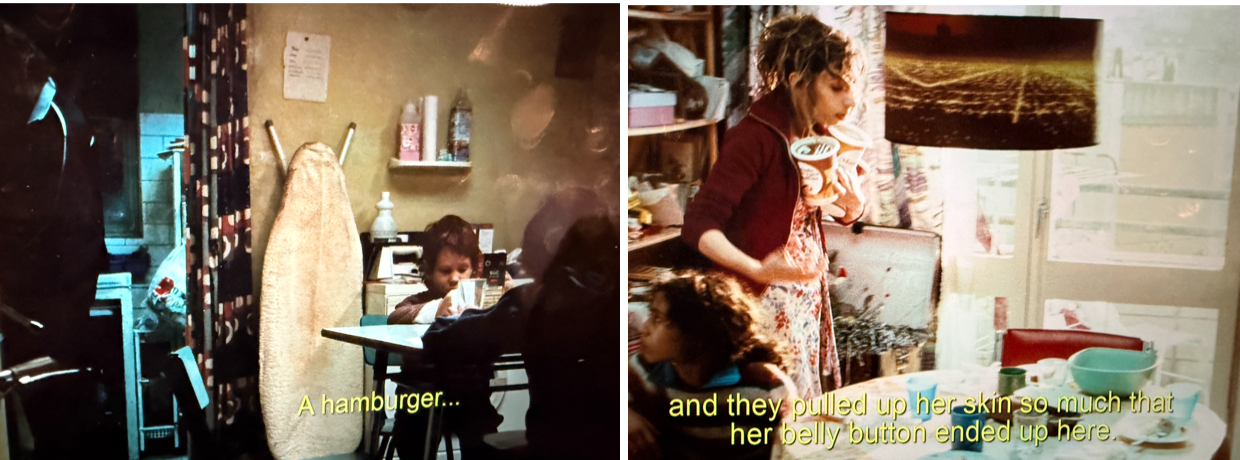
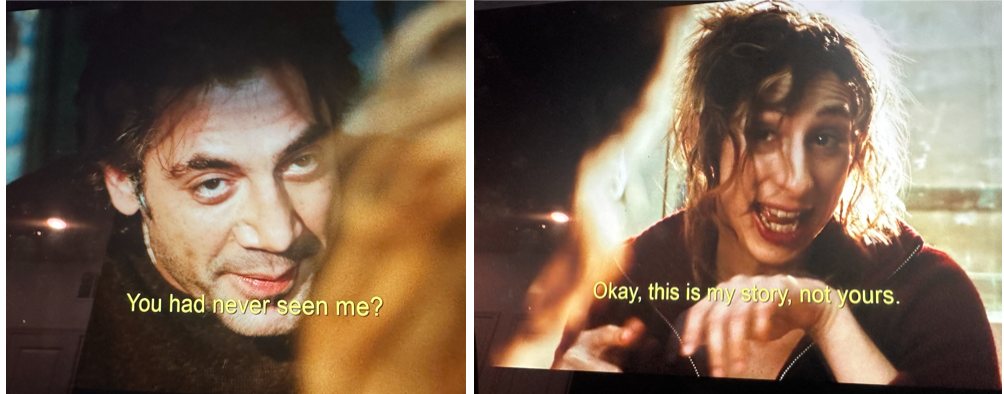
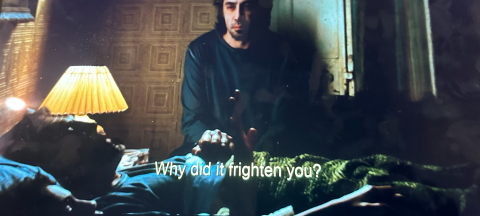
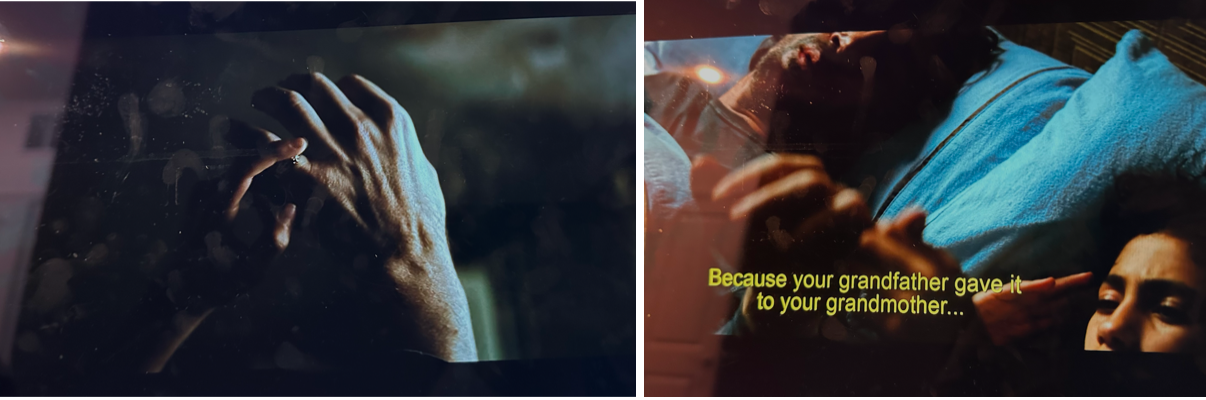
This beginning scene is in stark contrast with one of the closing scenes of the movies. Here, Uxbal lays in bed with his daughter as he slowly dies. The conversation mirrors his earlier conversation with Marambra, but here, his daughter and him are featured clearly. Despite their hands being the center of the shot, Uxbal and his daughter dance in and out of focus behind. As their hands touch, his daughter’s focus on the ring and Uxbal’s focus on her seem to pass the torch of naivety to her. Though her childlike joy and innocence are being robbed by watching her father pass, the actors’ choice to ground her character in the tactical action of holding her father's hand and paying both him and the ring attention makes the reader think she may live on to have a better life. Here, we feel more sympathy as her gaze shifts back and forth from the ring, and as the camera pans to Uxbal’s “dead” form watching over her, we get a calm but morbid sense that the cycle is about to repeat.
This is the art of photography and visual storytelling in a motion picture or television show. Cinematography comprises all on-screen visual elements, including lighting, framing, composition, camera motion, camera angles, film selection, lens choices, depth of field, zoom, focus, color, exposure, and filtration. Cinematography sets and supports the overall look and mood of a film’s visual narrative. Each visual element that appears on screen, a.k.a. the mise-en-scène of a film, can serve and enhance the story—so it is the cinematographer’s responsibility to ensure that every element is cohesive and support the story. Filmmakers often choose to spend the majority of their budget on high-quality cinematography to guarantee that the film will look incredible on the big screen.
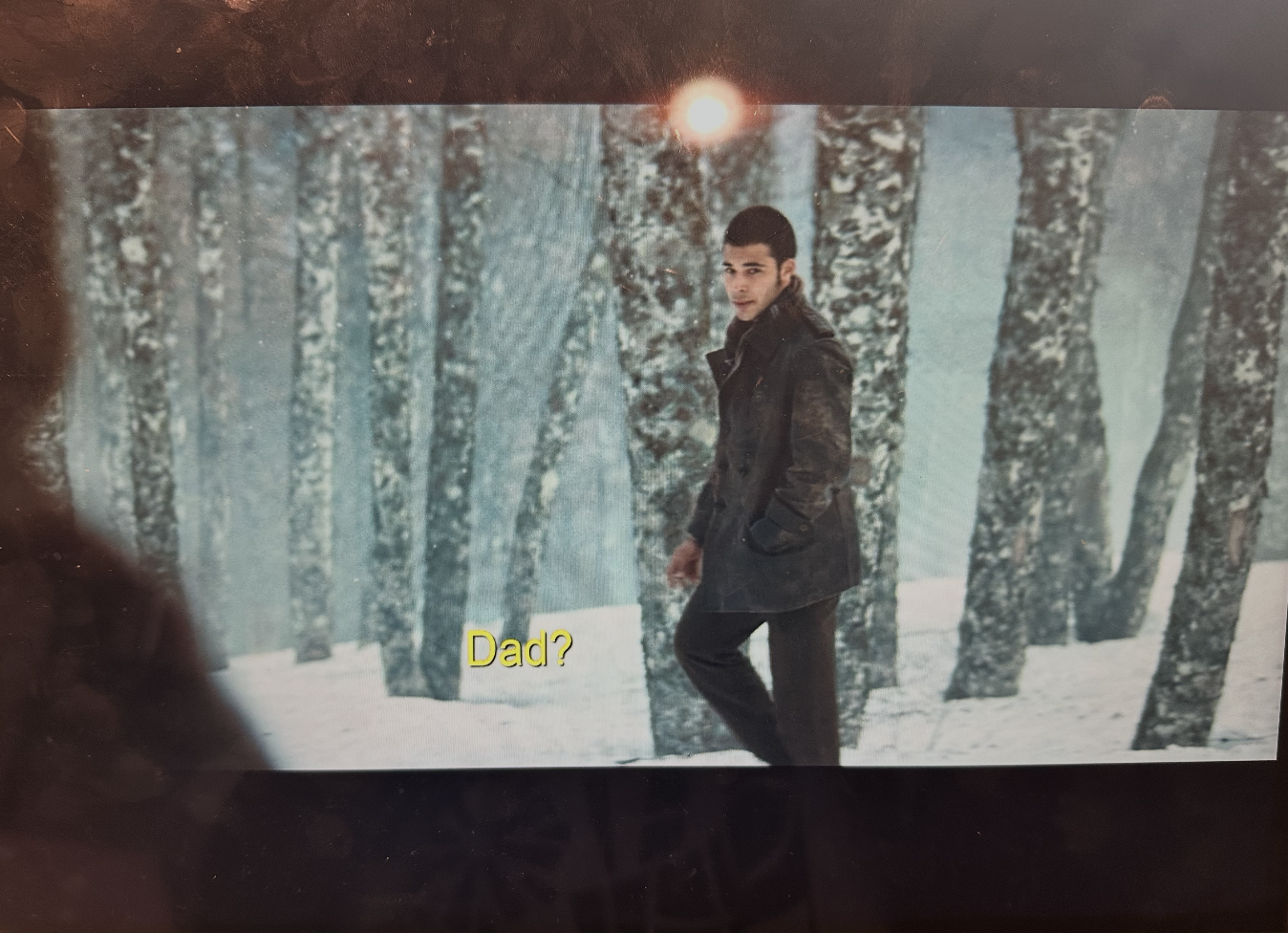
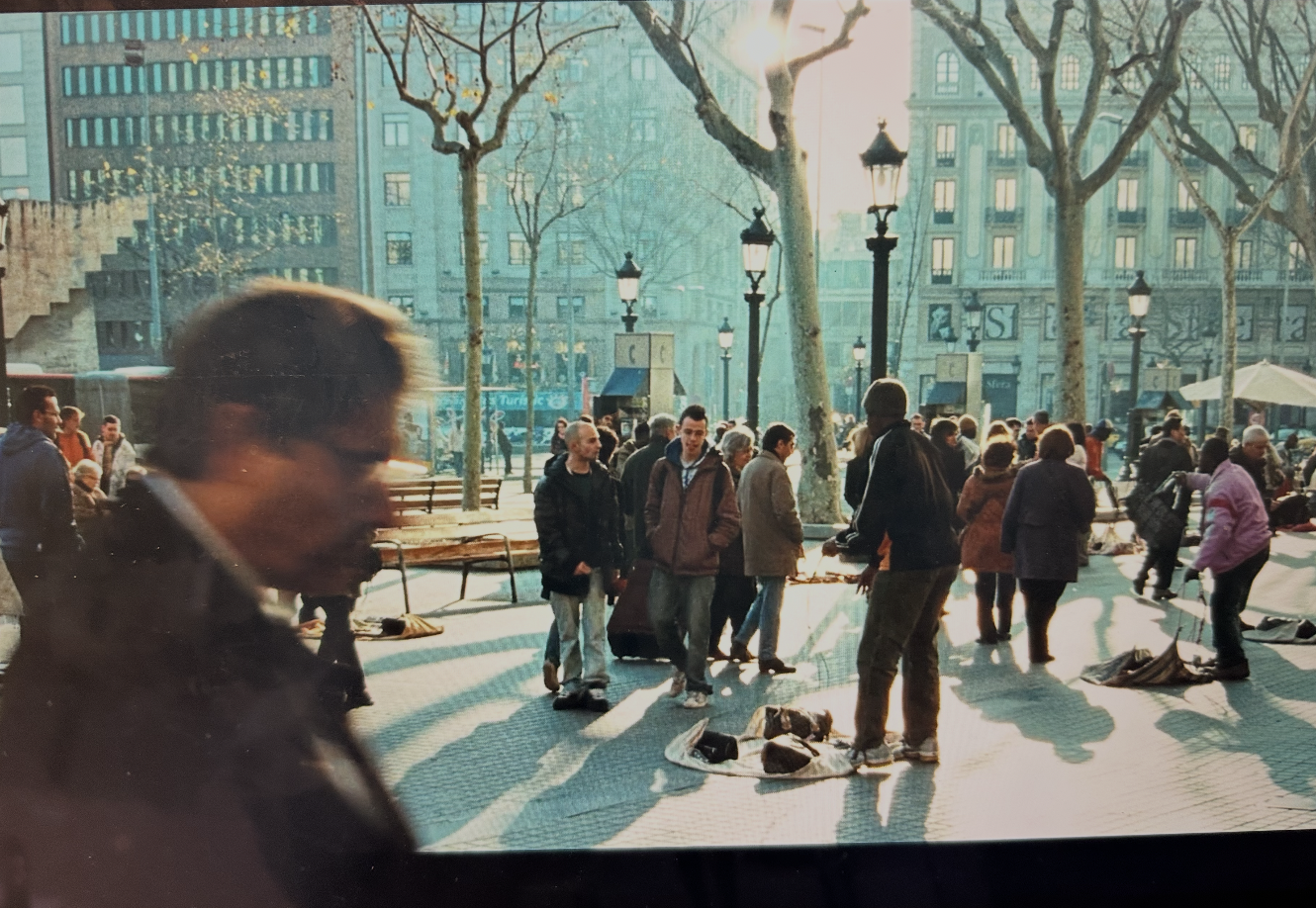
When we are in Uxbal’s cramped apartment, or the sweatshop he frequently attends, Prieto defaults to wide-angle lenses. These lenses help distort the various spaces we see in each scene, causing the rooms to feel unstable and claustrophobic (which, most likely intentionally, mirror Uxbal’s deteriorating mental and physical state). Normal lenses appear in the various dialogue scenes as we breeze through Barcelona, while telephoto lenses are occasionally used to compress the distant background (think of the scene where Uxbal walks alone by the industrial coastline). By rotating through these various lenses, the film results in a visual world where the environment is either oppressively close, or emotionally unreachable.
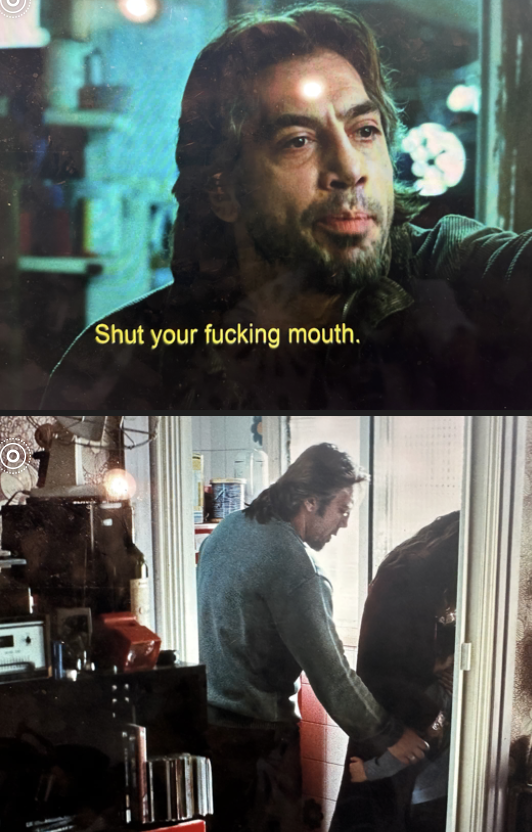
Prieto framing and use of camera angles further deepens the emotional resonance of Biutiful, especially in moments where Uxbal’s vulnerability or powerlessness become central. High-angle shots appear at key points: most strikingly, when Uxbal receives his cancer diagnosis, reducing him to a small, somewhat fragile figure overwhelmed by forces beyond his control. In contrast, low-angle shots briefly elevate characters like the police or the sweatshop supervisors, reinforcing the structural authority they hold over him. Most scenes, however, settle into eye-level framing, which preserves the film’s intimate realism and allows domestic interactions, especially those with his children, to unfold with unembellished emotional clarity. Occasionally, Prieto tilts the frame into a subtle oblique angle during moments of psychological instability or sadness, such as Marambra’s relapse, visually externalizing the chaos encroaching on the family.
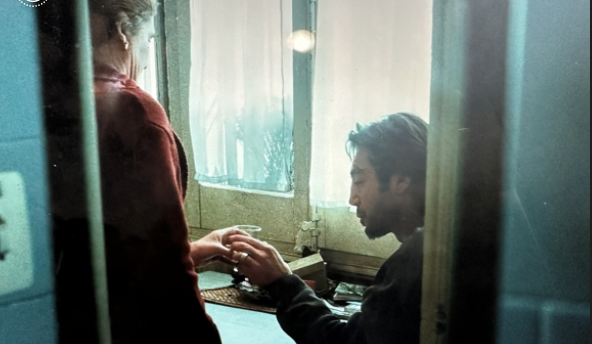
Overall, the cinematography of Biutiful becomes not just a visual method for enjoyment, but a narrative language to help express Uxbal’s inner world and thoughts. Through lens selection, focus, framing, camera angles, and even movement, Prieto crafts an environment that constantly mirrors the protagonist’s emotional and spiritual state. The viewer is not solely watching Uxbal’s suffering: they are feeling it with him, guided by a camera that moves and breathes the same way the character does. In this way, the film’s visual design becomes inseparable from its thematic core, turning the film into a profound embodiment of love, mortality, and the fragility of survival.
Editing is the process of putting a film together–the selection and arrangement of shots and scenes. Editing can condense space and time, emphasize separate elements and bring them together, and organize material in such a way that patterns of meaning become apparent. In addition, editing can determine how a film is perceived: for instance, quick, rapid cuts can create a feeling of tension, while a long take can create a more dramatic effect. The first photoplays generally had no cutting, owing to the fact that they were single-reel films; once filming began, you could not stop until the film ran out. (https://filmglossary.ccnmtl.columbia.edu/term/editing/)
In contrast, when Uxbal and Marambra get back together and the family is briefly reunited in Marambra’s apartment, the editing style shifts. Instead of the rapid cuts used previously, the style begins to rely more on panning shots and longer takes that showcase unity within the family by keeping everyone in one frame. The use of continuous camera movement rather than short, back-and-forth takes creates a slower, gentler rhythm, which emphasizes a new-found fluidity and togetherness within the family. Therefore, through deliberate changes in length and frequency of takes, Biutiful uses its editing to convey the fluctuating emotional dynamics of Uxbal and Marambra’s family throughout the film.
Lastly, using longer takes and an emphasis on realism, the movie is generally found to be slow and heavy, mirroring the gradual decline of Uxbal throughout the progression of the movie. This pace makes it easier for the film to bear an emotional weight that has a strong impact on the viewer. However, there are moments where the editing is more jerky and rapid, and this is usually in high-intensity moments where Uxbal’s plans were shattering or going astray. For example, when Uxbal’s friends were caught by the police or his actions after the factory deaths; these scenes had much more fast-paced editing styles to reflect the chaos of the event.
Sound is an integral part in a film. It refers to everything that the audience hears including sound effects, words and music. Sound is used in films for various purposes, including: providing the information to the viewer about the location of the scene, heightening the mood, telling the audience about the characters and advancing the plot. Every person who watches a film realizes that the choice of voices, soundtrack and music present in a film affect the way that the viewer perceives a particular film. As a result, the sound is an important and integral element of the film, one that determines the way that the viewer experiences and understands a film as a visual experience.
Narrative analysis is an examination of the story elements, including narrative structure, character, and plot. A narrative can be considered to be the chain of events in a cause-effect relationship occurring in time and space. In order to analyze the narrative of a film, we need to first make the distinction between the plot of the film and the story of the film. This is sometimes referred to as the discourse and story of a film. Narrative may also be called the story thought story mainly refers to the events that describe the narrative.
Film genres are various forms or identifiable types, categories, classifications or groups of films. (Genre comes from the French word meaning "kind," "category," or "type"). These provide a convenient way for scriptwriters and film-makers to produce, cast and structure their narratives within a manageable, well-defined framework. Genres also offer the studios an easily 'marketable' product, and give audiences satisfying, expected and predictable choices. Genres refers to recurring, repeating and similar, familiar or instantly-recognizable patterns, styles, themes, syntax, templates, paradigms, motifs, rules or generic conventions.
Iñárritu, A. (Director). (2010). Biutiful. [Film]. Menage Atroz. MOD Producciones. Focus Features International. Ikiru Films.