Bacurau

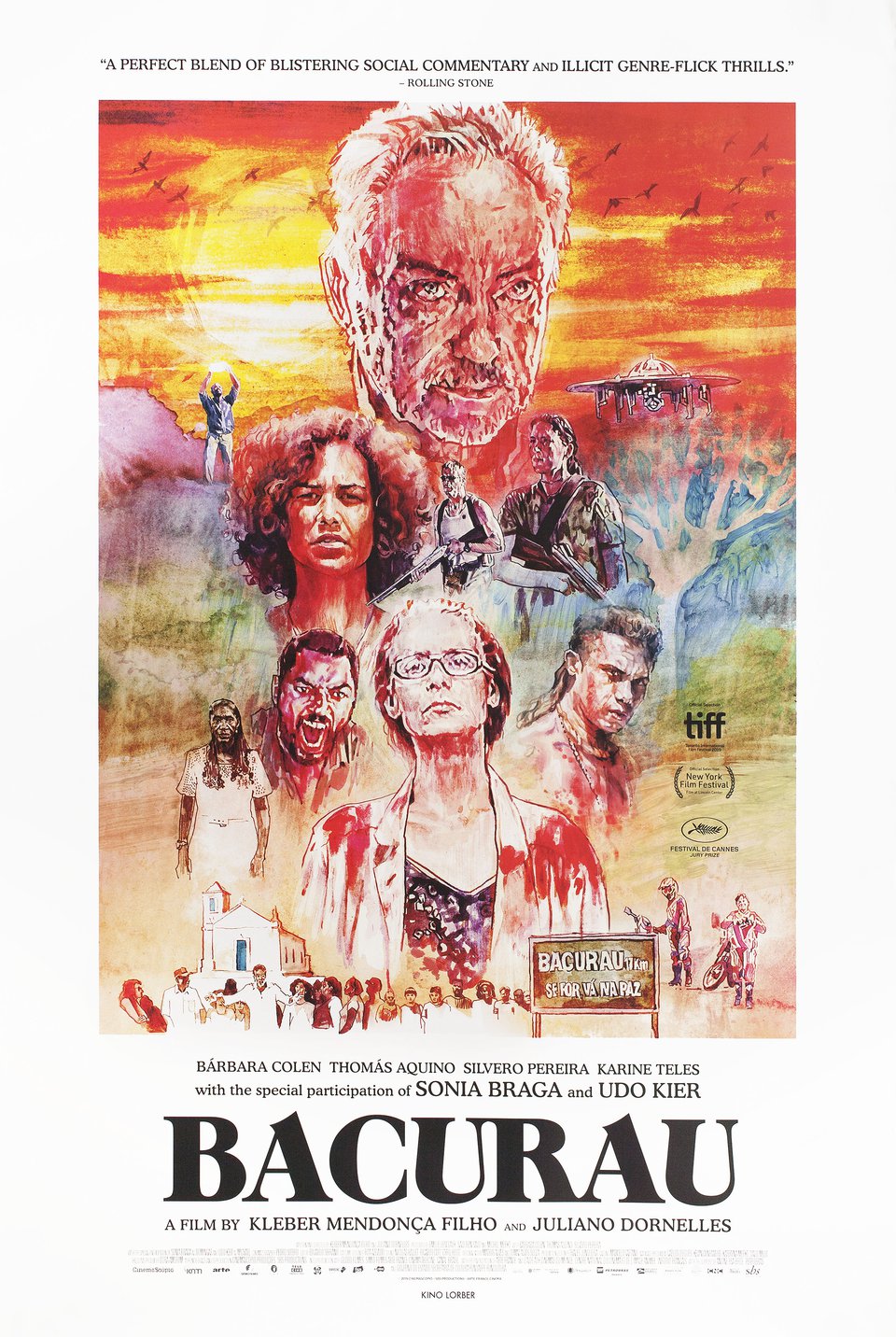
    Movie Poster
    Release year
    2019
    Director
    Kleber Mendonça Filho
    Juliano Dornelles
    Biography of director(s)
    Kleber Mendonça Filho was born in Recife, Brazil in 1968. He is a director, screenwriter, and former film critic who’s established himself as a leading voice in contemporary world cinema with his movies O Som ao Redor (2012) and Aquarius (2016). He is known for dissecting modern Brazilian class conflict.

    Co-director Juliano Dornelles was also born in Recife in 1980, and he is a filmmaker and visual artist who was Mendonça Filho’s longtime production designer on his earlier projects before his first co-directing project with Bacarau.
    Country
    Brazil and France
    Original synopsis of the film

    Bacarau is set “a few years from now” as written in the beginning of the movie, and it is in the desert/farmland of northeastern Brazil, in this small, tightly knit village of Bacarau. The beginning of the movie starts with the small town mourning the death of Carmelita, an old and wise woman everyone knew and listened to. The village is in need of water, which has been cut off by the government, especially the governor Tony Junior, who is corrupt. Soon, Bacarau vanishes from digital satellite maps, they lose all service on their cell phones, and a UFO-looking drone is flying around the region. Nearby farmers start being brutally executed along with their families, and the village soon notices that they are under attack by American and European “tourists” who are hunting humans. Once they figure this out, they call in one of their village's most known criminals to come back and help them fight these tourists. The town takes arms from their local history museum and prepares an ambush for when the tourists come to attack the town. Once all the tourists are killed by the villagers, the leader of the tourists reveals that he was being paid by the governor, and the town kills both of them brutally.

    Film Awards
    Cannes Film Festival 2019 - Prix du Jury Winner
    Cinema Brazil Grand Prize 2020 - Best Picture Winner

    Describes the setting of a scene in a play or a film. It refers to everything placed on the stage or in front of the camera—including people. In other words, mise en scène is a catch-all for everything that contributes to the visual presentation and overall “look” of a production. When translated from French, it means “placing on stage.”
    Setting
    Setting
    Explanation
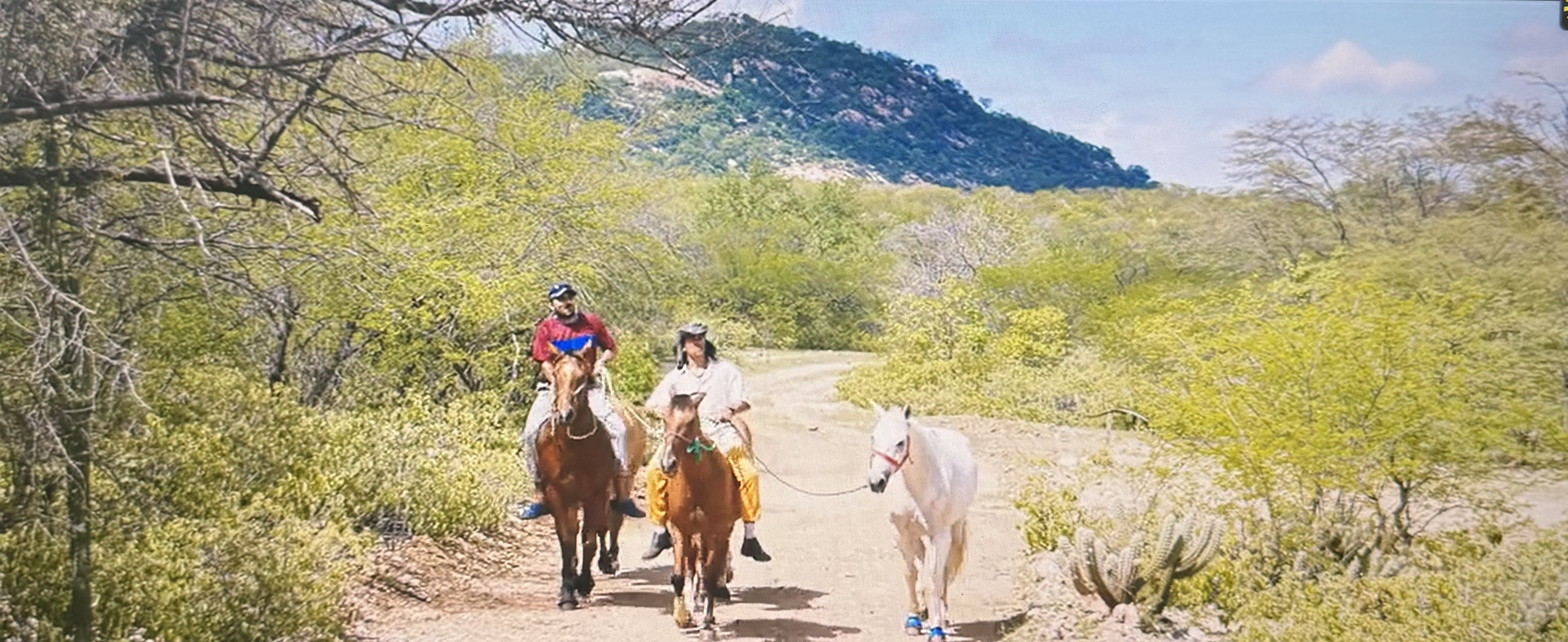
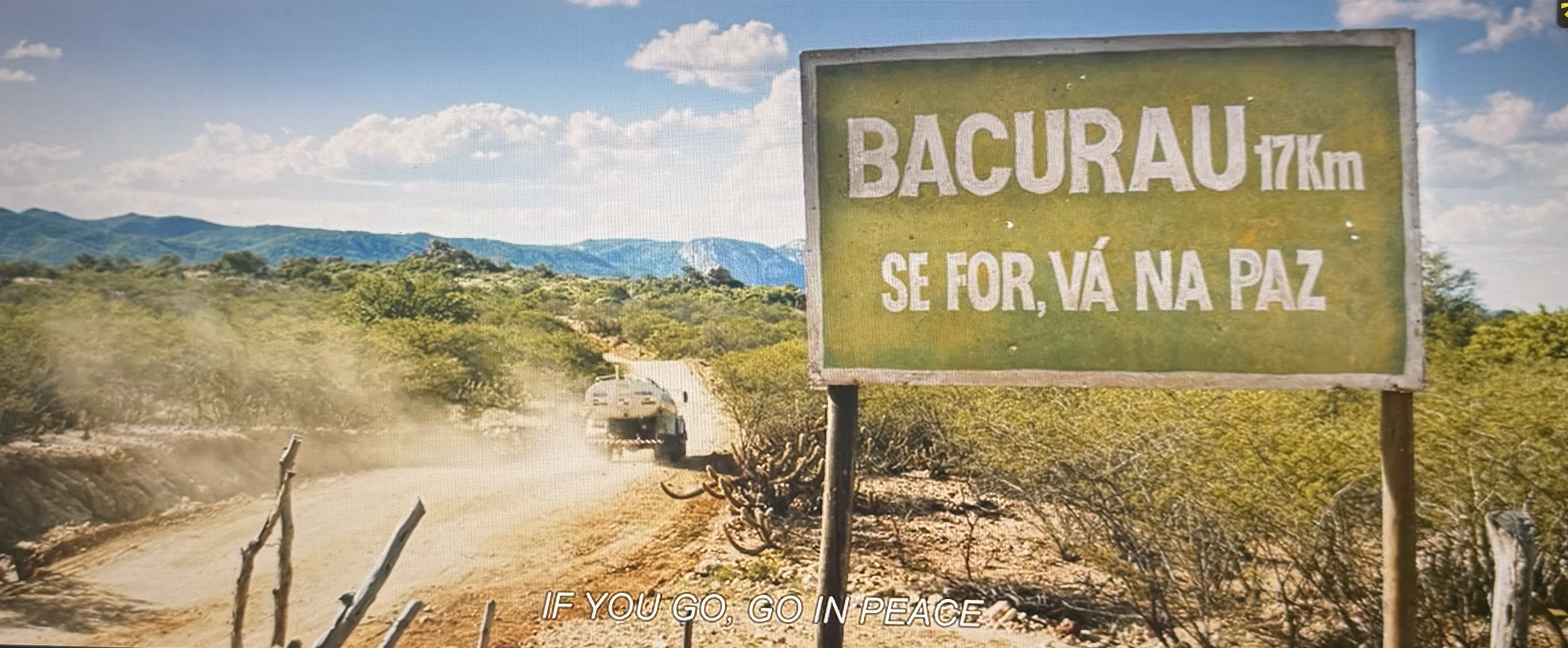
    The film was shot in Barra, a rural settlement located in Parelhas, which is in the Rio Grande do Norte region in Brazil. It was important they shoot in this rocky, sandy, unpaved town that has modest buildings and looks like a very isolated place. This location was important to symbolize the geography of northeast Brazil which has historically been a neglected place by Brazilians, tourists, and also federal authorities.
    Film Still
    This still shows the isolated, non-paved roads of the northeast of Brazil. Mountainous and dry, this place is difficult to live.
    Props
    Timecode
    40:24 - 41:29
    Prop
    The Water Truck
    Explanation
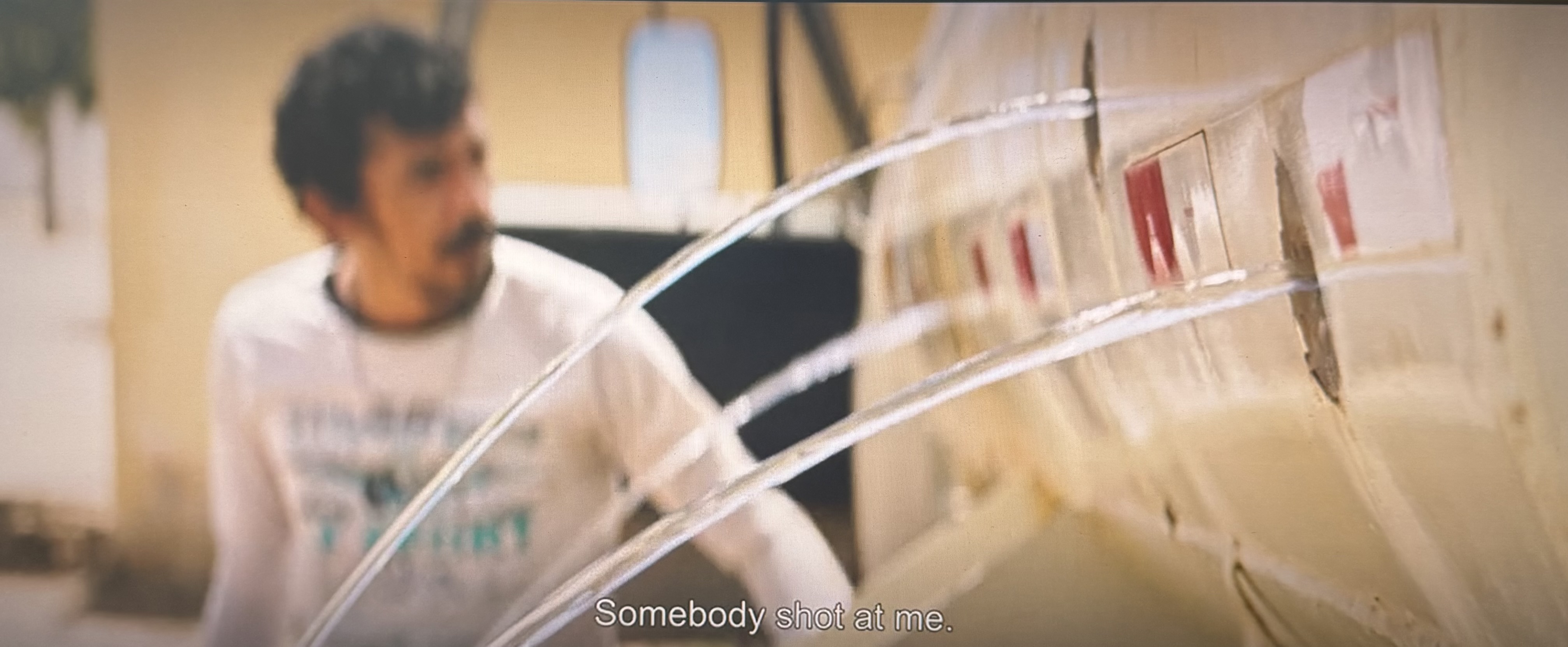
    The Water truck was a symbol that represented the corruption in the government. Tony Junior cut off water to this town because he knew that this town was very against him and would not vote for him, therefore he did everything in his power to ruin this town. The water truck was leaking from shotgun bullets, which is a symbol of the town’s livelihood deteriorating as Tony Junior cut off their water and also sent assassins to wipe out the village’s population.
    Film Still
    This still shows the water truck leaking due to the bullet holes.
    Lighting
    Lighting
    Explanation
    The film relies heavily on natural sunlight that completely makes this setting orange and sunlit. Rather than softening the landscape, the directors kept this sunlight beaming throughout the entire movie, which exposes the heat as a form of poverty and labor and difficulty in life. A contrast is at night, there are barely any lights on the roads, and the setting and mood becomes much more eerie and in turn, becomes more dangerous. Many deaths in this movie happened at night. One of the most significant ones was a kid who got killed because he was playing games in the dark with his friends.
    Film Still
    This still shows the sun beaming on the people in the village, a relentless heat that makes everything difficult.
    Costume
    Costume
    Lunga
    Explanation
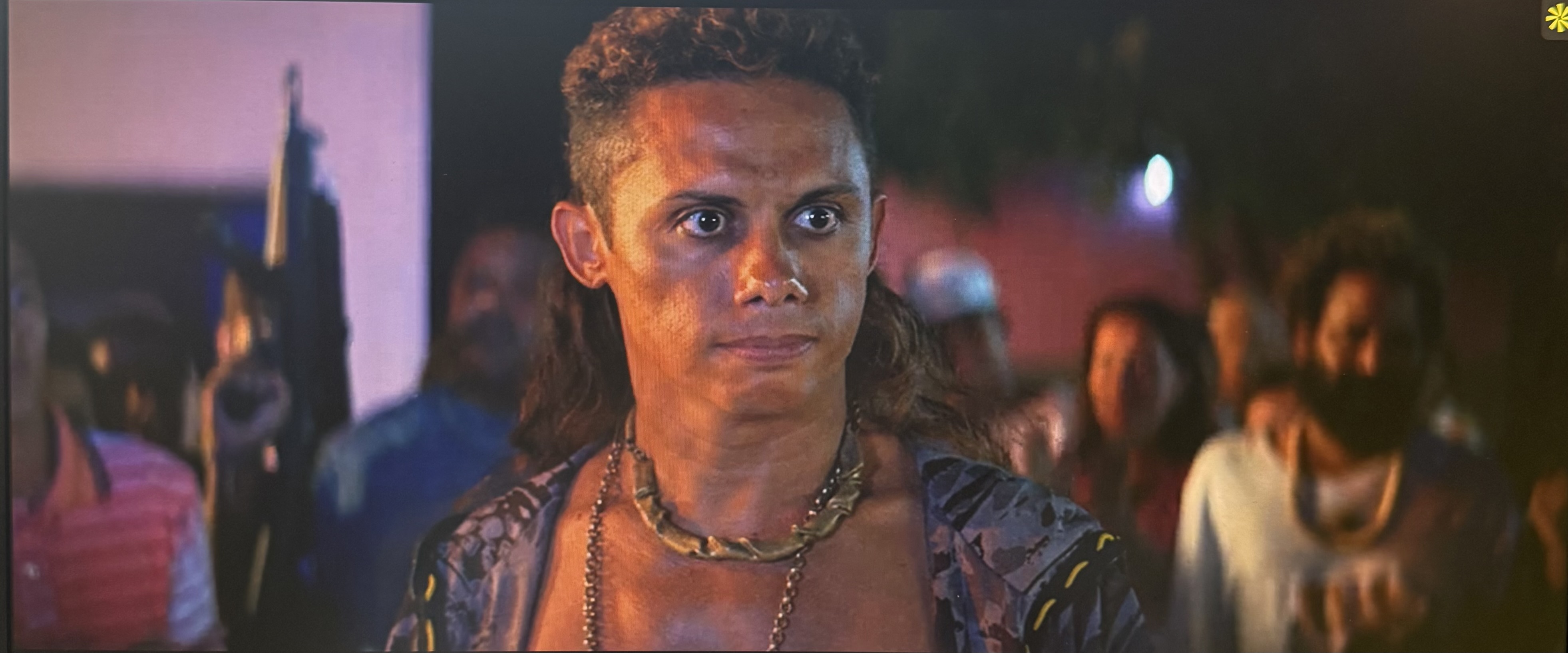
    One costume that stood out was Lunga’s. Lunga was an outlaw that we assume was exiled from the city because of the danger he caused, since he was a known criminal. Although, when they called him back in order to help the city’s defense, he was wearing long hair, a lot of jewelry in necklaces and rings, earrings, and sleeveless clothing along with makeup. This goes to show that anyone can be dangerous. This is related to gender roles, and that being powerful in Brazil is not related to how you look or who you are, it is related to your past and how you carry yourself.
    Timecode
    1:14:45 - 1:15:25
    Film Still
    This costume shows the dangerous Lunga with necklaces and open shirt and his hair down.
    Hair and Makeup
    Example
    Dr. Domingas
    Explanation
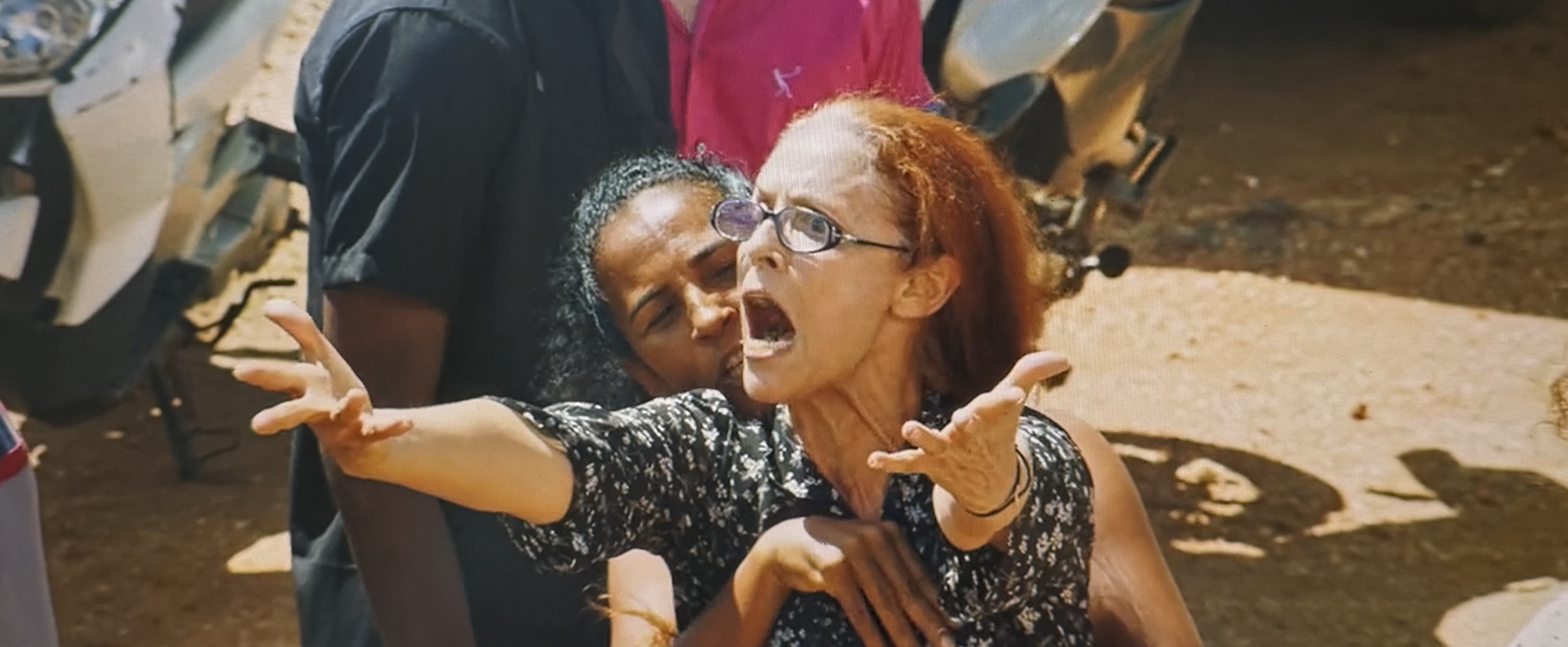
    Dr. Domingas was an old lady who cured people but became crazy when she was drunk. Whenever she was drunk, her hair would look extra red and frail and thing, she would have bloodshot eyes, and her face would be pale and without life, and it looked like someone who was mourning since she was still mourning the death of her friend, Carmelita. Another instance of hair and makeup that was notorious was Lunga's, previously mentioned. His hair down and mascara was a bold decision by the production team, but it worked out. His makeup and hair down gave off a vibe of power and in touch with his dangerous side.
    Timecode
    12:39 - 13:19
    Film Still
    This still shows Dr. Domingas in her drunk state during her mourning.
    Figure Behavior
    Example
    Collective
    Explanation
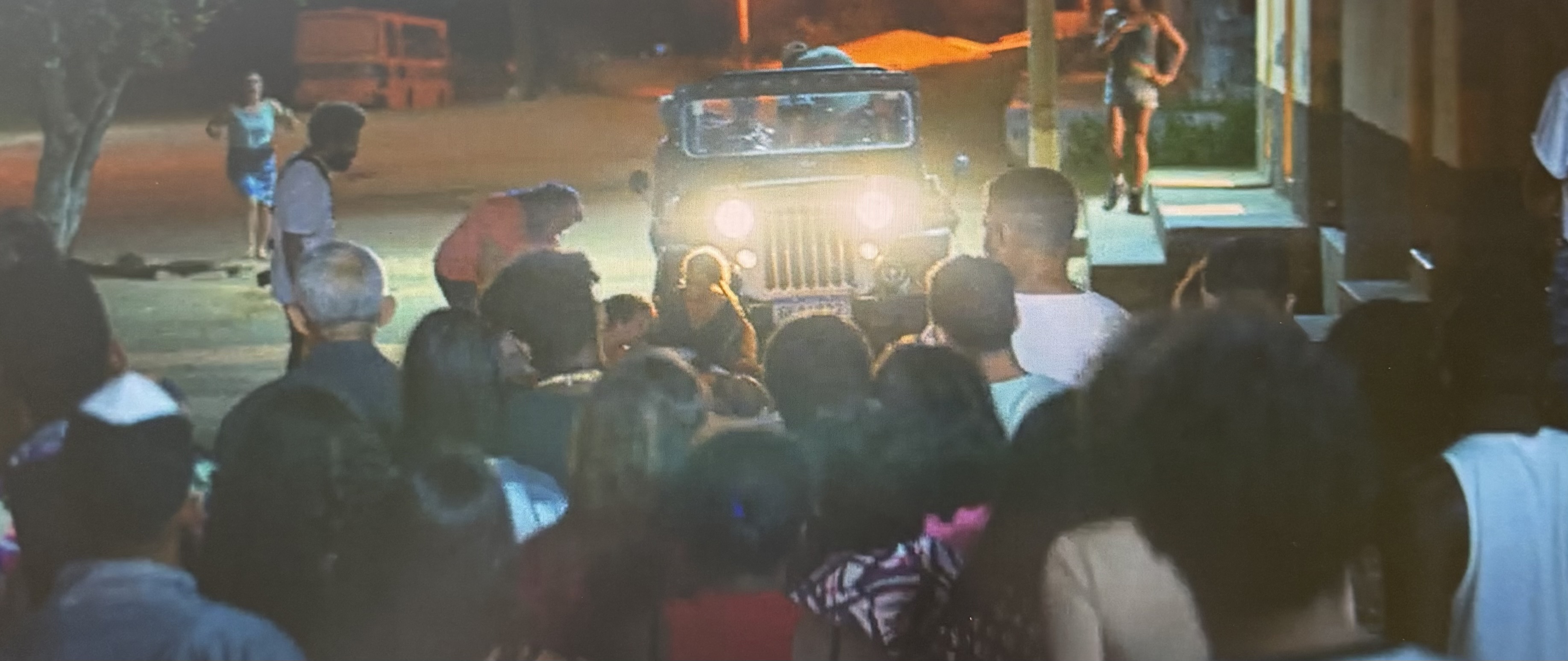
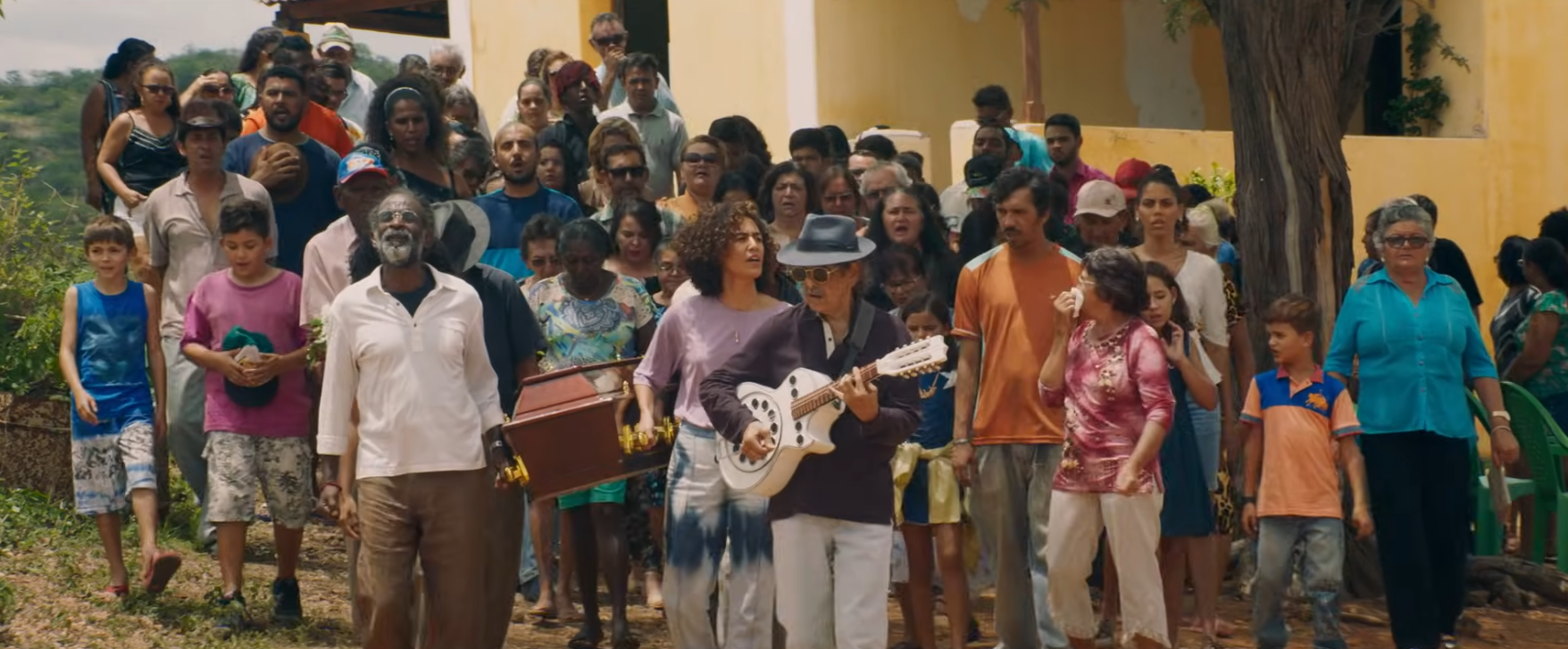
    The villagers of Bacurau are constantly framed as one, unified collective body. They can be seen crowding around tables, marching together, holding coffins all together, harmonizing in a song, moving all in silence, and then at the end, in a synchronized, coordinated defense structure to protect their city. Also, the way the characters maintain eye contact with each other and their gestures towards one another conveys a shared understanding and communal trust. It was very noticeable that alone, these characters seemed a lot weaker and less confident, but together, the sense of being a collective group gave them the power and courage to rise up against any evil. It can be seen in the scene with the kids, where together they were fine, and as soon as one went off alone into the dark, he was killed.
    Timecode
    1:15:32 - 1:17:52
    Film Still
    Shows the village gathered together when someone was screaming in pain.
    Representative Clip
    Film Clip
    Explanation
    The Bacurau trailer represents the mise-en-scène well for many reasons. They are shooting in a location across the arid sertão, showing the dusty village as a natural environment rather than a constructed studio set. The lighting relies on a sharp transition from harsh, natural daylight over the unpaved streets into shadowy, dawn, dark nights during the nights where people are killed. The communal water tanker with bullets and the UFO-looking drone emphasize an aesthetic clash between these isolated Brazilians and these European and American assassins. This battle is reinforced by costume, as the villagers use worn, functional cotton clothing, compared to the tourists wearing tactical safari gear. Lastly, the trailer visually contrasts the synchronized, collective body language of the townspeople defending their home against the isolated, predatory manners of the foreign killers.
    Film Still
    Collective townspeople

    This is the art of photography and visual storytelling in a motion picture or television show. Cinematography comprises all on-screen visual elements, including lighting, framing, composition, camera motion, camera angles, film selection, lens choices, depth of field, zoom, focus, color, exposure, and filtration. Cinematography sets and supports the overall look and mood of a film’s visual narrative. Each visual element that appears on screen, a.k.a. the mise-en-scène of a film, can serve and enhance the story—so it is the cinematographer’s responsibility to ensure that every element is cohesive and support the story. Filmmakers often choose to spend the majority of their budget on high-quality cinematography to guarantee that the film will look incredible on the big screen.

    Point of View
    Quality
    Framing
    Scale
    Movement

    Editing is the process of putting a film together–the selection and arrangement of shots and scenes. Editing can condense space and time, emphasize separate elements and bring them together, and organize material in such a way that patterns of meaning become apparent. In addition, editing can determine how a film is perceived: for instance, quick, rapid cuts can create a feeling of tension, while a long take can create a more dramatic effect. The first photoplays generally had no cutting, owing to the fact that they were single-reel films; once filming began, you could not stop until the film ran out. (https://filmglossary.ccnmtl.columbia.edu/term/editing/)

    Coherence, Continuity, and Rhythym
    Editing Style
    Transitions
    Match
    Expansion and Compression of Time
    Editing General Comments

    Sound is an integral part in a film. It refers to everything that the audience hears including sound effects, words and music. Sound is used in films for various purposes, including: providing the information to the viewer about the location of the scene, heightening the mood, telling the audience about the characters and advancing the plot. Every person who watches a film realizes that the choice of voices, soundtrack and music present in a film affect the way that the viewer perceives a particular film. As a result, the sound is an important and integral element of the film, one that determines the way that the viewer experiences and understands a film as a visual experience.

    Sound Type

    Narrative analysis is an examination of the story elements, including narrative structure, character, and plot. A narrative can be considered to be the chain of events in a cause-effect relationship occurring in time and space. In order to analyze the narrative of a film, we need to first make the distinction between the plot of the film and the story of the film. This is sometimes referred to as the discourse and story of a film. Narrative may also be called the story thought story mainly refers to the events that describe the narrative.

    Plot Comments
    Story Comments
    Narrator Type
    Narrative Structure

    Film genres are various forms or identifiable types, categories, classifications or groups of films. (Genre comes from the French word meaning "kind," "category," or "type"). These provide a convenient way for scriptwriters and film-makers to produce, cast and structure their narratives within a manageable, well-defined framework. Genres also offer the studios an easily 'marketable' product, and give audiences satisfying, expected and predictable choices. Genres refers to recurring, repeating and similar, familiar or instantly-recognizable patterns, styles, themes, syntax, templates, paradigms, motifs, rules or generic conventions.

    Category