
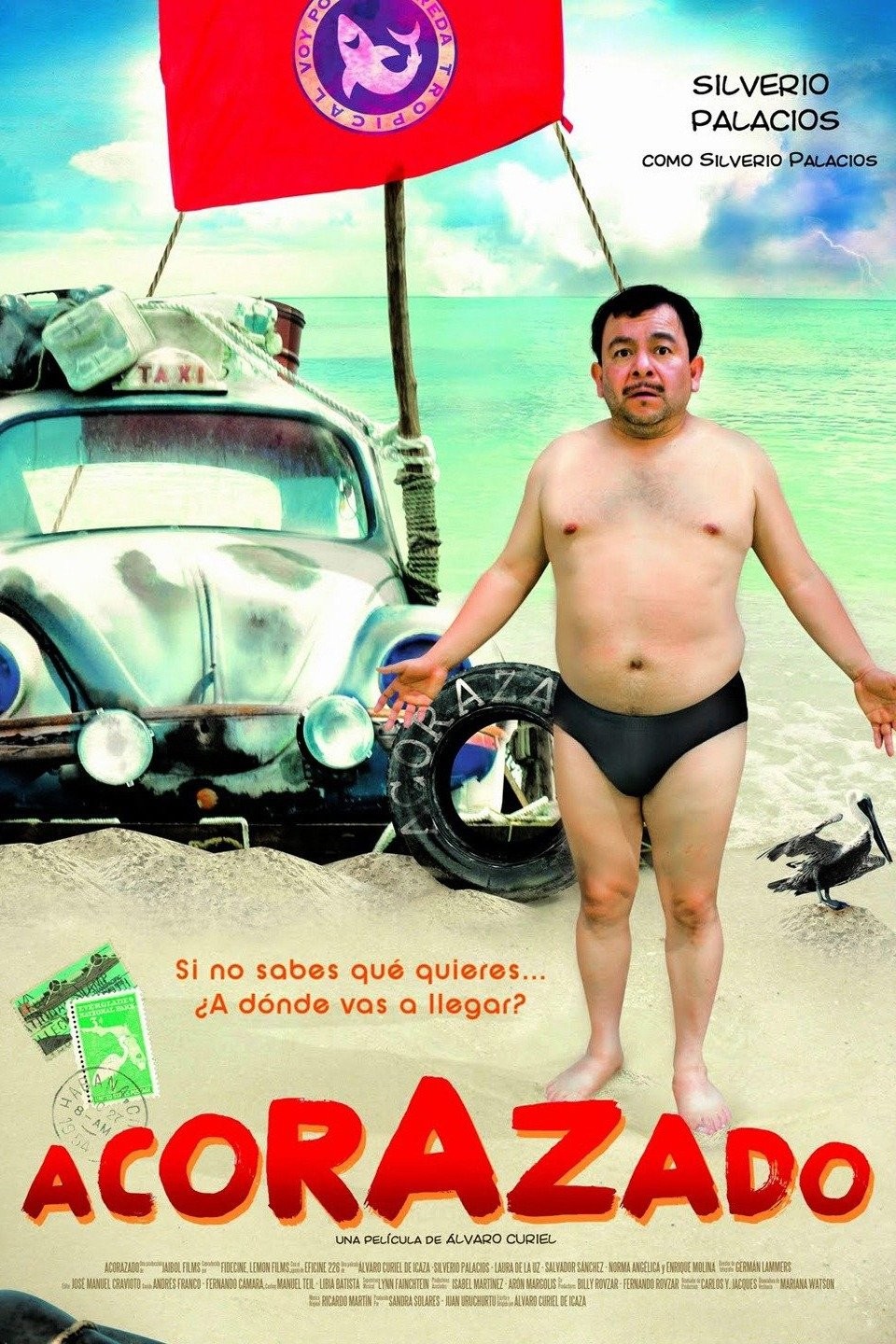
Acorazado is a comedy film following Silverio Palacios, who is a disgruntled middle-aged former union organizer from Veracruz. Tired of scraping by after losing his job, he converts his taxi into a makeshift raft and sails across the Gulf of Mexico. He plans to arrive in Miami and pose as a Cuban refugee, but a storm and a broken compass throw him completely off course. Instead of Florida, he ends up landing in Cuba itself, where he must survive and navigate an unfamiliar environment.
Describes the setting of a scene in a play or a film. It refers to everything placed on the stage or in front of the camera—including people. In other words, mise en scène is a catch-all for everything that contributes to the visual presentation and overall “look” of a production. When translated from French, it means “placing on stage.”
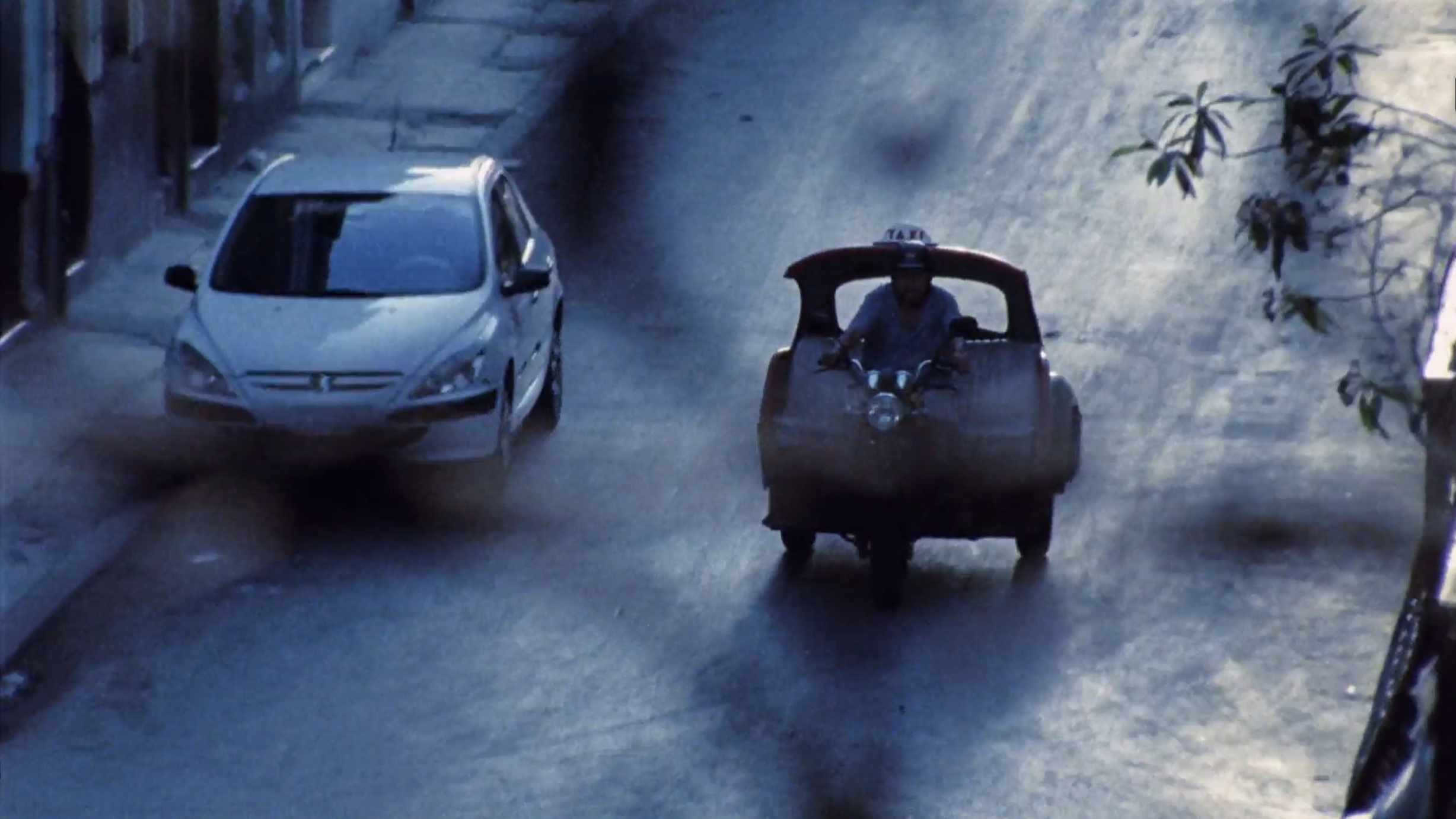
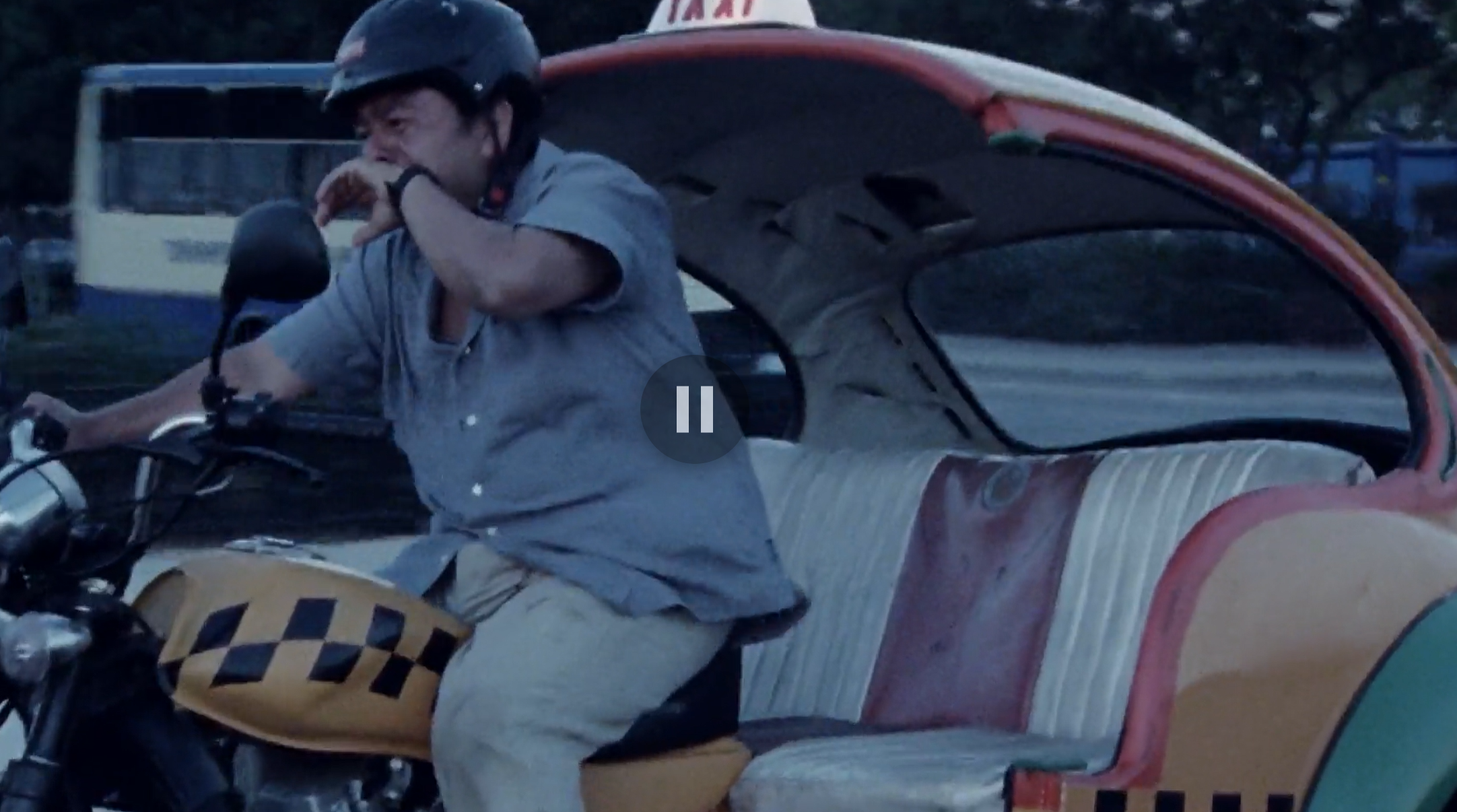
The second still, of him driving his new coco-taxi through Cuba, is a clear shift. The street is wide and largely empty, with only one other car in frame, and Silverio sits centered in the composition. Compared to the chaos of his home, this space feels open and uncluttered, he finally has room to move. But the emptiness doesn't read as purely positive; the quiet street and hazy light give the scene a slightly isolated feel, suggesting he now has more physical space but still doesn't quite belong in it. Together, the two stills trace a kind of trade-off: a cramped but familiar life in Mexico, versus a spacious but unfamiliar one in Cuba, without him ever really landing somewhere stable.
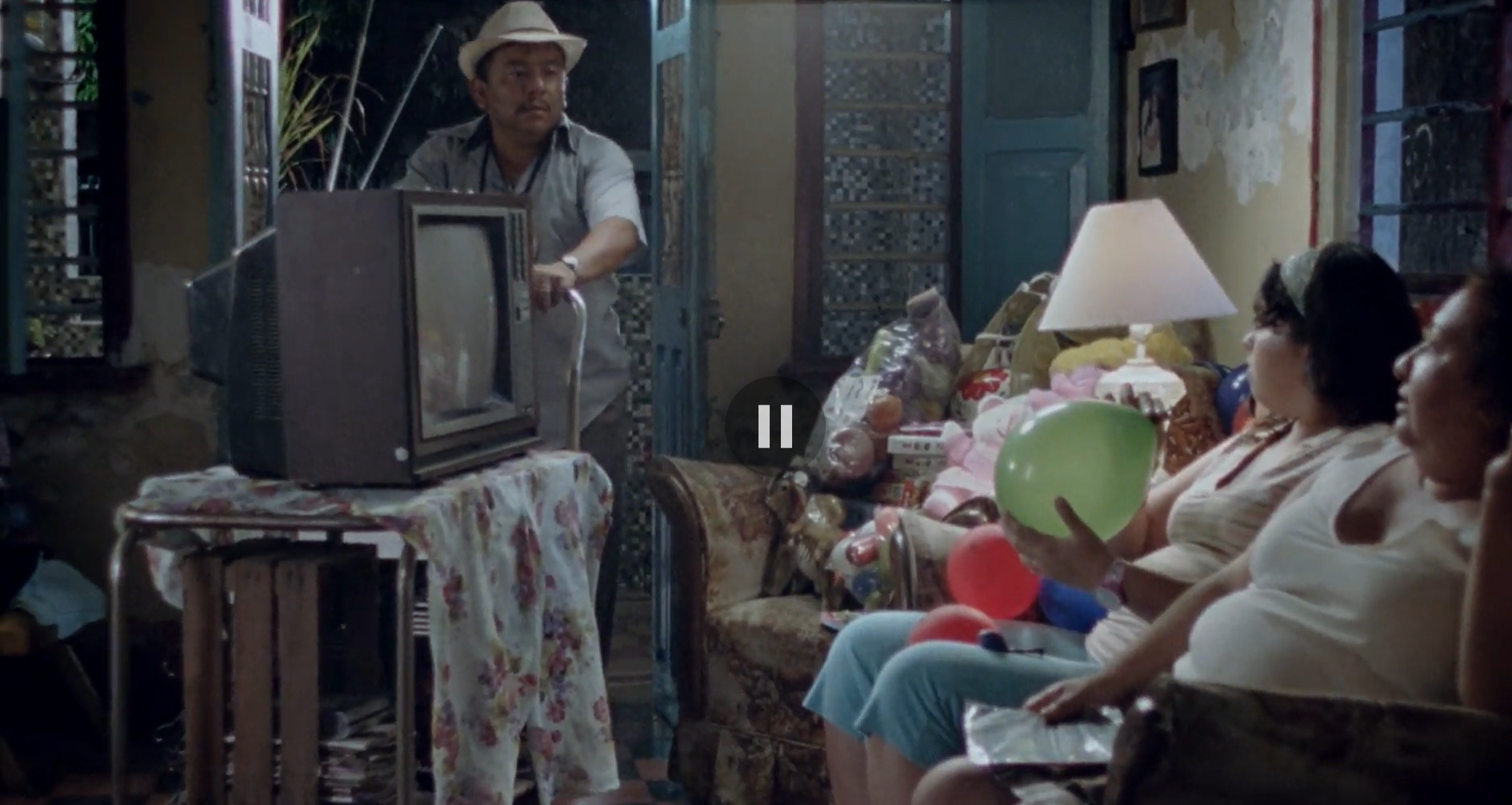
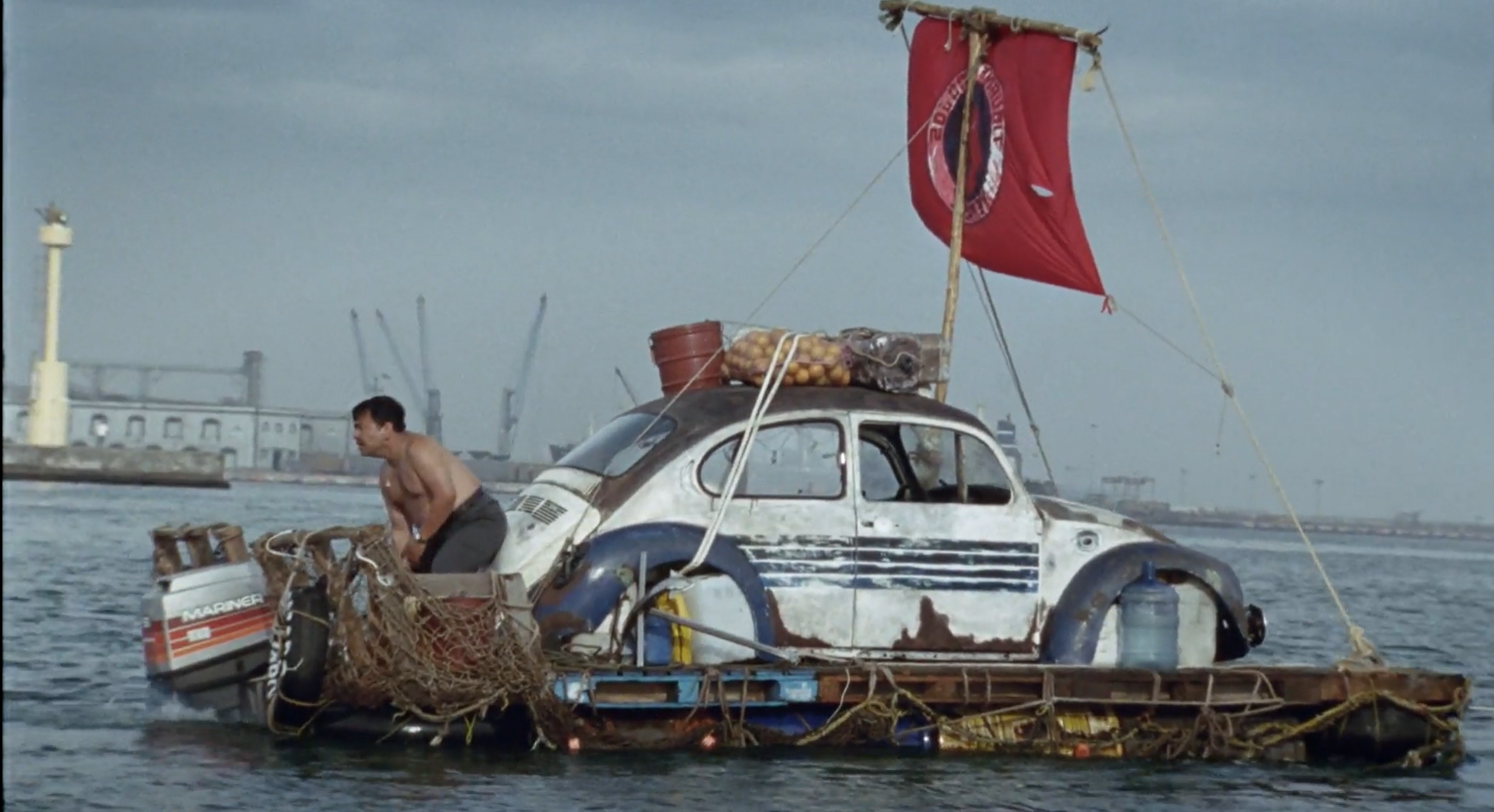
Later, the same car has been stripped, gutted, and rebuilt into a makeshift vessel, strapped to a wooden platform, rigged with a motor, and flying a bright red flag. The transformation is not clean or professional; ropes, netting, and mismatched materials hold the whole structure together, and Silverio himself is shirtless and actively working the raft rather than passively sitting in it as before. This shift visualizes his decision to convert passivity into action, but the improvised construction also signals how flimsy and dangerous that decision actually is. The taxi, once a symbol of a stagnant but stable life, becomes a symbol of desperate reinvention, his economic collapse literally repurposed into a vehicle for escape.
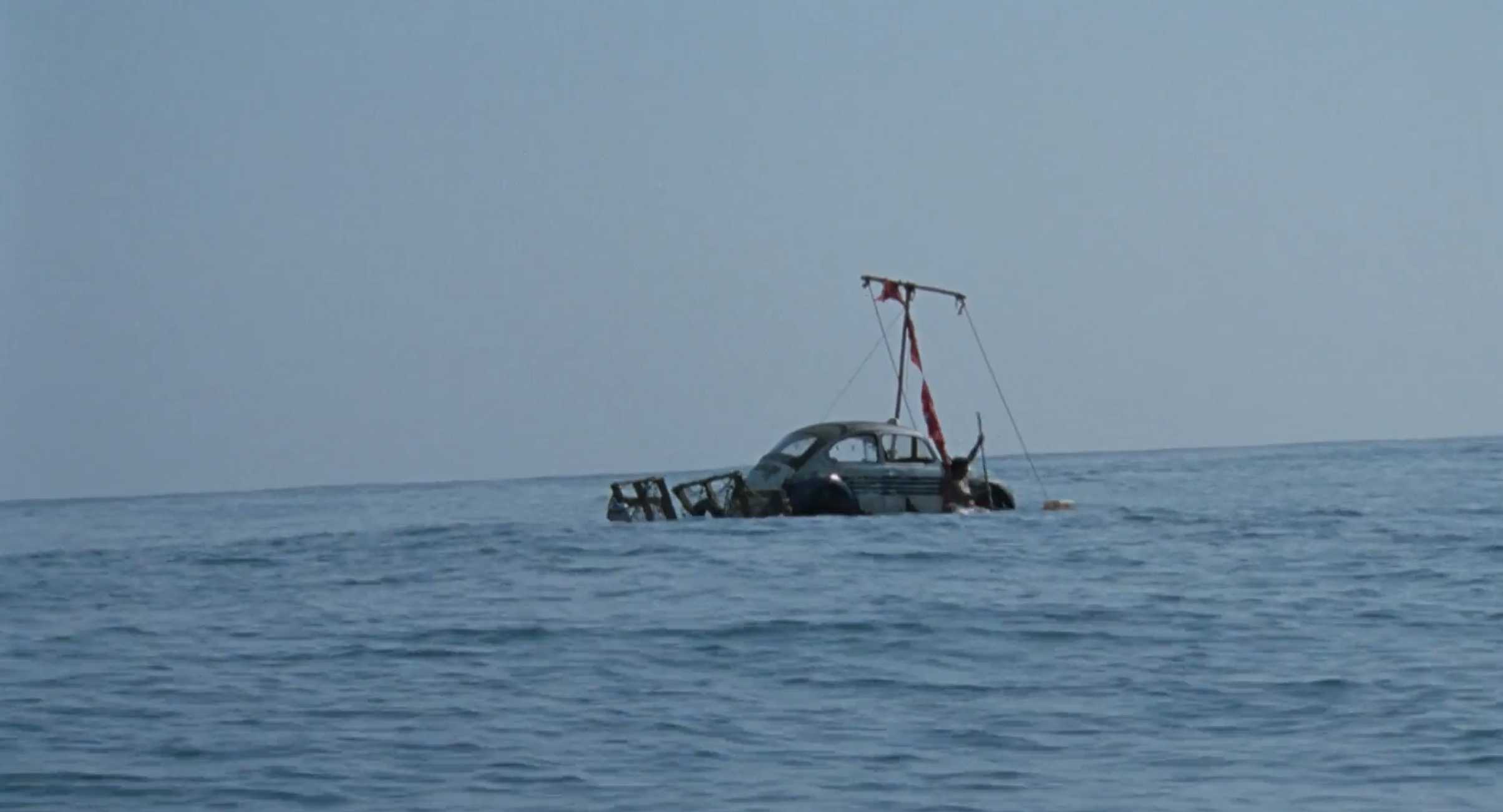
By the final still, the same raft is swamped and nearly submerged, with only the roof and its red flag still visible above the waterline. The vessel that once represented ambition and momentum becomes a symbol of failure and vulnerability, the ocean reclaiming what Silverio built out of necessity rather than skill. Together, these images trace a clear arc: the taxi moves from confinement, to fragile ambition, to near-disaster, mirroring Silverio's own trajectory from stagnation to desperate risk to the consequences of a plan built on improvisation rather than any real means.
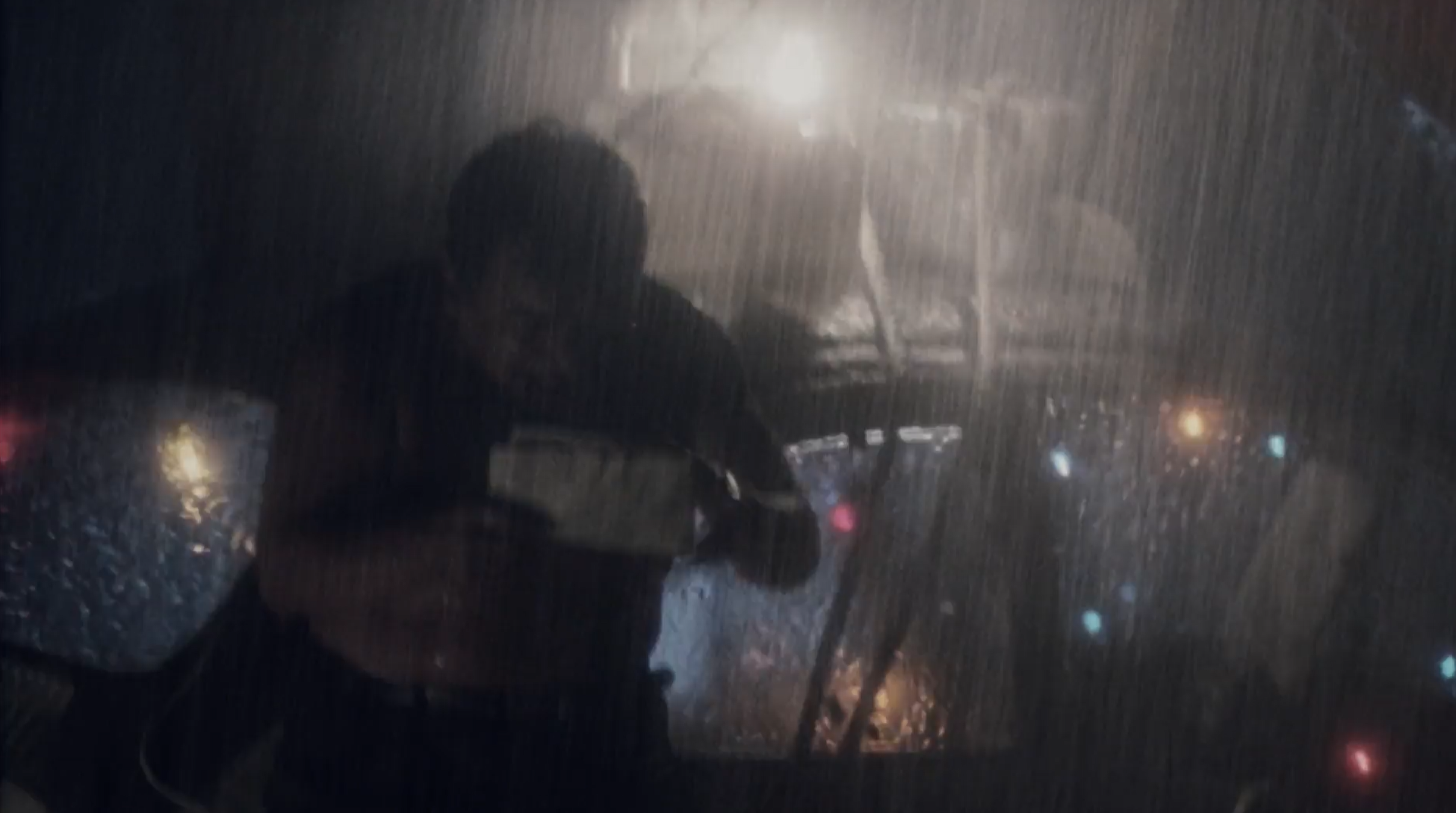
By the second still, that same open exposure has become a liability rather than a triumph. The scene is now dark, low-contrast, and nearly illegible, Silverio is reduced to a barely visible silhouette, his features swallowed by shadow and the relentless vertical streaks of pouring rain. What little light exists comes from small, scattered, artificial-looking points in the background, faint oranges and blues cutting through the darkness rather than any single dominant source. This use of underlighting and near-total obscurity contrasts sharply with the flat clarity of the earlier shot; where the first still hid nothing, this one hides everything, including, symbolically, Silverio's control over his own plan. The storm's lighting doesn't just create atmosphere, it visually enacts his loss of agency: the same openness that once let him celebrate freely now leaves him defenseless against the elements, and the film's high-contrast, chaotic lighting in this moment signals the collapse of the confidence established just scenes earlier.
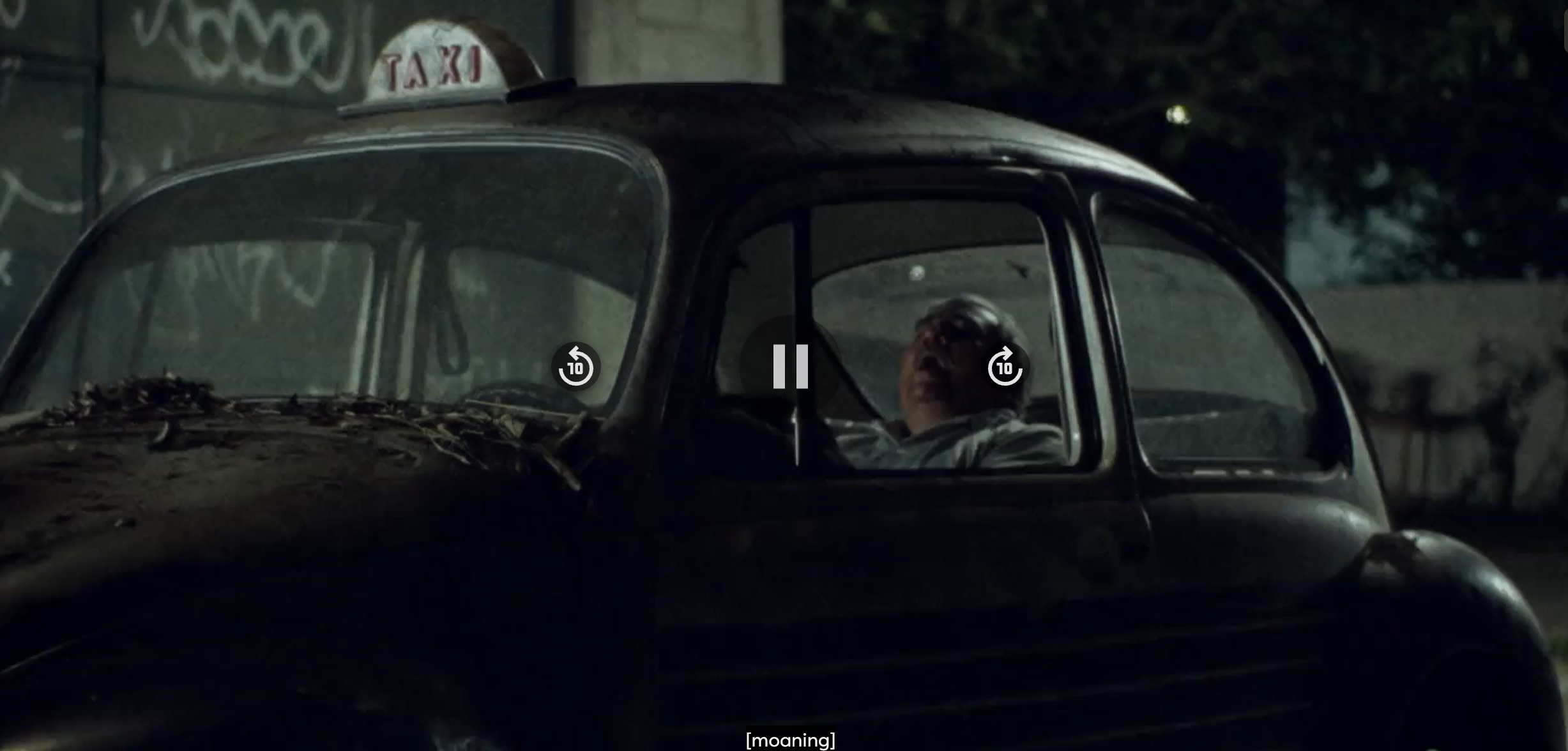
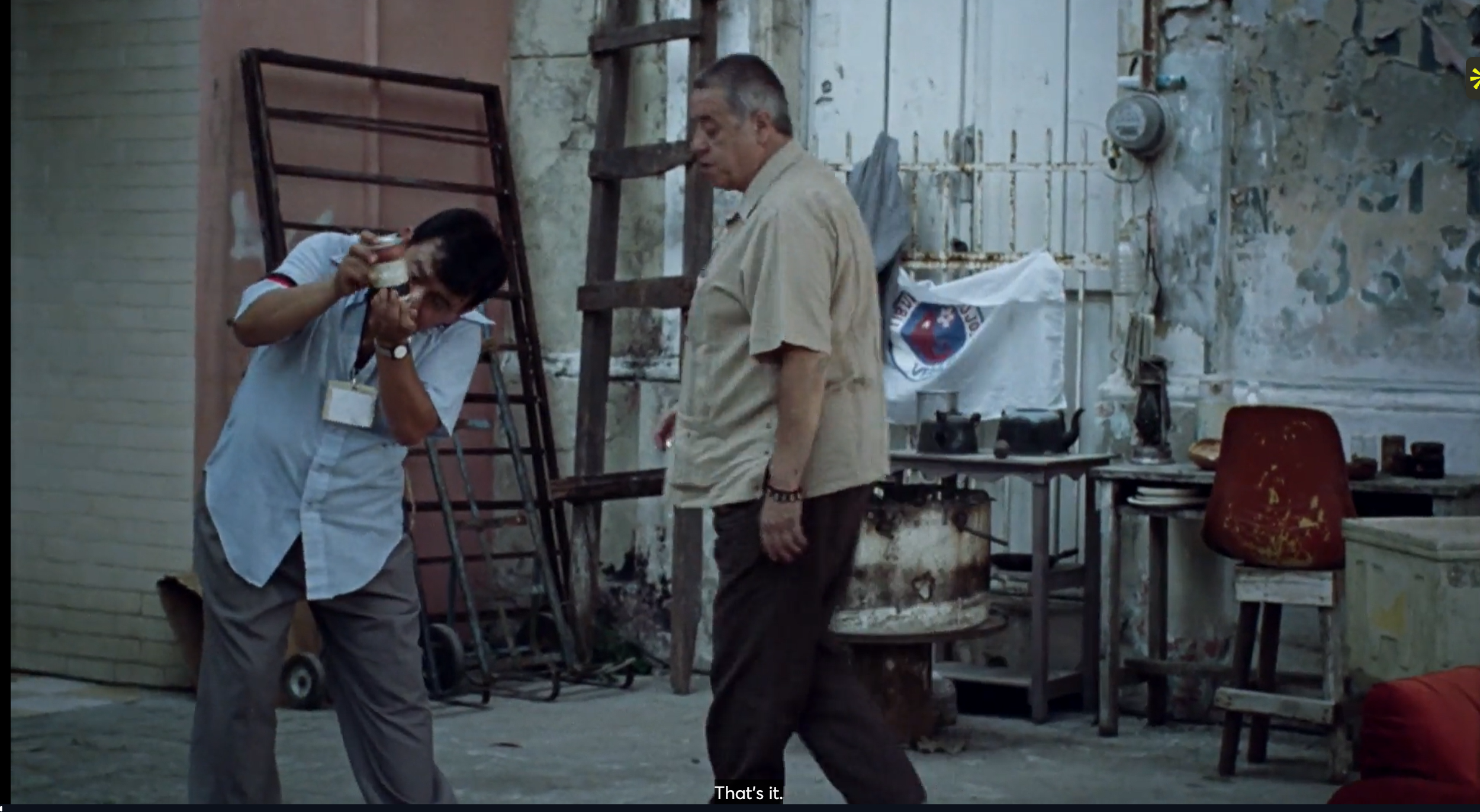
In the second still, now driving a coco-taxi in Cuba, his outfit is strikingly similar: another plain button-up shirt, simple pants, nothing stylized or visibly "foreign." The clearest addition is the motorcycle helmet, which marks him as outfitted for a specific role, official-looking gear tied to operating the vehicle, paired with the "TAXI" signage above him identifying his new occupation. Rather than a dramatic costume transformation signaling a new identity, what stands out here is how little his appearance actually changes. Silverio looks like essentially the same man in both settings, still dressed plainly, still visually working-class, even as his environment and role have shifted around him. The one clear addition, the helmet, reads less as personal reinvention and more as functional gear handed to him for a job, reinforcing the sense that whatever has changed for Silverio in Cuba is tied to his circumstances rather than to who he visually presents himself as.
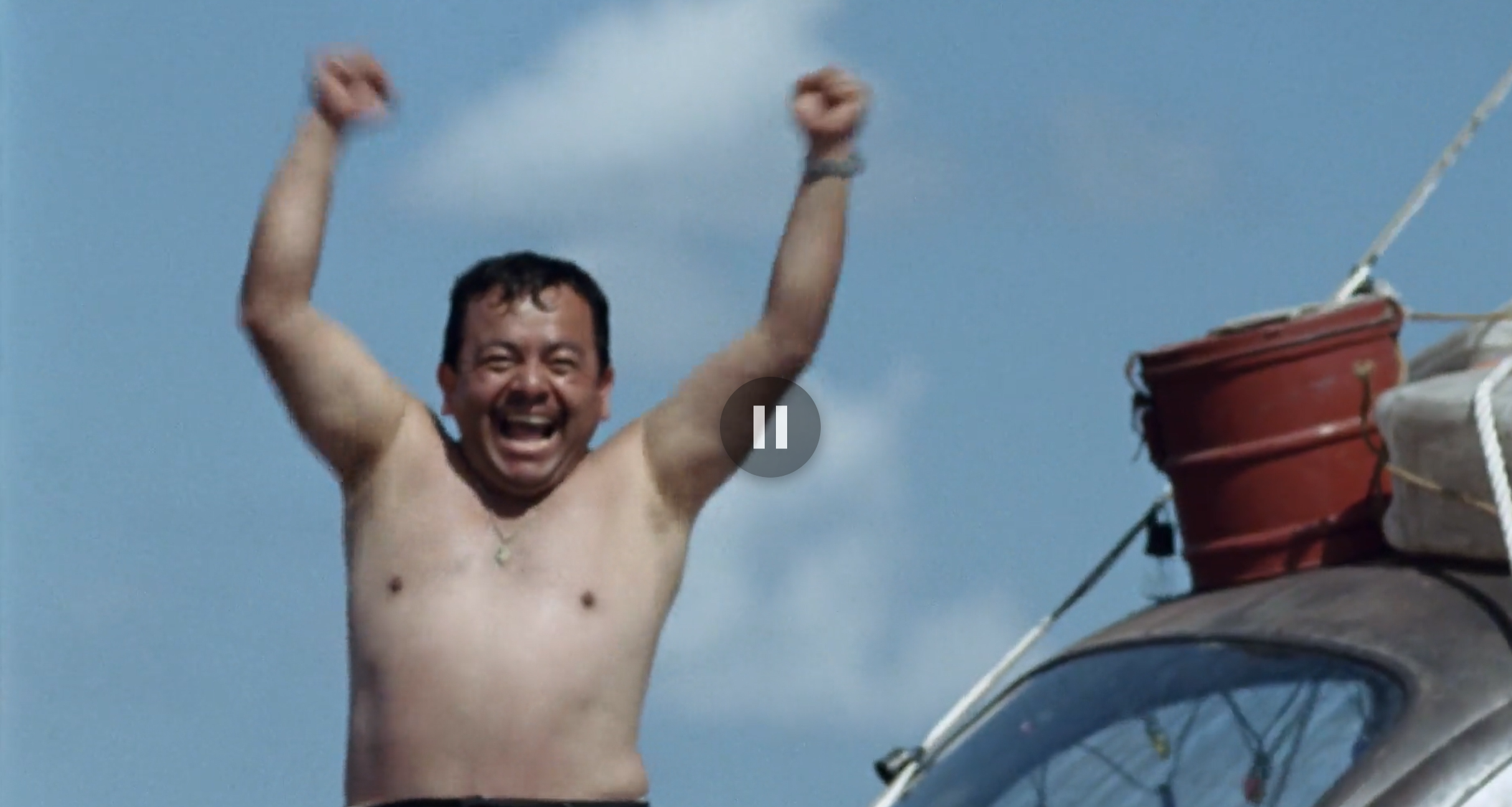
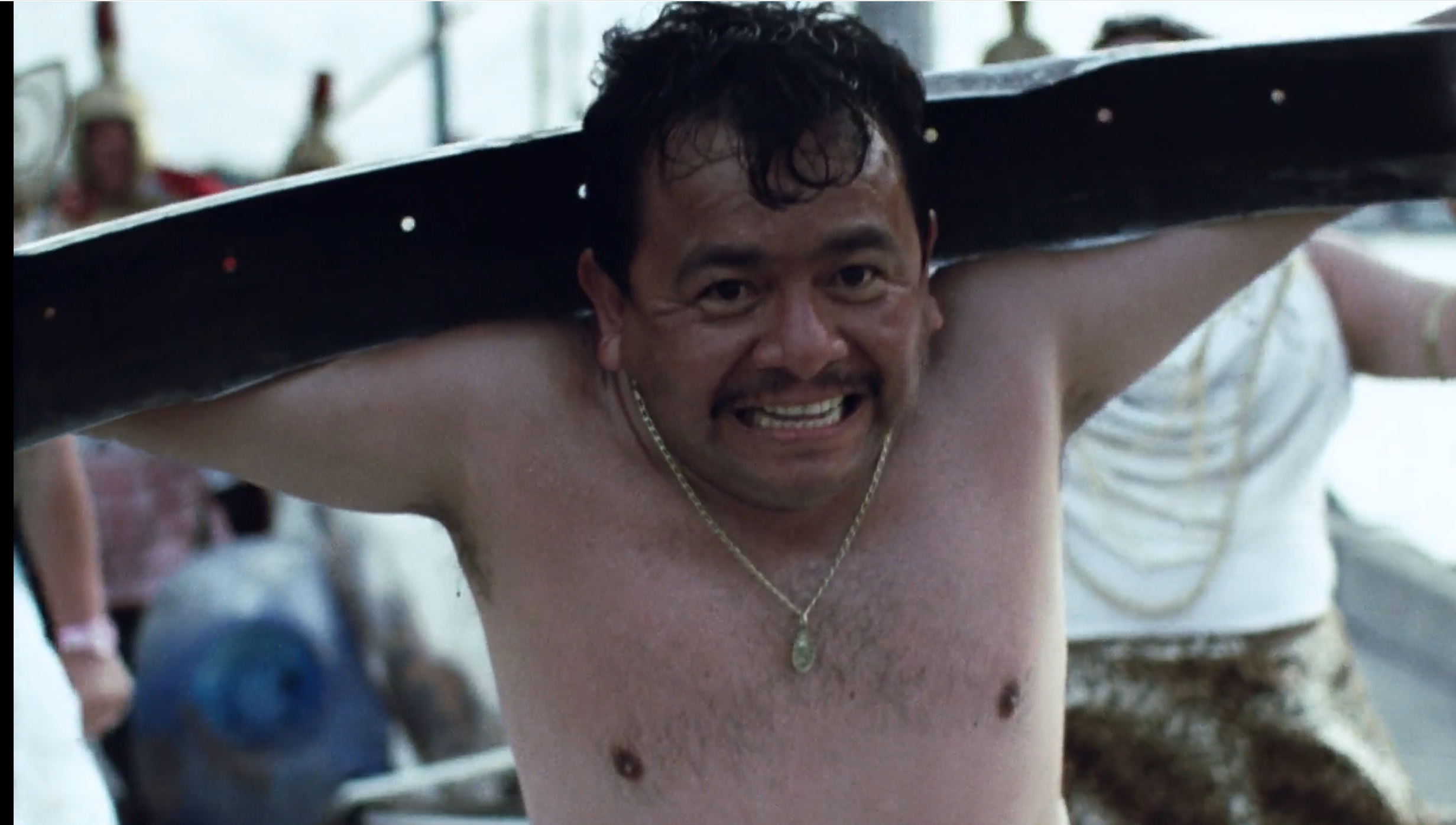
His open, arms-out posture also puts him fully on display, nothing about the shot feels private or guarded. He's exhausted but performing that exhaustion almost proudly, which fits his character overall: someone taking on a real, difficult plan, but doing it with a kind of comic showmanship that keeps the film from feeling too heavy even in moments of real effort. The Christ-like framing also gives his personal struggle a bigger, almost mythic feel, poking fun at the size of his American Dream fantasy while still taking his desperation seriously.
This is the art of photography and visual storytelling in a motion picture or television show. Cinematography comprises all on-screen visual elements, including lighting, framing, composition, camera motion, camera angles, film selection, lens choices, depth of field, zoom, focus, color, exposure, and filtration. Cinematography sets and supports the overall look and mood of a film’s visual narrative. Each visual element that appears on screen, a.k.a. the mise-en-scène of a film, can serve and enhance the story—so it is the cinematographer’s responsibility to ensure that every element is cohesive and support the story. Filmmakers often choose to spend the majority of their budget on high-quality cinematography to guarantee that the film will look incredible on the big screen.
Editing is the process of putting a film together–the selection and arrangement of shots and scenes. Editing can condense space and time, emphasize separate elements and bring them together, and organize material in such a way that patterns of meaning become apparent. In addition, editing can determine how a film is perceived: for instance, quick, rapid cuts can create a feeling of tension, while a long take can create a more dramatic effect. The first photoplays generally had no cutting, owing to the fact that they were single-reel films; once filming began, you could not stop until the film ran out. (https://filmglossary.ccnmtl.columbia.edu/term/editing/)
Sound is an integral part in a film. It refers to everything that the audience hears including sound effects, words and music. Sound is used in films for various purposes, including: providing the information to the viewer about the location of the scene, heightening the mood, telling the audience about the characters and advancing the plot. Every person who watches a film realizes that the choice of voices, soundtrack and music present in a film affect the way that the viewer perceives a particular film. As a result, the sound is an important and integral element of the film, one that determines the way that the viewer experiences and understands a film as a visual experience.
Narrative analysis is an examination of the story elements, including narrative structure, character, and plot. A narrative can be considered to be the chain of events in a cause-effect relationship occurring in time and space. In order to analyze the narrative of a film, we need to first make the distinction between the plot of the film and the story of the film. This is sometimes referred to as the discourse and story of a film. Narrative may also be called the story thought story mainly refers to the events that describe the narrative.
Film genres are various forms or identifiable types, categories, classifications or groups of films. (Genre comes from the French word meaning "kind," "category," or "type"). These provide a convenient way for scriptwriters and film-makers to produce, cast and structure their narratives within a manageable, well-defined framework. Genres also offer the studios an easily 'marketable' product, and give audiences satisfying, expected and predictable choices. Genres refers to recurring, repeating and similar, familiar or instantly-recognizable patterns, styles, themes, syntax, templates, paradigms, motifs, rules or generic conventions.